Ingredients
Method
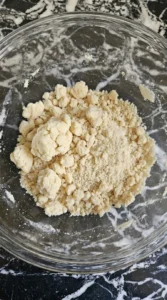
- Set the oven to 350°F and let it preheat for 10 to 15 minutes. Line a 9 by 13-inch baking pan with parchment and leave enough hanging over two sides to lift the bars out later. In a large bowl combine 2 cups all-purpose flour with 1/2 cup granulated sugar and 1/4 teaspoon fine sea salt. Add 1 cup softened unsalted butter cut into small cubes. Work the butter through the dry mix with your fingertips for 2 to 3 minutes. Then press a small handful together to check whether it holds its shape without feeling wet or sticky. The dough should look like coarse pale crumbs with a few larger clumps. It won't look like a smooth cookie dough. That's right. If you keep mixing until it turns greasy and heavy, the baked crust may lose its light texture. Stop when the crumbs hold together under pressure because the butter binds them during baking.
- Tip the dough crumbs into the lined 9 by 13-inch baking pan and spread them from corner to corner. Press down with the flat bottom of a measuring cup and then smooth the edges with your fingers. Aim for a layer that's about 1/4 inch thick. Place the pan on the middle oven rack at 350°F and bake for 18 to 22 minutes. Don't wait for a dark brown crust. Turn the pan once after 12 minutes if your oven browns more on one side. The base should feel firm rather than soft when it's time to add the filling. Watch the corners. They'll turn light gold first while the center stays pale with a faint buttery smell. (I once left the base in for an extra 10 minutes and the edges became much too hard.) If you bake past that light golden stage, the finished bars can crumble when sliced. The first bake sets the butter and flour before the wet filling goes on.

- While the crust bakes, make the filling in a second large bowl. Whisk 3 large eggs with 1 cup packed light brown sugar for about 60 seconds until the mixture looks smooth. Then pour in 3/4 cup light corn syrup and 2 teaspoons pure vanilla extract. Add 2 tablespoons all-purpose flour and 1/4 teaspoon fine sea salt. Whisk for another 30 to 45 seconds to break up any flour lumps. Next fold in 2 cups coarsely chopped pecan halves with a spatula. Use slow strokes from the bottom of the bowl so the nuts spread through the syrup instead of collecting on top. The mixture should look thick and amber with pecans coated on all sides. It should still flow from the spatula. Don't beat it until foamy because trapped air can make the top puff and crack. Gentle mixing keeps the filling smooth as the eggs set in the oven.

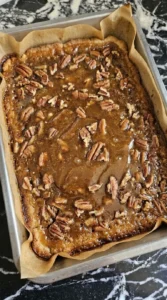
- Take the pan out once the shortbread edges are pale gold. Give the crust about 2 minutes to settle and then pour the pecan mixture over it. Start in the center and let the syrup flow toward the corners. Use a spatula to move any large clusters of nuts into bare spots so the top has an even amount of filling. Return the pan to the middle rack at 350°F and bake for 25 to 30 minutes. At minute 25 give the pan a gentle nudge. The center can wobble slightly as one mass but shouldn't ripple like liquid. Small bubbles should rise near the edges and the pecans will turn a deeper toasted brown. The filling will look glossy but not wet. If the middle still moves in waves, give it another 3 to 5 minutes and check again. Pulling it too early leaves syrup that won't hold a clean cut. The eggs and flour need steady heat to set the filling.
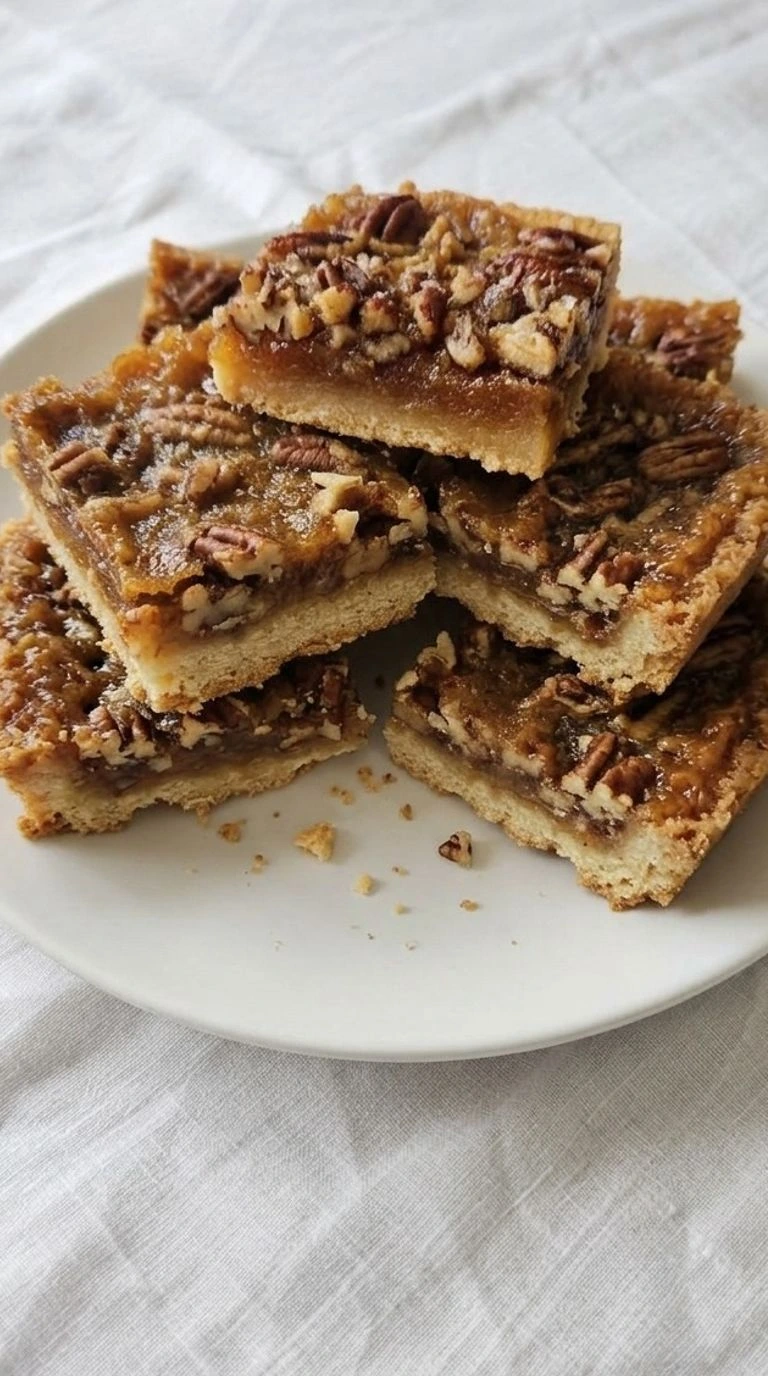
- Set the pan on a cooling rack and let it stand for 1 hour until the filling is no longer hot. Then refrigerate the whole slab for 2 hours so the center firms up enough to cut without dragging sticky caramel across the shortbread. Hold both parchment ends and lift the slab onto a cutting board. Use a sharp knife to divide it into 4 long rows and then cut each row into 4 pieces for 16 bars. Wipe the blade between cuts. For serving, place one square on a white dessert plate with its layered side visible. You'll see a thin golden crust below a thick caramel layer packed with toasted pecans. The edges won't all be identical. That's fine. Cutting while the slab is still warm can pull the filling away from the base. Cooling gives the sugar and egg mixture time to firm up into slices that hold together.

Notes
Once your Pecan Pie Bars have cooled completely, store them in an airtight container in the refrigerator at 40°F or below for up to 4 days. Place parchment between layers to stop the caramel filling from sticking to other pieces. For longer storage, wrap individual bars tightly in plastic wrap and place them inside a sealed freezer bag or freezer-safe container. They'll keep their best quality for about 2 months. Thaw them overnight in the refrigerator before serving. Freezing the bars individually also makes it easier to take out just a few when you need them. For a warm serving, heat the thawed bars in a 300°F oven for 5 to 8 minutes until the filling softens slightly. Don't microwave them for too long because the syrup can become very hot and the crust may turn soft. You can also serve them straight from the fridge after a 15 to 20 minute rest. Discard any bars with visible mold, an unusual sour smell or a slimy surface. Don't taste them to check for spoilage.