Ingredients
Method
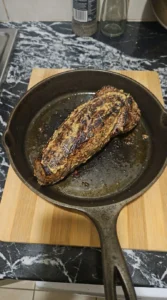
- Pat the 1.5-pound center-cut beef tenderloin dry, then season it with 3/4 teaspoon kosher salt and 1/2 teaspoon ground black pepper. Heat 1 tablespoon extra virgin olive oil in a 10-inch skillet over medium-high heat until the surface reaches about 400°F. Place the tenderloin in the hot skillet and sear each of its four long sides for 90 seconds to 2 minutes, turning as a nice crust develops. Give the ends a quick 30-second sear each, too. Transfer the meat to a plate and brush 1 tablespoon Dijon mustard evenly over the warm surface. Let it cool for 15 minutes, then pop it in the fridge for another 15 minutes. You're looking for a deep brown crust with a few darker spots. The mustard should leave a thin, golden coating, not a thick, wet layer. Don't let the tenderloin sit in the hot pan longer than necessary, or the center will start cooking too much. A quick sear builds plenty of flavor while keeping the middle from overcooking.
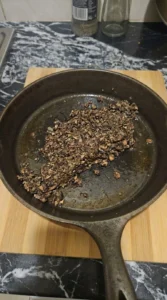
- Finely chop 12 ounces of cremini mushrooms and 1 medium shallot. Mince 2 garlic cloves. In the same skillet used for the beef, melt 1 tablespoon unsalted butter over medium heat at about setting 5 on a 10-point dial. Add the shallot and stir for 2 minutes. Then add the mushrooms and spread them into an even layer. Cook for 10 to 14 minutes and stir every 2 minutes while their water cooks away. Mix in the garlic and 1 teaspoon fresh thyme leaves during the last 2 minutes. Use a spatula to press the mixture against the pan and check for excess moisture. At first the mushrooms will look pale and wet. Then they'll shrink and turn a deep brown. You'll smell a rich earthy scent as the pan grows nearly dry. Stop when the mixture holds together but doesn't leave liquid behind. Extra water would soak the pastry later. A dry mushroom filling protects the crisp pastry layers.
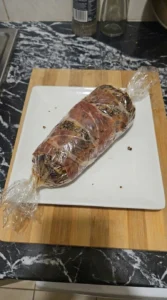
- Lay out a large sheet of food-safe plastic wrap and arrange 6 thin slices of prosciutto in a slightly overlapping rectangle. Spread the cooled mushroom mixture over the prosciutto and leave a narrow border around the edges. Place the chilled beef along the center with the mustard coating still visible where the mushrooms haven't touched it. Next lift the plastic wrap and roll the prosciutto around the beef. Pull it snug so the mushroom layer stays close to the meat. Twist the plastic ends to hold the roll firm and refrigerate for 30 minutes. You'll have one thick log with prosciutto wrapped around the dark mushroom layer. The shape won't be perfectly round. That's fine. Keep the wrap firm enough to hold together but don't crush the filling. Tight wrapping helps prevent gaps beneath the pastry.
- Unfold one 14-ounce sheet of thawed all-butter puff pastry and gently roll it into a rectangle about 12 by 14 inches and 1/8 inch thick. Take the chilled beef bundle out of its plastic wrap and place it in the center of the pastry. Fold the long sides over the meat, press the seam to seal, and tuck the short ends underneath. Trim off any excess dough so the bottom doesn't get too thick. Transfer the wrapped bundle to a parchment-lined baking sheet, seam-side down. Pop it in the fridge for 20 minutes to let the pastry firm up before baking. Make sure the dough completely covers the meat. A few small bumps from the overlapping prosciutto? That's perfectly normal. Just don't pull the pastry too tightly or it might thin out and tear. Keeping it cold helps maintain those buttery layers, giving you a beautifully flaky crust.
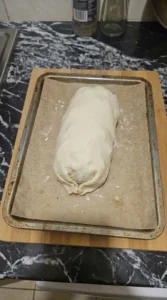
- Preheat the oven to 425°F with a rack in the middle. Beat 1 large egg in a small bowl and brush a thin layer over the chilled pastry. Make 3 small shallow vents across the top without cutting into the beef. Then bake the Wellington on its parchment-lined sheet for about 30 to 40 minutes. Check the pastry after 25 minutes and use a probe thermometer inserted into the center of the beef to guide the finish. For medium-rare beef, many cooks aim for about 130 to 135°F after resting. For the USDA-recommended safe minimum, aim for 145°F followed by at least a 3-minute rest. Timing will vary with the meat's thickness and starting temperature. Watch the pastry rise and turn a rich golden brown with darker amber patches near the folds. You'll smell toasted butter when the crust develops. (I prefer checking the center instead of guessing from the pastry color.) If the surface darkens too fast, shield it loosely with foil. Baking at 425°F gives the pastry enough heat to rise and crisp.
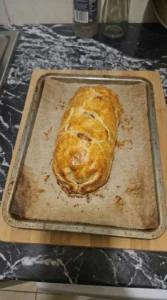
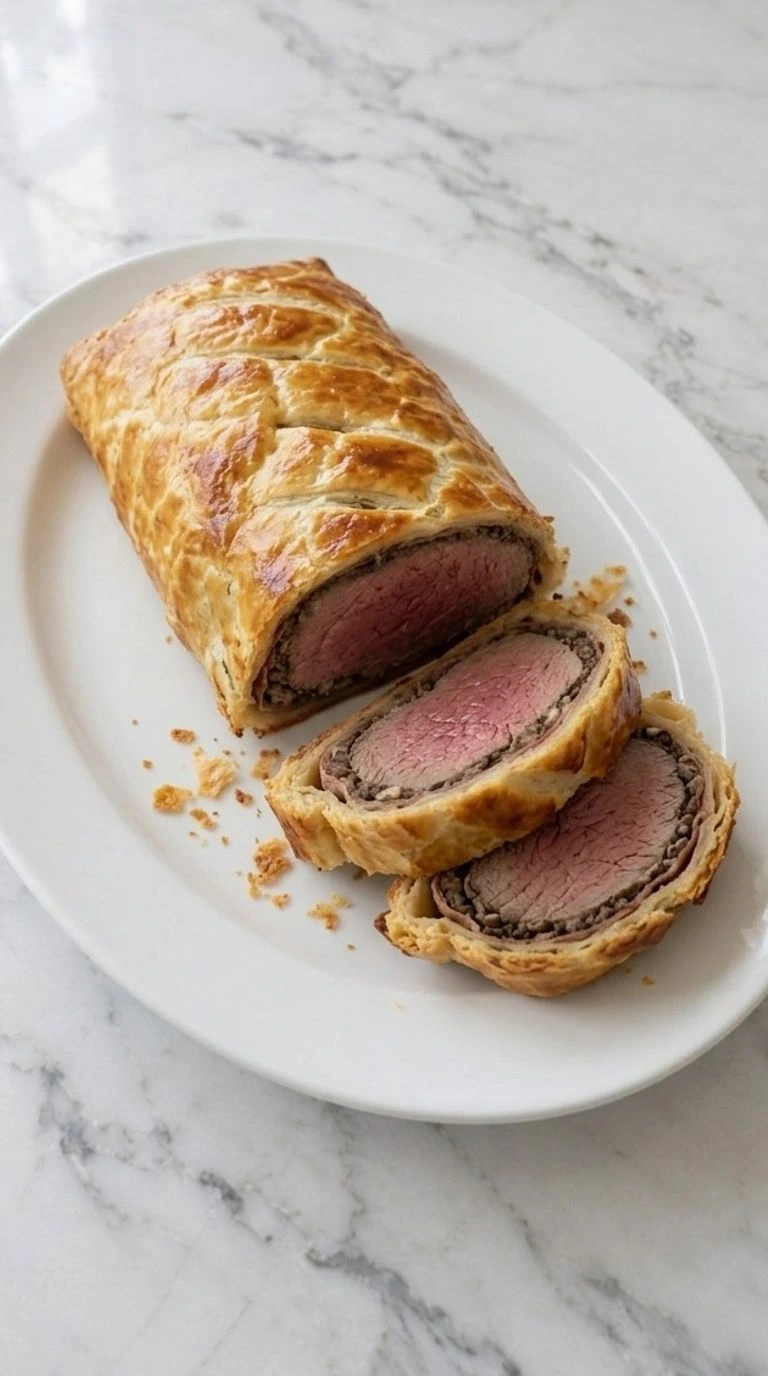
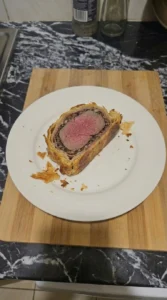
- Move the baked Wellington off the hot baking sheet and let it rest for 10 to 15 minutes. Don't cover it too tightly, or the trapped moisture will soften that beautiful, crispy crust. Leave the Wellington whole inside its pastry shell while it rests. Once it's ready, slice the roll into 4 thick portions and place one on a white plate. Take your time cutting, using gentle strokes to keep the pastry attached to the mushroom and beef layers. If a few crispy flakes break off, just leave them beside the slice. You'll see tender beef in the center, wrapped in a thin, dark mushroom layer and a delicate ring of prosciutto. The outside should stay golden and crisp. Don't rush the resting time! Cutting too soon can send the juices running onto the plate, while those extra minutes help everything settle.
Notes
For the best texture, serve Beef Wellington for Beginners soon after its 10 to 15-minute rest. Refrigerate leftovers within 2 hours of cooking in a shallow airtight container at 40°F or below. Keep them for 3 to 4 days. If you want to freeze portions, cool them promptly and wrap each piece in plastic wrap followed by a freezer-safe bag. Freeze at 0°F for up to 2 months for best quality. The beef freezes well, but the pastry loses some of its crispness. To reheat, thaw frozen slices overnight in the refrigerator and place them on a baking sheet at 325°F for about 15 to 25 minutes. Heat the center to 165°F for food safety. Don't add water or cover the pastry tightly because trapped steam makes it soft. Discard leftovers if they develop an unusual sour smell, slimy texture or visible mold. Food can also become unsafe without obvious spoilage signs.