Beef Wellington for Beginners
That first slice of Beef Wellington for Beginners is the part I care about most. I want crisp pastry that breaks into buttery flakes and beef that’s tender and pink inside. Not a soggy layer of dough stuck to a piece of meat. And getting all those layers right sounds harder than it should. I really thought it would be simple. Sear some beef and wrap it in mushrooms and pastry. But every little shortcut seemed to cause another problem.
The mushrooms held too much water and made the bottom soft. The pastry browned before the middle was warm enough. And when the beef went into the pastry while still hot, the butter in the dough started to melt. That’s why this easy beef wellington for beginners method gives each layer a little attention before everything goes into the oven. The good news is that you don’t need years of kitchen practice to pull this off. You need a good piece of beef and a bit of patience. The steps are clear.
You can even make the mushroom filling ahead of time. If you like beef dinners that feel special without too much fuss, our Crockpot Beef Short Ribs are another lovely choice for a family meal. For Christmas dinner, I like having one main dish that makes everyone stop talking for a second when it reaches the table. This beef Wellington does that. The outside turns deep golden and the mushroom layer gives every bite a rich flavor. And because most of the work happens before baking, you can get the table set while the pastry turns crisp.
Why This Recipe Works
The part that makes Beef Wellington for Beginners work is keeping moisture away from the dough. Cooking 12 ounces of cremini mushrooms until nearly dry stops their liquid from soaking the bottom crust. And wrapping the beef in prosciutto puts another layer between the meat and pastry.
That rich beef flavor is also what makes our Crockpot Beef Tips and Gravy such a good family dinner. Next comes the cold pastry and hot oven. Chilling the wrapped beef for 30 minutes and baking at 425°F helps the butter layers puff before they melt into the dough.
A thermometer keeps you from guessing when the beef has reached your preferred temperature.
Ingredients
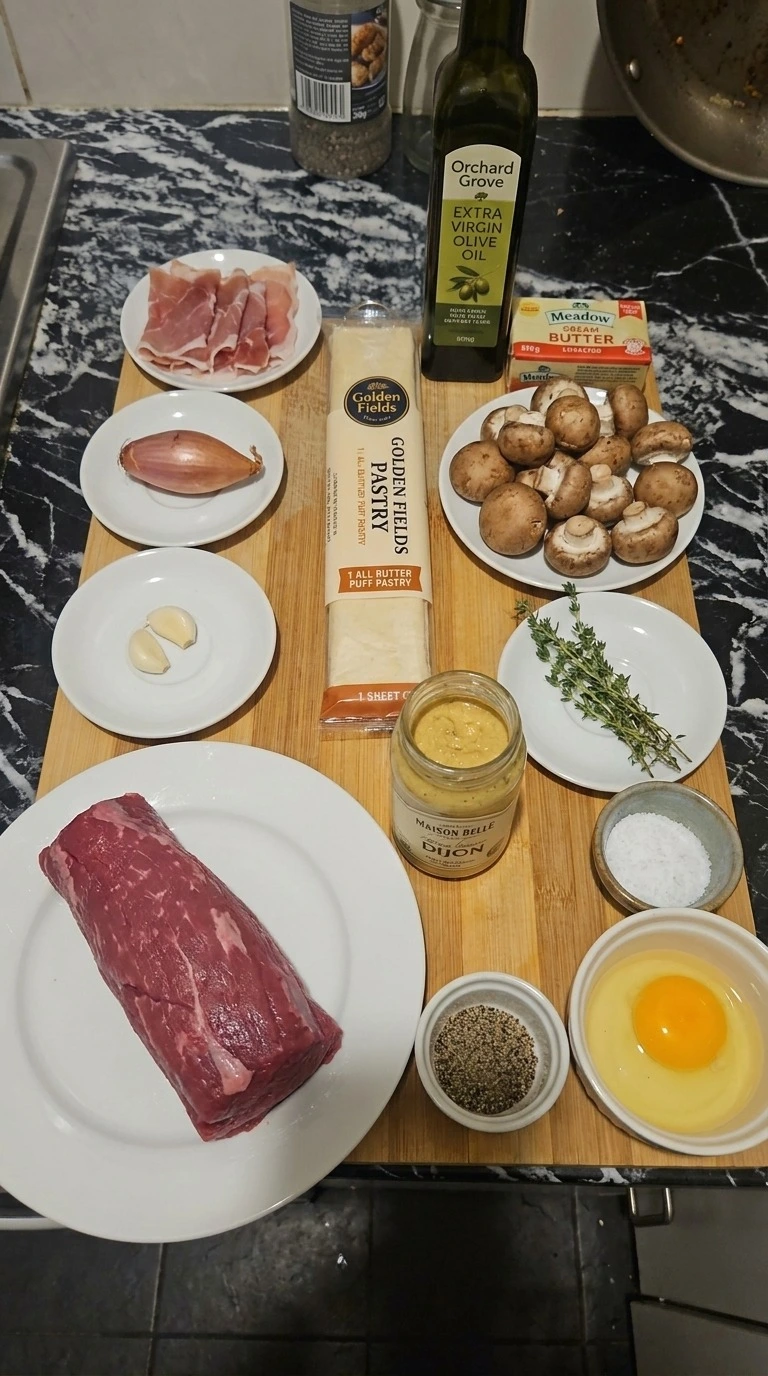
- Center-cut beef tenderloin: One evenly shaped piece about 8 inches long, trimmed of silverskin and patted dry for fast searing.
- Cremini mushrooms: Finely chopped and cooked until nearly dry to form a savory filling that protects the pastry.
- Prosciutto: Overlapped around the beef and mushroom filling to add saltiness and help hold the layers together.
- All-butter puff pastry: Thawed in the refrigerator but kept cold so the butter layers puff into a flaky golden crust.
- Dijon mustard: Brushed over the warm seared tenderloin to add a gentle tang beneath the mushroom layer.
- Shallot: Finely diced and softened before adding the mushrooms for a mild sweet onion flavor.
- Garlic cloves: Peeled and minced to add depth to the mushroom filling during the last minutes of cooking.
- Fresh thyme: Leaves stripped from the stems and stirred through the mushrooms for a light herbal flavor.
- Extra virgin olive oil: Used to sear the tenderloin quickly and help form a deep brown crust.
- Unsalted butter: Melted with the shallot and mushrooms to bring a rich flavor to the filling.
- Kosher salt: Sprinkled evenly over the tenderloin before searing to season the beef.
- Ground black pepper: Added to the beef before searing for gentle warmth and savory flavor.
- Large egg: Beaten and brushed over the cold pastry to create a glossy golden surface during baking.
Kitchen Equipment
- 10-inch heavy-bottomed skillet: A 10-inch cast-iron or heavy stainless steel skillet gives the beef room to sear and helps the mushrooms lose moisture evenly, while a thin pan can scorch the filling.
- Digital meat thermometer: A fast-reading probe with a narrow tip checks the center of the beef accurately, while a slow or poorly calibrated thermometer can lead to overcooking.
- Rimmed baking sheet: A sturdy 13 by 18-inch rimmed baking sheet supports the Wellington and catches any juices, while a thin sheet may warp and bake the pastry unevenly.
- Parchment paper: One sheet of oven-safe parchment rated for at least 425°F keeps the pastry from sticking, while paper with a lower heat rating shouldn’t be used at this temperature.
- Pastry brush: A 1-inch silicone pastry brush spreads a light egg coating without crushing the dough, while a stiff brush can drag and tear the surface.
- Rolling pin: A smooth 12-inch rolling pin helps make the puff pastry an even 1/8 inch thick, while uneven rolling can leave heavy folds that bake too slowly.
- Food-safe plastic wrap: A wide food-safe plastic wrap helps compress the mushroom and prosciutto layers into a firm roll for chilling, while narrow strips can leave gaps in the wrap.
- Flexible spatula: A heat-resistant silicone spatula helps spread and press the mushroom filling as it dries, while a rigid oversized tool can leave damp pockets behind.
- Wire cooling rack: A rack at least 10 inches long supports the Wellington during its rest and lets air reach the bottom crust, while resting on a solid tray can trap steam.
How to Make It
Step 1: Sear the beef tenderloin and brush with mustard
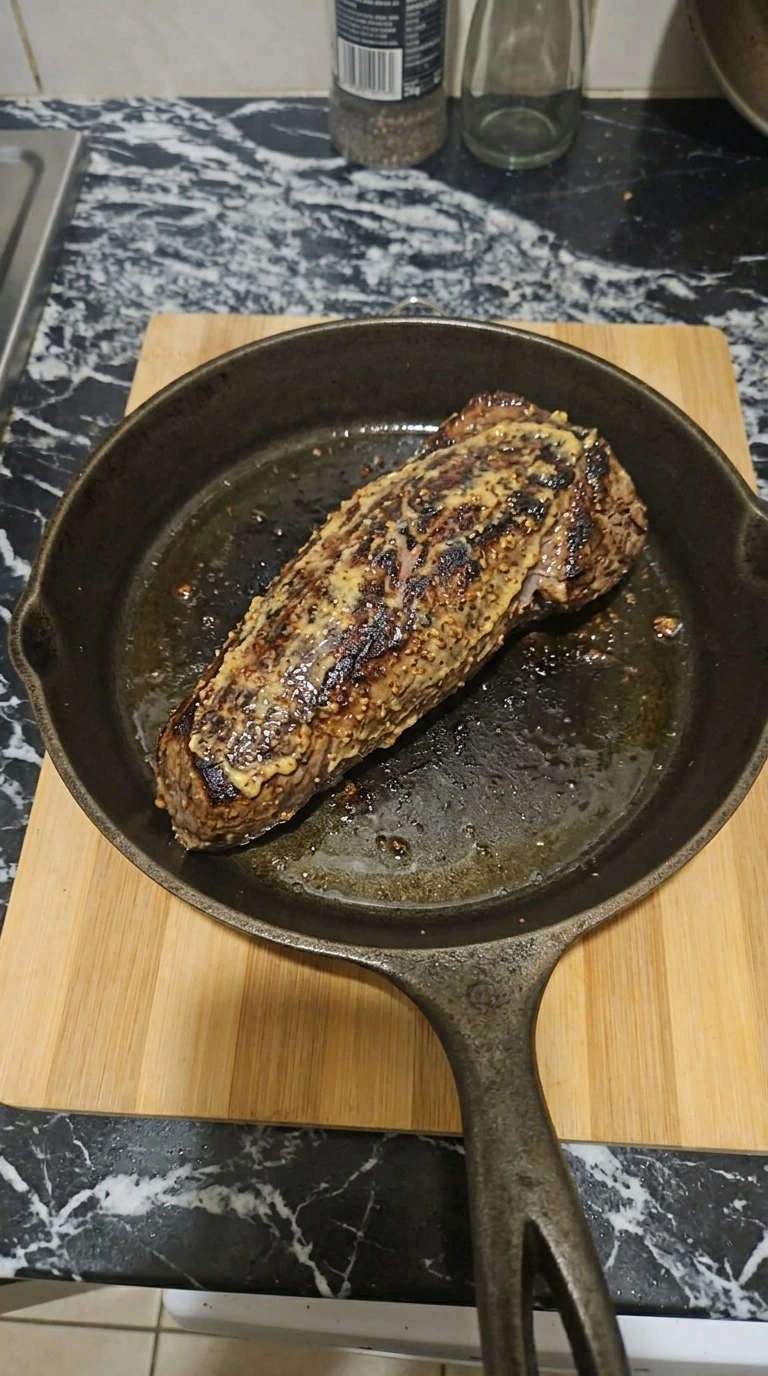
Pat the 1. 5-pound center-cut beef tenderloin dry, then season it with 3/4 teaspoon kosher salt and 1/2 teaspoon ground black pepper. Heat 1 tablespoon extra virgin olive oil in a 10-inch skillet over medium-high heat until the surface reaches about 400°F. Place the tenderloin in the hot skillet and sear each of its four long sides for 90 seconds to 2 minutes, turning as a nice crust develops.
Give the ends a quick 30-second sear each, too. Transfer the meat to a plate and brush 1 tablespoon Dijon mustard evenly over the warm surface. Let it cool for 15 minutes, then pop it in the fridge for another 15 minutes. You’re looking for a deep brown crust with a few darker spots.
The mustard should leave a thin, golden coating, not a thick, wet layer. Don’t let the tenderloin sit in the hot pan longer than necessary, or the center will start cooking too much. A quick sear builds plenty of flavor while keeping the middle from overcooking.
Tip: Choose a center-cut tenderloin with an even 2 to 2.5-inch thickness so all four servings cook at roughly the same rate.
Step 2: Cook the cremini mushroom filling until dry
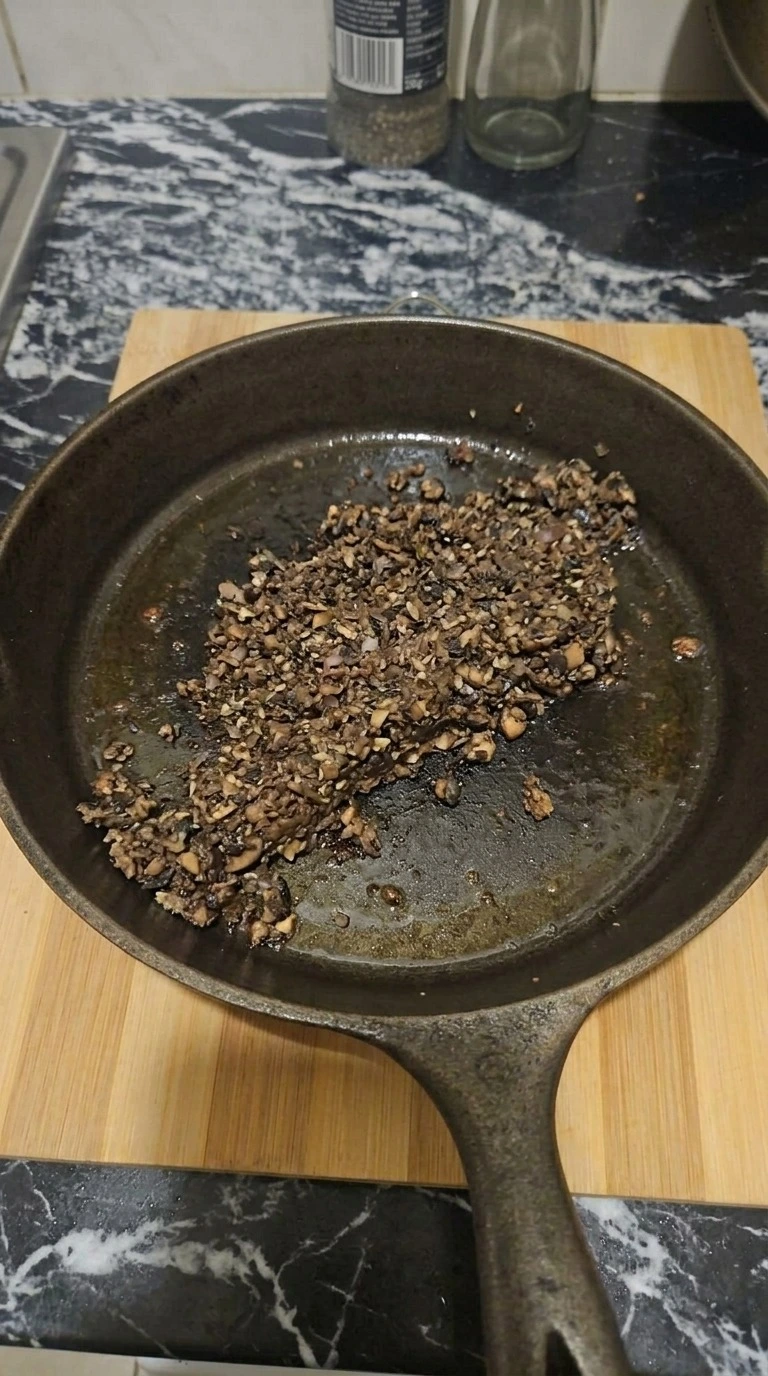
Finely chop 12 ounces of cremini mushrooms and 1 medium shallot. Mince 2 garlic cloves. In the same skillet used for the beef, melt 1 tablespoon unsalted butter over medium heat at about setting 5 on a 10-point dial. Add the shallot and stir for 2 minutes. Then add the mushrooms and spread them into an even layer.
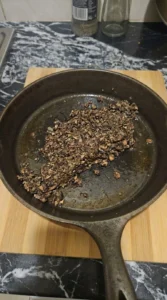
Cook for 10 to 14 minutes and stir every 2 minutes while their water cooks away. Mix in the garlic and 1 teaspoon fresh thyme leaves during the last 2 minutes. Use a spatula to press the mixture against the pan and check for excess moisture. At first the mushrooms will look pale and wet. Then they’ll shrink and turn a deep brown.
You’ll smell a rich earthy scent as the pan grows nearly dry. Stop when the mixture holds together but doesn’t leave liquid behind. Extra water would soak the pastry later. A dry mushroom filling protects the crisp pastry layers.
Tip: Spread the finished duxelles on a wide plate for 15 minutes so the center cools faster than it would in a deep bowl.
Step 3: Wrap the beef in prosciutto and mushroom duxelles
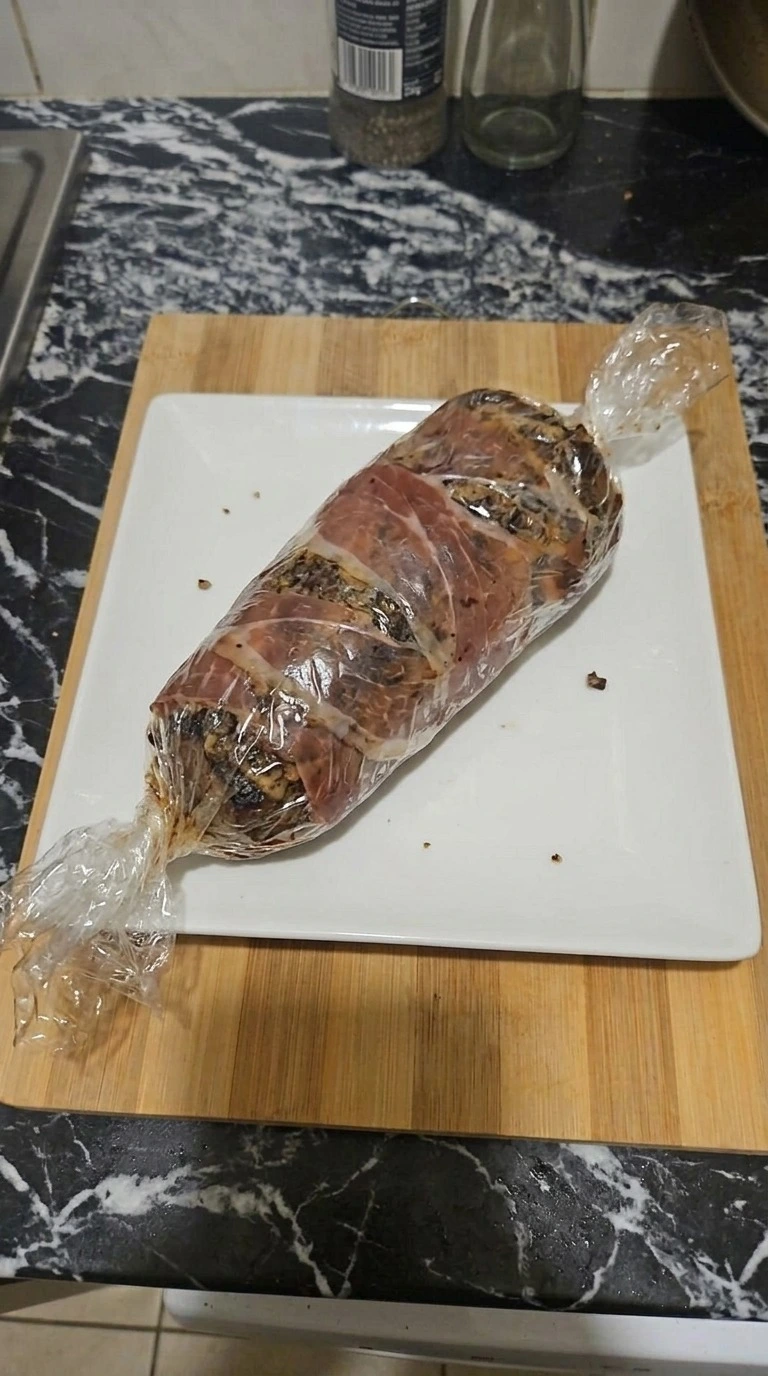
Lay out a large sheet of food-safe plastic wrap and arrange 6 thin slices of prosciutto in a slightly overlapping rectangle. Spread the cooled mushroom mixture over the prosciutto and leave a narrow border around the edges. Place the chilled beef along the center with the mustard coating still visible where the mushrooms haven’t touched it. Next lift the plastic wrap and roll the prosciutto around the beef.
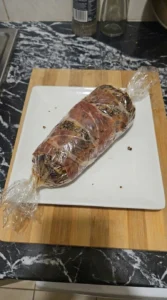
Pull it snug so the mushroom layer stays close to the meat. Twist the plastic ends to hold the roll firm and refrigerate for 30 minutes. You’ll have one thick log with prosciutto wrapped around the dark mushroom layer. The shape won’t be perfectly round.
That’s fine. Keep the wrap firm enough to hold together but don’t crush the filling. Tight wrapping helps prevent gaps beneath the pastry.
Tip: If your prosciutto slices tear, overlap the torn edges by about 1 inch instead of adding more slices and making the wrapping too salty.
Step 4: Enclose the chilled beef in puff pastry
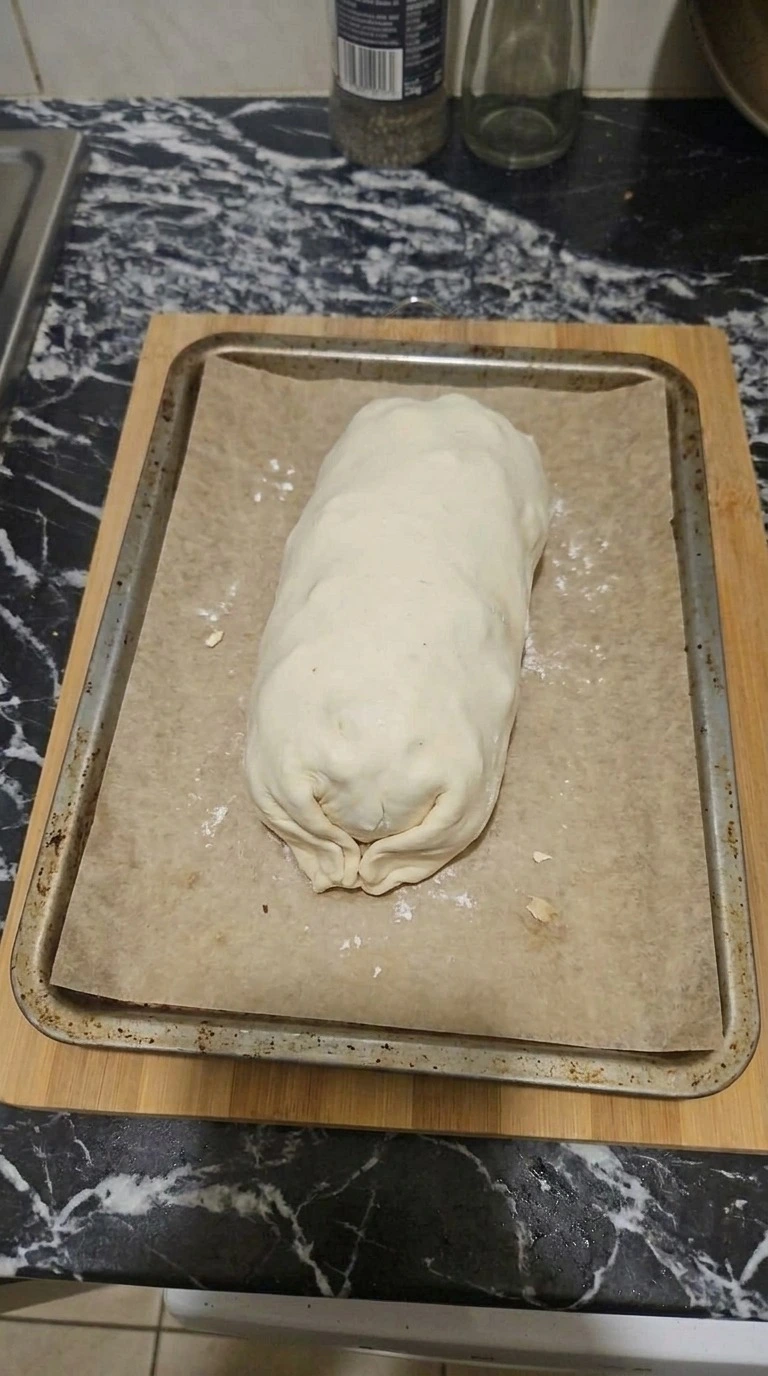
Unfold one 14-ounce sheet of thawed all-butter puff pastry and gently roll it into a rectangle about 12 by 14 inches and 1/8 inch thick. Take the chilled beef bundle out of its plastic wrap and place it in the center of the pastry. Fold the long sides over the meat, press the seam to seal, and tuck the short ends underneath. Trim off any excess dough so the bottom doesn’t get too thick.
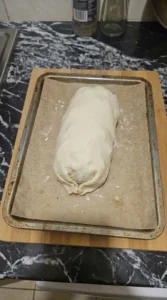
Transfer the wrapped bundle to a parchment-lined baking sheet, seam-side down. Pop it in the fridge for 20 minutes to let the pastry firm up before baking. Make sure the dough completely covers the meat. A few small bumps from the overlapping prosciutto?
That’s perfectly normal. Just don’t pull the pastry too tightly or it might thin out and tear. Keeping it cold helps maintain those buttery layers, giving you a beautifully flaky crust.
Tip: Keep a 1-inch overlap at the bottom seam and pinch it shut firmly. A thick stack of dough underneath may stay pale.
Step 5: Brush with egg and bake until golden
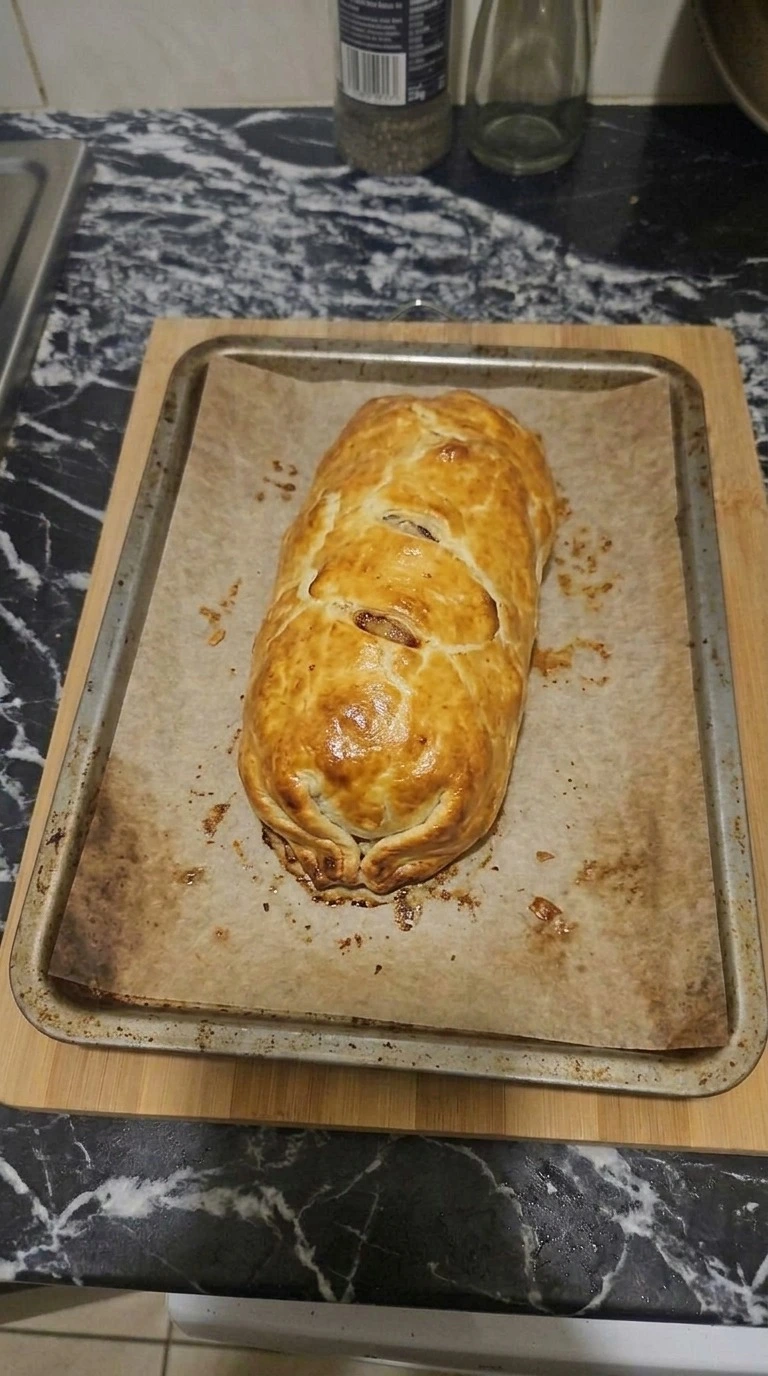
Preheat the oven to 425°F with a rack in the middle. Beat 1 large egg in a small bowl and brush a thin layer over the chilled pastry. Make 3 small shallow vents across the top without cutting into the beef. Then bake the Wellington on its parchment-lined sheet for about 30 to 40 minutes. Check the pastry after 25 minutes and use a probe thermometer inserted into the center of the beef to guide the finish.
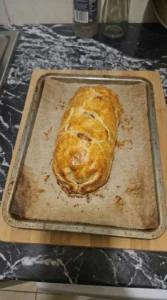
For medium-rare beef, many cooks aim for about 130 to 135°F after resting. For the USDA-recommended safe minimum, aim for 145°F followed by at least a 3-minute rest. Timing will vary with the meat’s thickness and starting temperature. Watch the pastry rise and turn a rich golden brown with darker amber patches near the folds. You’ll smell toasted butter when the crust develops.
(I prefer checking the center instead of guessing from the pastry color. ) If the surface darkens too fast, shield it loosely with foil. Baking at 425°F gives the pastry enough heat to rise and crisp.
Tip: Insert a slim probe through the side of the Wellington rather than the top to keep the golden pastry surface neat.
Step 6: Rest the Wellington and slice into four portions
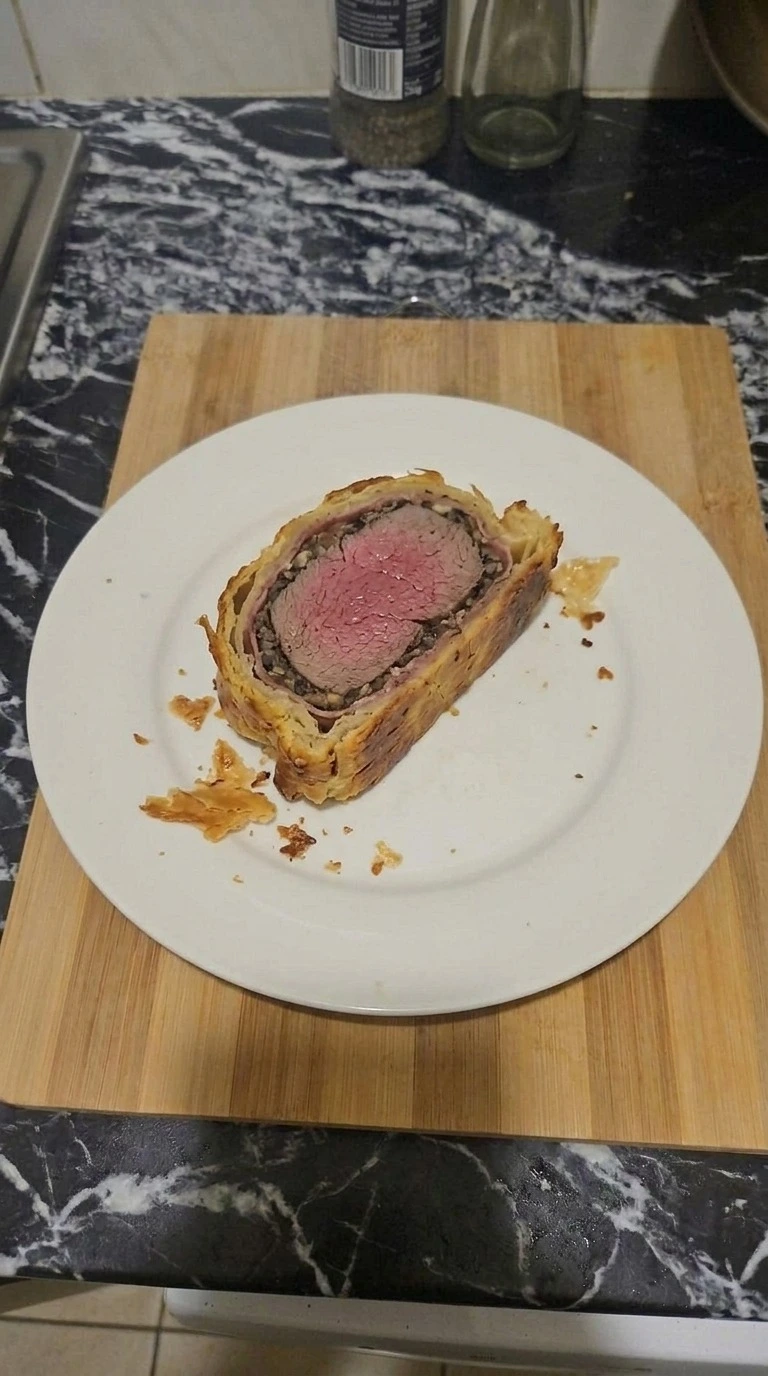
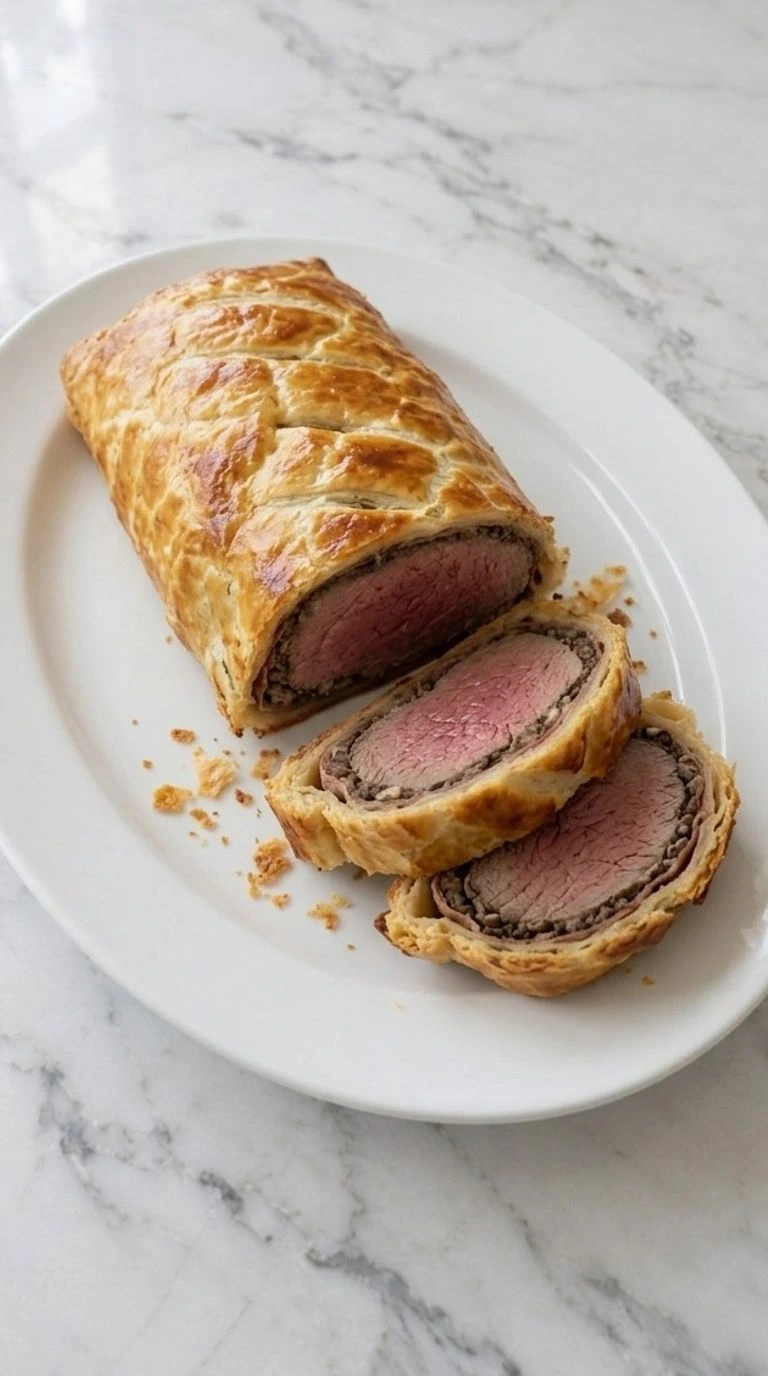
Move the baked Wellington off the hot baking sheet and let it rest for 10 to 15 minutes. Don’t cover it too tightly, or the trapped moisture will soften that beautiful, crispy crust. Leave the Wellington whole inside its pastry shell while it rests. Once it’s ready, slice the roll into 4 thick portions and place one on a white plate.
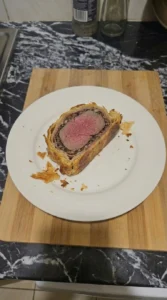
Take your time cutting, using gentle strokes to keep the pastry attached to the mushroom and beef layers. If a few crispy flakes break off, just leave them beside the slice. You’ll see tender beef in the center, wrapped in a thin, dark mushroom layer and a delicate ring of prosciutto. The outside should stay golden and crisp.
Don’t rush the resting time! Cutting too soon can send the juices running onto the plate, while those extra minutes help everything settle.
Tip: Warm the serving plates to about 100°F so each portion stays pleasant to eat without cooling the beef too fast.
Pro Tips
- Choose a center-cut beef tenderloin that’s close to 2 inches thick throughout. An even shape helps the middle reach your target temperature without overcooking the ends.
- Keep the mushroom pieces smaller than 1/4 inch so they form a smooth layer around the beef. Large chunks make the pastry harder to wrap.
- Check the mushrooms after 12 minutes by dragging a spatula across the skillet. The filling should leave no puddle of liquid behind.
- Keep the puff pastry below 40°F until you’re ready to wrap the beef. If it feels sticky or limp, refrigerate it for another 10 minutes.
- Leave about 1 inch of dough for the bottom seam and trim away thick folds. Too much overlapping pastry can leave a pale underside.
- Use a digital thermometer to check the center after 25 minutes of baking at 425°F. The beef’s thickness matters more than the timer.
- For a festive finish, use a thin layer of beaten egg over the pastry before baking. Excess wash can collect around the base and glue the layers together.
- Rest the Wellington on a rack for 10 to 15 minutes before cutting. Keep it uncovered so the crust doesn’t lose its crisp texture.
- For a stronger mushroom flavor, replace 4 ounces of the cremini mushrooms with finely chopped shiitake mushroom caps and cook the filling until dry.
- For a holiday herb version, add 1 teaspoon finely chopped fresh rosemary to the mushroom filling alongside the thyme for a more fragrant crust.
- For a mild mustard variation, replace the tablespoon of Dijon mustard with 1 tablespoon of whole-grain mustard for a slightly coarse texture and gentle tang.
- For individual Wellingtons, divide the 1.5-pound beef tenderloin into 4 equal portions and wrap each with one-quarter of the mushroom filling, prosciutto and pastry. Sear the pieces first and shorten the bake, checking each center with a thermometer.
Substitutions & Variations
- All-butter puff pastry: Use 1 sheet (14 ounces) of dairy-free puff pastry. Check that the package contains no butter or milk ingredients. The pastry may taste less rich and brown more evenly. Keep it cold and bake at 425°F.
- All-butter puff pastry: Use 14 ounces of gluten-free puff pastry. Choose a gluten-free pastry made for rolling and wrapping. It may crack more easily and rise less than wheat pastry. Roll it between parchment sheets and patch small cracks before baking. Check the package for baking temperature guidance.
- Large egg: Brush the pastry with 2 tablespoons of whole milk or unsweetened oat milk. This egg-free coating gives the pastry a lighter golden finish with less shine. Apply a thin layer so the pastry doesn’t become damp. For a richer coating, use 1 tablespoon melted unsalted butter instead.
- Prosciutto: Use 6 thin slices of smoked turkey or roast beef. Smoked turkey gives a milder flavor and roast beef adds a stronger beef taste. Both can hold more moisture than prosciutto, so pat the slices dry before wrapping. If you’d rather make a simpler beef dinner, try our Crockpot Beef Tips and Gravy.
- Cremini mushrooms: Use 12 ounces of white button mushrooms. White button mushrooms have a milder flavor but work with the same filling method. Chop them finely and cook for 12 to 16 minutes until their moisture evaporates. Don’t stop while the filling still looks wet.
Storage Instructions
For the best texture, serve Beef Wellington for Beginners soon after its 10 to 15-minute rest. Refrigerate leftovers within 2 hours of cooking in a shallow airtight container at 40°F or below. Keep them for 3 to 4 days. If you want to freeze portions, cool them promptly and wrap each piece in plastic wrap followed by a freezer-safe bag.
Freeze at 0°F for up to 2 months for best quality. The beef freezes well, but the pastry loses some of its crispness. To reheat, thaw frozen slices overnight in the refrigerator and place them on a baking sheet at 325°F for about 15 to 25 minutes. Heat the center to 165°F for food safety.
Don’t add water or cover the pastry tightly because trapped steam makes it soft. Discard leftovers if they develop an unusual sour smell, slimy texture or visible mold. Food can also become unsafe without obvious spoilage signs.
Beef Wellington for Beginners
Ingredients
Method
- Pat the 1.5-pound center-cut beef tenderloin dry, then season it with 3/4 teaspoon kosher salt and 1/2 teaspoon ground black pepper. Heat 1 tablespoon extra virgin olive oil in a 10-inch skillet over medium-high heat until the surface reaches about 400°F. Place the tenderloin in the hot skillet and sear each of its four long sides for 90 seconds to 2 minutes, turning as a nice crust develops. Give the ends a quick 30-second sear each, too. Transfer the meat to a plate and brush 1 tablespoon Dijon mustard evenly over the warm surface. Let it cool for 15 minutes, then pop it in the fridge for another 15 minutes. You’re looking for a deep brown crust with a few darker spots. The mustard should leave a thin, golden coating, not a thick, wet layer. Don’t let the tenderloin sit in the hot pan longer than necessary, or the center will start cooking too much. A quick sear builds plenty of flavor while keeping the middle from overcooking.
- Finely chop 12 ounces of cremini mushrooms and 1 medium shallot. Mince 2 garlic cloves. In the same skillet used for the beef, melt 1 tablespoon unsalted butter over medium heat at about setting 5 on a 10-point dial. Add the shallot and stir for 2 minutes. Then add the mushrooms and spread them into an even layer. Cook for 10 to 14 minutes and stir every 2 minutes while their water cooks away. Mix in the garlic and 1 teaspoon fresh thyme leaves during the last 2 minutes. Use a spatula to press the mixture against the pan and check for excess moisture. At first the mushrooms will look pale and wet. Then they’ll shrink and turn a deep brown. You’ll smell a rich earthy scent as the pan grows nearly dry. Stop when the mixture holds together but doesn’t leave liquid behind. Extra water would soak the pastry later. A dry mushroom filling protects the crisp pastry layers.
- Lay out a large sheet of food-safe plastic wrap and arrange 6 thin slices of prosciutto in a slightly overlapping rectangle. Spread the cooled mushroom mixture over the prosciutto and leave a narrow border around the edges. Place the chilled beef along the center with the mustard coating still visible where the mushrooms haven’t touched it. Next lift the plastic wrap and roll the prosciutto around the beef. Pull it snug so the mushroom layer stays close to the meat. Twist the plastic ends to hold the roll firm and refrigerate for 30 minutes. You’ll have one thick log with prosciutto wrapped around the dark mushroom layer. The shape won’t be perfectly round. That’s fine. Keep the wrap firm enough to hold together but don’t crush the filling. Tight wrapping helps prevent gaps beneath the pastry.
- Unfold one 14-ounce sheet of thawed all-butter puff pastry and gently roll it into a rectangle about 12 by 14 inches and 1/8 inch thick. Take the chilled beef bundle out of its plastic wrap and place it in the center of the pastry. Fold the long sides over the meat, press the seam to seal, and tuck the short ends underneath. Trim off any excess dough so the bottom doesn’t get too thick. Transfer the wrapped bundle to a parchment-lined baking sheet, seam-side down. Pop it in the fridge for 20 minutes to let the pastry firm up before baking. Make sure the dough completely covers the meat. A few small bumps from the overlapping prosciutto? That’s perfectly normal. Just don’t pull the pastry too tightly or it might thin out and tear. Keeping it cold helps maintain those buttery layers, giving you a beautifully flaky crust.
- Preheat the oven to 425°F with a rack in the middle. Beat 1 large egg in a small bowl and brush a thin layer over the chilled pastry. Make 3 small shallow vents across the top without cutting into the beef. Then bake the Wellington on its parchment-lined sheet for about 30 to 40 minutes. Check the pastry after 25 minutes and use a probe thermometer inserted into the center of the beef to guide the finish. For medium-rare beef, many cooks aim for about 130 to 135°F after resting. For the USDA-recommended safe minimum, aim for 145°F followed by at least a 3-minute rest. Timing will vary with the meat’s thickness and starting temperature. Watch the pastry rise and turn a rich golden brown with darker amber patches near the folds. You’ll smell toasted butter when the crust develops. (I prefer checking the center instead of guessing from the pastry color.) If the surface darkens too fast, shield it loosely with foil. Baking at 425°F gives the pastry enough heat to rise and crisp.
- Move the baked Wellington off the hot baking sheet and let it rest for 10 to 15 minutes. Don’t cover it too tightly, or the trapped moisture will soften that beautiful, crispy crust. Leave the Wellington whole inside its pastry shell while it rests. Once it’s ready, slice the roll into 4 thick portions and place one on a white plate. Take your time cutting, using gentle strokes to keep the pastry attached to the mushroom and beef layers. If a few crispy flakes break off, just leave them beside the slice. You’ll see tender beef in the center, wrapped in a thin, dark mushroom layer and a delicate ring of prosciutto. The outside should stay golden and crisp. Don’t rush the resting time! Cutting too soon can send the juices running onto the plate, while those extra minutes help everything settle.
Notes
Frequently Asked Questions
Yes. You can cook the mushroom filling and sear the beef up to 24 hours before baking. Cool both promptly and keep them covered in the refrigerator at 40°F or below. Assemble the Wellington up to 12 hours ahead and refrigerate it covered. Brush with egg just before baking at 425°F. A cold Wellington may need a few extra minutes.
The most common cause is moisture from the mushrooms or warm filling touching the dough. Cook the mushrooms for 10 to 14 minutes until they stop releasing liquid and cool them completely before wrapping. Chill the assembled Wellington for 20 minutes before baking at 425°F. If the pastry still feels soft underneath, check that you haven’t left thick folds along the bottom seam.
For medium-rare beef, many cooks aim for a final temperature of 130 to 135°F after resting. However, the USDA recommends cooking whole beef cuts to at least 145°F and resting them for 3 minutes. Insert a digital thermometer into the thickest part of the tenderloin. Start checking after 25 minutes in a 425°F oven because the beef’s thickness and starting temperature affect the result.
Yes. Replace the 6 prosciutto slices with 6 thin slices of smoked turkey or roast beef. Pat them dry and overlap them around the mushroom mixture so the filling stays close to the beef. The flavor will be milder and the pastry may absorb more moisture. You can also leave the cured meat out, but the mushrooms must be especially dry.
For eight servings, make two separate Wellingtons using two 1.5-pound center-cut beef tenderloins. Double the mushrooms, prosciutto, pastry and remaining ingredients. Place the pastries on separate baking sheets with at least 2 inches between them and rotate the sheets halfway through baking. Check each tenderloin independently with a thermometer because the two pieces may finish at different times.
Roasted carrots, green beans and mashed Yukon Gold potatoes all work well with the rich pastry and beef. Roast the carrots at 400°F for about 25 to 35 minutes while the Wellington is resting or before it goes into the oven. For a festive table, add our Christmas Fruit Salad as a fresh side. Its fruit adds a welcome contrast to the buttery main dish.
Yes, although freezing softens the pastry and changes its flaky texture. Freeze fully cooled portions in airtight wrapping for up to 2 months for best quality. Thaw them overnight in the refrigerator. Reheat on a baking sheet at 325°F until the center reaches 165°F, which generally takes 15 to 25 minutes depending on thickness. Avoid the microwave because it makes the crust soft.
Final Thoughts
That golden crust makes the effort worthwhile! Beef Wellington for Beginners keeps the classic British-style layers with tender beef, rich mushroom duxelles and buttery puff pastry. No complicated sauce or fancy decorations.
Just a few careful steps and a little patience. The first time I cut into a homemade Wellington and saw the pink beef inside, I knew it was a dish I’d want to make again. This beef wellington for beginners recipe makes 4 generous portions and gives you a festive centerpiece without the guesswork.
For another holiday meal, try our Crockpot Beef Short Ribs. Make this christmas beef wellington for beginners recipe and share a photo of your first slice. The same batch covers easy beef wellington for beginners without a single change.
Beef Wellington is often linked to Arthur Wellesley, the first Duke of Wellington, but historians haven’t confirmed that the dish was named after him. What we do know is that wrapping meat in pastry has a much longer history in European cooking. The mushroom filling used in many modern versions is called duxelles, a French mixture of finely chopped mushrooms cooked until their moisture evaporates.