Crockpot Breakfast Casserole
Busy mornings become much easier with this Crockpot Breakfast Casserole made with shredded hashbrowns, eggs, sausage and melted cheese. Layer everything in the slow cooker and wake up to a warm breakfast casserole that feels special without extra work. Hi!
Meet your new favorite breakfast casserole with hashbrowns, a hearty slow cooker dish that is so filling, so simple, so flavorful and also perfect for sharing. If you enjoy slow cooker comfort meals, our Crockpot Chicken Tater Tot Casserole has that same family-style appeal. That’s right.
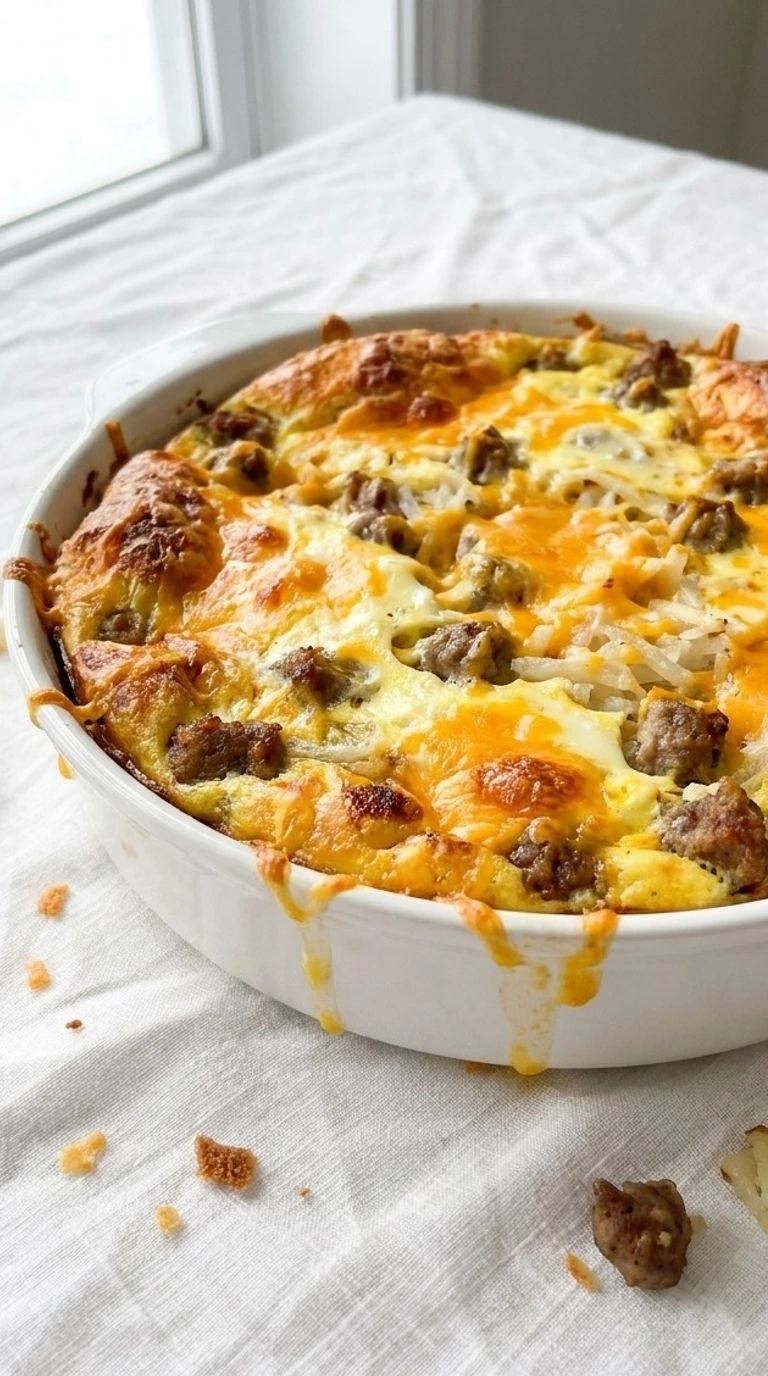
We’re letting the humble hashbrown shine here, and it brings the soft center and golden edges this morning meal needs. This overnight breakfast casserole style recipe gives you more time to enjoy your day while breakfast cooks.
Why This Recipe Works
The slow cooker works because the eggs set gently around 200°F while the hashbrowns absorb the savory sausage flavor.
Browning the sausage first for 8 to 10 minutes removes extra grease and adds deeper flavor.
Using shredded russet hashbrowns creates small spaces for the egg mixture to settle, which keeps the texture balanced.
Ingredients
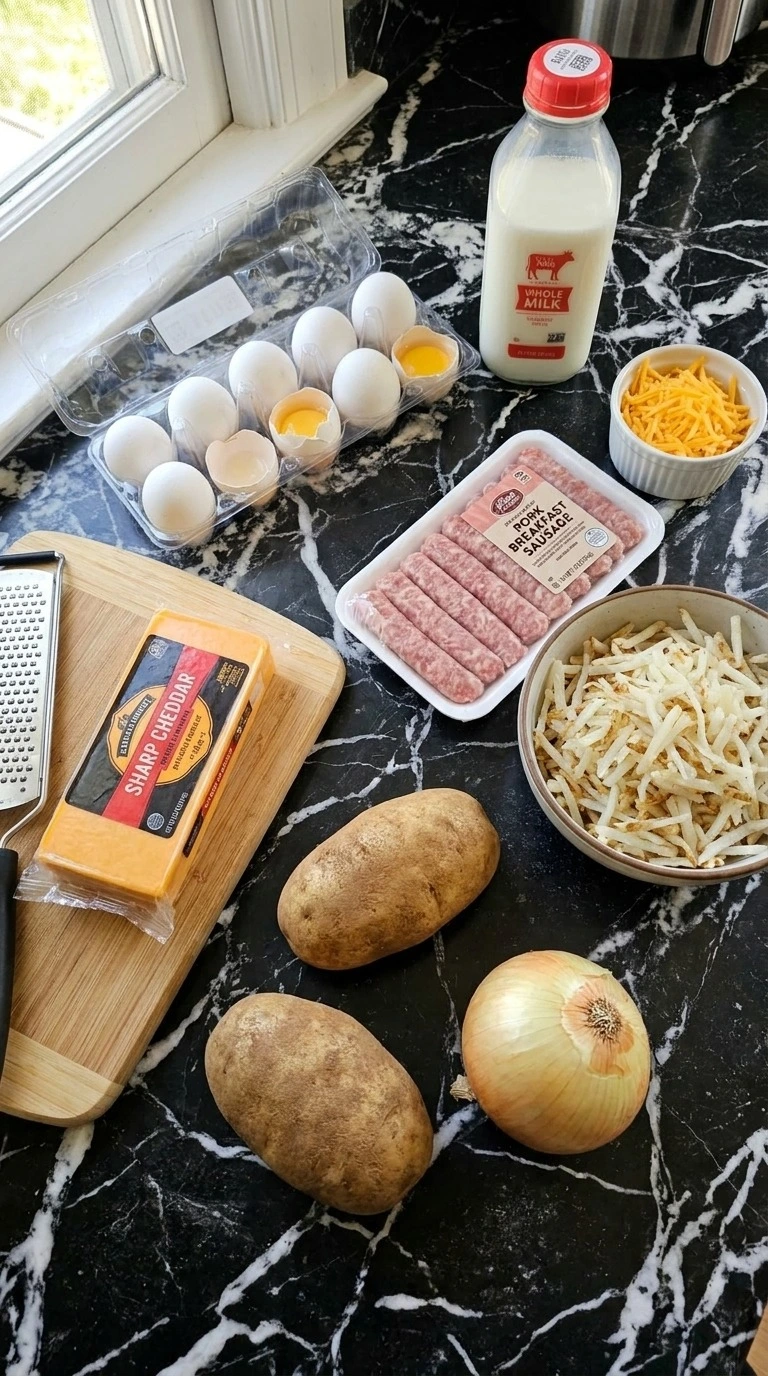
- pork breakfast sausage: Browned and broken into small pieces to add savory flavor and richness.
- russet hashbrowns: Shredded and used as the hearty base layer for the casserole.
- large eggs: Whisked to create the soft protein-rich filling.
- whole milk: Mixed with eggs to create a tender texture.
- sharp cheddar: Shredded and layered for melted cheese flavor.
- yellow onion: Diced and softened with sausage for a sweet savory note.
Kitchen Equipment
- 6-quart slow cooker: A 6-quart slow cooker fits the casserole layers evenly and helps steady heat reach the center, while a smaller cooker can make the egg layer too thick and slow to set.
- Large mixing bowl: A large bowl gives enough space to whisk eggs and milk without spills, and a deeper bowl works better than a shallow one for combining ingredients.
- Skillet: A heavy skillet browns sausage evenly and reduces excess moisture, while a thin pan may create hot spots that burn small pieces.
How to Make It
Step 1: Brown the breakfast sausage and slice the vegetables

Cook the pork breakfast sausage pieces in a skillet at medium-high heat until the pan reaches about 400°F equivalent and brown the meat for 8 to 10 minutes. Break it apart with a wooden spoon in short presses, then fold in the diced yellow onion for the final 3 minutes. (I tried adding raw sausage once.
The casserole released too much grease, so browning first fixed the texture. ) You’ll see deep golden sausage bits and soft onion pieces with a savory smell. Don’t rush it.
Miss this window and excess fat can make the eggs watery. Browning first builds flavor while removing extra moisture.
Tip: Drain the sausage well for 2 minutes before layering because extra grease can soften the hashbrowns too much.
Step 2: Layer the hashbrowns sausage and cheese mixture
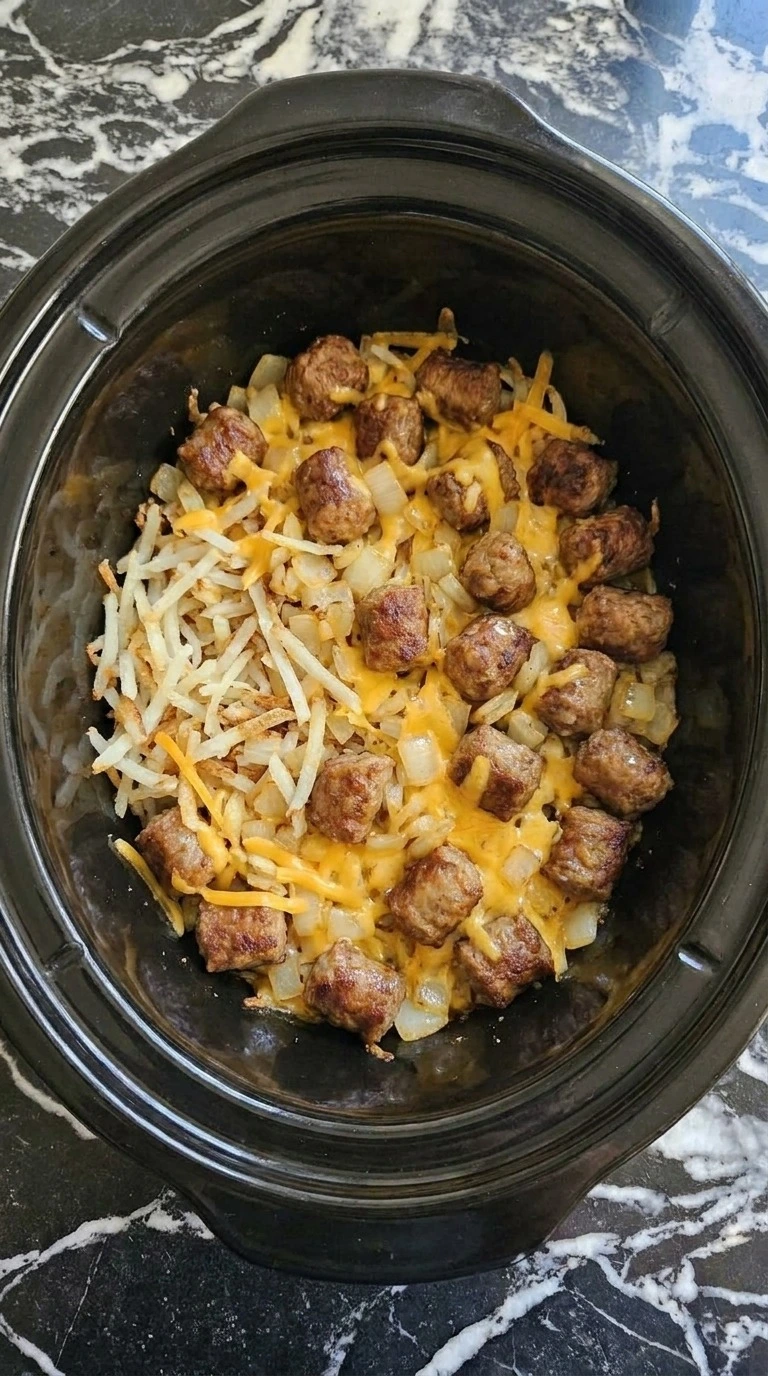
Spread shredded russet hashbrowns in a slow cooker in loose layers, then add browned pork breakfast sausage, diced yellow onion and shredded sharp cheddar. Whisk the eggs and whole milk for 2 to 3 minutes with a fork until blended, then pour the mixture evenly over the layers.
The temperature stays at room level during assembly and the layering takes about 10 minutes. The hashbrowns shift into soft overlapping layers while the egg mixture settles between the pieces.
You’ll notice a creamy yellow mixture around the edges. Skip the even pour and some sections may stay dry.
Tip: Use shredded russet hashbrowns instead of watery frozen potatoes because they hold the egg mixture better during slow cooking.
Step 3: Slow cook the casserole until the center sets
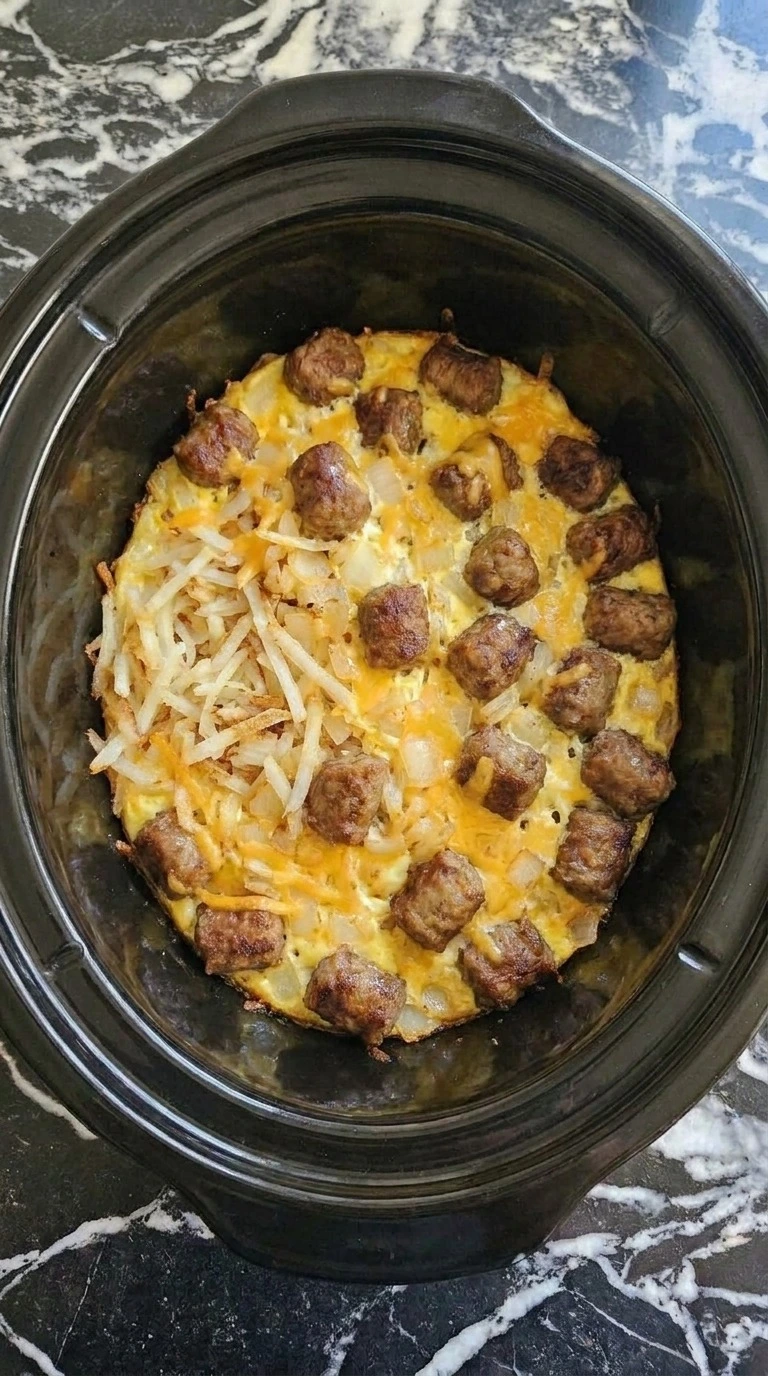
Cook the layered casserole on low heat, about 200°F inside the slow cooker, for 6 to 7 hours until the eggs set. Keep the lid closed and avoid stirring because the layers need time to firm. Check near hour 6 by gently pressing the center with a spoon to test the structure.
The top turns lightly golden and the edges become firmer while the middle stays tender. You’ll smell the melted cheddar and sausage blend together. Open the lid too often and the heat drops, which delays setting.
Slow heat lets the egg proteins set evenly without drying the edges.
Tip: Start this recipe at night for a true overnight breakfast casserole that finishes close to morning serving time.
Step 4: Slice and serve the finished casserole portion
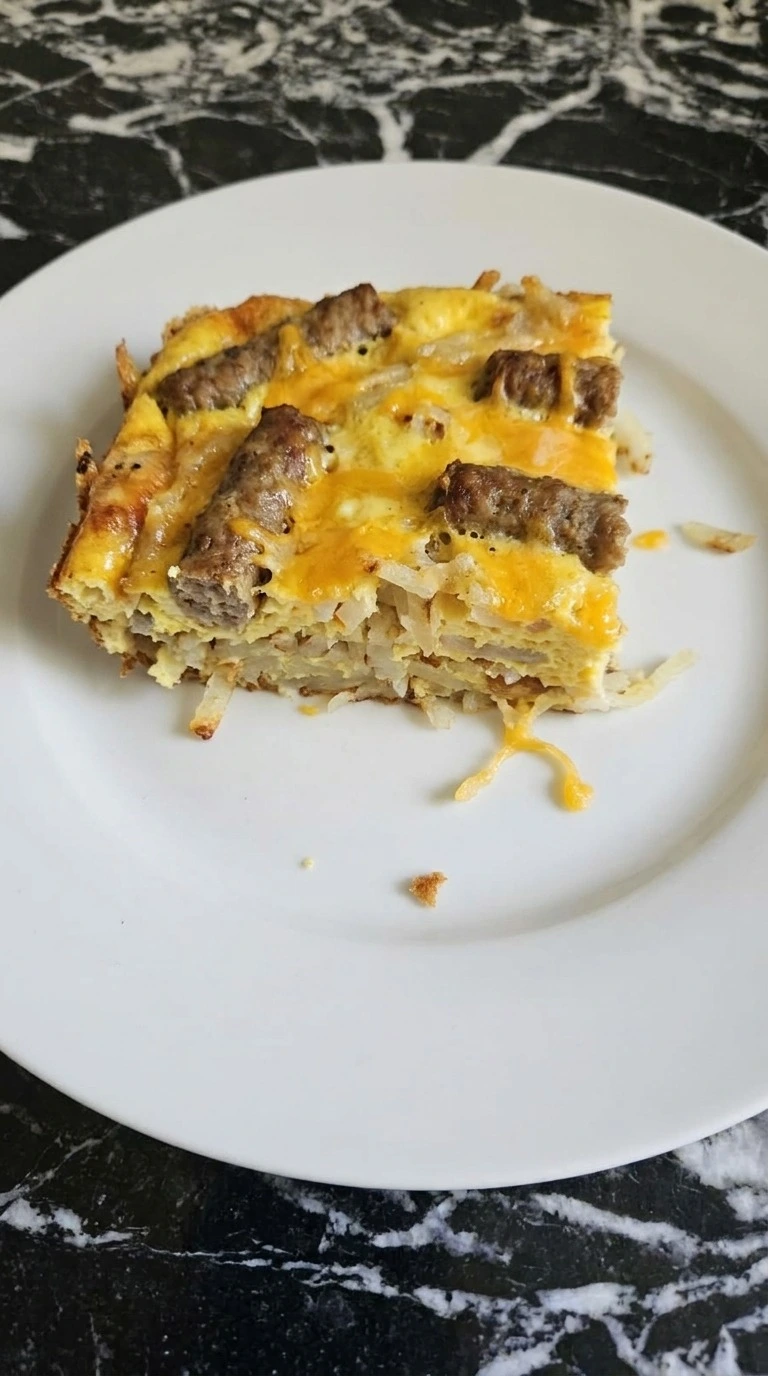
Rest the casserole for 15 minutes after cooking at about 200°F slow cooker heat, then cut a portion with a sharp knife. Lift one serving carefully and place it on a plate while keeping the layers together. (My first batch was served immediately and the center slid apart.
The short rest made the slices hold. ) The slice shows melted cheese pockets, tender eggs and golden hashbrown edges. The smell stays rich and savory.
Skip the rest and the filling may separate. Resting gives the proteins time to hold the layers.
Tip: Add fresh chopped green onions after slicing for a bright finish without changing the cooked texture.
Pro Tips
- Brown the pork breakfast sausage for 8 to 10 minutes until deep golden before adding it to the casserole because the extra flavor comes from those browned edges.
- Choose frozen shredded russet hashbrowns that contain less added water, and thaw them for 15 minutes if you want a firmer slice after cooking.
- Grease the slow cooker lightly before adding layers because a thin coating helps the edges release after the 15-minute resting period.
- Keep the lid closed during the 6 to 7 hour low cook because every opening can add about 15 minutes to the total cooking time.
- Avoid adding extra milk beyond 1 cup because too much liquid can stop the egg layer from setting around the center.
- Add 1/2 teaspoon smoked paprika with the eggs for a deeper flavor note that pairs well with the sausage.
- Let the casserole sit for exactly 15 minutes before cutting so the layers stay together instead of sliding apart.
- Use sharp cheddar aged for stronger flavor because 2 cups gives more taste without needing extra salt.
- Add 1 cup diced bell peppers and 1/2 cup chopped mushrooms for a vegetable breakfast casserole with extra color and texture.
- Replace pork breakfast sausage with 1 pound cooked bacon pieces for a smoky version that works well for holiday brunch.
- Add 1 teaspoon garlic powder and 1/2 teaspoon crushed red pepper flakes for a spicy morning casserole with more warmth.
- Create a tater tot breakfast casserole by replacing shredded russet hashbrowns with 3 cups frozen tater tots arranged over the sausage layer.
Substitutions & Variations
- pork breakfast sausage: turkey breakfast sausage. Use the same 1 pound amount for a lighter flavor. The casserole becomes slightly leaner and less rich because turkey sausage has less fat.
- whole milk: unsweetened almond milk. Replace 1 cup of whole milk with 1 cup of almond milk. The texture will be a little less creamy, but the eggs will still set well.
- sharp cheddar: dairy-free cheddar alternative. Use 2 cups of dairy-free cheddar style shreds for a dairy-free version. The melt can be softer and less stretchy than regular cheese.
- russet hashbrowns: frozen diced potatoes. Use 3 cups of frozen diced potatoes instead of shredded hashbrowns. The texture becomes chunkier and may need 30 extra minutes of cooking time.
- whole milk: milk with vinegar. Mix 1 cup milk with 1 tablespoon vinegar and rest it for 5 minutes. This adds slight tang but won’t make the casserole as creamy as whole milk. For more slow cooker ideas, try our Crockpot Chicken and Rice Soup.
Storage Instructions
Keep leftover Crockpot Breakfast Casserole in an airtight glass container in the refrigerator for up to 4 days. You can freeze individual portions wrapped tightly in plastic wrap and placed in freezer bags for up to 2 months.
Reheat slices at 350°F for about 15 to 20 minutes and add a small splash of milk if the eggs seem dry. Discard leftovers if you notice sour smells, slimy texture or unusual color changes.
Crockpot Breakfast Casserole
Ingredients
Method
- Cook the pork breakfast sausage pieces in a skillet at medium-high heat until the pan reaches about 400°F equivalent and brown the meat for 8 to 10 minutes. Break it apart with a wooden spoon in short presses, then fold in the diced yellow onion for the final 3 minutes. (I tried adding raw sausage once. The casserole released too much grease, so browning first fixed the texture.) You’ll see deep golden sausage bits and soft onion pieces with a savory smell. Don’t rush it. Miss this window and excess fat can make the eggs watery. Browning first builds flavor while removing extra moisture.

- Spread shredded russet hashbrowns in a slow cooker in loose layers, then add browned pork breakfast sausage, diced yellow onion and shredded sharp cheddar. Whisk the eggs and whole milk for 2 to 3 minutes with a fork until blended, then pour the mixture evenly over the layers. The temperature stays at room level during assembly and the layering takes about 10 minutes. The hashbrowns shift into soft overlapping layers while the egg mixture settles between the pieces. You’ll notice a creamy yellow mixture around the edges. Skip the even pour and some sections may stay dry.

- Cook the layered casserole on low heat, about 200°F inside the slow cooker, for 6 to 7 hours until the eggs set. Keep the lid closed and avoid stirring because the layers need time to firm. Check near hour 6 by gently pressing the center with a spoon to test the structure. The top turns lightly golden and the edges become firmer while the middle stays tender. You’ll smell the melted cheddar and sausage blend together. Open the lid too often and the heat drops, which delays setting. Slow heat lets the egg proteins set evenly without drying the edges.

- Rest the casserole for 15 minutes after cooking at about 200°F slow cooker heat, then cut a portion with a sharp knife. Lift one serving carefully and place it on a plate while keeping the layers together. (My first batch was served immediately and the center slid apart. The short rest made the slices hold.) The slice shows melted cheese pockets, tender eggs and golden hashbrown edges. The smell stays rich and savory. Skip the rest and the filling may separate. Resting gives the proteins time to hold the layers.

Notes
Frequently Asked Questions
Yes, you can assemble the layers and cover the slow cooker insert for up to 12 hours in the refrigerator before cooking. Start the slow cooker within that time and cook on low for 6 to 7 hours until the center reaches a firm set texture.
Store leftover slices in a sealed container for up to 4 days in the refrigerator. Reheat individual portions at 350°F for about 15 minutes or until the center is warm again.
Yes, check that the pork breakfast sausage and hashbrowns are labeled gluten-free before using them. Most ingredients are naturally gluten-free, but packaged breakfast meats can contain added fillers.
A watery casserole usually comes from excess moisture in the potatoes or opening the lid often during cooking. Drain thawed hashbrowns well and keep the slow cooker covered for the full cooking period.
You can double the ingredients if you use a larger slow cooker with enough room for the layers. The cooking time may increase by 30 to 60 minutes, so check the center before serving.
Freeze cooled slices in freezer-safe containers for up to 2 months. Thaw overnight in the refrigerator and reheat at 350°F for 20 minutes until the middle is warm.
Final Thoughts
Starting the morning with this Crockpot Breakfast Casserole feels like having a family favorite waiting for you. It has layers of eggs, hashbrowns and cheese that make this breakfast casserole worth repeating. Makes 4 generous servings.
This version keeps the texture soft inside with golden edges from the slow cooking method. You can also explore our Crockpot Chicken Tater Tot Casserole for another comforting meal idea. Try this hashbrown breakfast casserole for your next gathering and share it with friends.
It works just as well when you are after tater tot breakfast casserole and overnight breakfast casserole.
Slow cooker breakfast casseroles became popular because they let families prepare warm morning meals while saving time before busy days.