Split Pea Soup
A chilly evening at my mother-in-law’s house changed the way I make Split Pea Soup. She had a big pot simmering on the stove and the whole kitchen smelled like thyme and sweet onions. I watched her taste the broth three times before the peas were even soft. That was her little trick. She didn’t wait until the end to see what needed fixing, and the result was so much better than the flat pea soup I’d made at home. Now this easy split pea soup is something I make whenever the fridge looks a little bare and I need dinner to stretch into the next day.
It doesn’t ask for fancy ingredients. Just dried peas and a few fresh vegetables. And if you like simple soups with that same home-cooked feel, my Potato Leek Soup is another one worth keeping around. Both turn basic ingredients into something that feels like a real meal. It took me three tries to get this green pea soup just right. My first batch had too much water and tasted thin even after an hour on the stove.
The next one was so thick that my spoon nearly stood up on its own. Then I learned to start with a measured amount of broth and let the peas break down at their own pace before adding a squeeze of lemon. That’s the version I’m sharing here. Thick but still spoonable. And full of the kind of flavor that makes you glad there’s another bowl left for tomorrow.
Why This Recipe Works
The reason Split Pea Soup gets so thick without cream is the starch inside the dried peas. At a gentle simmer around 195 to 205°F, the peas slowly absorb broth and break apart while their starch turns the liquid creamy.
Keep the pot at a slow bubble because a hard boil can dry out the bottom before the peas turn soft. Then the lemon goes in after the peas soften because adding acid too soon can slow their breakdown.
It’s a small detail that makes a real difference. If you enjoy soups that get their body from simple ingredients, try my Crockpot Ham and Bean Soup for another hearty bowl.
Ingredients
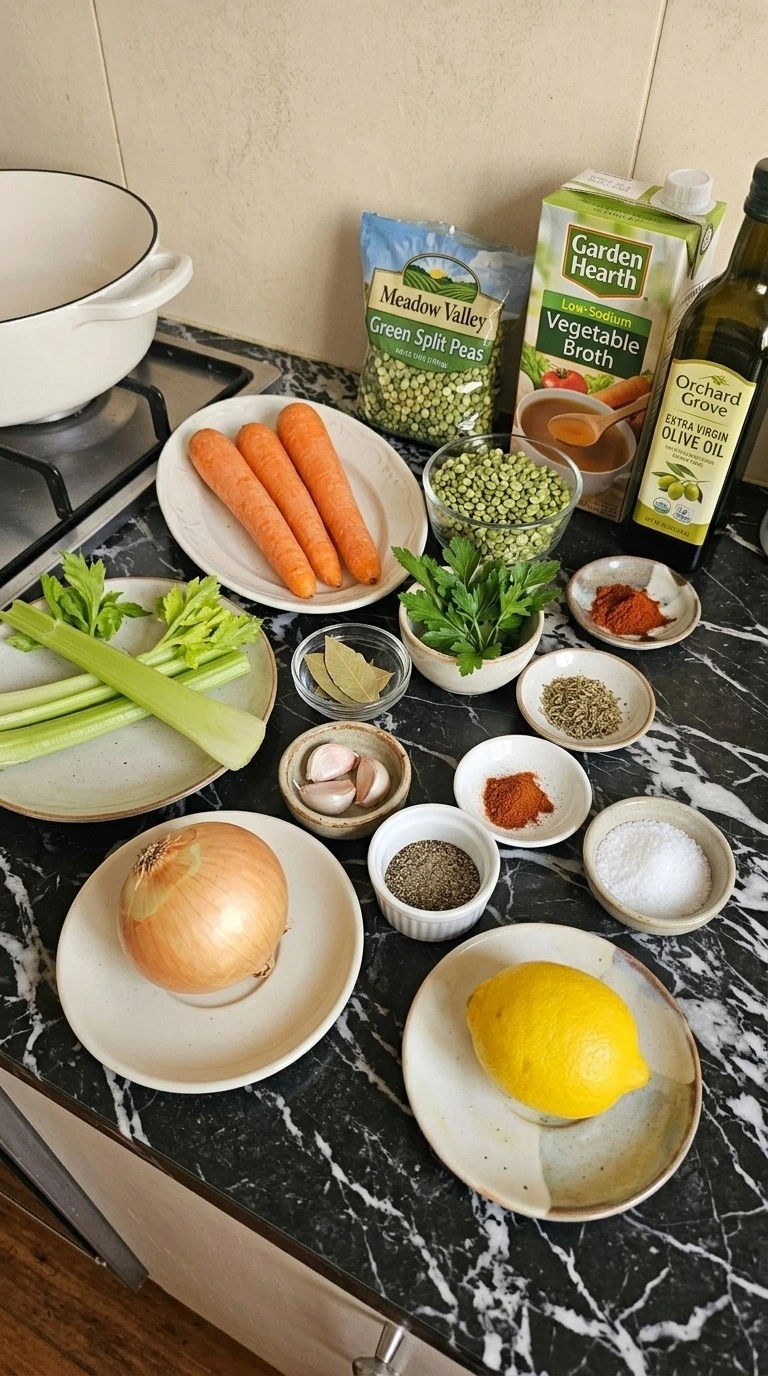
- dried green split peas: Sorted and rinsed under cold water. They soften during simmering and release starch that creates a thick soup without cream.
- yellow onion: Peeled and diced into 1/4-inch pieces. Adds a mild sweetness as it softens in olive oil.
- carrots: Peeled and cut into 1/4-inch half-moons. Add gentle sweetness and visible orange pieces to the soup.
- celery stalks: Trimmed and sliced into 1/4-inch pieces. Give the broth a fresh savory base.
- garlic cloves: Peeled and finely minced. Add savory depth when stirred into the softened vegetables.
- extra virgin olive oil: Use 1 tablespoon to soften the vegetables and reserve 1 tablespoon for a light finishing drizzle.
- low-sodium vegetable broth: Provides the liquid for simmering while letting you control the final salt level.
- dried bay leaf: Adds a mild herbal note during simmering. Remove it before serving.
- dried thyme: Adds an earthy herbal flavor that works well with green split peas.
- smoked paprika: Adds a gentle smoky note without using ham or bacon.
- ground black pepper: Adds mild warmth to the broth without overpowering the peas.
- kosher salt: Stir in after the peas soften and adjust to taste based on the saltiness of the broth.
- lemon: Juice enough to measure 1 tablespoon for the finished soup. The acidity brightens the earthy pea flavor.
- fresh flat-leaf parsley: Finely chopped just before serving. Adds fresh green flavor and a little contrast to the thick soup.
Kitchen Equipment
- 5 to 6-quart heavy-bottomed pot with lid: A heavy-bottomed 5 to 6-quart pot distributes heat evenly during the long simmer and its fitted lid controls moisture loss, while a thin pot can scorch the peas.
- 8-inch chef’s knife: A sharp 8-inch chef’s knife cuts the onion, carrots and celery into small pieces, while a dull blade tends to crush the vegetables and makes precise cuts harder.
- Large cutting board: A sturdy cutting board at least 12 by 18 inches gives the vegetables enough space and a nonslip base helps prevent the board from moving during chopping.
- Fine-mesh colander: A fine-mesh colander holds all 1 1/2 cups of dried green split peas during rinsing, while a wide-holed strainer can let the smaller pieces escape.
- Long wooden spoon: A wooden spoon at least 12 inches long reaches the bottom of a deep pot so you can scrape away settling peas, while a short spoon makes stirring harder.
- Liquid measuring cup: A clear liquid measuring cup with readable cup markings helps measure the 5 cups of broth accurately, while estimating the liquid can make the soup too thin.
- Soup ladle: A ladle holding about 1/2 cup makes it easier to divide the thick soup between four bowls, while a shallow serving spoon spills more during portioning.
How to Make It
Step 1: Dice the vegetables and rinse the green split peas
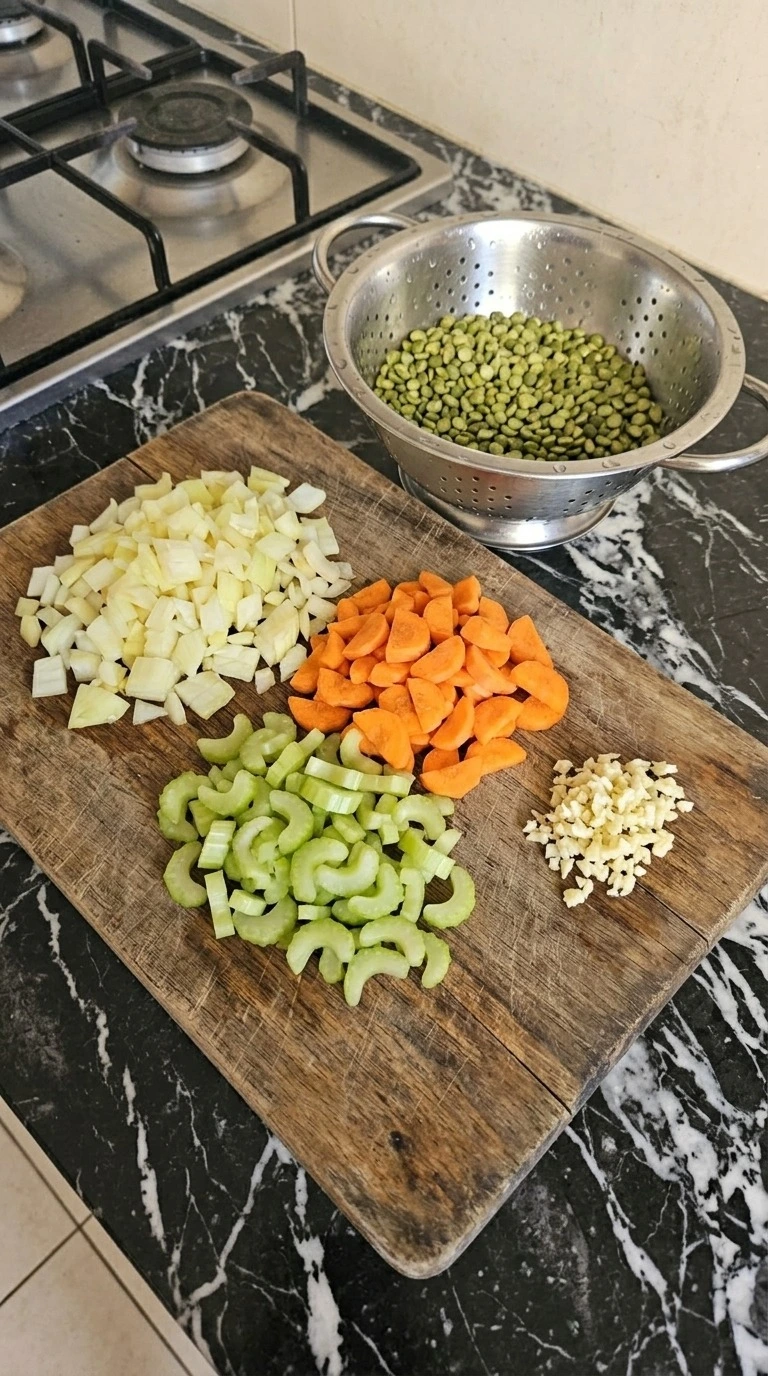
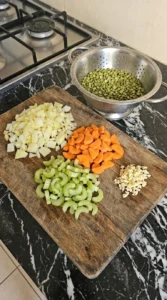
Peel 1 large yellow onion and cut it into 1/4-inch pieces. Then peel 3 medium carrots and slice them into uneven but fairly small 1/4-inch half-moons. Slice 2 celery stalks into 1/4-inch pieces and mince 3 garlic cloves. Keep the garlic separate because it goes into the pot later.
Next, pour 1 1/2 cups of dried green split peas into a colander and rinse them under cold running water at about 60°F for 1 to 2 minutes. Move the peas around with your fingers and pick out any small stones or damaged bits. Drain well. Don’t soak them.
The rinse water should run mostly clear and the peas should still feel firm with no slippery coating. If you skip sorting them, a tiny stone can end up in someone’s bowl. Keeping the vegetable pieces small also helps them soften at the same rate. Even cuts help the vegetables soften without falling apart too soon.
Tip: Choose split peas from a recently opened bag when possible. Older dried peas can take 20 to 30 minutes longer to soften.
Step 2: Soften the onion, carrots and celery
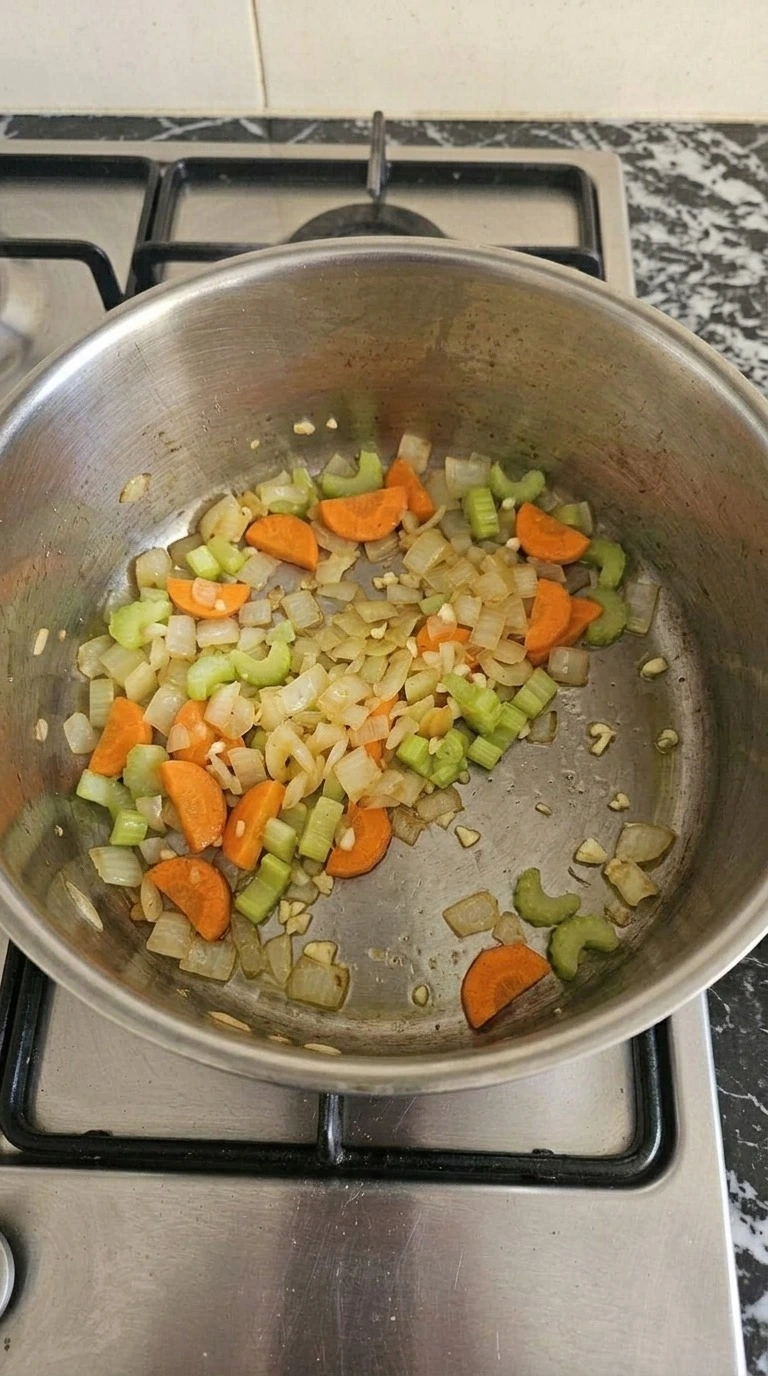
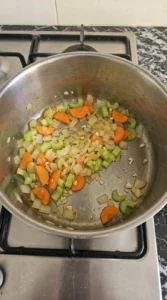
Set a heavy-bottomed 5 to 6-quart pot over medium heat at about 5 on a 10-setting stove dial. Add 1 tablespoon of extra virgin olive oil and then tip in the diced yellow onion, sliced carrots and sliced celery. Stir with a wooden spoon until the vegetables have a thin coating of oil. Cook for 7 to 9 minutes and stir every 90 seconds so the edges don’t catch.
Once the onion turns soft, add the 3 minced garlic cloves and stir for another 45 to 60 seconds. Keep the heat steady rather than turning it up to rush the vegetables. You’ll notice the onion turning clear around the edges and the celery taking on a softer green color. The carrots should still hold their shape.
A sweet smell will replace the sharp onion scent. But if the garlic goes dark brown, you’ve gone too far. Gentle heat draws out sweetness without scorching the garlic.
Tip: If the vegetables begin sticking before minute 7, add 1 tablespoon of the measured vegetable broth rather than extra oil to loosen them.
Step 3: Simmer the green peas until thick and tender
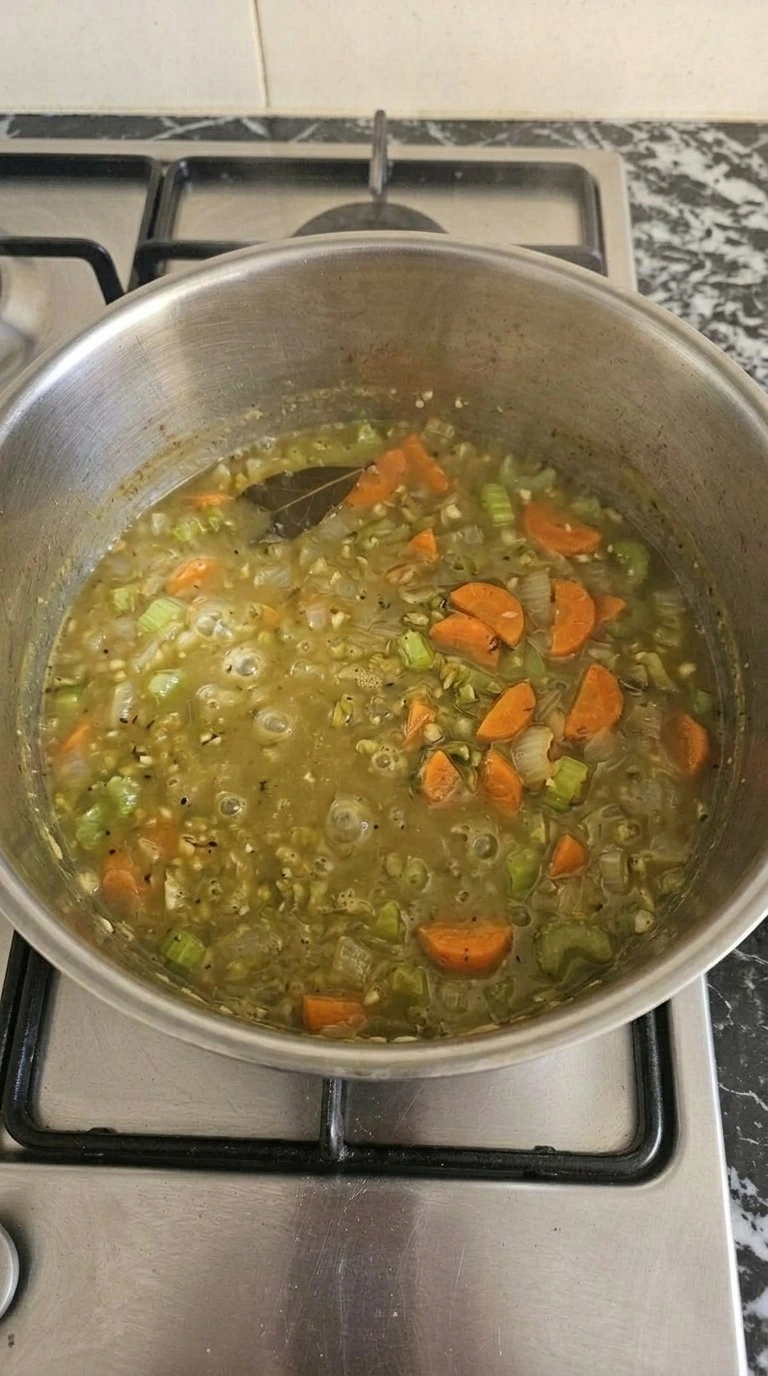
Add the rinsed 1 1/2 cups of dried green split peas to the softened vegetables and stir twice to spread them through the pot. Pour in 5 cups of low-sodium vegetable broth and add 1 dried bay leaf, 1 teaspoon of dried thyme, 1/4 teaspoon of smoked paprika and 1/4 teaspoon of ground black pepper. Bring the liquid to a steady boil near 212°F over medium-high heat. Then lower the heat until the soup holds a gentle simmer around 195 to 205°F.
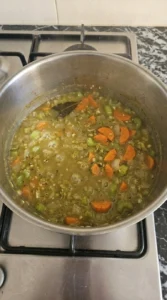
Leave the lid slightly ajar and cook for 50 to 60 minutes. Stir every 10 minutes and scrape the bottom to stop the peas from sticking. After about 35 minutes, some peas will split open and the broth will look cloudy green. By minute 50 the mixture should be much thicker and the peas should crush easily against a spoon.
I once let the pot boil too hard and lost too much liquid before the peas softened. Don’t rush it. A gentle simmer lets the pea starch thicken the broth without scorching.
Tip: If the soup gets too thick before the peas soften, add 1/4 cup of hot water at a time and keep simmering.
Step 4: Finish with lemon and serve the thick soup
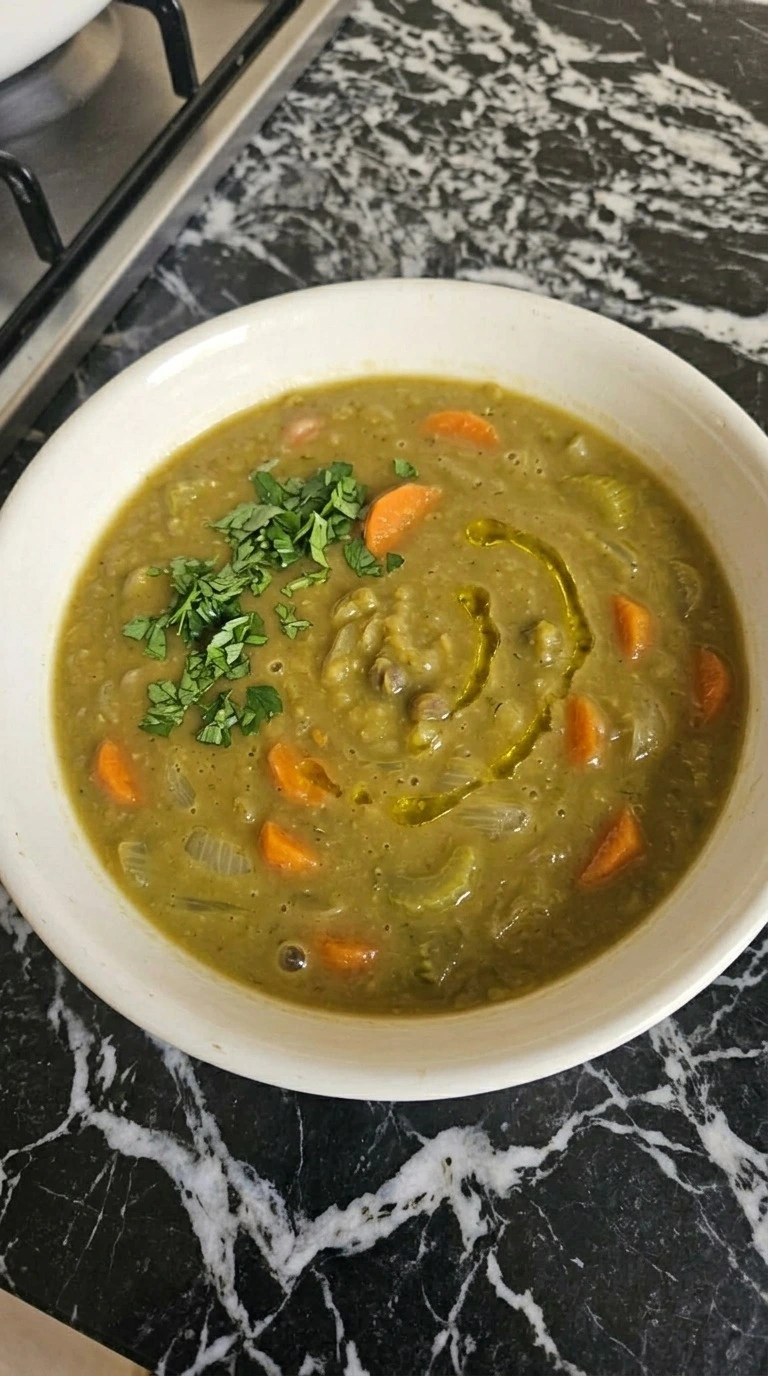
Turn off the heat and remove the bay leaf. Stir in 1 tablespoon of fresh lemon juice and 3/4 teaspoon of kosher salt. Taste a small spoonful and add more salt only if needed. Let the soup stand uncovered for 5 minutes as it cools from the simmer to about 180°F.
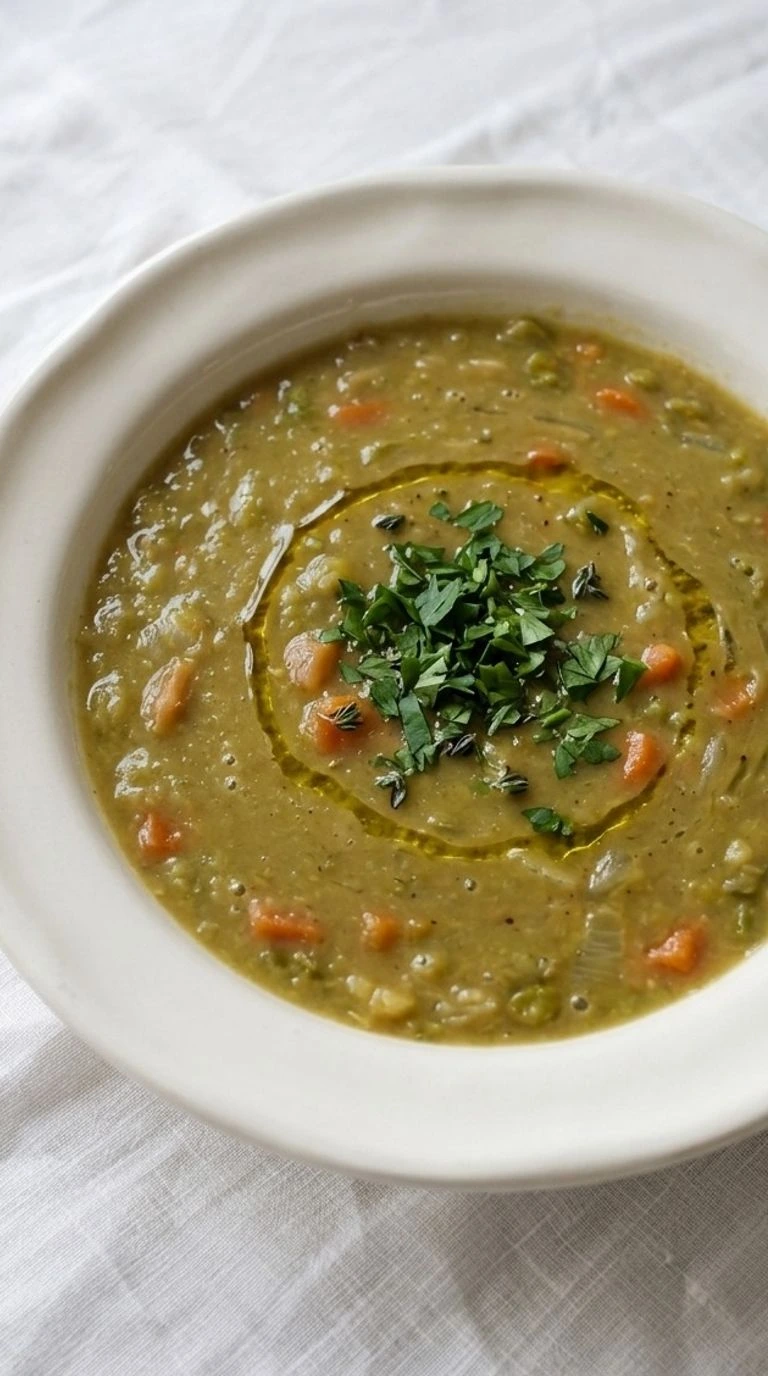
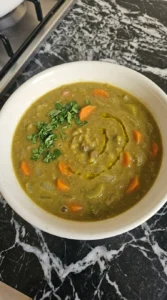
Then stir from the bottom with a wooden spoon to bring the soft peas and vegetables back into an even mix. Ladle the Split Pea Soup into 4 individual bowls and top each serving with a little of the 2 tablespoons of chopped fresh flat-leaf parsley and the remaining 1 tablespoon of extra virgin olive oil. The soup should fall from the ladle in a slow thick ribbon and leave small mounds that settle gently. Look for soft orange carrot pieces against the muted green base and an uneven shine from the oil.
Don’t let it stand too long without stirring because the peas keep soaking up liquid. The short rest lets the thick soup settle without turning pasty.
Tip: For a brighter finish, add a little finely grated zest from the measured lemon before serving. Even 1/4 teaspoon lifts the earthy flavor.
Pro Tips
- Check the date on your dried green split peas before cooking. Older peas may need 20 to 30 extra minutes to soften.
- Use a heavy-bottomed pot that holds at least 5 quarts. The thickening pea starch can stick and scorch in a thin pot.
- Keep Split Pea Soup at a gentle simmer around 195 to 205°F. A hard boil wastes liquid before the peas have time to soften.
- Stir along the bottom of the pot every 10 minutes. You’ll feel the peas begin to settle as the broth thickens.
- Don’t add lemon juice during the first 50 minutes. Acid can slow the softening of dried peas and leave tough pieces.
- If you prefer a thicker texture, mash about 1/2 cup of softened peas against the side of the pot before serving.
- Make the soup 1 day ahead when dinner plans are busy. Store it cold and keep 1/2 cup of extra broth for reheating.
- Finish each bowl with a little of the measured parsley and olive oil. That fresh green flavor lifts the earthy peas.
- Make a smoky vegetable version by increasing the smoked paprika to 1/2 teaspoon and adding 1/4 teaspoon of ground cumin with the thyme.
- For a greener soup, stir in 1 cup of finely chopped lacinato kale during the final 10 minutes of simmering.
- Give the soup a spring twist by adding 1/2 cup of thawed frozen sweet peas during the last 3 minutes.
- For a heartier dinner, add 1 cup of diced cooked Yukon Gold potato during the final 5 minutes and serve with toasted sourdough.
Substitutions & Variations
- low-sodium vegetable broth: Use 5 cups of low-sodium chicken broth instead. Chicken broth gives the soup a richer savory flavor without changing its thick texture. Keep the same simmer time, but the soup won’t be vegetarian.
- dried green split peas: Replace with 1 1/2 cups of dried yellow split peas. Yellow split peas have a milder flavor and turn the soup a soft golden color. Start checking after 45 minutes because they may soften sooner.
- extra virgin olive oil: Use 2 tablespoons of refined avocado oil or replace the cooking oil with 3 tablespoons of vegetable broth. Avocado oil keeps the recipe dairy-free and egg-free with a milder flavor. Using broth makes it lighter but less rich.
- dried thyme: Replace 1 teaspoon of dried thyme with 1 tablespoon of fresh thyme leaves. Fresh thyme gives the soup a brighter herbal taste without changing the cooking time. Add it with the broth so its flavor spreads evenly.
- low-sodium vegetable broth: Use 5 cups of certified gluten-free vegetable broth. This keeps the same savory flavor and soft texture while avoiding gluten in the broth. Check the split pea packaging for cross-contact warnings. For another vegetable-based soup idea, try Potato Leek Soup.
Storage Instructions
Let the soup cool in shallow containers and refrigerate it within 2 hours of cooking. Store leftovers in airtight containers at 40°F or below for up to 4 days. The peas will keep absorbing liquid so the soup will be thicker the next day.
For longer storage, freeze individual portions in freezer-safe containers for up to 3 months and leave 1 inch of headspace. If you’re stocking the freezer with easy dinners, my Crockpot Chicken and Rice Soup is another useful recipe to keep on hand. To reheat, place a portion in a small saucepan with 2 to 4 tablespoons of vegetable broth and warm over medium-low heat for 8 to 12 minutes.
Stir until it reaches 165°F throughout. Throw it out if you notice mold, an unpleasant sour smell or any other sign of spoilage. And don’t taste soup that seems questionable.
Split Pea Soup
Ingredients
Method
- Peel 1 large yellow onion and cut it into 1/4-inch pieces. Then peel 3 medium carrots and slice them into uneven but fairly small 1/4-inch half-moons. Slice 2 celery stalks into 1/4-inch pieces and mince 3 garlic cloves. Keep the garlic separate because it goes into the pot later. Next, pour 1 1/2 cups of dried green split peas into a colander and rinse them under cold running water at about 60°F for 1 to 2 minutes. Move the peas around with your fingers and pick out any small stones or damaged bits. Drain well. Don’t soak them. The rinse water should run mostly clear and the peas should still feel firm with no slippery coating. If you skip sorting them, a tiny stone can end up in someone’s bowl. Keeping the vegetable pieces small also helps them soften at the same rate. Even cuts help the vegetables soften without falling apart too soon.
- Set a heavy-bottomed 5 to 6-quart pot over medium heat at about 5 on a 10-setting stove dial. Add 1 tablespoon of extra virgin olive oil and then tip in the diced yellow onion, sliced carrots and sliced celery. Stir with a wooden spoon until the vegetables have a thin coating of oil. Cook for 7 to 9 minutes and stir every 90 seconds so the edges don’t catch. Once the onion turns soft, add the 3 minced garlic cloves and stir for another 45 to 60 seconds. Keep the heat steady rather than turning it up to rush the vegetables. You’ll notice the onion turning clear around the edges and the celery taking on a softer green color. The carrots should still hold their shape. A sweet smell will replace the sharp onion scent. But if the garlic goes dark brown, you’ve gone too far. Gentle heat draws out sweetness without scorching the garlic.
- Add the rinsed 1 1/2 cups of dried green split peas to the softened vegetables and stir twice to spread them through the pot. Pour in 5 cups of low-sodium vegetable broth and add 1 dried bay leaf, 1 teaspoon of dried thyme, 1/4 teaspoon of smoked paprika and 1/4 teaspoon of ground black pepper. Bring the liquid to a steady boil near 212°F over medium-high heat. Then lower the heat until the soup holds a gentle simmer around 195 to 205°F. Leave the lid slightly ajar and cook for 50 to 60 minutes. Stir every 10 minutes and scrape the bottom to stop the peas from sticking. After about 35 minutes, some peas will split open and the broth will look cloudy green. By minute 50 the mixture should be much thicker and the peas should crush easily against a spoon. I once let the pot boil too hard and lost too much liquid before the peas softened. Don’t rush it. A gentle simmer lets the pea starch thicken the broth without scorching.
- Turn off the heat and remove the bay leaf. Stir in 1 tablespoon of fresh lemon juice and 3/4 teaspoon of kosher salt. Taste a small spoonful and add more salt only if needed. Let the soup stand uncovered for 5 minutes as it cools from the simmer to about 180°F. Then stir from the bottom with a wooden spoon to bring the soft peas and vegetables back into an even mix. Ladle the Split Pea Soup into 4 individual bowls and top each serving with a little of the 2 tablespoons of chopped fresh flat-leaf parsley and the remaining 1 tablespoon of extra virgin olive oil. The soup should fall from the ladle in a slow thick ribbon and leave small mounds that settle gently. Look for soft orange carrot pieces against the muted green base and an uneven shine from the oil. Don’t let it stand too long without stirring because the peas keep soaking up liquid. The short rest lets the thick soup settle without turning pasty.
Notes
Frequently Asked Questions
Yes, and I often think it tastes better the next day because the herbs have more time to blend. Cool the soup in shallow containers and refrigerate it within 2 hours. Then reheat it over medium-low heat for 8 to 12 minutes until it reaches 165°F. Add a little broth if it’s too thick.
The most common reason is that the dried peas are old. Some need another 15 to 30 minutes of simmering before they’ll soften. Keep the broth gently bubbling around 200°F and check that there’s enough liquid. Also, don’t add lemon juice early because acid can slow the softening process.
Remove the lid and let the soup simmer for another 10 to 15 minutes. Stir often because the thicker mixture can stick to the bottom. You can also crush about 1 cup of tender peas against the pot with a spoon. The released starch will give the broth more body without adding flour.
The main recipe doesn’t use milk, cream or butter, so it’s naturally dairy-free and egg-free. Split peas also contain no gluten by nature. However, choose certified gluten-free broth and check the pea packaging if you need to avoid cross-contact. The soup still becomes thick because the peas release starch during the 50 to 60-minute simmer.
Yes, double the ingredients to make about 8 servings and use a pot that holds at least 8 quarts. That means 3 cups of dried green split peas and 10 cups of vegetable broth. The larger batch may take 5 to 10 extra minutes to reach a simmer. Once it does, keep the same gentle cooking method.
I like serving it with thick slices of toasted sourdough bread because the crisp edges hold up against the soft soup. Toast 1/2-inch slices at 375°F for 8 to 10 minutes. A small green salad with lemon dressing also works well. Both options keep dinner fairly light while the peas make it filling.
Yes, this soup freezes well for up to 3 months in airtight freezer-safe containers. Leave about 1 inch of space because the liquid expands as it freezes. Thaw portions overnight in the refrigerator and warm them until they reach 165°F throughout. Stir in 2 to 4 tablespoons of broth if the soup has thickened too much.
Final Thoughts
Cold evenings are a lot easier when I’ve got a pot of Split Pea Soup on the stove. I wish I’d figured out this simple method years ago because it would’ve saved me plenty of last-minute dinner stress. What makes this easy split pea soup so good is how the peas turn creamy without a drop of cream.
And now that I’ve got the timing right, I make this split pea soup recipe all winter. If you enjoyed it, try my Loaded Baked Potato Soup or Chicken Pot Pie Soup next. And please leave a comment after you make it.
I read every one and love hearing what you think. The same batch covers winter split pea soup without a single change.
Split peas are regular field peas that have been dried and had their outer skins removed. Then they’re split in half along their natural seam. That’s why they soften faster than many whole dried beans and don’t need overnight soaking. Green split peas also keep some of their earthy flavor after cooking, which makes them especially good for thick soups.