French Dip Sandwiches
The first time I served French Dip Sandwiches at home, everyone reached for another before I’d even put the plates away. I watched how the beef soaked up the warm broth and how the toasted bread held everything together. After a few tries, I learned that keeping the roast beef in the hot au jus for just a short time makes all the difference. Too long and the meat loses its tender texture.
Now these sandwiches are one of my favorite ways to make a filling meal without spending hours in the kitchen. This easy french dip sandwiches recipe uses thinly sliced roast beef and a homemade broth with garlic, onion and Worcestershire sauce. If sandwiches are a regular part of your family meals, you’ll also enjoy our Sassy Tailgate Sandwiches: Hot Ham and Cheese Sliders for Game Day. The method is simple, but the little details matter. Toasting the rolls before adding the beef keeps them from getting soggy, while a quick dip in the warm broth gives every bite plenty of flavor.
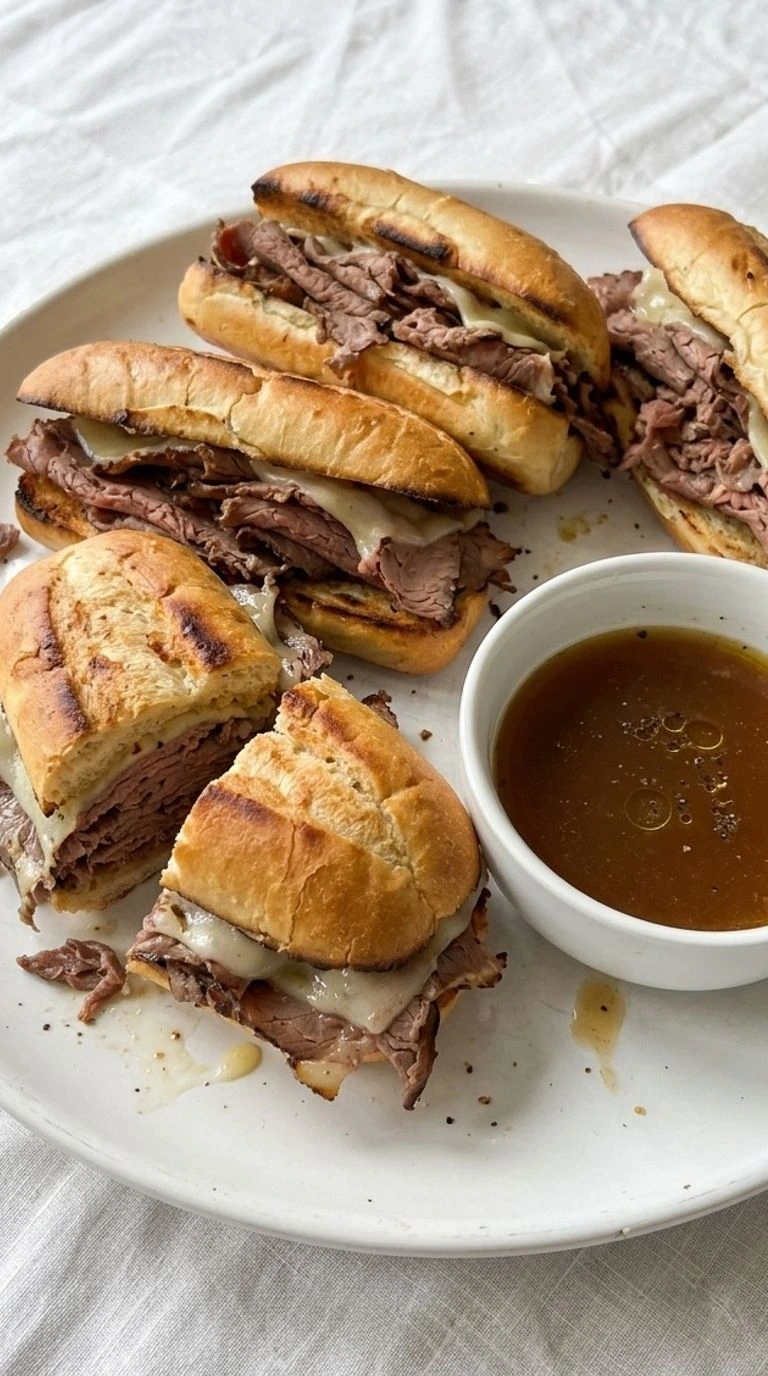
And that small bowl of au jus on the side? Don’t skip it.
Why This Recipe Works
The onions cook slowly in butter before the broth goes in, so their natural sugars add depth without making the au jus sweet. Worcestershire sauce adds savory complexity, while thyme gives the broth a gentle herbal note.
Keeping the liquid around 160°F to 170°F when warming the beef prevents the thin slices from tightening and turning chewy. Toasting the hoagie rolls at 400°F creates a light crust that slows down moisture absorption.
It’s the same attention to texture that makes our Thanksgiving Leftover Sandwich worth making.
Ingredients
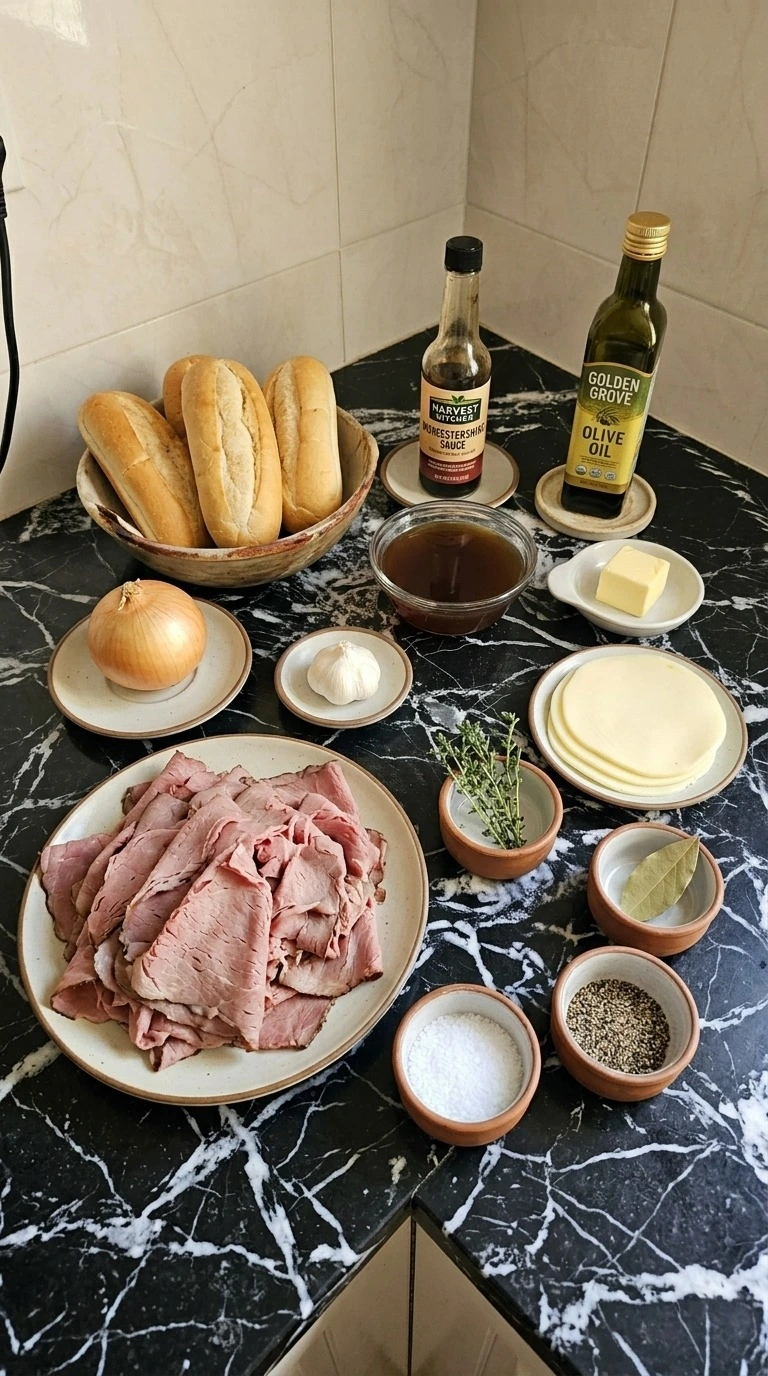
- Hoagie rolls: Soft sandwich rolls sliced lengthwise and lightly buttered before toasting. Choose sturdy rolls that can hold the warm beef without falling apart.
- Deli roast beef: Thinly sliced roast beef with natural marbling for a tender and savory filling.
- Yellow onion: Thinly sliced into half-moons to add sweetness and body to the au jus.
- Unsalted butter: Divided between softening the onions and coating the cut sides of the hoagie rolls.
- Olive oil: Helps the butter cook the onions evenly without browning too quickly.
- Garlic cloves: Finely minced and added near the end of the onion cooking time for a fragrant broth.
- Low-sodium beef broth: Creates the dipping au jus and provides enough savory liquid to warm the roast beef.
- Worcestershire sauce: Adds a deep savory flavor and balances the sweetness of the softened onions.
- Fresh thyme: Leaves stripped from the stems to add a mild herbal flavor to the broth.
- Bay leaf: Simmered in the broth to add a subtle herbal depth and removed before serving.
- Kosher salt: Seasoning for the broth, adjusted to account for the salt already present in the deli roast beef.
- Black pepper: Freshly ground to give the au jus a mild peppery finish.
- Provolone cheese: Placed over the warm roast beef and melted briefly in the oven for a creamy sandwich filling.
Kitchen Equipment
- 10-inch heavy-bottomed skillet: Use a heavy-bottomed stainless steel or cast-iron skillet to soften onions and simmer the au jus evenly, since a thin pan can create hot spots and scorch the garlic.
- Baking sheet: A standard rimmed 13-by-18-inch baking sheet holds four hoagie rolls during toasting, while a warped or very thin sheet can brown the bread unevenly.
- Kitchen tongs: Use 9 to 12-inch stainless steel tongs to separate and lift the delicate beef slices, choosing a firm gripping end that won’t tear the meat.
- Instant-read thermometer: A digital thermometer helps check that the broth stays around 160°F to 170°F while warming the beef, and a fast-reading probe gives more reliable results than guessing.
- Small dipping bowls: Use four small 4 to 6-ounce bowls to serve individual portions of au jus, choosing bowls deep enough for dipping sandwich pieces without spilling.
How to Make It
Step 1: Soften the onions in butter
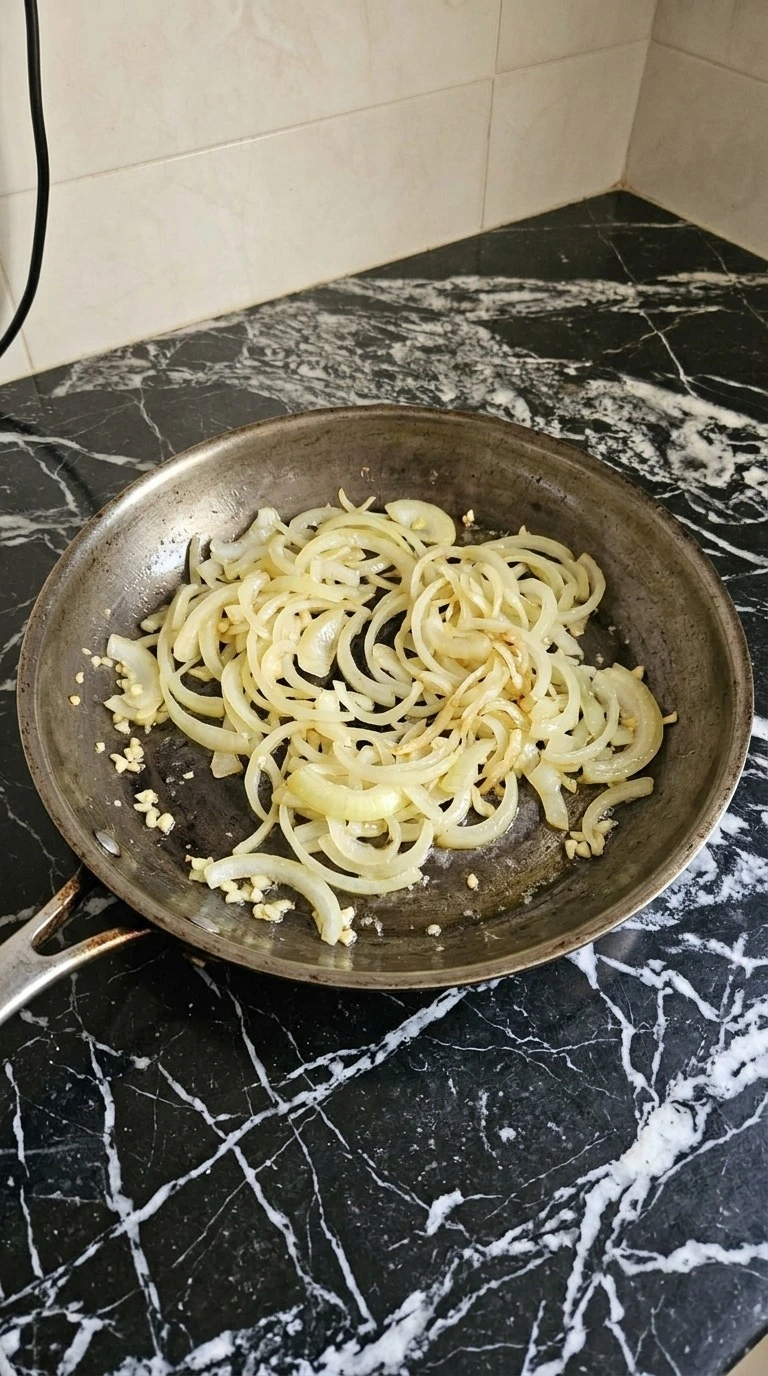
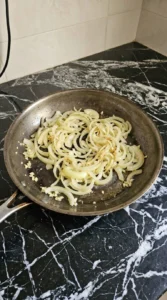
Melt 2 tablespoons of unsalted butter with 1 teaspoon of olive oil in a 10-inch skillet over medium heat, about 300°F. Add the thinly sliced yellow onion and cook for 7 to 9 minutes. Stir with a wooden spoon every minute and spread the slices back across the skillet. Add the minced garlic during the final 60 seconds.
The onions should turn soft and translucent with a few pale golden edges. Don’t let the garlic turn brown. You’ll smell a sweet onion aroma as the butter coats the slices. Stop when the onions bend easily and look lightly golden.
Overcooking the garlic makes the broth bitter. Gentle heat preserves the onion sweetness.
Tip: Cut the onion into evenly thin half-moons so every slice softens at roughly the same rate.
Step 2: Simmer the homemade beef au jus
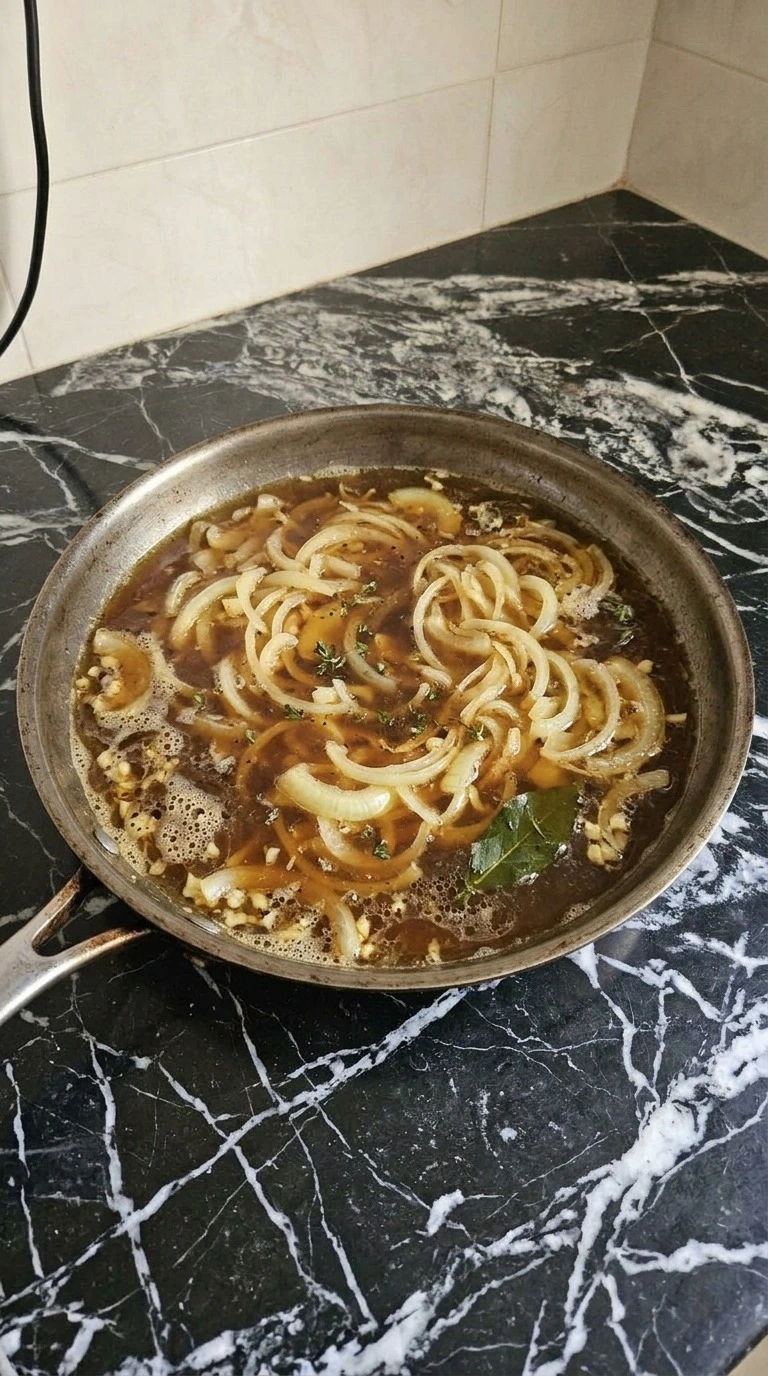
Pour 3 cups of low-sodium beef broth into the skillet with the softened onions and garlic. Add 1 tablespoon of Worcestershire sauce, 1 teaspoon of fresh thyme leaves, one bay leaf, 1/2 teaspoon of kosher salt and 1/4 teaspoon of black pepper. Bring the liquid to a gentle simmer over medium heat, around 200°F to 205°F, then reduce the heat to medium-low.
Stir slowly and simmer uncovered for 10 to 12 minutes. The broth should darken slightly and smell rich and savory. Watch for small bubbles around the edges rather than a rolling boil.
Strain the bay leaf out before serving. A hard boil can make the broth taste harsh. A gentle simmer draws out the aromatics.
Tip: Taste the broth after 8 minutes and adjust the salt only after checking the seasoning in your beef.
Step 3: Warm the roast beef in the au jus
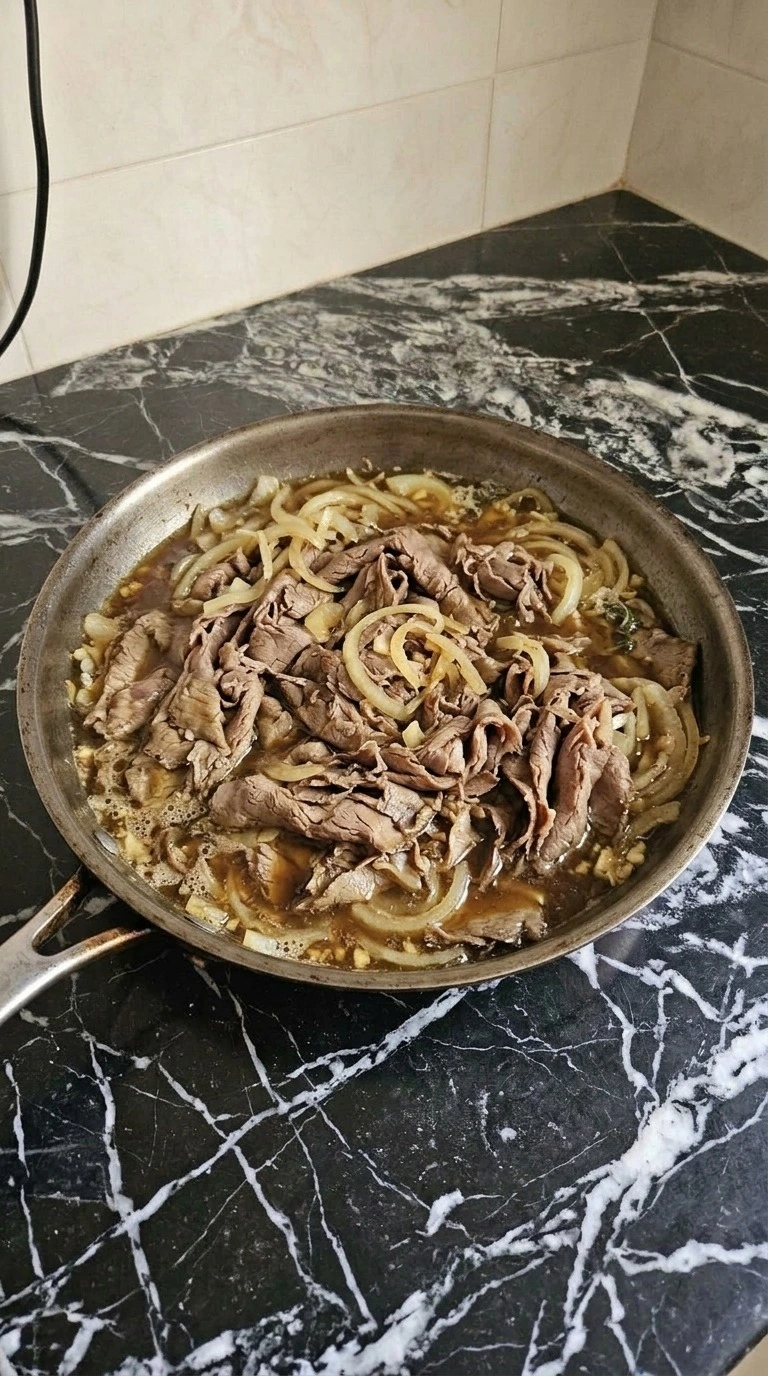
Remove the bay leaf and lower the skillet heat until the broth stays around 160°F to 170°F without boiling. Add 1. 5 pounds of thinly sliced deli roast beef in loose layers, separating any slices that stick together.
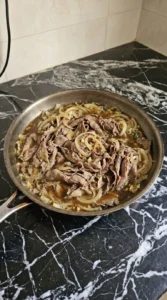
Use tongs to turn and gently move the beef through the broth for 2 to 3 minutes. Keep the slices submerged just long enough to warm through while the softened onions remain mixed into the liquid. The beef should look moist and slightly darker from the broth.
Look for gentle movement in the liquid and warm, flexible beef slices. Don’t leave the meat simmering for too long or it can become tough. Brief warming keeps the roast beef tender.
Tip: Separate the roast beef slices before adding them so the broth can reach every layer.
Step 4: Toast the rolls and melt the provolone
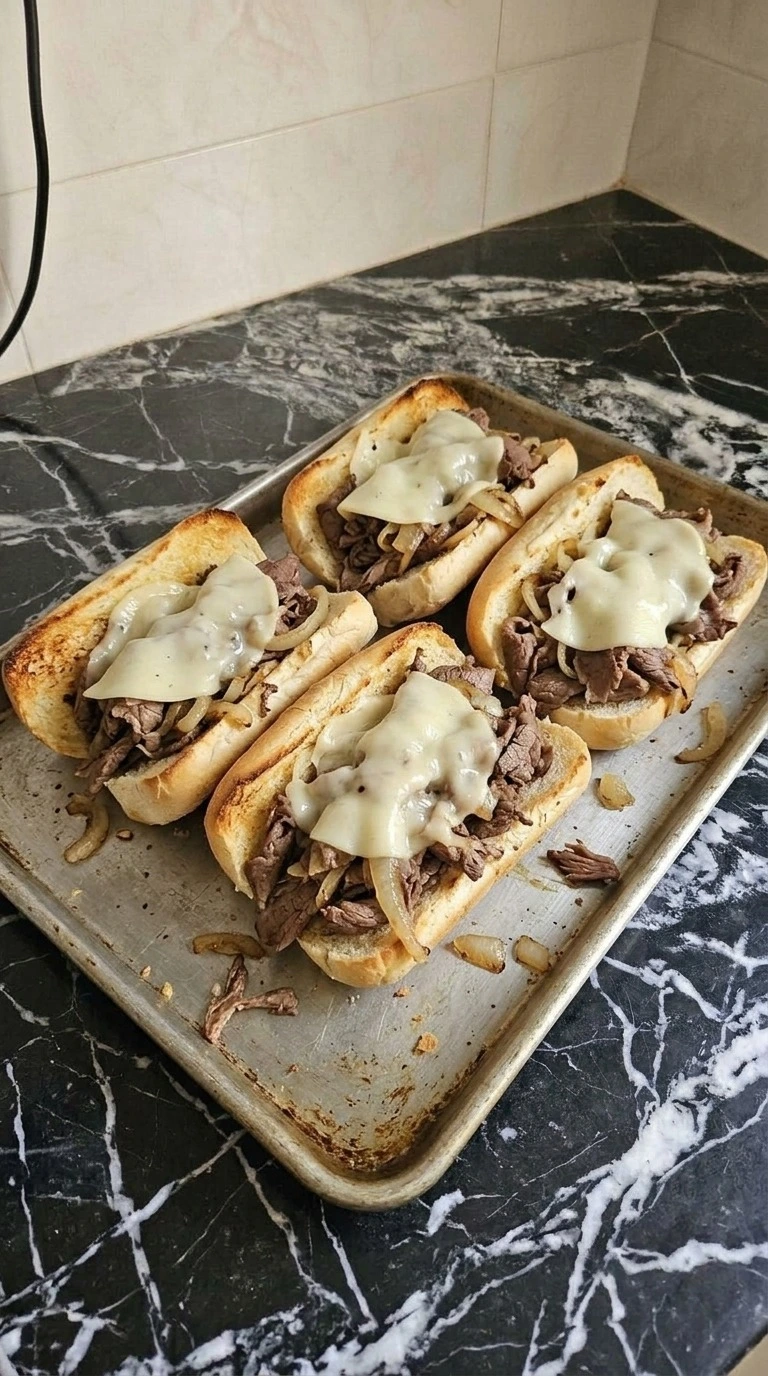
Slice 4 hoagie rolls lengthwise without cutting all the way through. Spread the remaining 2 tablespoons of unsalted butter over the cut sides. Arrange the rolls open on a baking sheet and toast at 400°F for 4 to 5 minutes until the edges turn golden and crisp. Divide the warm roast beef and softened onions between the rolls, then top each sandwich with 1 slice of provolone cheese.
Return them to the 400°F oven for 2 to 3 minutes until the cheese softens and begins to melt. (I found that adding the cheese after the beef keeps it from disappearing into the hot broth. ) The bread should feel lightly crisp outside but remain soft inside. You’ll see the cheese settle over the uneven beef slices.
Don’t toast too long or the rolls become brittle. Toasting creates a barrier against excess broth.
Tip: Keep the sandwiches open during the final toast so the provolone melts evenly over the beef.
Pro Tips
- Choose freshly sliced roast beef from the deli counter, preferably medium-rare style, and ask for thin slices around 1/16 inch thick.
- Cook the onions over medium heat for 7 to 9 minutes, stirring every minute so their edges turn golden without burning.
- Use low-sodium beef broth with 1 tablespoon of Worcestershire sauce so you can control the salt without losing savory flavor.
- Keep the au jus between 160°F and 170°F when warming the beef, because boiling can make thin roast beef slices tough.
- Toast the open hoagie rolls at 400°F for 4 to 5 minutes, then add the filling so the bread stays firm underneath.
- Place provolone over the beef and return the sandwiches to the oven for 2 to 3 minutes until the cheese softens.
- Serve each sandwich with about 1/2 cup of warm au jus in a separate dipping bowl, and add a little fresh thyme for extra aroma.
- Make a French onion version by adding 1/2 cup of caramelized onions and using Swiss cheese instead of provolone.
- Add 1 teaspoon of smoked paprika and 1/2 teaspoon of crushed red pepper to the au jus for a deeper flavor with gentle heat.
- Prepare a mushroom version by sautéing 8 ounces of sliced cremini mushrooms with the yellow onions before adding the beef broth.
- For smaller party sandwiches, use 8 mini rolls instead of 4 hoagie rolls and divide the roast beef and provolone evenly.
Substitutions & Variations
- Provolone cheese: Use 4 slices of dairy-free provolone-style cheese or omit the cheese entirely. Dairy-free slices melt differently and may stay slightly firmer. For a lighter sandwich, leave out the cheese and let the warm beef and au jus provide the flavor.
- Hoagie rolls: Use 4 gluten-free sandwich rolls of similar size. Gluten-free rolls can be more delicate and absorb broth faster. Toast them at 375°F for 4 to 5 minutes and serve the au jus separately.
- Deli roast beef: Use 1.5 pounds of leftover thinly sliced beef roast. This is a great way to use leftover roast beef. Slice it against the grain and warm it in the broth for 2 to 3 minutes without boiling.
- Low-sodium beef broth: Use 3 cups of homemade beef stock or reduced-sodium vegetable broth. Homemade beef stock gives a deeper flavor, while vegetable broth creates a lighter au jus. Add 1 teaspoon of soy sauce to vegetable broth for extra savory depth.
- Unsalted butter: Use 4 tablespoons of dairy-free butter or 3 tablespoons of olive oil. Dairy-free butter gives a similar rich taste, while olive oil creates a slightly lighter result. Both work for softening onions and toasting the rolls.
Storage Instructions
Store the roast beef and au jus separately in airtight containers in the refrigerator for up to 3 days. Keep the rolls and provolone in separate sealed bags so they retain their texture. You can freeze the beef and strained broth for up to 2 months.
Divide the broth into meal-sized portions before freezing so you only thaw what you need. For reheating, warm the au jus in a saucepan over medium-low heat until it reaches 165°F. Add the beef for 1 to 2 minutes, then toast fresh rolls at 375°F for 3 to 4 minutes.
Discard anything with a sour smell, unusual discoloration or visible mold.
French Dip Sandwiches
Ingredients
Method
- Melt 2 tablespoons of unsalted butter with 1 teaspoon of olive oil in a 10-inch skillet over medium heat, about 300°F. Add the thinly sliced yellow onion and cook for 7 to 9 minutes. Stir with a wooden spoon every minute and spread the slices back across the skillet. Add the minced garlic during the final 60 seconds. The onions should turn soft and translucent with a few pale golden edges. Don’t let the garlic turn brown. You’ll smell a sweet onion aroma as the butter coats the slices. Stop when the onions bend easily and look lightly golden. Overcooking the garlic makes the broth bitter. Gentle heat preserves the onion sweetness.
- Pour 3 cups of low-sodium beef broth into the skillet with the softened onions and garlic. Add 1 tablespoon of Worcestershire sauce, 1 teaspoon of fresh thyme leaves, one bay leaf, 1/2 teaspoon of kosher salt and 1/4 teaspoon of black pepper. Bring the liquid to a gentle simmer over medium heat, around 200°F to 205°F, then reduce the heat to medium-low. Stir slowly and simmer uncovered for 10 to 12 minutes. The broth should darken slightly and smell rich and savory. Watch for small bubbles around the edges rather than a rolling boil. Strain the bay leaf out before serving. A hard boil can make the broth taste harsh. A gentle simmer draws out the aromatics.

- Remove the bay leaf and lower the skillet heat until the broth stays around 160°F to 170°F without boiling. Add 1.5 pounds of thinly sliced deli roast beef in loose layers, separating any slices that stick together. Use tongs to turn and gently move the beef through the broth for 2 to 3 minutes. Keep the slices submerged just long enough to warm through while the softened onions remain mixed into the liquid. The beef should look moist and slightly darker from the broth. Look for gentle movement in the liquid and warm, flexible beef slices. Don’t leave the meat simmering for too long or it can become tough. Brief warming keeps the roast beef tender.
- Slice 4 hoagie rolls lengthwise without cutting all the way through. Spread the remaining 2 tablespoons of unsalted butter over the cut sides. Arrange the rolls open on a baking sheet and toast at 400°F for 4 to 5 minutes until the edges turn golden and crisp. Divide the warm roast beef and softened onions between the rolls, then top each sandwich with 1 slice of provolone cheese. Return them to the 400°F oven for 2 to 3 minutes until the cheese softens and begins to melt. (I found that adding the cheese after the beef keeps it from disappearing into the hot broth.) The bread should feel lightly crisp outside but remain soft inside. You’ll see the cheese settle over the uneven beef slices. Don’t toast too long or the rolls become brittle. Toasting creates a barrier against excess broth.

Notes
Frequently Asked Questions
Yes. Make the au jus and softened onions up to 2 days ahead, then refrigerate them in a sealed container. When serving, reheat the broth to 165°F and warm the roast beef for 2 to 3 minutes before assembling freshly toasted rolls.
Store assembled sandwiches for no more than 2 days, although the bread will soften as it absorbs moisture. For better texture, keep the beef and au jus separate for up to 3 days and refrigerate the rolls separately.
Yes. Replace the 1 tablespoon of Worcestershire sauce with 2 teaspoons of low-sodium soy sauce and 1 teaspoon of apple cider vinegar. The broth will taste slightly different, but it’ll still have a savory depth that pairs well with roast beef.
Deli roast beef and regular beef broth can both contain plenty of sodium, so their flavors add up quickly. Add 1/2 cup of unsalted beef stock and simmer for another 2 minutes, then taste again before adding more seasoning.
Absolutely. Double the ingredients to serve 8 people and use a 6-quart pot for the au jus if your skillet is too small. Keep the broth at a gentle simmer around 200°F and toast the rolls in two batches at 400°F.
Roasted Brussels sprouts, crisp green salads and oven-baked potato wedges all pair well with the rich beef filling. Our Roasted Brussels Sprouts with Bacon make a savory side with crisp edges that contrast nicely with the tender sandwich.
Yes. Freeze the beef and strained broth separately in airtight freezer containers for up to 2 months. Thaw overnight in the refrigerator and reheat the broth to 165°F before warming the beef gently for 1 to 2 minutes.
Final Thoughts
The first time I made French Dip Sandwiches, I worried that the bread would turn soggy before everyone finished eating. It turns out that toasted rolls and a quick dip make all the difference.
This french dip sandwiches recipe stands out because the homemade au jus gives the tender beef so much flavor without complicated steps. Give it a try and let me know how your sandwiches turn out.
You can also check out our Make Ahead Mashed Potatoes for another satisfying dinner side. It works just as well when you are after easy french dip sandwiches.
Despite its French name, the French dip sandwich originated in Los Angeles in the early 1900s. Its defining feature is the savory beef cooking liquid served alongside the sandwich for dipping.