Sheet Pan Chicken and Vegetables
Dinner smelled so good the other night that my family started asking what was in the oven before I even set the table! When my mom tried this Sheet Pan Chicken and Vegetables, she went straight for another piece of chicken. I think that’s a pretty good sign! What started as a way to use up some sweet potatoes and carrots turned into one of my favorite cold weather dinners. The chicken gets golden around the edges while the vegetables turn soft and sweet. And the best part?
Everything roasts together. I’ve always loved dinners that don’t leave me with a sink full of dishes. This easy sheet pan chicken and vegetables is exactly that kind of meal. You get juicy chicken thighs with crisp edges and a generous helping of roasted vegetables. I’ve made plenty of chicken dinners over the years and I still come back to this method because it’s so simple. If you love that kind of cooking too, you’ll probably enjoy my Sheet Pan Chicken Thighs and Veggies for Busy Weeknights. It’s another great option when you need dinner without much fuss.
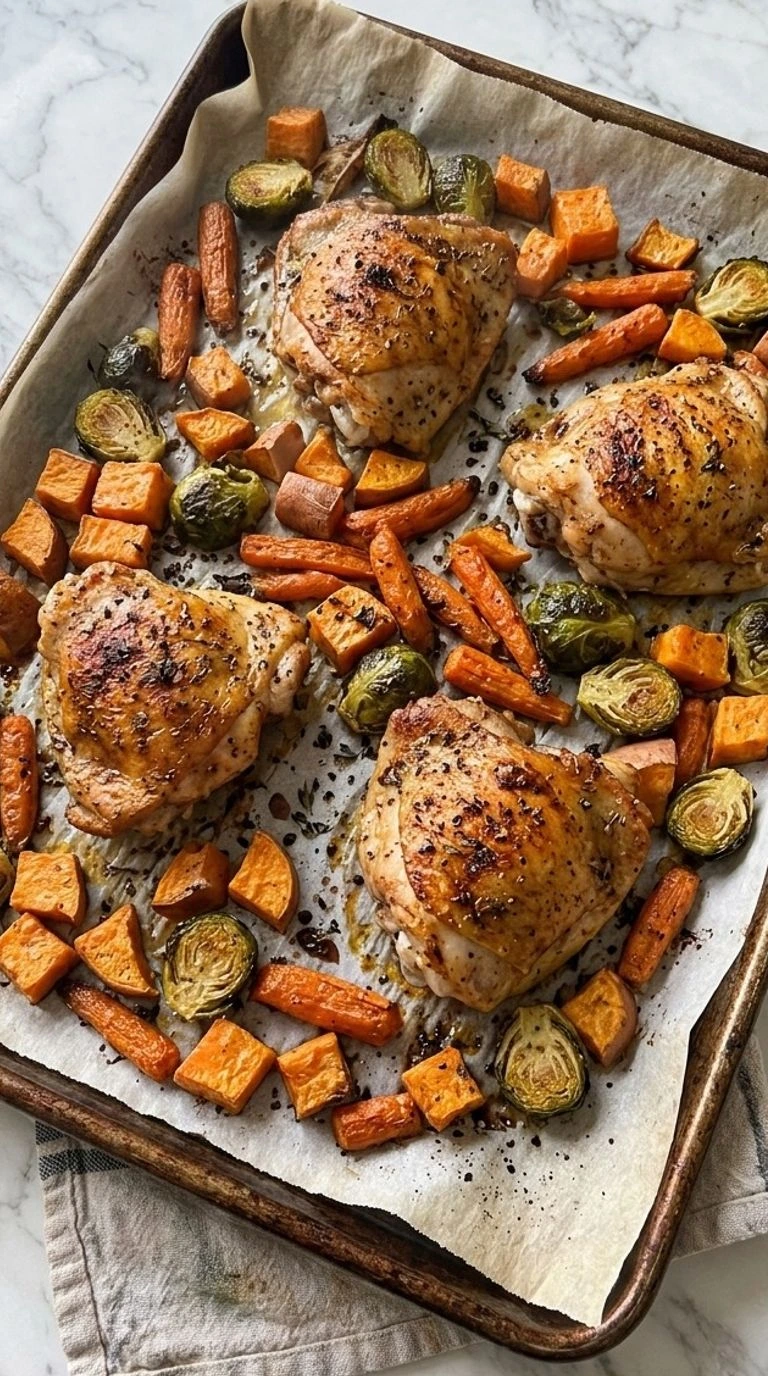
What I really love about this roasted chicken and vegetable dinner is how well it works for the rest of the week. Make four servings on Sunday and you’ve got lunch or dinner sorted for another day. The sweet potatoes add a little heartiness while the Brussels sprouts and carrots keep everything fresh and colorful. You don’t need a fancy sauce or a long list of ingredients. Just a hot oven and some good seasoning. And maybe a squeeze of lemon at the end.
Why This Recipe Works
The reason Sheet Pan Chicken and Vegetables turns out so well is the high oven heat and the way you cut the vegetables. At 425°F the chicken skin loses moisture and turns crisp while the sweet potatoes and carrots develop sweet golden edges.
Cutting the carrots thinner than the sweet potatoes helps both finish in the same 35 to 40-minute roasting window. The chicken also adds flavor as its juices mingle with the vegetables on the pan.
And because you leave some space between the pieces, the moisture can escape instead of making everything soggy.
Ingredients
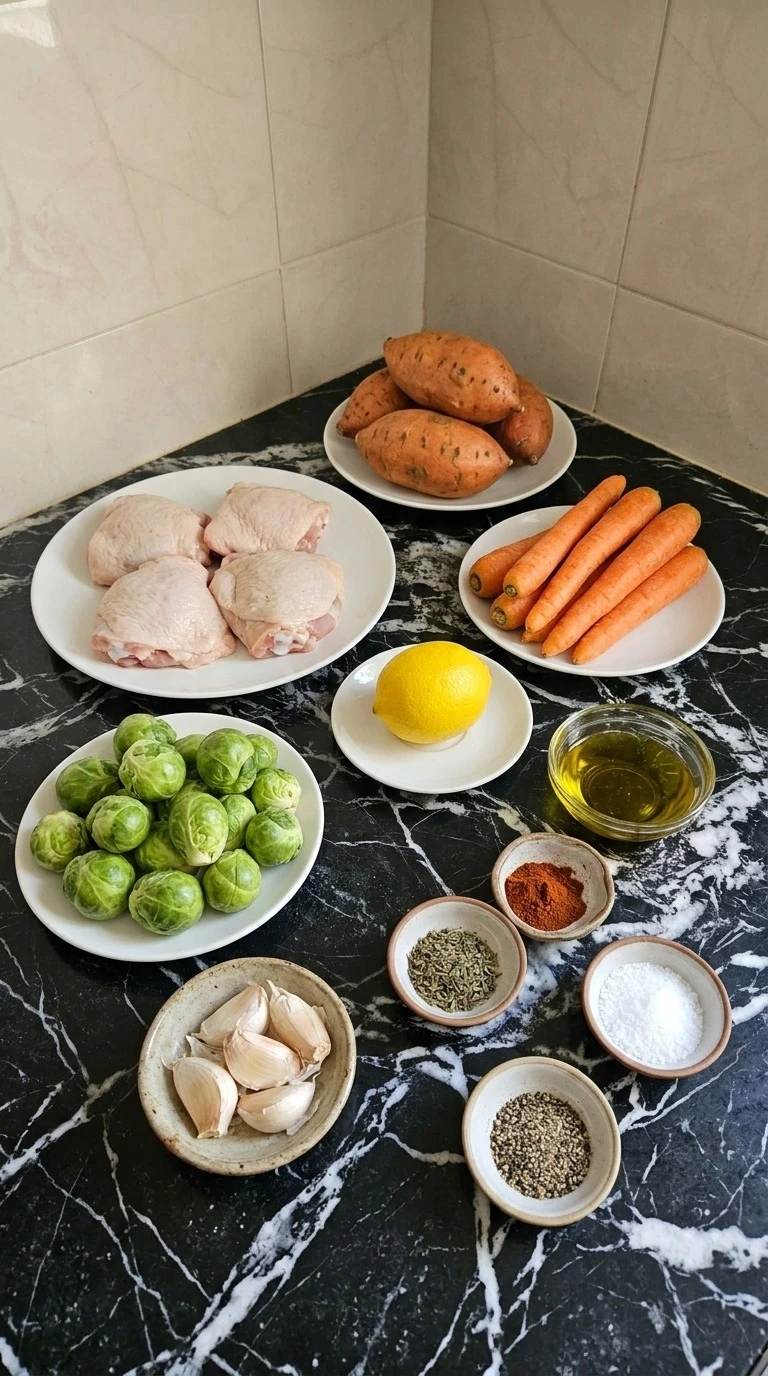
- Bone-in skin-on chicken thighs: Pat dry before seasoning so the skin roasts golden and crisp while the meat stays juicy.
- Orange sweet potatoes: Scrubbed and cut into 3/4-inch cubes for tender centers and lightly caramelized edges.
- Carrots: Peeled and sliced diagonally into 1/2-inch pieces for even roasting and natural sweetness.
- Brussels sprouts: Trimmed and halved lengthwise so the cut sides develop deep roasted color.
- Extra virgin olive oil: Divided between the vegetables and chicken to encourage browning and help seasonings cling.
- Garlic cloves: Peeled and finely minced to add savory flavor throughout the roasted vegetables.
- Smoked paprika: Divided between the vegetables and chicken for mild smoky flavor and warm roasted color.
- Dried thyme: Divided between the vegetables and chicken to add a gentle herbal flavor.
- Kosher salt: Divided evenly between the chicken and vegetables to bring out their natural flavors.
- Freshly ground black pepper: Divided between the chicken and vegetables for a mild peppery finish.
- Fresh lemon: Halved and squeezed after roasting to provide about 1 tablespoon of juice and brighten the finished dish.
Kitchen Equipment
- Large rimmed sheet pan: Choose a sturdy 18 by 13-inch rimmed sheet pan that distributes heat evenly and gives the chicken and vegetables room to roast, since a small or thin tray can cause steaming or uneven browning.
- Large mixing bowl: A 4 to 5-quart mixing bowl gives the vegetables room to tumble through the seasoning without spilling, while a smaller bowl makes even coating harder.
- Sharp chef’s knife: Use an 8-inch chef’s knife with a firm grip for cutting sweet potatoes and Brussels sprouts, since a dull blade can slip on hard vegetables.
- Large cutting board: A nonslip cutting board at least 12 by 18 inches provides space for trimming and chopping vegetables, while a small board increases crowding and slipping.
- Instant-read meat thermometer: Choose a digital thermometer with a narrow probe that reads quickly and accurately so you can check the chicken’s internal temperature without relying on skin color.
- Heatproof spatula: Use a wide heatproof spatula with a thin edge for turning the vegetables halfway through roasting, since a thick or narrow spatula can crush tender pieces.
- Measuring spoons: A set with 1/4-teaspoon through 1-tablespoon measures keeps the oil and seasoning amounts consistent, while estimating small spice portions can make the chicken too salty.
How to Make It
Step 1: Cut the sweet potatoes, carrots and Brussels sprouts
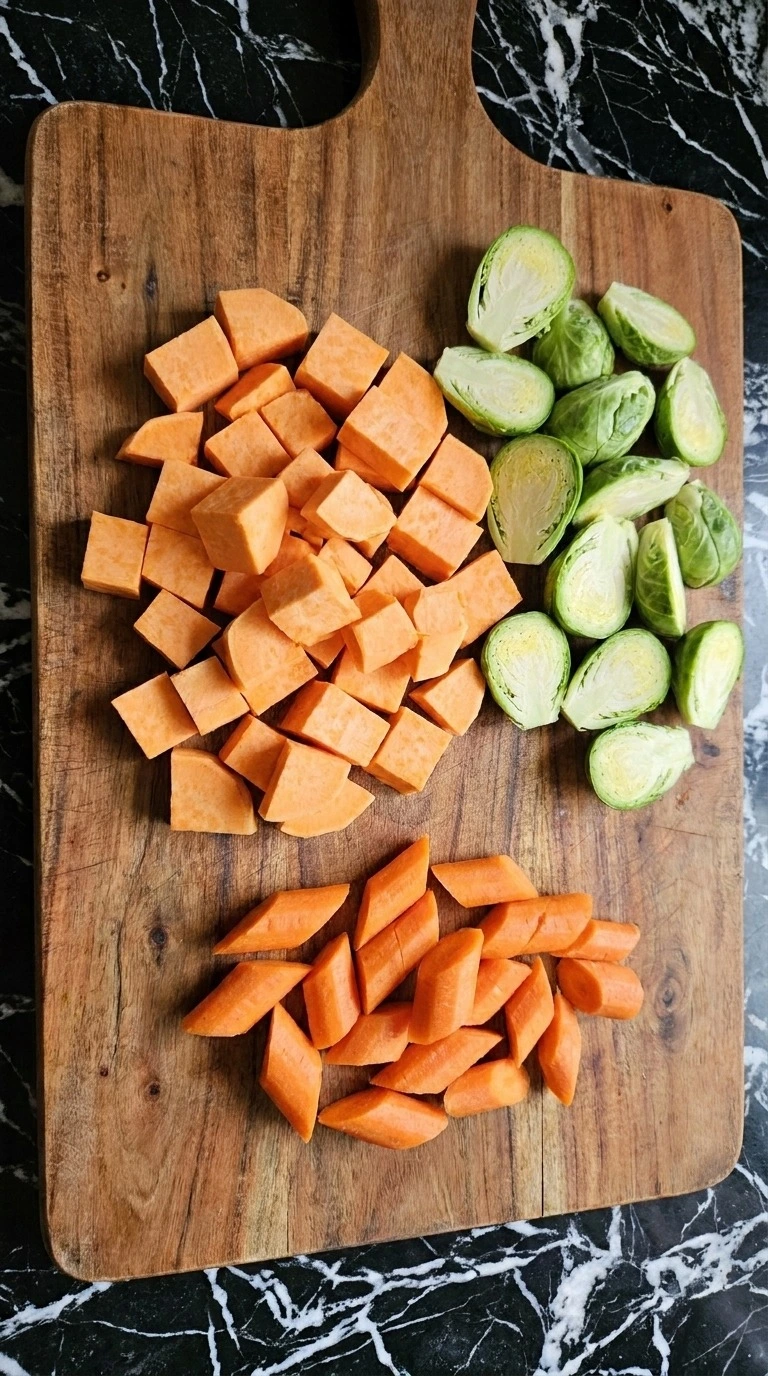
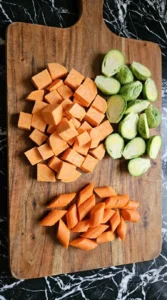
Start by heating your oven to 425°F. While it heats, scrub the sweet potatoes and peel them if you prefer a softer bite. Cut them into roughly 3/4-inch cubes with a sharp knife. Next, peel the carrots and cut them into 1/2-inch diagonal pieces so they roast at about the same rate as the sweet potatoes.
Trim the Brussels sprouts and slice each one in half through the stem. Keep the pieces fairly close in size. You’ll spend about 10 to 12 minutes on the cutting, but don’t rush through the thicker carrots because large pieces can stay firm after the chicken finishes roasting. You’ll see a mix of bright orange cubes, angled carrot pieces and green sprout halves.
Some size difference is fine. But if the carrot pieces are twice as thick as the others, they’ll take longer to soften. Even cuts help the vegetables roast at 425°F without leaving hard centers.
Tip: Choose Brussels sprouts about 1 to 1.5 inches wide because very large sprouts can stay firm while the smaller pieces start to char.
Step 2: Coat the vegetables with olive oil and seasoning
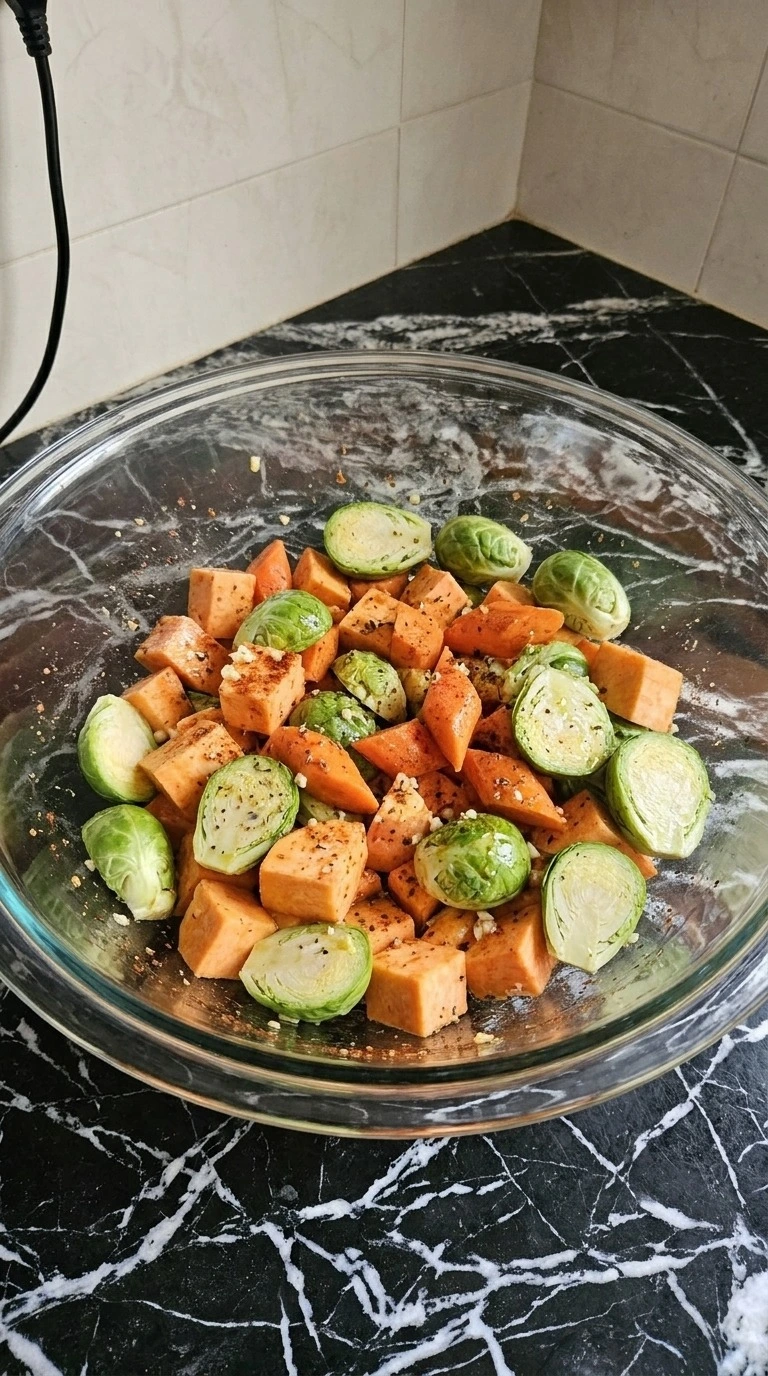
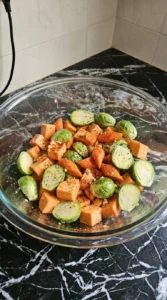
Transfer the cut sweet potatoes, carrots and Brussels sprouts to a large mixing bowl. Add 1 1/2 tablespoons of extra virgin olive oil along with 1/2 teaspoon of smoked paprika, 1/2 teaspoon of dried thyme, 1/2 teaspoon of kosher salt and 1/4 teaspoon of freshly ground black pepper. Add the minced garlic and toss everything with your hands or a large spoon for about 1 to 2 minutes.
Lift the vegetables from the bottom as you mix so the seasoning reaches the pieces underneath. Keep your oven at 425°F because the next stage needs strong heat to brown the vegetables. The vegetables should look lightly glossy rather than wet.
You’ll also notice the paprika clinging to the sweet potato edges. Don’t leave dry pockets of spice at the bottom of the bowl because those pieces won’t roast with the same flavor. A thin oil coating helps the vegetables brown without turning greasy.
Tip: If the garlic cloves are unusually large, use 2 instead of 3 so their flavor doesn’t overpower the sweeter roasted vegetables.
Step 3: Arrange and season the chicken on the sheet pan
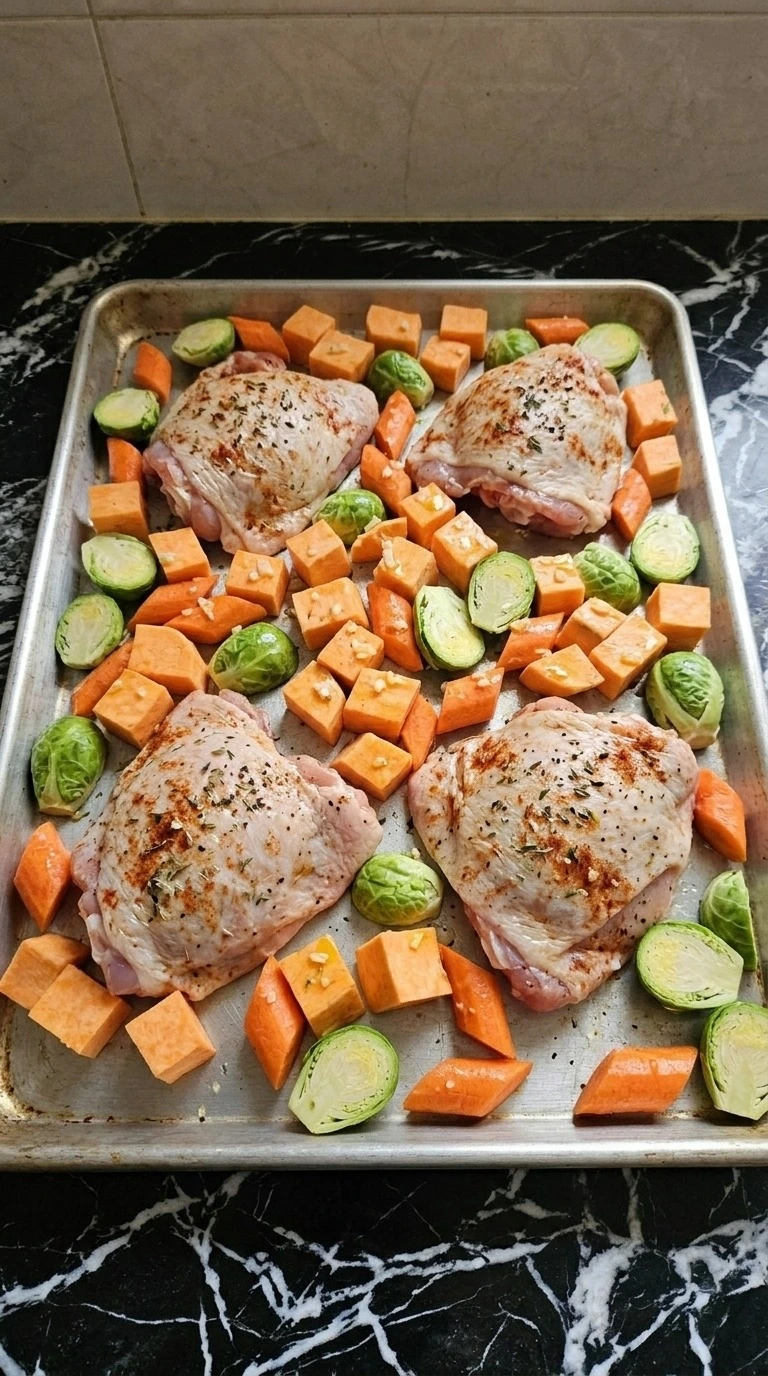
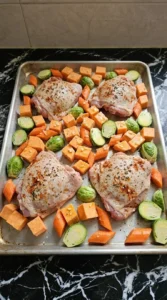
Spread the seasoned vegetables across a large rimmed sheet pan in a loose single layer. Then pat 4 bone-in skin-on chicken thighs dry with paper towels. Rub them with the remaining 1 tablespoon of extra virgin olive oil and season with the remaining 1/2 teaspoon of smoked paprika, 1/2 teaspoon of dried thyme, 1/2 teaspoon of kosher salt and 1/4 teaspoon of black pepper. Set each thigh skin side up between the vegetables with a little room around its edges.
Keep the oven at 425°F and plan to move the pan into it within 5 minutes so the chicken doesn’t sit out longer than needed. You’ll see pale pink chicken with taut seasoned skin surrounded by colorful vegetables. Keep the thick thighs from touching. (I once packed the pan too tightly and the vegetables turned soft instead of golden.
) Crowding traps moisture during roasting. Space lets the 425°F heat reach the food and dry the skin.
Tip: Use a sheet pan about 18 by 13 inches with a raised rim because a smaller tray can trap moisture and make the vegetables soggy.
Step 4: Roast until the chicken skin is crisp and the vegetables are tender
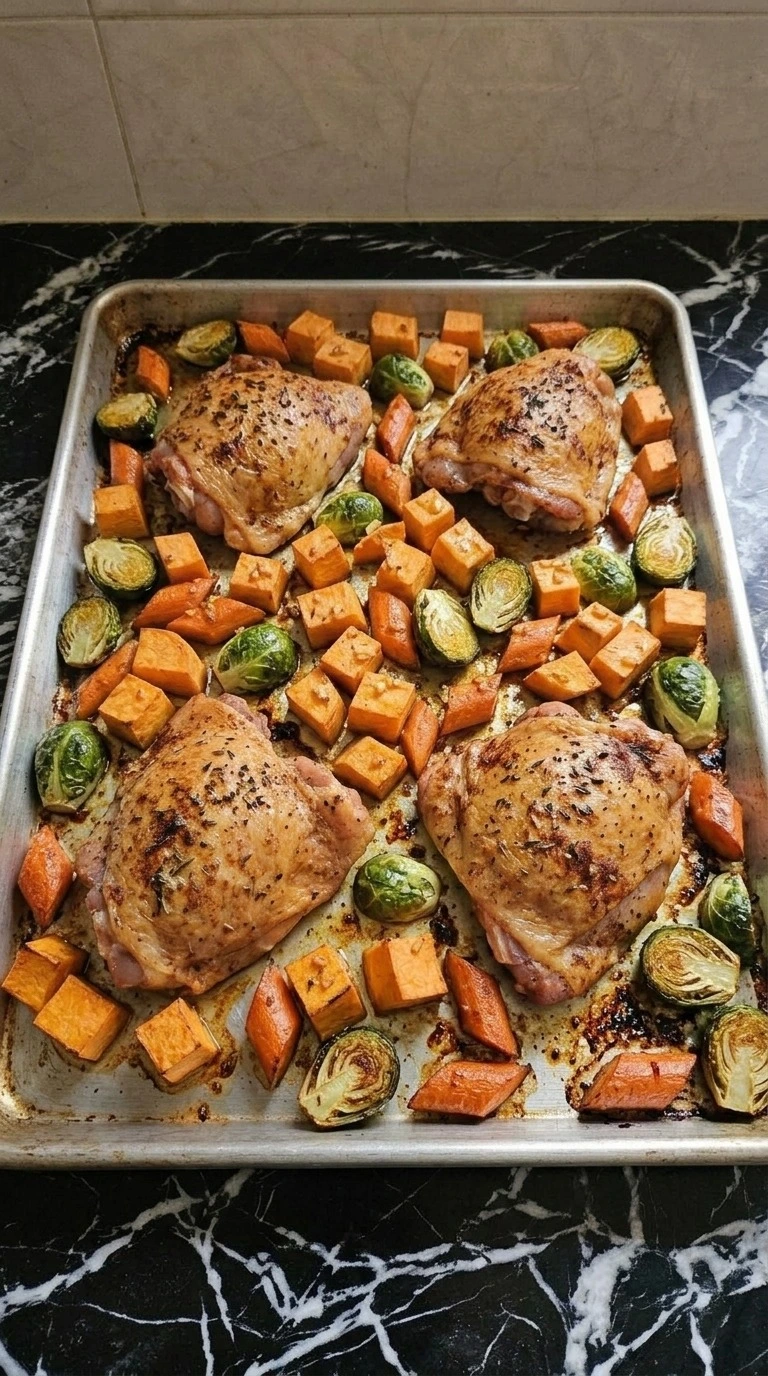
Slide the loaded sheet pan onto the middle rack of your 425°F oven. Roast for 20 minutes without moving the chicken so the skin can start to brown. Then pull the tray out and turn the vegetables with a spatula while leaving the thighs skin side up. Spread everything back into an even layer and return the pan to the oven for another 15 to 20 minutes.
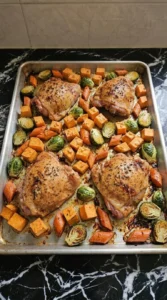
Check the thickest part of each thigh with an instant-read thermometer without touching the bone. The chicken must reach at least 165°F and dark meat often tastes more tender closer to 175°F. If the chicken needs longer, keep roasting and check every 3 minutes. By minute 35, the skin should look golden with darker crisp patches.
The carrots and sweet potatoes should give easily when pierced with a fork. You’ll smell toasted garlic and herbs. If you roast past the point of tender vegetables, their smaller edges can burn. The high oven heat builds color while the thermometer guards against undercooked chicken.
Tip: If your chicken thighs are much larger than 6 ounces each, allow 5 to 10 extra minutes and check the internal temperature before serving.
Step 5: Rest the chicken and finish each plate with lemon
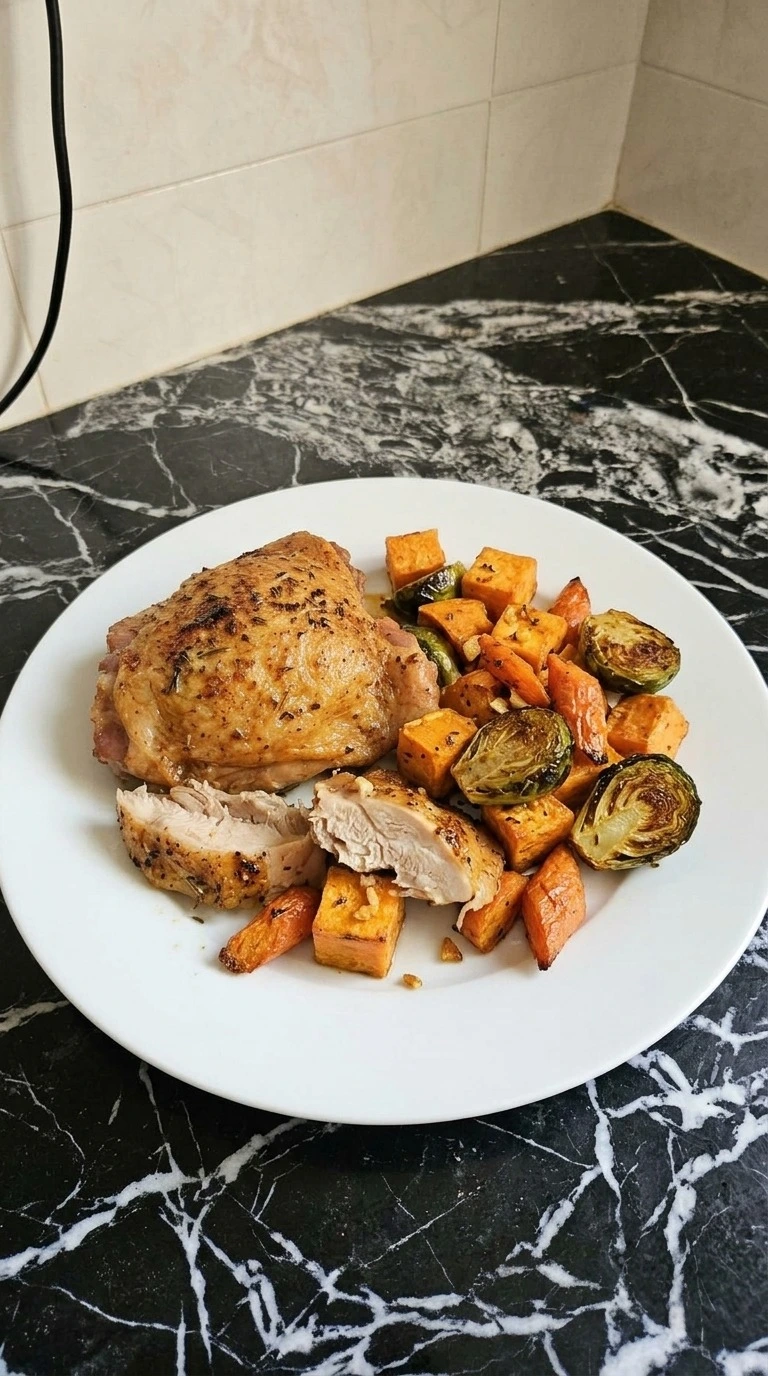
Take the pan out once all 4 thighs have reached at least 165°F in the thickest part. Let the chicken rest for 5 minutes while the vegetables stay warm on the tray. Next, cut the lemon in half and squeeze about 1 tablespoon of juice evenly over the roasted vegetables. Toss them gently so the citrus coats the warm pieces without breaking the softened sweet potatoes.
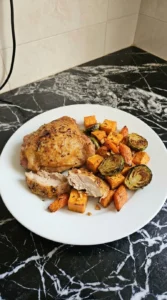
Transfer one chicken thigh and one quarter of the vegetables to each of 4 plates. Keep the crisp skin facing up. For a closer look at the meat, cut a small section from one thigh before serving. You’ll see juicy opaque chicken beneath the golden skin and soft sweet potato centers beside browned sprouts.
The lemon adds a bright smell. Don’t cut the meat as soon as it leaves the oven or you’ll lose more juice. A 5-minute rest helps keep each serving moist.
Tip: For a brighter finish, save 1 teaspoon of fresh lemon juice per plate and add it right before serving instead of soaking the chicken skin.
Pro Tips
- Choose chicken thighs that weigh about 5 to 6 ounces each so all 4 pieces roast at roughly the same rate.
- Leave about 1/2 inch between the larger pieces whenever possible. Sheet Pan Chicken and Vegetables needs space for moisture to escape and edges to brown.
- Use a sturdy 18 by 13-inch rimmed sheet pan because thin trays can warp at 425°F and send roasting juices toward one corner.
- Dry the chicken skin thoroughly before adding seasoning. Even a thin layer of moisture can slow browning during the first 20 minutes.
- Check the thickest thigh with a digital thermometer around minute 35. Remove it only after the center reaches at least 165°F.
- Use fresh Brussels sprouts with tight green leaves and firm stems. Loose yellow leaves can scorch before the sweet potatoes become tender.
- Save the lemon juice until the end and add about 1 tablespoon over the vegetables. Early acid can mute their natural sweetness.
- For easier meal prep, cut the sweet potatoes and carrots up to 24 hours ahead and keep them chilled in separate airtight containers.
- Make a lemon herb version by replacing the smoked paprika with 1 teaspoon of dried rosemary and adding an extra tablespoon of fresh lemon juice after roasting.
- Give the dinner a warmer spice flavor with 1/2 teaspoon of ground cumin and 1/4 teaspoon of ground coriander alongside the smoked paprika.
- For a colorful winter variation, replace the 12 ounces of Brussels sprouts with 12 ounces of peeled butternut squash cut into 3/4-inch cubes.
- Make a maple mustard version by brushing the chicken with 1 tablespoon of pure maple syrup mixed with 1 tablespoon of Dijon mustard during the final 8 minutes of roasting.
Substitutions & Variations
- Bone-in skin-on chicken thighs: Use 4 boneless skinless chicken thighs instead. Boneless thighs cook faster and won’t develop the same crispy skin. Start checking after 20 minutes at 425°F and remove them at 165°F. Keep roasting the vegetables if they need more time.
- Orange sweet potatoes: Replace with 1 pound of Yukon Gold potatoes. Cut the Yukon Gold potatoes into 3/4-inch cubes and use the same amount of extra virgin olive oil. They’ll taste less sweet and have a creamier center. If you love roasted potatoes with chicken, try our Sheet Pan Chicken Thighs and Potatoes for an Easy Dinner.
- Brussels sprouts: Use 12 ounces of fresh broccoli florets. Broccoli has a softer texture and develops crispy tips rather than the firm caramelized centers of Brussels sprouts. Add the florets during the final 15 to 20 minutes so they don’t burn.
- Smoked paprika: Replace with an equal amount of sweet paprika. Use 1 teaspoon of sweet paprika for a milder flavor without the smoky finish. Both options are naturally dairy-free, gluten-free and egg-free when you use pure spices without added seasoning blends.
- Extra virgin olive oil: Use 2.5 tablespoons of avocado oil. Avocado oil handles the 425°F roasting temperature and has a more neutral flavor. You’ll lose some of the olive oil’s fruity taste, but the vegetables can still develop crisp golden edges.
Storage Instructions
Let the leftovers cool slightly and refrigerate them within 2 hours of cooking. Store Sheet Pan Chicken and Vegetables in shallow airtight containers at 40°F or below for up to 3 to 4 days. Keep the chicken and vegetables in separate compartments if possible because the vegetables release moisture that can soften the skin. You can also freeze individual portions for up to 3 months.
Wrap the cooked chicken tightly and store the vegetables in freezer-safe containers. Label each portion with the date so you know when to use it. The vegetables will be a little softer after thawing, especially the Brussels sprouts. For the best texture, reheat refrigerated portions in a 350°F oven for 12 to 18 minutes or until the chicken reaches 165°F internally.
Add 1 tablespoon of water around the vegetables if they look dry. Don’t cover the chicken skin because trapped moisture makes it soft. If you notice a sour smell, slimy surface or visible mold, discard the leftovers. And don’t taste food to check whether it’s safe.
Sheet Pan Chicken and Vegetables
Ingredients
Method
- Start by heating your oven to 425°F. While it heats, scrub the sweet potatoes and peel them if you prefer a softer bite. Cut them into roughly 3/4-inch cubes with a sharp knife. Next, peel the carrots and cut them into 1/2-inch diagonal pieces so they roast at about the same rate as the sweet potatoes. Trim the Brussels sprouts and slice each one in half through the stem. Keep the pieces fairly close in size. You’ll spend about 10 to 12 minutes on the cutting, but don’t rush through the thicker carrots because large pieces can stay firm after the chicken finishes roasting. You’ll see a mix of bright orange cubes, angled carrot pieces and green sprout halves. Some size difference is fine. But if the carrot pieces are twice as thick as the others, they’ll take longer to soften. Even cuts help the vegetables roast at 425°F without leaving hard centers.
- Transfer the cut sweet potatoes, carrots and Brussels sprouts to a large mixing bowl. Add 1 1/2 tablespoons of extra virgin olive oil along with 1/2 teaspoon of smoked paprika, 1/2 teaspoon of dried thyme, 1/2 teaspoon of kosher salt and 1/4 teaspoon of freshly ground black pepper. Add the minced garlic and toss everything with your hands or a large spoon for about 1 to 2 minutes. Lift the vegetables from the bottom as you mix so the seasoning reaches the pieces underneath. Keep your oven at 425°F because the next stage needs strong heat to brown the vegetables. The vegetables should look lightly glossy rather than wet. You’ll also notice the paprika clinging to the sweet potato edges. Don’t leave dry pockets of spice at the bottom of the bowl because those pieces won’t roast with the same flavor. A thin oil coating helps the vegetables brown without turning greasy.
- Spread the seasoned vegetables across a large rimmed sheet pan in a loose single layer. Then pat 4 bone-in skin-on chicken thighs dry with paper towels. Rub them with the remaining 1 tablespoon of extra virgin olive oil and season with the remaining 1/2 teaspoon of smoked paprika, 1/2 teaspoon of dried thyme, 1/2 teaspoon of kosher salt and 1/4 teaspoon of black pepper. Set each thigh skin side up between the vegetables with a little room around its edges. Keep the oven at 425°F and plan to move the pan into it within 5 minutes so the chicken doesn’t sit out longer than needed. You’ll see pale pink chicken with taut seasoned skin surrounded by colorful vegetables. Keep the thick thighs from touching. (I once packed the pan too tightly and the vegetables turned soft instead of golden.) Crowding traps moisture during roasting. Space lets the 425°F heat reach the food and dry the skin.
- Slide the loaded sheet pan onto the middle rack of your 425°F oven. Roast for 20 minutes without moving the chicken so the skin can start to brown. Then pull the tray out and turn the vegetables with a spatula while leaving the thighs skin side up. Spread everything back into an even layer and return the pan to the oven for another 15 to 20 minutes. Check the thickest part of each thigh with an instant-read thermometer without touching the bone. The chicken must reach at least 165°F and dark meat often tastes more tender closer to 175°F. If the chicken needs longer, keep roasting and check every 3 minutes. By minute 35, the skin should look golden with darker crisp patches. The carrots and sweet potatoes should give easily when pierced with a fork. You’ll smell toasted garlic and herbs. If you roast past the point of tender vegetables, their smaller edges can burn. The high oven heat builds color while the thermometer guards against undercooked chicken.
- Take the pan out once all 4 thighs have reached at least 165°F in the thickest part. Let the chicken rest for 5 minutes while the vegetables stay warm on the tray. Next, cut the lemon in half and squeeze about 1 tablespoon of juice evenly over the roasted vegetables. Toss them gently so the citrus coats the warm pieces without breaking the softened sweet potatoes. Transfer one chicken thigh and one quarter of the vegetables to each of 4 plates. Keep the crisp skin facing up. For a closer look at the meat, cut a small section from one thigh before serving. You’ll see juicy opaque chicken beneath the golden skin and soft sweet potato centers beside browned sprouts. The lemon adds a bright smell. Don’t cut the meat as soon as it leaves the oven or you’ll lose more juice. A 5-minute rest helps keep each serving moist.
Notes
Frequently Asked Questions
Yes! You can cut the carrots and Brussels sprouts up to 2 days ahead and keep them in separate airtight containers in the refrigerator. Cut the sweet potatoes up to 24 hours ahead and refrigerate them submerged in cold water. Drain and dry them thoroughly before roasting. Keep the raw chicken refrigerated separately at 40°F or below until you’re ready to season and cook it.
Too much moisture or an overcrowded pan usually causes this problem. Use an 18 by 13-inch rimmed sheet pan and spread the vegetables into a loose single layer. Roast at 425°F so their surfaces lose moisture and develop golden edges. If your tray looks crowded, split the ingredients between 2 pans and rotate their oven positions halfway through cooking.
Yes, but boneless skinless chicken breasts need a different cooking schedule. Use 4 small breasts weighing about 5 to 6 ounces each and check their thickest centers after 18 to 22 minutes at 425°F. Remove them once they reach 165°F and let the vegetables continue roasting if needed. Breast meat is leaner and can turn dry if you leave it in the oven too long.
Double every ingredient and divide the food between 2 large rimmed sheet pans instead of piling everything onto one. Roast at 425°F with one pan on the upper middle rack and the other on the lower middle rack. Switch their positions halfway through the 35 to 40-minute cooking window. Check all 8 chicken thighs individually and make sure each reaches at least 165°F.
The recipe uses no wheat flour, milk, butter or cheese, so it’s naturally gluten-free and dairy-free when made with plain ingredients. Check packaged smoked paprika and other spices for additives or cross-contact warnings if you have strict dietary needs. Roast everything at 425°F as directed because these dietary choices don’t require changing the cooking temperature or time.
The sweet potatoes and roasted vegetables make this a complete meal on their own. However, you can serve each portion over 1/2 cup of cooked brown rice or alongside a simple green salad with lemon dressing. For a larger dinner, add warm bread and a fresh vegetable side. Keep the chicken skin uncovered until serving so it stays crisp.
Yes! Freeze the cooked chicken and vegetables in meal-sized airtight containers for up to 3 months for the best texture. Thaw overnight in the refrigerator and reheat at 350°F for about 15 to 20 minutes until the center reaches 165°F. Add 1 tablespoon of water around the vegetables if they seem dry, but keep it away from the chicken skin.
Final Thoughts
That first pan of Sheet Pan Chicken and Vegetables reminded me that dinner doesn’t need to be complicated to make everyone happy. I was worried the carrots would stay hard or the chicken would dry out, but cutting everything to the right size made all the difference.
If you’re looking for a sheet pan chicken and vegetables recipe to keep in your weeknight dinner rotation or a winter sheet pan chicken and vegetables meal with very little cleanup, give this one a try and tell me how it turned out. And if you love these kinds of dinners, check out my Sheet Pan Chicken Thighs and Veggies for Busy Weeknights or my Sheet Pan Roasted Butternut Squash Soup for another warm meal made with simple ingredients.
It works just as well when you are after easy sheet pan chicken and vegetables.
Brussels sprouts and broccoli belong to the same plant species as cabbage and kale. Their edges turn wonderfully crisp in a 425°F oven because dry heat drives away surface moisture and encourages browning. That’s why roasting gives them a much richer flavor than boiling.