Pomegranate Pear Salad
A Christmas lunch at my sister’s house changed the way I make Pomegranate Pear Salad. She had a big bowl of crisp greens with slices of pear and bright red pomegranate seeds, and everyone kept going back for more. I watched her toss the dressing just before serving because she didn’t want the leaves to wilt. That little trick stuck with me. Now I make this easy pomegranate pear salad whenever we have family over during the holidays. My first try wasn’t quite right because I added too much dressing and the pecans lost their crunch.
The part I love most is how fresh it tastes next to all the rich food on a Christmas table. You get sweet pear in one bite and a sharp pop of pomegranate in the next. Then the toasted pecans add a warm nutty crunch while the feta brings a bit of salt. It’s a nice change from heavier sides. And if you enjoy salads with fall fruit, our Fall Harvest Salad is another one to keep in mind. This pear and pomegranate salad doesn’t need any hard-to-find ingredients or hours in the kitchen.
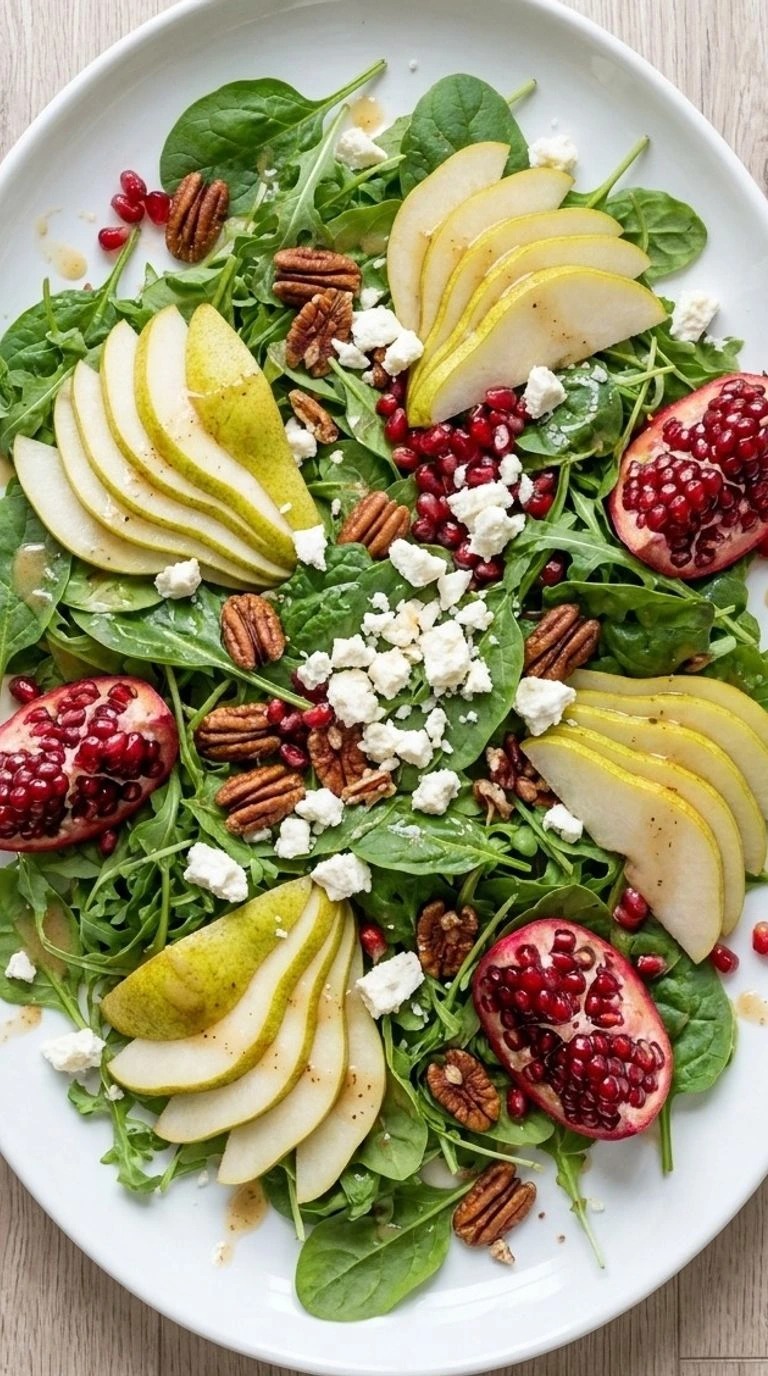
Most of the work is just slicing and whisking. You can get the nuts toasted and the dressing mixed ahead of time, then put everything together when people are ready to eat. Simple as that. The red pomegranate seeds and green leaves also make the bowl look festive without any extra fuss.
Why This Recipe Works
Pomegranate Pear Salad works best when you keep the fruit firm and the greens dry. Slicing the pears just before serving helps them stay pale while the sharp apple cider vinegar and fresh lemon juice keep the dressing bright.
Whisking Dijon mustard into the oil for 30 to 45 seconds helps the dressing cling to leaves instead of pooling below them. It’s a simple trick that makes every bite taste fresher.
The toasted pecans go on last because their dry crunch fades once they sit in dressing. If you like this mix of sweet fruit and greens, try our Fall Apple Salad too.
Ingredients
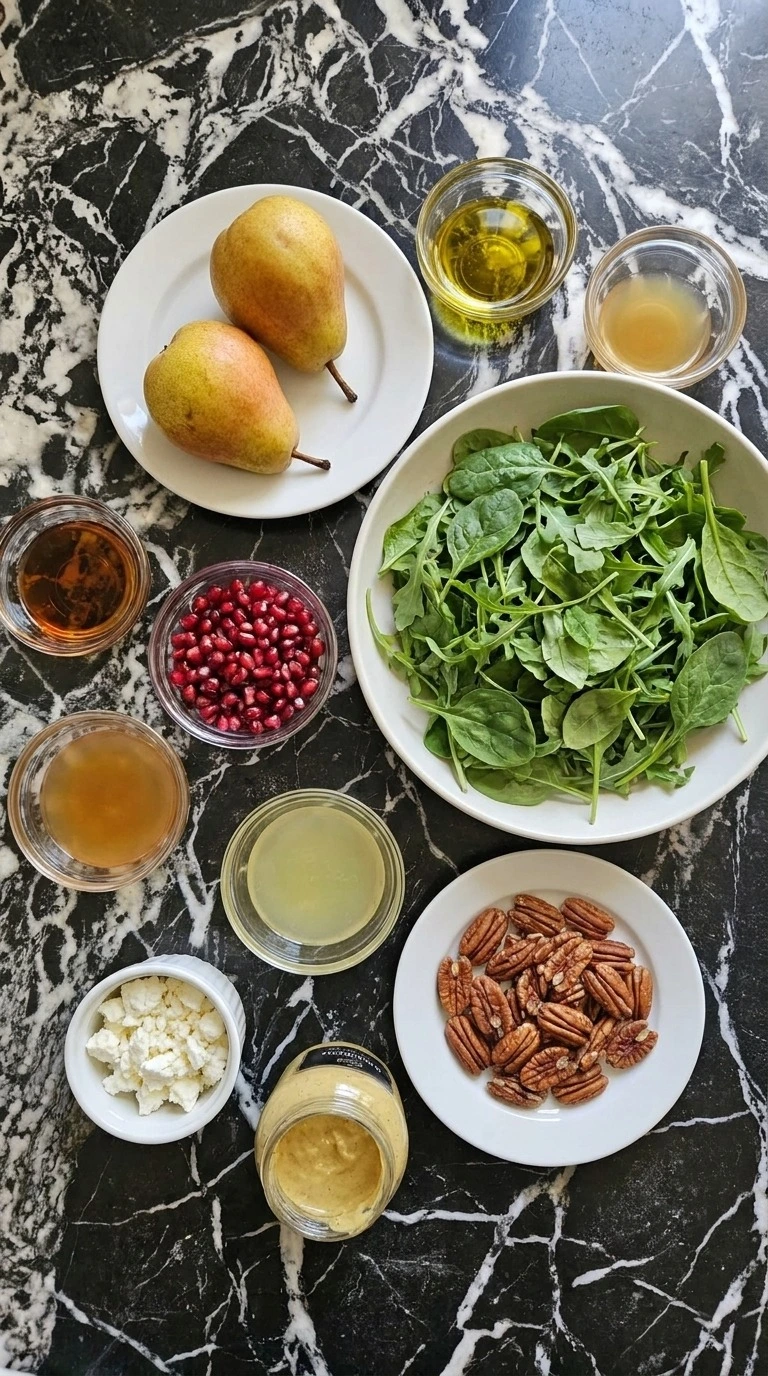
- pecan halves: Raw and unsalted, then toasted until fragrant to bring a rich nutty crunch to the salad.
- extra virgin olive oil: Used as the base of the maple Dijon vinaigrette for a smooth coating on the greens.
- apple cider vinegar: Adds gentle acidity that cuts through the sweetness of the pears and maple syrup.
- fresh lemon juice: Freshly squeezed to add a bright citrus note to the dressing.
- pure maple syrup: Adds a mild sweetness that rounds out the vinegar without making the salad sugary.
- Dijon mustard: Whisked into the dressing to help the oil and vinegar blend and add a mild tang.
- fine sea salt: Added to the dressing to sharpen the fruit flavors and balance the maple syrup.
- black pepper: Freshly ground for a mild peppery finish that works with the Dijon mustard.
- baby spinach: Rinsed and thoroughly dried to form the soft green base of the salad.
- baby arugula: Rinsed and thoroughly dried to add a lightly peppery contrast to the sweet fruit.
- Bartlett pears: Ripe but firm, quartered, cored and cut into thin 1/8-inch slices with the skin left on.
- pomegranate arils: Fresh and fully separated from the white membrane to add juicy ruby red bursts.
- feta cheese: Crumbled into small irregular pieces for a creamy and salty contrast.
Kitchen Equipment
- 10-inch skillet: A heavy 10-inch skillet spreads the pecan halves in one layer for even toasting, while a smaller pan crowds the nuts and causes uneven dark spots.
- Small mixing bowl: A 2-cup mixing bowl gives the dressing enough room to move while whisking, but a very shallow bowl makes the oil splash over the edge.
- Small balloon whisk: A 6-inch whisk breaks the oil into fine droplets for a smoother dressing, while a large stiff whisk is harder to control in a small bowl.
- Sharp chef’s knife: An 8-inch chef’s knife makes clean pear slices without crushing the flesh, while a dull blade can bruise ripe fruit and make the pieces uneven.
- Cutting board: A stable cutting board at least 12 inches long gives enough room to quarter and slice two pears, while a small sliding board makes thin cuts harder to control.
- Large salad spinner: A 4 to 5-quart salad spinner dries the spinach and arugula so the dressing sticks, while a smaller spinner may need several batches to avoid crushed leaves.
- Large oval serving platter: A shallow serving platter about 14 to 16 inches long gives the pears and greens room to spread out, while a narrow deep bowl can compress the leaves.
- Measuring cups and spoons: A standard measuring set with 1/8 teaspoon through 1 cup sizes keeps the dressing ratio accurate, while rough estimates can make the vinaigrette too sharp or oily.
How to Make It
Step 1: Toast the pecan halves until fragrant
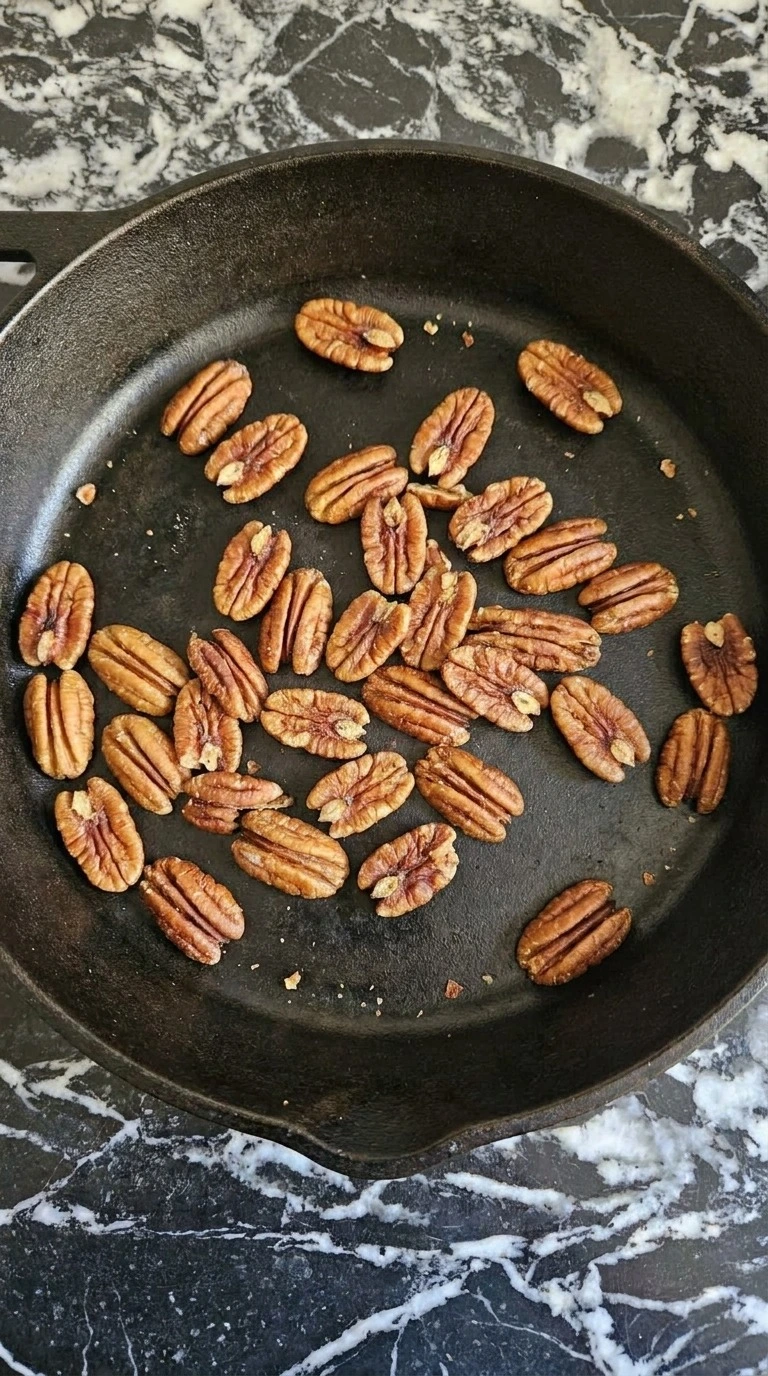
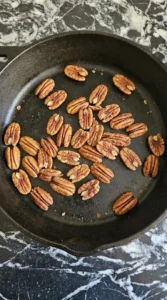
Place 1/2 cup raw pecan halves in a dry skillet and spread them in one loose layer. Set the heat to medium-low, around 3 to 4 on a 10-point dial. Toast for 3 to 5 minutes and shake the skillet every 30 seconds so the nuts turn over and heat on both sides. Keep a close eye on them after minute 3 because pecans can go from golden to bitter in less than a minute.
Then move them to a plate and let them cool for 5 minutes before they go near the greens. Don’t leave them in the hot skillet. You’ll notice the pecans turn a shade darker and start to smell warm and nutty. A few edges may deepen faster than the rest.
That’s normal. If you leave them over the heat after that fragrant stage, they’ll taste burnt. Cooling them for 5 minutes keeps the greens from wilting.
Tip: For a larger holiday batch, toast up to 1 cup of pecan halves in a wide skillet so they still have room to move.
Step 2: Whisk the maple Dijon vinaigrette
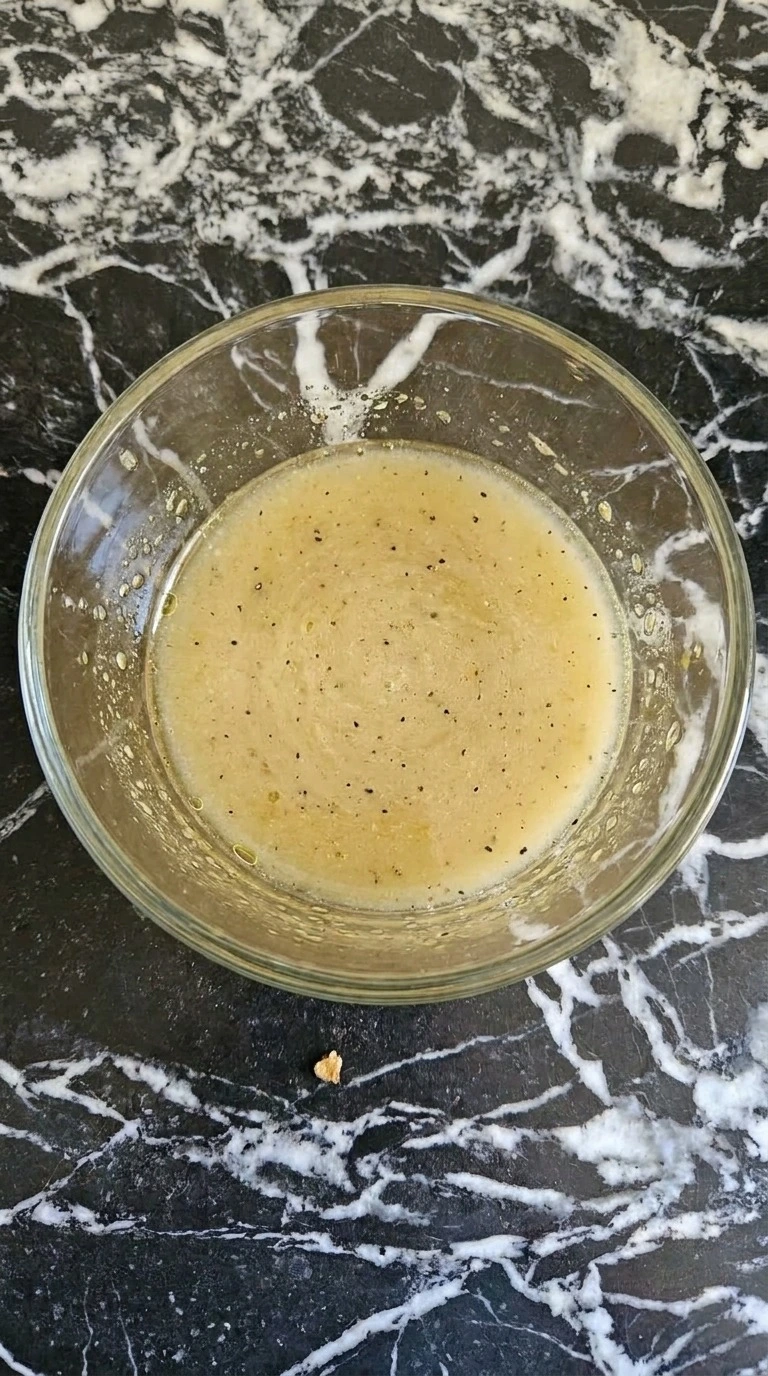
Add 3 tablespoons extra virgin olive oil to a small bowl with 1 tablespoon apple cider vinegar and 1 tablespoon fresh lemon juice. Then add 2 teaspoons pure maple syrup and 1 teaspoon Dijon mustard. Sprinkle in 1/4 teaspoon fine sea salt and 1/8 teaspoon freshly ground black pepper.
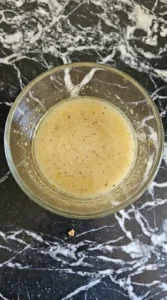
At a cool room temperature of about 68°F to 72°F, whisk briskly for 30 to 45 seconds until the oil breaks into tiny drops and the mix turns cloudy. Taste a small spoonful before adding it to the salad. It should taste bright with just enough sweetness to soften the vinegar.
The dressing will look a bit thicker than plain oil and won’t show a clear layer of vinegar at the bottom. If you stop whisking too soon, it may split before you pour it. Whisking for 45 seconds helps the mustard hold the oil and acid together.
Tip: If your maple syrup has been chilled below 60°F, let it warm slightly before measuring so it blends into the dressing more easily.
Step 3: Slice the pears and build the fresh salad base
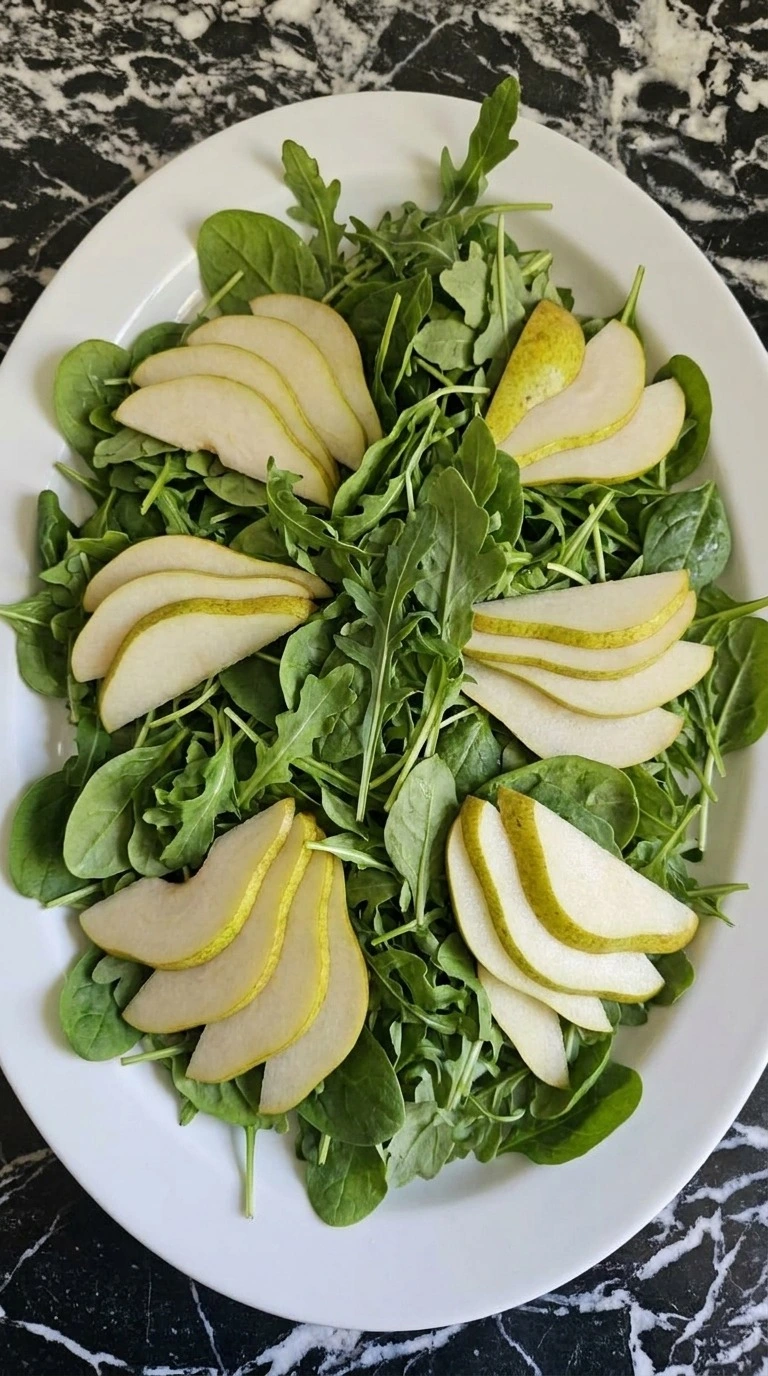
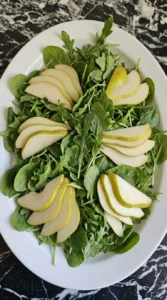
Rinse and thoroughly dry 4 cups of mixed baby spinach and baby arugula. Spread the greens across a large serving platter and keep them loose rather than packing them down. Next, cut 2 ripe but firm Bartlett pears into quarters and remove the cores. Slice each quarter into pieces about 1/8 inch thick.
Work at a cool room temperature near 70°F and aim to finish slicing within 3 minutes of serving or dressing the fruit. Tuck the slices through the greens in small uneven groups so each serving gets a good mix of fruit and leaves. The pear slices should look pale and juicy but still hold their shape when lifted. The leaves should feel dry rather than wet.
Cut the fruit too early and it may darken around the edges. Late slicing helps the pears stay pale and firm.
Tip: Choose Bartlett pears that yield just slightly near the stem. Very soft pears can break apart when cut into slices thinner than 1/4 inch.
Step 4: Scatter the pomegranate arils and feta
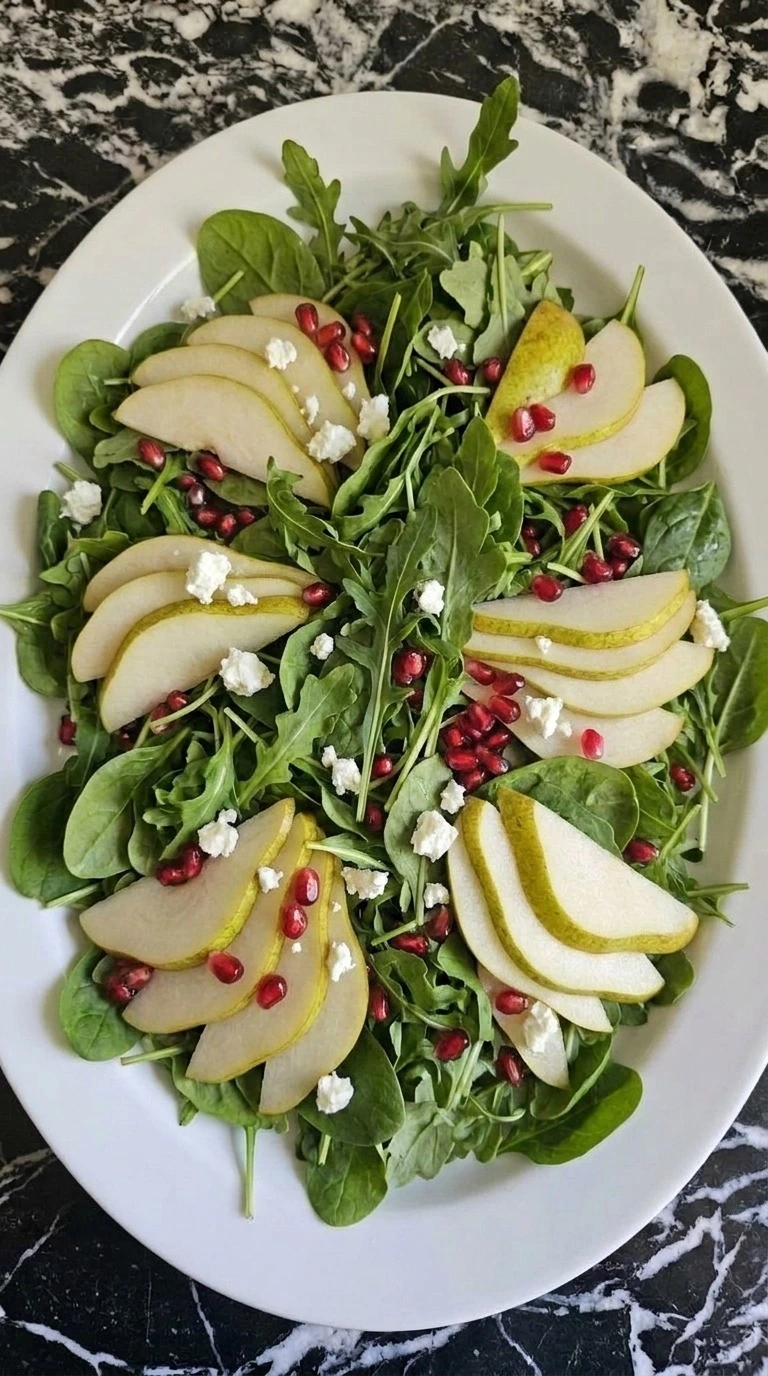
Take the platter of greens and sliced pears and add 3/4 cup fresh pomegranate arils. Use your fingertips to drop small pinches over different parts of the salad instead of tipping them all into one spot. Then scatter 1/3 cup crumbled feta cheese across the top. Work for about 1 to 2 minutes at a cool room temperature near 70°F and leave some pear slices clear so their pale color still shows.
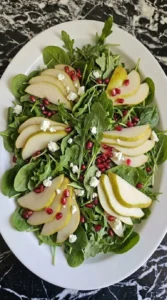
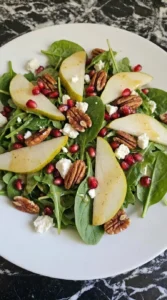
Try to keep most of the cheese on the leaves rather than pressing it into the moist fruit. This keeps the white crumbles from turning pink right away. Now the salad should have bright red arils tucked between the pear slices and uneven white feta pieces resting on the greens. (I once tossed the feta too hard and ended up with pink streaks across the pears.
) Press too much and the soft cheese smears. Gentle scattering keeps the colors distinct.
Tip: If you’re preparing pomegranate arils from a whole fruit, use 3/4 cup of intact seeds and discard any pale membrane before adding them.
Step 5: Dress the salad and finish with toasted pecans
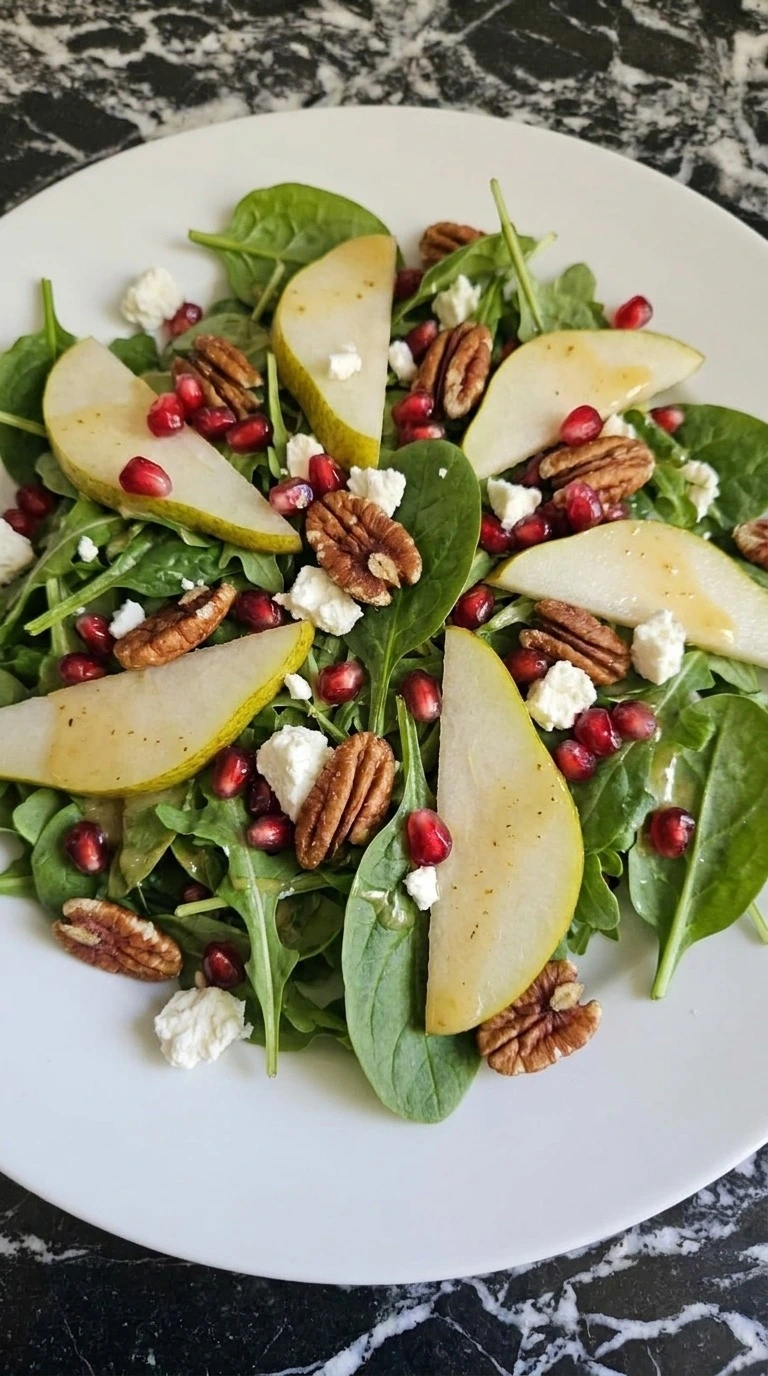
Give the maple Dijon vinaigrette a quick 10-second whisk if it has started to separate. Then spoon about two-thirds of the dressing over the greens and pear slices in thin uneven lines. Gently lift and turn a few sections of leaves so the dressing coats them without crushing the fruit. Add the cooled 1/2 cup toasted pecan halves across the platter and leave them mostly on top.
Do all this within 2 minutes of serving at a room temperature around 68°F to 72°F. Taste one leaf and add more dressing only if it needs it. You may not need every drop. Your Pomegranate Pear Salad should look lightly glossy with pale pear slices and red pomegranate arils still easy to see.
The nuts should feel dry and crisp on top. Too much dressing will pool and soften them. Dress at the last minute to protect the crunch.
Tip: Keep the last tablespoon or two of dressing separate for guests who prefer a sharper salad. Offer it alongside the plated portions.
Pro Tips
- Choose Bartlett pears that give slightly near the stem but still feel firm along the sides. Two medium pears should yield enough slices for four servings.
- Dry the 4 cups of baby greens thoroughly after washing. Even a tablespoon of water left on the leaves can thin the dressing and make it slide off.
- Keep the 1/2 cup toasted pecans in a separate airtight container until serving. This protects their crisp texture if you’re preparing the salad 1 day ahead.
- Use a wide 14 to 16-inch serving platter instead of a deep salad bowl. The shallow shape helps keep delicate pear slices from breaking under the greens.
- Start with about two-thirds of the maple Dijon dressing and taste a leaf before adding more. A light coating looks glossy without leaving liquid beneath the salad.
- For brighter pear slices, toss them gently with 1 teaspoon of lemon juice taken from the measured dressing ingredients if you need a 10-minute serving delay.
- If your pomegranate arils look wet, drain them for 2 minutes before adding them. Excess juice can tint the feta pink and collect beneath the greens.
- For a sharper finish, add an extra 1/2 teaspoon Dijon mustard to the dressing. Whisk for 15 seconds and taste before changing the maple syrup.
- Make a winter citrus version by adding 1 peeled and segmented navel orange. Reduce the Bartlett pears to 1 medium pear so the platter doesn’t become overcrowded.
- For a vegan holiday salad, replace the 1/3 cup feta with 1/3 cup crumbled dairy-free feta and keep the pure maple syrup in the dressing.
- Turn this into a more filling lunch by adding 1 cup cooked and cooled quinoa to the greens. Increase the dressing by half to coat the extra grains.
- Give the salad a fresh herbal twist with 2 tablespoons finely chopped fresh mint. Scatter it over the finished dish just before serving for a cool contrast to the sweet pears.
Substitutions & Variations
- feta cheese: 1/3 cup crumbled dairy-free feta. Use the same amount for a dairy-free salad. Plant-based feta is often softer and less salty, so start with a small pinch of extra sea salt if needed. For another fruit-filled holiday dish, try our Christmas Fruit Salad.
- pecan halves: 1/2 cup raw walnut halves or roasted pumpkin seeds. Toast walnut halves for 3 to 5 minutes over medium-low heat for a slightly bitter and earthy crunch. For a nut-free version, use 1/2 cup roasted pumpkin seeds instead. Check that they’re prepared without nut cross-contact when serving someone with a nut allergy.
- Bartlett pears: 2 medium Bosc pears or 2 medium Anjou pears. Bosc pears hold their shape especially well and have a firmer bite than ripe Bartlett pears. Anjou pears are slightly milder. Use the same quantity and slice them about 1/8 inch thick. Choose ripe but firm fruit for either swap.
- pure maple syrup: 2 teaspoons honey or 2 teaspoons agave nectar. Honey makes the dressing a little thicker and adds a floral taste. Agave has a milder flavor and keeps the dressing vegan if you also replace the feta. Both blend into the vinaigrette at the same ratio. This dressing is naturally egg-free and gluten-free when the packaged ingredients are certified gluten-free.
- apple cider vinegar: 1 tablespoon white wine vinegar. White wine vinegar gives the dressing a cleaner and slightly sharper taste. Keep the measurement at 1 tablespoon and taste after whisking. If it seems too sharp, add another 1/2 teaspoon maple syrup rather than extra olive oil.
Storage Instructions
For the best texture, store each part of Pomegranate Pear Salad separately in the refrigerator at 40°F or below. Keep the washed and dried greens in a covered container with a dry paper towel for up to 2 days. Store the vinaigrette in a sealed jar for up to 4 days and the toasted pecans in an airtight container for up to 5 days. Refrigerate opened pomegranate arils for up to 3 days.
Keep whole pears uncut until assembly. If you’ve already dressed the salad, refrigerate leftovers promptly and eat them within 1 day. Don’t freeze the assembled dish because the fruit and leaves turn limp after thawing. This salad doesn’t need reheating.
If the dressing has been chilled, let it stand for 10 minutes at room temperature and shake the jar for 15 seconds before serving. Add a teaspoon of fresh lemon juice if the flavor seems dull. Discard the salad if you notice slimy greens, mold, an unpleasant sour odor or fruit that has become unusually mushy. Don’t leave the finished salad unrefrigerated for longer than 2 hours.
Pomegranate Pear Salad
Ingredients
Method
- Place 1/2 cup raw pecan halves in a dry skillet and spread them in one loose layer. Set the heat to medium-low, around 3 to 4 on a 10-point dial. Toast for 3 to 5 minutes and shake the skillet every 30 seconds so the nuts turn over and heat on both sides. Keep a close eye on them after minute 3 because pecans can go from golden to bitter in less than a minute. Then move them to a plate and let them cool for 5 minutes before they go near the greens. Don’t leave them in the hot skillet. You’ll notice the pecans turn a shade darker and start to smell warm and nutty. A few edges may deepen faster than the rest. That’s normal. If you leave them over the heat after that fragrant stage, they’ll taste burnt. Cooling them for 5 minutes keeps the greens from wilting.
- Add 3 tablespoons extra virgin olive oil to a small bowl with 1 tablespoon apple cider vinegar and 1 tablespoon fresh lemon juice. Then add 2 teaspoons pure maple syrup and 1 teaspoon Dijon mustard. Sprinkle in 1/4 teaspoon fine sea salt and 1/8 teaspoon freshly ground black pepper. At a cool room temperature of about 68°F to 72°F, whisk briskly for 30 to 45 seconds until the oil breaks into tiny drops and the mix turns cloudy. Taste a small spoonful before adding it to the salad. It should taste bright with just enough sweetness to soften the vinegar. The dressing will look a bit thicker than plain oil and won’t show a clear layer of vinegar at the bottom. If you stop whisking too soon, it may split before you pour it. Whisking for 45 seconds helps the mustard hold the oil and acid together.
- Rinse and thoroughly dry 4 cups of mixed baby spinach and baby arugula. Spread the greens across a large serving platter and keep them loose rather than packing them down. Next, cut 2 ripe but firm Bartlett pears into quarters and remove the cores. Slice each quarter into pieces about 1/8 inch thick. Work at a cool room temperature near 70°F and aim to finish slicing within 3 minutes of serving or dressing the fruit. Tuck the slices through the greens in small uneven groups so each serving gets a good mix of fruit and leaves. The pear slices should look pale and juicy but still hold their shape when lifted. The leaves should feel dry rather than wet. Cut the fruit too early and it may darken around the edges. Late slicing helps the pears stay pale and firm.
- Take the platter of greens and sliced pears and add 3/4 cup fresh pomegranate arils. Use your fingertips to drop small pinches over different parts of the salad instead of tipping them all into one spot. Then scatter 1/3 cup crumbled feta cheese across the top. Work for about 1 to 2 minutes at a cool room temperature near 70°F and leave some pear slices clear so their pale color still shows. Try to keep most of the cheese on the leaves rather than pressing it into the moist fruit. This keeps the white crumbles from turning pink right away. Now the salad should have bright red arils tucked between the pear slices and uneven white feta pieces resting on the greens. (I once tossed the feta too hard and ended up with pink streaks across the pears.) Press too much and the soft cheese smears. Gentle scattering keeps the colors distinct.
- Give the maple Dijon vinaigrette a quick 10-second whisk if it has started to separate. Then spoon about two-thirds of the dressing over the greens and pear slices in thin uneven lines. Gently lift and turn a few sections of leaves so the dressing coats them without crushing the fruit. Add the cooled 1/2 cup toasted pecan halves across the platter and leave them mostly on top. Do all this within 2 minutes of serving at a room temperature around 68°F to 72°F. Taste one leaf and add more dressing only if it needs it. You may not need every drop. Your Pomegranate Pear Salad should look lightly glossy with pale pear slices and red pomegranate arils still easy to see. The nuts should feel dry and crisp on top. Too much dressing will pool and soften them. Dress at the last minute to protect the crunch.
Notes
Frequently Asked Questions
Yes, but keep the main parts separate until you’re ready to serve. You can toast the pecans and mix the dressing up to 2 days ahead. Wash and dry the greens 1 day before serving and refrigerate them in a covered container. Slice the pears within 10 to 15 minutes of assembly because their cut surfaces slowly turn brown. Add the dressing and nuts just before everyone sits down.
The fully dressed salad is best eaten right away, but you can keep leftovers in an airtight container at 40°F or below for up to 1 day. The greens will lose some of their crisp texture and the pears may darken slightly. Keep unused dressing separately for up to 4 days in the fridge. Discard any leftovers with a sour smell, slimy leaves or visible mold.
Absolutely. For a dairy-free version, replace the 1/3 cup feta with the same amount of dairy-free feta or leave it out. If you’re avoiding tree nuts, use 1/2 cup roasted pumpkin seeds instead of the pecans. The seeds give a smaller and firmer crunch. Check the labels for cross-contact warnings if allergies are involved. The fruit and maple dressing will still provide plenty of flavor.
Extra moisture usually comes from wet greens or fruit that has released juice after sitting too long. Spin the leaves until dry and let the pomegranate arils drain for about 2 minutes. Then spoon the vinaigrette over the salad in small amounts rather than pouring it all at once. If the bottom already has a pool of dressing, transfer the salad to a dry platter and leave the extra liquid behind.
Yes. Use 4 medium Bartlett pears and 8 cups of mixed greens for 8 servings. Double the pomegranate arils, feta, pecans and dressing ingredients too. Choose two large serving platters instead of piling everything into one deep bowl because the fruit can weigh down the leaves. Divide the dressing between the platters and add it within 2 minutes of serving for the freshest texture.
This salad works well beside roasted turkey, baked chicken or a hearty holiday casserole because the lemon and vinegar cut through rich flavors. Plan on one quarter of the full recipe per person when serving it as a side. For a lighter lunch, pair a generous portion with 1 cup of cooked quinoa or a warm bowl of soup. Serve it chilled or lightly cool rather than warm.
Freezing isn’t a good option because the pears turn soft when thawed and the greens lose their crisp structure. Reheating also wilts the leaves and makes the feta softer. Serve the salad cold, or let the refrigerated components sit out for 10 minutes before assembly. Keep the dressed salad out of the fridge for no more than 2 hours, or 1 hour when temperatures exceed 90°F.
Final Thoughts
This bright Christmas salad has become one of the dishes I love bringing to our family table! Pomegranate Pear Salad keeps things simple with juicy Bartlett pears, ruby red seeds and crunchy toasted pecans under a light maple Dijon dressing.
My first batch had far too much dressing, so now I add it slowly and keep the nuts crisp until serving. That little change makes this easy pomegranate pear salad especially fresh and colorful.
For another holiday idea, try our Christmas Fruit Salad or Fall Harvest Salad. Give this christmas pomegranate pear salad a try and tell me how your family likes it! Come back to it whenever you need pomegranate pear salad recipe.
Pomegranate arils are the juicy red seed coverings inside the fruit, and each one gives a little burst when you bite into it. They’re a popular addition to winter dishes because the bright red color stands out against green leaves. Fresh pears add another seasonal touch, especially when they’re sliced just before serving. And you don’t need to remove the pear skin because it adds color and a bit of texture.