Spinach Artichoke Puff Pastry
A tray of golden Spinach Artichoke Puff Pastry pockets can make a plain old evening feel like something worth celebrating. We’re talking crisp buttery layers wrapped around spinach and tender artichokes with plenty of warm cheese tucked inside. Break one open and that creamy filling peeks right out. So good. Hi! Meet your new favorite party snack.
This easy spinach artichoke puff pastry has everything I love about a warm spinach dip but with a flaky crust you can pick up and eat. It’s rich and cheesy and just messy enough to feel homemade. And when you’ve got friends coming over for New Year’s Eve, these little pockets are exactly the sort of thing that disappears before dinner starts. Add a pitcher of Non Alcoholic Christmas Punch and you’ve got a lovely start to the night. That’s right. We’re asking a pack of frozen puff pastry and a handful of simple filling ingredients to do something pretty special here.
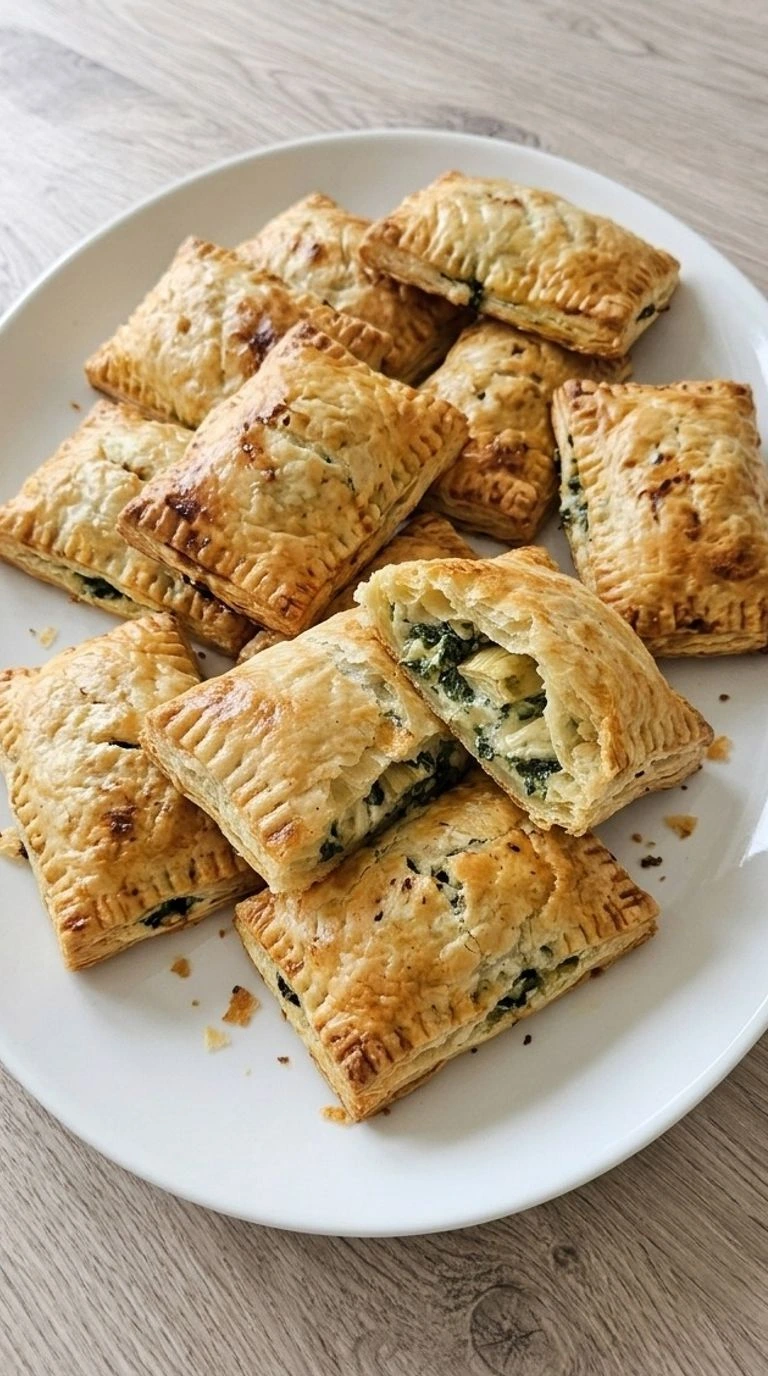
And they really deliver. No tricky dough to make. No fancy shaping skills. Just those crisp layers and a soft cheesy center that makes everyone reach for another one.
Why This Recipe Works
Spinach Artichoke Puff Pastry stays crisp because you cook off extra moisture before the filling ever touches the dough.
The dry spinach and thick cream cheese hold the artichokes together, so the pastry doesn’t turn wet underneath.
Then the 400°F oven gives the all-butter pastry enough heat to puff into flaky layers while the cheese melts inside.
Ingredients
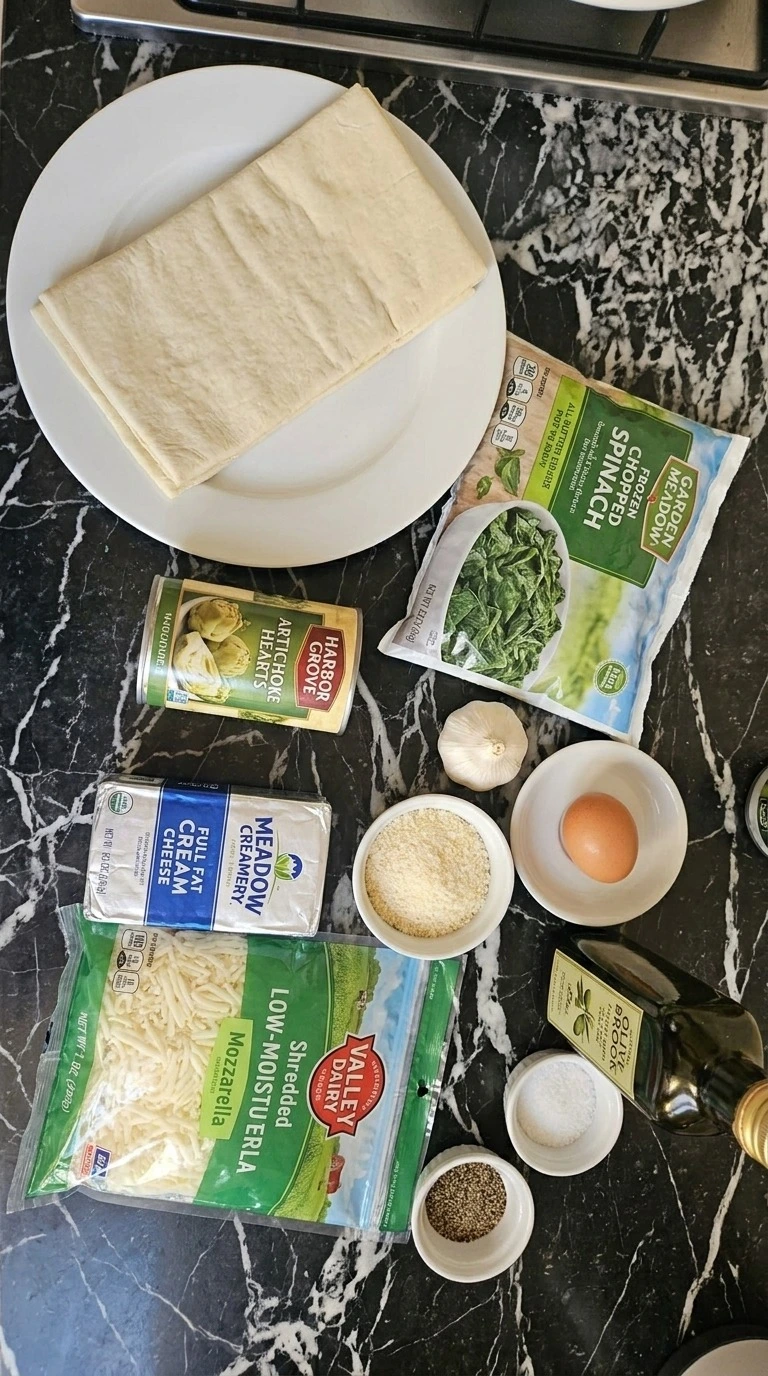
- All-butter puff pastry: Thawed according to package directions but kept cool, then cut into six rectangles per sheet for flaky pastry pockets.
- Frozen chopped spinach: Thawed and squeezed thoroughly to remove excess water so the filling doesn’t soak the pastry.
- Canned artichoke hearts: Drained well and chopped into pieces about 1/2 inch wide for tender bites throughout the filling.
- Full-fat cream cheese: Softened slightly before mixing to bind the spinach and artichokes into a thick creamy filling.
- Low-moisture whole-milk mozzarella: Shredded to add a creamy melted cheese texture without bringing too much moisture into the pastry.
- Parmesan cheese: Finely grated for a salty nutty flavor that balances the mild cream cheese.
- Garlic cloves: Peeled and finely minced to add savory aroma to the spinach and artichoke filling.
- Extra-virgin olive oil: Used to soften the garlic and help release excess moisture from the vegetables.
- Fine sea salt: Added to the cheese filling to season the vegetables without overpowering the Parmesan.
- Ground black pepper: Mixed into the filling for a gentle peppery warmth and a little contrast.
- Large egg: Beaten and lightly brushed over the pastry tops to give them a deep golden finish during baking.
Kitchen Equipment
- 10-inch skillet: A 10-inch nonstick or stainless steel skillet gives spinach enough room to lose moisture, while a smaller crowded pan can trap water in the filling.
- Large mixing bowl: A 3-quart glass or stainless steel mixing bowl provides room to fold in the cheeses without spilling, while a small bowl makes even mixing difficult.
- Large baking sheet: A heavy rimmed baking sheet around 13 by 18 inches holds 12 small pastry pockets with space for airflow, while a thin sheet may brown their bottoms unevenly.
- Parchment paper: Oven-safe parchment rated for at least 400°F helps prevent cheese from sticking to the baking sheet, while wax paper isn’t suitable for oven baking.
- Pastry brush: A soft silicone or natural-bristle pastry brush spreads a thin egg coating without flattening the dough, while a heavy coating can glue the layers together.
- Fork: A standard dinner fork seals the folded pastry seams with small even crimps, while pressing too deeply can tear the dough.
- Sharp knife or pizza cutter: A sharp straight-edged knife or pizza cutter divides the pastry sheets into clean rectangles, while a dull blade can compress the delicate layers.
- Rubber spatula: A heat-safe rubber spatula with a firm flexible edge scrapes and folds the filling evenly, while a rigid spoon can leave unmixed cream cheese lumps.
How to Make It
Step 1: Cook the Garlic, Spinach and Artichokes
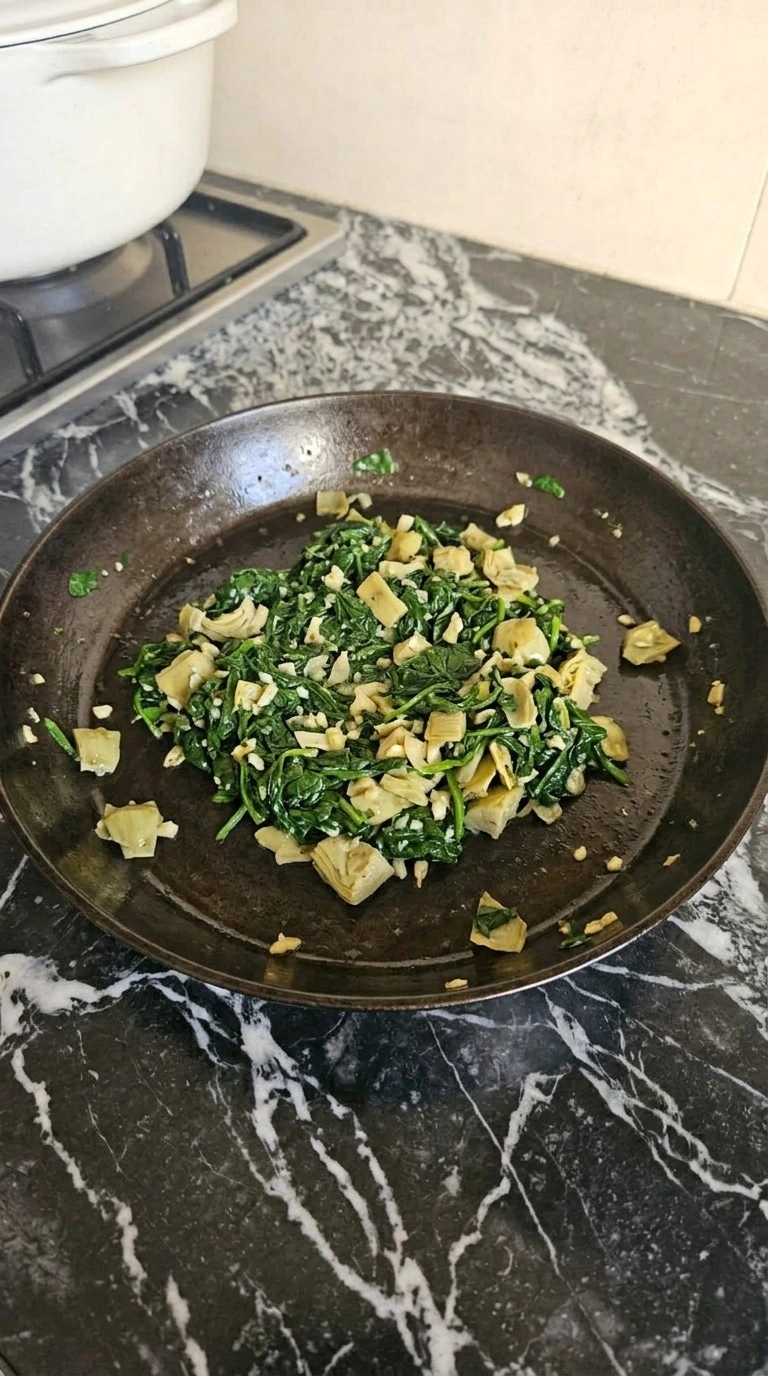
First, thaw the frozen chopped spinach and squeeze it firmly until you’ve pressed out as much water as you can. Drain the canned artichoke hearts and chop them into small pieces about 1/2 inch wide. Then warm the extra-virgin olive oil in a skillet over medium heat, around 5 on a 10-setting stove dial. Add the minced garlic and stir for 30 seconds.
Tip in the spinach and chopped artichokes. Cook for 4 to 5 minutes while turning the mixture with a spatula so the last bits of moisture can escape. Keep it moving. You’ll smell the garlic first.
Then the spinach mixture will look darker and feel less wet as you stir it. Don’t let the garlic turn dark brown or it’ll taste bitter. Transfer the mixture to a clean bowl and let it cool for 5 minutes before adding the cheese. Cooling helps keep the filling thick.
Tip: Use a clean kitchen towel to squeeze thawed spinach in small batches. A thin towel removes more water than pressing it with a spoon.
Step 2: Mix the Creamy Cheese Filling
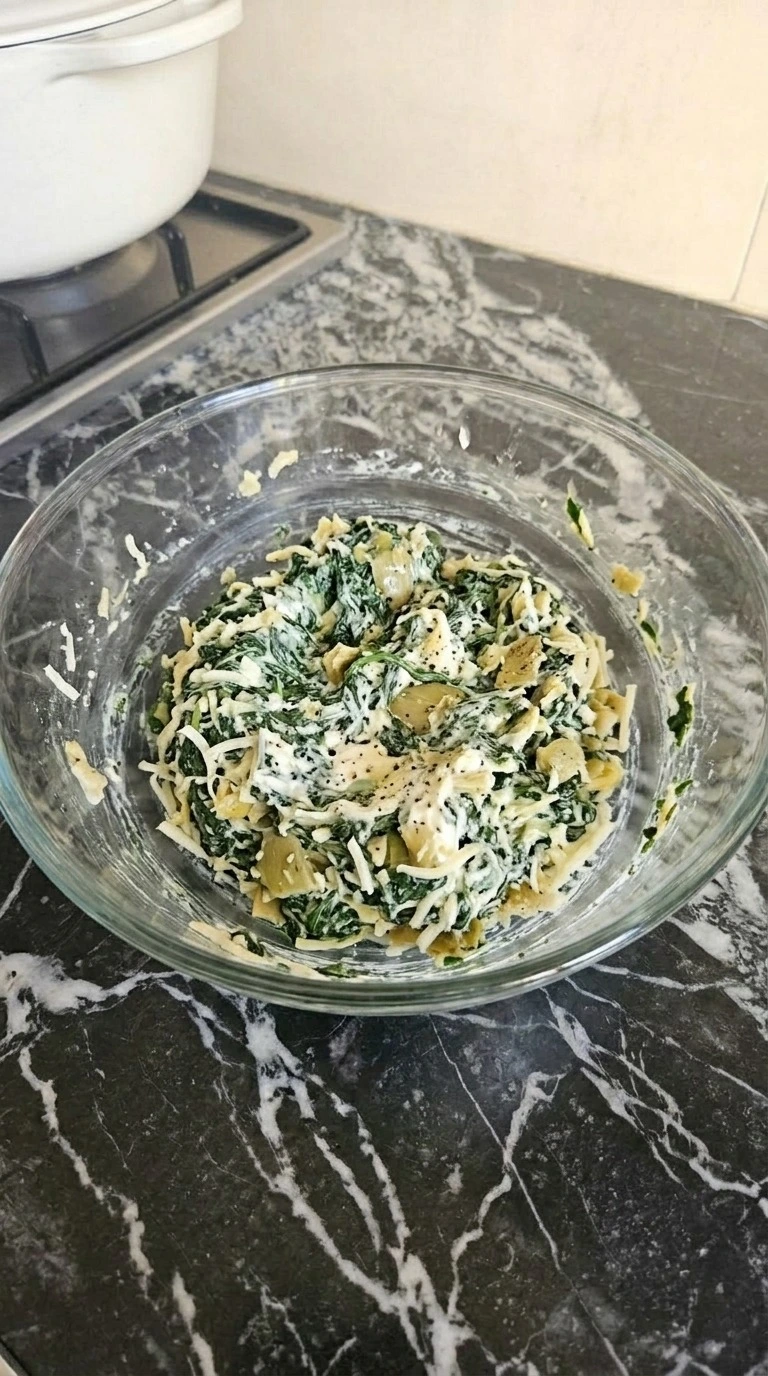
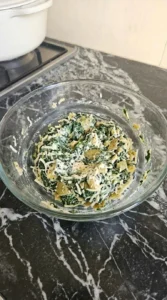
Next, add the softened full-fat cream cheese to the bowl of cooled spinach and artichokes. Sprinkle in the shredded low-moisture mozzarella and finely grated Parmesan. Add the fine sea salt and ground black pepper. Use a sturdy spatula to press the cream cheese against the side of the bowl and fold it through the vegetables until the mixture holds together.
This takes about 2 to 3 minutes. Keep the filling below 75°F if possible and don’t warm it again. You want a thick spread rather than a runny dip. The spinach should look evenly streaked with white cheese, with little pieces of artichoke still easy to spot.
Give it a gentle stir and check that no large lumps remain. If the filling gets warm and loose, chill it for 10 minutes. A cool filling helps protect the pastry layers.
Tip: Grate Parmesan finely rather than using large shreds. Small flakes blend more evenly and won’t leave salty clumps inside the pockets.
Step 3: Cut, Fill and Seal the Pastry Pockets
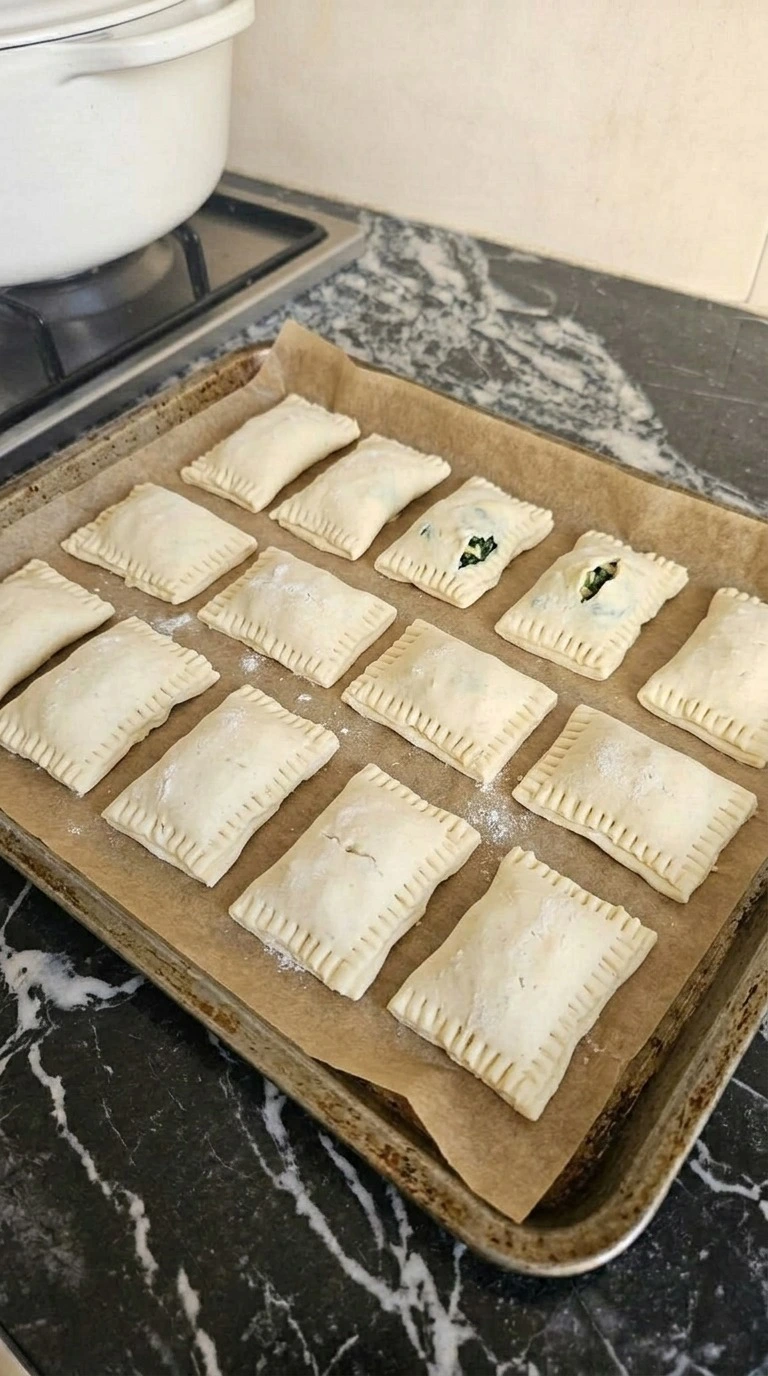
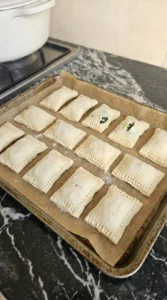
Now heat your oven to 400°F and line a large baking sheet with parchment paper. Unfold the two thawed but still cool all-butter puff pastry sheets. If each sheet measures about 9 by 9 inches, cut it into six rectangles with three columns and two rows. You’ll have 12 pieces in total. Place roughly 2 tablespoons of spinach and artichoke filling on one half of each rectangle.
Leave a 1/2-inch clear border. Fold the empty half over the filling and press the edges closed with your fingertips. Then crimp the seams with a fork. You’ll see 12 small rectangular pockets with slightly uneven folded edges. Move them onto the lined baking sheet and space them about 1 inch apart.
Work within 10 minutes so the pastry stays cool. Overfill them and the seams can burst. Firm edges help hold the filling inside.
Tip: If your pastry sheets are larger or smaller than 9 inches, divide each into six equal rectangles and adjust the filling to leave a clean border.
Step 4: Brush with Egg and Bake Until Deep Golden
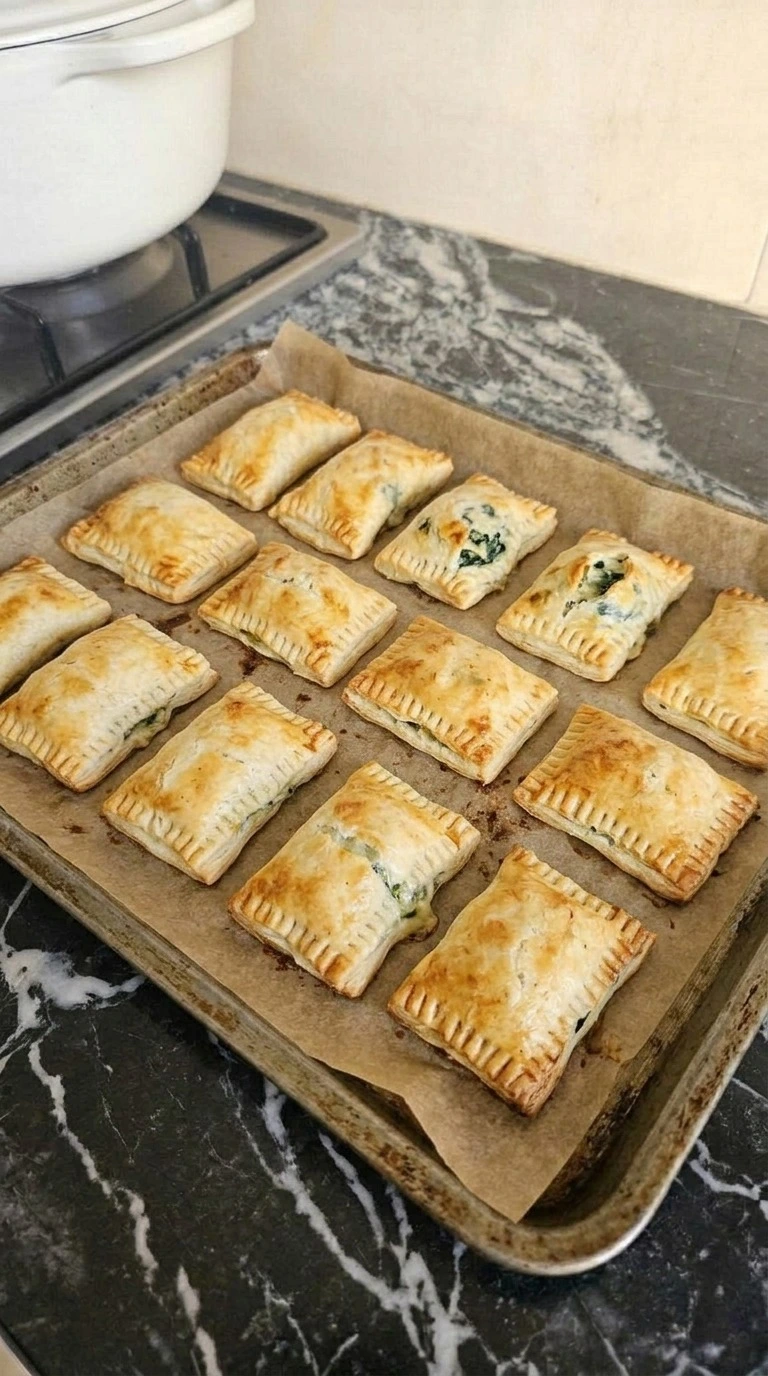
Beat the large egg until the yolk and white blend well. Brush a thin coat over the tops of all 12 pastry pockets without soaking the cut edges. Cut one small slit in the top of each pocket so steam can escape. Then slide the baking sheet onto the middle rack of your 400°F oven.
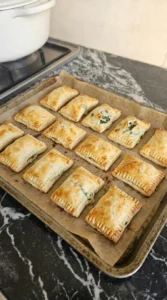
Bake for 20 to 23 minutes and rotate the sheet at minute 12 if your oven heats unevenly. The pastry should rise into distinct layers while the filling heats through. Don’t open the oven during the first 10 minutes or you’ll lose heat needed for a good rise. By minute 20, the tops should look deep golden with a few darker amber patches along the raised folds.
You’ll also notice small spots of melted cheese near some seams. (I like the edges a shade darker because they stay crisp after serving. ) Stop before the crust turns dark brown. High heat lifts the layers before moisture softens them.
Tip: Use the middle oven rack rather than the highest one. This gives the bottom crust more time to brown before the tops get too dark.
Step 5: Rest, Open and Plate the Warm Pastry
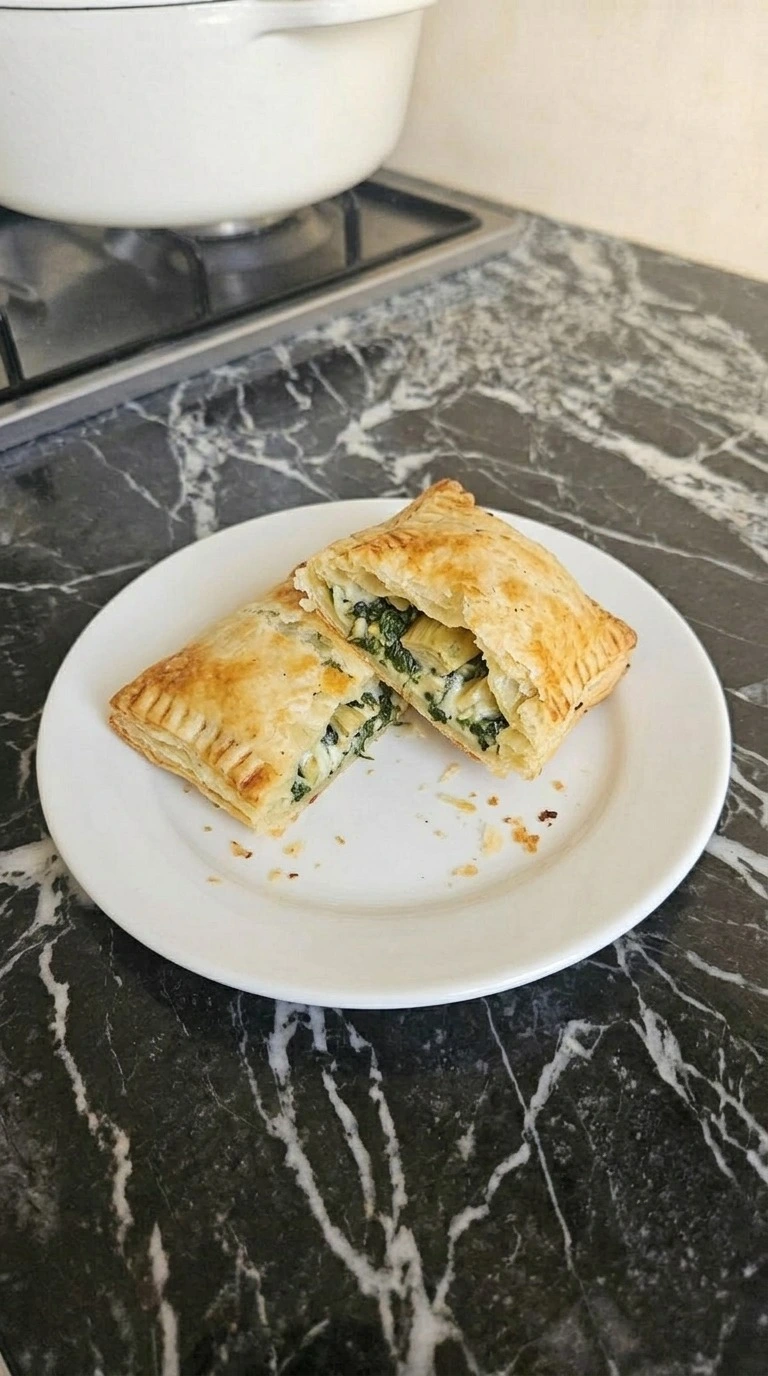
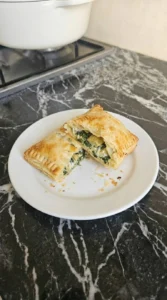
Finally, take the golden pastry pockets out of the oven and let them rest on the baking sheet for 5 minutes. Don’t stack them while they’re hot. The steam needs room to escape or those crisp layers will soften. Transfer one pocket to a white serving plate and cut it diagonally through the center.
Gently pull the halves a little apart so you can see the spinach, artichoke and melted cheese filling. Keep the other 11 pockets intact for serving. The center should be hot and the filling thick enough to stay inside each half. You’ll hear the flaky crust crack as you cut it.
The filling should look creamy rather than watery, with pale cheese against the green spinach. Let it cool another 2 minutes if it’s too hot to eat. That short rest helps the cheese settle.
Tip: For a party, arrange the remaining pockets in small batches and bring out fresh portions as guests arrive so they’re served warm.
Pro Tips
- Keep the puff pastry below 70°F while shaping the pockets. If the dough starts feeling sticky or soft, chill it for 10 minutes before baking.
- Choose plain artichoke hearts packed in water rather than marinated artichokes. Oil-packed hearts can make the filling greasy unless you drain them very well.
- Use no more than 2 tablespoons of filling per pocket when cutting each sheet into six rectangles. Too much filling makes the folded seams harder to seal.
- Leave about 1 inch between the 12 pockets on your baking sheet. Crowding traps steam and can leave the sides softer than the tops.
- For Spinach Artichoke Puff Pastry with a crisp bottom, bake on the middle oven rack at 400°F and check for a golden underside before removing.
- If you’re serving these for New Year’s Eve, shape the 12 pockets up to 8 hours ahead and refrigerate them covered until it’s time to bake.
- Add 1/4 teaspoon of finely grated lemon zest to the cheese mixture for a brighter taste. It cuts through the rich cream cheese without adding extra moisture.
- Let the baked pastries rest for 5 minutes before moving them. This gives the melted filling time to settle while the outer layers stay crisp.
- For a little heat, mix 1/4 teaspoon of crushed red pepper flakes into the spinach and artichoke filling before sealing the pastry pockets.
- Give the filling a sharper cheese flavor by replacing 1/4 cup of the mozzarella with finely shredded aged sharp white cheddar.
- Make smaller party bites by dividing each pastry sheet into eight rectangles instead of six and using about 1 tablespoon of filling per pocket. Start checking for browning after 16 minutes.
- For a brighter herb flavor, fold 1 tablespoon of finely chopped fresh dill and 1 teaspoon of lemon zest into the cooled filling before assembling the pockets.
Substitutions & Variations
- All-butter puff pastry: Certified gluten-free puff pastry in the same weight, about 17.3 ounces. Gluten-free pastry tends to crack more easily and may rise less than regular puff pastry. Keep it chilled and follow the package baking temperature. Start checking at 18 minutes because some brands brown faster.
- Full-fat cream cheese and mozzarella: Use 4 ounces of dairy-free cream cheese and 1/2 cup of dairy-free mozzarella instead. Choose thick plant-based cheeses rather than spreadable sauces. The filling may melt less smoothly and taste slightly different. For a fully dairy-free version, replace the Parmesan with 2 tablespoons of nutritional yeast and use dairy-free puff pastry.
- Large egg: Brush the pastry with 2 tablespoons of unsweetened oat milk instead of the beaten egg. This makes the recipe egg-free when paired with egg-free puff pastry. The crust won’t develop quite the same deep golden shine, but it’ll still turn crisp. Check that your pastry package contains no eggs.
- Frozen chopped spinach: Use 10 ounces of fresh baby spinach instead of 10 ounces of frozen chopped spinach. Chop the fresh leaves roughly and wilt them in the skillet for 3 to 4 minutes before adding the artichokes. Cook off the excess liquid and let the mixture cool. Fresh spinach gives the filling a slightly brighter green color and a milder taste.
- Canned artichoke hearts: Use 14 ounces of frozen artichoke hearts after thawing and draining. Frozen hearts often taste less salty and have a firmer bite than canned ones. Chop them into 1/2-inch pieces and cook for 2 extra minutes if they still hold moisture. For another savory meal, try our Chicken Pot Pie Soup.
Storage Instructions
Spinach Artichoke Puff Pastry keeps well in the refrigerator for up to 3 days when you store it in an airtight container at 40°F or below. Let the pockets cool briefly before packing them and refrigerate within 2 hours of baking. Place parchment between layers to stop them from sticking. For longer storage, freeze the baked pockets in a single layer until firm.
Then wrap them individually and place them in a freezer-safe bag for up to 2 months. The pastry may lose some of its delicate crunch after freezing, but the filling holds up well. To reheat refrigerated pockets, arrange them in a single layer and bake at 350°F for 8 to 12 minutes until hot throughout. Frozen baked pockets usually need 15 to 20 minutes at the same temperature.
Aim for a filling temperature of 165°F. Don’t use the microwave if you want a crisp crust because it softens the pastry. Discard leftovers that smell sour, show mold or have been left at room temperature for over 2 hours.
Spinach Artichoke Puff Pastry
Ingredients
Method
- First, thaw the frozen chopped spinach and squeeze it firmly until you’ve pressed out as much water as you can. Drain the canned artichoke hearts and chop them into small pieces about 1/2 inch wide. Then warm the extra-virgin olive oil in a skillet over medium heat, around 5 on a 10-setting stove dial. Add the minced garlic and stir for 30 seconds. Tip in the spinach and chopped artichokes. Cook for 4 to 5 minutes while turning the mixture with a spatula so the last bits of moisture can escape. Keep it moving. You’ll smell the garlic first. Then the spinach mixture will look darker and feel less wet as you stir it. Don’t let the garlic turn dark brown or it’ll taste bitter. Transfer the mixture to a clean bowl and let it cool for 5 minutes before adding the cheese. Cooling helps keep the filling thick.
- Next, add the softened full-fat cream cheese to the bowl of cooled spinach and artichokes. Sprinkle in the shredded low-moisture mozzarella and finely grated Parmesan. Add the fine sea salt and ground black pepper. Use a sturdy spatula to press the cream cheese against the side of the bowl and fold it through the vegetables until the mixture holds together. This takes about 2 to 3 minutes. Keep the filling below 75°F if possible and don’t warm it again. You want a thick spread rather than a runny dip. The spinach should look evenly streaked with white cheese, with little pieces of artichoke still easy to spot. Give it a gentle stir and check that no large lumps remain. If the filling gets warm and loose, chill it for 10 minutes. A cool filling helps protect the pastry layers.
- Now heat your oven to 400°F and line a large baking sheet with parchment paper. Unfold the two thawed but still cool all-butter puff pastry sheets. If each sheet measures about 9 by 9 inches, cut it into six rectangles with three columns and two rows. You’ll have 12 pieces in total. Place roughly 2 tablespoons of spinach and artichoke filling on one half of each rectangle. Leave a 1/2-inch clear border. Fold the empty half over the filling and press the edges closed with your fingertips. Then crimp the seams with a fork. You’ll see 12 small rectangular pockets with slightly uneven folded edges. Move them onto the lined baking sheet and space them about 1 inch apart. Work within 10 minutes so the pastry stays cool. Overfill them and the seams can burst. Firm edges help hold the filling inside.
- Beat the large egg until the yolk and white blend well. Brush a thin coat over the tops of all 12 pastry pockets without soaking the cut edges. Cut one small slit in the top of each pocket so steam can escape. Then slide the baking sheet onto the middle rack of your 400°F oven. Bake for 20 to 23 minutes and rotate the sheet at minute 12 if your oven heats unevenly. The pastry should rise into distinct layers while the filling heats through. Don’t open the oven during the first 10 minutes or you’ll lose heat needed for a good rise. By minute 20, the tops should look deep golden with a few darker amber patches along the raised folds. You’ll also notice small spots of melted cheese near some seams. (I like the edges a shade darker because they stay crisp after serving.) Stop before the crust turns dark brown. High heat lifts the layers before moisture softens them.
- Finally, take the golden pastry pockets out of the oven and let them rest on the baking sheet for 5 minutes. Don’t stack them while they’re hot. The steam needs room to escape or those crisp layers will soften. Transfer one pocket to a white serving plate and cut it diagonally through the center. Gently pull the halves a little apart so you can see the spinach, artichoke and melted cheese filling. Keep the other 11 pockets intact for serving. The center should be hot and the filling thick enough to stay inside each half. You’ll hear the flaky crust crack as you cut it. The filling should look creamy rather than watery, with pale cheese against the green spinach. Let it cool another 2 minutes if it’s too hot to eat. That short rest helps the cheese settle.
Notes
Frequently Asked Questions
Yes, and it’s a great way to get ready for a party without spending the whole evening in the kitchen. Make the filling up to 2 days ahead and keep it chilled below 40°F. You can also assemble the pockets up to 8 hours before baking. Keep them covered in the fridge and brush with egg just before they go into the 400°F oven.
Store cooled pastry pockets in an airtight container in the fridge for up to 3 days at 40°F or below. Let them cool briefly and refrigerate within 2 hours of baking. Place parchment between layers so they don’t stick together. The crust will soften as it absorbs moisture, but you can bring back some crunch by reheating the pockets in the oven.
You can replace the 4 ounces of cream cheese with 4 ounces of thick whole-milk ricotta, but drain it first if it looks wet. Ricotta gives the filling a lighter and slightly grainier texture instead of the smooth creamy center. Mix in an extra tablespoon of finely grated Parmesan if the filling tastes mild. Avoid thin ricotta because excess water can soak through the pastry.
The most common cause is water left in the spinach or artichokes. Frozen spinach holds plenty of liquid, so squeeze it thoroughly after thawing and cook the vegetables for 4 to 5 minutes. Another cause is a crowded baking sheet. Leave 1 inch between the pockets and bake at 400°F until the undersides look golden rather than pale.
Absolutely. Double the ingredients and use 4 sheets of puff pastry to make 24 pockets, enough for 12 guests at two each. Divide them between two large baking sheets without crowding. For even browning, bake one sheet at a time at 400°F for about 20 to 23 minutes. If baking both together, swap the sheets between racks halfway through and check the crusts carefully.
These pockets are rich and cheesy, so something fresh or lightly acidic makes a good match. For lunch, serve two pockets per person with a simple green salad and lemon dressing. At a holiday gathering, pair them with Non Alcoholic Christmas Punch. Bake the pastries about 20 to 23 minutes before serving and allow a 5-minute rest so guests get them warm.
Yes. Assemble the pockets without egg wash and freeze them in a single layer until firm, about 2 hours. Then transfer them to a freezer-safe bag for up to 2 months. Bake straight from frozen at 400°F after brushing the tops with beaten egg. Allow roughly 25 to 30 minutes and check that the pastry is golden and the filling reaches 165°F in the center.
Final Thoughts
A tray of warm cheesy pastry pockets is something I wish I’d started making for holiday gatherings years ago. It would’ve saved me so many last-minute appetizer worries.
But now that I’ve got this Spinach Artichoke Puff Pastry recipe, I keep coming back to it because the filling stays thick while the crust turns crisp and golden. If you’re planning a new years eve spinach artichoke puff pastry spread, I’d serve these with Non Alcoholic Christmas Punch and maybe finish the evening with Soft Gingerbread Cookies. Give these little pockets a try and leave a comment.
I read every single one and it really makes my day. It works just as well when you are after easy spinach artichoke puff pastry.
Puff pastry gets its flaky layers from thin sheets of dough separated by butter. When it hits a hot oven, the water in the butter turns to steam and pushes those layers apart. That’s why keeping the dough cold before baking makes such a difference.