
Ingredients
Method
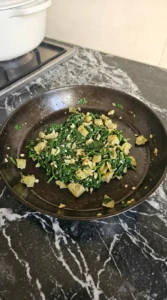
- First, thaw the frozen chopped spinach and squeeze it firmly until you've pressed out as much water as you can. Drain the canned artichoke hearts and chop them into small pieces about 1/2 inch wide. Then warm the extra-virgin olive oil in a skillet over medium heat, around 5 on a 10-setting stove dial. Add the minced garlic and stir for 30 seconds. Tip in the spinach and chopped artichokes. Cook for 4 to 5 minutes while turning the mixture with a spatula so the last bits of moisture can escape. Keep it moving. You'll smell the garlic first. Then the spinach mixture will look darker and feel less wet as you stir it. Don't let the garlic turn dark brown or it'll taste bitter. Transfer the mixture to a clean bowl and let it cool for 5 minutes before adding the cheese. Cooling helps keep the filling thick.
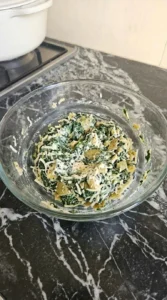
- Next, add the softened full-fat cream cheese to the bowl of cooled spinach and artichokes. Sprinkle in the shredded low-moisture mozzarella and finely grated Parmesan. Add the fine sea salt and ground black pepper. Use a sturdy spatula to press the cream cheese against the side of the bowl and fold it through the vegetables until the mixture holds together. This takes about 2 to 3 minutes. Keep the filling below 75°F if possible and don't warm it again. You want a thick spread rather than a runny dip. The spinach should look evenly streaked with white cheese, with little pieces of artichoke still easy to spot. Give it a gentle stir and check that no large lumps remain. If the filling gets warm and loose, chill it for 10 minutes. A cool filling helps protect the pastry layers.
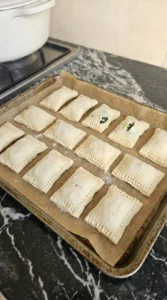
- Now heat your oven to 400°F and line a large baking sheet with parchment paper. Unfold the two thawed but still cool all-butter puff pastry sheets. If each sheet measures about 9 by 9 inches, cut it into six rectangles with three columns and two rows. You'll have 12 pieces in total. Place roughly 2 tablespoons of spinach and artichoke filling on one half of each rectangle. Leave a 1/2-inch clear border. Fold the empty half over the filling and press the edges closed with your fingertips. Then crimp the seams with a fork. You'll see 12 small rectangular pockets with slightly uneven folded edges. Move them onto the lined baking sheet and space them about 1 inch apart. Work within 10 minutes so the pastry stays cool. Overfill them and the seams can burst. Firm edges help hold the filling inside.
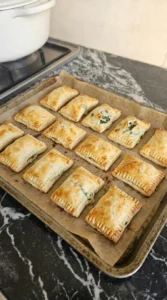
- Beat the large egg until the yolk and white blend well. Brush a thin coat over the tops of all 12 pastry pockets without soaking the cut edges. Cut one small slit in the top of each pocket so steam can escape. Then slide the baking sheet onto the middle rack of your 400°F oven. Bake for 20 to 23 minutes and rotate the sheet at minute 12 if your oven heats unevenly. The pastry should rise into distinct layers while the filling heats through. Don't open the oven during the first 10 minutes or you'll lose heat needed for a good rise. By minute 20, the tops should look deep golden with a few darker amber patches along the raised folds. You'll also notice small spots of melted cheese near some seams. (I like the edges a shade darker because they stay crisp after serving.) Stop before the crust turns dark brown. High heat lifts the layers before moisture softens them.
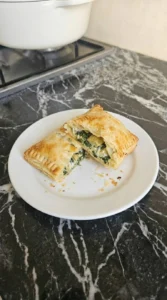
- Finally, take the golden pastry pockets out of the oven and let them rest on the baking sheet for 5 minutes. Don't stack them while they're hot. The steam needs room to escape or those crisp layers will soften. Transfer one pocket to a white serving plate and cut it diagonally through the center. Gently pull the halves a little apart so you can see the spinach, artichoke and melted cheese filling. Keep the other 11 pockets intact for serving. The center should be hot and the filling thick enough to stay inside each half. You'll hear the flaky crust crack as you cut it. The filling should look creamy rather than watery, with pale cheese against the green spinach. Let it cool another 2 minutes if it's too hot to eat. That short rest helps the cheese settle.
Notes
Spinach Artichoke Puff Pastry keeps well in the refrigerator for up to 3 days when you store it in an airtight container at 40°F or below. Let the pockets cool briefly before packing them and refrigerate within 2 hours of baking. Place parchment between layers to stop them from sticking. For longer storage, freeze the baked pockets in a single layer until firm. Then wrap them individually and place them in a freezer-safe bag for up to 2 months. The pastry may lose some of its delicate crunch after freezing, but the filling holds up well. To reheat refrigerated pockets, arrange them in a single layer and bake at 350°F for 8 to 12 minutes until hot throughout. Frozen baked pockets usually need 15 to 20 minutes at the same temperature. Aim for a filling temperature of 165°F. Don't use the microwave if you want a crisp crust because it softens the pastry. Discard leftovers that smell sour, show mold or have been left at room temperature for over 2 hours.