Soft Gingerbread Cookies
Warm spices and sweet molasses come together in these Soft Gingerbread Cookies with a tender center and classic holiday flavor. These soft and chewy gingerbread cookies bring that bakery-style texture home without needing complicated steps. They are the kind of treat that makes the kitchen smell like winter.
Hi! Meet your new favorite holiday cookie, a soft gingerbread treat with rich molasses, ginger, cinnamon and a buttery bite that feels so festive, so comforting, so flavorful and easy, and also.. totally homemade.

That’s right. We’re calling upon that mix of warm spices and deep molasses to create gingerbread cookies soft enough for every bite, and they don’t disappoint. If you enjoy seasonal baking, try our Christmas Cookies for another festive idea.
Why This Recipe Works
The dough stays soft because molasses adds moisture while brown sugar holds onto water during baking. Resting the dough for 60 to 90 minutes lets the flour hydrate and keeps the cookies from spreading too much.
Baking at 350°F instead of higher heat helps the centers stay tender while the edges set. If you enjoy similar holiday flavors, try our Pumpkin Cheesecake Cookies for another spiced dessert idea.
Ingredients

- all-purpose flour: Measured carefully to create the structure while keeping the cookies tender.
- baking soda: Adds lift and helps create the soft cookie texture.
- ground ginger: Provides the warm spicy flavor that defines gingerbread.
- ground cinnamon: Adds sweet spice and balances the molasses flavor.
- ground cloves: Brings a deep holiday spice note.
- salt: Enhances the sweetness and spice layers.
- unsalted butter: Softened before mixing to create a smooth dough.
- brown sugar: Adds moisture and caramel notes to the cookies.
- molasses: Creates the rich color and deep gingerbread flavor.
- large egg: Adds moisture and helps bind the dough.
- vanilla extract: Adds a smooth background flavor.
- powdered sugar: Used to create the simple icing finish.
- whole milk: Thins the icing to a drizzle consistency.
Kitchen Equipment
- large clear glass mixing bowl: A large clear glass mixing bowl gives enough space for cookie dough mixing and lets you see uneven flour pockets before baking, while a bowl under 4 quarts can make scraping difficult.
- baking tray: A heavy baking tray helps cookies bake evenly and should be large enough for spacing, because thin trays can create dark bottoms before the centers set.
- wire cooling rack: A wire cooling rack lets air move around the cookies after baking and prevents trapped heat from making the bottoms soggy.
How to Make It
Step 1: Mix the spiced cookie dough
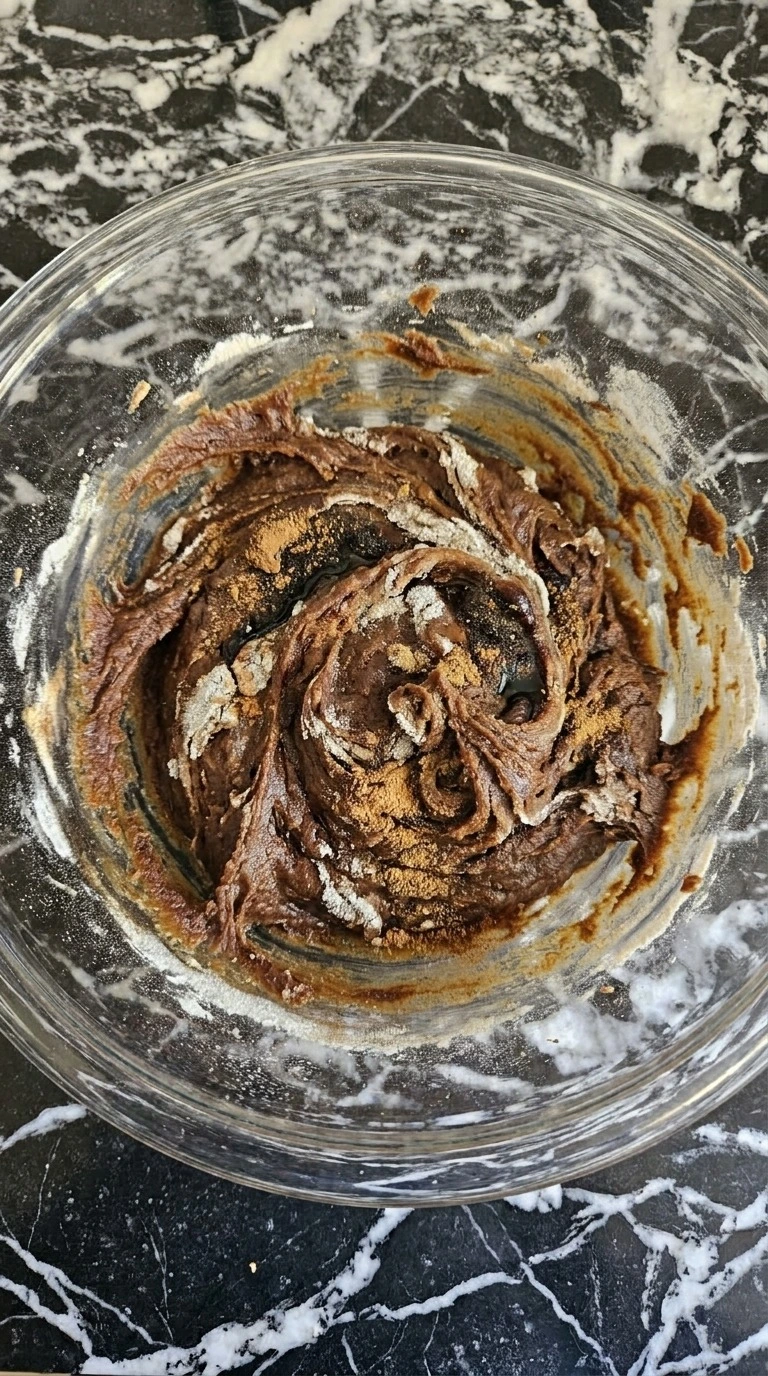
Combine 3 cups all-purpose flour, 1 teaspoon baking soda, 1 tablespoon ground ginger, 2 teaspoons ground cinnamon, 1/4 teaspoon ground cloves and 1/2 teaspoon salt with the wet mix at room temperature. Stir with a wooden spoon using slow circles for 2 to 3 minutes, then scrape the bowl halfway through. Keep the mixture at about 70°F while blending.
(I tried adding flour all at once and the dough turned lumpy. Adding it in portions fixed the texture. ) The dough should look thick and evenly brown with tiny spice flecks.
You’ll smell the molasses and ginger right away. Skip this careful mix and dry pockets stay hidden. Mix at 70°F for 3 minutes so the flour hydrates evenly.
Tip: Measure flour by spooning it into the cup and leveling it because packed flour makes cookies dense.
Step 2: Chill and shape the cookie dough

Cover the dough and chill it at 40°F for 60 to 90 minutes before shaping. Roll portions with your hands into uneven 1 1/2 inch balls and place them with natural spacing. Press lightly with your fingertips to keep the centers thick.
Don’t skip the chill. The dough should feel firm but flexible, and the surface should stay smooth without cracks. You’ll notice the spices smell stronger after resting.
Over-resting past 24 hours can make the dough harder to scoop. Chill 90 minutes so the fat firms and controls spreading.
Tip: Make smaller test cookies first and bake one at 350°F for 11 minutes to check the spread.
Step 3: Bake the shaped cookies
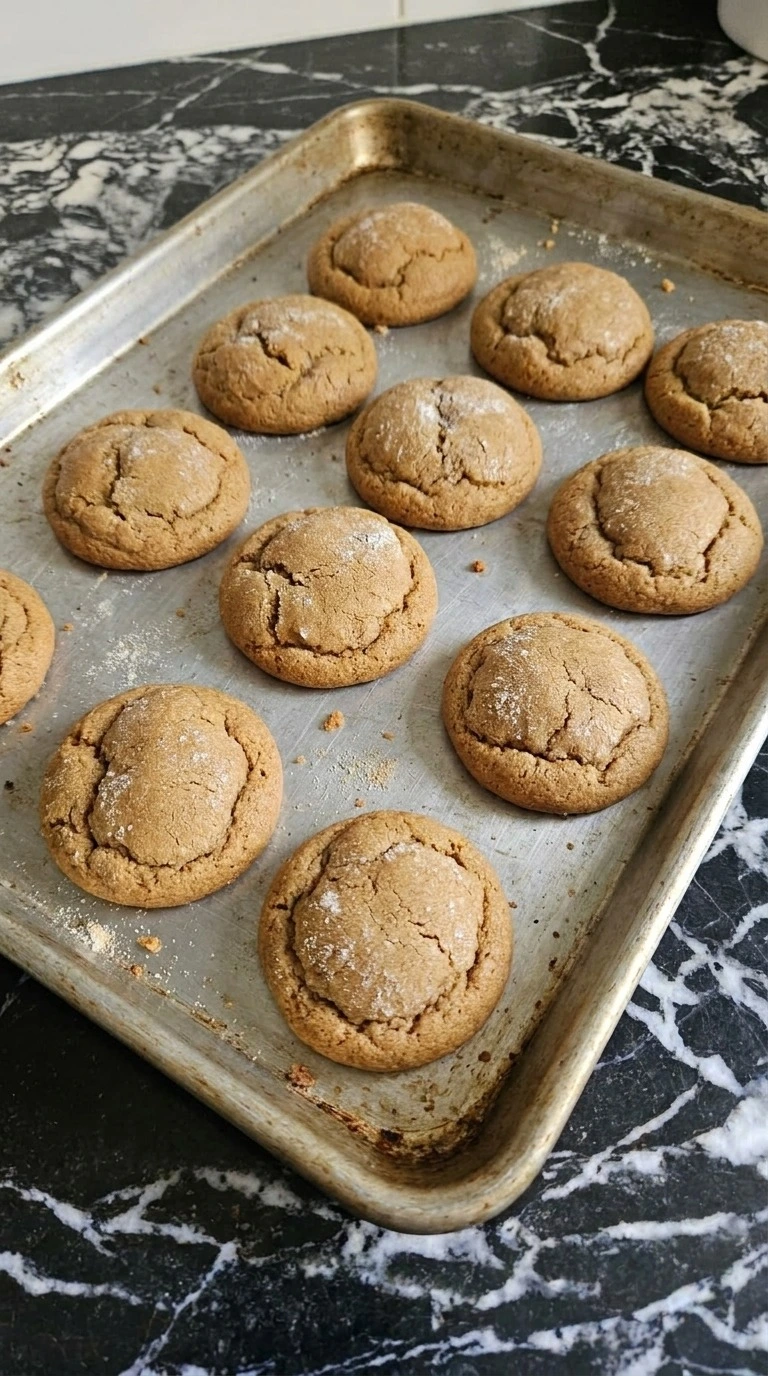
Place the shaped dough on a baking tray and bake at 350°F for 10 to 12 minutes until the edges set. Rotate the tray once at minute 6 and avoid pressing the cookies flat. The exact timing keeps the centers tender while the outside develops structure.
You’ll see slightly puffed tops with small cracks and darker edges. The cookies should smell rich and spicy. Go past 12 minutes and the centers lose their soft texture.
Bake at 350°F for 11 minutes because gentle heat keeps the middle tender.
Tip: Let the first batch rest for 5 minutes before moving them so the soft centers stay intact.
Step 4: Finish and decorate the cookies

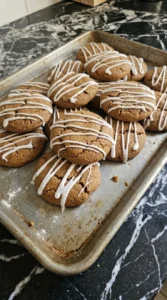
Cool the baked cookies for 15 minutes, then add simple icing made from 1 cup powdered sugar and 2 tablespoons milk. Drizzle the icing in thin lines using gentle back-and-forth motions. Keep the icing at about 68°F so it stays smooth and doesn’t soak into the cookies.
The tops should show uneven white icing patterns over warm brown cookies. You’ll see a soft surface with natural cracks. Add icing too early and the decoration melts away.
Cool before icing so the surface structure stays firm.
Tip: Add a pinch of cinnamon to the icing for a stronger holiday flavor without adding more sugar.
Pro Tips
- Chill the dough for 60 to 90 minutes at 40°F before shaping because cold butter helps the cookies keep their thick center.
- Use fresh ground ginger from a sealed spice jar dated within 12 months for the strongest aroma and a warmer flavor in every bite.
- Bake one test cookie at 350°F for 11 minutes before the full batch because oven temperatures can change the final spread.
- Mix the icing until it falls in a thin ribbon after 20 seconds of stirring, since thick icing can hide the cookie texture.
- Avoid adding extra flour after chilling unless the dough is impossible to handle because too much flour makes the cookies dry.
- Choose dark brown sugar when possible because its extra molasses content adds moisture and creates a softer texture after baking.
- Store a few cookies with a slice of bread in the container for 24 hours because the bread helps maintain softness without changing the flavor.
- Add 1/2 cup white chocolate chips to the dough before chilling for a sweeter holiday version with creamy bites.
- Mix 1/2 teaspoon orange zest into the dough for a bright citrus twist that balances the deep molasses flavor.
- Replace the icing with a maple glaze made from 1 cup powdered sugar and 2 tablespoons maple syrup for a richer seasonal finish.
- Add 1/3 cup finely chopped pecans for a nutty version with extra crunch around the soft cookie center.
Substitutions & Variations
- unsalted butter: dairy-free butter stick. Use the same 3/4 cup amount for a dairy-free version. The cookies stay soft, but the flavor becomes slightly less rich because butter adds a deeper milk note.
- all-purpose flour: gluten-free 1-to-1 baking flour blend. Replace 3 cups with a blend containing xanthan gum. The texture can become a little more delicate, so chill the dough for the full 90 minutes before shaping.
- large egg: flax egg. Mix 1 tablespoon ground flaxseed with 3 tablespoons water and rest for 5 minutes. The cookies will be slightly denser but still hold together well.
- whole milk: unsweetened almond milk. Use the same 2 tablespoons for the icing. The drizzle will be slightly thinner, so add powdered sugar 1 tablespoon at a time if needed. For another seasonal option, try our Soft Gluten Free Pumpkin Cookies with Chocolate Chips.
- molasses: dark maple syrup. Use 3/4 cup maple syrup for a milder sweetness. The cookies will have a lighter color and less deep gingerbread flavor.
Storage Instructions
Keep Soft Gingerbread Cookies in an airtight container at room temperature for up to 7 days. Freeze uniced cookies for up to 3 months by wrapping each layer with parchment and sealing them in a freezer bag.
Warm frozen cookies at 300°F for 4 to 5 minutes if you want a softer bite. Add fresh icing after cooling and discard cookies that smell stale or show moisture spots.
Soft Gingerbread Cookies
Ingredients
Method
- Combine 3 cups all-purpose flour, 1 teaspoon baking soda, 1 tablespoon ground ginger, 2 teaspoons ground cinnamon, 1/4 teaspoon ground cloves and 1/2 teaspoon salt with the wet mix at room temperature. Stir with a wooden spoon using slow circles for 2 to 3 minutes, then scrape the bowl halfway through. Keep the mixture at about 70°F while blending. (I tried adding flour all at once and the dough turned lumpy. Adding it in portions fixed the texture.) The dough should look thick and evenly brown with tiny spice flecks. You’ll smell the molasses and ginger right away. Skip this careful mix and dry pockets stay hidden. Mix at 70°F for 3 minutes so the flour hydrates evenly.

- Cover the dough and chill it at 40°F for 60 to 90 minutes before shaping. Roll portions with your hands into uneven 1 1/2 inch balls and place them with natural spacing. Press lightly with your fingertips to keep the centers thick. Don’t skip the chill. The dough should feel firm but flexible, and the surface should stay smooth without cracks. You’ll notice the spices smell stronger after resting. Over-resting past 24 hours can make the dough harder to scoop. Chill 90 minutes so the fat firms and controls spreading.
- Place the shaped dough on a baking tray and bake at 350°F for 10 to 12 minutes until the edges set. Rotate the tray once at minute 6 and avoid pressing the cookies flat. The exact timing keeps the centers tender while the outside develops structure. You’ll see slightly puffed tops with small cracks and darker edges. The cookies should smell rich and spicy. Go past 12 minutes and the centers lose their soft texture. Bake at 350°F for 11 minutes because gentle heat keeps the middle tender.

- Cool the baked cookies for 15 minutes, then add simple icing made from 1 cup powdered sugar and 2 tablespoons milk. Drizzle the icing in thin lines using gentle back-and-forth motions. Keep the icing at about 68°F so it stays smooth and doesn’t soak into the cookies. The tops should show uneven white icing patterns over warm brown cookies. You’ll see a soft surface with natural cracks. Add icing too early and the decoration melts away. Cool before icing so the surface structure stays firm.
Notes
Frequently Asked Questions
Yes, you can prepare the dough up to 3 days ahead and keep it covered in the refrigerator at 40°F. Let it sit for 10 to 15 minutes before shaping so the dough becomes flexible without warming too much.
Store the cookies in an airtight container for up to 7 days at room temperature. Keep layers separated with parchment paper and avoid leaving the container open because the edges can dry out.
Freeze the baked cookies for up to 3 months by wrapping them tightly in plastic wrap and placing them in a freezer bag. Thaw them for 2 hours at room temperature before adding fresh icing.
Cookies usually spread when the dough is too warm or the butter softens too much before baking. Chill the shaped dough for 15 minutes and bake at 350°F until the edges set around the 10 to 12 minute mark.
You can double the recipe, but mix the dough in two batches if your bowl feels crowded. Keep the same 60 to 90 minute chill time and bake each tray separately for even results.
Serve them with hot cocoa, coffee or spiced tea for a simple holiday treat. For a party, arrange them with other desserts and add icing close to serving time so the decoration stays fresh.
Final Thoughts
The first batch of these Soft Gingerbread Cookies reminded me of learning holiday baking without worrying about tiny mistakes. I was surprised by how forgiving these soft and chewy gingerbread cookies can be when the timing feels right.
It turns out this recipe creates gingerbread cookies soft enough to share with family and friends. If you try it, leave me a comment below because I love hearing how your cookies turn out.
And if you enjoyed this recipe, check out our Christmas Cookies and Halloween Cookies for more baking ideas. It works just as well when you are after gingerbread soft cookies, easy soft gingerbread cookies and soft gingerbread cookies with icing.
Gingerbread has been enjoyed for centuries, and early versions often used honey instead of modern sweeteners. The warm spice blend became linked with winter celebrations because ginger was once a prized imported ingredient.