Almond Flour Pumpkin Bread
One rainy October morning, I baked Almond Flour Pumpkin Bread because I had an open can of pumpkin and no patience for a fussy loaf. I expected the almond flour pumpkin bread to be fragile, but the first slice held together better than I thought. That batch also taught me that pumpkin bread with almond flour needs a little cooling time before you judge the crumb.
The next weekend, I made it again for brunch and pulled it five minutes earlier. Much better. The center stayed tender and the edges had just enough color, so I stopped treating almond flour like regular wheat flour and started watching the loaf instead of only the clock.

Since then I’ve made this version for meal prep, quiet holiday mornings and a couple of last-minute get-togethers. It’s warmly spiced and pleasantly moist without feeling heavy. And even with a short ingredient list, it still has that familiar pumpkin loaf smell that makes the kitchen feel busy in the best way.
Why This Recipe Works
Fine blanched almond flour absorbs pumpkin more slowly than wheat flour absorbs liquid, so a short 5-minute rest gives the batter time to thicken before baking. That short rest matters.
Three eggs then provide the protein network that Almond Flour Pumpkin Bread needs to hold its moist crumb without gluten. Baking at 350°F for 50 to 60 minutes lets that structure set before the nutty crust gets too dark, while a 200°F to 205°F center prevents a gummy middle.
That timing keeps pumpkin bread with almond flour tender instead of dry.
Ingredients

- fine blanched almond flour: Use a finely ground blanched flour for a lighter crumb and more even hydration.
- aluminum-free baking powder: Provides steady lift so the almond-rich batter doesn’t bake up squat.
- baking soda: Supports browning and lift while balancing the natural acidity of pumpkin.
- Ceylon cinnamon: Adds warm spice without overpowering the pumpkin.
- ground ginger: Adds a gentle warm edge that keeps the loaf from tasting flat.
- ground nutmeg: Adds a deeper autumn spice note in a small amount.
- fine sea salt: Sharpens the pumpkin and maple flavors throughout the loaf.
- 100% pure pumpkin puree: Use canned plain pumpkin puree rather than pie filling so sweetness and spice stay controlled.
- large eggs: Bring near room temperature before whisking so the batter emulsifies smoothly.
- pure maple syrup: Sweetens the loaf while adding enough moisture for a tender almond flour crumb.
- virgin coconut oil: Melt the main portion and cool it to about 85°F, then reserve 1 teaspoon for coating the pan.
- pure vanilla extract: Rounds out the pumpkin and warm spices without adding extra sweetness.
Kitchen Equipment
- 8.5 by 4.5-inch metal loaf pan: An 8.5 by 4.5-inch light metal loaf pan gives the loaf enough height and even browning, while a dark pan can overbrown the edges before the center reaches 200°F.
- Large mixing bowl: A 3 to 4-quart bowl gives the dry mixture room for broad whisking and folding, while a cramped bowl encourages spills and uneven mixing.
- Medium mixing bowl: A 2-quart bowl holds the pumpkin mixture without splashing, and a much smaller bowl makes vigorous whisking messy and less effective.
- Balloon whisk: A medium balloon whisk blends dry ingredients and emulsifies the wet mixture efficiently, while a tiny whisk takes longer and leaves more streaks.
- Rubber spatula: A flexible rubber spatula reaches the bowl bottom during the 12 to 15 folds, while a stiff spoon can leave hidden dry pockets.
- Instant-read thermometer: A thin-probe instant-read thermometer confirms the loaf reaches 200°F to 205°F in the center, which is more reliable than judging doneness by color alone.
- Wire cooling rack: A standard wire rack lets air circulate around the loaf after 15 minutes in the pan, while a flat plate traps steam and softens the crust.
- Parchment paper: A parchment sling helps lift the tender loaf without breaking it, while bare pan sides can grip the almond-rich crumb during removal.
How to Make It
Step 1: Whisk the almond flour and spices

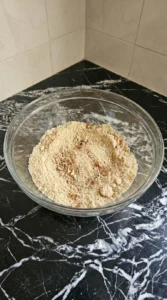
Heat the oven to 350°F, then whisk fine blanched almond flour, aluminum-free baking powder, baking soda, Ceylon cinnamon, ground ginger, ground nutmeg and fine sea salt for 45 to 60 seconds. Use broad circles from the center outward and scrape the sides once so the leaveners don’t settle in one spot. Keep going until the mixture looks evenly tan.
Take the full minute if you still see streaks. Next, pinch a little mixture between your fingers and check for hard white clumps or dark spice pockets. You should smell cinnamon first, then a faint nutty aroma.
No clumps. Stop when the color is uniform because poor mixing creates bitter pockets and lopsided rise later. Even mixing prevents bitter soda pockets and uneven rise.
Tip: For the most reliable crumb, weigh 240 grams of fine blanched almond flour instead of packing measuring cups.
Step 2: Whisk the pumpkin mixture smooth
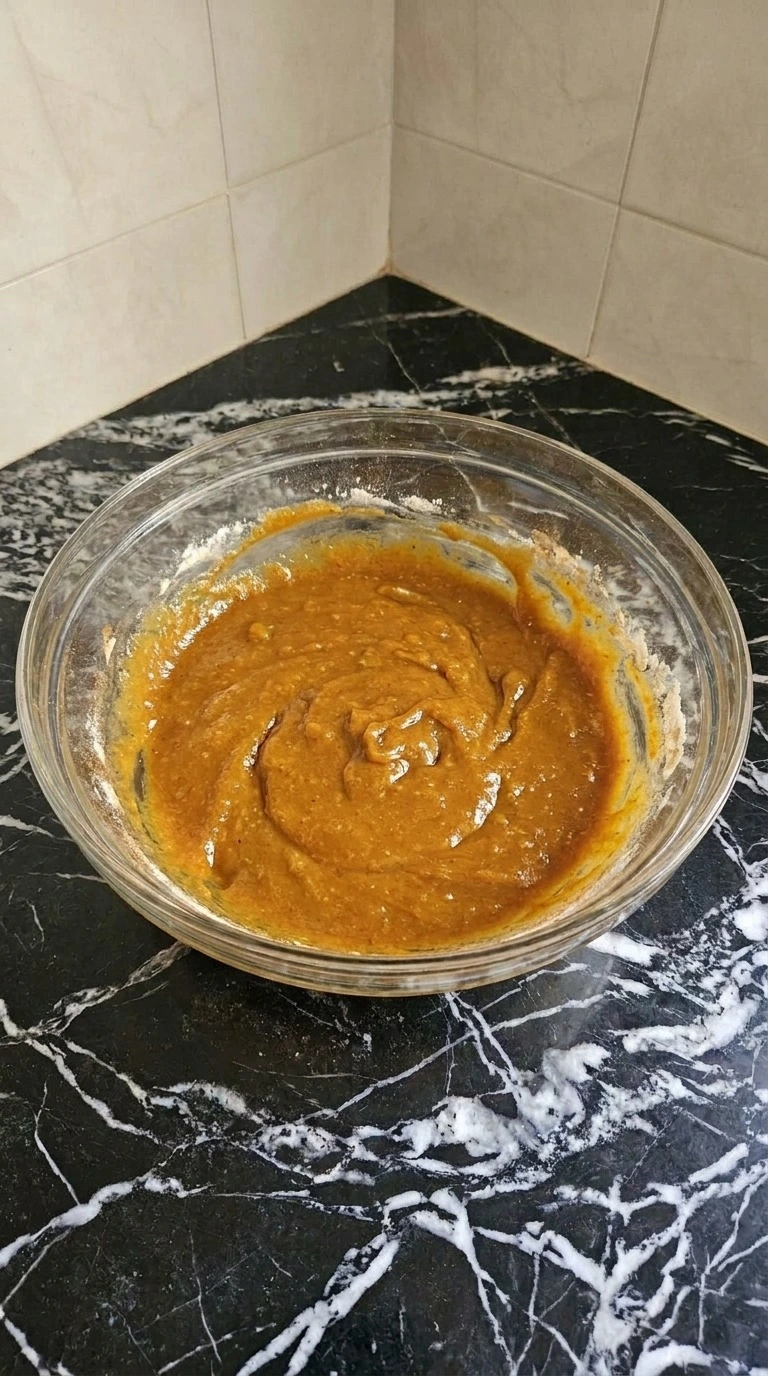
With the oven holding at 350°F, whisk 100% pure pumpkin puree, three large eggs, pure maple syrup, melted virgin coconut oil and pure vanilla extract for 60 to 90 seconds. Keep the eggs and pumpkin near 68°F to 72°F, and let the coconut oil cool to about 85°F before it goes in. Whisk firmly from the center until the mixture turns glossy and uniform.
Keep the bowl steady so the whisk reaches the center cleanly. Then lift the whisk and watch the pumpkin mixture fall back in a thick ribbon that disappears within about three seconds. For Almond Flour Pumpkin Bread, the color should be even orange-brown with no pale egg streaks.
Stop there. Below 65°F, coconut oil firms into beads and creates oily pockets after baking. A smooth emulsion distributes fat evenly through the crumb.
Tip: Crack the three eggs into a separate cup first, so one shell fragment or bad egg can’t ruin the full pumpkin mixture.
Step 3: Fold the batter and fill the loaf pan

Pour the pumpkin mixture into the dry mixture, then fold with a rubber spatula in a J-shaped motion for 12 to 15 folds. Scrape the bottom after fold eight. Rest the batter for 5 minutes at 68°F to 72°F, coat an 8. 5 by 4.
5-inch loaf pan with the reserved virgin coconut oil and transfer the batter. Nudge it into the corners without pressing hard. Fold from the bottom rather than stirring around the sides. Next, look for thick orange batter that drops slowly and keeps soft ridges for a few seconds.
The Almond Flour Pumpkin Bread batter should show tiny spice specks but no dry almond flour streaks. Stop there. More than 20 folds knocks out useful air, while too few leave dry pockets. Five-minute rest lets almond flour absorb pumpkin moisture before baking.
Tip: Tap the filled loaf pan once against the counter to release one or two large air pockets, but don’t flatten the natural ridges.
Step 4: Bake until the center is set
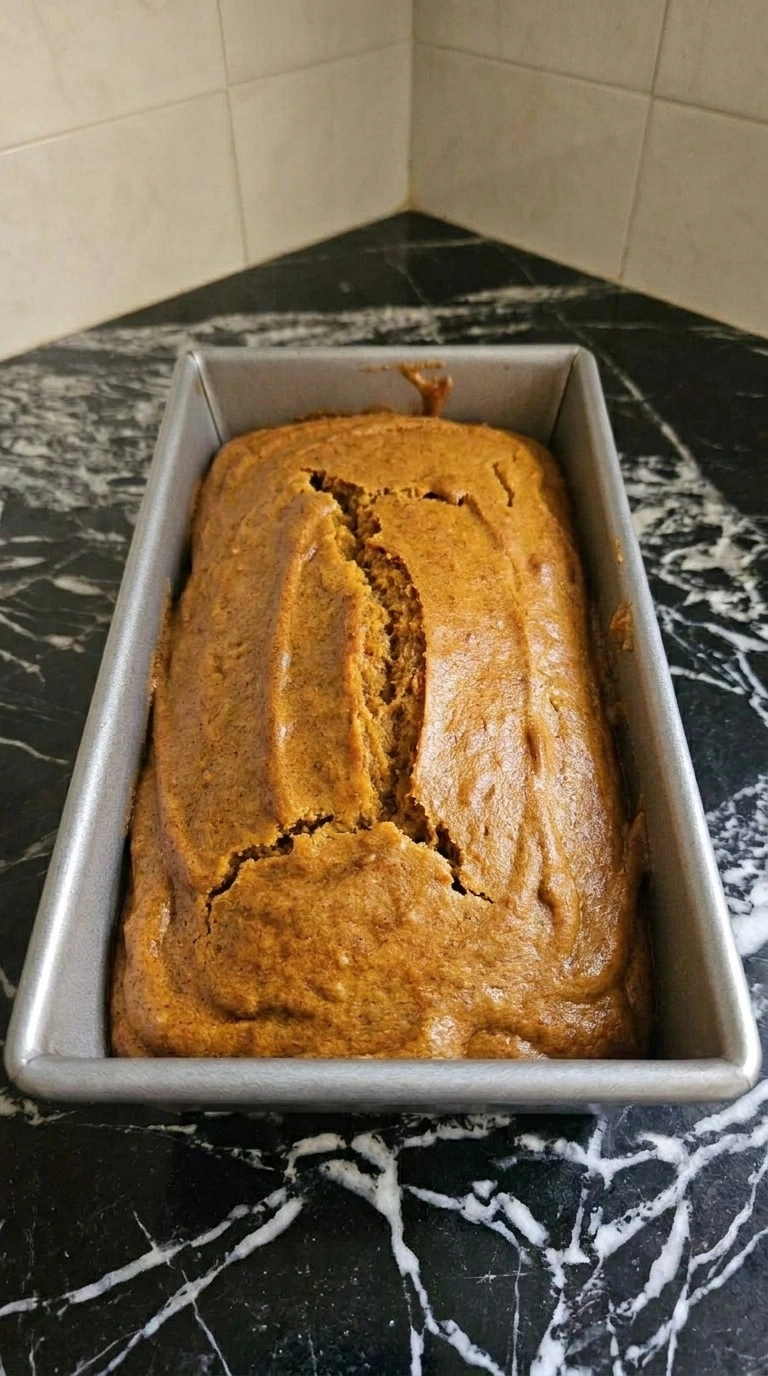
Bake the loaf at 350°F on the center rack for 50 to 60 minutes, rotating the pan 180 degrees at minute 35. Start checking at minute 50 and insert an instant-read thermometer into the center. Watch the center. This Almond Flour Pumpkin Bread is ready between 200°F and 205°F, when the probe comes out with a few moist crumbs rather than wet batter.
Meanwhile, watch the top deepen from orange-tan to amber-gold as one irregular crack opens near the center. The edges should pull back slightly and the kitchen should smell strongly of cinnamon and toasted almond. (I baked my first batch for 65 minutes. The edges dried out before the center needed that much time.
) Go past 205°F and the outer crumb dries quickly. Moderate heat sets the egg structure before the almond crust overbrowns.
Tip: If your oven runs hot, verify 350°F with an oven thermometer and begin checking the loaf at minute 48 instead of waiting.
Step 5: Cool, slice and serve the loaf

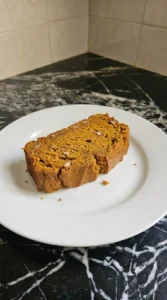
Cool the loaf in its pan for 15 minutes at room temperature around 68°F to 72°F, then lift it out with the parchment and cool for 30 minutes more. Slice it into 10 portions with a gentle sawing motion and place one slice on a white plate. Keep the cuts slightly uneven so you don’t compress the tender center.
Finally, check the exposed crumb. It should look moist and orange with tiny almond flecks, but it shouldn’t show shiny wet streaks or collapse around the knife line. The crust will feel firmer than the center and soften slightly as it sits.
Cut before 20 minutes and the warm center can compress into a gummy band. Cooling lets egg proteins set the crumb before slicing pressure compresses it.
Tip: For cleaner Almond Flour Pumpkin Bread slices, chill the fully cooled loaf for 20 minutes before cutting, then let portions return to room temperature.
Pro Tips
- Use 240 grams of fine blanched almond flour for consistent results because cup measurements can vary by more than 20 grams.
- Bring the three eggs and pumpkin puree near 70°F before mixing so melted coconut oil stays fluid instead of forming tiny solid beads.
- Rest the mixed batter for exactly 5 minutes before filling the pan. Almond flour absorbs moisture during that short pause and thickens noticeably.
- Use an 8.5 by 4.5-inch light metal pan for taller slices. A 9 by 5-inch pan makes a wider loaf that may finish 5 minutes sooner.
- Check Almond Flour Pumpkin Bread at minute 50 with a thin thermometer. Pull it between 200°F and 205°F so the center sets without drying.
- Let the loaf cool at least 45 minutes before slicing because warm almond flour crumbs compress easily and can appear gummy before they set.
- For stronger pumpkin spice flavor, add another 1/2 teaspoon Ceylon cinnamon. Don’t increase nutmeg beyond 1/2 teaspoon because it can taste bitter.
- Fold in 1/2 cup chopped toasted pecans after the batter rests for a nutty version with extra crunch in every slice.
- Add 1/2 cup sugar-free dark chocolate chips for a richer low carb pumpkin bread variation with small molten pockets after baking.
- Stir in 1 tablespoon finely grated orange zest with the wet ingredients for a brighter loaf that balances the warm pumpkin spices.
- Replace 2 tablespoons almond flour with 2 tablespoons unsweetened cocoa powder for a lightly chocolate pumpkin loaf with a darker crumb.
Substitutions & Variations
- virgin coconut oil: Use 1/4 cup avocado oil instead. Avocado oil keeps the loaf dairy free and makes the crumb slightly softer with less coconut aroma. Use the same 1 to 1 amount.
- fine blanched almond flour: Use 2 1/2 cups finely ground sunflower seed flour. Sunflower seed flour keeps the loaf gluten free and works close to 1 to 1. The crumb tastes earthier and may turn slightly green from baking soda.
- large eggs: Use 3 prepared portions of Bob’s Red Mill Egg Replacer. This makes an egg-free version, but expect a denser crumb and less rise. Add 2 extra tablespoons pumpkin puree if the batter looks stiff.
- pure maple syrup: Use 1/3 cup mild honey instead. Honey makes the loaf slightly sweeter and browns the crust faster. Check the top around minute 45 and cover loosely if it darkens early.
- Ceylon cinnamon, ground ginger and ground nutmeg: Use 2 3/4 teaspoons pumpkin pie spice. Use the same total spice volume for a simpler pantry swap. The flavor becomes more blended and may include clove or allspice.
Storage Instructions
Store completely cooled Almond Flour Pumpkin Bread in an airtight container in the refrigerator for up to 5 days. For freezing, wrap individual slices tightly and place them inside a freezer bag for up to 3 months.
Reheat refrigerated slices at 300°F for 6 to 8 minutes or microwave each slice for 10 to 15 seconds. Discard the loaf if you notice mold, fermented odors or an unusually sticky surface.
Almond Flour Pumpkin Bread
Ingredients
Method
- Heat the oven to 350°F, then whisk fine blanched almond flour, aluminum-free baking powder, baking soda, Ceylon cinnamon, ground ginger, ground nutmeg and fine sea salt for 45 to 60 seconds. Use broad circles from the center outward and scrape the sides once so the leaveners don’t settle in one spot. Keep going until the mixture looks evenly tan. Take the full minute if you still see streaks. Next, pinch a little mixture between your fingers and check for hard white clumps or dark spice pockets. You should smell cinnamon first, then a faint nutty aroma. No clumps. Stop when the color is uniform because poor mixing creates bitter pockets and lopsided rise later. Even mixing prevents bitter soda pockets and uneven rise.
- With the oven holding at 350°F, whisk 100% pure pumpkin puree, three large eggs, pure maple syrup, melted virgin coconut oil and pure vanilla extract for 60 to 90 seconds. Keep the eggs and pumpkin near 68°F to 72°F, and let the coconut oil cool to about 85°F before it goes in. Whisk firmly from the center until the mixture turns glossy and uniform. Keep the bowl steady so the whisk reaches the center cleanly. Then lift the whisk and watch the pumpkin mixture fall back in a thick ribbon that disappears within about three seconds. For Almond Flour Pumpkin Bread, the color should be even orange-brown with no pale egg streaks. Stop there. Below 65°F, coconut oil firms into beads and creates oily pockets after baking. A smooth emulsion distributes fat evenly through the crumb.

- Pour the pumpkin mixture into the dry mixture, then fold with a rubber spatula in a J-shaped motion for 12 to 15 folds. Scrape the bottom after fold eight. Rest the batter for 5 minutes at 68°F to 72°F, coat an 8.5 by 4.5-inch loaf pan with the reserved virgin coconut oil and transfer the batter. Nudge it into the corners without pressing hard. Fold from the bottom rather than stirring around the sides. Next, look for thick orange batter that drops slowly and keeps soft ridges for a few seconds. The Almond Flour Pumpkin Bread batter should show tiny spice specks but no dry almond flour streaks. Stop there. More than 20 folds knocks out useful air, while too few leave dry pockets. Five-minute rest lets almond flour absorb pumpkin moisture before baking.

- Bake the loaf at 350°F on the center rack for 50 to 60 minutes, rotating the pan 180 degrees at minute 35. Start checking at minute 50 and insert an instant-read thermometer into the center. Watch the center. This Almond Flour Pumpkin Bread is ready between 200°F and 205°F, when the probe comes out with a few moist crumbs rather than wet batter. Meanwhile, watch the top deepen from orange-tan to amber-gold as one irregular crack opens near the center. The edges should pull back slightly and the kitchen should smell strongly of cinnamon and toasted almond. (I baked my first batch for 65 minutes. The edges dried out before the center needed that much time.) Go past 205°F and the outer crumb dries quickly. Moderate heat sets the egg structure before the almond crust overbrowns.

- Cool the loaf in its pan for 15 minutes at room temperature around 68°F to 72°F, then lift it out with the parchment and cool for 30 minutes more. Slice it into 10 portions with a gentle sawing motion and place one slice on a white plate. Keep the cuts slightly uneven so you don’t compress the tender center. Finally, check the exposed crumb. It should look moist and orange with tiny almond flecks, but it shouldn’t show shiny wet streaks or collapse around the knife line. The crust will feel firmer than the center and soften slightly as it sits. Cut before 20 minutes and the warm center can compress into a gummy band. Cooling lets egg proteins set the crumb before slicing pressure compresses it.
Notes
Frequently Asked Questions
Yes. Bake it up to 2 days before serving and cool it completely for at least 45 minutes first. Wrap the unsliced loaf tightly and keep it refrigerated, then bring slices to room temperature for 20 minutes before serving.
A gummy center usually means the loaf was sliced too warm or removed before reaching 200°F internally. Bake another 5 minutes if needed, then cool it 15 minutes in the pan and at least 30 minutes outside.
You can replace the maple syrup with a baking-friendly allulose blend using the package’s 1 to 1 conversion. The loaf may brown faster, so begin checking the top around minute 45 and cover loosely if needed.
Yes, but divide the doubled batter between two 8.5 by 4.5-inch pans instead of using one larger pan. Bake both at 350°F and start checking around minute 50, rotating their positions at minute 35.
Serve slices at room temperature or warm them for about 10 seconds in the microwave. For brunch, pair each slice with Greek yogurt, berries or nut butter so the soft pumpkin crumb gets a creamy or fresh contrast.
Freeze individual slices for up to 3 months after cooling completely. Thaw overnight in the refrigerator, then warm at 300°F for 6 to 8 minutes so the crumb softens without drying.
Final Thoughts
Something about this Almond Flour Pumpkin Bread still takes me back to the first loaf I cut too soon, when I was sure the soft center meant I’d ruined it. Turns out it just needed more cooling, and that’s what makes this version feel dependable even if almond flour pumpkin bread is new to you.
You can use it as a gluten free pumpkin bread recipe for brunch or meal prep and still get that tender spiced crumb. If you try it, leave me a comment and tell me how your loaf turned out.
Come back to it whenever you need keto pumpkin bread, paleo pumpkin bread and low carb pumpkin bread.
Almond flour contains more natural fat than wheat flour, so pumpkin loaves made with it stay tender longer. Pumpkin puree also adds moisture without needing dairy.