Turkey Noodle Soup
A pot of Turkey Noodle Soup might be my favorite thing to make when there’s leftover roast turkey in the fridge. Tender pieces of turkey and soft egg noodles swim in a savory broth with carrots and celery. Add a little thyme and garlic and suddenly those holiday leftovers have a whole new life. It’s warm and filling. And it’s the kind of dinner that makes you glad you saved that extra turkey.
Hi! Meet your new favorite easy turkey noodle soup with tender bites of meat and buttery noodles that soak up just enough broth without turning into mush. It’s simple and so satisfying. The best part? You don’t need to spend hours in the kitchen because the turkey’s already roasted and full of flavor.
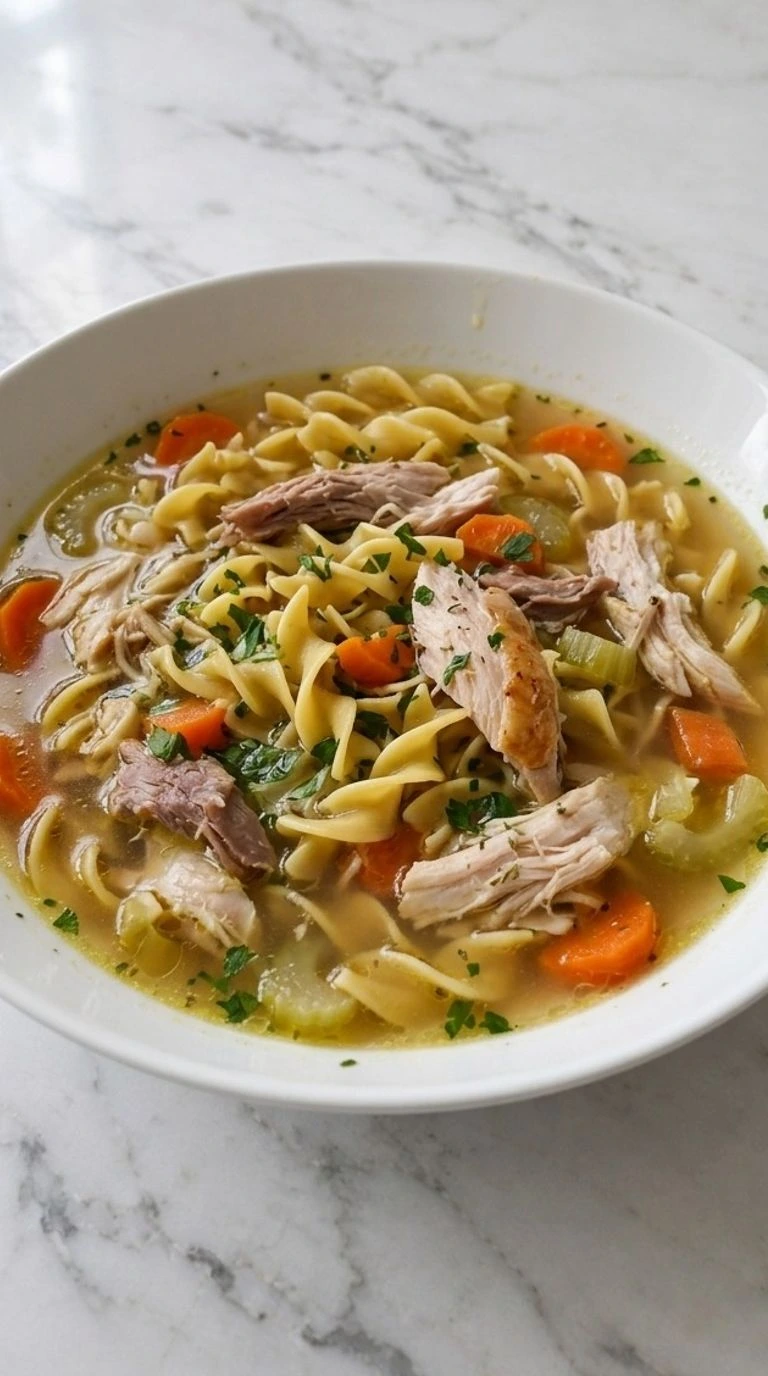
And if you love a creamy twist on this classic comfort food, our Creamy Chicken Noodle Soup is another good one to keep around. That’s right. We’re calling upon that container of LEFTOVER TURKEY to do something much more fun than become another sandwich. A few fresh vegetables and a handful of herbs bring everything together while the egg noodles make each spoonful feel like a proper meal. This homemade turkey soup is especially good after a big holiday dinner when you’re craving something lighter but still want food that tastes like home.
Why This Recipe Works
Turkey Noodle Soup gets its rich flavor from two simple moves. First, soften the onion and carrots for 6 to 7 minutes so their natural sweetness blends into the stock.
Then cook the wide egg noodles right in the broth because they’ll absorb its savory flavor as they soften. But timing matters most with leftover meat.
Adding fully roasted turkey during the last 3 to 4 minutes warms it through to 165°F without making it tough. If you prefer a richer bowl with a creamy finish, try our Chicken Pot Pie Soup too.
Ingredients

- Roasted turkey breast and thigh meat: Fully cooked and shredded into irregular bite-size pieces, using a mix of white and dark meat for a tender texture and deeper roasted flavor.
- Wide egg noodles: Measured dry and uncooked, these wavy noodles absorb the seasoned turkey broth while adding a soft and hearty texture.
- Low-sodium turkey stock: Used as the main broth, preferably homemade or a good-quality packaged version so the roasted turkey flavor stays noticeable.
- Medium carrots: Peeled and sliced into 1/4-inch half-moons so they soften evenly and add natural sweetness and bright orange color.
- Celery stalks: Washed and sliced into 1/4-inch crescents to add a mild savory flavor and soft vegetable texture.
- Yellow onion: Peeled and finely diced so it softens quickly and builds a sweet and savory flavor in the broth.
- Garlic cloves: Peeled and finely minced, then added near the end of the vegetable sauté so the garlic smells fragrant without burning.
- Extra-virgin olive oil: Used to soften the carrots, celery and onion while carrying their flavor into the stock.
- Dried thyme: Stirred into the broth to give the soup a gentle herbal flavor that pairs naturally with roasted turkey.
- Dried bay leaf: Simmered in the stock for a mild earthy aroma, then removed completely before serving.
- Kosher salt: Added to the broth for balanced seasoning, with the final salt level adjusted according to how salty the turkey and stock already are.
- Freshly ground black pepper: Added with the dried herbs to bring gentle warmth without overpowering the turkey flavor.
- Fresh flat-leaf parsley: Finely chopped just before serving, with half mixed into the soup and half sprinkled on top for a fresh herbal finish.
Kitchen Equipment
- 6-quart heavy-bottomed soup pot: A heavy-bottomed 6-quart pot gives the vegetables room to soften and holds 8 cups of stock without crowding, while a thin lightweight pot can heat unevenly and scorch the onion.
- Sharp 8-inch chef’s knife: A sharp 8-inch chef’s knife makes clean and even 1/4-inch vegetable cuts, while a dull blade can slip and leave pieces that cook at different rates.
- Large cutting board: A stable cutting board at least 12 by 18 inches gives enough room to chop the vegetables and turkey safely, while a small sliding board makes the work awkward.
- Wooden cooking spoon: A long wooden spoon lets you stir vegetables and fold in turkey without tearing the noodles, while a short spoon makes it harder to reach the bottom of a deep pot.
- Liquid measuring jug: A heat-safe measuring jug with clear cup markings helps measure the stock accurately, while a small unmarked container can lead to too little broth for the noodles.
- Measuring cups and spoons: Standard measuring cups and spoons help portion the egg noodles and herbs consistently, while guessing the noodle quantity can leave the soup too thick.
- Instant-read food thermometer: A fast digital thermometer with a narrow probe confirms the reheated turkey reaches 165°F, while relying on appearance alone can’t verify safe reheating.
- Soup ladle: A ladle holding about 1/2 cup helps divide the broth and vegetables between four bowls, while a shallow serving spoon makes even portions harder.
How to Make It
Step 1: Dice the vegetables and soften them in olive oil
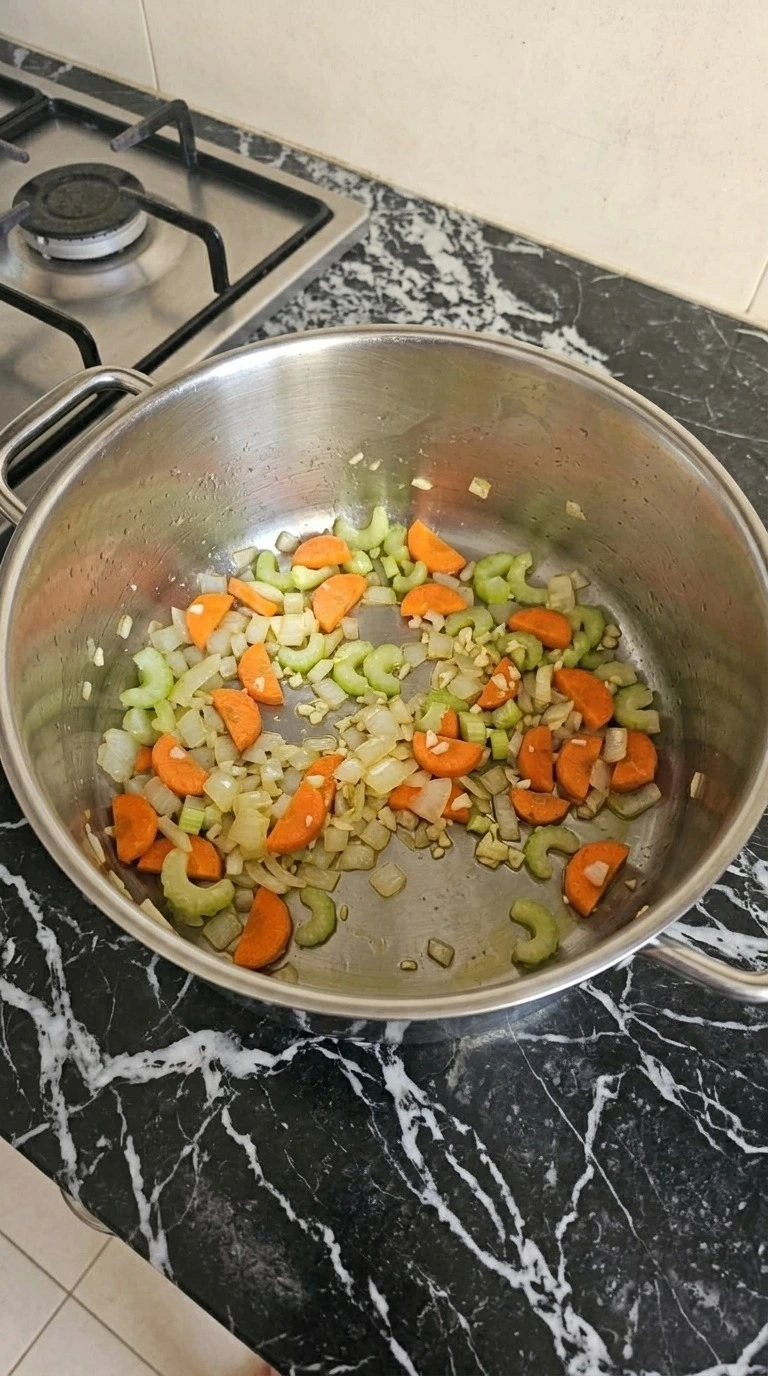
Peel 2 medium carrots and cut them into 1/4-inch half-moons. Slice 2 celery stalks into 1/4-inch crescents and finely dice 1 medium yellow onion. Mince 3 garlic cloves. Then pour 2 tablespoons of extra-virgin olive oil into a heavy-bottomed 6-quart pot and set the burner to medium heat (about 5 on a 10-dial).
Add the carrots and celery with the onion. Stir with a wooden spoon every 60 seconds for 6 to 7 minutes. Keep the vegetables moving across the base so they soften without turning dark brown. Add the minced garlic during the final 45 seconds.
The onion should look soft and almost clear while the carrots turn a brighter orange. You’ll smell the garlic as soon as it warms through. Don’t let it turn brown because burnt garlic leaves a bitter taste in the broth. Gentle heat softens the vegetables without scorching their natural sugars.
Tip: Cut the carrot pieces no thicker than 1/4 inch so they’ll turn tender during the short simmer and won’t stay firm beside the noodles.
Step 2: Simmer the vegetables in seasoned turkey stock
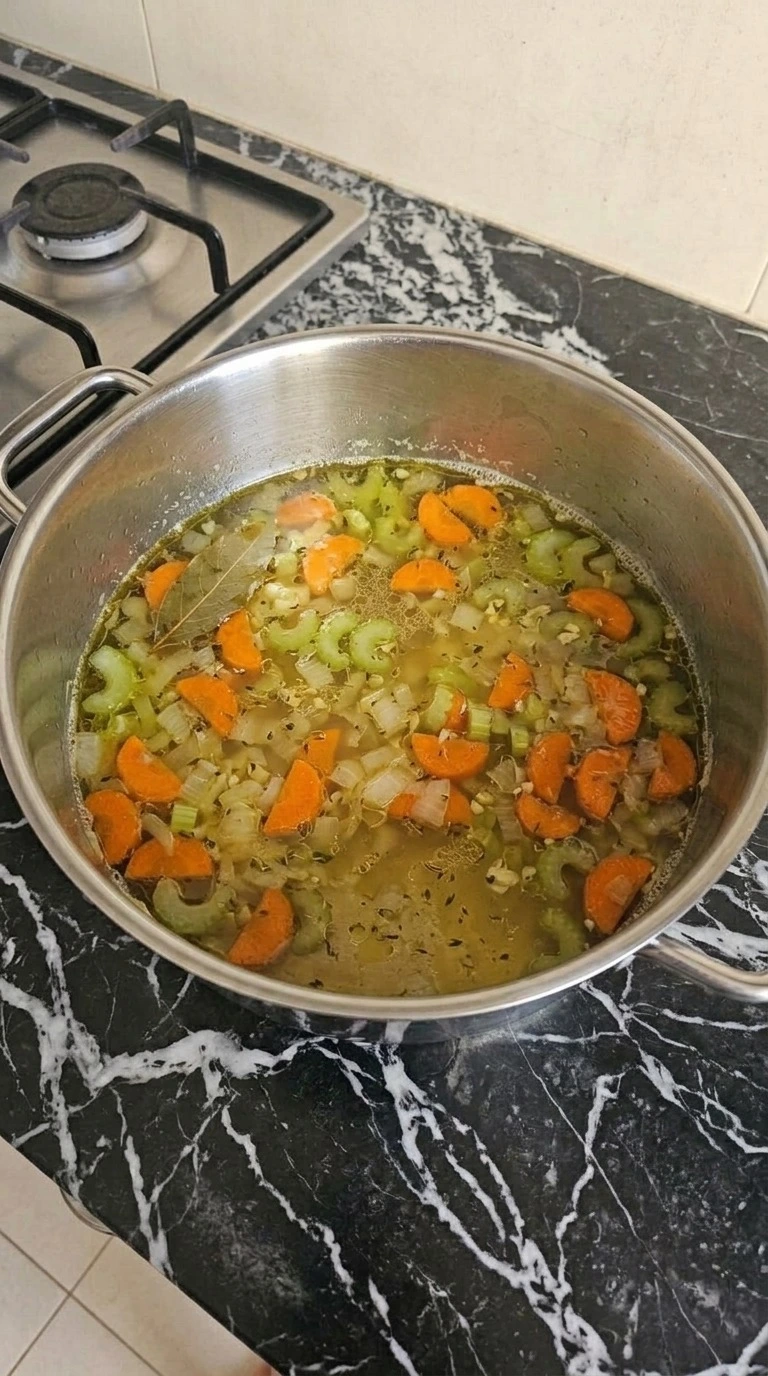
Pour 8 cups of low-sodium turkey stock over the softened vegetables. Add 1 teaspoon of dried thyme and 1 dried bay leaf. Then stir in 3/4 teaspoon of kosher salt and 1/4 teaspoon of freshly ground black pepper. Raise the burner to medium-high heat (about 7 on a 10-dial) for 3 to 4 minutes until small bubbles form across the surface.
Lower the heat to medium-low (about 3 on a 10-dial) and simmer uncovered for 8 minutes. Stir once halfway through so the vegetables move freely through the broth. The stock should turn a warm golden color with tiny thyme flecks floating near the surface. You’ll notice the carrot pieces starting to soften while the onion blends into the broth.
Avoid a rolling boil because the liquid can reduce too fast. A light simmer draws out flavor without wasting the stock.
Tip: Choose low-sodium turkey stock so you can adjust the final seasoning. A strongly salted stock may become too salty as it simmers.
Step 3: Cook the wide egg noodles in the simmering broth

Bring the seasoned stock back to a steady simmer over medium heat (about 5 on a 10-dial). Add 2 cups of dry wide egg noodles and use a wooden spoon to push them beneath the surface. Stir gently for the first 30 seconds so the wavy strips don’t clump together.
Then simmer uncovered for 6 to 8 minutes or until the noodles feel tender with a slight bite in the center. Stir again every 2 minutes and keep the broth moving with small bubbles rather than a hard boil. The noodles will swell and turn from pale yellow to a soft golden shade as they absorb some of the stock.
They should bend with ease. Stop before they become very soft because they’ll keep soaking up liquid after you turn off the heat. A short simmer keeps the egg noodles from turning mushy.
Tip: Check the package at minute 6 since thinner egg noodles soften faster than extra-wide varieties. Begin tasting before the printed cooking time ends.
Step 4: Fold in the roasted turkey and warm it through
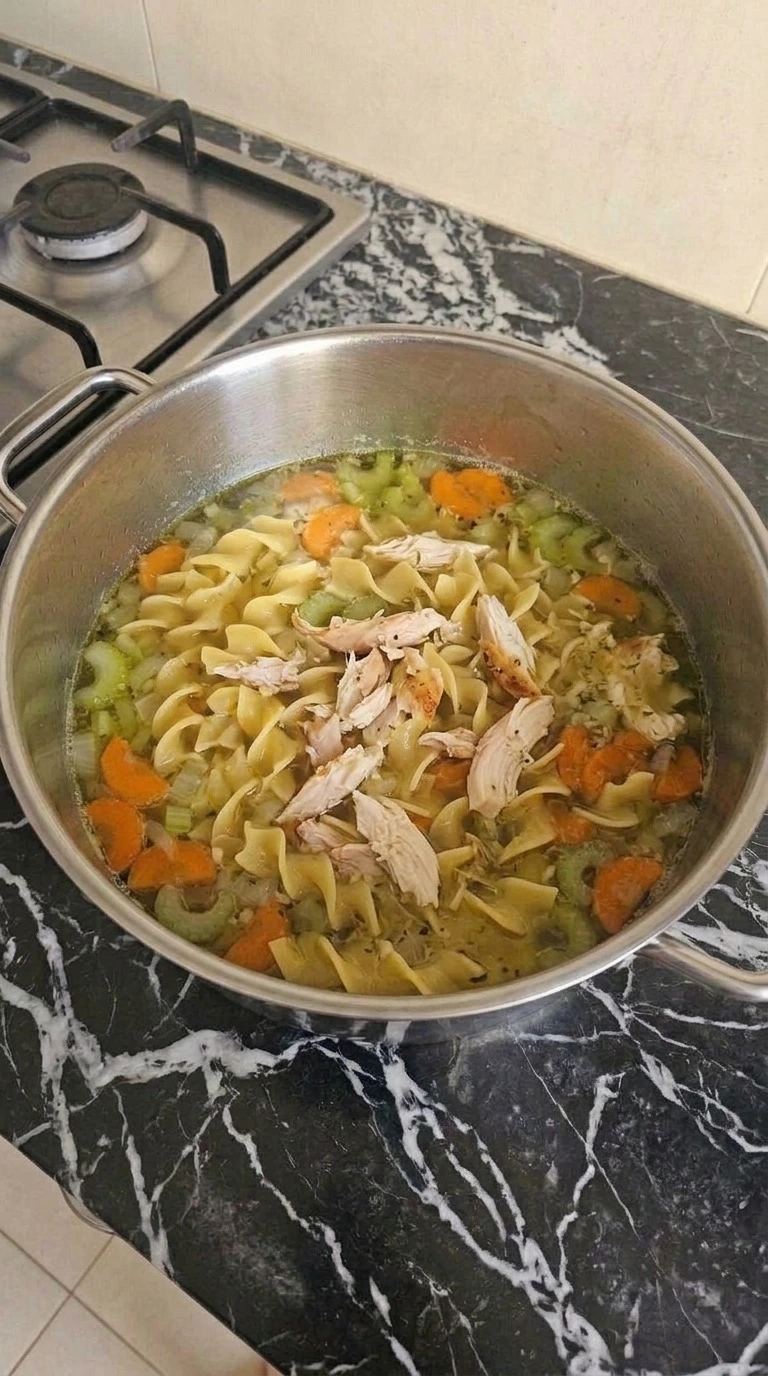
Turn the burner down to medium-low heat (about 3 on a 10-dial). Add 2 cups of shredded fully roasted turkey breast and thigh meat to the pot. Use a spoon to fold the turkey gently through the broth and around the soft noodles rather than stirring hard. Keep the soup at a light simmer for 3 to 4 minutes until the turkey reaches 165°F in the thickest pieces.
Don’t boil it hard because the meat can dry out and the noodles may split. Remove the bay leaf before serving. The turkey should look moist and pale golden with a few darker roasted edges. You’ll see the shreds spread between the soft vegetables and noodles rather than sinking into one big clump.
(I find this gentle finish gives the turkey a much better bite than a long boil. ) Brief heating keeps the already roasted meat tender.
Tip: If the turkey came from a heavily seasoned holiday roast, taste the broth after adding it before deciding whether it needs more salt.
Step 5: Ladle the soup into bowls and finish with parsley
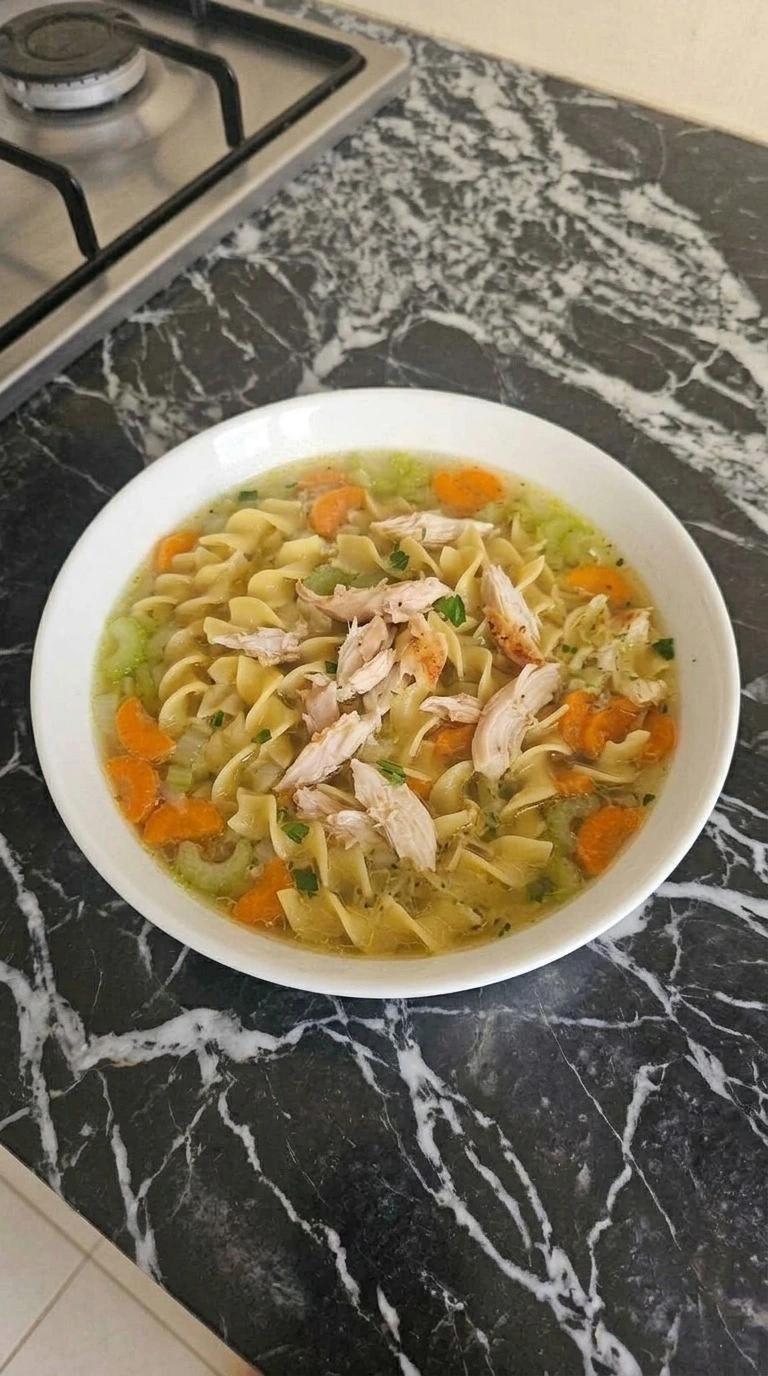
Turn off the burner and let the Turkey Noodle Soup stand for 1 minute. Chop 2 tablespoons of fresh flat-leaf parsley into small uneven pieces. Stir half into the pot and save the rest for the top. Then ladle the soup into 4 individual serving bowls and divide the turkey and noodles evenly.
Aim for about 2 cups per bowl with a good mix of meat and vegetables. Check that the turkey is still at least 165°F when served. Add the remaining parsley across the surface without pressing it beneath the broth. Each bowl should show curled golden noodles and tender turkey between the bright carrots and pale celery.
The parsley adds fresh green flecks and a clean herbal smell. Serve while hot because the noodles continue to soak up liquid as they sit. Adding parsley last keeps its fresh flavor and color.
Tip: For a slightly brighter finish, serve each bowl with a lemon wedge on the side if you have one. Keep lemon optional and add it only at the table.
Pro Tips
- Choose a mix of roasted turkey breast and thigh meat because 2 cups of mixed meat give you a better balance of tender shreds and rich flavor.
- Cut the carrots into 1/4-inch half-moons so they’ll soften at roughly the same rate as the celery during the 8-minute broth simmer.
- Use a heavy-bottomed 6-quart pot to spread the heat evenly. Keep the broth below a hard boil so the vegetables won’t break apart.
- For the best Turkey Noodle Soup texture, start tasting the wide egg noodles after 6 minutes because they’ll keep soaking up broth even after cooking.
- If your roasted turkey has crisp seasoned skin, remove most of it before shredding. Leaving a little adds flavor but too much can make the broth greasy.
- Measure the stock before cooking and keep another 1/2 cup nearby. Add a splash if the noodles soak up more liquid than expected.
- Chop the fresh flat-leaf parsley right before serving and add 2 tablespoons in total. The bright green flecks give each bowl a fresh finish.
- For holiday meal prep, chop the carrots and celery up to 2 days ahead. Store them in covered containers so dinner takes less hands-on work.
- Make a lemon herb version by stirring 1 tablespoon of fresh lemon juice into the finished soup and adding another teaspoon of chopped flat-leaf parsley for a brighter flavor.
- Turn it into a heartier vegetable soup by adding 1 cup of frozen peas during the final 3 minutes and reducing the dry wide egg noodles to 1 1/2 cups.
- For a creamy turkey noodle soup, stir in 1/2 cup of heavy cream after the turkey reaches 165°F and warm gently for 1 minute without boiling.
- Make a turkey and wild rice version by replacing the egg noodles with 1 1/2 cups of separately cooked wild rice blend and stirring it into the broth with the shredded turkey.
Substitutions & Variations
- Wide egg noodles: Use 2 cups of dry gluten-free wide rice noodles or certified gluten-free pasta. Rice noodles make the broth a little less rich and can turn soft faster. Start checking after 4 minutes and follow the package timing. For another wheat-free option, try our Gluten Free Chicken Noodle Soup.
- Low-sodium turkey stock: Replace with 8 cups of low-sodium chicken stock. Chicken stock gives the soup a lighter flavor with less of that deep roasted turkey taste. Choose a stock with less than 150 mg of sodium per cup when possible and taste before adding the full amount of salt.
- Roasted turkey breast and thigh meat: Use 2 cups of shredded fully cooked chicken breast or thigh meat. Chicken makes a slightly milder soup and works well when holiday leftovers aren’t available. Add it during the final 3 to 4 minutes and heat it to 165°F. Avoid raw chicken in this quick method because it needs a separate cooking stage.
- Wide egg noodles: Use 2 cups of dry egg-free rotini or small egg-free pasta shells. This makes the soup egg-free if your stock and other ingredients are also egg-free. The smaller pasta holds its shape but may take 8 to 11 minutes to soften. Check the package and add extra stock if needed.
- Extra-virgin olive oil: Use 2 tablespoons of refined avocado oil. Avocado oil gives the vegetables a more neutral flavor while keeping the recipe dairy-free. Use the same medium heat and 6 to 7 minute sauté. There’s no need to add butter or cream because the turkey stock already gives the soup plenty of savory flavor.
Storage Instructions
Let Turkey Noodle Soup cool slightly and transfer it into shallow airtight containers within 2 hours of cooking. Refrigerate at 40°F or below and eat within 3 to 4 days of the turkey’s original roasting date. If you’re using Thanksgiving leftovers, remember that cooking them into soup doesn’t reset their storage life.
For freezing, keep the noodles separate whenever possible because they soften after thawing. Pack the broth and turkey into freezer-safe containers with about 1 inch of headspace and freeze at 0°F for up to 3 months for the best quality. To reheat, warm the soup over medium-low heat for 5 to 8 minutes or until it reaches 165°F throughout.
Add 1/4 to 1/2 cup of fresh turkey stock if the noodles have absorbed too much liquid. Throw the soup away if you notice a sour smell, mold or a slimy texture. But don’t rely on smell alone because harmful bacteria aren’t always detectable.
Turkey Noodle Soup
Ingredients
Method
- Peel 2 medium carrots and cut them into 1/4-inch half-moons. Slice 2 celery stalks into 1/4-inch crescents and finely dice 1 medium yellow onion. Mince 3 garlic cloves. Then pour 2 tablespoons of extra-virgin olive oil into a heavy-bottomed 6-quart pot and set the burner to medium heat (about 5 on a 10-dial). Add the carrots and celery with the onion. Stir with a wooden spoon every 60 seconds for 6 to 7 minutes. Keep the vegetables moving across the base so they soften without turning dark brown. Add the minced garlic during the final 45 seconds. The onion should look soft and almost clear while the carrots turn a brighter orange. You’ll smell the garlic as soon as it warms through. Don’t let it turn brown because burnt garlic leaves a bitter taste in the broth. Gentle heat softens the vegetables without scorching their natural sugars.

- Pour 8 cups of low-sodium turkey stock over the softened vegetables. Add 1 teaspoon of dried thyme and 1 dried bay leaf. Then stir in 3/4 teaspoon of kosher salt and 1/4 teaspoon of freshly ground black pepper. Raise the burner to medium-high heat (about 7 on a 10-dial) for 3 to 4 minutes until small bubbles form across the surface. Lower the heat to medium-low (about 3 on a 10-dial) and simmer uncovered for 8 minutes. Stir once halfway through so the vegetables move freely through the broth. The stock should turn a warm golden color with tiny thyme flecks floating near the surface. You’ll notice the carrot pieces starting to soften while the onion blends into the broth. Avoid a rolling boil because the liquid can reduce too fast. A light simmer draws out flavor without wasting the stock.

- Bring the seasoned stock back to a steady simmer over medium heat (about 5 on a 10-dial). Add 2 cups of dry wide egg noodles and use a wooden spoon to push them beneath the surface. Stir gently for the first 30 seconds so the wavy strips don’t clump together. Then simmer uncovered for 6 to 8 minutes or until the noodles feel tender with a slight bite in the center. Stir again every 2 minutes and keep the broth moving with small bubbles rather than a hard boil. The noodles will swell and turn from pale yellow to a soft golden shade as they absorb some of the stock. They should bend with ease. Stop before they become very soft because they’ll keep soaking up liquid after you turn off the heat. A short simmer keeps the egg noodles from turning mushy.

- Turn the burner down to medium-low heat (about 3 on a 10-dial). Add 2 cups of shredded fully roasted turkey breast and thigh meat to the pot. Use a spoon to fold the turkey gently through the broth and around the soft noodles rather than stirring hard. Keep the soup at a light simmer for 3 to 4 minutes until the turkey reaches 165°F in the thickest pieces. Don’t boil it hard because the meat can dry out and the noodles may split. Remove the bay leaf before serving. The turkey should look moist and pale golden with a few darker roasted edges. You’ll see the shreds spread between the soft vegetables and noodles rather than sinking into one big clump. (I find this gentle finish gives the turkey a much better bite than a long boil.) Brief heating keeps the already roasted meat tender.

- Turn off the burner and let the Turkey Noodle Soup stand for 1 minute. Chop 2 tablespoons of fresh flat-leaf parsley into small uneven pieces. Stir half into the pot and save the rest for the top. Then ladle the soup into 4 individual serving bowls and divide the turkey and noodles evenly. Aim for about 2 cups per bowl with a good mix of meat and vegetables. Check that the turkey is still at least 165°F when served. Add the remaining parsley across the surface without pressing it beneath the broth. Each bowl should show curled golden noodles and tender turkey between the bright carrots and pale celery. The parsley adds fresh green flecks and a clean herbal smell. Serve while hot because the noodles continue to soak up liquid as they sit. Adding parsley last keeps its fresh flavor and color.

Notes
Frequently Asked Questions
Yes, and it’s a great way to get ahead of a busy holiday weekend. Cook the vegetable broth up to 2 days early and chill it promptly in a covered container. Keep the roasted turkey separate, then reheat the broth and cook the noodles just before serving. Add the turkey during the final minutes and heat it to 165°F so it stays tender.
Store the soup in a shallow airtight container at 40°F or below and use it within 3 to 4 days of the turkey’s original cooking date. If the turkey was already refrigerated for 2 days before you made the soup, don’t restart the storage clock. The noodles will soften as they sit, so you may need extra stock when reheating.
Yes. For a gluten-free version, use 2 cups of certified gluten-free noodles and check that your turkey stock contains no gluten ingredients. For an egg-free version, choose egg-free rotini or rice noodles instead of traditional wide egg noodles. Start checking the texture around minute 4 for rice noodles and follow the package directions because cooking times can vary.
Egg noodles release starch and keep absorbing liquid after you turn off the heat. If your soup looks more like a stew, stir in 1/2 cup of warm turkey stock at a time until the broth flows freely around the noodles. Warm it gently over medium-low heat for 2 to 3 minutes and avoid adding extra salt before tasting.
Absolutely. Use 4 cups of shredded roasted turkey, 4 cups of dry wide egg noodles and 16 cups of turkey stock for approximately 8 servings. You’ll need a heavy-bottomed pot that holds at least 8 quarts so the soup has room to simmer without overflowing. Allow a few extra minutes for the larger volume to reach a simmer, but check the noodles at their usual cooking time.
A thick slice of toasted sourdough bread makes a great partner because it soaks up the golden broth. For a lighter dinner, serve a small green salad with a lemon dressing and keep the soup portion around 2 cups per person. If you’re feeding guests after Thanksgiving, warm the bread at 350°F for 5 to 7 minutes before serving.
You can freeze it, but the noodles usually turn much softer after thawing. For the best texture, freeze the broth and turkey without the noodles in airtight freezer-safe containers for up to 3 months. Thaw overnight in the refrigerator, bring the broth to a simmer and cook fresh noodles in it. Then heat the turkey until it reaches 165°F before serving.
Final Thoughts
That first spoonful always reminds me why I save extra turkey after Thanksgiving. I used to think a good soup needed hours on the stove, but Turkey Noodle Soup changed my mind.
Turns out this easy turkey noodle soup is one of those forgiving dinners where a splash of extra broth can fix noodles that have soaked up too much liquid. What makes this version special is the rich turkey stock and those tender roasted pieces that don’t need another long cook.
If you try it, leave me a comment below. And for another warming dinner, check out our Creamy Chicken Noodle Soup or Crockpot Chicken and Rice Soup. It works just as well when you are after thanksgiving turkey noodle soup and turkey noodle soup recipe.
Here’s a neat Thanksgiving leftover trick. Roasted turkey can give homemade noodle soup a deeper flavor than plain poached poultry because the browning from roasting adds savory notes. And if you’ve ever wondered why leftover soup seems thicker the next day, it’s because the egg noodles keep soaking up the broth while they sit.