Gluten Free Chicken Noodle Soup
I made Gluten Free Chicken Noodle Soup for the first time the week we moved into our house in 2019, boxes everywhere, no proper kitchen setup and somehow it turned out better than expected. What saved me that night was keeping the broth at a gentle simmer instead of boiling the chicken hard. Since then it’s become my go-to when I’m exhausted but still want something that tastes real.
Mark always says this homemade chicken noodle soup is better than takeout and Emma, who’s usually suspicious of anything new, asks for seconds. When we’re craving another cozy dinner with almost no fuss, I also make Crockpot Beef Tips and Gravy. The same comfort-food mood is there, but the soup feels lighter and fresher when we want something brothy. The whole pot takes about 45 minutes and there’s nothing fancy hiding in the method.
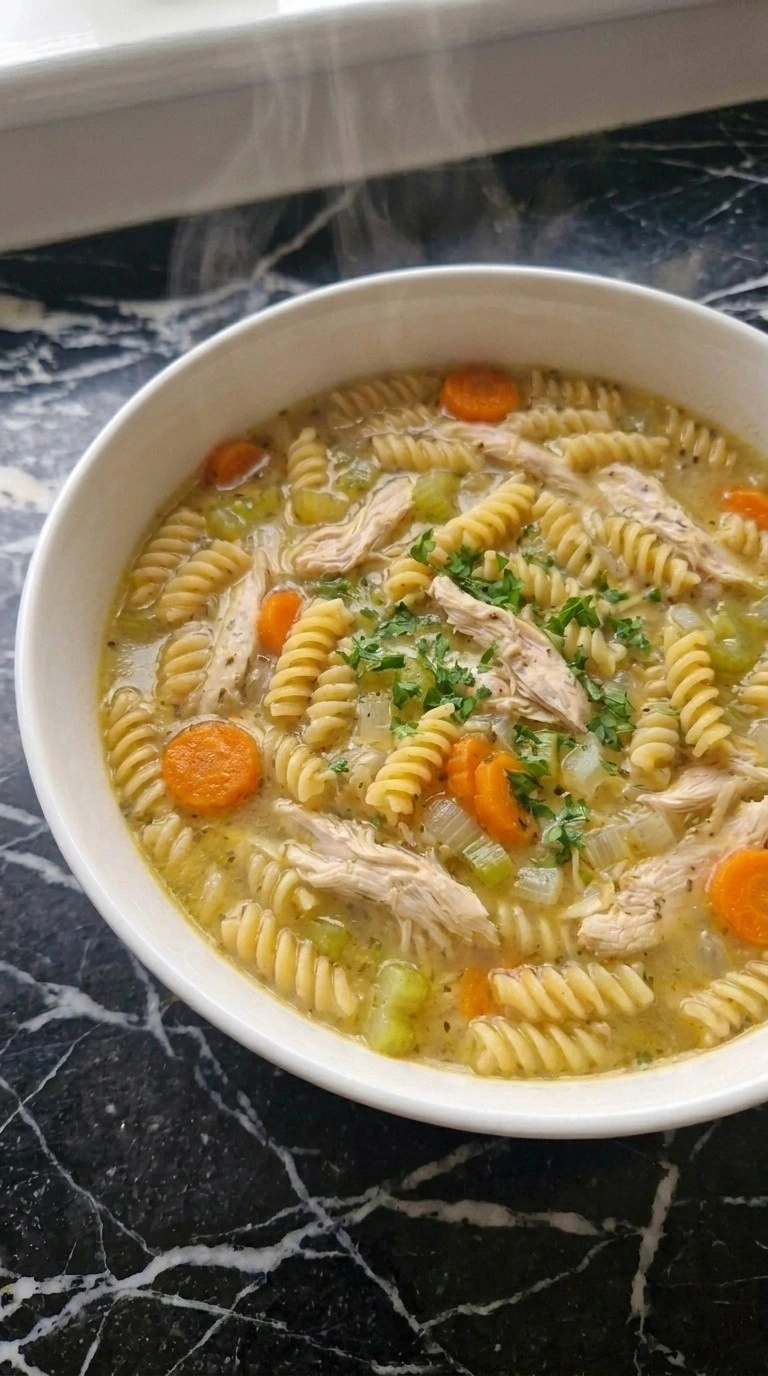
You soften the vegetables, gently simmer the chicken and then cook gluten-free brown rice rotini right in the savory broth. Fresh parsley and lemon wake everything up at the end. And because the noodles go in later, they keep more bite instead of turning soft before dinner reaches the table.
Why You’ll Love This Gluten Free Chicken Noodle Soup
Gluten Free Chicken Noodle Soup stays tender because the chicken simmers gently rather than boiling hard. Pulling the breasts at 165°F protects lean meat from unnecessary heat while the vegetables finish softening. Adding brown rice rotini only after the chicken comes out also gives you better control over its short cooking window.
That matters because gluten-free noodles can soften quickly once hydrated. The final 2-minute return of the shredded chicken warms it without repeatedly cooking the breast. Lemon and parsley go in off heat so their fresh aromas stay noticeable against the savory broth.
If you’re in the mood for another comforting dinner, Crockpot Mac and Cheese Velveeta uses a completely different texture but delivers the same cozy appeal.
Ingredient List
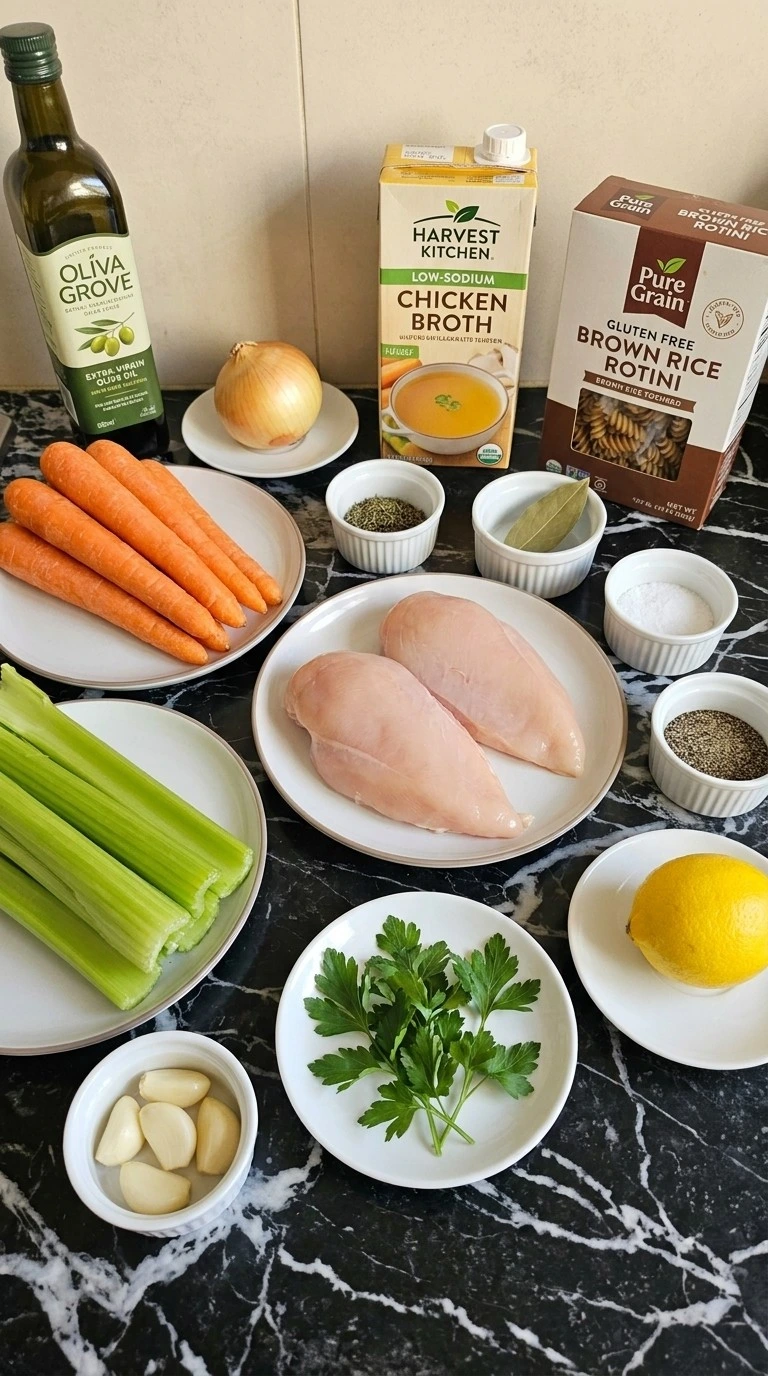
- extra-virgin olive oil: Used to soften the aromatics gently and carry their flavor into the broth.
- yellow onion: Finely diced so it softens into the broth without leaving large onion pieces.
- carrots: Peeled and sliced into roughly 1/4-inch rounds so they become tender but keep their shape.
- celery stalks: Sliced about 1/4-inch thick for tender pieces that still remain visible in the finished soup.
- garlic cloves: Minced finely and added near the end of sautéing so the garlic stays fragrant instead of bitter.
- low-sodium chicken broth: Provides the clear golden soup base and leaves room to control the final salt level.
- boneless skinless chicken breasts: Use two medium breasts of similar thickness so they finish simmering at nearly the same time.
- dried thyme: Adds an earthy herbal note that infuses the broth during the chicken simmer.
- dried bay leaf: Simmered in the broth for background aroma and removed before the noodles are added.
- kosher salt: Seasons the broth early, with the final amount adjusted according to the sodium level of the broth.
- ground black pepper: Adds gentle pepper warmth and visible specks throughout the clear broth.
- gluten-free brown rice rotini: Cooked directly in the broth until just tender so the spiral shape remains distinct and springy.
- flat-leaf parsley: Chopped shortly before serving and stirred in for fresh green color and herbal flavor.
- fresh lemon juice: Stirred in after cooking to brighten the broth without making it noticeably sour.
Kitchen Equipment
- 6-quart Dutch oven or soup pot: A heavy-bottomed 6-quart pot holds the broth and ingredients comfortably while distributing heat evenly, while a smaller thin pot can crowd the noodles and create hot spots.
- Instant-read food thermometer: A fast digital thermometer confirms the chicken reaches 165°F without unnecessary cooking, and a slow or poorly calibrated model makes precise doneness harder to judge.
- Cutting board: A medium nonporous cutting board gives enough room for the onion, carrots, celery and chicken preparation, while a cramped board makes safe and even cutting harder.
- Chef’s knife: An 8-inch sharp chef’s knife makes consistent 1/4-inch carrot slices and clean vegetable cuts, while a dull blade can crush vegetables and slip during prep.
- Soup ladle: A 4-to-6-ounce ladle lifts broth, noodles, vegetables and chicken together for balanced portions, while a very shallow spoon tends to leave the solids behind.
Making Gluten Free Chicken Noodle Soup: Step-by-Step
Step 1: Soften the onion, carrots and celery

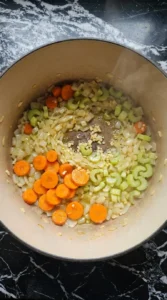
Heat the extra-virgin olive oil over medium heat, about 5 on a 10-dial. Add the diced yellow onion, sliced carrots and sliced celery. Cook for 6 to 8 minutes while stirring from the bottom every 60 to 90 seconds. Add the minced garlic during the final 45 seconds.
Keep the vegetables moving so the garlic can’t sit against the hottest part too long. Next, watch the onion change from opaque white to translucent while the carrot edges brighten and the celery turns glossy. You’ll smell the garlic clearly during those last seconds. Don’t let the garlic become dark brown because that bitterness follows the broth all the way to the bowl.
The vegetables should still hold their shape and shouldn’t look mushy. This early softening gives Gluten Free Chicken Noodle Soup a sweeter and rounder broth without turning the vegetables limp. Cook over medium heat for 6 to 8 minutes because controlled heat releases flavor without scorching the aromatics.
Tip: Cut the carrots about 1/4-inch thick so they soften during the simmer but still hold a clear round shape in each bowl.
Step 2: Gently simmer the chicken in the broth

Pour in the low-sodium chicken broth and add the dried thyme, bay leaf, kosher salt and ground black pepper. Nestle the two boneless skinless chicken breasts into the liquid. Bring it just to a boil over medium-high heat. Then lower the heat to medium-low, about 3 on a 10-dial, and maintain a gentle simmer for 12 to 15 minutes.
Check the thickest part of each breast and remove the chicken when it reaches 165°F. USDA guidance sets 165°F as the safe minimum temperature for poultry. citeturn258868search1turn258868search3 The broth should make small steady bubbles rather than rolling violently. You’ll smell thyme and chicken while the vegetables become tender around their edges.
A hard boil can tighten the chicken before its center reaches temperature. (I used to boil chicken soup harder because I thought faster bubbles meant faster cooking, the breast always turned stringy. ) Keep the simmer gentle until 165°F because slower convection limits moisture loss from the lean chicken.
Tip: If your chicken breasts differ greatly in thickness, remove the smaller one as soon as it reaches 165°F instead of waiting for both.
Step 3: Rest and shred the chicken
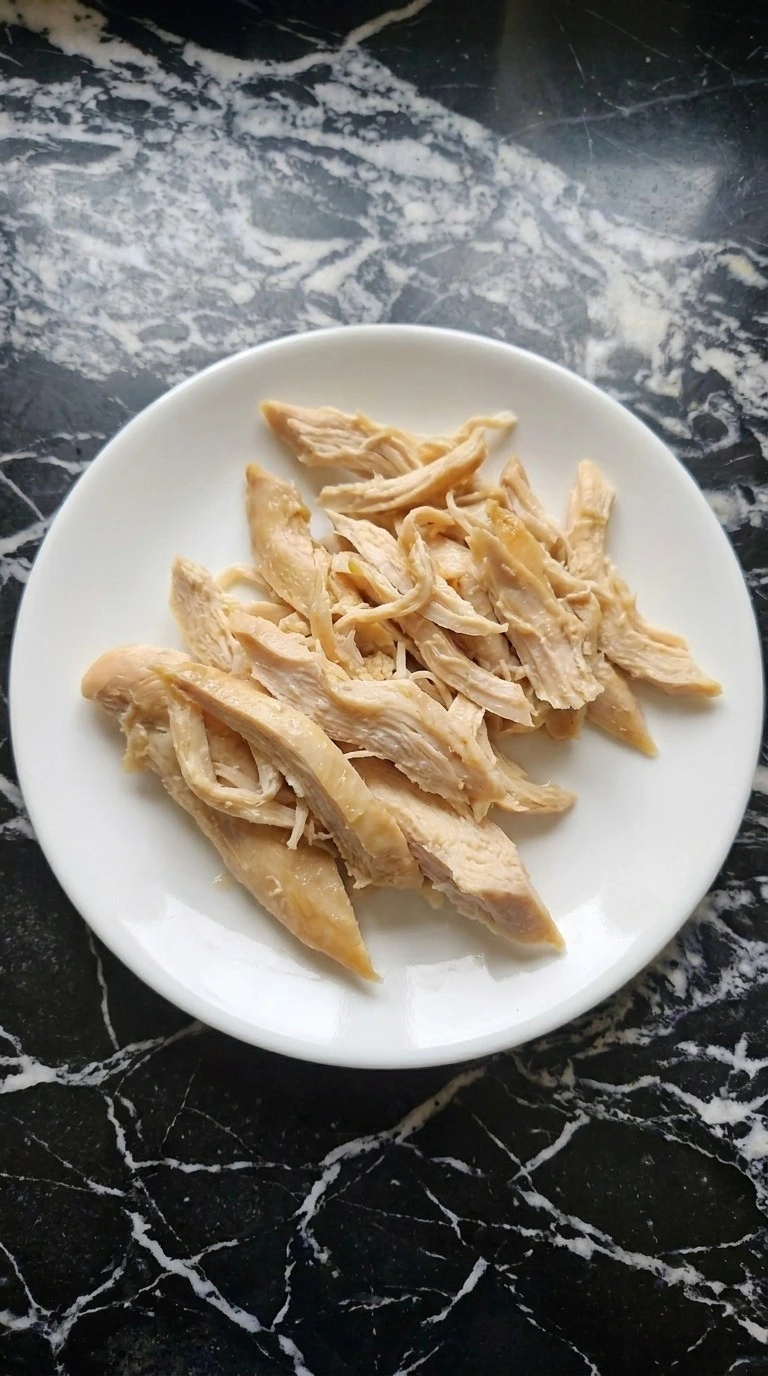
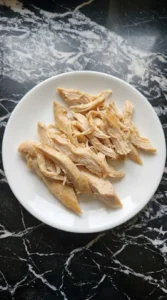
Transfer both chicken breasts out of the broth once they reach 165°F. Let them rest for exactly 5 minutes so the fibers settle before shredding. Then pull each breast into irregular bite-size strands about 1 to 2 inches long.
Work along the natural grain rather than chopping cubes. Meanwhile, keep the vegetable broth barely simmering over low heat, about 2 on a 10-dial. The breast meat should look fully opaque and moist inside with no translucent sections.
As you pull it apart, the pieces should separate with light resistance instead of crumbling into dry threads. If you shred it immediately while piping hot, more juices escape and the pieces can feel drier once they return to the broth. Rest for 5 minutes before shredding because brief resting reduces moisture loss from the chicken fibers.
Tip: Keep the shreds uneven rather than tiny and uniform. Larger strands stay more noticeable after they simmer with the noodles for two final minutes.
Step 4: Cook the gluten-free rotini and return the chicken
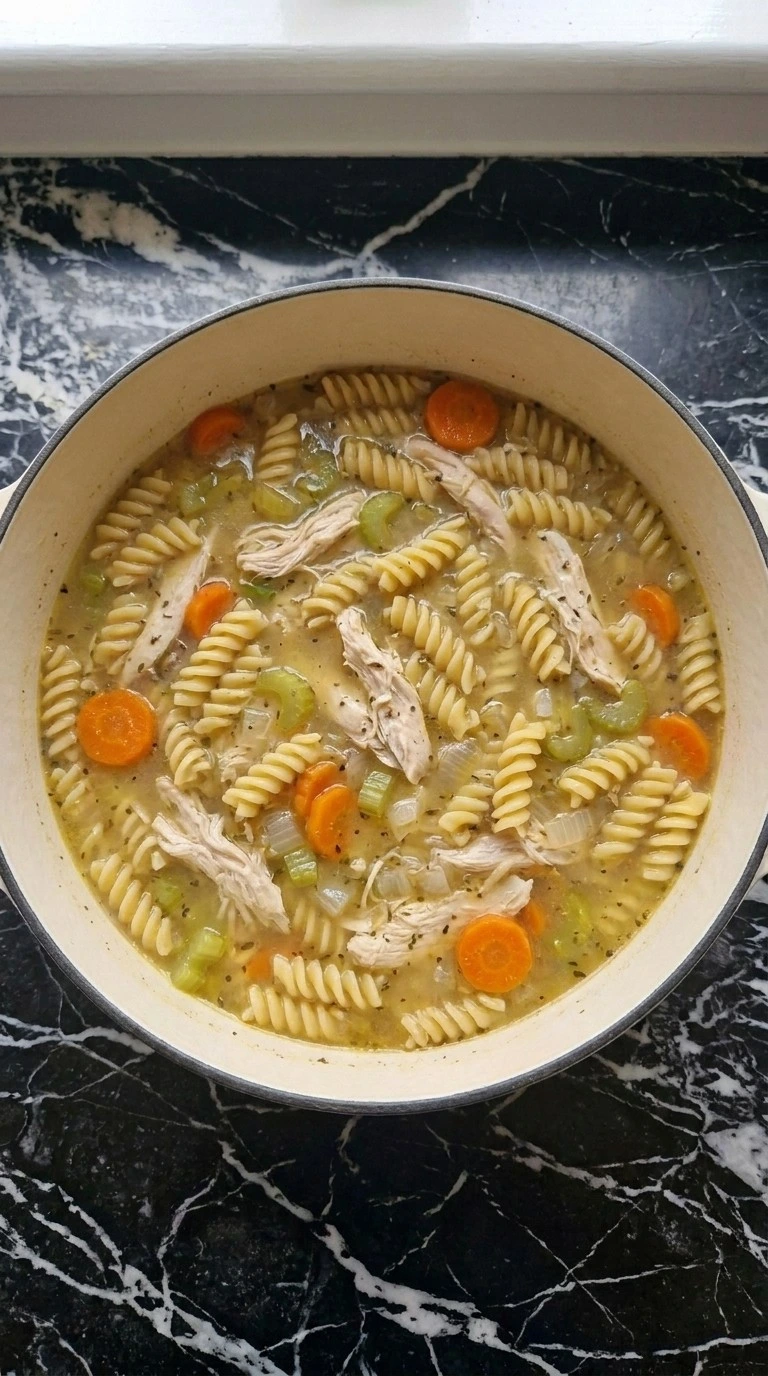
Remove the bay leaf and bring the broth back to a steady simmer over medium heat, about 5 on a 10-dial. Add the gluten-free brown rice rotini and stir immediately so pieces don’t settle together. Simmer for 7 to 9 minutes or according to the package’s lower recommended time. Stir gently at minutes 2, 4 and 6 to separate the spirals without breaking them.
Next, taste one rotini at minute 7. It should bend easily but retain a faintly firm center. The broth will look slightly fuller from released starch while the carrots stay intact. Return all the shredded chicken during the final 2 minutes and fold it through gently.
Go too far past the noodle window and gluten-free rotini can become fragile and split. Cook the noodles only until tender because gluten-free starch softens quickly once fully hydrated.
Tip: If your rotini package lists an 8-to-10-minute range, start checking at minute 7 because it continues softening in the hot broth after cooking.
Step 5: Finish with parsley and lemon
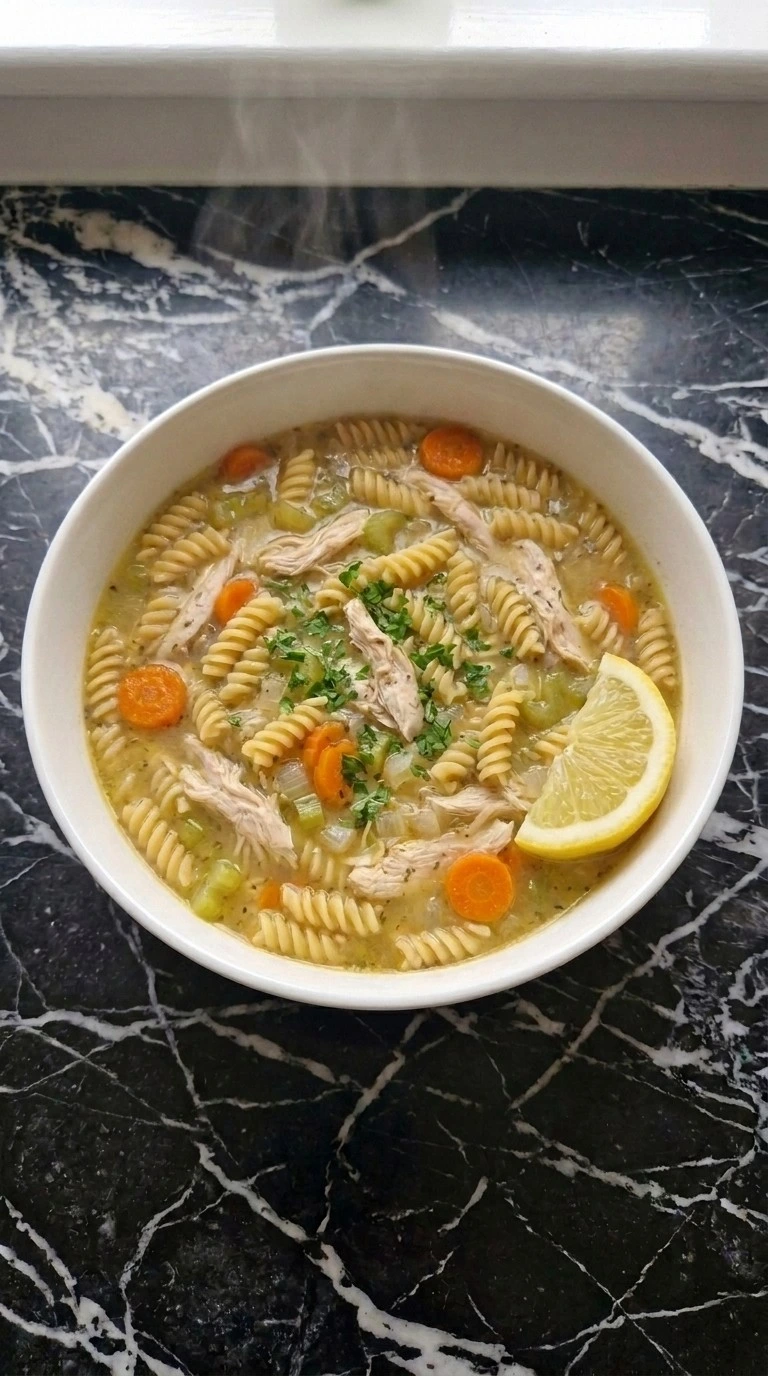
Turn the heat to low, about 1 on a 10-dial, once the rotini is tender. Stir in the fresh lemon juice and chopped flat-leaf parsley for 30 seconds. Taste the broth and adjust only if needed. Then remove the pot from the heat and let the soup stand for 2 minutes before serving.
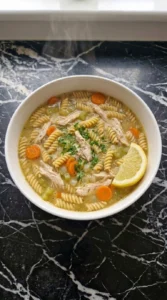
This short pause lets the bubbling settle without giving the noodles much extra cooking time. Finally, the broth should look clear golden and lightly glossy. Orange carrot rounds, pale chicken shreds and spiral noodles should remain easy to distinguish. Fresh parsley adds bright green flecks and the lemon should smell fresh rather than sharply sour.
If the soup sits over active heat for another 8 to 10 minutes, the noodles can absorb too much broth and lose their spring. Finish Gluten Free Chicken Noodle Soup off heat because residual heat is enough to blend the final flavors.
Tip: Serve each portion with about 2 cups of soup so every bowl gets a balanced amount of broth, chicken, vegetables and rotini.
Pro Tips for the Best Gluten Free Chicken Noodle Soup
- Cook the gluten-free rotini 1 to 2 minutes less than the package maximum if you expect leftovers. The noodles continue absorbing broth after the heat is off.
- Slice the carrots into even 1/4-inch rounds so they soften at the same rate. Uneven pieces leave some crunchy while others become overly soft.
- Taste the broth only after the chicken reaches 165°F. Different broth brands contain different sodium levels and early seasoning can make the finished soup too salty.
- Add the parsley and lemon juice during the final 30 seconds off the heat. High heat dulls their fresh flavor and bright green color.
- If you’re making Gluten Free Chicken Noodle Soup for meal prep, cook the noodles separately and combine them only when serving. This keeps the broth clear and the pasta pleasantly firm.
- Use a heavy-bottomed 6-quart Dutch oven whenever possible. It keeps the simmer gentle and steady instead of creating hot spots that toughen lean chicken.
- Add 1 cup of baby spinach during the final minute for extra color and a mild earthy flavor without changing the cooking time.
- Stir in 1/2 teaspoon of smoked paprika with the thyme for a subtle smoky version that still keeps the broth clear and light.
- Replace half the carrots with diced parsnips during winter for a sweeter broth and slightly creamier texture.
- Add 1/2 cup frozen peas during the final 2 minutes if you want a little extra color and natural sweetness.
Ingredient Swaps
- Boneless skinless chicken breasts: Boneless skinless chicken thighs — Use an equal weight. Simmer until they reach 175°F for a richer broth and slightly softer texture.
- Gluten-free brown rice rotini: Gluten-free corn and rice fusilli — Use the same weight and begin checking 2 minutes before the package time because some brands soften faster and release more starch.
- Fresh parsley: Fresh dill — Replace with the same amount. Dill creates a brighter finish and pairs especially well with lemon, but the soup will taste more herbal.
- Low-sodium chicken broth: Homemade chicken stock — Use the same volume and reduce the added salt until the end. For another cozy homemade dinner, pair it with Sourdough Discard Focaccia (easy No-waste Recipe) for dipping.
How to Store & Reheat
Store Gluten Free Chicken Noodle Soup in airtight containers once it has cooled completely. Keep it in the fridge for up to 4 days. If you know you’ll have leftovers, try to store the noodles separately from the broth so they don’t get too soft.
You can freeze the broth and chicken for up to 3 months in freezer-safe containers. Just leave about 1 inch of space at the top for expansion. When you’re ready to eat, reheat the soup gently over medium-low heat until it reaches 165°F.
If the noodles soaked up too much broth, add about 1/4 cup of extra chicken broth. Stir only once or twice so the gluten-free pasta doesn’t break apart. Toss the soup if you notice a sour smell, cloudy bubbles, or an unusual slimy texture.
Gluten Free Chicken Noodle Soup
Ingredients
- 1 tablespoon extra-virgin olive oil Used to soften the aromatics gently and carry their flavor into the broth.
- 1 medium yellow onion Finely diced so it softens into the broth without leaving large onion pieces.
- 3 medium carrots Peeled and sliced into roughly 1/4-inch rounds so they become tender but keep their shape.
- 3 large celery stalks Sliced about 1/4-inch thick for tender pieces that still remain visible in the finished soup.
- 3 large garlic cloves Minced finely and added near the end of sautéing so the garlic stays fragrant instead of bitter.
- 8 cups low-sodium chicken broth Provides the clear golden soup base and leaves room to control the final salt level.
- 1 pound boneless skinless chicken breasts Use two medium breasts of similar thickness so they finish simmering at nearly the same time.
- 1 teaspoon dried thyme Adds an earthy herbal note that infuses the broth during the chicken simmer.
- 1 large dried bay leaf Simmered in the broth for background aroma and removed before the noodles are added.
- 1 teaspoon kosher salt Seasons the broth early, with the final amount adjusted according to the sodium level of the broth.
- 1/2 teaspoon ground black pepper Adds gentle pepper warmth and visible specks throughout the clear broth.
- 8 ounces gluten-free brown rice rotini Cooked directly in the broth until just tender so the spiral shape remains distinct and springy.
- 2 tablespoons flat-leaf parsley Chopped shortly before serving and stirred in for fresh green color and herbal flavor.
- 1 tablespoon fresh lemon juice Stirred in after cooking to brighten the broth without making it noticeably sour.
Instructions
- Heat the extra-virgin olive oil over medium heat, about 5 on a 10-dial. Add the diced yellow onion, sliced carrots and sliced celery. Cook for 6 to 8 minutes while stirring from the bottom every 60 to 90 seconds. Add the minced garlic during the final 45 seconds. Keep the vegetables moving so the garlic can’t sit against the hottest part too long. Next, watch the onion change from opaque white to translucent while the carrot edges brighten and the celery turns glossy. You’ll smell the garlic clearly during those last seconds. Don’t let the garlic become dark brown because that bitterness follows the broth all the way to the bowl. The vegetables should still hold their shape and shouldn’t look mushy. This early softening gives Gluten Free Chicken Noodle Soup a sweeter and rounder broth without turning the vegetables limp. Cook over medium heat for 6 to 8 minutes because controlled heat releases flavor without scorching the aromatics.
- Pour in the low-sodium chicken broth and add the dried thyme, bay leaf, kosher salt and ground black pepper. Nestle the two boneless skinless chicken breasts into the liquid. Bring it just to a boil over medium-high heat. Then lower the heat to medium-low, about 3 on a 10-dial, and maintain a gentle simmer for 12 to 15 minutes. Check the thickest part of each breast and remove the chicken when it reaches 165°F. USDA guidance sets 165°F as the safe minimum temperature for poultry. citeturn258868search1turn258868search3 The broth should make small steady bubbles rather than rolling violently. You’ll smell thyme and chicken while the vegetables become tender around their edges. A hard boil can tighten the chicken before its center reaches temperature. (I used to boil chicken soup harder because I thought faster bubbles meant faster cooking, the breast always turned stringy.) Keep the simmer gentle until 165°F because slower convection limits moisture loss from the lean chicken.

- Transfer both chicken breasts out of the broth once they reach 165°F. Let them rest for exactly 5 minutes so the fibers settle before shredding. Then pull each breast into irregular bite-size strands about 1 to 2 inches long. Work along the natural grain rather than chopping cubes. Meanwhile, keep the vegetable broth barely simmering over low heat, about 2 on a 10-dial. The breast meat should look fully opaque and moist inside with no translucent sections. As you pull it apart, the pieces should separate with light resistance instead of crumbling into dry threads. If you shred it immediately while piping hot, more juices escape and the pieces can feel drier once they return to the broth. Rest for 5 minutes before shredding because brief resting reduces moisture loss from the chicken fibers.
- Remove the bay leaf and bring the broth back to a steady simmer over medium heat, about 5 on a 10-dial. Add the gluten-free brown rice rotini and stir immediately so pieces don’t settle together. Simmer for 7 to 9 minutes or according to the package’s lower recommended time. Stir gently at minutes 2, 4 and 6 to separate the spirals without breaking them. Next, taste one rotini at minute 7. It should bend easily but retain a faintly firm center. The broth will look slightly fuller from released starch while the carrots stay intact. Return all the shredded chicken during the final 2 minutes and fold it through gently. Go too far past the noodle window and gluten-free rotini can become fragile and split. Cook the noodles only until tender because gluten-free starch softens quickly once fully hydrated.
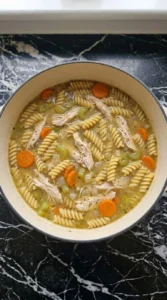
- Turn the heat to low, about 1 on a 10-dial, once the rotini is tender. Stir in the fresh lemon juice and chopped flat-leaf parsley for 30 seconds. Taste the broth and adjust only if needed. Then remove the pot from the heat and let the soup stand for 2 minutes before serving. This short pause lets the bubbling settle without giving the noodles much extra cooking time. Finally, the broth should look clear golden and lightly glossy. Orange carrot rounds, pale chicken shreds and spiral noodles should remain easy to distinguish. Fresh parsley adds bright green flecks and the lemon should smell fresh rather than sharply sour. If the soup sits over active heat for another 8 to 10 minutes, the noodles can absorb too much broth and lose their spring. Finish Gluten Free Chicken Noodle Soup off heat because residual heat is enough to blend the final flavors.
Notes
Reader Questions
Yes. Cook the broth and chicken completely, then cool everything within 2 hours before refrigerating. If possible, keep the gluten-free noodles separate and add them while reheating or within the final 5 minutes so they stay pleasantly firm.
Yes, but the best texture comes from freezing the broth and chicken without the noodles. Store in airtight freezer containers for up to 3 months. Thaw overnight in the refrigerator and cook fresh gluten-free pasta before serving.
Gluten-free pasta absorbs liquid even after the burner is off. Start checking the noodles about 2 minutes before the package time and stop cooking when they’re just tender. Leaving the soup over low heat for another 10 minutes usually causes the texture to break down.
Warm the soup gently over medium-low heat until it reaches about 165°F, which usually takes 8 to 10 minutes. Add 1/4 to 1/2 cup of extra broth if the noodles absorbed too much liquid. Avoid a rolling boil because it can make the chicken stringy.
A slice of crusty bread or Sourdough Discard Focaccia (easy No-waste Recipe) makes an excellent side for soaking up the broth. If you want a lighter meal, finish with a crisp green salad dressed simply with lemon and olive oil.
Before You Go
If you make Gluten Free Chicken Noodle Soup on a weekend afternoon with music playing, like I do, you’ll see why it’s been a family favorite for years. One little trick makes a big difference: don’t rush the noodles. It’s what takes the soup from just okay to really good.
For another cozy dinner, try Slow Cooker Garlic Butter Beef Bites and Potatoes or save Fall Pasta Salad Recipes with Cozy Harvest Flavor for a lighter side. If you make this soup, tag me on Instagram. I love seeing what you cook!
And Liam says hi. He ate almost half the batch while I was testing it, and honestly, that’s about the best review you can get from a 5-year-old.
Chicken noodle soup has been a comfort-food favorite for generations. It’s easy to see why. The warm broth, tender chicken, and mild herbs make a cozy, nourishing meal that’s simple to enjoy whenever you want something comforting.