Sourdough Discard Focaccia (easy No-waste Recipe)
Sourdough Discard Focaccia (Easy No-Waste Recipe) starts with bubbly dough, plenty of olive oil, and a topping of rosemary, Parmesan, and flaky salt. Bake it until the edges are crisp, and dinner’s ready. Hi!
Meet your new favorite focaccia. It’s golden, chewy and soft inside, with a crisp Parmesan top that’s filling, flavorful, easy to make, and completely no-waste. That’s right.
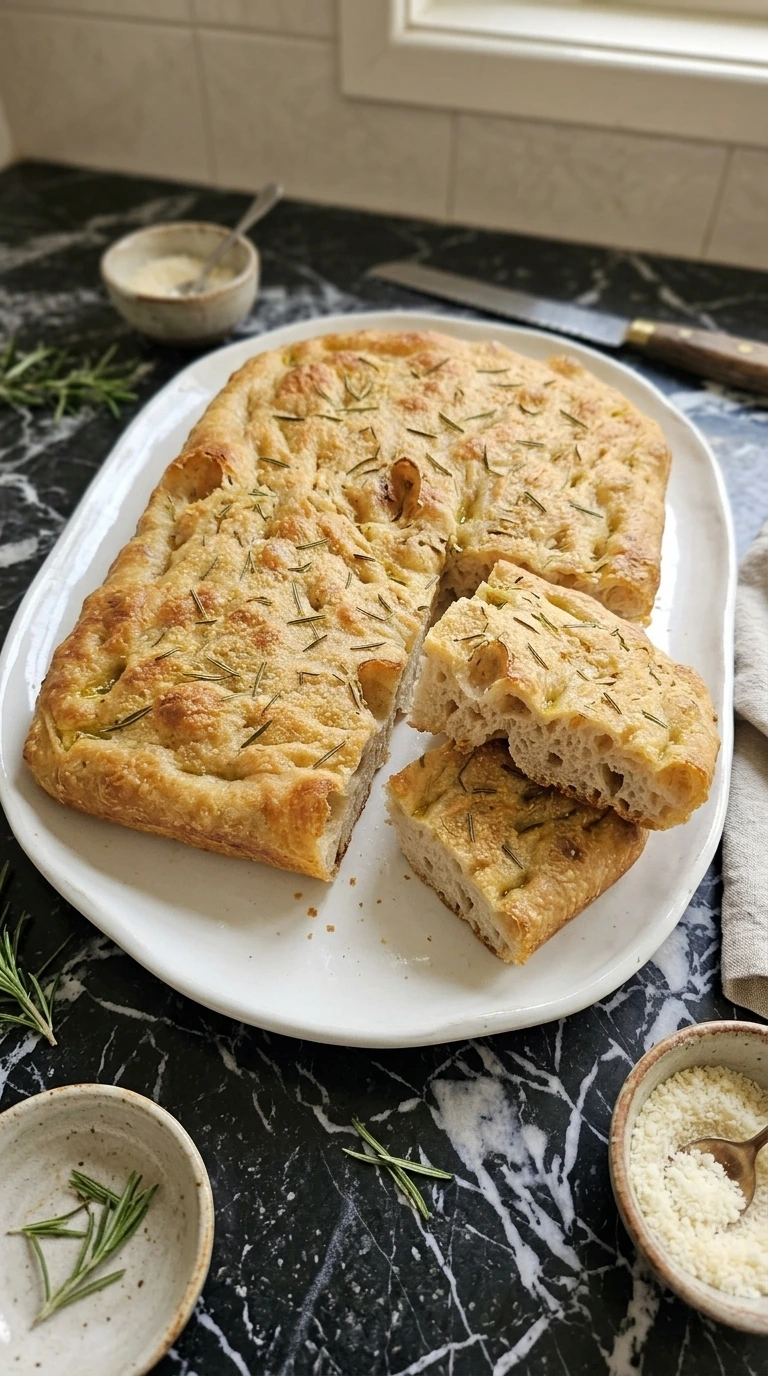
We’re finally putting that jar of SOURDOUGH DISCARD to work, and it creates the best light, bubbly texture. It won’t disappoint. Serve a warm square with our Chicken Caesar Salad for a simple, satisfying lunch.
Why This Sourdough Discard Focaccia (Easy No-Waste Recipe) Recipe Works
Sourdough Discard Focaccia (Easy No-Waste Recipe) pairs 100°F water with instant yeast, so sleepy refrigerated discard still rises on a predictable same-day schedule. Three fold sets at 15-minute intervals align gluten strands, spread fermentation gases evenly and trap larger bubbles without turning the sticky dough into a kneading project by hand.
Baking at 425°F sets the open crumb quickly while olive oil fries the base, edges and deep dimples instead of merely coating them. The 20-minute cooling window keeps steam inside long enough to finish the crumb before slicing, much like the patient structure in our Easy Homemade Pumpkin Sourdough Bread.
Ingredients for Sourdough Discard Focaccia (Easy No-Waste Recipe)
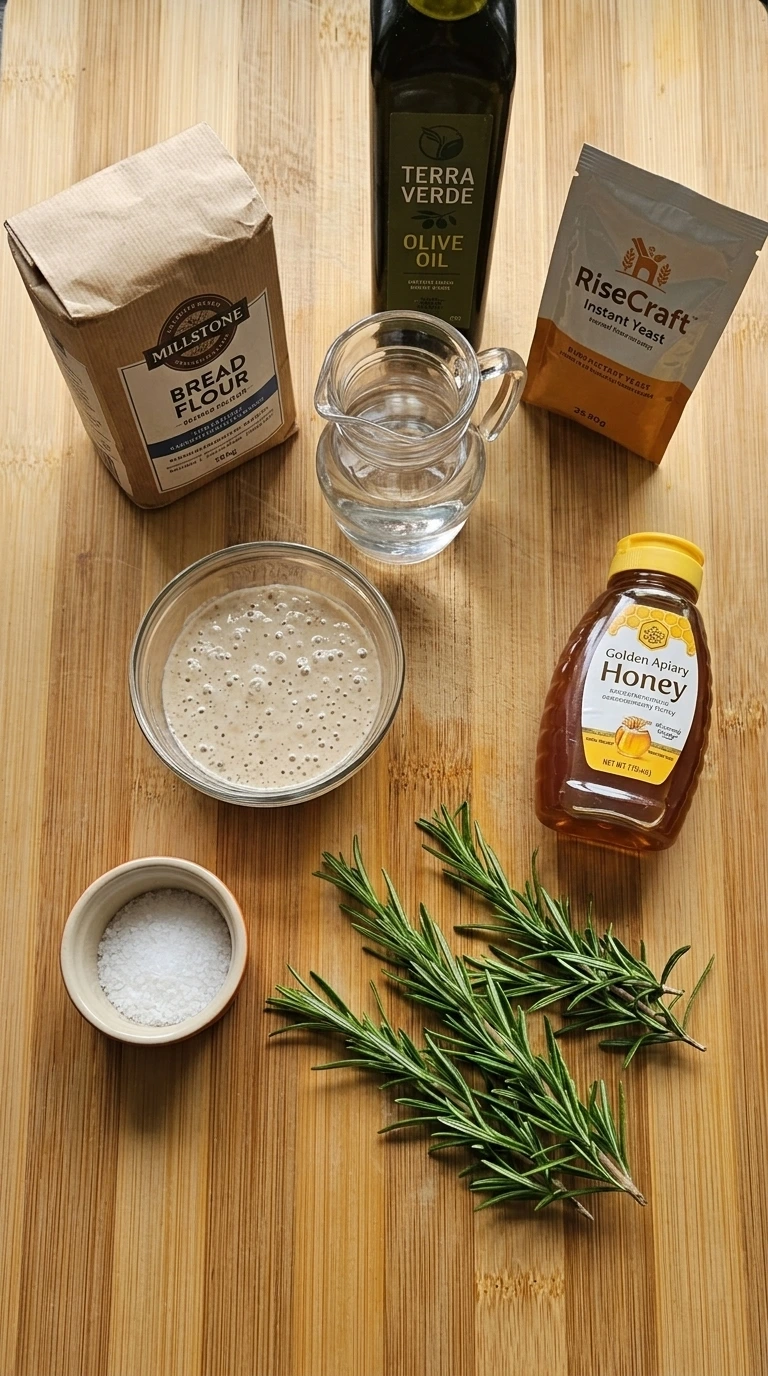
- Filtered water: Warm to 100°F to 105°F so the yeast activates without overheating.
- Sourdough discard: Use unfed discard at room temperature for acidity, flavor and no-waste baking.
- Honey: Adds a small amount of fermentable sugar and helps the crust brown.
- Instant yeast: Provides reliable same-day lift even when the sourdough discard is inactive.
- Bread flour: Use about 480 grams for enough protein to support the wet airy dough.
- Fine sea salt: Seasons the dough and strengthens its gluten structure.
- Extra virgin olive oil: Divide between the pan, topping, rosemary and warm serving drizzle.
- Fresh rosemary: Strip the leaves and chop them roughly so they spread without forming dense clumps.
- Parmigiano Reggiano: Finely grate it so the cheese melts into crisp toasted speckles.
- Flaky sea salt: Reserve ¼ teaspoon for finishing after the focaccia is sliced.
What You’ll Use
- 9×13-inch dark metal baking pan: A dark metal 9×13-inch pan builds crisp edges and an evenly browned base, while glass heats more slowly and can leave the bottom pale.
- Large clear glass mixing bowl: A 4-quart clear bowl gives the dough room to rise and lets you track bubbles, while a smaller bowl can overflow during proofing.
- Digital kitchen scale: A scale that reads in 1-gram increments keeps the high-hydration dough balanced, while volume cups can add enough flour to make it dense.
- Instant-read thermometer: A fast thermometer checks 100°F water and a 200°F center, while a slow dial model can miss both short temperature windows.
- Flexible bowl scraper: A soft scraper lifts sticky dough without adding flour, while a rigid metal edge can cut the gluten strands during transfer.
Making Sourdough Discard Focaccia (Easy No-Waste Recipe): Step-by-Step
Step 1: Mix the sticky focaccia dough
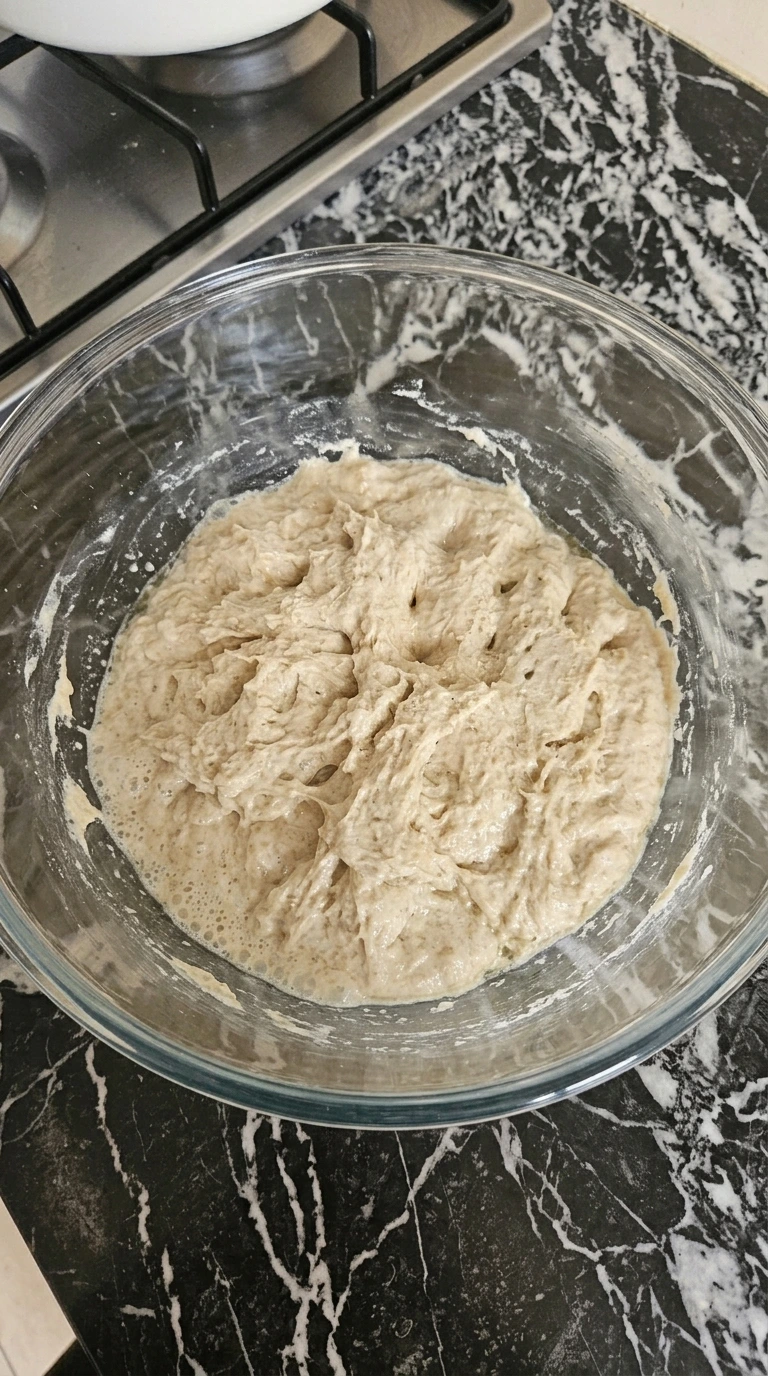
Warm the filtered water to 100°F to 105°F. Whisk in the sourdough discard, honey and instant yeast for 60 seconds. Add the bread flour and fine sea salt. Then stir with a rubber spatula for 2 minutes using firm circular strokes.
Scrape the bowl halfway through. Cover the shaggy dough and rest it at 75°F for 20 minutes. The dough should look wet and rough with no dry flour pockets. Small bubbles may appear near the bowl wall, and the mixture should smell lightly yeasty.
Stop mixing once every streak disappears because extra stirring can tighten the dough. Resting hydrates the flour so gluten starts forming without heavy kneading.
Tip: Use water no hotter than 105°F because temperatures above 115°F can weaken the yeast before the first rise.
Step 2: Fold and rise the dough

Keep the bowl at 75°F to 78°F. With a damp hand, lift one dough edge and fold it into the center. Rotate the bowl 90 degrees and repeat four times. Complete 3 fold sets at 15-minute intervals.
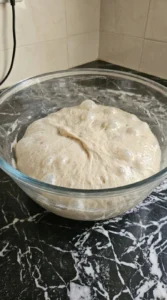
Then cover the bowl and let the dough rise for 60 to 90 minutes until it grows by about 75 percent. The surface should turn smoother and wobble when the bowl moves. Look for large bubbles under the skin and a mild fermented smell. If you stop before the dough expands, the crumb stays tight.
If it doubles far beyond the rim, the gluten can weaken. This controlled rise gives Sourdough Discard Focaccia (Easy No-Waste Recipe) its open crumb. Preheat the oven to 425°F now so it’s fully hot by the time the pan goes in.
Tip: Mark the starting height with removable tape so a 75 percent rise is easier to judge than a clock alone.
Step 3: Stretch the dough into the pan

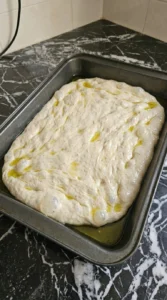
Coat a 9×13-inch dark metal pan with 2 tablespoons of extra virgin olive oil. Tip in the risen dough at 75°F and turn it once so both sides glisten. Rest it for 15 minutes. Then press outward with oiled fingertips until the dough reaches most corners.
Cover and proof for 45 to 60 minutes at 75°F to 78°F. The dough should relax into a puffy rectangle with bubbles near the edges. It will resist at first and then spread without tearing. Don’t force cold dough because it snaps back and loses trapped gas.
Stop when the surface sits about 1 inch high. The second rise rebuilds bubbles after the transfer and creates a lighter center.
Tip: Choose a dark 9×13-inch metal pan for stronger bottom browning than clear glass can provide at the same bake time.
Step 4: Dimple and top the focaccia

Keep the proofed dough near 75°F. Reserve 1 teaspoon from the remaining 2 tablespoons of extra virgin olive oil for the rosemary. Pour the rest across the surface. Press straight down with spread fingertips until they nearly touch the pan bottom. Work for about 2 minutes and leave irregular spacing.
Then scatter the oiled rosemary, Parmigiano Reggiano and 1¼ teaspoons of flaky sea salt. Rest the topped dough for 5 minutes. Deep pockets should hold small pools of oil while bubbles remain between them. The rosemary should sit unevenly and the cheese should leave fine pale speckles. (I pressed too aggressively once, the center tore and baked flat.
Gentle fingertips fixed it. ) Shallow dimples vanish during baking, but torn dough loses lift. Deep gentle dimples anchor the toppings and help the surface fry.
Tip: Rub the rosemary with 1 teaspoon of measured olive oil before scattering so the needles stay fragrant instead of scorching.
Step 5: Bake until deeply golden

Bake Sourdough Discard Focaccia (Easy No-Waste Recipe) at 425°F for 24 to 28 minutes. Rotate the pan 180 degrees at minute 15. Pull it when the center reaches 200°F to 205°F. Release the edges after 5 minutes and cool the loaf for 20 minutes.
Then cut 8 uneven rectangles and finish them with the remaining ¼ teaspoon flaky sea salt. The top should show deep golden patches and darker amber bubbles. The edges feel crisp and the Parmesan smells toasted. A hollow tap beneath the center confirms the crumb has set.
Remove it too early and the middle can stay gummy. Cool before slicing because escaping steam finishes the crumb structure.
Tip: Slide one cut piece onto a plate while warm and drizzle with 1 teaspoon extra virgin olive oil from the measured batch.
Step 6: Slice and serve one airy piece
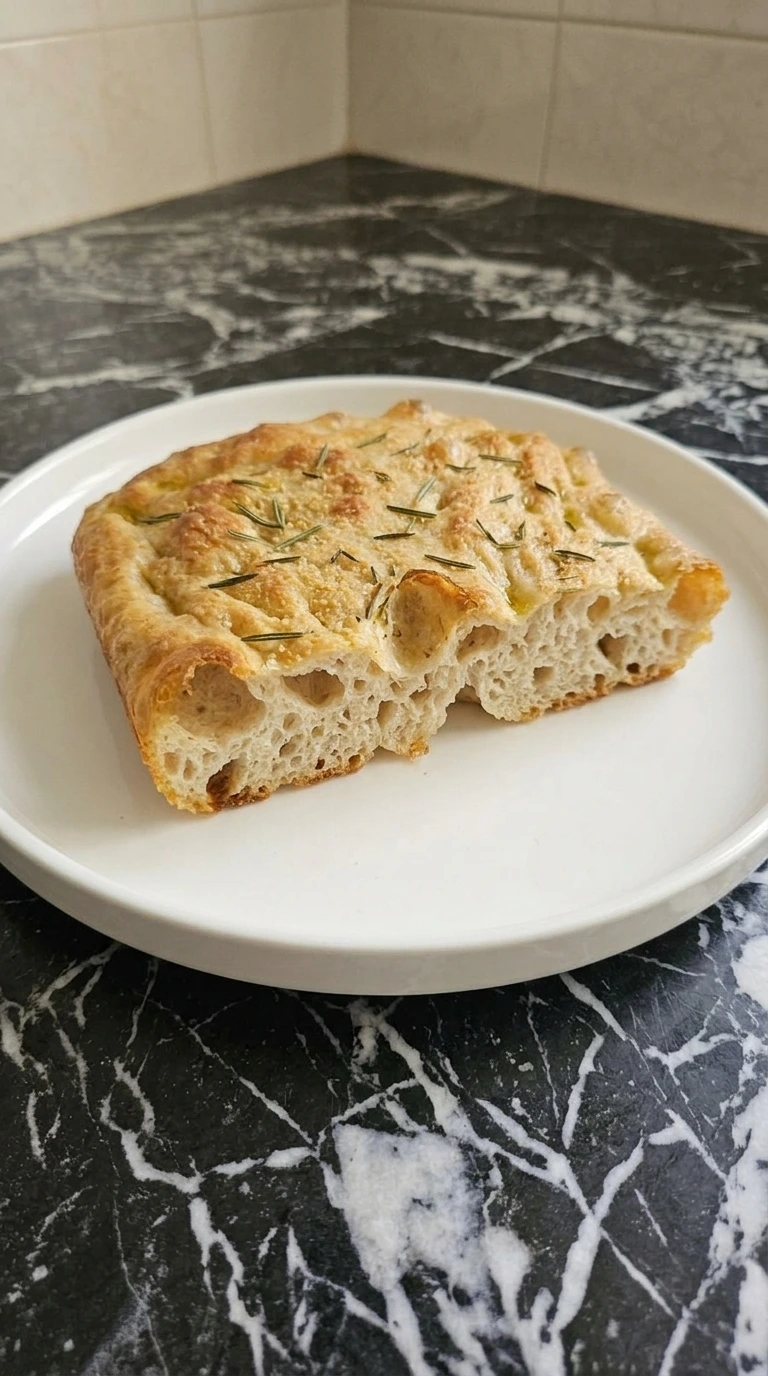
A rustic 9×13-inch rectangular focaccia slab with softly rounded corners and an uneven 1 1/2-inch height. The full slab measures about 9×13 inches and fills 92% of a 9×13-inch dark metal baking pan.
deep fingertip dimples across the top, irregular air bubbles and slightly uneven edges, scattered rosemary needles and fine Parmigiano Reggiano speckles, non-uniform color with darker patches after baking. Only one irregular 4×3-inch portion is shown after cutting, with a deep golden dimpled top, crisp amber edges and a torn-open cream crumb.
Matches step 5 except the full slab has been sliced and one piece now exposes its interior.
Pro Tips
- Weigh the bread flour at 480 grams because a packed 4-cup measure can add 40 grams and make the crumb dense.
- Bring cold discard to 68°F to 75°F for 30 minutes so it blends smoothly into the warm water without chilling the dough.
- Proof below 70°F in an off oven with the light on, but check after 45 minutes because that space can warm quickly.
- Use a dark metal 9×13-inch pan because it gives the base stronger color by minute 24 than a clear glass dish.
- Don’t add extra flour to sticky dough. Wet your hand before each of the 3 fold sets so the surface stays hydrated.
- Bake Sourdough Discard Focaccia (Easy No-Waste Recipe) until the center reaches at least 200°F, not just until the top looks golden.
- Finish each warm piece with ¼ teaspoon total flaky salt and serve within 2 hours for the crispest edges.
- Replace the rosemary with 2 teaspoons fresh thyme and add ½ teaspoon cracked black pepper for an earthy peppered version.
- Scatter ½ cup halved cherry tomatoes over the dimples before baking, then extend the bake by 2 minutes if their juices pool.
- Add ¼ cup sliced Kalamata olives and reduce the flaky salt by ½ teaspoon so the topping doesn’t taste overly salty.
- Omit Parmigiano Reggiano and add 2 tablespoons toasted sesame seeds for a dairy-free nutty crust.
Ingredient Swaps
- Parmigiano Reggiano: ⅓ cup nutritional yeast — This makes the topping dairy-free, but it tastes nuttier and browns less deeply. Mist it with 1 teaspoon olive oil before baking.
- Bread flour and wheat sourdough discard: 480 grams gluten-free bread flour blend plus 227 grams gluten-free discard — Use a blend containing psyllium husk and reduce the water by 2 tablespoons. The crumb will be tighter and the dough may proof 15 minutes faster.
- Eggs: No replacement needed — The dough is naturally egg-free because gluten and fermentation provide structure. Don’t add flax egg because it makes the crumb heavy and slightly gummy.
- Instant yeast: 2¼ teaspoons active dry yeast — Bloom it in the 100°F water with honey for 5 to 10 minutes. Expect each rise to take about 15 minutes longer.
- Honey: 2 teaspoons granulated cane sugar — Use the same amount for similar browning, though the flavor loses a mild floral note. The fermentation time stays the same.
- Fresh rosemary: 2 teaspoons fresh thyme leaves — Thyme tastes softer and earthier, so use less than the rosemary. Pair the focaccia with our Garlic Parmesan Roasted Carrots for a matching savory side.
Storage Instructions
Store Sourdough Discard Focaccia (Easy No-Waste Recipe) at room temperature for 2 days or refrigerate it for up to 4 days. Use an airtight container lined with a dry paper towel so surface moisture doesn’t soften the crust. For freezing, wrap cooled individual pieces in foil and place them inside a freezer bag.
Freeze for up to 2 months and press out excess air before sealing. Reheat room-temperature pieces at 375°F for 5 to 7 minutes. Frozen pieces need 10 to 12 minutes at the same temperature.
Add a light ½ teaspoon olive oil drizzle after reheating if the surface looks dry. Discard any piece with visible mold, a sour smell beyond normal fermentation or a damp sticky surface. Don’t taste bread that shows spoilage.
Sourdough Discard Focaccia (easy No-waste Recipe)
Ingredients
- 1¼ cups Filtered water Warm to 100°F to 105°F so the yeast activates without overheating.
- 1 cup Sourdough discard Use unfed discard at room temperature for acidity, flavor and no-waste baking.
- 2 teaspoons Honey Adds a small amount of fermentable sugar and helps the crust brown.
- 2¼ teaspoons Instant yeast Provides reliable same-day lift even when the sourdough discard is inactive.
- 4 cups Bread flour Use about 480 grams for enough protein to support the wet airy dough.
- 2 teaspoons Fine sea salt Seasons the dough and strengthens its gluten structure.
- ¼ cup plus 1 teaspoon Extra virgin olive oil Divide between the pan, topping, rosemary and warm serving drizzle.
- 1 tablespoon Fresh rosemary Strip the leaves and chop them roughly so they spread without forming dense clumps.
- ⅓ cup Parmigiano Reggiano Finely grate it so the cheese melts into crisp toasted speckles.
- 1½ teaspoons Flaky sea salt Reserve ¼ teaspoon for finishing after the focaccia is sliced.
Instructions
- Warm the filtered water to 100°F to 105°F. Whisk in the sourdough discard, honey and instant yeast for 60 seconds. Add the bread flour and fine sea salt. Then stir with a rubber spatula for 2 minutes using firm circular strokes. Scrape the bowl halfway through. Cover the shaggy dough and rest it at 75°F for 20 minutes. The dough should look wet and rough with no dry flour pockets. Small bubbles may appear near the bowl wall, and the mixture should smell lightly yeasty. Stop mixing once every streak disappears because extra stirring can tighten the dough. Resting hydrates the flour so gluten starts forming without heavy kneading.

- Keep the bowl at 75°F to 78°F. With a damp hand, lift one dough edge and fold it into the center. Rotate the bowl 90 degrees and repeat four times. Complete 3 fold sets at 15-minute intervals. Then cover the bowl and let the dough rise for 60 to 90 minutes until it grows by about 75 percent. The surface should turn smoother and wobble when the bowl moves. Look for large bubbles under the skin and a mild fermented smell. If you stop before the dough expands, the crumb stays tight. If it doubles far beyond the rim, the gluten can weaken. This controlled rise gives Sourdough Discard Focaccia (Easy No-Waste Recipe) its open crumb. Preheat the oven to 425°F now so it’s fully hot by the time the pan goes in.
- Coat a 9×13-inch dark metal pan with 2 tablespoons of extra virgin olive oil. Tip in the risen dough at 75°F and turn it once so both sides glisten. Rest it for 15 minutes. Then press outward with oiled fingertips until the dough reaches most corners. Cover and proof for 45 to 60 minutes at 75°F to 78°F. The dough should relax into a puffy rectangle with bubbles near the edges. It will resist at first and then spread without tearing. Don’t force cold dough because it snaps back and loses trapped gas. Stop when the surface sits about 1 inch high. The second rise rebuilds bubbles after the transfer and creates a lighter center.
- Keep the proofed dough near 75°F. Reserve 1 teaspoon from the remaining 2 tablespoons of extra virgin olive oil for the rosemary. Pour the rest across the surface. Press straight down with spread fingertips until they nearly touch the pan bottom. Work for about 2 minutes and leave irregular spacing. Then scatter the oiled rosemary, Parmigiano Reggiano and 1¼ teaspoons of flaky sea salt. Rest the topped dough for 5 minutes. Deep pockets should hold small pools of oil while bubbles remain between them. The rosemary should sit unevenly and the cheese should leave fine pale speckles. (I pressed too aggressively once, the center tore and baked flat. Gentle fingertips fixed it.) Shallow dimples vanish during baking, but torn dough loses lift. Deep gentle dimples anchor the toppings and help the surface fry.

- Bake Sourdough Discard Focaccia (Easy No-Waste Recipe) at 425°F for 24 to 28 minutes. Rotate the pan 180 degrees at minute 15. Pull it when the center reaches 200°F to 205°F. Release the edges after 5 minutes and cool the loaf for 20 minutes. Then cut 8 uneven rectangles and finish them with the remaining ¼ teaspoon flaky sea salt. The top should show deep golden patches and darker amber bubbles. The edges feel crisp and the Parmesan smells toasted. A hollow tap beneath the center confirms the crumb has set. Remove it too early and the middle can stay gummy. Cool before slicing because escaping steam finishes the crumb structure.
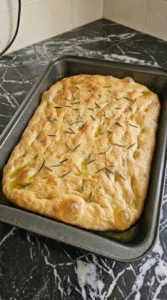
- A rustic 9×13-inch rectangular focaccia slab with softly rounded corners and an uneven 1 1/2-inch height. The full slab measures about 9×13 inches and fills 92% of a 9×13-inch dark metal baking pan. deep fingertip dimples across the top, irregular air bubbles and slightly uneven edges, scattered rosemary needles and fine Parmigiano Reggiano speckles, non-uniform color with darker patches after baking. Only one irregular 4×3-inch portion is shown after cutting, with a deep golden dimpled top, crisp amber edges and a torn-open cream crumb. Matches step 5 except the full slab has been sliced and one piece now exposes its interior.

Notes
Nutrition
Frequently Asked Questions
Yes. Complete the three fold sets, then refrigerate the covered bowl for 8 to 16 hours. The next day, let the dough stand at 72°F for 45 minutes before moving it into the oiled pan and starting the second rise.
Keep cooled pieces at room temperature for 2 days in an airtight container lined with paper towel. For longer storage, refrigerate up to 4 days, though the crumb firms and needs reheating to regain softness. Keep the container away from direct sunlight and don’t add fresh rosemary before storing.
Use the same 1-cup amount of active starter and keep the instant yeast for the most reliable same-day timing. If you omit the yeast, the first rise can take 4 to 6 hours at 75°F and may vary with starter strength.
Dense Sourdough Discard Focaccia (Easy No-Waste Recipe) usually comes from too much flour or an incomplete rise. Weigh 480 grams of bread flour, keep the dough near 75°F and wait for about 75 percent growth before transferring it. Check the dough’s volume before trusting the clock.
Double every ingredient and divide the dough between two 9×13-inch pans. Don’t crowd one deeper pan because the center may need more than 35 minutes while the Parmesan topping darkens too far. Bake on separate racks and swap the pans at minute 15 for even color.
Serve warm squares with soup, salad or roasted vegetables. For a lunch plate, allow 2 pieces per person and warm them at 375°F for 6 minutes so the edges stay crisp beside cooler foods. A warm tomato soup also works especially well.
Freeze cooled pieces for up to 2 months after wrapping each one tightly and placing them in a freezer bag. Reheat from frozen at 375°F for 10 to 12 minutes, then rest for 2 minutes before eating. The short rest keeps the crumb from feeling overly hot and chewy.
A Final Note
One of my signature bakes! Sourdough Discard Focaccia (Easy No-Waste Recipe) gets its crisp, flavorful top from olive oil, rosemary, and Parmesan.
There’s no overnight ferment here, that’s for the longer version. Instead, you’ll use two shorter rises, and they’re worth every minute.
I always grab a warm corner first. Serve yours with Chicken Caesar Salad, make Sweet Potato Gnocchi next, and don’t forget to tag me.
Focaccia’s dimples hold olive oil in tiny pockets, which helps the top fry while it bakes.