Easy Sheet Pan Tomato Soup with Fresh Tomatoes
Last summer, we were visiting my in-laws. My mother-in-law made Easy Sheet Pan Tomato Soup With Fresh Tomatoes three nights in a row. The kids kept asking for it. I watched her make it four times before I noticed her little secret. She lets the tomato edges turn dark and jammy instead of stopping when they simply soften. That extra color changes everything.
Now it’s on heavy rotation in our house too. Honestly, it took me three tries to get the balance right. The first batch had too much broth and tasted flat. A hot sheet pan fixes that problem because it concentrates the tomatoes first. For an easy side, serve it with Zucchini Pizza Bites while the soup stays warm. The result is smooth and bright with a gentle roasted garlic finish.
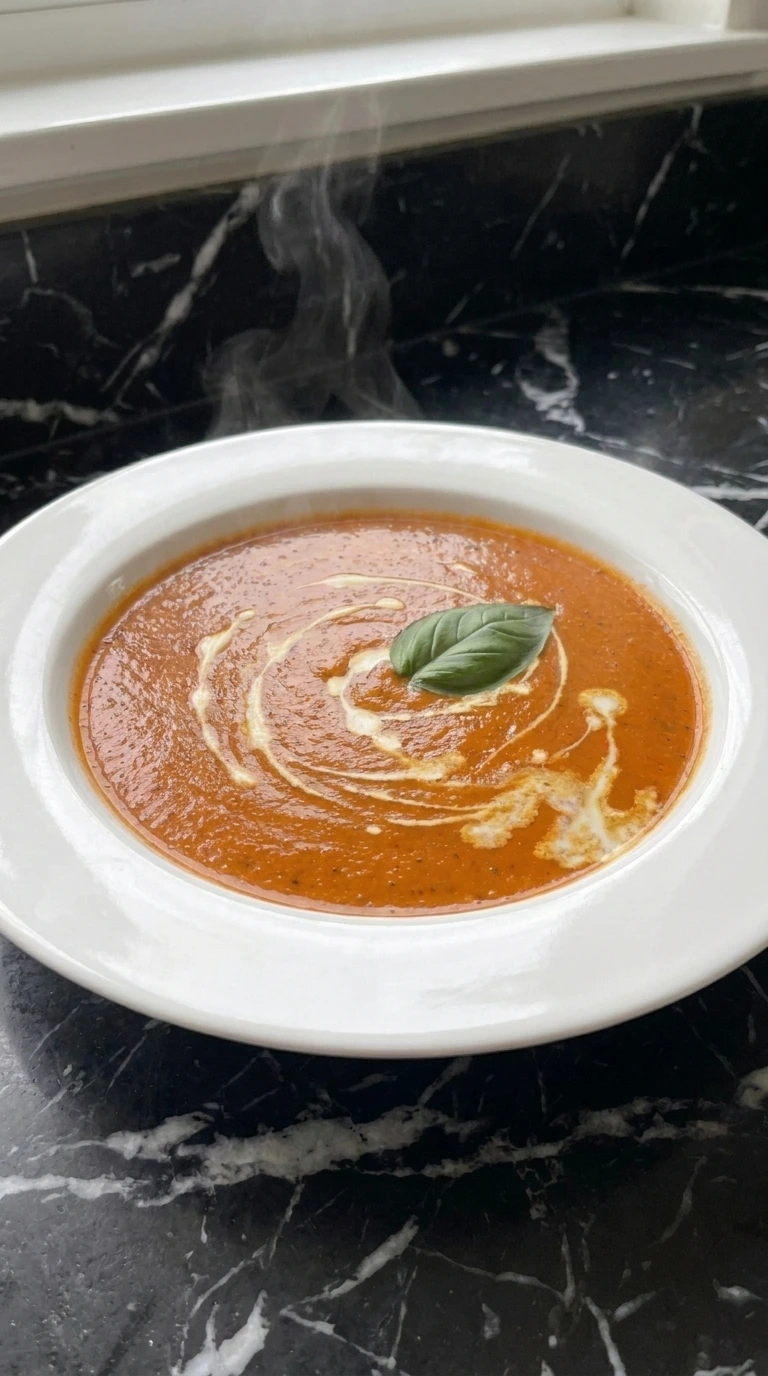
And it still tastes like fresh tomatoes rather than canned sauce. I like a loose cream swirl and a few basil leaves on top. The bowl looks homemade instead of fussy. It’s great for a weeknight dinner and it also works for a simple lunch. No special garnish skills needed.
Why You’ll Love This Easy Sheet Pan Tomato Soup With Fresh Tomatoes
Easy Sheet Pan Tomato Soup With Fresh Tomatoes roasts at 425°F. Surface moisture escapes before the tomatoes turn mushy. Keeping the cut sides up traps concentrated juices inside each half while the edges caramelize.
That same high-heat method gives Cinnamon Maple Roasted Carrots their browned edges without drying the centers. Blending the vegetables near 180°F softens the skins enough for a smooth puree while reducing steam pressure. Then a 185°F to 195°F simmer folds in cream without a hard boil.
The fat rounds the tomato acidity while Modena balsamic vinegar restores brightness. So the soup tastes rich but not heavy.
Easy Sheet Pan Tomato Soup With Fresh Tomatoes Ingredients
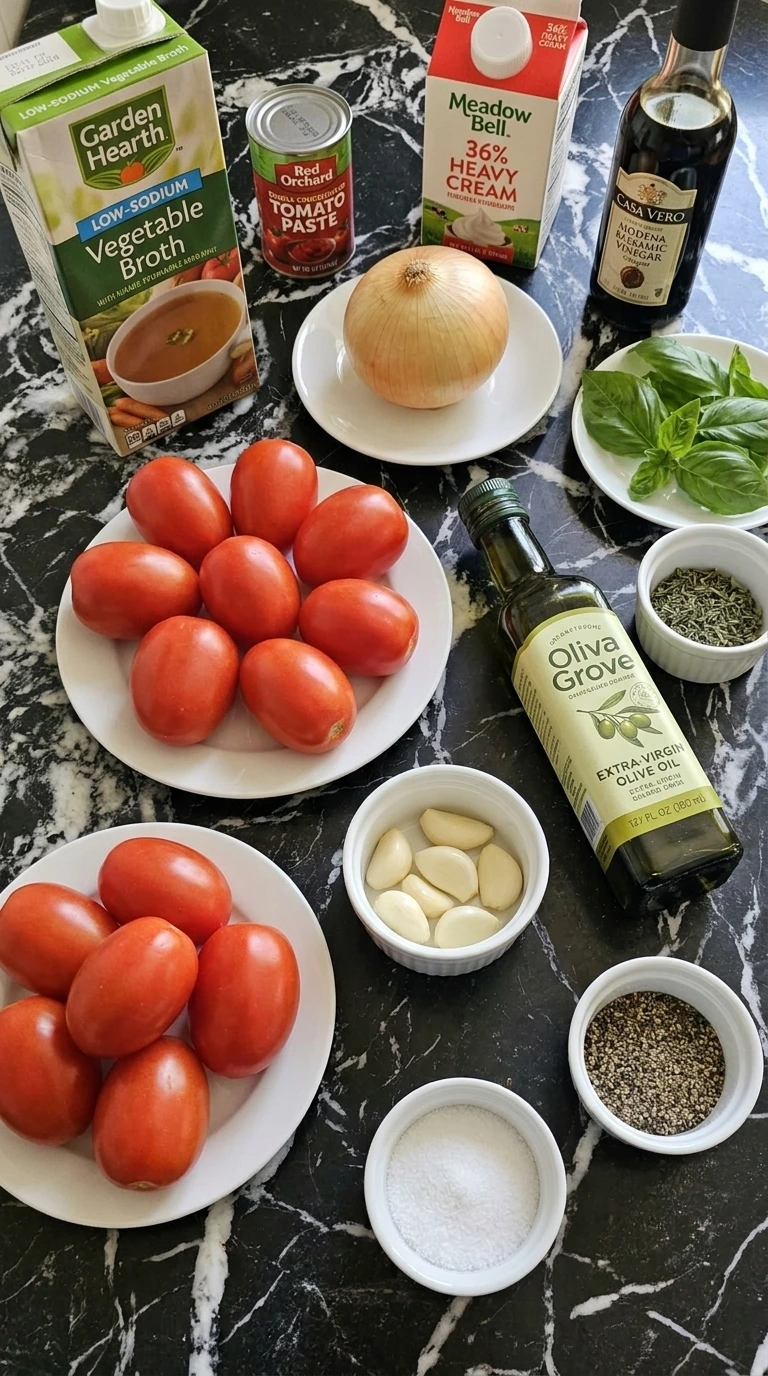
- Roma tomatoes: Choose ripe firm tomatoes and halve them lengthwise into 24 pieces for roasting.
- Sweet yellow onion: Peel and cut it into eight wedges so the edges caramelize without burning.
- Hardneck garlic cloves: Peel and leave them whole so they soften slowly between the tomatoes.
- Extra-virgin olive oil: Use a fruity oil to coat the vegetables and support browning.
- Diamond Crystal kosher salt: Divide it between the sheet pan and the final simmer for controlled seasoning.
- Tellicherry black pepper: Grind it fresh so the roasted vegetables keep a warm peppery finish.
- English thyme leaves: Strip the leaves from the stems and scatter them over the vegetables.
- Low-sodium vegetable broth: Use a mild broth so the fresh tomato flavor stays dominant.
- Double-concentrated tomato paste: Add it to the blender for deeper color and concentrated savory flavor.
- Modena balsamic vinegar: Blend in 1 tablespoon and reserve the optional teaspoon for a brighter finish.
- Genovese basil leaves: Blend most of the leaves and reserve four small leaves for serving.
- 36% heavy cream: Stir 6 tablespoons into the soup and reserve 2 tablespoons for the final swirl.
Kitchen Equipment
- 18×13-inch rimmed sheet pan: A sturdy light-colored half-sheet pan gives the tomatoes room to brown and prevents the scorched edges that a thin dark pan can cause.
- 64-ounce vented blender: A heat-safe 64-ounce blender purees the hot vegetables smoothly and a sealed personal blender can build dangerous steam pressure.
- 4-quart heavy-bottomed saucepan: A heavy 4-quart saucepan reheats the puree evenly and a thin pot can scorch the concentrated tomato sugars.
- Instant-read thermometer: A fast digital thermometer tracks the 185°F to 195°F simmer and a slow dial model can miss the boiling window.
- Four shallow soup bowls: Shallow 8-inch bowls show the cream swirl clearly and very deep bowls hide the garnish while cooling unevenly.
How to Make Easy Sheet Pan Tomato Soup With Fresh Tomatoes
Step 1: Halve and season the tomatoes

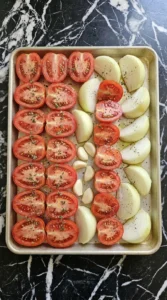
Heat the oven to 425°F and let it preheat for 15 minutes. Halve 12 medium Roma tomatoes lengthwise into 24 pieces and cut one sweet yellow onion into eight wedges. Place them with six whole hardneck garlic cloves on the sheet pan. Drizzle with 2 tablespoons extra-virgin olive oil.
Then rub and turn every piece by hand for 60 seconds so the coating reaches the cut faces. Spread the tomato halves cut-side up with small gaps between them. Scatter the onion wedges and hardneck garlic cloves through the open spaces. Add 1 teaspoon Diamond Crystal kosher salt, 1/2 teaspoon Tellicherry black pepper and 1 tablespoon English thyme leaves.
The vegetables should look lightly glossy rather than pooled in oil. Crowding traps steam and leaves the tomatoes pale. Wide spacing drives evaporation, which concentrates tomato flavor before roasting.
Tip: Use a light-colored 18×13-inch sheet pan because dark pans can scorch the garlic before minute 30.
Step 2: Roast until the edges turn jammy

Roast at 425°F for 30 to 35 minutes. Rotate the pan front to back at minute 18 and turn the onion wedges once with tongs. Leave the tomato halves cut-side up so their juices reduce inside each piece. The garlic should stay tucked between tomatoes rather than exposed at the pan edge.
This deeper roast gives Easy Sheet Pan Tomato Soup With Fresh Tomatoes its savory edge. Look for blistered ruby-red skins, charred dark edges and collapsed glossy flesh. The onions should show deep amber tips and the garlic should smell sweet. (My first batch stayed pale because I crowded the pan.
Spreading it wider fixed the flavor. ) Pull the pan by minute 35 because black garlic turns bitter. High heat caramelizes natural sugars before the tomato centers dry out.
Tip: If the tomatoes release a deep puddle by minute 20, carefully spoon off 1/4 cup so the edges can brown.
Step 3: Blend the roasted vegetables smooth
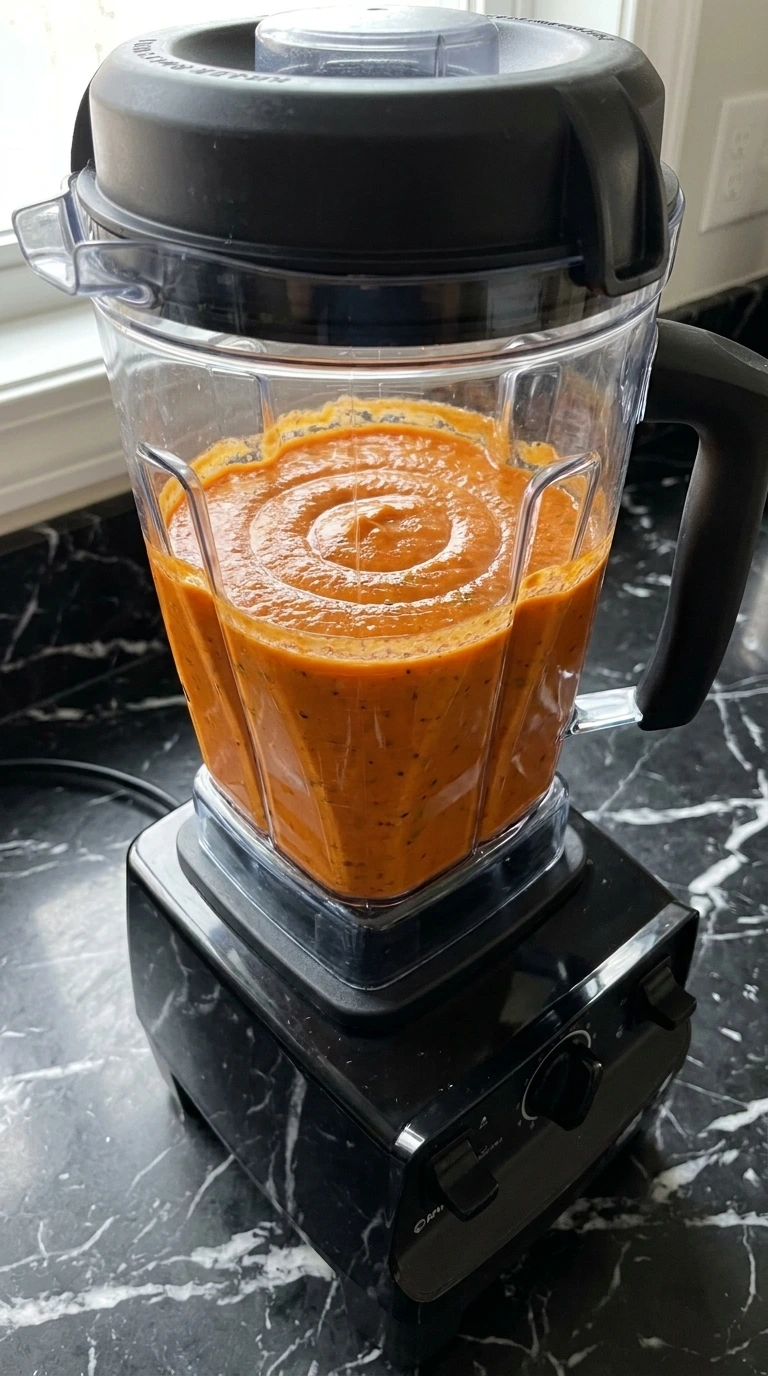
Let the roasted vegetables cool for 5 minutes until they reach about 180°F. Transfer every tomato half, onion wedge and garlic clove with the pan juices into a vented blender jar. Add 2 cups low-sodium vegetable broth and 2 tablespoons double-concentrated tomato paste. Then add 1 tablespoon Modena balsamic vinegar and most of 1 packed cup Genovese basil.
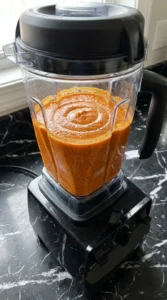
Reserve four small basil leaves for serving. Blend on low for 20 seconds and then on high for 60 to 90 seconds. Hold the lid with a folded towel and keep the center vent open. The puree should turn smooth and orange-red with tiny dark flecks.
Stop when no onion pieces circle the jar. Overfilling a hot blender can force liquid upward. Gradual blending controls steam and shears the tomato skins into a silky puree.
Tip: Blend in two batches if your jar holds under 64 ounces and combine both batches before simmering.
Step 4: Simmer with cream until velvety

Pour the puree into a 4-quart heavy-bottomed saucepan and set it over medium-low heat. Keep the soup between 185°F and 195°F for 5 to 7 minutes. Stir in 6 tablespoons 36% heavy cream with slow circles and scrape the bottom every 30 seconds.
Taste at minute 5 and add the remaining 1/2 teaspoon kosher salt only if the tomatoes need it. The soup should release small bubbles around the edge and coat a spoon in a thin orange-red layer. Ivory cream streaks will disappear after about 90 seconds and the texture will look velvety.
Don’t let it boil hard because the cream can separate and the fresh flavor dulls. Gentle heat binds fat into the puree without breaking the emulsion.
Tip: For a brighter finish, stir in 1 teaspoon extra Modena balsamic vinegar after removing the saucepan from heat.
Step 5: Ladle and finish with basil
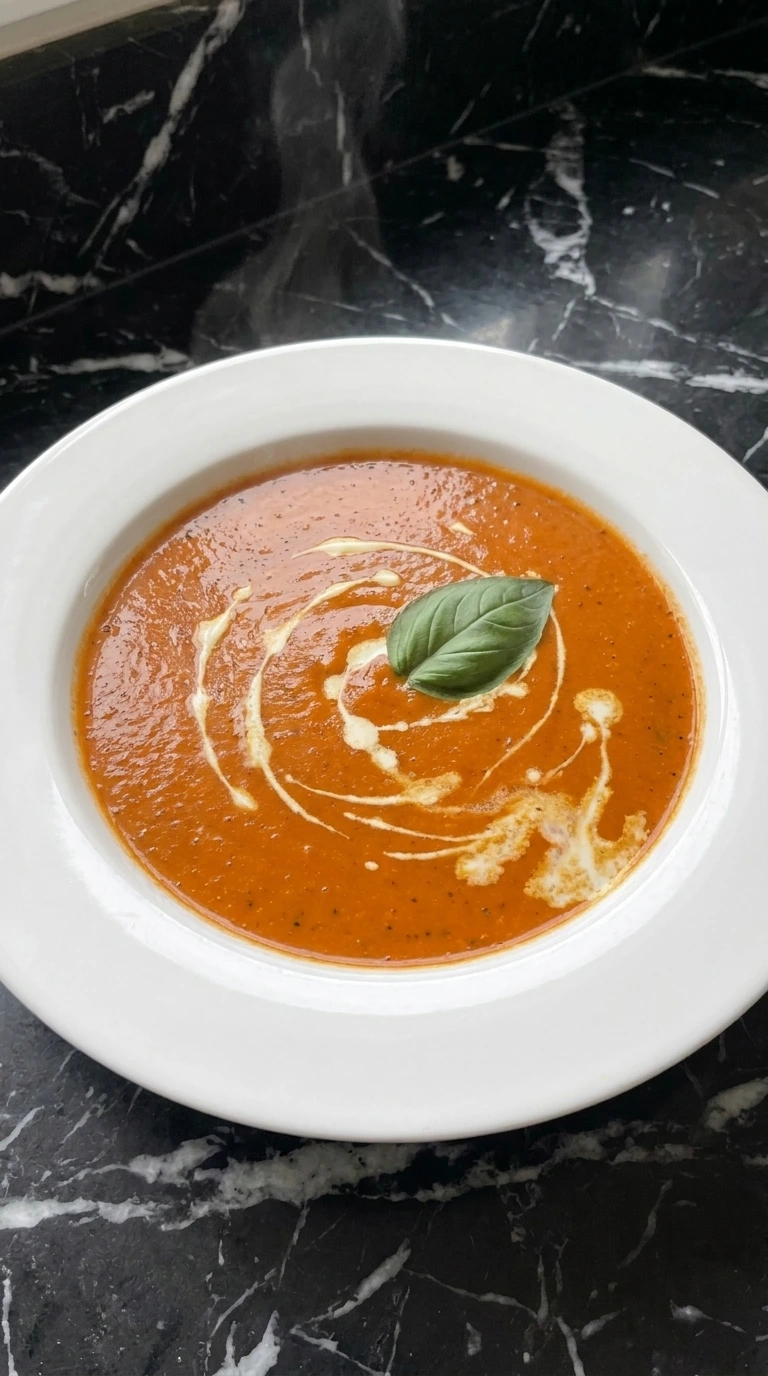
Remove the saucepan from heat and let the soup stand for 2 minutes. Ladle one quarter into each of four shallow white bowls while it stays near 165°F. Drizzle the reserved 2 tablespoons 36% heavy cream across the bowls in loose uneven spirals.
Then place one reserved basil leaf on each serving. Keep the garnish slightly off-center rather than arranging it symmetrically. The finished surface should look glossy and orange-red with ivory curves and tiny roasted flecks.
A faint wisp of steam should remain but the cream shouldn’t sink immediately. Garnishing above 190°F makes the cream vanish and wilts the basil too fast. Brief cooling keeps the swirl visible and protects the basil’s fresh aroma.
Tip: Warm oven-safe bowls at 170°F for 5 minutes so each serving stays hot longer.
Pro Tips for the Best Easy Sheet Pan Tomato Soup With Fresh Tomatoes
- Choose Roma tomatoes that feel heavy for their size. Three watery pounds can add nearly 1 cup of unwanted liquid.
- Keep at least 1/2 inch between tomato halves so the 425°F oven roasts them instead of steaming them.
- Rotate the sheet pan at minute 18. Most home ovens run 10°F to 25°F hotter at the back.
- Blend hot vegetables in two batches when the jar is under 64 ounces so steam can’t force the lid upward.
- Keep Easy Sheet Pan Tomato Soup With Fresh Tomatoes below 195°F after adding cream. A hard boil can split the emulsion.
- Taste after 5 minutes of simmering and add salt in 1/8-teaspoon increments because roasted tomatoes concentrate quickly.
- Reserve 2 tablespoons cream for serving and drizzle it after a 2-minute rest so the ivory swirl stays visible.
- Add 1 teaspoon smoked paprika before roasting for a deeper smoky flavor that works well with grilled sandwiches.
- Blend in 1/2 teaspoon crushed red pepper for a gentle heat that builds after each spoonful.
- Replace 1 cup broth with 1 cup canned cannellini beans for a thicker soup with extra body and protein.
- Roast one seeded red bell pepper with the tomatoes for a sweeter orange-red soup and a softer acidity.
Make It Your Own
- 36% heavy cream: Full-fat canned coconut milk — Use the same 1/2 cup. The soup stays creamy but gains a mild coconut flavor and a slightly thinner finish.
- Low-sodium vegetable broth: Low-sodium chicken broth — Use 2 cups in the same way. The flavor becomes fuller and more savory but the soup won’t remain vegetarian.
- Roma tomatoes: Ripe plum tomatoes or vine tomatoes — Use 3 pounds and roast watery vine tomatoes 5 minutes longer. Expect a looser soup unless their pan juices reduce well.
- English thyme leaves: Dried thyme — Use 1 teaspoon dried thyme instead of 1 tablespoon fresh. The flavor becomes more concentrated and slightly woodier.
- Standard vegetable broth: Certified gluten-free and egg-free vegetable broth — Use the same 2 cups and check the label for hidden wheat or egg additives. Pair the soup with Air Fryer Zucchini Chips for a crisp gluten-free side.
- Genovese basil leaves: Fresh flat-leaf parsley — Use 3/4 cup parsley because its flavor is sharper. The soup loses its sweet basil aroma and tastes more herbaceous.
Storage Tips
Cool Easy Sheet Pan Tomato Soup With Fresh Tomatoes to room temperature within 2 hours. Then refrigerate it in a shallow airtight container. It keeps for 4 days at 40°F or colder. Freeze portions without the cream swirl in freezer-safe containers with 1 inch of headspace.
Label them and use within 3 months. Thaw overnight in the refrigerator for the smoothest texture. Reheat refrigerated soup over medium-low heat for 6 to 8 minutes and stir every 30 seconds. Keep it near 180°F and add 1 to 2 tablespoons broth if it looks too thick.
For frozen soup, warm it for 10 to 12 minutes after thawing and add fresh cream at the end. Discard any portion with a sour smell, foamy bubbles or visible mold.
Easy Sheet Pan Tomato Soup with Fresh Tomatoes
Ingredients
- 12 medium, about 3 pounds Roma tomatoes Choose ripe firm tomatoes and halve them lengthwise into 24 pieces for roasting.
- 1 large Sweet yellow onion Peel and cut it into eight wedges so the edges caramelize without burning.
- 6 large Hardneck garlic cloves Peel and leave them whole so they soften slowly between the tomatoes.
- 2 tablespoons Extra-virgin olive oil Use a fruity oil to coat the vegetables and support browning.
- 1.5 teaspoons Diamond Crystal kosher salt Divide it between the sheet pan and the final simmer for controlled seasoning.
- 1/2 teaspoon Tellicherry black pepper Grind it fresh so the roasted vegetables keep a warm peppery finish.
- 1 tablespoon English thyme leaves Strip the leaves from the stems and scatter them over the vegetables.
- 2 cups Low-sodium vegetable broth Use a mild broth so the fresh tomato flavor stays dominant.
- 2 tablespoons Double-concentrated tomato paste Add it to the blender for deeper color and concentrated savory flavor.
- 1 tablespoon plus 1 teaspoon optional Modena balsamic vinegar Blend in 1 tablespoon and reserve the optional teaspoon for a brighter finish.
- 1 packed cup Genovese basil leaves Blend most of the leaves and reserve four small leaves for serving.
- 1/2 cup 36% heavy cream Stir 6 tablespoons into the soup and reserve 2 tablespoons for the final swirl.
Instructions
- Heat the oven to 425°F and let it preheat for 15 minutes. Halve 12 medium Roma tomatoes lengthwise into 24 pieces and cut one sweet yellow onion into eight wedges. Place them with six whole hardneck garlic cloves on the sheet pan. Drizzle with 2 tablespoons extra-virgin olive oil. Then rub and turn every piece by hand for 60 seconds so the coating reaches the cut faces. Spread the tomato halves cut-side up with small gaps between them. Scatter the onion wedges and hardneck garlic cloves through the open spaces. Add 1 teaspoon Diamond Crystal kosher salt, 1/2 teaspoon Tellicherry black pepper and 1 tablespoon English thyme leaves. The vegetables should look lightly glossy rather than pooled in oil. Crowding traps steam and leaves the tomatoes pale. Wide spacing drives evaporation, which concentrates tomato flavor before roasting.
- Roast at 425°F for 30 to 35 minutes. Rotate the pan front to back at minute 18 and turn the onion wedges once with tongs. Leave the tomato halves cut-side up so their juices reduce inside each piece. The garlic should stay tucked between tomatoes rather than exposed at the pan edge. This deeper roast gives Easy Sheet Pan Tomato Soup With Fresh Tomatoes its savory edge. Look for blistered ruby-red skins, charred dark edges and collapsed glossy flesh. The onions should show deep amber tips and the garlic should smell sweet. (My first batch stayed pale because I crowded the pan. Spreading it wider fixed the flavor.) Pull the pan by minute 35 because black garlic turns bitter. High heat caramelizes natural sugars before the tomato centers dry out.

- Let the roasted vegetables cool for 5 minutes until they reach about 180°F. Transfer every tomato half, onion wedge and garlic clove with the pan juices into a vented blender jar. Add 2 cups low-sodium vegetable broth and 2 tablespoons double-concentrated tomato paste. Then add 1 tablespoon Modena balsamic vinegar and most of 1 packed cup Genovese basil. Reserve four small basil leaves for serving. Blend on low for 20 seconds and then on high for 60 to 90 seconds. Hold the lid with a folded towel and keep the center vent open. The puree should turn smooth and orange-red with tiny dark flecks. Stop when no onion pieces circle the jar. Overfilling a hot blender can force liquid upward. Gradual blending controls steam and shears the tomato skins into a silky puree.
- Pour the puree into a 4-quart heavy-bottomed saucepan and set it over medium-low heat. Keep the soup between 185°F and 195°F for 5 to 7 minutes. Stir in 6 tablespoons 36% heavy cream with slow circles and scrape the bottom every 30 seconds. Taste at minute 5 and add the remaining 1/2 teaspoon kosher salt only if the tomatoes need it. The soup should release small bubbles around the edge and coat a spoon in a thin orange-red layer. Ivory cream streaks will disappear after about 90 seconds and the texture will look velvety. Don’t let it boil hard because the cream can separate and the fresh flavor dulls. Gentle heat binds fat into the puree without breaking the emulsion.

- Remove the saucepan from heat and let the soup stand for 2 minutes. Ladle one quarter into each of four shallow white bowls while it stays near 165°F. Drizzle the reserved 2 tablespoons 36% heavy cream across the bowls in loose uneven spirals. Then place one reserved basil leaf on each serving. Keep the garnish slightly off-center rather than arranging it symmetrically. The finished surface should look glossy and orange-red with ivory curves and tiny roasted flecks. A faint wisp of steam should remain but the cream shouldn’t sink immediately. Garnishing above 190°F makes the cream vanish and wilts the basil too fast. Brief cooling keeps the swirl visible and protects the basil’s fresh aroma.

Notes
Nutrition
Common Questions About Easy Sheet Pan Tomato Soup With Fresh Tomatoes
Yes. Halve the tomatoes and cut the onion up to 24 hours ahead. Refrigerate them in separate airtight containers. Wait to add salt and oil until the oven reaches 425°F. Early salting pulls out water and weakens browning.
The sheet pan was probably crowded or the tomatoes were especially juicy. Roast them at 425°F for 5 to 10 extra minutes and spoon off excess liquid after minute 20. Then simmer the blended soup uncovered for another 4 minutes before adding cream.
Yes, but use two 18×13-inch sheet pans and switch their oven positions at minute 18. Don’t pile six pounds of tomatoes onto one pan because trapped steam prevents caramelization. Blend in batches and use at least a 6-quart pot for the final simmer.
Freeze it for up to 3 months in airtight containers with 1 inch of headspace. For the smoothest result, freeze before adding cream and stir in 1/2 cup fresh cream after reheating. Thaw overnight in the refrigerator before warming.
Warm it over medium-low heat for 6 to 8 minutes and stir every 30 seconds. Keep the soup between 175°F and 185°F so the cream stays emulsified. Add 1 to 2 tablespoons broth if it thickened during storage.
Serve it with grilled sourdough or a crisp salad for contrast. For a fuller meal, add Chicken Caesar Salad and keep the soup portion near 1.5 cups per person. Warm the bowls for 2 minutes before ladling.
In Conclusion
Every time I make this, I remember my nervous first batch and the tomatoes I nearly scorched. Turns out the sheet pan does most of the flavor work, so beginners have room for mistakes.
Easy Sheet Pan Tomato Soup With Fresh Tomatoes forgives beginner timing mistakes and still tastes comforting. Try it, then leave a comment or make Chicken Caesar Salad and Patty Pan Squash Frittata next.
Roasting tomatoes cooks off extra water and brings out their natural sweetness. That means the soup tastes richer, and you won’t need to add much sweetener.