Easy Homemade Pumpkin Sourdough Bread
I made this for the first time the week we moved into our house in 2019, boxes everywhere, no proper kitchen setup, and somehow the loaf turned out better than expected. What saved me that day was keeping the dough cooler than I thought I should. Since then this Pumpkin Cinnamon Sourdough Bread Recipe has become my go-to. I make it when I’m tired but still want something that tastes real. The pumpkin keeps the crumb soft and the honey gives the crust a quiet sweetness. Mark (my husband) always says it’s better than bakery bread.
And Emma, who’s usually suspicious of anything orange, asks for warm slices. When we want the same cozy flavor without waiting overnight, I bake our Pumpkin Muffins instead. But this loaf has its own charm. The crust crackles when you cut it. And the inside stays tender enough for breakfast toast or a holiday bread basket. This isn’t one of those Pumpkin Bread Machine Recipes that finishes on a fixed timer.

The dough needs a little watching because pumpkin changes how quickly it ferments. Still, nothing here feels fussy. Mixed in about 20 minutes, one bowl, no stand mixer. Then the fridge does most of the work. Meanwhile, the cinnamon settles into the dough and the starter builds a gentle tang.
The Secret to This Recipe
Pumpkin puree supplies water and pectin, so the crumb stays tender without turning cake-like. Holding bulk fermentation at 76 to 78°F keeps the dough strong. Stopping near a 55 percent rise prevents the pumpkin-heavy dough from overproofing and spreading.
Honey supplies fermentable sugar and helps the crust brown evenly at 425°F. A 30-minute flour rest lets gluten form before salt tightens the network. The overnight cold proof develops gentle tang and makes scoring cleaner.
Dutch oven steam delays crust setting during the first 20 minutes. Serve it beside our Pumpkin Pie when you want matching fall flavors.
Shopping List

- 100% hydration sourdough starter: Use at peak activity when doubled and bubbly so the dough ferments predictably.
- filtered water: Warm to about 78°F before mixing to support steady fermentation.
- wildflower honey: Adds mild sweetness and helps the crust develop a deeper color.
- canned sugar pumpkin puree: Use plain puree with no added sugar or spices for controlled hydration.
- unbleached bread flour: Provides the strong gluten structure needed to hold pumpkin moisture.
- stone-ground whole wheat flour: Adds nutty flavor and extra fermentation activity without making the loaf heavy.
- Saigon cinnamon: Distributes warm spice through the crumb without overpowering the sourdough.
- ground nutmeg: Adds a gentle fall aroma behind the cinnamon and honey.
- fine sea salt: Strengthens the gluten network and balances the pumpkin and honey.
- raw pepitas: Divide evenly between the dough and the basket for nutty flavor and a seeded crust.
- white rice flour: Dust the proofing basket so the moist pumpkin dough releases cleanly.
Equipment
- Digital kitchen scale: A scale measures flour and water accurately for stable hydration, and a model reading to 1 gram prevents dense dough caused by volume scoops.
- Large clear glass mixing bowl: A 4-quart clear bowl shows fermentation height and side bubbles, while a smaller bowl crowds the folds and hides the rise.
- Flexible bowl scraper: A flexible scraper lifts sticky dough without tearing it, and a rigid metal scraper can cut developing gluten against the curved bowl.
- Round proofing basket: An 8-inch round rattan basket supports the boule during the cold proof, while a wider basket encourages sideways spread.
- Bread lame: A sharp lame makes a clean 1/2-inch score at a low angle, while a dull knife drags and deflates the cold dough.
- Cast-iron Dutch oven: A heavy 5-quart Dutch oven traps steam and radiates steady heat, while thin cookware loses steam and produces a pale flat crust.
- Instant-read thermometer: A fast thermometer confirms a 208 to 210°F center, and a slow dial model can leave the oven open long enough to soften the crust.
- Wire cooling rack: A rack lets air reach the loaf base for 2 hours, while cooling on a plate traps steam and softens the bottom crust.
Step-by-Step Instructions
Step 1: Mix the pumpkin dough
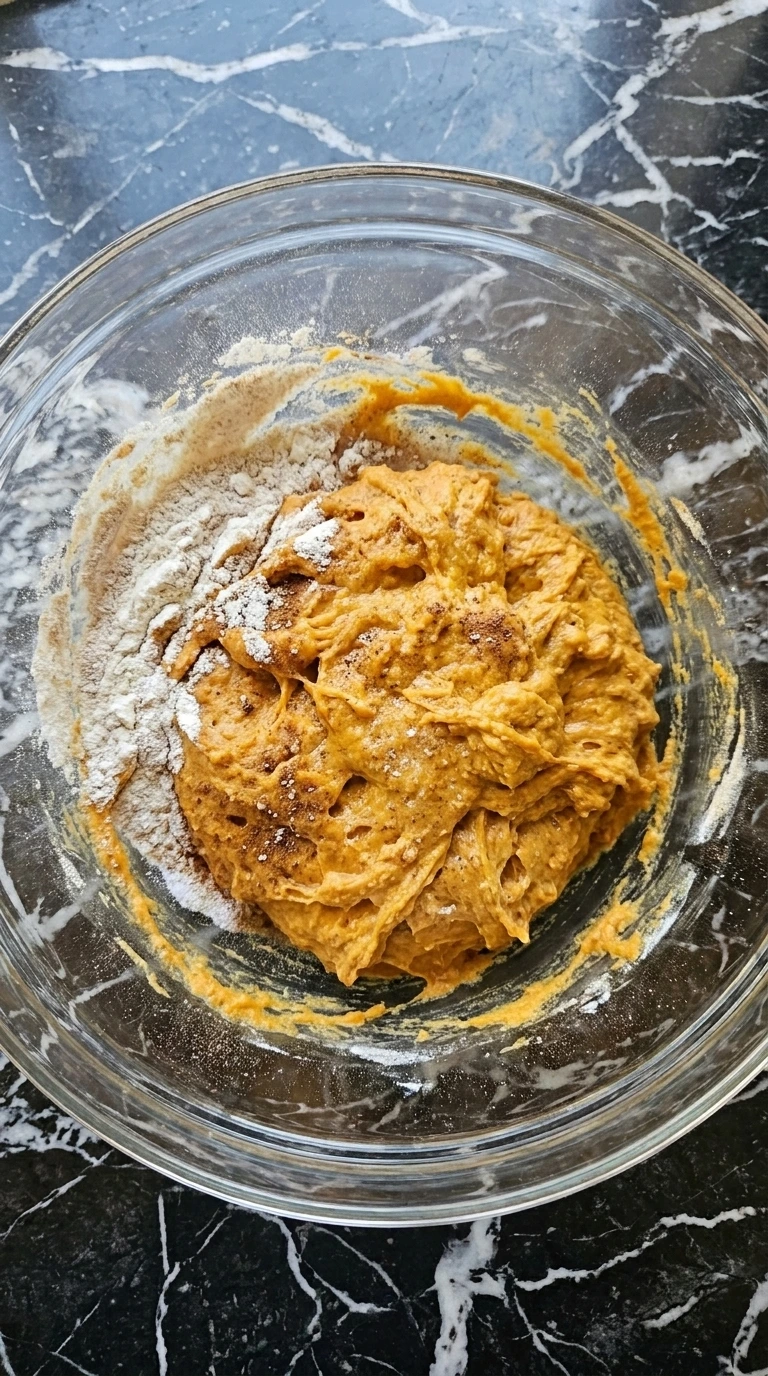
Keep the filtered water and pumpkin puree near 78°F. Stir the active starter into the water and honey for 30 seconds. Add the pumpkin puree and both flours with cinnamon and nutmeg. Fold with a rubber spatula in a J-shaped motion for 2 minutes.
Cover and rest for 30 minutes. Then pinch in the fine sea salt for 90 seconds until no dry streaks remain. The dough should look rough but cohesive and feel tacky rather than soupy. You’ll smell warm cinnamon while the orange color becomes even.
Scrape the bowl once after 15 minutes so every edge hydrates. Miss the 30-minute rest and the dough tears during folding. Resting hydrates the flour so gluten forms without aggressive kneading.
Tip: Use pure canned pumpkin puree, not pie filling, because added sugar and thickeners make fermentation unpredictable.
Step 2: Fold and bulk ferment the dough

Hold the dough at 76 to 78°F for 3 1/2 to 4 1/2 hours. Perform four coil folds at 30-minute intervals. Lift the center with damp hands and let both ends tuck under themselves. Scatter 15 grams of raw pepitas after the first fold and trap them inside.
Rotate the bowl one quarter-turn before each lift. Then leave it untouched until the dough rises 50 to 60 percent. The surface turns smoother after each fold and small bubbles appear along the glass. By the final hour the dough should wobble when the bowl moves and smell fruity, not sharply sour.
(I once waited for doubling, the loaf spread flat in the oven. A 50 to 60 percent rise works better. ) Go past 5 hours at 78°F and the gluten weakens. Controlled bulk fermentation builds gas while preserving dough strength.
Tip: Mark the starting dough level with removable tape, then stop bulk fermentation when it reaches about 1.55 times that height.
Step 3: Shape and cold-proof the boule

Turn the dough onto a lightly damp work area at 72°F and pre-shape it into a loose round. Pull the edges toward the center and flip it seam-down. Drag the dough toward you in short strokes for 45 seconds. Rest it uncovered for 20 minutes.
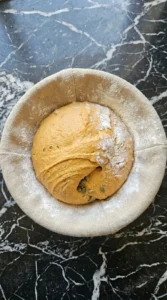
Tighten it again with six gentle pulls. Place 15 grams of raw pepitas in a rice-floured 8-inch basket, then set the boule smooth-side down. The boule should hold a domed shape with faint tension lines across the surface. After 8 to 12 hours at 38 to 40°F, it should feel firm and show a slow spring when pressed.
If it spreads during the 20-minute bench rest, shape it once more before chilling. Skip surface tension and the loaf widens instead of rising. Cold proofing slows yeast and lets acids deepen flavor.
Tip: Cover the basket tightly so the surface can’t dry out during the 8 to 12-hour refrigerator proof.
Step 4: Score and bake the loaf

Heat a 5-quart Dutch oven at 475°F for 45 minutes. Invert the cold dough onto parchment and score one 1/2-inch deep slash at a 30-degree angle. Lower it into the pot and cover. Bake at 450°F for 20 minutes.
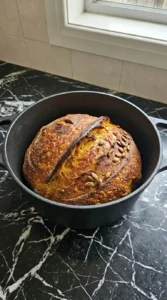
Remove the lid and continue at 425°F for 22 to 25 minutes until the center reaches 208 to 210°F. The loaf should spring open along the score and the pepitas should toast dark green with amber edges. Listen for dry crackling as the crust firms. The surface should turn deep chestnut with irregular orange-gold patches.
Pale sides need 5 more minutes uncovered. Pull it below 205°F and the crumb can stay gummy. Steam delays crust setting so the loaf expands before browning.
Tip: Set a plain sheet pan on the rack below the Dutch oven to soften harsh bottom heat without blocking oven airflow.
Step 5: Cool and slice the bread

Move the loaf to a rack and cool it at 68 to 72°F for 2 full hours. Don’t cover it. Then cut one 1-inch slice with steady sawing strokes and place it on a small white plate. Keep the remaining loaf intact until needed because extra cuts release moisture.
For toast, warm the slice at 350°F for 6 to 8 minutes. The crust should sound crisp under the knife and the crumb should show irregular small-to-medium holes. Pumpkin gives a moist orange interior but it shouldn’t smear across the blade. Slice before 90 minutes and trapped steam compresses the crumb into a gummy line.
A fully cooled loaf smells honeyed and nutty rather than yeasty. Cooling lets starches set so each slice keeps its structure.
Tip: Slice only what you’ll eat that day, then store the remaining cut face pressed against the wrapping.
My Favorite Tips
- Use a digital scale accurate to 1 gram because an extra 30 grams of flour can turn the orange crumb tight and dry.
- Feed the starter 4 to 6 hours before mixing and use it when the top looks domed with bubbles along the jar.
- Choose plain canned pumpkin puree with one listed ingredient because pie filling adds sugar and can speed fermentation unpredictably.
- Keep the dough between 76 and 78°F during bulk fermentation, then check rise after 3 1/2 hours instead of waiting for doubling.
- Dust the basket with about 20 grams of white rice flour because wheat flour absorbs moisture and sticks to pumpkin dough.
- Place a sheet pan one rack below the Dutch oven if the loaf base darkens before the center reaches 208°F.
- Wait the full 2 hours before slicing because the crumb keeps setting long after the crust stops crackling.
- Fold in 60 grams dried cranberries and 50 grams toasted walnuts during the first coil fold for a tart holiday loaf.
- Replace the cinnamon and nutmeg with 1 teaspoon chopped rosemary and 1/2 teaspoon black pepper for a savory pumpkin bread.
- Add 50 grams dark chocolate chips during the first coil fold for a sweeter brunch loaf with soft chocolate pockets.
- Replace 15 grams of honey with blackstrap molasses and add 1/4 teaspoon ground cloves for a darker gingerbread-style crust.
Ingredient Swaps
- canned sugar pumpkin puree: homemade roasted sugar pumpkin puree — Use the same 240 grams, but drain watery puree for 20 to 30 minutes first. For a faster pumpkin bake, try our Pumpkin Muffins.
- wildflower honey: pure maple syrup — Use 30 grams maple syrup for a vegan loaf. The crust browns slightly less and the crumb tastes more maple-forward.
- unbleached bread flour: unbleached all-purpose flour — Use 450 grams all-purpose flour and reduce the water by 15 grams. The loaf will spread more and have a softer chew.
- stone-ground whole wheat flour: additional unbleached bread flour — Replace it gram for gram with 50 grams bread flour. The flavor becomes milder and bulk fermentation may finish about 20 minutes later.
- wheat flour for a gluten-free loaf: a tested gluten-free sourdough blend with psyllium husk — A 1:1 gluten-free flour swap won’t hold this shape. Use a dedicated formula with about 4 percent psyllium based on flour weight.
- dairy and eggs: no replacement needed — The recipe already contains no butter, milk or eggs. Use maple syrup instead of honey only when you also need the loaf to be vegan.
How to Store & Reheat
For refrigerator storage, wrap the cooled loaf tightly and keep it up to 5 days. The crumb firms faster there than at room temperature. Freeze better-quality slices in an airtight bag for up to 2 months. Place parchment between 1-inch slices so they separate cleanly.
You can also freeze half a loaf double-wrapped in plastic and foil for clean thawing later. Reheat refrigerated slices at 350°F for 6 to 8 minutes. Or toast them for 2 to 3 minutes on a medium setting. Mist each slice with about 1 teaspoon of water before oven reheating if the crust feels dry.
Discard bread that shows green, blue or black spots. A fermented smell is normal, but a musty odor or sticky surface signals spoilage.
Easy Homemade Pumpkin Sourdough Bread
Ingredients
- 100 grams 100% hydration sourdough starter Use at peak activity when doubled and bubbly so the dough ferments predictably.
- 80 grams filtered water Warm to about 78°F before mixing to support steady fermentation.
- 30 grams wildflower honey Adds mild sweetness and helps the crust develop a deeper color.
- 240 grams canned sugar pumpkin puree Use plain puree with no added sugar or spices for controlled hydration.
- 450 grams unbleached bread flour Provides the strong gluten structure needed to hold pumpkin moisture.
- 50 grams stone-ground whole wheat flour Adds nutty flavor and extra fermentation activity without making the loaf heavy.
- 1 teaspoon Saigon cinnamon Distributes warm spice through the crumb without overpowering the sourdough.
- 1/4 teaspoon ground nutmeg Adds a gentle fall aroma behind the cinnamon and honey.
- 10 grams fine sea salt Strengthens the gluten network and balances the pumpkin and honey.
- 30 grams raw pepitas Divide evenly between the dough and the basket for nutty flavor and a seeded crust.
- 20 grams white rice flour Dust the proofing basket so the moist pumpkin dough releases cleanly.
Instructions
- Keep the filtered water and pumpkin puree near 78°F. Stir the active starter into the water and honey for 30 seconds. Add the pumpkin puree and both flours with cinnamon and nutmeg. Fold with a rubber spatula in a J-shaped motion for 2 minutes. Cover and rest for 30 minutes. Then pinch in the fine sea salt for 90 seconds until no dry streaks remain. The dough should look rough but cohesive and feel tacky rather than soupy. You’ll smell warm cinnamon while the orange color becomes even. Scrape the bowl once after 15 minutes so every edge hydrates. Miss the 30-minute rest and the dough tears during folding. Resting hydrates the flour so gluten forms without aggressive kneading.

- Hold the dough at 76 to 78°F for 3 1/2 to 4 1/2 hours. Perform four coil folds at 30-minute intervals. Lift the center with damp hands and let both ends tuck under themselves. Scatter 15 grams of raw pepitas after the first fold and trap them inside. Rotate the bowl one quarter-turn before each lift. Then leave it untouched until the dough rises 50 to 60 percent. The surface turns smoother after each fold and small bubbles appear along the glass. By the final hour the dough should wobble when the bowl moves and smell fruity, not sharply sour. (I once waited for doubling, the loaf spread flat in the oven. A 50 to 60 percent rise works better.) Go past 5 hours at 78°F and the gluten weakens. Controlled bulk fermentation builds gas while preserving dough strength.

- Turn the dough onto a lightly damp work area at 72°F and pre-shape it into a loose round. Pull the edges toward the center and flip it seam-down. Drag the dough toward you in short strokes for 45 seconds. Rest it uncovered for 20 minutes. Tighten it again with six gentle pulls. Place 15 grams of raw pepitas in a rice-floured 8-inch basket, then set the boule smooth-side down. The boule should hold a domed shape with faint tension lines across the surface. After 8 to 12 hours at 38 to 40°F, it should feel firm and show a slow spring when pressed. If it spreads during the 20-minute bench rest, shape it once more before chilling. Skip surface tension and the loaf widens instead of rising. Cold proofing slows yeast and lets acids deepen flavor.
- Heat a 5-quart Dutch oven at 475°F for 45 minutes. Invert the cold dough onto parchment and score one 1/2-inch deep slash at a 30-degree angle. Lower it into the pot and cover. Bake at 450°F for 20 minutes. Remove the lid and continue at 425°F for 22 to 25 minutes until the center reaches 208 to 210°F. The loaf should spring open along the score and the pepitas should toast dark green with amber edges. Listen for dry crackling as the crust firms. The surface should turn deep chestnut with irregular orange-gold patches. Pale sides need 5 more minutes uncovered. Pull it below 205°F and the crumb can stay gummy. Steam delays crust setting so the loaf expands before browning.
- Move the loaf to a rack and cool it at 68 to 72°F for 2 full hours. Don’t cover it. Then cut one 1-inch slice with steady sawing strokes and place it on a small white plate. Keep the remaining loaf intact until needed because extra cuts release moisture. For toast, warm the slice at 350°F for 6 to 8 minutes. The crust should sound crisp under the knife and the crumb should show irregular small-to-medium holes. Pumpkin gives a moist orange interior but it shouldn’t smear across the blade. Slice before 90 minutes and trapped steam compresses the crumb into a gummy line. A fully cooled loaf smells honeyed and nutty rather than yeasty. Cooling lets starches set so each slice keeps its structure.

Notes
Nutrition
FAQ
Yes, and this is the most reliable schedule. Shape the dough after bulk fermentation and refrigerate it at 38 to 40°F for 8 to 12 hours. Bake it straight from the refrigerator because cold dough scores cleanly and holds its round shape better.
The usual causes are underfermentation, early slicing or excess puree. Stop bulk fermentation near a 50 to 60 percent rise, bake to 208 to 210°F and cool for 2 hours. If your puree looks watery, drain it for 20 minutes before measuring.
Discard works only when it’s recently fed and still shows bubbles. Use 100 grams and expect bulk fermentation to take 1 to 2 hours longer at 78°F. Very old acidic discard weakens gluten, so it isn’t reliable for a tall boule.
Double every ingredient by weight, then divide the dough into two equal pieces before shaping. Bake one loaf at a time in a 5-quart Dutch oven. Crowding two boules together blocks expansion and gives pale sidewalls with uneven baking where they touch.
Freeze 1-inch slices in a single layer for 1 hour, then pack them airtight for up to 2 months. Toast from frozen at 350°F for 8 to 10 minutes. A light mist of water restores surface crispness without making the crumb wet.
Serve warm slices with salted butter, sharp cheddar or apple butter for breakfast and brunch. For a holiday table, cut the loaf into 1-inch pieces and pair it with soup or roasted poultry. The mild cinnamon stays savory enough for both.
A Final Note
If you make this on a weekend afternoon with music playing, the way I do, you’ll understand its place among Fall Sourdough Bread Recipes. The final cooling trick makes it special, especially beside our Stuffing at the holidays.
Tag me on Instagram if you make it, I love seeing your Sour Dough Recipe Ideas and brunch tables. And Liam says hi after eating half, then asking for Blueberry Muffins too.
Readers also use it for: Decorative Sourdough Bread, Pumpkin Discard Recipes, Sourdough Bread Mix Ins.
Pumpkin puree naturally colors the crumb, and its pectin keeps the loaf moist after it cools.