Pumpkin Pie
When you’re greedy like me and want proper pumpkin flavour in every bite, not just a faint whiff of “vaguely tastes like spice …. maybe? ”, making a Pumpkin Pie suddenly becomes harder than it sounds. I really thought it would be simple: mix pumpkin puree into my favourite custard batter, pour it in, and bake it.
But every option had problems. The filling often separated while baking or cracked if I cooked it too fast. In some versions, the center stayed soggy, and mixing cold eggs through often stopped the custard setting smoothly. Pouring it into a raw crust just made the bottom soggy unless you baked it until the edges turned into charcoal.

Then I tried making our Halloween Cookies last October and realized something about holiday baking. It is all about moisture control and gentle heat.
The Secret to This Recipe
Baking the pie at 325°F instead of 350°F prevents the outer custard from curdling before the middle sets. The addition of a single extra egg yolk provides pure fat and lecithin, which creates an ultra-creamy mouthfeel and keeps the surface from splitting open.
Cooling the pie inside the turned-off oven with the door cracked open allows the temperature to drop slowly. This gradual cooling prevents thermal shock so your finished dessert remains completely flat and beautiful.
If you love rich fall treats, check out our Oreo Dirt Cups for another easy party sweet.
The Ingredients
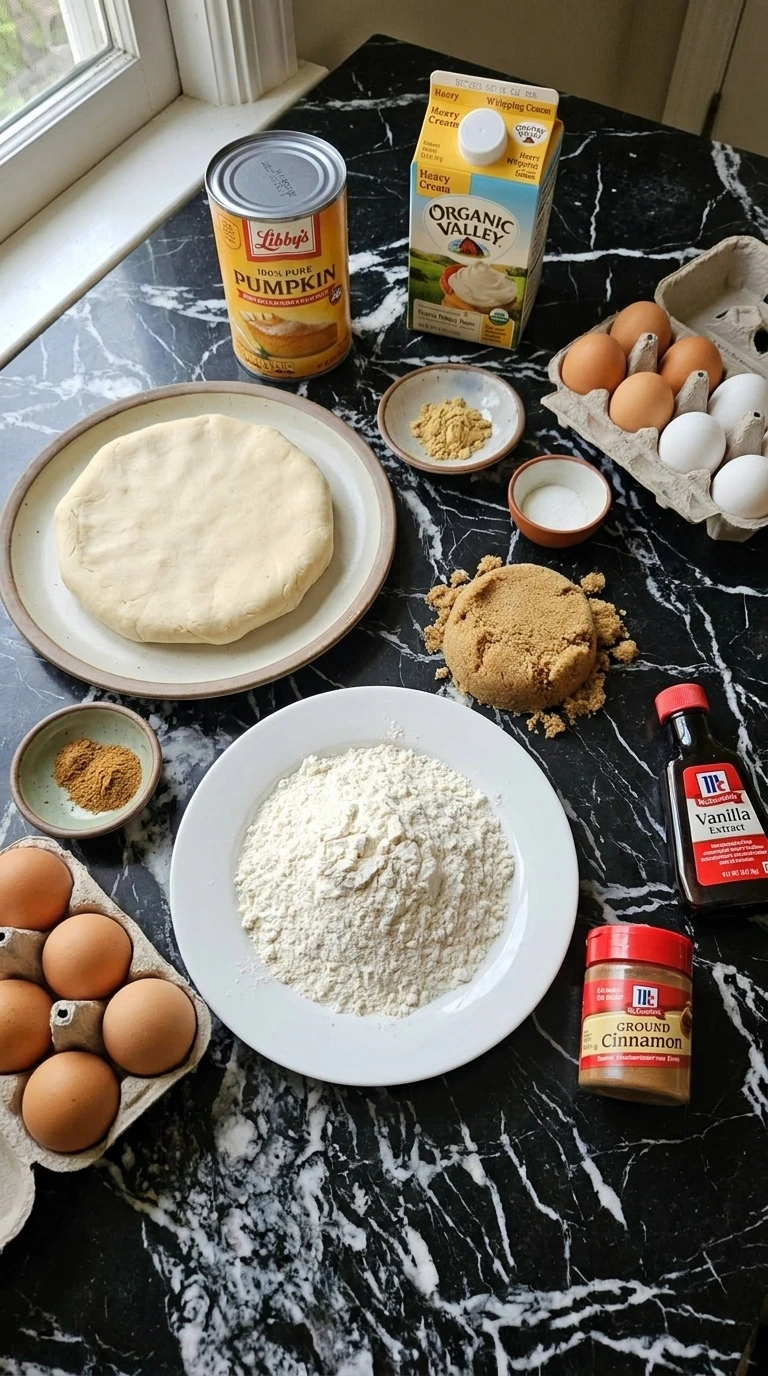
- Libby’s Pumpkin Puree: One standard can of 100% pure pumpkin paste, not pumpkin pie mix.
- pastry dough: Chilled homemade or store-bought pie pastry ready for rolling.
- large brown eggs: Bring to room temperature before cracking to ensure easy blending.
- egg yolk: Separated from the white to add extra richness and structure to the custard.
- dark brown sugar: Pack tightly into the measuring cup for a deep caramel undertone.
- McCormick Ground Cinnamon: Adds the primary warm woodsy aromatic note to the pumpkin mix.
- ground ginger: Provides a sharp, slightly spicy bite to balance the heavy sugars.
- ground nutmeg: Grate freshly if possible for the most potent holiday aroma.
- Organic Valley Heavy Cream: Full fat dairy containing at least 36% milkfat for supreme creaminess.
- whole milk: Lightens the filling slightly so the custard does not taste greasy.
Equipment
- 9-inch ceramic pie dish: A heavy-walled ceramic dish distributes heat slowly and evenly so the pie crust bakes thoroughly without scorching the bottom filling.
- wire whisk: A large balloon whisk incorporates the eggs into the pumpkin puree quickly without beating too much excess air into the custard.
- rolling pin: A classic wooden rolling pin provides enough weight to flatten cold pastry dough smoothly before the butter spots begin to melt.
How to
Step 1: Roll out the pastry dough

Place the chilled pastry dough onto a lightly floured surface. Roll it out firmly from the center outward using a rolling pin until it forms a 12-inch circle. Work quickly so the butter inside the dough stays cold.
You’ll see the dough stretch into a wide circle with slightly uneven edges. Small specks of solid yellow butter should still be visible across the surface. This means your crust will turn out wonderfully flaky instead of tough.
Transfer the dough to your pie dish because keeping the fat cold prevents shrinking.
Tip: If the dough gets too warm and sticky while rolling, slide it back into the fridge for 10 minutes before continuing.
Step 2: Crimping and blind baking the crust

Press the rolled dough into a 9-inch white ceramic pie dish and trim the excess to leave a 1-inch overhang. Fold the edge under itself and press your thumbs together along the rim to form a classic fluted pattern. Line the empty crust with parchment paper and fill it to the brim with ceramic pie weights.
Bake the crust in a 375°F preheated oven for exactly 15 minutes until the edges set. (My first batch went into a 400°F oven and the top scorched before the bottom cooked through, 375°F is the fix. ) Carefully remove the paper and weights then bake for another 8 minutes.
The pastry will look dry and dull with a very pale golden hue along the crimped rim. Blind bake the crust fully, this prevents the liquid custard filling from making the bottom pasty and soggy.
Tip: Make sure your pie weights go all the way up the sides of the crust to keep the vertical walls from collapsing.
Step 3: Whisk the pumpkin filling smooth

Whisk 15 ounces of pumpkin puree with two large brown eggs and one egg yolk in a large glass bowl. Add three-quarters of a cup of dark brown sugar, one teaspoon of ground cinnamon, half a teaspoon of ground ginger, and a quarter teaspoon of ground nutmeg. Pour in one cup of heavy cream and half a cup of whole milk then whisk in a J-shaped motion until completely combined.
The mixture will transform from a chunky orange paste into a perfectly smooth, glossy batter. It should smell intensely of autumn spices and have the consistency of thick pourable cream. If you see streaks of unmixed egg white, keep whisking.
Mix the liquid thoroughly because large pockets of egg white will cook into rubbery bits in your pie.
Tip: Tap the mixing bowl firmly against the counter three times after whisking to force trapped air bubbles to the surface.
Step 4: Pour filling and bake gently

Pour the smooth orange filling into the par-baked crust until it reaches just below the fluted rim. Slide the dish carefully onto the middle rack of your oven at 325°F and bake for 50 to 55 minutes.
Do not open the oven door during the first 40 minutes. The outer two inches of the filling will puff up slightly and look set while the exact center still jiggles like gelatin when nudged.
Turn off the heat and crack the oven door open with a wooden spoon for 15 minutes. Bake at 325°F not 350°F, slow heat keeps the eggs from curdling and prevents the surface from cracking.
Tip: An instant-read thermometer inserted into the filling an inch from the edge should read exactly 175°F when it is done.
Step 5: Garnish a single slice
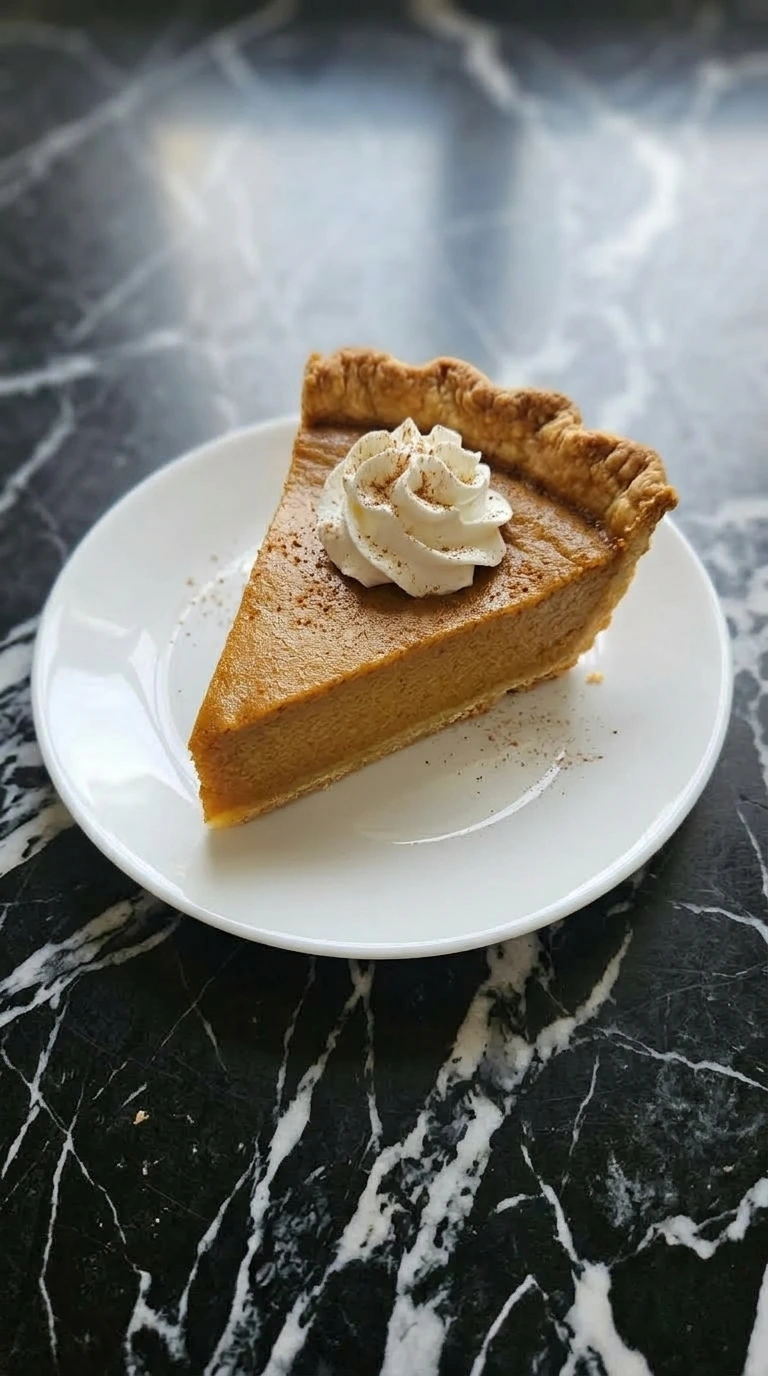
Let the pie cool completely at room temperature for two hours then slice it cleanly using a sharp knife. Wipe the blade with a warm wet towel between every cut to keep the edges sharp.
Place a single triangular slice onto a small white dessert plate. The slice will showcase a perfectly dense, creamy orange interior layer sitting on top of a thin, crisp golden bottom crust.
Dollop a neat mound of freshly whipped heavy cream on the wide back edge of the slice and sprinkle a light pinch of ground cinnamon over the top. Serve at room temperature or chilled because the cold temperature solidifies the fats for a cleaner texture.
Tip: For the cleanest slices, refrigerate the baked pie overnight before cutting into it the next day.
My Favorite Tips
- Bake the pie on a preheated sheet pan on the lowest rack to guarantee a crisp bottom crust.
- Never use pumpkin pie mix because it contains added water and sugars that will ruin our custard ratios.
- Let the rolled pastry dough rest in the pie dish for 20 minutes before baking to stop shrinking.
- Stop baking when the center 2 inches still look wobbly because the residual heat finishes the cooking.
- Always use room temperature eggs so they emulsify perfectly with the pumpkin puree without creating pockets.
- Grill a few extra pastry scraps to make decorative leaves for hiding any small edge imperfections easily.
- Add 1 tablespoon of bourbon and a pinch of ground cloves to the liquid filling for a mature, smoky twist that pairs beautifully with dark coffee.
- Scatter 1 half cup of chopped candied pecans over the top surface during the last 10 minutes of baking for a crunchy praline texture.
- Whisk 1 teaspoon of orange zest into the raw pumpkin mixture to provide a bright citrus lift that cuts through the heavy cream.
Variations to Try
- Organic Valley Heavy Cream: canned full-fat coconut cream — Use the exact same amount but expect a mild coconut flavor and a slightly lighter texture in the finished custard.
- dark brown sugar: granulated white sugar — Swap 1 for 1 but your pie will have a lighter color and will lack the deep molasses undertone.
- pastry dough: gluten-free pie crust — Works well but the crust will be more fragile so press it carefully into the plate instead of rolling heavily.
- whole milk: evaporated milk — Use equal parts for an even richer texture that mimics old-school diner pies perfectly.
Storage Tips
Store any leftover pie in the refrigerator covered loosely with aluminum foil for up to 4 days. Keep it away from strong-smelling foods like onions because the dairy custard will absorb those aromas quickly.
You can freeze the pie for 1 month by wrapping the entire dish tightly in plastic wrap and aluminum foil. Defrost frozen leftovers in the fridge for 24 hours before serving.
Do not use a microwave to reheat the slices because rapid heat will turn the creamy egg custard into a watery mess. Check for spoilage by looking for any surface separation, liquid pooling, or a sour aroma.
Pumpkin Pie
Ingredients
- 15 ounces Libby’s Pumpkin Puree One standard can of 100% pure pumpkin paste, not pumpkin pie mix.
- 1 disc pastry dough Chilled homemade or store-bought pie pastry ready for rolling.
- 2 large brown eggs Bring to room temperature before cracking to ensure easy blending.
- 1 large egg yolk Separated from the white to add extra richness and structure to the custard.
- 0.75 cup dark brown sugar Pack tightly into the measuring cup for a deep caramel undertone.
- 1 teaspoon McCormick Ground Cinnamon Adds the primary warm woodsy aromatic note to the pumpkin mix.
- 0.5 teaspoon ground ginger Provides a sharp, slightly spicy bite to balance the heavy sugars.
- 0.25 teaspoon ground nutmeg Grate freshly if possible for the most potent holiday aroma.
- 1 cup Organic Valley Heavy Cream Full fat dairy containing at least 36% milkfat for supreme creaminess.
- 0.5 cup whole milk Lightens the filling slightly so the custard does not taste greasy.
Instructions
- Place the chilled pastry dough onto a lightly floured surface. Roll it out firmly from the center outward using a rolling pin until it forms a 12-inch circle. Work quickly so the butter inside the dough stays cold. You’ll see the dough stretch into a wide circle with slightly uneven edges. Small specks of solid yellow butter should still be visible across the surface. This means your crust will turn out wonderfully flaky instead of tough. Transfer the dough to your pie dish because keeping the fat cold prevents shrinking.

- Press the rolled dough into a 9-inch white ceramic pie dish and trim the excess to leave a 1-inch overhang. Fold the edge under itself and press your thumbs together along the rim to form a classic fluted pattern. Line the empty crust with parchment paper and fill it to the brim with ceramic pie weights. Bake the crust in a 375°F preheated oven for exactly 15 minutes until the edges set. (My first batch went into a 400°F oven and the top scorched before the bottom cooked through, 375°F is the fix.) Carefully remove the paper and weights then bake for another 8 minutes. The pastry will look dry and dull with a very pale golden hue along the crimped rim. Blind bake the crust fully, this prevents the liquid custard filling from making the bottom pasty and soggy.
- Whisk 15 ounces of pumpkin puree with two large brown eggs and one egg yolk in a large glass bowl. Add three-quarters of a cup of dark brown sugar, one teaspoon of ground cinnamon, half a teaspoon of ground ginger, and a quarter teaspoon of ground nutmeg. Pour in one cup of heavy cream and half a cup of whole milk then whisk in a J-shaped motion until completely combined. The mixture will transform from a chunky orange paste into a perfectly smooth, glossy batter. It should smell intensely of autumn spices and have the consistency of thick pourable cream. If you see streaks of unmixed egg white, keep whisking. Mix the liquid thoroughly because large pockets of egg white will cook into rubbery bits in your pie.

- Pour the smooth orange filling into the par-baked crust until it reaches just below the fluted rim. Slide the dish carefully onto the middle rack of your oven at 325°F and bake for 50 to 55 minutes. Do not open the oven door during the first 40 minutes. The outer two inches of the filling will puff up slightly and look set while the exact center still jiggles like gelatin when nudged. Turn off the heat and crack the oven door open with a wooden spoon for 15 minutes. Bake at 325°F not 350°F, slow heat keeps the eggs from curdling and prevents the surface from cracking.

- Let the pie cool completely at room temperature for two hours then slice it cleanly using a sharp knife. Wipe the blade with a warm wet towel between every cut to keep the edges sharp. Place a single triangular slice onto a small white dessert plate. The slice will showcase a perfectly dense, creamy orange interior layer sitting on top of a thin, crisp golden bottom crust. Dollop a neat mound of freshly whipped heavy cream on the wide back edge of the slice and sprinkle a light pinch of ground cinnamon over the top. Serve at room temperature or chilled because the cold temperature solidifies the fats for a cleaner texture.
Notes
Nutrition
Common Questions
Cracks happen because the eggs in the custard were overcooked at too high a temperature or left in the oven for too long. The proteins shrink and pull apart when overheated. Always bake at 325°F and pull the pie out when the center still jiggles like gelatin.
You can easily bake this pie up to two days in advance. Let it cool completely at room temperature for two hours then cover it loosely with plastic wrap and store it in the fridge. Do not add the whipped cream garnish until right before you plan to serve it.
The best way to prevent a soggy bottom is to completely blind bake your crust with weights before adding the liquid filling. This seals the pastry surface. , baking the assembled pie on a hot baking sheet placed on the lowest oven rack cooks the bottom pastry quickly.
Yes, you can freeze this pie for up to one month. Wrap the completely cooled pie tightly in two layers of plastic wrap and then a layer of aluminum foil. Thaw it slowly in the refrigerator for 24 hours before slicing to keep the custard texturally sound.
Final Thoughts
Every time I make this I think about the first time I tried it, nervous about screwing it up, convinced I’d need more experience. Turns out it’s one of those dishes that forgives you for being a beginner.
You can mess up the timing like I did those first three attempts and it still turns out good. If you love cozy seasonal dishes, be sure to try our hearty Green Bean Casserole or our delicious holiday Stuffing for your next big family feast.
If you try it, leave me a comment below, I read every single one. And if you enjoyed this, check out some of my other recipes that use similar techniques.
Pumpkin pie wasn’t always baked in a crispy crust. Early American colonists actually hollowed out whole pumpkins and filled them to the brim with spiced milk and honey. Then, they tossed the entire fruit straight into hot ashes to bake.