
Ingredients
Method
- Place the chilled pastry dough onto a lightly floured surface. Roll it out firmly from the center outward using a rolling pin until it forms a 12-inch circle. Work quickly so the butter inside the dough stays cold. You'll see the dough stretch into a wide circle with slightly uneven edges. Small specks of solid yellow butter should still be visible across the surface. This means your crust will turn out wonderfully flaky instead of tough. Transfer the dough to your pie dish because keeping the fat cold prevents shrinking.

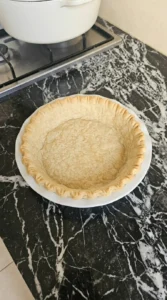
- Press the rolled dough into a 9-inch white ceramic pie dish and trim the excess to leave a 1-inch overhang. Fold the edge under itself and press your thumbs together along the rim to form a classic fluted pattern. Line the empty crust with parchment paper and fill it to the brim with ceramic pie weights. Bake the crust in a 375°F preheated oven for exactly 15 minutes until the edges set. (My first batch went into a 400°F oven and the top scorched before the bottom cooked through, 375°F is the fix.) Carefully remove the paper and weights then bake for another 8 minutes. The pastry will look dry and dull with a very pale golden hue along the crimped rim. Blind bake the crust fully, this prevents the liquid custard filling from making the bottom pasty and soggy.
- Whisk 15 ounces of pumpkin puree with two large brown eggs and one egg yolk in a large glass bowl. Add three-quarters of a cup of dark brown sugar, one teaspoon of ground cinnamon, half a teaspoon of ground ginger, and a quarter teaspoon of ground nutmeg. Pour in one cup of heavy cream and half a cup of whole milk then whisk in a J-shaped motion until completely combined. The mixture will transform from a chunky orange paste into a perfectly smooth, glossy batter. It should smell intensely of autumn spices and have the consistency of thick pourable cream. If you see streaks of unmixed egg white, keep whisking. Mix the liquid thoroughly because large pockets of egg white will cook into rubbery bits in your pie.

- Pour the smooth orange filling into the par-baked crust until it reaches just below the fluted rim. Slide the dish carefully onto the middle rack of your oven at 325°F and bake for 50 to 55 minutes. Do not open the oven door during the first 40 minutes. The outer two inches of the filling will puff up slightly and look set while the exact center still jiggles like gelatin when nudged. Turn off the heat and crack the oven door open with a wooden spoon for 15 minutes. Bake at 325°F not 350°F, slow heat keeps the eggs from curdling and prevents the surface from cracking.

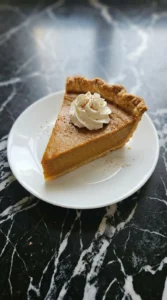
- Let the pie cool completely at room temperature for two hours then slice it cleanly using a sharp knife. Wipe the blade with a warm wet towel between every cut to keep the edges sharp. Place a single triangular slice onto a small white dessert plate. The slice will showcase a perfectly dense, creamy orange interior layer sitting on top of a thin, crisp golden bottom crust. Dollop a neat mound of freshly whipped heavy cream on the wide back edge of the slice and sprinkle a light pinch of ground cinnamon over the top. Serve at room temperature or chilled because the cold temperature solidifies the fats for a cleaner texture.
Notes
Store any leftover pie in the refrigerator covered loosely with aluminum foil for up to 4 days. Keep it away from strong-smelling foods like onions because the dairy custard will absorb those aromas quickly. You can freeze the pie for 1 month by wrapping the entire dish tightly in plastic wrap and aluminum foil. Defrost frozen leftovers in the fridge for 24 hours before serving. Do not use a microwave to reheat the slices because rapid heat will turn the creamy egg custard into a watery mess. Check for spoilage by looking for any surface separation, liquid pooling, or a sour aroma.