Pumpkin Spice Sourdough Bread
These pumpkin spice sourdough bread loaves feature a cozy mix of real pumpkin and warm spices tossed with wild yeast starter and a bit of sweet brown sugar. Swirl it all together with a cinnamon sugar ribbon inside a crisp blistered crust and breakfast is ready! Hi! Meet your new friend.
It’s the most festive, flavor-packed autumn bread with a beautiful orange crumb. It is so filling, so day-making, so fragrant and easy, and also totally naturally leavened. That’s right. We’re calling upon that active sourdough starter to impress us with her rising and bubbly ways here, and she won’t disappoint you.

If you want more seasonal baking ideas, check out our Pumpkin Muffins for another quick morning bake. This stunning bake fits right into your collection of Fall Sourdough Bread Recipes because it pairs classic spices with an overnight ferment. It’s magnificent when sliced thick, toasted, and slathered with salted butter while the steam still rises.
The Secret to This Recipe
Baking at 450°F with a covered heavy pot traps the natural moisture from the pumpkin puree, creating intense steam that prevents the crust from setting too early. This steam window allows the wild yeast to expand fully before the hot air sets the final structure.
Mixing molasses with the wet ingredients provides simple sugars that feed the sourdough culture, accelerating gas production during bulk fermentation for a lighter crumb. Laminating the dough on a damp surface lets you stretch the gluten network into a paper-thin sheet without tearing the delicate structure.
This technique allows you to distribute the cinnamon sugar evenly across the interior without breaking the main dough structure during shaping. If you enjoy cozy spiced bakes, our seasonal Pumpkin Pie uses a similar spice blending technique to maximize flavor depth.
The Ingredients
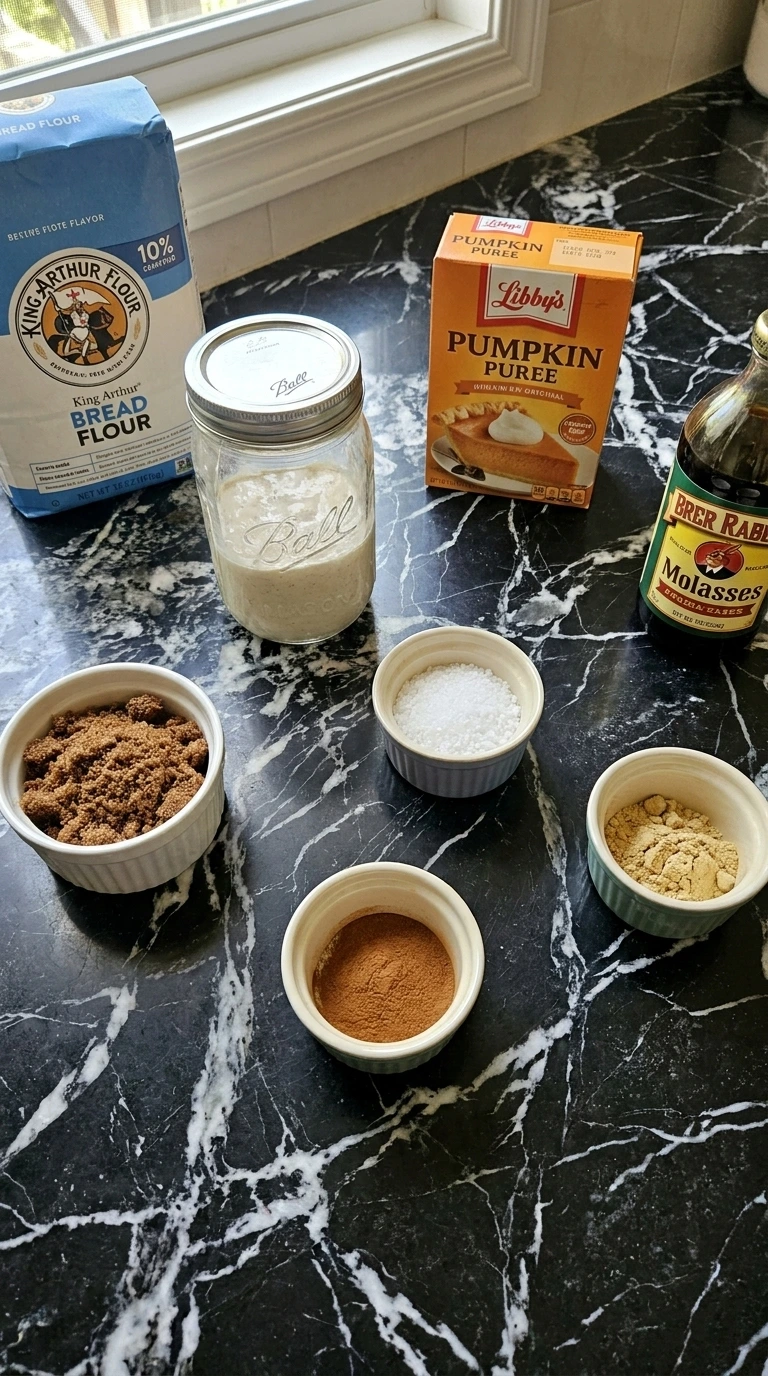
- King Arthur Bread Flour: High-protein unbleached flour to support the heavy pumpkin puree and create a strong gluten network.
- sourdough starter: Mature, active, 100% hydration leaven fed with unbleached flour and bubbling vigorously.
- Libby’s Pumpkin Puree: Pure canned pumpkin without added spices or sugar to provide moisture, color, and flavor.
- lukewarm water: Filtered water warmed to roughly 80°F to balance the cool pumpkin and keep yeast happy.
- Brer Rabbit Molasses: Unsulfured dark molasses for a deep caramel sweetness and color enhancement.
- coarse sea salt: Fine crystals to tighten the gluten structure and balance the sweet autumn notes.
- dark brown sugar: Packed sugar for the lamination layer to create a gooey interior swirl.
- Saigon cinnamon: Divided use, with one teaspoon in the dough dough and the rest mixed with the brown sugar.
- ground ginger: Whisked into the flour to add a subtle biting warmth to the background crumb.
What You’ll Use
- 6-quart cast iron Dutch oven: A heavy-bottomed 6-quart Dutch oven distributes heat evenly so the bottom doesn’t scorch — a thin-walled stockpot will hot-spot and burn the sugars.
How to
Step 1: Whisk the pumpkin and wet ingredients
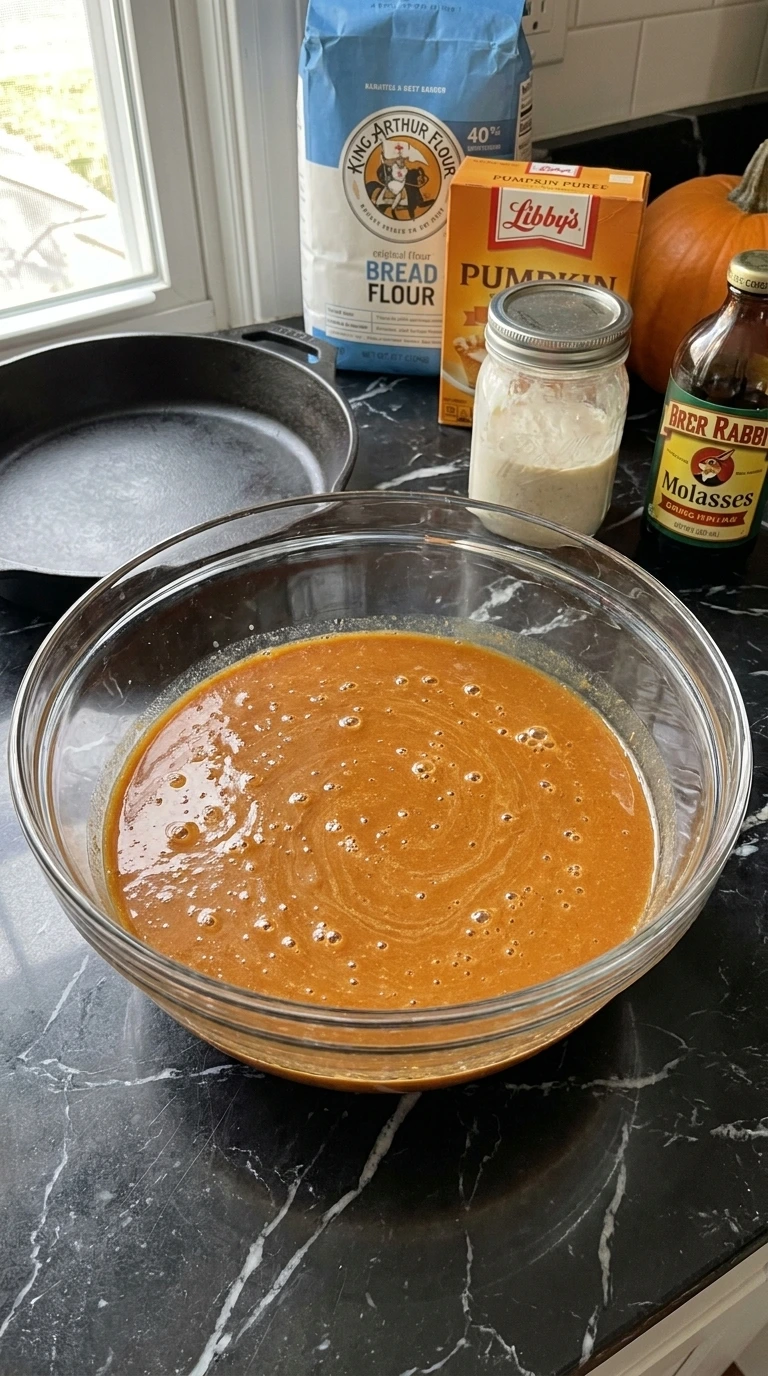
Measure the wet components into your vessel to build a smooth foundation for the flour. Combine the pumpkin puree, mature active starter, lukewarm water, and molasses thoroughly using a sturdy balloon whisk with firm circular motions. Make sure the ambient temperature stays around 75°F to keep the wild yeast comfortable during this initial phase.
Watch for the thick orange puree to completely dissolve into a uniform rustic copper liquid without any dark streaks of molasses. You’ll smell the distinct tangy aroma of the starter mixing with the sweet earthy scent of the pumpkin. (I tried using cold water the first time and the starter clumped up instead of dispersing.
Lukewarm water is the fix for smooth blending. ) Mix the liquids entirely before introducing any dry flour, this hydration technique ensures the starter distributes evenly so the dough ferments uniformly later.
Tip: Feed your starter four hours before using so it is fully active and bubbly when mixed.
Step 2: Mix the flour to form a shaggy dough
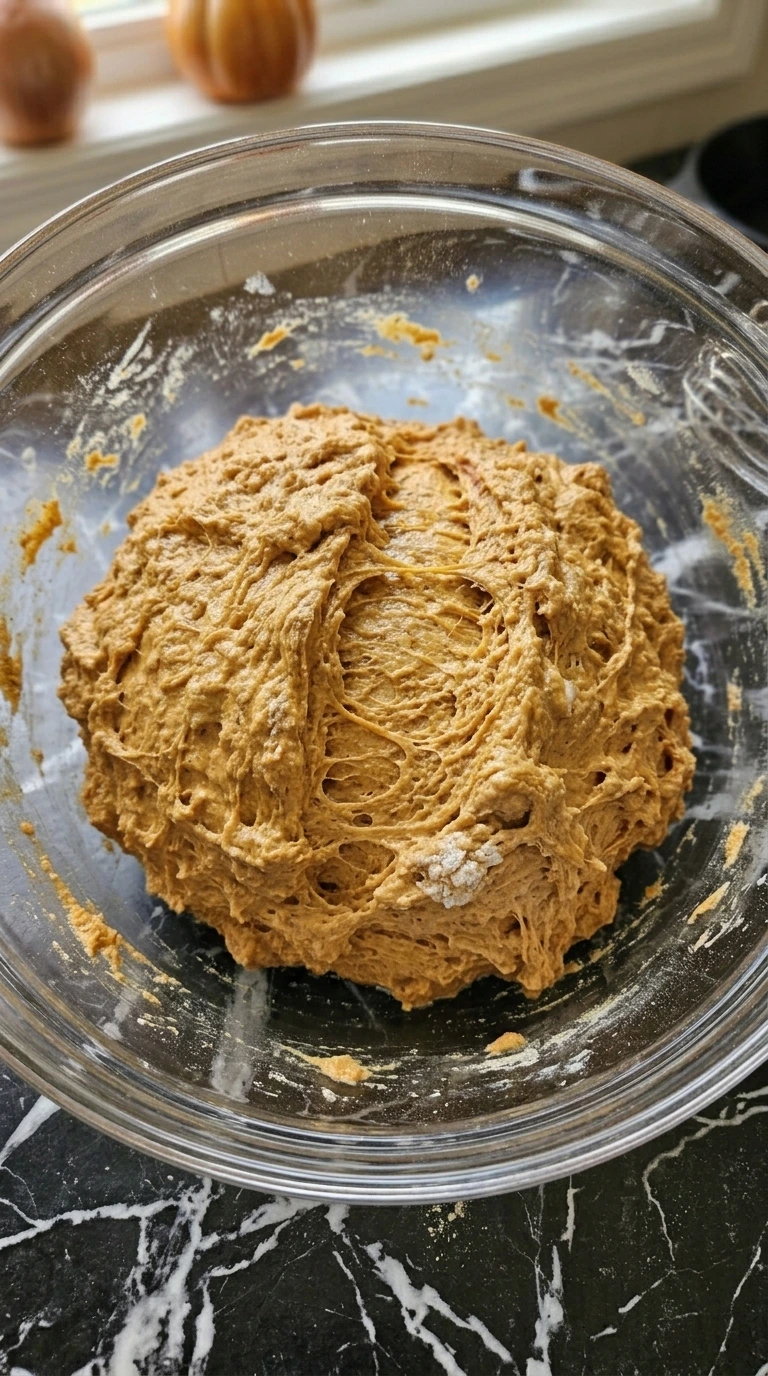
Add the strong bread flour, warm spices, and fine sea salt directly into the liquid base. Stir the mass using a sturdy wooden spoon or your bare hand by sweeping around the sides and folding inward for about 2 minutes. Work the mixture just until all dry patches disappear and a rough mass forms.
The dough will look sticky, uneven, and completely unrefined with a deep gold hue from the pumpkin spice spices. You will see strands of wet flour clinging to the sides but no loose white powder should remain at the bottom. (My first batch looked too wet here and I added extra flour, don’t do it because the pumpkin hydrates slowly over the next hour.
) Let the mass rest unworked for 30 minutes, this autolyse period allows the flour proteins to absorb the pumpkin moisture completely so the gluten bonds begin forming naturally.
Tip: Wet your fingers with cold water before handling the dough to prevent it from sticking to your skin.
Step 3: Perform stretch and folds for strength
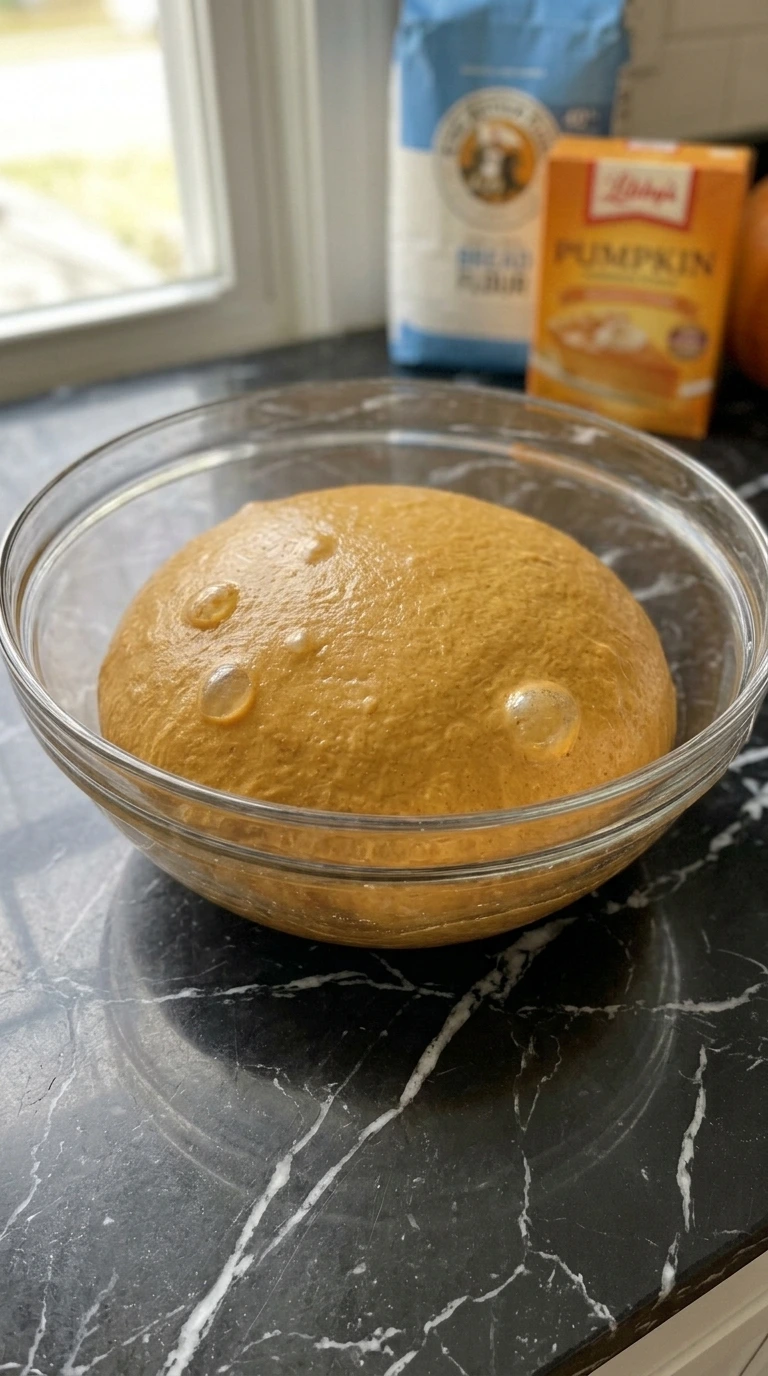
Slide your wet hand under one side of the rested dough, pull it gently upward, and fold it over the center. Rotate the container 90 degrees and repeat this action three more times to complete one full cycle. Execute four separate sets of these stretch and folds over a 2-hour window, waiting exactly 30 minutes between each session.
You will feel the structure change from loose and tearing to smooth, elastic, and holding a clean rounded shape in the center. The surface will develop a satin sheen, and small air pockets will start inflating under the skin as the fermentation advances. Go past the 2-hour mark without folding and the dough collapses into a flat sticky puddle.
Fold the mass gently without snapping the strands, this careful manipulation builds structural tension so the loaf rises high instead of spreading wide.
Tip: Keep the bowl covered with a damp towel between folds to stop a dry crust from forming on top.
Step 4: Laminate and add the cinnamon sugar filling
Mist your work surface lightly with water and turn the fermented dough out onto it. Press and slide your hands underneath, lifting from the center to stretch it out into a large thin rectangle about 12 by 18 inches. Scatter the dark brown sugar and extra ground cinnamon evenly across the entire surface, leaving a clean 1-inch border along the edges.
The orange dough will look translucent and thin enough to see through in some spots, creating a stark contrast against the dark brown cinnamon sugar layer. You’ll smell the sharp sweet spice instantly as the sugar hits the wet dough surface. (I tried using granulated sugar once but it liquefied too fast and leaked through the seams, stick to brown sugar.
) Roll the sheet up tightly into a log then shape it into a smooth round boule, this layering method locks the cinnamon inside so it creates distinct swirls without weakening the bread structure.
Tip: Work quickly and confidently during lamination so the delicate dough sheet doesn’t stick or tear on your counter.
Step 5: Bake in a hot covered Dutch oven
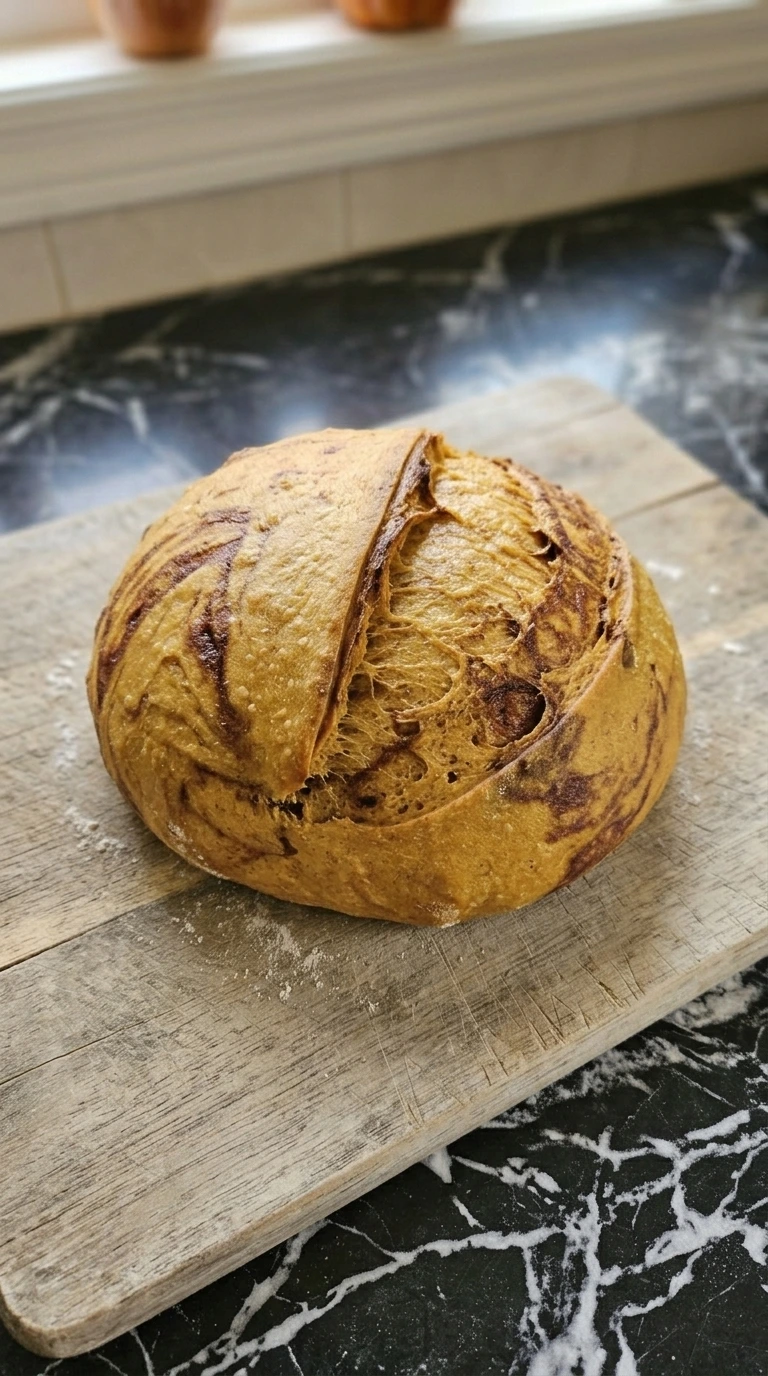
Preheat your heavy cast iron Dutch oven at 450°F for an hour, then score the top of your chilled loaf with a sharp blade. Drop the loaf into the hot pot, slide the heavy lid on, and bake for exactly 20 minutes before removing the cover to finish. Drop the oven heat to 400°F and bake uncovered for another 20 to 25 minutes until the exterior darkens.
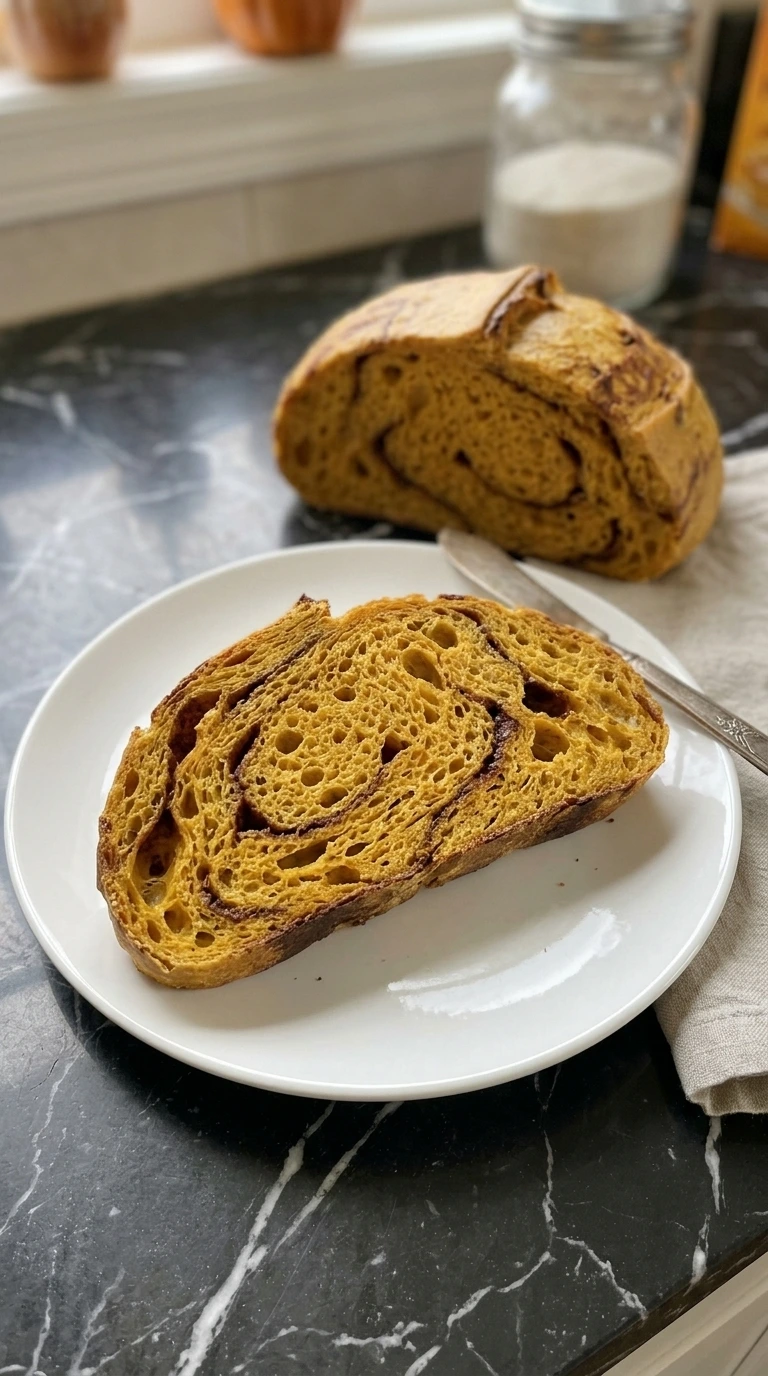
You will see the scored cut burst wide open, revealing a orange interior contrasting against the rapidly browning outer skin. The kitchen will fill with a deep caramelized pumpkin aroma mixed with toasted cinnamon. Miss the window to remove the lid and the crust stays soft and pale instead of crisp.
Bake with the lid tightly sealed first, the trapped steam keeps the outer skin soft so the loaf achieves maximum oven spring before setting.
Tip: Dust the top with white rice flour before scoring to make your decorative cuts stand out sharply against the dark crust.
Tips and Tricks
- Chill the shaped loaf in the refrigerator at 38°F for at least 12 hours because cold dough holds its shape better and scores much cleaner.
- Drain your pumpkin puree on paper towels for 15 minutes before mixing to remove excess water that throws off your hydration calculations.
- Mix the cinnamon sugar with a half teaspoon of cornstarch before sprinkling because it stops the melting sugar from weeping through the bottom crust.
- Use a genuine razor-sharp baker’s lame held at a 45-degree angle to slice the dough cleanly, creating a prominent decorative ear as it expands.
- Place an empty sheet pan on the bottom oven rack below your Dutch oven because it blocks direct intense heat from scorching the base sugar.
- Wait at least two full hours before slicing the baked loaf so the internal starches finish setting and don’t turn gummy under the knife.
- Feed your wild yeast starter with whole rye flour the night before baking because the extra nutrients guarantee a strong aggressive rise.
- Add 1/2 cup of chopped toasted pecans and 1/4 cup of dried cranberries during the lamination step for a nutty crunch that pairs beautifully with morning coffee.
- Incorporate 1 tablespoon of orange zest into the wet mixture for a bright citrus lift that cuts through the heavy earthy pumpkin tones.
- Substitute the cinnamon sugar swirl with a savory filling of roasted garlic cloves and fresh chopped rosemary for a unique holiday dinner bread.
Variations to Try
- Libby’s Pumpkin Puree: roasted butternut squash puree — Use an equal amount by weight but ensure it is drained through cheesecloth because homemade squash purees carry more water than commercial canned pumpkin.
- Brer Rabbit Molasses: pure maple syrup — Swap 1:1 by volume for a lighter woody sweetness, though your final crumb will lose some of the deep mahogany undertones.
- dark brown sugar: coconut sugar — Use an equal weight for a lower glycemic alternative, but the interior swirl will be slightly drier because coconut sugar lacks the moisture of molasses-infused brown sugar.
- King Arthur Bread Flour: all-purpose flour — Reduce the water by 30 grams because all-purpose flour has less protein and cannot absorb as much liquid, resulting in a slightly denser loaf. For another classic morning bread option, check out our Blueberry Muffins.
Keeping Leftovers
Store your baked bread at room temperature wrapped loosely in a clean brown paper bag for up to three days. Keep the cut side facing down on a solid wooden board to preserve the interior moisture while keeping the outer crust crisp.
For long-term preservation, slice the boule completely, wrap each piece in plastic wrap, and freeze the slices in a heavy freezer bag for three months. Reheat frozen slices directly in your toaster on medium heat for about three minutes until the center is hot and the edges crisp up.
If you are warming a larger chunk, wrap it in foil and heat in a 350°F oven for 15 minutes before removing the foil for the final two minutes. Watch for a dull look or a stale texture, which indicates the starch structure is breaking down.
Pumpkin Spice Sourdough Bread
Ingredients
- 500 grams King Arthur Bread Flour High-protein unbleached flour to support the heavy pumpkin puree and create a strong gluten network.
- 100 grams sourdough starter Mature, active, 100% hydration leaven fed with unbleached flour and bubbling vigorously.
- 200 grams Libby’s Pumpkin Puree Pure canned pumpkin without added spices or sugar to provide moisture, color, and flavor.
- 225 grams lukewarm water Filtered water warmed to roughly 80°F to balance the cool pumpkin and keep yeast happy.
- 20 grams Brer Rabbit Molasses Unsulfured dark molasses for a deep caramel sweetness and color enhancement.
- 10 grams coarse sea salt Fine crystals to tighten the gluten structure and balance the sweet autumn notes.
- 50 grams dark brown sugar Packed sugar for the lamination layer to create a gooey interior swirl.
- 2 tablespoons Saigon cinnamon Divided use, with one teaspoon in the dough dough and the rest mixed with the brown sugar.
- 0.5 teaspoon ground ginger Whisked into the flour to add a subtle biting warmth to the background crumb.
Instructions
- Measure the wet components into your vessel to build a smooth foundation for the flour. Combine the pumpkin puree, mature active starter, lukewarm water, and molasses thoroughly using a sturdy balloon whisk with firm circular motions. Make sure the ambient temperature stays around 75°F to keep the wild yeast comfortable during this initial phase. Watch for the thick orange puree to completely dissolve into a uniform rustic copper liquid without any dark streaks of molasses. You’ll smell the distinct tangy aroma of the starter mixing with the sweet earthy scent of the pumpkin. (I tried using cold water the first time and the starter clumped up instead of dispersing. Lukewarm water is the fix for smooth blending.) Mix the liquids entirely before introducing any dry flour, this hydration technique ensures the starter distributes evenly so the dough ferments uniformly later.
- Add the strong bread flour, warm spices, and fine sea salt directly into the liquid base. Stir the mass using a sturdy wooden spoon or your bare hand by sweeping around the sides and folding inward for about 2 minutes. Work the mixture just until all dry patches disappear and a rough mass forms. The dough will look sticky, uneven, and completely unrefined with a deep gold hue from the pumpkin spice spices. You will see strands of wet flour clinging to the sides but no loose white powder should remain at the bottom. (My first batch looked too wet here and I added extra flour, don’t do it because the pumpkin hydrates slowly over the next hour.) Let the mass rest unworked for 30 minutes, this autolyse period allows the flour proteins to absorb the pumpkin moisture completely so the gluten bonds begin forming naturally.
- Slide your wet hand under one side of the rested dough, pull it gently upward, and fold it over the center. Rotate the container 90 degrees and repeat this action three more times to complete one full cycle. Execute four separate sets of these stretch and folds over a 2-hour window, waiting exactly 30 minutes between each session. You will feel the structure change from loose and tearing to smooth, elastic, and holding a clean rounded shape in the center. The surface will develop a satin sheen, and small air pockets will start inflating under the skin as the fermentation advances. Go past the 2-hour mark without folding and the dough collapses into a flat sticky puddle. Fold the mass gently without snapping the strands, this careful manipulation builds structural tension so the loaf rises high instead of spreading wide.
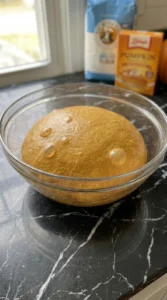
- Mist your work surface lightly with water and turn the fermented dough out onto it. Press and slide your hands underneath, lifting from the center to stretch it out into a large thin rectangle about 12 by 18 inches. Scatter the dark brown sugar and extra ground cinnamon evenly across the entire surface, leaving a clean 1-inch border along the edges. The orange dough will look translucent and thin enough to see through in some spots, creating a stark contrast against the dark brown cinnamon sugar layer. You’ll smell the sharp sweet spice instantly as the sugar hits the wet dough surface. (I tried using granulated sugar once but it liquefied too fast and leaked through the seams, stick to brown sugar.) Roll the sheet up tightly into a log then shape it into a smooth round boule, this layering method locks the cinnamon inside so it creates distinct swirls without weakening the bread structure.
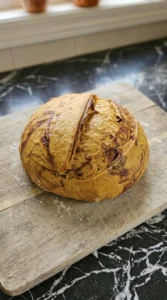
- Preheat your heavy cast iron Dutch oven at 450°F for an hour, then score the top of your chilled loaf with a sharp blade. Drop the loaf into the hot pot, slide the heavy lid on, and bake for exactly 20 minutes before removing the cover to finish. Drop the oven heat to 400°F and bake uncovered for another 20 to 25 minutes until the exterior darkens. You will see the scored cut burst wide open, revealing a orange interior contrasting against the rapidly browning outer skin. The kitchen will fill with a deep caramelized pumpkin aroma mixed with toasted cinnamon. Miss the window to remove the lid and the crust stays soft and pale instead of crisp. Bake with the lid tightly sealed first, the trapped steam keeps the outer skin soft so the loaf achieves maximum oven spring before setting.
Notes
Nutrition
Common Questions
Yes, you can easily control the timeline using your refrigerator. After shaping the loaf into a round boule, pop it into a proofing basket, cover it with plastic, and leave it in the fridge for up to 36 hours. The cold temperature slows fermentation to a crawl while developing a richer sour profile, allowing you to bake fresh whenever you are ready.
Large hollow pockets happen when you sprinkle too much loose flour on the dough during lamination or roll the log too loosely. The sugar melts during baking and creates steam, which expands into an empty cave if the dough layers aren’t pressed firmly together. Roll the stretched sheet tightly like a sleeping bag to keep the layers unified.
Keep the sliced loaf cut-side down on a heavy wooden cutting board for the first two days at room temperature. Avoid plastic bags because they trap moisture and turn the crisp artisan crust leathery within hours. If you need to keep it longer, wrap individual thick slices in foil and freeze them inside a zip-top freezer bag.
A flat loaf usually points to an underactive starter or over-proofing during the warm bulk ferment phase. If your starter doesn’t double in size within four hours of feeding, it won’t have the strength to lift the heavy pumpkin puree. Watch the dough volume rather than the clock, ensuring it expands by roughly 50 percent before shaping.
Avoid using canned pumpkin pie mix because it contains added liquids, sugars, and preservatives that alter the dough hydration and interfere with the fermentation chemistry. Stick to 100 percent pure pumpkin puree, then add your own measured spices and molasses so the dough balance remains completely under your control.
In Conclusion
This pumpkin spice sourdough bread is easily one of my favorite go-to recipes for cozy autumn mornings. It pairs a slow wild ferment with warm holiday spices. Honestly, it makes your whole kitchen smell incredible.
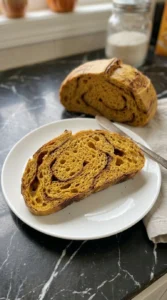
You’ll need some patience during the long bulk ferment, but don’t worry. That blistered crust and gooey cinnamon ribbon are worth every single minute. Give it a shot this weekend!
Share a photo with your baking friends, and tag us so we can see that beautiful open crumb. Readers also use it for: Fall Sourdough Bread Recipes.
That bright orange color in your crumb comes from beta-carotene. It’s a powerful antioxidant in pumpkins. When it heats up, it actually strengthens your gluten network a little bit.