Fluffy Pancakes Recipe
I used to think pancakes were simple. Stir, pour, flip, done. But getting that real height and softness took more tweaking than I expected. Too thin and they spread flat.
Too thick and they turned heavy. I kept chasing that balance until the batter finally behaved the way I wanted. Now it’s the same kind of comfort I look for in something like Healthy Avocado Toast (https://leagueofcooking. com/healthy-avocado-toast/).
Once you see how the batter should look and how the heat feels under the pan, it all clicks. And suddenly, you’re making pancakes that actually feel fluffy, not just called that.
Why This Recipe Works
The batter rests just long enough for the baking powder to activate before hitting a medium heat pan around 350°F, which traps air early. Gentle mixing keeps gluten low so the structure stays soft instead of chewy. That timing between rest and cooking is what gives you height without density.
What You Will Need
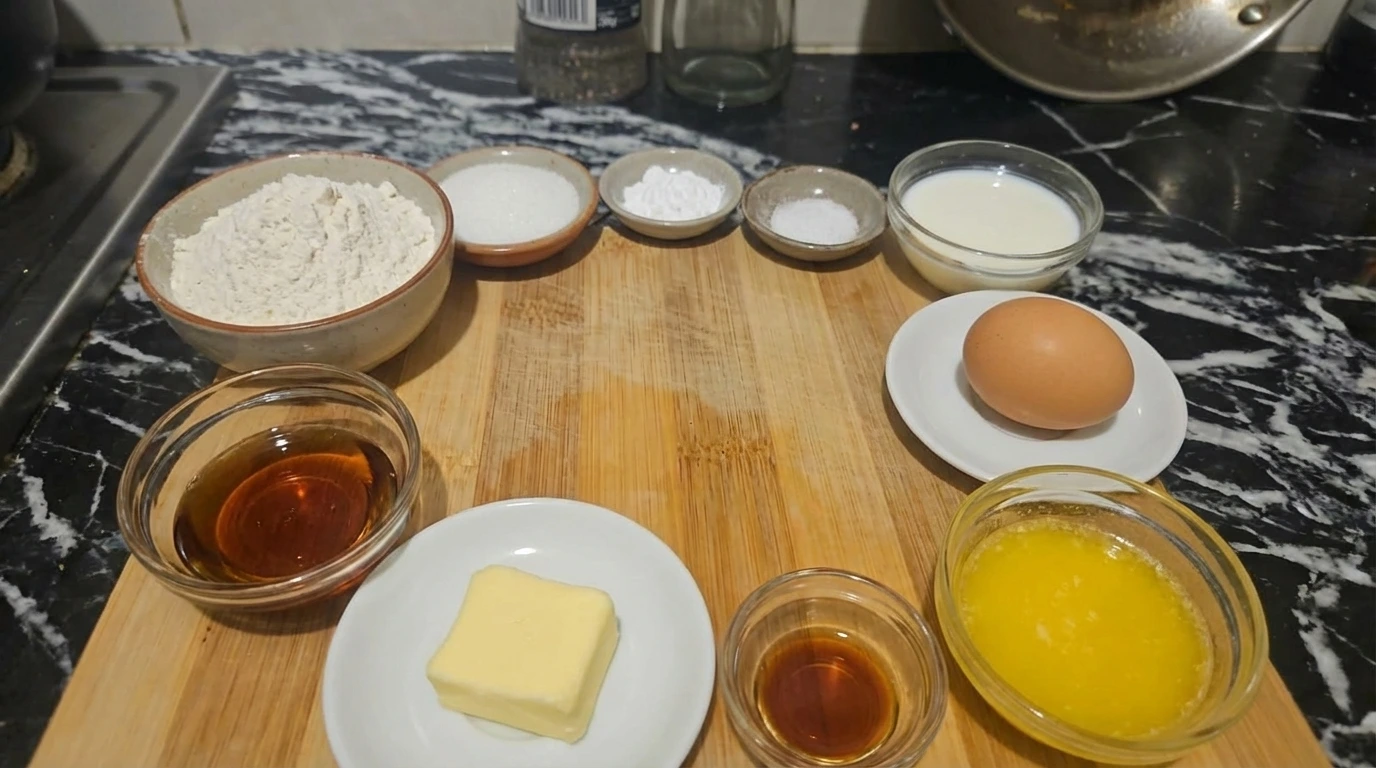
- all purpose flour: Provides structure while staying tender when you stop mixing early.
- granulated sugar: Adds light sweetness and helps the surface brown evenly.
- baking powder: The main lift that creates those tall, airy centers.
- fine salt: Sharpens the flavor and balances the sweetness.
- whole milk: Adds moisture and loosens the batter to the right thickness.
- large egg: Helps bind everything and supports a soft crumb.
- unsalted butter melted: Brings richness and keeps the pancakes soft after cooking.
- vanilla extract: Adds a warm background sweetness.
- butter for serving: Melts into the warm stack for extra richness.
- maple syrup for serving: Adds sweetness and soaks into the layers.
Kitchen Equipment
Method
Step 1: Mix the batter until it is mostly smooth
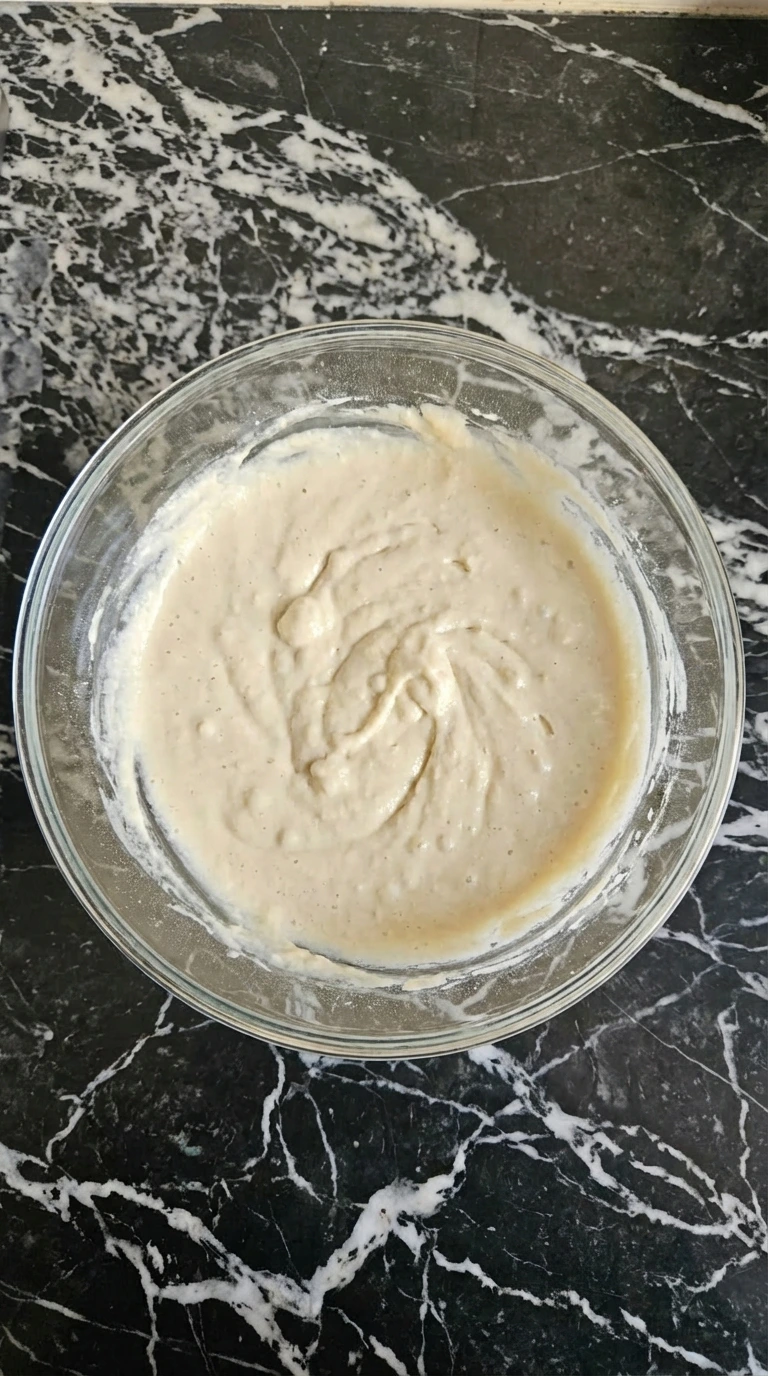
In a bowl, combine everything and stir on a steady rhythm for about 45 to 60 seconds using a gentle folding motion. Keep your speed moderate, around a 4 out of 10, and scrape the sides once halfway through. The batter should turn pale and creamy but still show a few small lumps. You’ll notice the surface looks slightly uneven and thick but pourable. That’s right where you want it. Overmix past this point and the batter tightens, which leads to dense pancakes instead of soft ones.
Tip: Use a wide spoon or spatula instead of a whisk to avoid overworking the batter.
Step 2: Let the batter rest until bubbles appear
Let the batter sit at room temperature around 70°F for 5 to 8 minutes without stirring. During this time, the baking powder activates and the mixture thickens slightly. Don’t rush this part. You’ll see tiny bubbles forming across the surface and a slight puffing. That’s your signal. Miss this window and cook too soon, and the pancakes won’t rise as tall once they hit the pan.
Tip: Keep the bowl uncovered so you can clearly see the bubbles forming.
Step 3: Cook the first side until the rounds puff and set
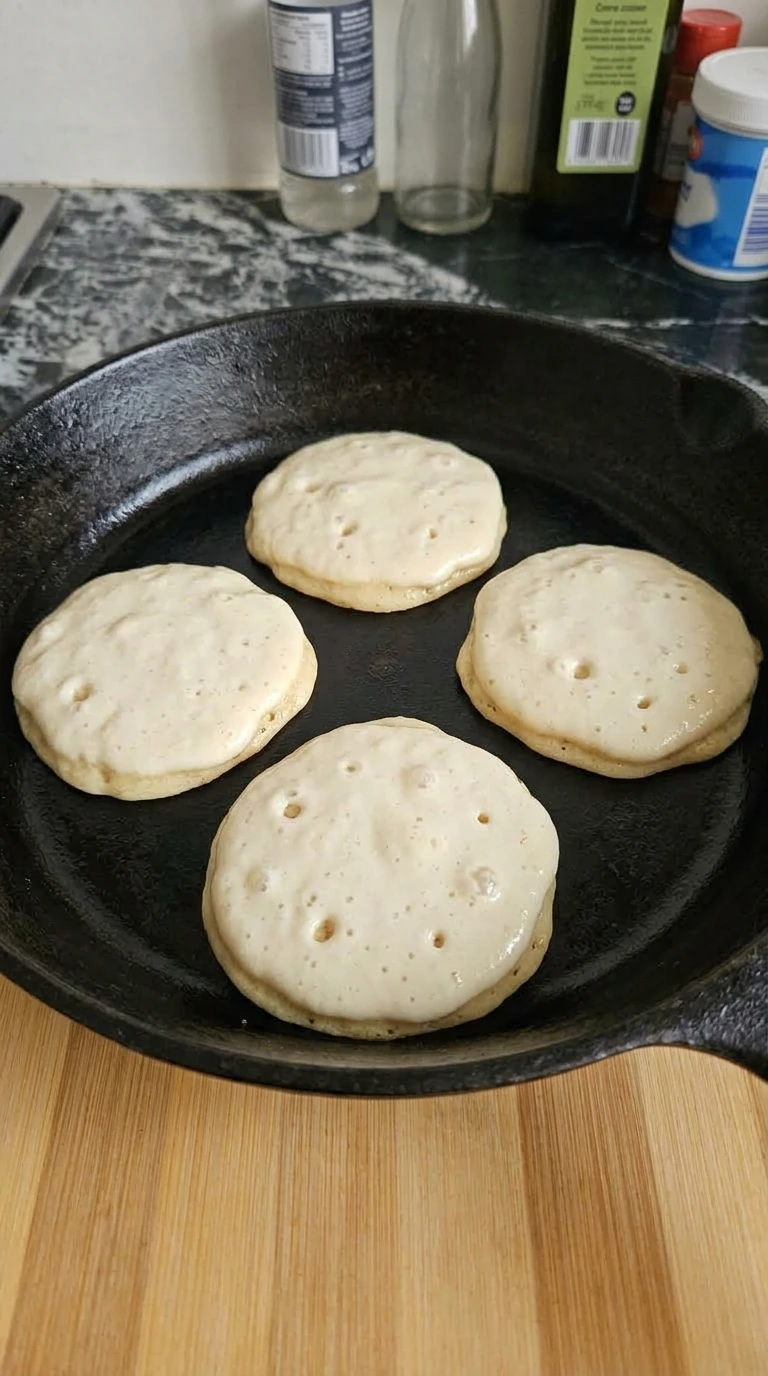
Heat a pan over medium heat, about 350°F, and pour the batter into rounds. Let them cook undisturbed for 2 to 3 minutes. Don’t spread them out, just let gravity shape them. Watch for bubbles that rise and stay open and edges that look set and slightly dry. You’ll hear a gentle sizzle and smell a light buttery aroma. Flip too early and the centers collapse, leaving flat pancakes. (I used to flip at the first bubble, and they always fell flat.)
Tip: Lightly grease the pan but wipe away excess so the pancakes cook evenly.
Step 4: Flip the pancakes and finish until golden
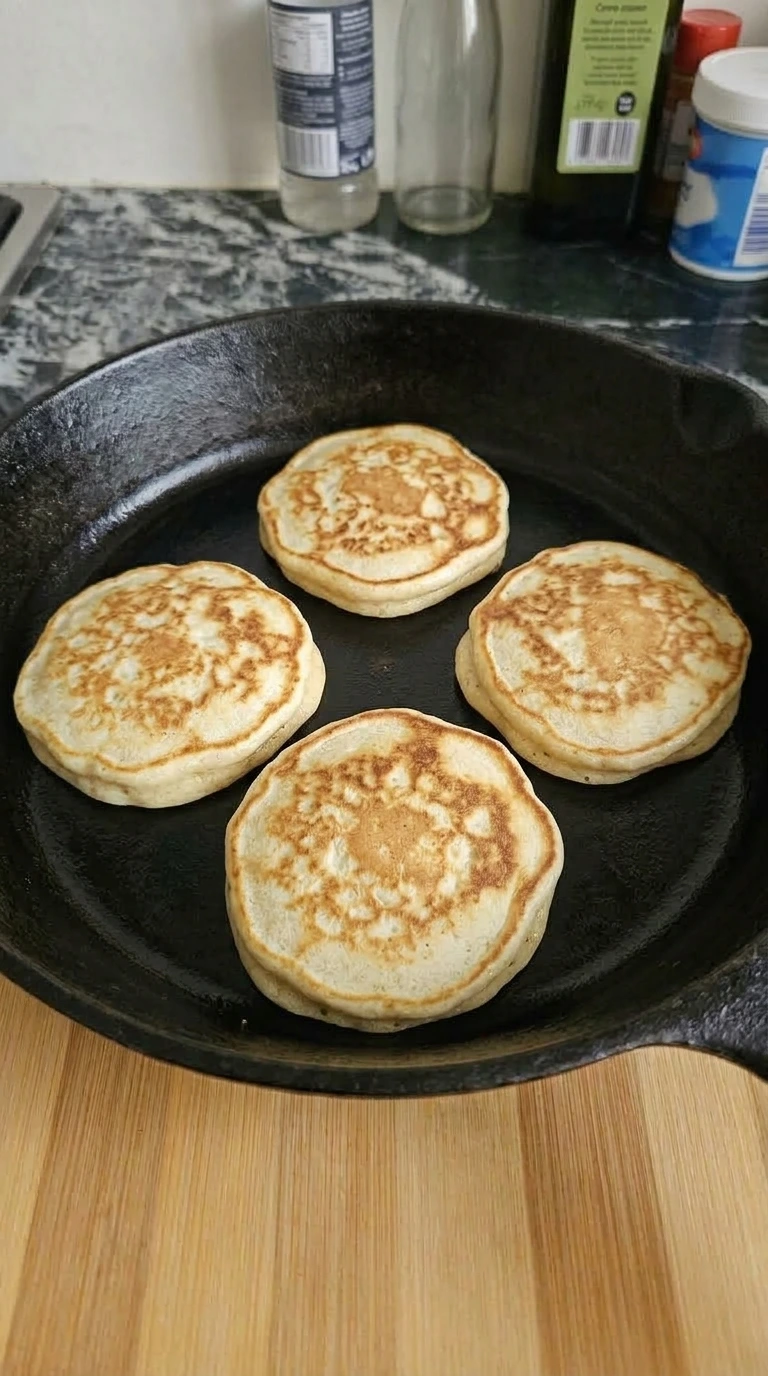
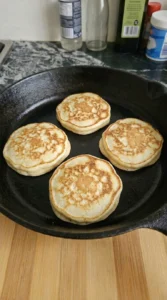
Flip each pancake in one smooth motion and cook the second side for 1 to 2 minutes on the same medium heat. Keep the heat steady and don’t press them down. The bottoms should develop golden patches while the centers rise a little more. You’ll feel a slight spring when you tap the top. Leave them too long and the inside dries out before the outside deepens in color.
Tip: Adjust heat slightly lower if the bottoms brown too fast before the centers cook through.
Step 5: Stack and finish with butter and syrup
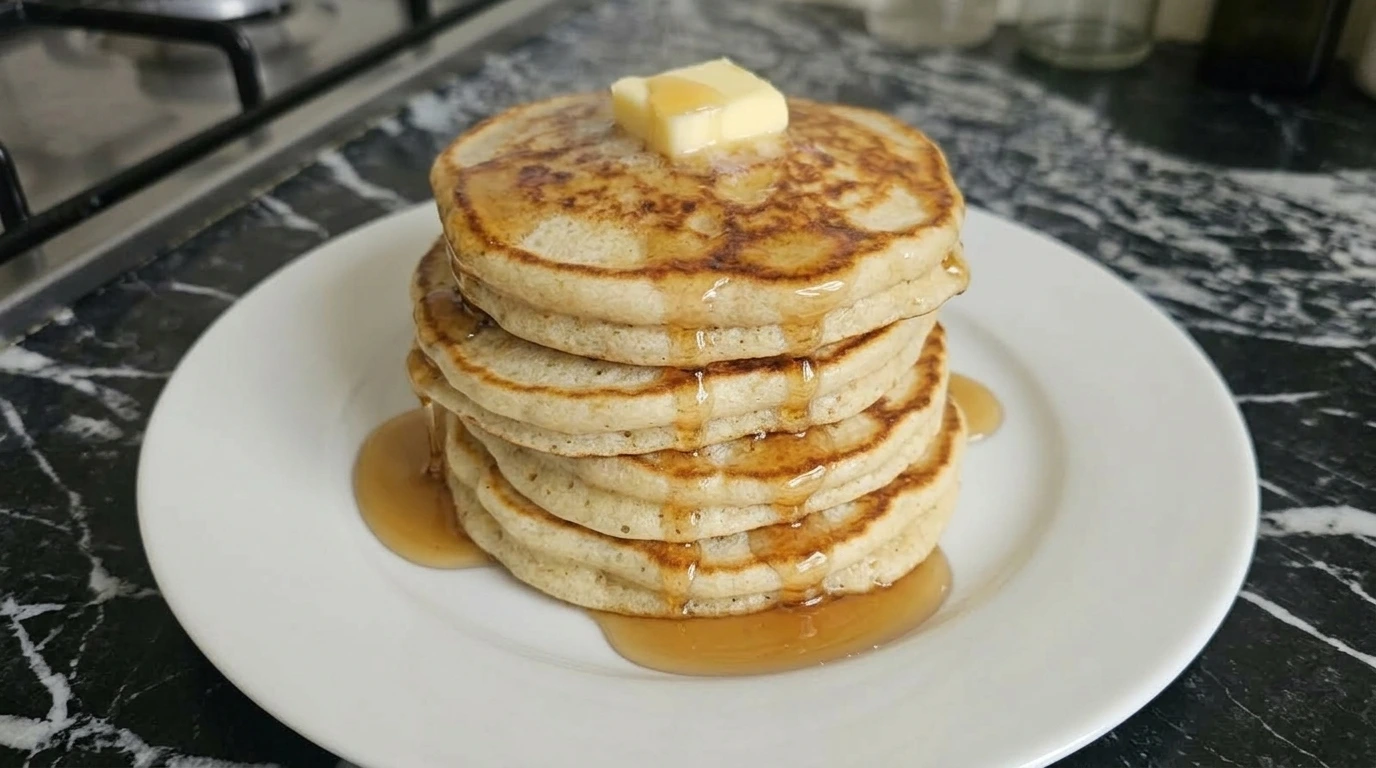
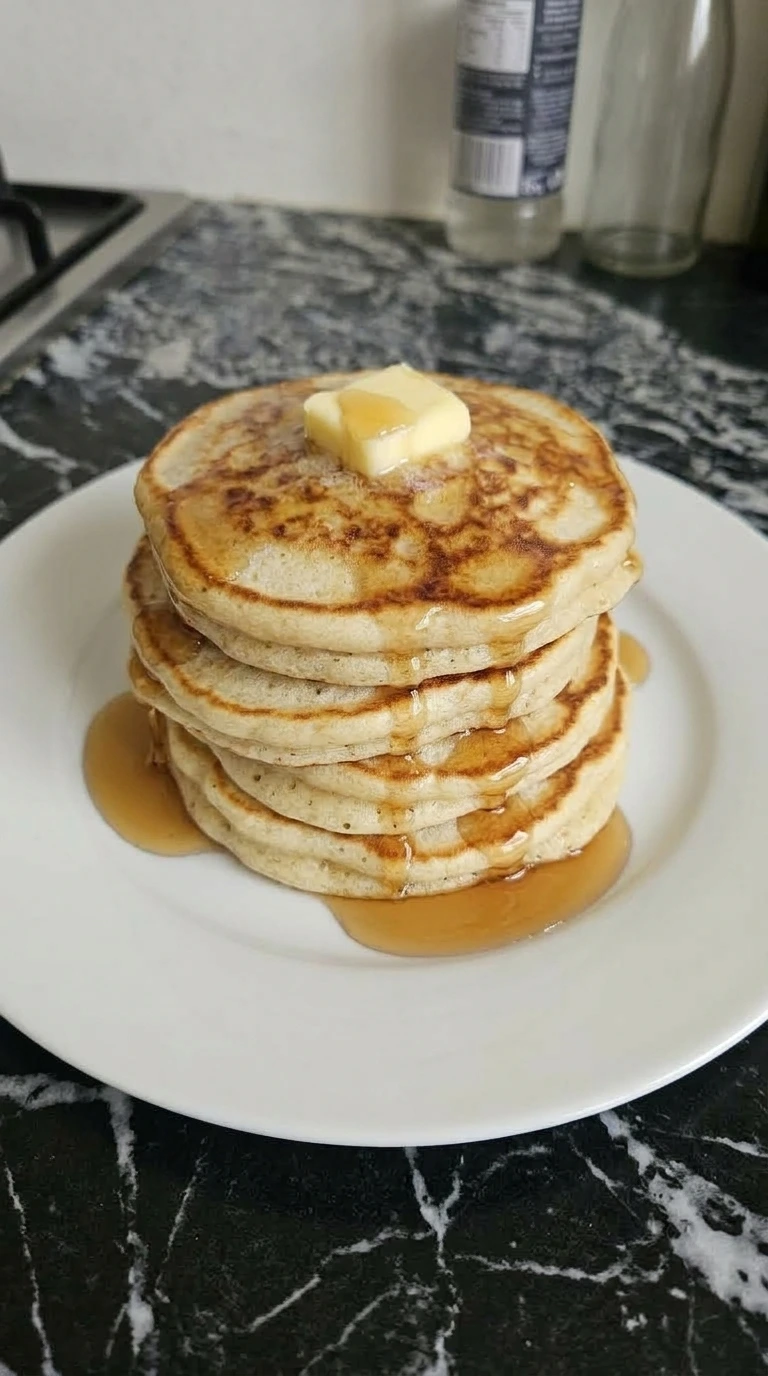
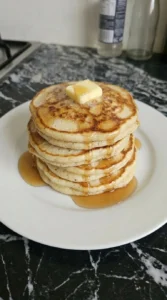
Stack the pancakes right after cooking while they’re still hot, ideally within 30 seconds of coming off the pan. Add butter immediately so it melts from the heat of the stack. Pour warm syrup over the top and let it run down the sides. You’ll see it soak into the layers and glisten. Wait too long and the butter won’t melt properly, leaving the pancakes feeling dry instead of soft.
Tip: Warm the syrup slightly before pouring so it flows easily into the stack.
Helpful Tips
- Stop mixing while a few lumps remain for softer pancakes.
- Give the batter a short rest so it thickens and traps air.
- Flip only when bubbles stay open and edges look set.
- Serve warm so the butter melts into every layer.
Make It Your Own
- whole milk: almond milk — works fine but the pancakes will be slightly less rich
- all purpose flour: gluten-free flour blend — texture is a bit softer and can crumble if overcooked
- unsalted butter: coconut oil — adds a mild coconut flavor that changes the taste slightly
- large egg: flax egg — holds together but won’t rise quite as tall
- granulated sugar: honey — adds moisture so reduce milk slightly or batter gets too thin
- whole milk: buttermilk — gives a tangier flavor and softer crumb, similar to recipes like Detox Green Smoothie (https://leagueofcooking.com/?p=3204) in balance
Storing Leftovers
Let the pancakes cool completely before storing so they don’t trap steam. Store in a covered container in the fridge for up to 3 days. For longer storage, freeze in a single layer first, then stack with paper between each. Reheat gently until warm and soft again.
Fluffy Pancakes Recipe
Ingredients
- 1 cup all purpose flour
- 2 tablespoons granulated sugar
- 2 teaspoons baking powder
- 1/4 teaspoon fine salt
- 3/4 cup whole milk
- 1 large egg
- 2 tablespoons unsalted butter melted
- 1 teaspoon vanilla extract
- 1 tablespoon butter for serving
- 1/4 cup maple syrup for serving
Instructions
-
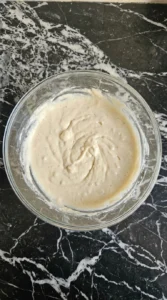
The flour sugar baking powder and salt are covered with the milk egg melted butter and vanilla and the mixture changes from dry patches into a pale creamy batter. A few small lumps stay behind and the surface looks slightly uneven which is exactly what keeps the pancakes soft.
-
As the batter sits it thickens slightly and tiny bubbles rise across the top. The surface changes from glossy and freshly stirred to softly puffed and a little airy which helps the pancakes rise once they hit the heat.
-
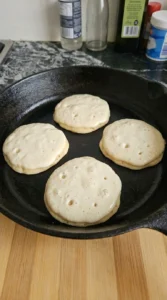
Four portions of batter spread into thick uneven circles and begin to rise as they cook. The tops shift from wet shine to a matte surface with bubbles while the edges set and turn a little deeper in color than the centers.
-
Once turned the pancakes show patchy golden brown spots and thicker risen centers. The second side cooks through and the rounds look fuller and softer with irregular color and a lightly browned finish that feels homemade rather than perfect.
-
The cooked pancakes are layered on a plate with slight overlap and casual height rather than a perfect tower. Butter softens over the warm top pancake and syrup runs down the sides in uneven lines while the browned spots and fluffy layers stay visible.
Notes
Questions I Get Asked
It usually comes down to overmixing or skipping the rest time. If the batter is too smooth or rushed into the pan, it won’t trap enough air. Keep a few lumps and let it sit for a few minutes.
Medium heat around 350°F works best. Too hot and the outside browns before the inside cooks. Too low and they won’t rise properly.
It’s best used fresh after resting. If it sits too long, the baking powder loses strength and the pancakes won’t rise as well.
Wrap Up
Once you get the feel for the batter and heat, these pancakes become second nature. Soft, tall, and worth the little details.
If you want another easy breakfast idea, try the Cottage Cheese Protein Bowl (https://leagueofcooking. com/cottage-cheese-protein-bowl/).
The height of pancakes depends more on trapped air and timing than on adding extra flour.