
Ingredients
Method
- Keep the filtered water and pumpkin puree near 78°F. Stir the active starter into the water and honey for 30 seconds. Add the pumpkin puree and both flours with cinnamon and nutmeg. Fold with a rubber spatula in a J-shaped motion for 2 minutes. Cover and rest for 30 minutes. Then pinch in the fine sea salt for 90 seconds until no dry streaks remain. The dough should look rough but cohesive and feel tacky rather than soupy. You'll smell warm cinnamon while the orange color becomes even. Scrape the bowl once after 15 minutes so every edge hydrates. Miss the 30-minute rest and the dough tears during folding. Resting hydrates the flour so gluten forms without aggressive kneading.

- Hold the dough at 76 to 78°F for 3 1/2 to 4 1/2 hours. Perform four coil folds at 30-minute intervals. Lift the center with damp hands and let both ends tuck under themselves. Scatter 15 grams of raw pepitas after the first fold and trap them inside. Rotate the bowl one quarter-turn before each lift. Then leave it untouched until the dough rises 50 to 60 percent. The surface turns smoother after each fold and small bubbles appear along the glass. By the final hour the dough should wobble when the bowl moves and smell fruity, not sharply sour. (I once waited for doubling, the loaf spread flat in the oven. A 50 to 60 percent rise works better.) Go past 5 hours at 78°F and the gluten weakens. Controlled bulk fermentation builds gas while preserving dough strength.

- Turn the dough onto a lightly damp work area at 72°F and pre-shape it into a loose round. Pull the edges toward the center and flip it seam-down. Drag the dough toward you in short strokes for 45 seconds. Rest it uncovered for 20 minutes. Tighten it again with six gentle pulls. Place 15 grams of raw pepitas in a rice-floured 8-inch basket, then set the boule smooth-side down. The boule should hold a domed shape with faint tension lines across the surface. After 8 to 12 hours at 38 to 40°F, it should feel firm and show a slow spring when pressed. If it spreads during the 20-minute bench rest, shape it once more before chilling. Skip surface tension and the loaf widens instead of rising. Cold proofing slows yeast and lets acids deepen flavor.
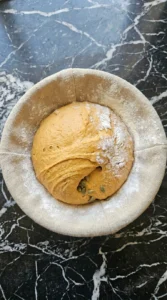
- Heat a 5-quart Dutch oven at 475°F for 45 minutes. Invert the cold dough onto parchment and score one 1/2-inch deep slash at a 30-degree angle. Lower it into the pot and cover. Bake at 450°F for 20 minutes. Remove the lid and continue at 425°F for 22 to 25 minutes until the center reaches 208 to 210°F. The loaf should spring open along the score and the pepitas should toast dark green with amber edges. Listen for dry crackling as the crust firms. The surface should turn deep chestnut with irregular orange-gold patches. Pale sides need 5 more minutes uncovered. Pull it below 205°F and the crumb can stay gummy. Steam delays crust setting so the loaf expands before browning.
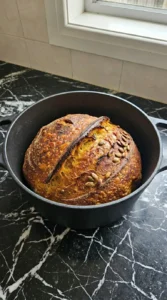
- Move the loaf to a rack and cool it at 68 to 72°F for 2 full hours. Don't cover it. Then cut one 1-inch slice with steady sawing strokes and place it on a small white plate. Keep the remaining loaf intact until needed because extra cuts release moisture. For toast, warm the slice at 350°F for 6 to 8 minutes. The crust should sound crisp under the knife and the crumb should show irregular small-to-medium holes. Pumpkin gives a moist orange interior but it shouldn't smear across the blade. Slice before 90 minutes and trapped steam compresses the crumb into a gummy line. A fully cooled loaf smells honeyed and nutty rather than yeasty. Cooling lets starches set so each slice keeps its structure.

Notes
For refrigerator storage, wrap the cooled loaf tightly and keep it up to 5 days. The crumb firms faster there than at room temperature. Freeze better-quality slices in an airtight bag for up to 2 months. Place parchment between 1-inch slices so they separate cleanly. You can also freeze half a loaf double-wrapped in plastic and foil for clean thawing later. Reheat refrigerated slices at 350°F for 6 to 8 minutes. Or toast them for 2 to 3 minutes on a medium setting. Mist each slice with about 1 teaspoon of water before oven reheating if the crust feels dry. Discard bread that shows green, blue or black spots. A fermented smell is normal, but a musty odor or sticky surface signals spoilage.