Ingredients
Method
- Warm the filtered water to 100°F to 105°F. Whisk in the sourdough discard, honey and instant yeast for 60 seconds. Add the bread flour and fine sea salt. Then stir with a rubber spatula for 2 minutes using firm circular strokes. Scrape the bowl halfway through. Cover the shaggy dough and rest it at 75°F for 20 minutes. The dough should look wet and rough with no dry flour pockets. Small bubbles may appear near the bowl wall, and the mixture should smell lightly yeasty. Stop mixing once every streak disappears because extra stirring can tighten the dough. Resting hydrates the flour so gluten starts forming without heavy kneading.

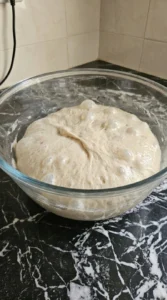
- Keep the bowl at 75°F to 78°F. With a damp hand, lift one dough edge and fold it into the center. Rotate the bowl 90 degrees and repeat four times. Complete 3 fold sets at 15-minute intervals. Then cover the bowl and let the dough rise for 60 to 90 minutes until it grows by about 75 percent. The surface should turn smoother and wobble when the bowl moves. Look for large bubbles under the skin and a mild fermented smell. If you stop before the dough expands, the crumb stays tight. If it doubles far beyond the rim, the gluten can weaken. This controlled rise gives Sourdough Discard Focaccia (Easy No-Waste Recipe) its open crumb. Preheat the oven to 425°F now so it's fully hot by the time the pan goes in.
- Coat a 9×13-inch dark metal pan with 2 tablespoons of extra virgin olive oil. Tip in the risen dough at 75°F and turn it once so both sides glisten. Rest it for 15 minutes. Then press outward with oiled fingertips until the dough reaches most corners. Cover and proof for 45 to 60 minutes at 75°F to 78°F. The dough should relax into a puffy rectangle with bubbles near the edges. It will resist at first and then spread without tearing. Don't force cold dough because it snaps back and loses trapped gas. Stop when the surface sits about 1 inch high. The second rise rebuilds bubbles after the transfer and creates a lighter center.
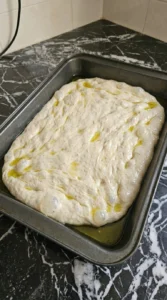
- Keep the proofed dough near 75°F. Reserve 1 teaspoon from the remaining 2 tablespoons of extra virgin olive oil for the rosemary. Pour the rest across the surface. Press straight down with spread fingertips until they nearly touch the pan bottom. Work for about 2 minutes and leave irregular spacing. Then scatter the oiled rosemary, Parmigiano Reggiano and 1¼ teaspoons of flaky sea salt. Rest the topped dough for 5 minutes. Deep pockets should hold small pools of oil while bubbles remain between them. The rosemary should sit unevenly and the cheese should leave fine pale speckles. (I pressed too aggressively once, the center tore and baked flat. Gentle fingertips fixed it.) Shallow dimples vanish during baking, but torn dough loses lift. Deep gentle dimples anchor the toppings and help the surface fry.

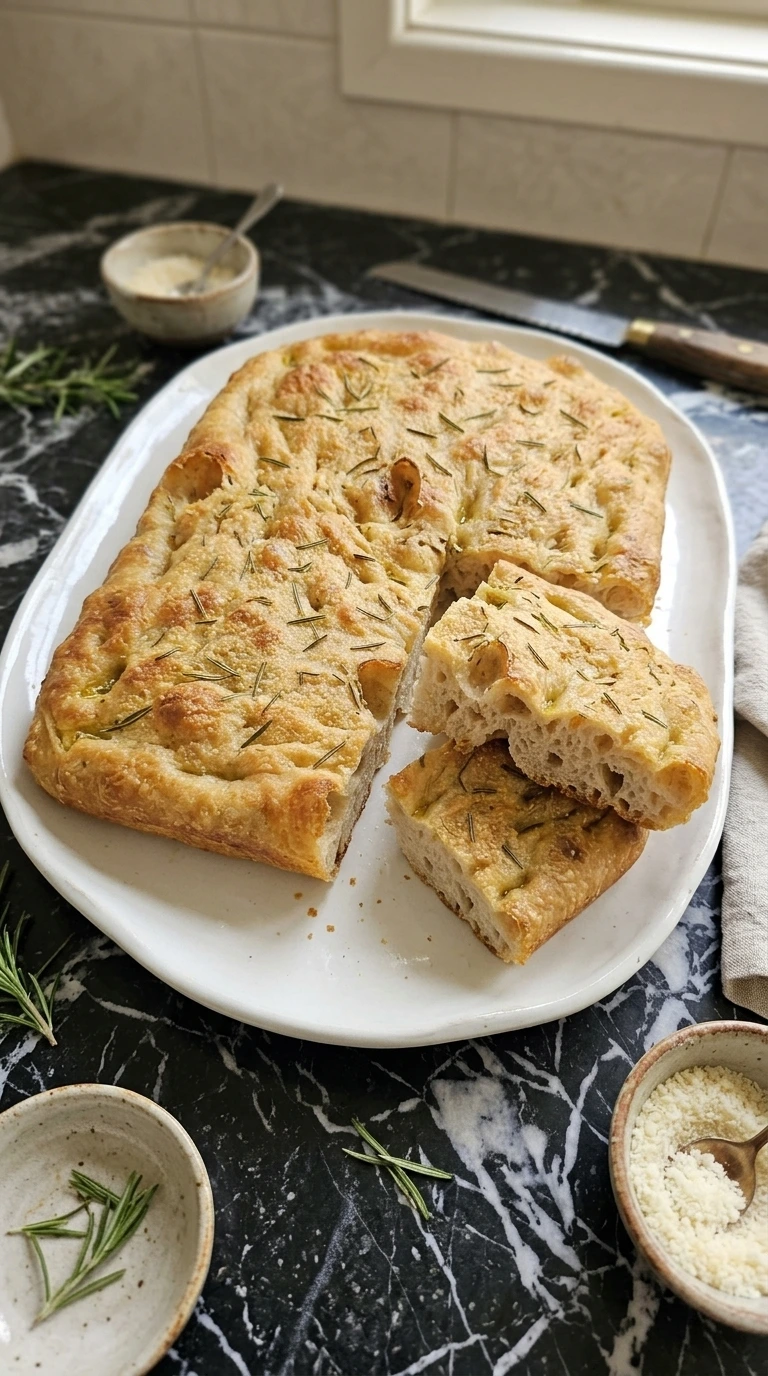
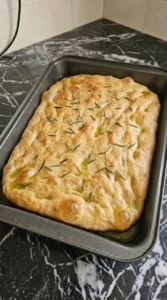
- Bake Sourdough Discard Focaccia (Easy No-Waste Recipe) at 425°F for 24 to 28 minutes. Rotate the pan 180 degrees at minute 15. Pull it when the center reaches 200°F to 205°F. Release the edges after 5 minutes and cool the loaf for 20 minutes. Then cut 8 uneven rectangles and finish them with the remaining ¼ teaspoon flaky sea salt. The top should show deep golden patches and darker amber bubbles. The edges feel crisp and the Parmesan smells toasted. A hollow tap beneath the center confirms the crumb has set. Remove it too early and the middle can stay gummy. Cool before slicing because escaping steam finishes the crumb structure.
- A rustic 9×13-inch rectangular focaccia slab with softly rounded corners and an uneven 1 1/2-inch height. The full slab measures about 9×13 inches and fills 92% of a 9×13-inch dark metal baking pan. deep fingertip dimples across the top, irregular air bubbles and slightly uneven edges, scattered rosemary needles and fine Parmigiano Reggiano speckles, non-uniform color with darker patches after baking. Only one irregular 4×3-inch portion is shown after cutting, with a deep golden dimpled top, crisp amber edges and a torn-open cream crumb. Matches step 5 except the full slab has been sliced and one piece now exposes its interior.

Notes
Store Sourdough Discard Focaccia (Easy No-Waste Recipe) at room temperature for 2 days or refrigerate it for up to 4 days. Use an airtight container lined with a dry paper towel so surface moisture doesn't soften the crust. For freezing, wrap cooled individual pieces in foil and place them inside a freezer bag. Freeze for up to 2 months and press out excess air before sealing. Reheat room-temperature pieces at 375°F for 5 to 7 minutes. Frozen pieces need 10 to 12 minutes at the same temperature. Add a light ½ teaspoon olive oil drizzle after reheating if the surface looks dry. Discard any piece with visible mold, a sour smell beyond normal fermentation or a damp sticky surface. Don't taste bread that shows spoilage.