Cold Noodle Salad
When you’re greedy like me and want proper peanut flavour in every bite, not just a faint whiff of “vaguely tastes like sesame …. maybe? ”, making a Cold Noodle Salad suddenly becomes harder than it sounds. I really thought it would be simple: swirl peanut butter through my favourite cooked noodles, layer it, or pour it on top. But every option had problems.
Swirls mostly clumped together while mixing or got chalky if I used more peanut butter. In cold versions, the sauce and noodles slid apart, and mixing dressing through often stopped the ingredients staying crisp. Pouring it on top just sat there unless it was thin enough to pool at the bottom. So I spent weeks testing different ratios in my kitchen. The breakthrough came when I balanced creamy peanut butter with rice vinegar and hot pasta water.

That specific interaction creates an emulsified sauce that actually clings to the noodles. For lunch, dinner, or snacks, this dish delivers massive flavor without feeling heavy. If you want a different classic side, check out my Coleslaw which also brings that necessary crunch.
What Makes It Work
Mixing hot pasta water directly into the peanut butter creates a stable emulsion because the starches act as a natural binding agent. This prevents the oil from separating when chilled.
Whisking rice vinegar into the rich fats breaks up the heavy density of the peanut butter, which keeps the coating light and refreshing. The acidity cuts through the protein paste so every flavor registers clearly on your tongue.
If you love refreshing summer salads, you should also try making our Chicken Caesar Salad for another incredible lunch option.
Ingredient List
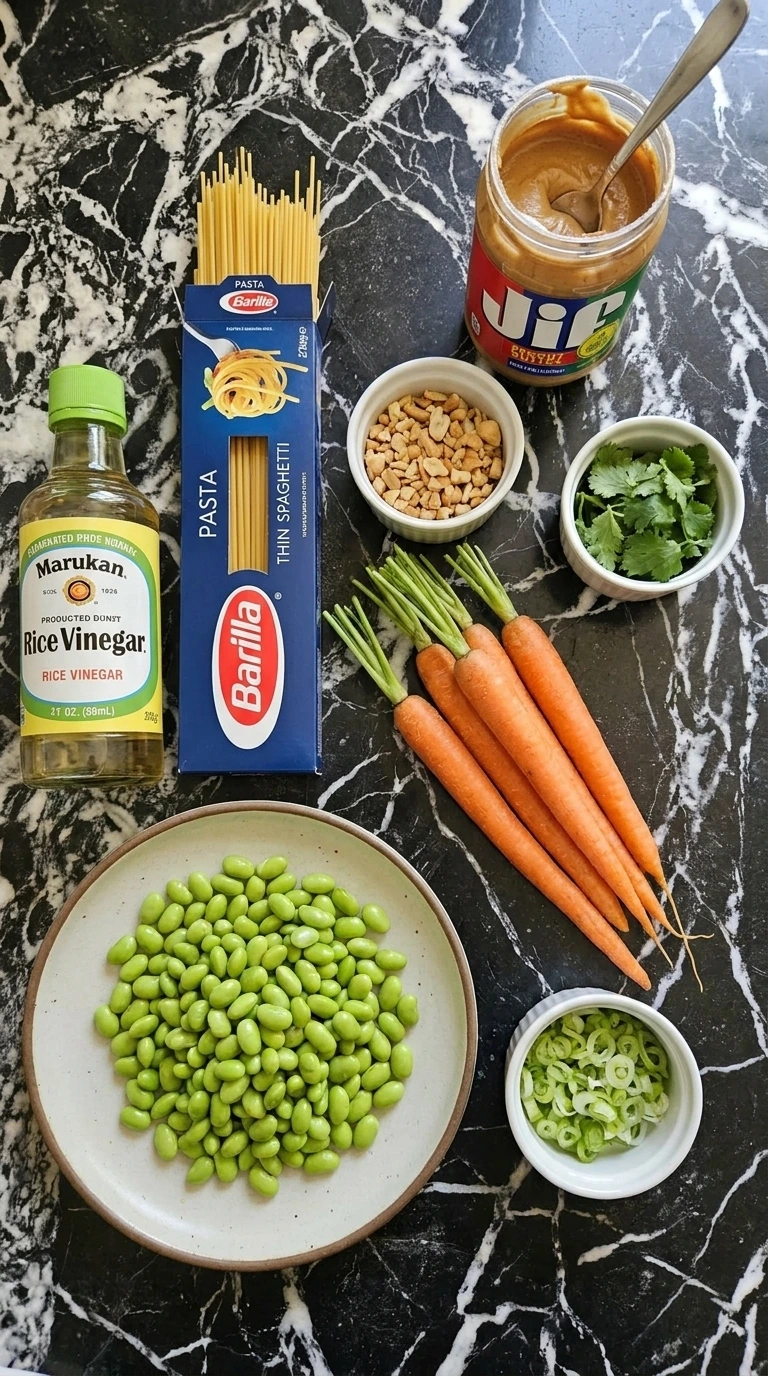
- thin spaghetti: Dry pasta strands boiled until perfectly tender to hold the heavy sauce.
- creamy peanut butter: Smooth conventional style used to build the rich velvety base of the dressing.
- rice vinegar: Brings a mild necessary acidity to balance the fat from the nut butter.
- tamari soy sauce: Provides a deep savory salinity and umami depth to the sauce.
- orange carrot: Peeled and cut into thin matchsticks for a sweet crunch.
- edamame bean: Shelled and completely thawed to add color and plant-based protein.
- scallion: Finely sliced green and white parts for a sharp aromatic bite.
- roasted peanut: Roughly chopped to garnish the top with essential texture.
- fresh cilantro leaf: Coarsely torn for a bright herbaceous finishing note.
- salt: Used exclusively in the boiling water to season the inside of the spaghetti.
What You’ll Use
- Large pot: A heavy-bottomed 6-quart stainless steel pot distributes heat evenly so the water returns to a boil quickly — a thin-walled pot will cause temperature drops and leave the noodles pasty.
- Large clear glass mixing bowl: A wide 4-quart glass mixing bowl provides ample room for tossing the long noodles without spilling — plastic bowls can absorb strong peanut oils and retain residual aromas.
- Wire whisk: A sturdy stainless steel balloon whisk effectively breaks down thick nut butters into stable emulsions — using a standard fork will fail to incorporate the fats smoothly.
- Silicone tongs: Tongs with silicone tips grip slippery spaghetti strands firmly without tearing them apart — metal tongs can slice through delicate cooked pasta shapes.
Directions
Step 1: Boil the spaghetti noodles
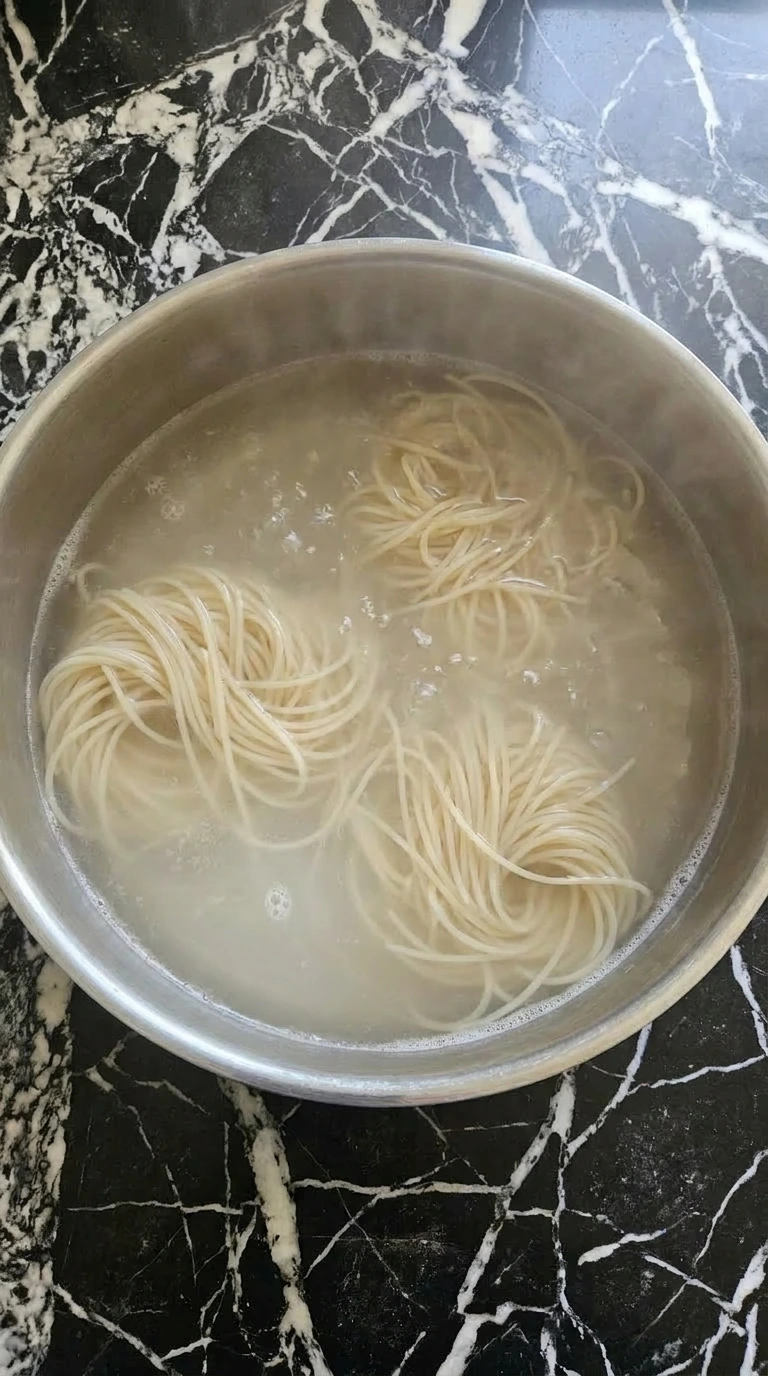
Bring a large pot of heavily salted water to a rolling boil over high heat (about 9 on a 10-dial). Drop exactly 8 ounces of dry thin spaghetti into the bubbling water. Cook the noodles uncovered for exactly 9 minutes, stirring once at minute 3 with a wooden spoon to prevent sticking.
You will see the noodles soften and transform from stiff brittle sticks into flexible opaque strands. The water will turn cloudy from the released starches. Dip a glass measuring cup into the pot at minute 8 to scoop out exactly 1/2 cup of the starchy cooking water before draining.
Miss this window and overcooked pasta becomes mushy when chilled. Boil hard at full heat, the convection finishes the gluten in 9 min, low heat leaves the center pasty.
Tip: Save a bit extra pasta water in case your dressing thickens too much later during the chilling process.
Step 2: Whisk the peanut dressing

Measure 1/2 cup of creamy peanut butter, 3 tablespoons of rice vinegar, and 2 tablespoons of tamari soy sauce into a large clear glass mixing bowl. Whisk the mixture vigorously with a wire whisk using a rapid circular motion. (I tried using a fork the first time, the oil separated completely and left grainy lumps.
A balloon whisk is the fix. ) The mixture will initially look broken and curdled as the liquid meets the fat. Slowly drizzle in 1/4 cup of the warm reserved pasta water while whisking continuously.
The sauce will suddenly emulsify into a perfectly smooth glossy light-brown dressing that coats the back of a spoon. Skip the warm water and the cold ingredients will seize into a thick unmanageable paste. Whisk liquid into fat slowly, the gradual addition creates a stable emulsion that won’t separate later.
Tip: Make sure your reserved pasta water is still warm to help melt and smooth out the peanut butter smoothly.
Step 3: Toss the noodles and dressing
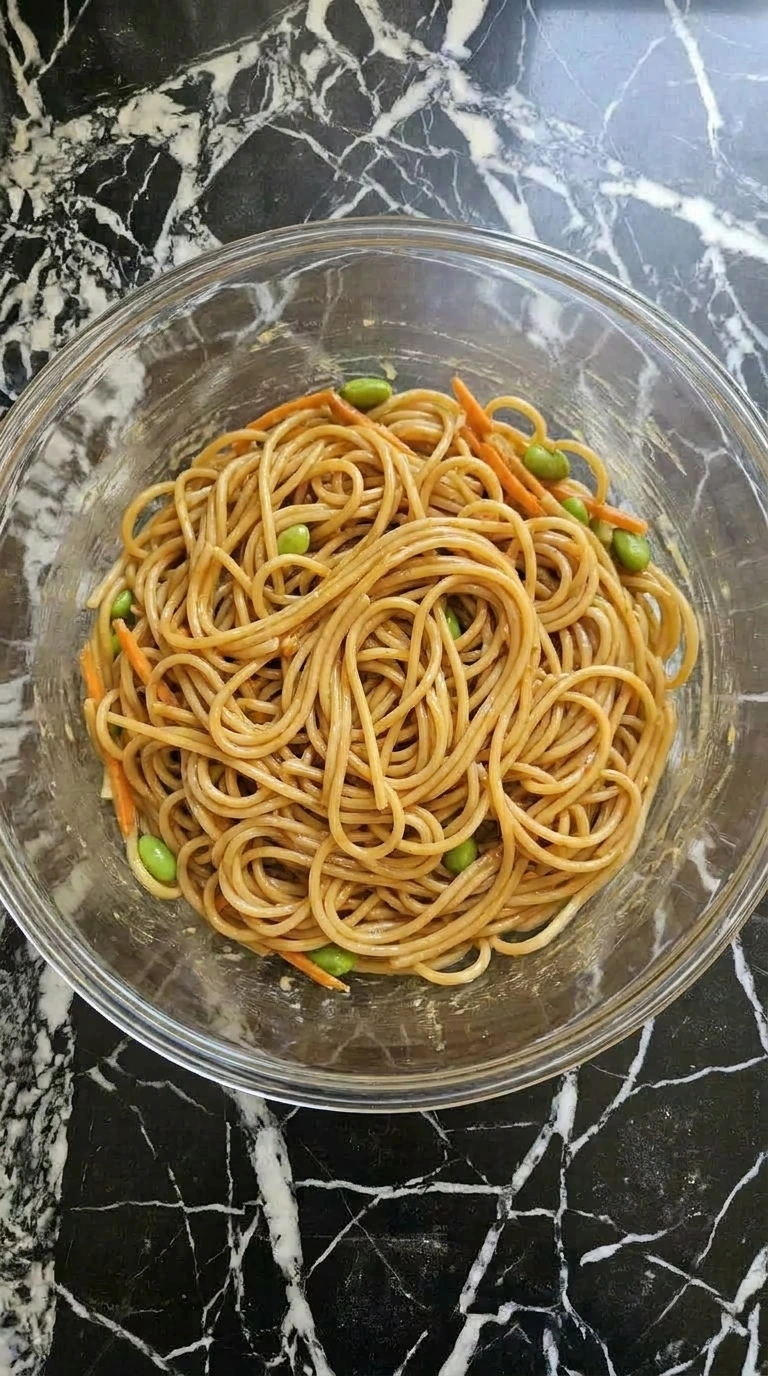
Add the drained spaghetti noodles directly into the large clear glass mixing bowl containing the peanut dressing. Use a pair of silicone tongs to lift and turn the noodles from the bottom to the top in a continuous folding motion. Ensure every strand is thoroughly coated.
You will see the pale noodles absorb the light-brown sauce and turn glossy and slippery. The dressing will pool slightly at the bottom of the bowl before being fully drawn into the pasta. The rich aroma of toasted sesame and peanuts will fill the kitchen instantly.
Toss while the noodles are still slightly warm or the starch dries out and prevents the sauce from sticking. Coat the warm pasta immediately, the heat opens the starch structure so the flavor penetrates deeply.
Tip: Tossing the noodles while they carry a hint of warmth ensures the dressing distributes evenly without clumping.
Step 4: Fold in the vegetables

Dump 1 cup of matchstick carrots, 1/2 cup of thawed edamame beans, and 1/3 cup of sliced scallions into the large clear glass mixing bowl. Fold the vegetables gently into the coated noodles using a rubber spatula in a J-shaped motion from the outer edge to the center. Bright orange strips and green rounds will scatter unevenly throughout the brown noodle mass.
The dish transitions from a plain monochromatic pasta into a highly textured colorful salad. The crisp vegetables contrast beautifully against the soft yielding strands of spaghetti. Over-mixing at this stage will bruise the delicate scallions and release unwanted moisture into the sauce.
Fold the fresh elements quickly, gentle handling preserves the crisp textures that balance the heavy creaminess.
Tip: Cut your carrots thin so they match the thickness of the spaghetti strands for a better bite.
Step 5: Plate and garnish the salad
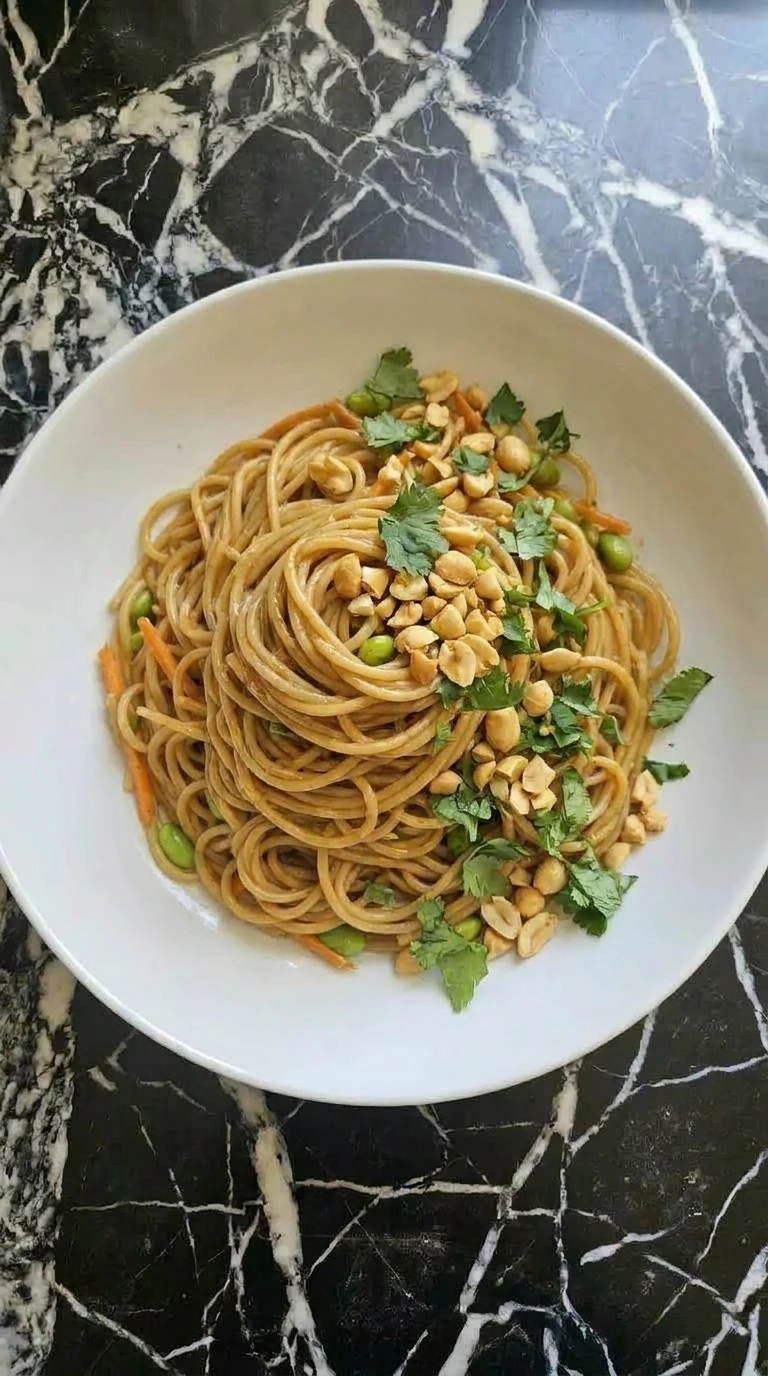
Transfer the finished salad from the mixing bowl into a wide shallow white ceramic bowl using the tongs. Use an asymmetrical piling technique to create height in the center. Scatter 1/4 cup of chopped roasted peanuts and 1/4 cup of fresh cilantro leaves unevenly over the surface.
The salad will present a beautiful homemade look with non-uniform clusters of nuts and herbs. The crushed peanuts add a deep golden color and a rustic crunch to the top. Individual edamame beans will peek out from between the intertwined noodles.
Letting the dish sit at room temperature too long will cause the fresh garnish to wilt and lose its visual punch. Serve the garnished dish fresh, cold temperatures keep the components crisp and contrast the crunchy toppings.
Tip: Add the crunchy peanut topping right before serving so they stay perfectly crisp and don’t get soggy.
Recipe Notes
- Cool the drained noodles under cold running water for 30 seconds to halt the cooking process instantly and wash away excess surface starch.
- Select a commercial creamy peanut butter like Skippy or Jif because natural oils separate too easily when chilled in a noodle salad.
- Cut the carrots into uniform 2-inch matchsticks so they thread perfectly with the spaghetti strands on your fork.
- Thaw frozen edamame completely in a bowl of warm water for 5 minutes then pat them completely dry before folding.
- Avoid dressing the noodles when they are ice cold because the cold fat will resist spreading and clump up unevenly.
- Toast the chopped peanuts in a dry skillet over medium heat for 3 minutes to unlock deep aromatic oils before garnishing.
- Add 1 tablespoon of chili crisp and a teaspoon of szechuan peppercorn oil for a spicy kick that pairs brilliantly with the cold peanut base.
- Shred 1 cup of leftover cooked chicken breast into the mix to transform this light side dish into a filling protein-packed dinner.
- Swap the carrots for thin ribbons of English cucumber and fresh mango slices to create a refreshing tropical adaptation.
Make It Your Own
- thin spaghetti: buckwheat soba noodles — Use the same weight but reduce the boiling time to 5 minutes because buckwheat cooks faster and can become gummy if overdone.
- creamy peanut butter: sunflower seed butter — Provides an excellent nut-free alternative though the final flavor will carry a slightly more earthy and roasted seed profile.
- tamari soy sauce: coconut aminos — Use 2.5 tablespoons instead because coconut aminos are naturally sweeter and less salty than traditional tamari.
- edamame bean: green peas — If you want a similar sweet vibe, look at how we utilize peas in our Easy Tuna Pasta Salad for a traditional style swap.
How to Store
Pop any leftovers into a sealed glass container and keep them in the fridge for up to 3 days. Definitely don’t freeze this salad. If you do, the fresh veggies will turn translucent and slimy when they thaw, and that gorgeous emulsified peanut dressing will completely separate into oil and water.
When you’re ready to eat, you can serve it straight from the fridge. You could also let it sit on the counter for about 10 minutes to take the chill off. If the pasta looks a bit dry because it absorbed the sauce, don’t panic.
Just stir in a teaspoon of warm water and a quick splash of rice vinegar to restore that original glossy texture. Be sure to discard the leftovers if you notice a sour odor or if the cilantro turns dark and mushy.
Cold Noodle Salad
Ingredients
- 8 ounces thin spaghetti Dry pasta strands boiled until perfectly tender to hold the heavy sauce.
- 1/2 cup creamy peanut butter Smooth conventional style used to build the rich velvety base of the dressing.
- 3 tablespoons rice vinegar Brings a mild necessary acidity to balance the fat from the nut butter.
- 2 tablespoons tamari soy sauce Provides a deep savory salinity and umami depth to the sauce.
- 1 cup orange carrot Peeled and cut into thin matchsticks for a sweet crunch.
- 1/2 cup edamame bean Shelled and completely thawed to add color and plant-based protein.
- 1/3 cup scallion Finely sliced green and white parts for a sharp aromatic bite.
- 1/4 cup roasted peanut Roughly chopped to garnish the top with essential texture.
- 1/4 cup fresh cilantro leaf Coarsely torn for a bright herbaceous finishing note.
- 1 tablespoon salt Used exclusively in the boiling water to season the inside of the spaghetti.
Instructions
- Bring a large pot of heavily salted water to a rolling boil over high heat (about 9 on a 10-dial). Drop exactly 8 ounces of dry thin spaghetti into the bubbling water. Cook the noodles uncovered for exactly 9 minutes, stirring once at minute 3 with a wooden spoon to prevent sticking. You will see the noodles soften and transform from stiff brittle sticks into flexible opaque strands. The water will turn cloudy from the released starches. Dip a glass measuring cup into the pot at minute 8 to scoop out exactly 1/2 cup of the starchy cooking water before draining. Miss this window and overcooked pasta becomes mushy when chilled. Boil hard at full heat, the convection finishes the gluten in 9 min, low heat leaves the center pasty.

- Measure 1/2 cup of creamy peanut butter, 3 tablespoons of rice vinegar, and 2 tablespoons of tamari soy sauce into a large clear glass mixing bowl. Whisk the mixture vigorously with a wire whisk using a rapid circular motion. (I tried using a fork the first time, the oil separated completely and left grainy lumps. A balloon whisk is the fix.) The mixture will initially look broken and curdled as the liquid meets the fat. Slowly drizzle in 1/4 cup of the warm reserved pasta water while whisking continuously. The sauce will suddenly emulsify into a perfectly smooth glossy light-brown dressing that coats the back of a spoon. Skip the warm water and the cold ingredients will seize into a thick unmanageable paste. Whisk liquid into fat slowly, the gradual addition creates a stable emulsion that won’t separate later.

- Add the drained spaghetti noodles directly into the large clear glass mixing bowl containing the peanut dressing. Use a pair of silicone tongs to lift and turn the noodles from the bottom to the top in a continuous folding motion. Ensure every strand is thoroughly coated. You will see the pale noodles absorb the light-brown sauce and turn glossy and slippery. The dressing will pool slightly at the bottom of the bowl before being fully drawn into the pasta. The rich aroma of toasted sesame and peanuts will fill the kitchen instantly. Toss while the noodles are still slightly warm or the starch dries out and prevents the sauce from sticking. Coat the warm pasta immediately, the heat opens the starch structure so the flavor penetrates deeply.

- Dump 1 cup of matchstick carrots, 1/2 cup of thawed edamame beans, and 1/3 cup of sliced scallions into the large clear glass mixing bowl. Fold the vegetables gently into the coated noodles using a rubber spatula in a J-shaped motion from the outer edge to the center. Bright orange strips and green rounds will scatter unevenly throughout the brown noodle mass. The dish transitions from a plain monochromatic pasta into a highly textured colorful salad. The crisp vegetables contrast beautifully against the soft yielding strands of spaghetti. Over-mixing at this stage will bruise the delicate scallions and release unwanted moisture into the sauce. Fold the fresh elements quickly, gentle handling preserves the crisp textures that balance the heavy creaminess.

- Transfer the finished salad from the mixing bowl into a wide shallow white ceramic bowl using the tongs. Use an asymmetrical piling technique to create height in the center. Scatter 1/4 cup of chopped roasted peanuts and 1/4 cup of fresh cilantro leaves unevenly over the surface. The salad will present a beautiful homemade look with non-uniform clusters of nuts and herbs. The crushed peanuts add a deep golden color and a rustic crunch to the top. Individual edamame beans will peek out from between the intertwined noodles. Letting the dish sit at room temperature too long will cause the fresh garnish to wilt and lose its visual punch. Serve the garnished dish fresh, cold temperatures keep the components crisp and contrast the crunchy toppings.

Notes
Nutrition
Frequently Asked Questions
Yes, this dish actually improves as it sits because the pasta absorbs the savory dressing. Store the dressed noodles and vegetables in an airtight container for up to 24 hours. Keep the chopped peanuts and fresh cilantro separate in small bags, then scatter them on top right before you serve the meal to preserve that essential crunch.
Peanut butter contains high amounts of protein and fat that naturally seize up when they meet cold liquids. The secret is using hot pasta water during the whisking phase to melt the fats. If it thickens up too much after sitting in the fridge, simply whisk in one extra tablespoon of warm water to loosen the texture back to a glossy cream.
Long thin shapes work best because they provide a high surface area for the sauce to cling to. Fettuccine or angel hair pasta are great alternatives from your pantry. If you prefer short shapes, use rotini pasta because the twisted crevices catch the thick peanut emulsion beautifully without letting it pool at the bottom.
It can easily be made entirely gluten-free by changing just one core ingredient. Swap the standard wheat spaghetti for traditional brown rice noodles or gluten-free spaghetti. Always double-check your soy sauce bottle to ensure it is labeled as 100% tamari, since traditional soy sauces contain brewed wheat starches that introduce gluten.
High-fat nut butters can sometimes overwhelm the palate if they lack balance. Introduce a bright splash of fresh lime juice or an extra teaspoon of rice vinegar directly into the bowl. The sharp acid cuts through the heavy oils instantly, brightening the entire and highlighting the crisp freshness of the scallions.
Before You Go
Every time I make this I think about the first time I tried it, nervous about screwing it up, convinced I’d need more experience. Turns out it’s one of those dishes that forgives you for being a beginner.
You can mess up the timing like I did those first three attempts and it still turns out good. If you try it, leave me a comment below, I read every single one.
And if you enjoyed this, check out my Creamy Tomato Pasta for another comforting pasta option.
Did you know cold peanut noodles actually started out as a popular street food over in Sichuan, China? It’s true. But after that, they made a massive leap across the ocean. By the 1970s, they officially became an absolute staple on American takeout menus all over New York City.