Chicken Shawarma
The smell of warm spices and garlic cooking together is one reason I’ve wanted to share Chicken Shawarma on my blog for a while. It’s one of those meals that looks like it takes a lot of work, but it’s much easier to make at home than most people think. And the flavor is worth it. This recipe takes its roots from Middle Eastern cooking and uses chicken thighs mixed with lemon juice, garlic and a few pantry spices. It’s an easy chicken shawarma you can make in your oven without a vertical rotisserie.
You still get that rich flavor and those golden edges that make shawarma so good. If you enjoy meals with bold seasoning, you might also like my Easy Lemon Garlic Butter Chicken Bites. When people think about shawarma they often picture meat turning slowly on a large spit at a busy food stand. But you don’t need that setup to make a good version at home. The trick is to coat the chicken well and give it enough heat to brown while the inside stays juicy. A little time in the marinade helps too.

I like serving this spiced chicken with warm pita bread and crunchy vegetables because everyone can build their own plate. It’s a tasty dinner that doesn’t need much work once the chicken goes into the oven. And if you’ve never made homemade shawarma before, this is a good place to start.
Why This Recipe Works
Chicken Shawarma gets its deep flavor from spices that stick to the meat rather than washing off in a thin marinade. The olive oil coats each piece while lemon juice and garlic add a sharp taste that cuts through the rich thighs.
Roasting at 425°F helps the edges turn dark gold before the center dries out. Using boneless thighs also gives you more room for error than lean breast meat.
Ingredients
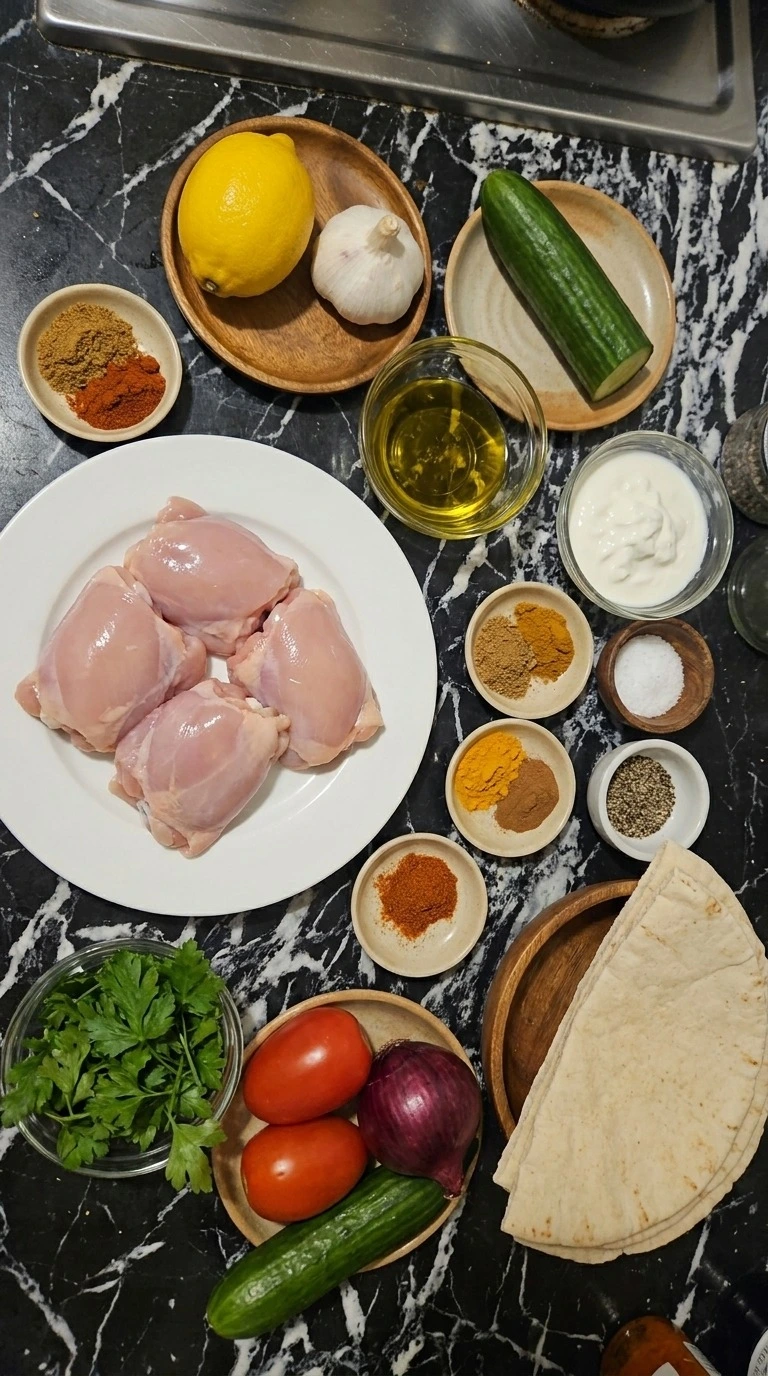
- Boneless skinless chicken thighs: Cut each thigh into 2 large pieces for 8 total pieces. The thigh meat stays juicy under high oven heat.
- Extra virgin olive oil: Mixed into the marinade to coat the chicken and help the spices toast during roasting.
- Fresh lemon juice: Use 2 tablespoons in the marinade and 1 tablespoon in the yogurt sauce for fresh acidity.
- Garlic cloves: Mince 4 cloves for the marinade and finely grate 1 small clove for the yogurt sauce.
- Ground cumin: Adds the earthy and warm flavor that forms the base of the shawarma spice mixture.
- Smoked paprika: Provides a deep red color and gentle smoky flavor without requiring a grill.
- Ground coriander: Adds mild citrus notes that balance the cumin and garlic.
- Ground turmeric: Gives the marinade a warm golden color and a mild earthy taste.
- Ground cinnamon: Adds gentle warmth without making the chicken taste sweet.
- Cayenne pepper: Adds mild heat to the spice mixture and can be reduced for a gentler flavor.
- Kosher salt: Use 1 teaspoon for the chicken and 1/4 teaspoon for the garlic yogurt sauce.
- Freshly ground black pepper: Adds a sharp savory note that balances the lemon and warm spices.
- Plain whole milk Greek yogurt: Mixed with lemon, garlic and salt to make a thick and creamy sauce for serving.
- English cucumber: Slice into thin rounds for a crisp and cool contrast to the seasoned chicken.
- Roma tomatoes: Cut into wedges to add fresh flavor and moisture to the pita filling.
- Red onion: Thinly sliced to add a sharp crunch that balances the creamy yogurt sauce.
- Fresh flat-leaf parsley: Roughly chopped and added at the end for a fresh herbal finish.
- White wheat pita bread: Warm briefly until soft and flexible so each pita can hold a portion of chicken and toppings.
Kitchen Equipment
- Large mixing bowl: A 4-quart mixing bowl gives the chicken room to turn through the marinade, and a smaller bowl can leave dry patches when you mix.
- 18 by 13-inch rimmed baking tray: A sturdy large baking tray holds the chicken in one layer for even browning, while a thin or crowded tray may warp or trap too much moisture.
- Oven: An oven that holds a steady 425°F roasts the chicken evenly, and an oven thermometer helps you spot a temperature setting that runs too hot or cold.
- Instant-read meat thermometer: A fast digital thermometer checks the thickest chicken pieces for 165°F, and a slow or inaccurate model makes it harder to avoid undercooking.
- Kitchen tongs: Tongs at least 9 inches long help turn hot chicken without scraping away its spice coating, and silicone tips work well on coated trays.
- Sharp chef’s knife: An 8-inch chef’s knife cuts the roasted thighs into neat but natural strips, while a dull blade can tear the meat and squeeze out juices.
- Cutting board: A stable board at least 12 inches long gives you room to slice the chicken, and a non-slip base helps prevent movement while cutting.
- 10-inch skillet: A 10-inch skillet warms pita bread in small batches without burning it, and a flat heavy base helps spread heat more evenly.
- Small mixing bowl: A 2-cup bowl holds the garlic yogurt sauce with enough room to stir, and a shallow dish can spill when you mix the ingredients.
How to Make It
Step 1: Coat the chicken thighs in lemon and shawarma spices

First pat 4 boneless skinless chicken thighs dry and cut each into 2 large pieces. Place all 8 pieces in a large mixing bowl. Then add 3 tablespoons extra virgin olive oil, 2 tablespoons fresh lemon juice and 4 minced garlic cloves. Sprinkle in 2 teaspoons ground cumin, 2 teaspoons smoked paprika, 1 teaspoon ground coriander, 1 teaspoon ground turmeric, 1/4 teaspoon ground cinnamon, 1/4 teaspoon cayenne pepper, 1 teaspoon kosher salt and 1/2 teaspoon freshly ground black pepper.
Turn the chicken with your hands or tongs for 1 to 2 minutes until every piece has a thin coat of spice paste. Keep it below 40°F if you’re not cooking it right away. The pale pink meat should now look orange-red with small dark flecks and no dry patches of spice. Don’t add extra lemon juice just to thin the paste.
Too much liquid can make the chicken steam later. The oil helps the spices cling so they won’t fall off during roasting.
Tip: Mix the dry spices in a small dish before adding them. This keeps the cinnamon and cayenne from collecting in one spot.
Step 2: Marinate the chicken and spread it on a baking tray

Cover the bowl and chill the coated chicken at 40°F or colder for at least 30 minutes. You can leave it for up to 12 hours if you’re getting dinner ready the night before. Next heat the oven to 425°F. Line a large rimmed baking tray with parchment rated for at least 425°F.
Transfer the 8 chicken pieces onto the tray and spread them in a single layer. Leave about 1 inch between pieces where possible. Use your fingers or tongs to smooth any thick clumps of marinade across the meat. Don’t pour leftover liquid from the bowl onto the tray.
After the rest you’ll notice the spice paste has settled into a more even coat. The pieces should look deep orange rather than wet and pale. Crowding the tray traps water and slows the browning. Spacing the meat lets hot air reach more of its surface.
Tip: Use a large 18 by 13-inch rimmed tray for this amount of chicken. A smaller tray can crowd the pieces and leave pale edges.
Step 3: Roast the chicken until the edges turn golden

Place the tray on the middle rack of the 425°F oven and roast for 12 minutes. Then use tongs to flip each piece and move the outer pieces closer to the center. Roast for another 8 to 12 minutes. Start checking the thickest piece with an instant-read thermometer near minute 20.
You’re looking for at least 165°F in the center. Don’t rely on the dark spice coating as proof that the meat is safe to eat. If needed, keep roasting and check again every 2 minutes until the center reaches 165°F. The edges should turn deep golden brown while the thick parts stay plump and fully opaque inside.
You’ll smell toasted cumin and garlic. (I once packed the tray too tightly and the chicken released too much water. Giving each piece space made a big difference. ) Stop at a safe internal temperature because extra oven time can dry the meat.
Tip: For extra color, broil for 1 to 2 minutes only after the chicken reaches 165°F. Watch closely because the spice coating can burn.
Step 4: Rest the chicken and slice it into shawarma strips
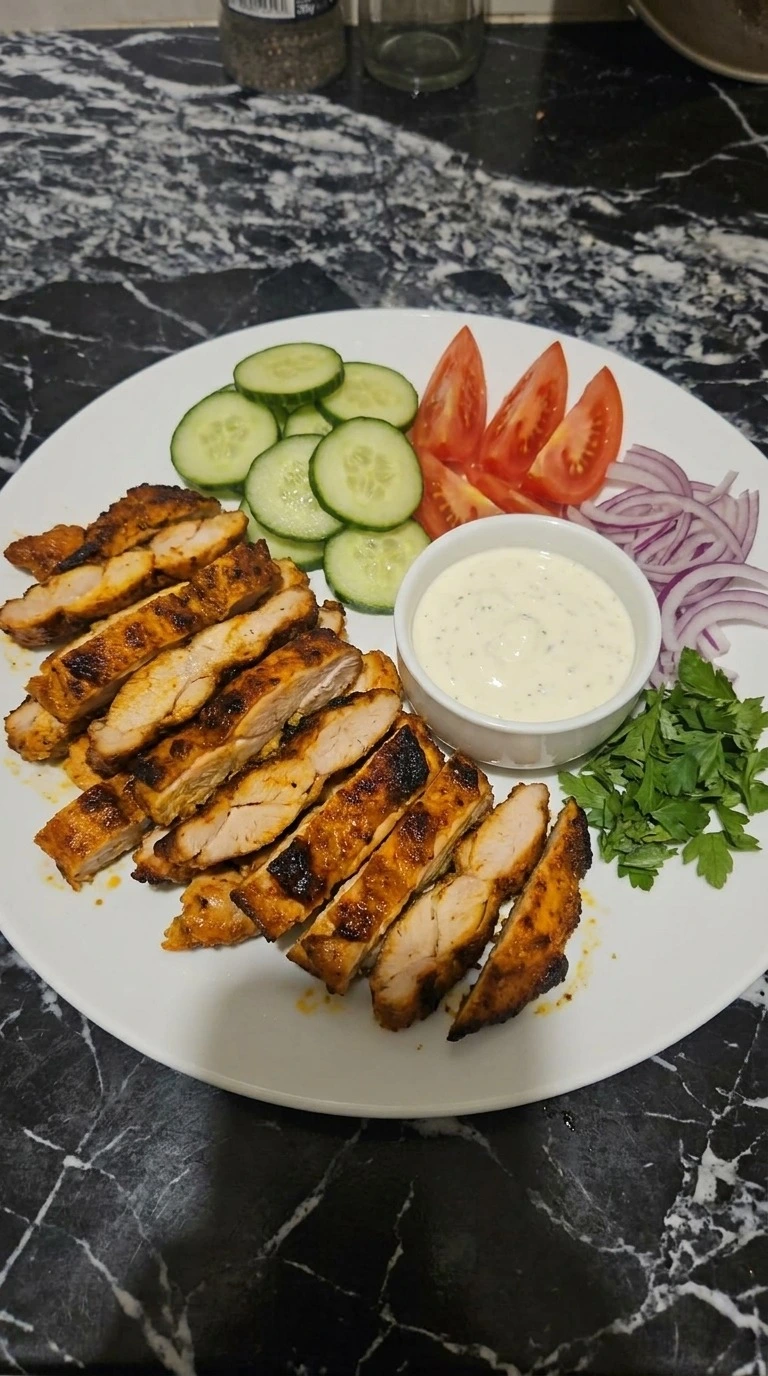
Take the tray out of the oven once every piece reaches at least 165°F. Let the 8 pieces rest for 5 minutes without cutting them. Meanwhile stir 1/2 cup plain whole milk Greek yogurt with 1 tablespoon fresh lemon juice, 1 small grated garlic clove and 1/4 teaspoon kosher salt. Mix for about 30 seconds until the sauce looks smooth.
Next cut 1 English cucumber into thin rounds and slice 2 Roma tomatoes into wedges. Thinly slice 1/2 red onion and roughly chop 2 tablespoons fresh flat-leaf parsley. Keep the vegetables cool while you finish the chicken. After the rest slice each thigh piece across the grain into strips about 1/2 inch wide.
The center should look fully opaque and moist while the cut edges stay slightly rough. Cut too soon and more juices escape onto the tray. A short rest helps the meat keep its moisture.
Tip: Keep the chicken strips about 1/2 inch wide rather than shredding them. Wider pieces retain more moisture when tucked into warm pita.
Step 5: Fill warm pita bread with chicken and fresh toppings

Warm 4 white wheat pita breads in a dry skillet over medium heat at about 325°F for 20 to 30 seconds per side. Turn each one once so both faces feel soft and warm. Don’t leave the bread in the skillet until it becomes crisp because it’ll crack when folded. Next spread about 1 tablespoon of garlic yogurt sauce inside each pita.
Divide the sliced chicken evenly between the four breads. Then add the English cucumber rounds, Roma tomato wedges and red onion slices. Spoon the remaining yogurt sauce over the filling and scatter the chopped flat-leaf parsley on top. Fold each pita loosely around the filling so the chicken stays visible along the open edge.
You’ll see dark golden strips against the fresh vegetables and pale sauce. Serve right away because a long wait makes the bread soggy. Brief warming keeps the pita soft enough to fold without tearing.
Tip: For cleaner portions, leave a 1-inch border along one edge of each pita before folding. This gives the filling room to settle.
Pro Tips
- Choose chicken thighs close to 6 ounces each so the 8 pieces roast at a similar rate. Unevenly sized pieces can finish several minutes apart.
- Pat the chicken dry before mixing the marinade because surface moisture dilutes the spices. The coating should look thick and cling to each piece.
- Use an 18 by 13-inch rimmed tray and leave about 1 inch between chicken pieces. Crowding traps steam and keeps the edges pale.
- For a richer spice aroma, check that your ground cumin and coriander still smell strong. Replace spices that have sat open for over 12 months.
- Start checking the thickest chicken piece after 20 minutes at 425°F. A digital thermometer should register at least 165°F before you remove it.
- Warm each pita for 20 to 30 seconds per side over medium heat. Cover the warmed bread so it stays flexible while you fill the wraps.
- Keep the garlic yogurt sauce chilled below 40°F until serving. Add it after cooking so the yogurt stays thick and doesn’t split under high heat.
- Finish each portion with about 1 tablespoon of freshly chopped flat-leaf parsley. Its fresh flavor helps balance the deeper notes of cumin and paprika.
- For a spicier shawarma wrap, increase the cayenne pepper from 1/4 teaspoon to 1/2 teaspoon and add 1 teaspoon harissa paste to each finished portion.
- For a shawarma rice bowl, replace the 4 pita rounds with 3 cups cooked basmati rice and serve the roasted chicken with the same vegetables and yogurt sauce.
- For a brighter herb version, add 1 tablespoon chopped fresh mint to the garlic yogurt sauce and finish the chicken with an extra teaspoon of lemon juice.
- For a dairy-free shawarma plate, replace the Greek yogurt sauce with 1/4 cup tahini mixed with 2 tablespoons lemon juice and 3 tablespoons water, adjusting the water until the sauce pours easily.
Substitutions & Variations
- Plain whole milk Greek yogurt: Use 1/2 cup unsweetened plain coconut yogurt for a dairy-free garlic sauce. Coconut yogurt makes the sauce a little lighter and may add a mild coconut taste. Choose a thick variety without added sugar because thin yogurt can make the pita soggy. Add the lemon juice slowly until the sauce has the right consistency.
- White wheat pita bread: Use 4 certified gluten-free pita breads or 4 large gluten-free tortillas. Gluten-free bread can crack more easily when folded. Warm each piece for 15 to 20 seconds per side and keep it covered until serving. The chicken and spice marinade are naturally gluten-free when all packaged seasonings are certified gluten-free.
- Boneless skinless chicken thighs: Use 1.5 pounds boneless skinless chicken breasts instead. Chicken breasts have a leaner texture and can dry out more quickly. Cut them into similar-sized pieces and begin checking their internal temperature after 15 minutes at 425°F. Remove them once the thickest part reaches 165°F. For another chicken breast dinner, try our Easy Lemon Garlic Butter Chicken Bites.
- Fresh lemon juice: Use fresh lime juice in an equal amount. Replace the 3 tablespoons of lemon juice with 3 tablespoons of fresh lime juice. The result tastes slightly sharper and more floral, but it still balances the rich chicken and warm spices. Avoid bottled lime juice if possible because its flavor can taste harsh.
- Cayenne pepper: Use 1/2 teaspoon sweet paprika instead of 1/4 teaspoon cayenne pepper. This swap removes most of the spicy heat while keeping a warm pepper flavor. The marinade becomes slightly sweeter and more paprika-forward. It’s a useful choice when serving people who prefer mild chicken dishes.
Storage Instructions
Chicken Shawarma stores well when you keep the chicken separate from the bread and fresh toppings. Let the roasted meat cool briefly and refrigerate it in a shallow airtight container within 2 hours of cooking. Keep it at 40°F or colder and use it within 3 to 4 days. Store the garlic yogurt sauce separately for up to 3 days and keep the cut vegetables in another covered container for up to 2 days. For longer storage, freeze the cooked chicken in individual portions inside freezer-safe containers or tightly sealed freezer bags.
Press out extra air and label each portion with the date. Use within 3 months for the best flavor and texture. To reheat, thaw frozen chicken overnight in the refrigerator. Place it in a covered baking dish with 2 tablespoons water and warm at 325°F for about 10 to 15 minutes, or until the center reaches 165°F. The water helps keep the meat from drying out.
You can also reheat smaller portions in the microwave in 30-second bursts while stirring between rounds until they reach 165°F. Add fresh sauce and vegetables only after reheating. Throw away leftovers that smell sour, feel slimy or show mold. However, harmful bacteria aren’t always visible or detectable by smell, so follow the storage limits even when the food looks normal.
Chicken Shawarma
Ingredients
Method
- First pat 4 boneless skinless chicken thighs dry and cut each into 2 large pieces. Place all 8 pieces in a large mixing bowl. Then add 3 tablespoons extra virgin olive oil, 2 tablespoons fresh lemon juice and 4 minced garlic cloves. Sprinkle in 2 teaspoons ground cumin, 2 teaspoons smoked paprika, 1 teaspoon ground coriander, 1 teaspoon ground turmeric, 1/4 teaspoon ground cinnamon, 1/4 teaspoon cayenne pepper, 1 teaspoon kosher salt and 1/2 teaspoon freshly ground black pepper. Turn the chicken with your hands or tongs for 1 to 2 minutes until every piece has a thin coat of spice paste. Keep it below 40°F if you’re not cooking it right away. The pale pink meat should now look orange-red with small dark flecks and no dry patches of spice. Don’t add extra lemon juice just to thin the paste. Too much liquid can make the chicken steam later. The oil helps the spices cling so they won’t fall off during roasting.

- Cover the bowl and chill the coated chicken at 40°F or colder for at least 30 minutes. You can leave it for up to 12 hours if you’re getting dinner ready the night before. Next heat the oven to 425°F. Line a large rimmed baking tray with parchment rated for at least 425°F. Transfer the 8 chicken pieces onto the tray and spread them in a single layer. Leave about 1 inch between pieces where possible. Use your fingers or tongs to smooth any thick clumps of marinade across the meat. Don’t pour leftover liquid from the bowl onto the tray. After the rest you’ll notice the spice paste has settled into a more even coat. The pieces should look deep orange rather than wet and pale. Crowding the tray traps water and slows the browning. Spacing the meat lets hot air reach more of its surface.

- Place the tray on the middle rack of the 425°F oven and roast for 12 minutes. Then use tongs to flip each piece and move the outer pieces closer to the center. Roast for another 8 to 12 minutes. Start checking the thickest piece with an instant-read thermometer near minute 20. You’re looking for at least 165°F in the center. Don’t rely on the dark spice coating as proof that the meat is safe to eat. If needed, keep roasting and check again every 2 minutes until the center reaches 165°F. The edges should turn deep golden brown while the thick parts stay plump and fully opaque inside. You’ll smell toasted cumin and garlic. (I once packed the tray too tightly and the chicken released too much water. Giving each piece space made a big difference.) Stop at a safe internal temperature because extra oven time can dry the meat.

- Take the tray out of the oven once every piece reaches at least 165°F. Let the 8 pieces rest for 5 minutes without cutting them. Meanwhile stir 1/2 cup plain whole milk Greek yogurt with 1 tablespoon fresh lemon juice, 1 small grated garlic clove and 1/4 teaspoon kosher salt. Mix for about 30 seconds until the sauce looks smooth. Next cut 1 English cucumber into thin rounds and slice 2 Roma tomatoes into wedges. Thinly slice 1/2 red onion and roughly chop 2 tablespoons fresh flat-leaf parsley. Keep the vegetables cool while you finish the chicken. After the rest slice each thigh piece across the grain into strips about 1/2 inch wide. The center should look fully opaque and moist while the cut edges stay slightly rough. Cut too soon and more juices escape onto the tray. A short rest helps the meat keep its moisture.

- Warm 4 white wheat pita breads in a dry skillet over medium heat at about 325°F for 20 to 30 seconds per side. Turn each one once so both faces feel soft and warm. Don’t leave the bread in the skillet until it becomes crisp because it’ll crack when folded. Next spread about 1 tablespoon of garlic yogurt sauce inside each pita. Divide the sliced chicken evenly between the four breads. Then add the English cucumber rounds, Roma tomato wedges and red onion slices. Spoon the remaining yogurt sauce over the filling and scatter the chopped flat-leaf parsley on top. Fold each pita loosely around the filling so the chicken stays visible along the open edge. You’ll see dark golden strips against the fresh vegetables and pale sauce. Serve right away because a long wait makes the bread soggy. Brief warming keeps the pita soft enough to fold without tearing.

Notes
Frequently Asked Questions
Yes, you can coat the chicken with the olive oil, lemon juice and spices up to 12 hours before cooking. Store it in a covered container in the refrigerator at 40°F or colder. The extra time helps the spices spread through the surface of the meat, but don’t leave it on the counter while it marinates.
Store the roasted chicken in a shallow airtight container and refrigerate it within 2 hours of cooking. It keeps for 3 to 4 days when the refrigerator stays at 40°F or colder. Keep the sliced vegetables and yogurt sauce in separate containers so the chicken doesn’t soak up extra moisture.
Yes, the chicken marinade doesn’t contain yogurt, so you only need to change the serving sauce. Mix 1/4 cup tahini with 2 tablespoons lemon juice and about 3 tablespoons water for a dairy-free option. Whisk for 30 to 60 seconds until smooth, then add water a teaspoon at a time if the sauce feels too thick.
Chicken releases moisture as it roasts, especially when the pieces sit too close together. Use an 18 by 13-inch baking tray and roast at 425°F so moisture can escape and the surface can brown. If the meat reaches 165°F without much color, you can briefly broil it for 1 to 2 minutes while watching the spices closely.
Yes, use 3 pounds of boneless skinless chicken thighs and double the marinade ingredients to keep the seasoning balanced. Divide the meat between two large baking trays instead of stacking it on one. Roast at 425°F and rotate the trays halfway through, then check each tray for chicken that has reached an internal temperature of 165°F.
Warm pita with cucumber, Roma tomatoes and garlic yogurt sauce makes a satisfying meal. You can also serve the chicken over cooked basmati rice or beside a fresh chopped salad. For four servings, prepare about 3 cups cooked rice if you’re replacing the pita, and keep the sauce on the side until everyone is ready to eat.
Yes, cool the chicken promptly and freeze it in an airtight freezer-safe container for up to 3 months for the best quality. Thaw it overnight in the refrigerator rather than on the counter. Reheat it covered in a 325°F oven with 2 tablespoons water until the thickest pieces reach 165°F, then add fresh vegetables and sauce.
Final Thoughts
Once I started making Chicken Shawarma at home, I wondered why I’d spent so many busy evenings trying to decide what to cook. The warm spices and golden chicken edges make this version special, and it’s much simpler than the restaurant setup might suggest.
I love that everyone can fill their own pita with the toppings they enjoy. If you liked this easy chicken shawarma, try my Sheet Pan Chicken Thighs and Potatoes for an Easy Dinner or Creamy Hatch Green Chile Chicken Enchiladas next.
And leave a comment to tell me how your chicken shawarma recipe turned out because I read every single one.
Traditional shawarma gets its name from a Turkish word linked to turning because the meat rotates slowly on a vertical spit. This homemade version uses a 425°F oven instead, which helps create golden edges without the large restaurant equipment. The dish is closely associated with Middle Eastern street food and has many regional seasoning and serving styles.