Ingredients
Method
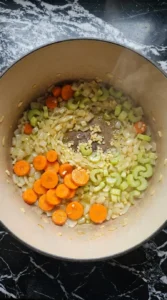
- Heat the extra-virgin olive oil over medium heat, about 5 on a 10-dial. Add the diced yellow onion, sliced carrots and sliced celery. Cook for 6 to 8 minutes while stirring from the bottom every 60 to 90 seconds. Add the minced garlic during the final 45 seconds. Keep the vegetables moving so the garlic can't sit against the hottest part too long. Next, watch the onion change from opaque white to translucent while the carrot edges brighten and the celery turns glossy. You'll smell the garlic clearly during those last seconds. Don't let the garlic become dark brown because that bitterness follows the broth all the way to the bowl. The vegetables should still hold their shape and shouldn't look mushy. This early softening gives Gluten Free Chicken Noodle Soup a sweeter and rounder broth without turning the vegetables limp. Cook over medium heat for 6 to 8 minutes because controlled heat releases flavor without scorching the aromatics.
- Pour in the low-sodium chicken broth and add the dried thyme, bay leaf, kosher salt and ground black pepper. Nestle the two boneless skinless chicken breasts into the liquid. Bring it just to a boil over medium-high heat. Then lower the heat to medium-low, about 3 on a 10-dial, and maintain a gentle simmer for 12 to 15 minutes. Check the thickest part of each breast and remove the chicken when it reaches 165°F. USDA guidance sets 165°F as the safe minimum temperature for poultry. citeturn258868search1turn258868search3 The broth should make small steady bubbles rather than rolling violently. You'll smell thyme and chicken while the vegetables become tender around their edges. A hard boil can tighten the chicken before its center reaches temperature. (I used to boil chicken soup harder because I thought faster bubbles meant faster cooking, the breast always turned stringy.) Keep the simmer gentle until 165°F because slower convection limits moisture loss from the lean chicken.

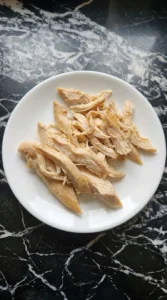
- Transfer both chicken breasts out of the broth once they reach 165°F. Let them rest for exactly 5 minutes so the fibers settle before shredding. Then pull each breast into irregular bite-size strands about 1 to 2 inches long. Work along the natural grain rather than chopping cubes. Meanwhile, keep the vegetable broth barely simmering over low heat, about 2 on a 10-dial. The breast meat should look fully opaque and moist inside with no translucent sections. As you pull it apart, the pieces should separate with light resistance instead of crumbling into dry threads. If you shred it immediately while piping hot, more juices escape and the pieces can feel drier once they return to the broth. Rest for 5 minutes before shredding because brief resting reduces moisture loss from the chicken fibers.
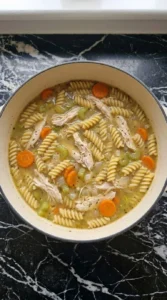
- Remove the bay leaf and bring the broth back to a steady simmer over medium heat, about 5 on a 10-dial. Add the gluten-free brown rice rotini and stir immediately so pieces don't settle together. Simmer for 7 to 9 minutes or according to the package's lower recommended time. Stir gently at minutes 2, 4 and 6 to separate the spirals without breaking them. Next, taste one rotini at minute 7. It should bend easily but retain a faintly firm center. The broth will look slightly fuller from released starch while the carrots stay intact. Return all the shredded chicken during the final 2 minutes and fold it through gently. Go too far past the noodle window and gluten-free rotini can become fragile and split. Cook the noodles only until tender because gluten-free starch softens quickly once fully hydrated.
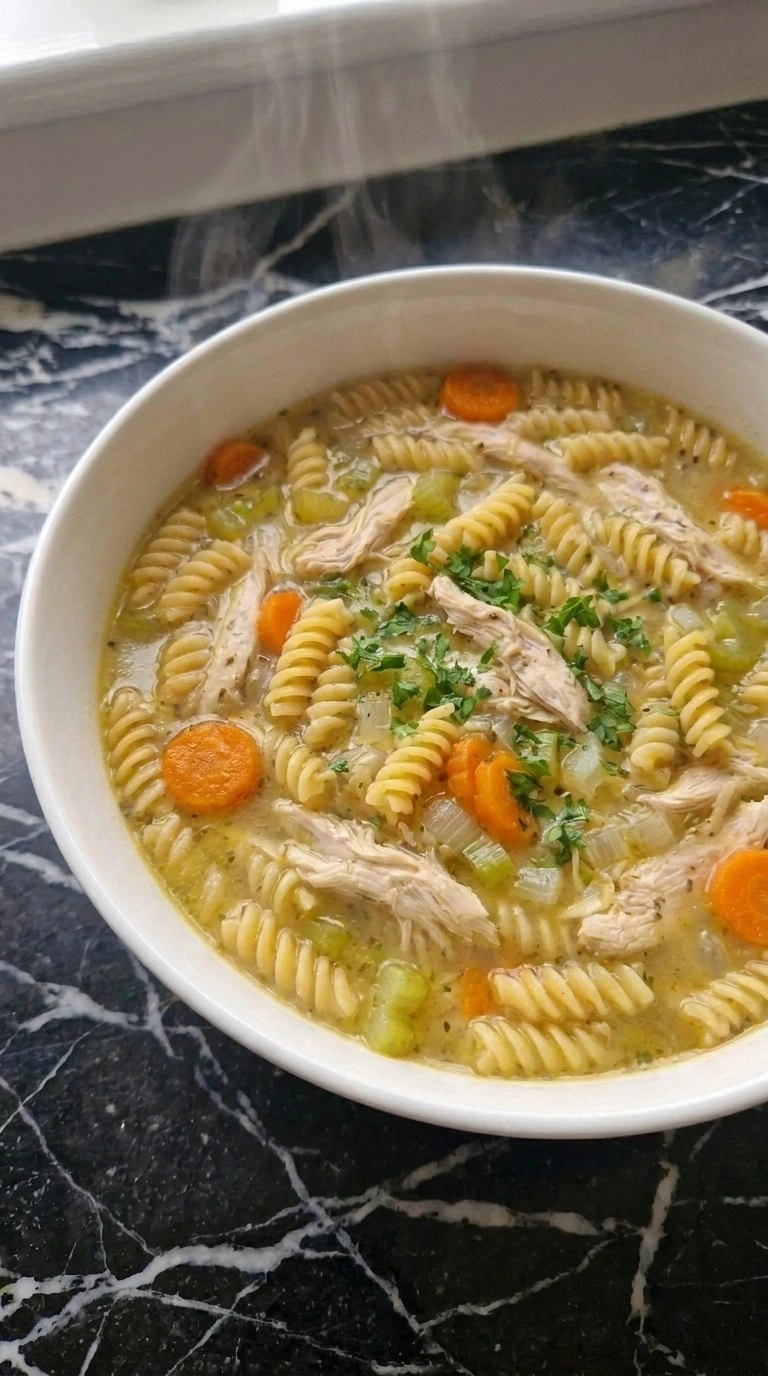
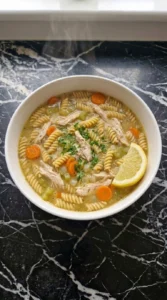
- Turn the heat to low, about 1 on a 10-dial, once the rotini is tender. Stir in the fresh lemon juice and chopped flat-leaf parsley for 30 seconds. Taste the broth and adjust only if needed. Then remove the pot from the heat and let the soup stand for 2 minutes before serving. This short pause lets the bubbling settle without giving the noodles much extra cooking time. Finally, the broth should look clear golden and lightly glossy. Orange carrot rounds, pale chicken shreds and spiral noodles should remain easy to distinguish. Fresh parsley adds bright green flecks and the lemon should smell fresh rather than sharply sour. If the soup sits over active heat for another 8 to 10 minutes, the noodles can absorb too much broth and lose their spring. Finish Gluten Free Chicken Noodle Soup off heat because residual heat is enough to blend the final flavors.
Notes
Store Gluten Free Chicken Noodle Soup in airtight containers once it has cooled completely. Keep it in the fridge for up to 4 days. If you know you’ll have leftovers, try to store the noodles separately from the broth so they don’t get too soft. You can freeze the broth and chicken for up to 3 months in freezer-safe containers. Just leave about 1 inch of space at the top for expansion. When you’re ready to eat, reheat the soup gently over medium-low heat until it reaches 165°F. If the noodles soaked up too much broth, add about 1/4 cup of extra chicken broth. Stir only once or twice so the gluten-free pasta doesn’t break apart. Toss the soup if you notice a sour smell, cloudy bubbles, or an unusual slimy texture.