Linzer Cookies
There’s something about a little cookie with a bright red jam center that makes a Christmas cookie plate feel extra special. These Linzer Cookies have soft almond shortbread layers and a sweet raspberry filling peeking through tiny heart cutouts. Finish them with a snowy dusting of powdered sugar and suddenly that plain old cookie tin looks pretty festive. Hi! Meet your new holiday baking favorite. These easy linzer cookies are buttery and nutty with just enough sweet and tart raspberry jam to make you reach for another one.
They’re cute. Really cute. And the best part is that you don’t need fancy baking skills to make them. If you’re filling a holiday cookie box this year then our Cranberry White Chocolate Cookies would make a lovely neighbor for these little jam sandwiches. That’s right. We’re calling upon a little almond flour and a jar of raspberry jam to do something pretty wonderful here.

The dough rolls out like classic shortbread and the filling adds that pop of fruity sweetness without making things too rich. And once you see those tiny hearts filled with red jam? Well. Good luck saving them all for Christmas.
Why This Recipe Works
The finely ground almond flour is what gives Linzer Cookies their tender and slightly sandy bite. Mixing it with all-purpose wheat flour keeps the dough strong enough to cut into thin shapes without falling apart.
A 45 to 60-minute chill helps the butter firm up so the scalloped edges stay neat in the oven. Baking at 350°F for 10 to 12 minutes gives the shortbread light golden edges without drying out the center.
And dusting the tops before adding them to the jam keeps those little red hearts bright and clear. If you enjoy this kind of buttery cookie then our Butter Pecan Cookies are another good one to try.
Ingredients
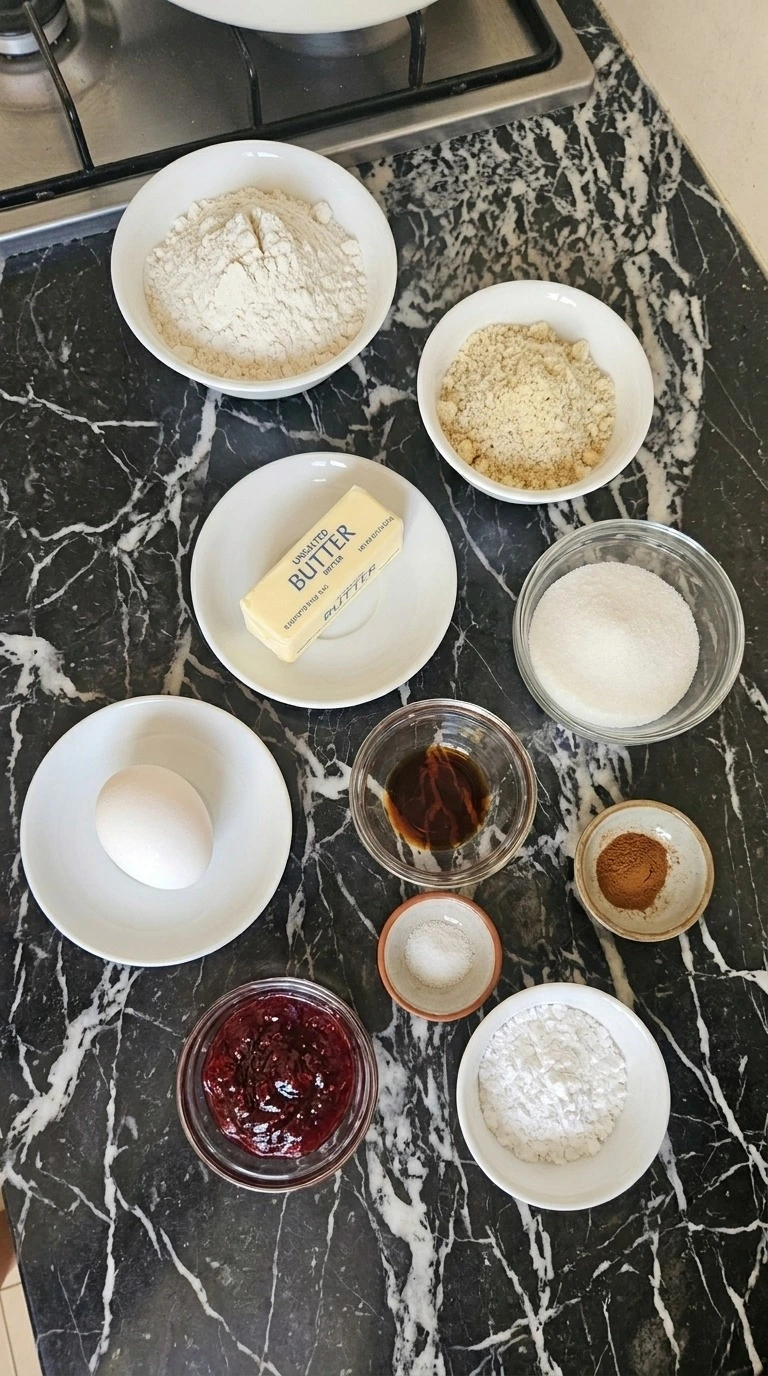
- all-purpose wheat flour: About 210 grams, spooned and leveled to build the tender structure of the shortbread dough.
- finely ground blanched almond flour: About 75 grams, finely ground and free of large almond pieces for a soft nutty crumb.
- unsalted butter: About 170 grams, softened to 65°F to 68°F so it creams smoothly with the granulated white sugar.
- granulated white sugar: About 100 grams, used to sweeten the shortbread and help the butter mixture turn light and fluffy.
- large chicken egg: About 50 grams without the shell, brought near room temperature to bind the dough without making it crumbly.
- pure vanilla extract: Added to the butter mixture for a warm vanilla flavor that pairs with the almonds and raspberry filling.
- ground cinnamon: Finely ground and mixed with the dry ingredients for a mild warm spice note.
- fine sea salt: Mixed evenly through the dough to sharpen the butter and almond flavors.
- seedless raspberry jam: About 160 grams, thick and spreadable with a bright red color for the cookie sandwich filling.
- powdered sugar: Sifted over the cutout cookie tops before assembly to create a delicate snowy finish without hiding the red jam.
Kitchen Equipment
- Electric hand mixer: A hand mixer with two beaters creams the butter and sugar evenly in 2 to 3 minutes, while a stand mixer with a paddle works if you keep the speed moderate to avoid overmixing.
- Large mixing bowl: A sturdy 3 to 4-quart mixing bowl gives enough space to cream the butter and fold in the flour without spilling, while a bowl smaller than 2 quarts makes mixing difficult.
- Medium mixing bowl: A 2-quart bowl holds both flours and the dry seasonings for even mixing, and a wide opening helps prevent pockets of cinnamon from staying unmixed.
- Digital kitchen scale: A scale that measures in 1-gram increments helps keep the almond flour and wheat flour accurate, while rough cup measurements can make the dough too dry.
- Rolling pin: A smooth rolling pin with 1/8-inch thickness guides makes even cookie layers, while uneven rolling can cause small pieces to brown before thick ones finish baking.
- Scalloped cookie cutter: A 2.5-inch round scalloped cutter makes uniform sandwich bases and tops, while a plain round cutter of the same size works but changes the decorative edge.
- Small heart-shaped cookie cutter: A 0.75 to 1-inch heart cutter makes clean center windows without leaving the tops too fragile, while oversized cutouts can split during assembly.
- Rimmed baking trays: Two or more sturdy 13 by 18-inch baking trays give the dough room to spread slightly, while very thin trays may brown the bottoms before the tops set.
- Parchment paper: Food-safe baking parchment rated for at least 350°F keeps the thin cookie layers from sticking, while wax paper isn’t suitable for oven baking.
- Fine mesh sieve: A small fine mesh sieve distributes the powdered sugar in a light coat over the cutout tops, while large holes can leave uneven heavy patches.
- Cooling rack: A flat wire cooling rack at least 12 inches wide lets the baked pieces release heat without trapping moisture beneath them, which helps preserve their crisp edges.
- Small offset spatula: A 4 to 5-inch offset spatula spreads a measured teaspoon of jam over the cookie bases without breaking the thin shortbread, while a small butter knife also works with gentle pressure.
How to Make It
Step 1: Cream the butter and sugar into a soft dough
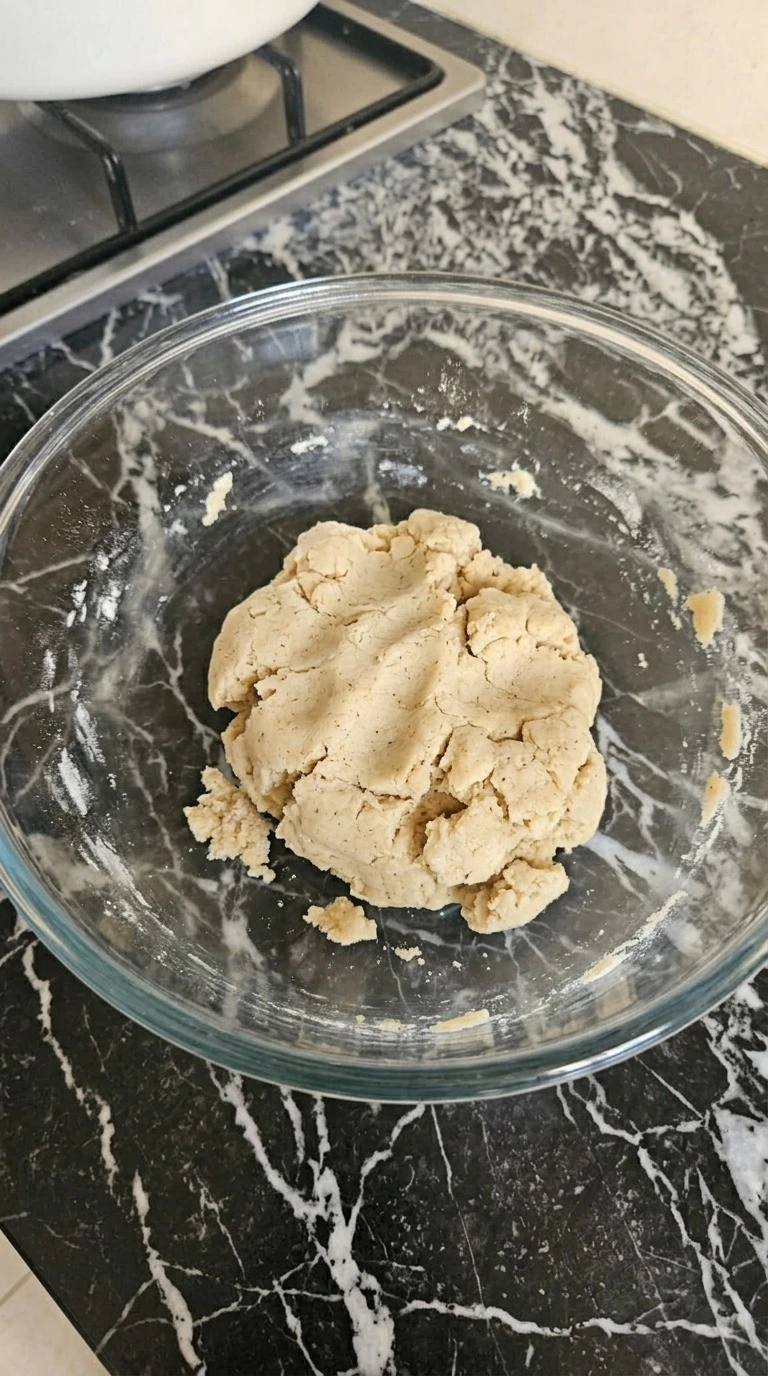
Set the unsalted butter out for 30 to 45 minutes until it reaches about 65°F to 68°F and gives slightly when pressed. Beat it with the granulated white sugar for 2 to 3 minutes until the mixture looks pale and fluffy. Next add the large egg and pure vanilla extract and beat for another 30 seconds. Scrape the bowl so no streaks of egg hide along the sides.
In a separate bowl whisk the all-purpose wheat flour with the blanched almond flour and ground cinnamon and fine sea salt. Then fold these dry ingredients into the butter mixture just until a soft dough forms. Stop mixing as soon as the last dry patch disappears. The dough should look pale beige with tiny specks of almond and feel soft without sticking heavily to your fingers.
It’s fine if it looks a little crumbly at first. Keep mixing too long and the cookies can turn tough. Gentle mixing keeps the crumb tender.
Tip: Weigh the flour if possible. Use 210 grams of all-purpose wheat flour and 75 grams of almond flour for consistent dough texture.
Step 2: Chill the dough and cut scalloped cookie shapes

Divide the dough into two equal portions and press each into a flat disk about 1 inch thick. Wrap both disks and chill at 38°F to 40°F for 45 to 60 minutes. Next roll one disk at a time between sheets of parchment until the dough measures 1/8 inch thick. Use a 2.
5-inch scalloped cutter to make 48 rounds in total. Cut a small heart from the center of 24 rounds and leave the other 24 whole. Gather scraps gently and roll them again only once or twice. Arrange the pieces on lined trays with about 1 inch between them and chill for 15 minutes.
The shaped dough should have neat scalloped edges and clean little heart windows. If it bends or smears then it’s too warm. (I once skipped the second chill and lost those pretty scalloped edges. ) Cold dough holds its shape in the oven.
Tip: Keep the second dough disk in the fridge while cutting the first. Warm almond dough can start sticking after just 5 minutes.
Step 3: Bake the almond cookies until the edges turn golden
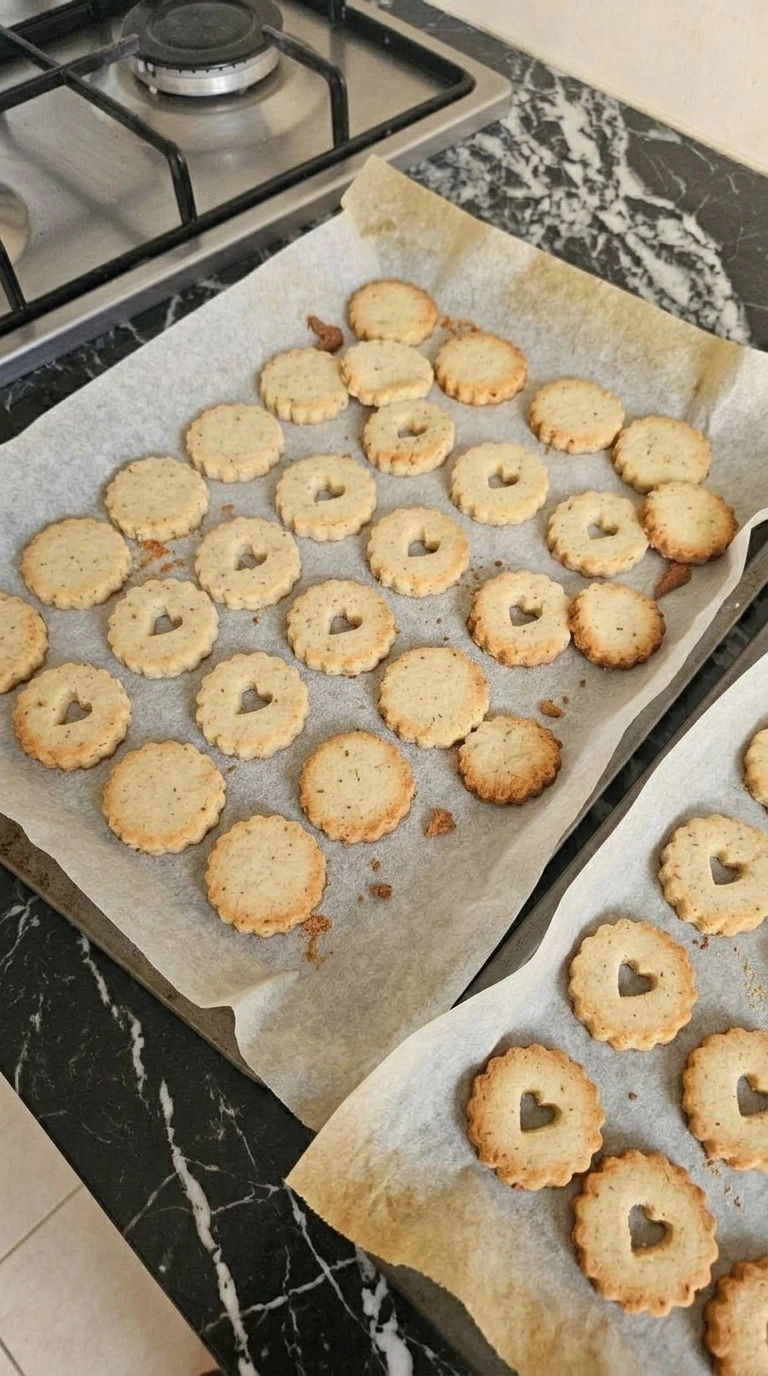
Heat the oven to 350°F and place a rack in the center. Arrange the chilled cookie rounds on parchment-lined baking trays and leave about 1 inch of space between them. Bake one tray at a time for 10 to 12 minutes. Rotate the tray at minute 6 so the edges color more evenly.
The heart cutouts may turn golden slightly faster than the solid bases. Check both shapes at minute 10 and pull the tray when the outer edges turn light gold. Leave the centers pale rather than waiting for a dark brown finish. You’ll smell warm butter and toasted almonds near the end.
The centers may feel a little soft but they’ll firm up as they cool. Let them rest on the tray for 5 minutes and then cool fully for 20 minutes. Bake too long and the thin edges taste dry. Mild heat protects the tender almond crumb.
Tip: Keep your unbaked trays in the fridge at 38°F to 40°F while the first batch bakes to prevent spreading.
Step 4: Dust the tops and sandwich with raspberry jam

Make sure the cookie layers have cooled for at least 20 minutes and feel close to 70°F before filling them. Lay the 24 heart-window tops on a clean plate and dust them with the powdered sugar. Meanwhile spread 1 level teaspoon of thick seedless raspberry jam over each of the 24 solid bases. Leave a narrow border around the edge so the filling doesn’t spill out when pressed.
Then place a powdered top over each jam-covered base and press very gently around the outside. Work in small batches over 10 to 15 minutes so the jam stays neat and each heart window lines up. The raspberry jam should peek through the heart windows with a bright ruby red color. Some will spread a little closer to one edge.
That’s fine. Press too hard and the thin tops may crack. Dust before stacking to keep the jam bright.
Tip: If your jam seems runny, refrigerate it for 20 minutes before filling. A thicker spread makes cleaner cookie sandwiches.
Step 5: Let the jam settle and arrange the finished cookies

Leave the 24 filled cookie sandwiches at a cool room temperature of about 68°F to 72°F for 20 to 30 minutes. During this time the thick raspberry jam will settle against the baked layers and make the sandwiches easier to lift without sliding. Once the filling feels stable arrange 12 cookies on a large white serving plate with a little overlap. Put the remaining 12 in a sealed container for later.
Use your fingertips to lift each cookie by its outer edge and don’t press on the heart window. Keep the powdered tops facing up. The finished cookies should have light golden rims and firm shortbread layers with a slight give where the jam meets the crumb. The red centers stay bright.
Don’t stack them too high or the tops may break. A short rest helps the filling grip the layers.
Tip: For a holiday cookie platter, arrange 12 sandwiches in two loose overlapping groups rather than one tall stack that may crush the cutout tops.
Pro Tips
- Use unsalted butter softened to 65°F to 68°F. It should dent when pressed but still hold its shape instead of looking greasy.
- Measure the all-purpose wheat flour by weight when possible. A full 210 grams gives the dough enough structure without making the cookies dry.
- Roll the chilled dough to an even 1/8-inch thickness. Thicker cookies need more baking time and can make the finished sandwiches feel heavy.
- Dip the scalloped cutter into a little flour after every 4 or 5 cuts. This helps release the dough without pulling the delicate edges out of shape.
- Keep the heart-shaped openings about 0.75 to 1 inch wide. Larger openings leave thinner borders that can break when you sandwich the layers.
- Watch the cookies closely from minute 10 at 350°F. Pull the tray when the scalloped edges turn pale gold and the centers remain light.
- Choose thick seedless raspberry jam with a deep ruby color. Measure about 1 teaspoon per sandwich so the filling stays inside the edges.
- Dust the 24 cutout tops before assembling your Linzer Cookies. The powdered sugar stays white and the raspberry jam remains bright through each little heart.
- For a citrus version, add 1 teaspoon finely grated orange zest to the dough and replace the raspberry jam with 0.5 cup thick orange marmalade.
- Make chocolate hazelnut sandwich cookies by replacing the almond flour with 0.75 cup finely ground toasted hazelnut flour and the jam with 0.5 cup chocolate hazelnut spread.
- For a winter spice twist, add 0.25 teaspoon ground cardamom and 0.25 teaspoon ground ginger to the dough while keeping the original raspberry filling.
- Create a colorful holiday assortment by dividing the 24 sandwiches into three groups and filling 8 with raspberry jam, 8 with strawberry jam and 8 with apricot preserves.
Substitutions & Variations
- unsalted butter: Use 0.75 cup plant-based baking butter with at least 75% fat for a dairy-free version. Choose firm baking sticks rather than a soft tub spread. The cookies may spread slightly more and have a less rich flavor. Chill the shaped dough for 20 minutes before baking instead of 15 minutes.
- all-purpose wheat flour: Replace 1.75 cups with 210 grams of a gluten-free 1-to-1 baking flour blend containing xanthan gum. The dough may crack more easily when rolled and the baked edges can feel slightly more fragile. Roll between parchment sheets and chill for an extra 15 minutes. For another holiday baking idea, try our Gluten Free Gingerbread Cookies.
- large chicken egg: Use 1 tablespoon finely ground golden flaxseed mixed with 3 tablespoons water for an egg-free version. Let the mixture thicken for 10 minutes before adding it to the butter. The dough will be slightly denser and the cookies may crumble more easily. Chill the dough well before cutting and handle the baked layers gently.
- finely ground blanched almond flour: Replace 0.75 cup almond flour with 0.75 cup finely ground toasted hazelnut flour. Hazelnuts give the cookies a deeper roasted flavor and a slightly darker crumb. The dough may feel softer because of the nuts’ natural oils. Chill it for another 10 minutes if it sticks during rolling.
- seedless raspberry jam: Use 0.5 cup thick seedless strawberry jam or 0.5 cup smooth apricot preserves. Strawberry jam gives a sweeter and milder filling while apricot preserves add a softer tartness and golden color. Choose a thick preserve so the filling doesn’t run through the heart-shaped openings.
Storage Instructions
Keep assembled Linzer Cookies in an airtight container in the refrigerator for up to 5 days. Place parchment between layers so the powdered tops don’t stick together. The raspberry jam will slowly soften the shortbread, which is normal. For longer storage, freeze the unfilled baked cookie layers for up to 2 months in a sealed freezer container with parchment between them.
You can also freeze the wrapped raw dough for up to 2 months and thaw it overnight in the refrigerator before rolling. These cookies don’t need reheating. Take the filled sandwiches out of the refrigerator about 15 to 20 minutes before serving so the butter-rich crumb softens slightly. If frozen, thaw the unfilled layers in their sealed container for 30 to 45 minutes and then add the jam and a fresh dusting of powdered sugar.
Don’t warm assembled cookies in the oven because the filling can loosen and the sugar will dissolve. Discard any cookies showing mold, unusual moisture or an off smell.
Linzer Cookies
Ingredients
Method
- Set the unsalted butter out for 30 to 45 minutes until it reaches about 65°F to 68°F and gives slightly when pressed. Beat it with the granulated white sugar for 2 to 3 minutes until the mixture looks pale and fluffy. Next add the large egg and pure vanilla extract and beat for another 30 seconds. Scrape the bowl so no streaks of egg hide along the sides. In a separate bowl whisk the all-purpose wheat flour with the blanched almond flour and ground cinnamon and fine sea salt. Then fold these dry ingredients into the butter mixture just until a soft dough forms. Stop mixing as soon as the last dry patch disappears. The dough should look pale beige with tiny specks of almond and feel soft without sticking heavily to your fingers. It’s fine if it looks a little crumbly at first. Keep mixing too long and the cookies can turn tough. Gentle mixing keeps the crumb tender.
- Divide the dough into two equal portions and press each into a flat disk about 1 inch thick. Wrap both disks and chill at 38°F to 40°F for 45 to 60 minutes. Next roll one disk at a time between sheets of parchment until the dough measures 1/8 inch thick. Use a 2.5-inch scalloped cutter to make 48 rounds in total. Cut a small heart from the center of 24 rounds and leave the other 24 whole. Gather scraps gently and roll them again only once or twice. Arrange the pieces on lined trays with about 1 inch between them and chill for 15 minutes. The shaped dough should have neat scalloped edges and clean little heart windows. If it bends or smears then it’s too warm. (I once skipped the second chill and lost those pretty scalloped edges.) Cold dough holds its shape in the oven.

- Heat the oven to 350°F and place a rack in the center. Arrange the chilled cookie rounds on parchment-lined baking trays and leave about 1 inch of space between them. Bake one tray at a time for 10 to 12 minutes. Rotate the tray at minute 6 so the edges color more evenly. The heart cutouts may turn golden slightly faster than the solid bases. Check both shapes at minute 10 and pull the tray when the outer edges turn light gold. Leave the centers pale rather than waiting for a dark brown finish. You’ll smell warm butter and toasted almonds near the end. The centers may feel a little soft but they’ll firm up as they cool. Let them rest on the tray for 5 minutes and then cool fully for 20 minutes. Bake too long and the thin edges taste dry. Mild heat protects the tender almond crumb.

- Make sure the cookie layers have cooled for at least 20 minutes and feel close to 70°F before filling them. Lay the 24 heart-window tops on a clean plate and dust them with the powdered sugar. Meanwhile spread 1 level teaspoon of thick seedless raspberry jam over each of the 24 solid bases. Leave a narrow border around the edge so the filling doesn’t spill out when pressed. Then place a powdered top over each jam-covered base and press very gently around the outside. Work in small batches over 10 to 15 minutes so the jam stays neat and each heart window lines up. The raspberry jam should peek through the heart windows with a bright ruby red color. Some will spread a little closer to one edge. That’s fine. Press too hard and the thin tops may crack. Dust before stacking to keep the jam bright.

- Leave the 24 filled cookie sandwiches at a cool room temperature of about 68°F to 72°F for 20 to 30 minutes. During this time the thick raspberry jam will settle against the baked layers and make the sandwiches easier to lift without sliding. Once the filling feels stable arrange 12 cookies on a large white serving plate with a little overlap. Put the remaining 12 in a sealed container for later. Use your fingertips to lift each cookie by its outer edge and don’t press on the heart window. Keep the powdered tops facing up. The finished cookies should have light golden rims and firm shortbread layers with a slight give where the jam meets the crumb. The red centers stay bright. Don’t stack them too high or the tops may break. A short rest helps the filling grip the layers.

Notes
Frequently Asked Questions
Yes! You can make the dough up to 3 days ahead and keep it tightly wrapped in the refrigerator at 38°F to 40°F. Let it sit for 5 to 10 minutes before rolling if it’s too firm. For the sharpest heart-shaped windows, bake the cookie layers 1 or 2 days before your holiday gathering and add the raspberry jam closer to serving.
The butter may have become too warm before baking or the dough may have been rolled too thick. Keep the dough around 1/8 inch thick and chill the shaped cookies for at least 15 minutes before they enter a 350°F oven. If the edges still spread, check that your butter isn’t overly soft and avoid beating the dough after adding the flour.
You can replace the 0.75 cup almond flour with about 90 grams of additional all-purpose wheat flour, but the result won’t have the same delicate nutty crumb. Start with 75 grams and add the rest only if the dough feels too soft. The cookies will taste closer to classic butter shortbread, so keep the raspberry filling for a bright contrast.
Use a thick seedless raspberry jam and spread only 1 level teaspoon over each solid cookie base. Leave roughly 1/8 inch clear around the outer edge before placing the cutout top over the filling. Press around the rim rather than directly above the heart. Then let the sandwiches stand at 68°F to 72°F for 20 to 30 minutes so the filling settles.
Yes, doubling the ingredients gives you approximately 48 finished sandwich cookies instead of 24. Divide the dough into four disks and chill them for 45 to 60 minutes. Keep the same 1/8-inch thickness and bake each tray at 350°F for 10 to 12 minutes. Don’t crowd the trays because the pieces need space for even browning.
Absolutely. Let the baked shortbread layers cool completely and place them between sheets of parchment inside an airtight freezer container. Freeze them for up to 2 months. Thaw the sealed container at room temperature for 30 to 45 minutes before opening it. Once the layers have lost their chill, add the raspberry jam and powdered sugar for a fresher finish.
These buttery almond cookies taste lovely with hot chocolate, black tea or a warm cup of coffee. For a holiday dessert plate, serve 2 cookies per guest alongside fresh raspberries and a few chocolate cookies. If you’re preparing a larger Christmas spread, our Cranberry White Chocolate Cookies add a different texture and another festive flavor.
Final Thoughts
There’s something so nice about spending a quiet afternoon making Linzer Cookies with Christmas music playing and a little flour on the counter. I always love the moment those tiny red hearts show through the snowy sugar, and the trick of chilling the shaped dough really does make these easy linzer cookies look much neater.
If you’re filling a holiday tin, try adding our Gluten Free Gingerbread Cookies or Chewy Chocolate Gingerbread Cookies alongside these christmas linzer cookies. And if you bake a batch, tag League of Cooking on Instagram because I’d love to see your little raspberry hearts.
It works just as well when you are after linzer cookies recipe.
Traditional Linzer cookies are inspired by the Austrian Linzer torte, a pastry made with nut-rich dough and fruit preserves. The little sandwich cookies borrow that same idea but turn it into a bite-sized treat. Their cutout centers often resemble tiny windows, which is why they’re sometimes called Linzer eyes. The bright jam peeking through the powdered sugar makes them especially popular during Christmas baking.