Cornbread Dressing
The smell of sage and warm cornbread takes me straight back to Thanksgiving. The first time I made Cornbread Dressing was for Thanksgiving 2020 when we couldn’t travel and I left it in the oven almost 10 minutes too long. The edges got darker than I’d planned. But somehow it was still the best part of the meal. That’s when I realized this dish is a lot more forgiving than people think. Since then I’ve made it for holiday dinners and random Sunday nights when family dropped by.
I even brought a big pan to a potluck where three people asked how I’d made it. What surprised me most was how an easy cornbread dressing could taste so much like something that took all day. It’s rich and full of herbs but doesn’t feel heavy or greasy. The trick is starting with homemade cornbread and giving it enough time to dry slightly before adding the broth. You want the middle soft but not wet. And those crisp golden corners?
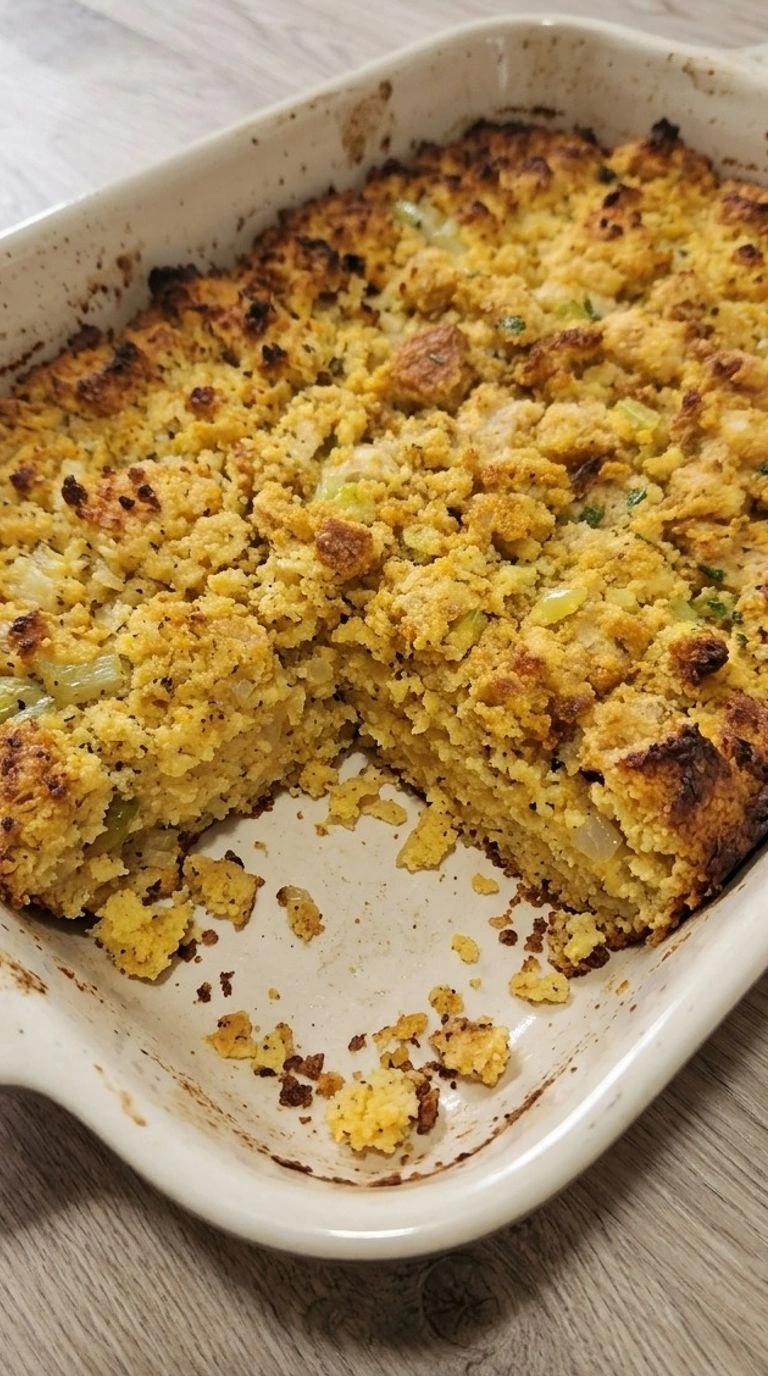
They’re worth fighting over. If you’re putting together a full Thanksgiving spread, our Sweet Potato Casserole with Pecans makes a lovely partner because its sweet topping balances the savory herbs. Nothing fancy here. Just a generous pan of food that people always seem to want seconds of.
Why This Recipe Works
The texture of Cornbread Dressing depends on how the cornbread takes in broth. Drying the crumbs at 300°F for 12 to 15 minutes gives them a firmer surface so they don’t turn mushy when you fold in the liquid.
And using two eggs in the broth helps the center set without making it feel like a dense bread pudding. Baking uncovered at 375°F gives the top time to turn crisp while the inside stays soft.
It’s the same contrast that makes a good holiday casserole worth a second helping.
Ingredients

- yellow cornmeal: Use medium-ground yellow cornmeal for a hearty homemade cornbread crumb that absorbs broth without disappearing into a paste.
- all-purpose flour: Mix with the cornmeal to give the cornbread enough structure to hold its shape after crumbling.
- baking powder: Use fresh baking powder to help the homemade cornbread rise into a light crumb.
- whole milk: Mix into the cornbread batter for moisture and a tender texture.
- large eggs: Use one egg in the cornbread batter and whisk the remaining two with the broth to help the finished dressing hold together.
- unsalted butter: Melt 4 tablespoons for the cornbread and use 4 tablespoons to soften the vegetables, then reserve 2 tablespoons to grease the baking dish.
- yellow onion: Peel and finely dice into small pieces that soften and add savory sweetness throughout the dressing.
- celery stalks: Trim and cut into 1/4 inch pieces to bring a fresh herbal flavor and delicate texture.
- rubbed sage: Add to the softened vegetables for the familiar earthy aroma of traditional Southern dressing.
- dried thyme: Warm briefly in the butter with sage to give the dressing an extra savory note.
- low-sodium chicken broth: Whisk with the remaining eggs and add gradually to soften the dried cornbread without making the mixture soupy.
- kosher salt: Season the dressing mixture evenly and adjust only if the broth already contains significant sodium.
- black pepper: Use freshly ground pepper to add gentle warmth to the sage and thyme seasoning.
Kitchen Equipment
- 8 by 8 inch square baking pan: A sturdy 8 by 8 inch metal baking pan gives the cornbread an even rise and tender crumb, while a larger pan spreads the batter too thin and can dry it out.
- Large mixing bowl: A 5 to 6 quart mixing bowl provides enough room to fold the cornbread with broth and vegetables without crushing the pieces, while a smaller bowl makes spills more likely.
- Large rimmed baking sheet: A half-sheet pan measuring about 18 by 13 inches spreads the broken cornbread into a loose layer for even drying, while a crowded tray traps moisture.
- 12 inch skillet: A heavy 12 inch skillet gives the onion and celery enough space to soften evenly, while a small thin skillet can crowd the vegetables and scorch the butter.
- 9 by 13 inch baking dish: A 9 by 13 inch ceramic or glass baking dish provides enough depth for a moist center and crisp top, while a shallow oversized dish can dry the dressing.
- Silicone spatula: A wide flexible spatula folds the damp cornbread without crushing it, so choose one with a firm core rather than a narrow flimsy blade.
- Wire whisk: A medium stainless steel whisk blends the eggs and broth evenly, while a tiny whisk takes longer and may leave streaks of egg.
- Instant-read food thermometer: A digital instant-read thermometer with a thin probe checks that the dressing reaches 165°F at its center, preventing guesswork based only on crust color.
- Measuring cups and spoons: Use standard dry measuring cups and marked liquid measuring cups for accurate cornmeal and broth amounts, because inaccurate measurements can leave the dressing pasty or dry.
How to Make It
Step 1: Mix and bake the homemade cornbread

Heat your oven to 400°F. Whisk 1 1/2 cups yellow cornmeal with 1/2 cup all-purpose flour and 1 tablespoon baking powder in a large bowl. Add 1 large egg and 1 1/4 cups whole milk. Then pour in 4 tablespoons melted unsalted butter and stir just until the dry spots fade.
Don’t beat it smooth. Spread the thick batter into a lightly greased 8 by 8 inch baking pan. Bake for 20 to 25 minutes until the top turns light gold and a toothpick comes out clean. Let it cool for 20 minutes.
You’ll see a few uneven cracks across the top and the edges will pull back a little from the pan. That’s what you want. Too much mixing makes the crumb tough and a longer bake dries it out before the dressing even starts. Gentle stirring keeps the cornbread tender.
Tip: For a stronger corn flavor, choose stone-ground yellow cornmeal with a medium grind instead of very finely milled cornmeal.
Step 2: Break the cornbread into coarse crumbs
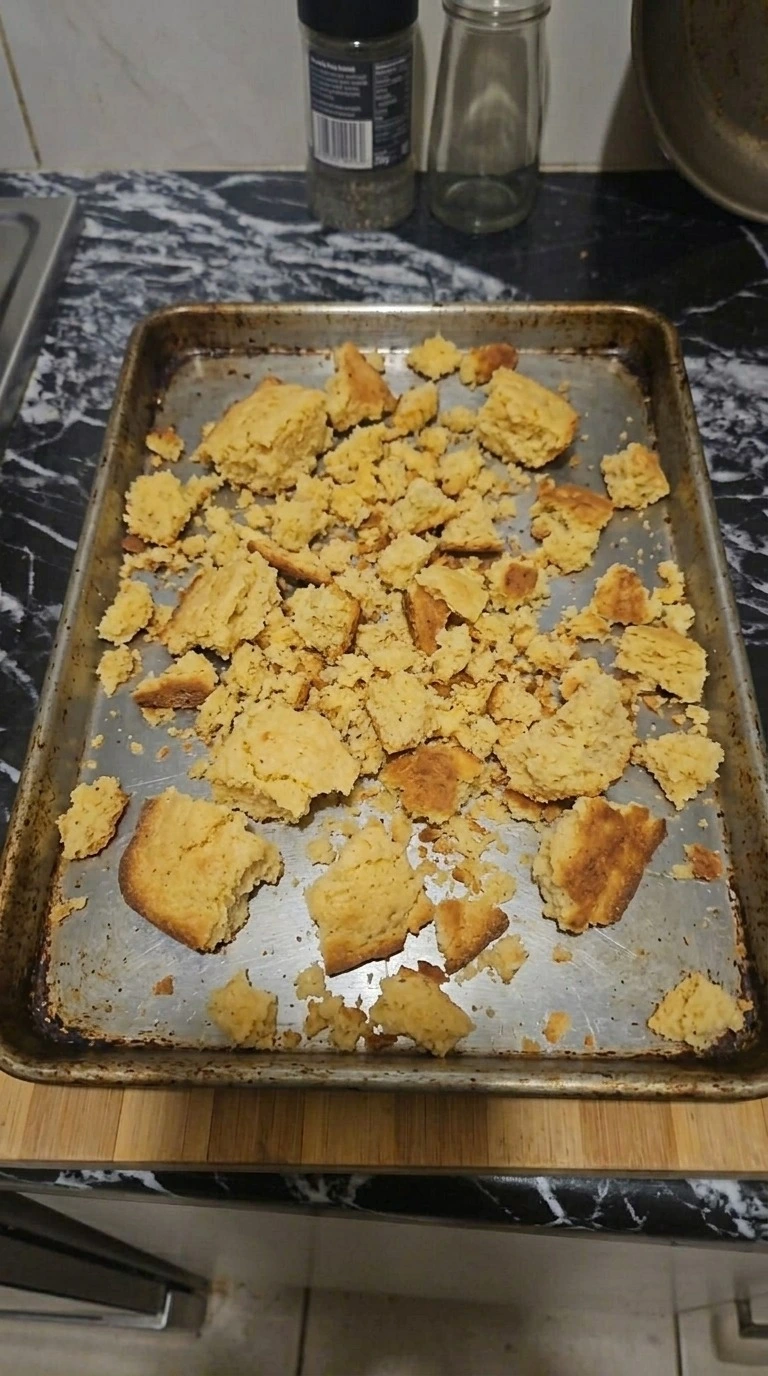
Once the cornbread has cooled for 20 minutes, lift it from the pan and break it apart with your hands. Aim for uneven pieces between 1/2 inch and 1 inch wide. Leave a few larger bits because they’ll give the finished dressing more texture. Spread the crumbs across a large rimmed baking sheet and lower the oven to 300°F.
Toast them for 12 to 15 minutes and turn them once halfway through. The crumbs should feel slightly dry on the outside but still give when you press them. Next, leave the crumbs on the sheet for 5 minutes so the last bit of steam can escape. You’ll notice the surface feels less sticky.
If you toast them too long they’ll become hard and need far more broth. A short dry-out helps the crumbs hold their shape.
Tip: If you’ve baked the cornbread a day ahead, leave it loosely covered overnight and reduce the oven drying time to 5 minutes if needed.
Step 3: Soften the onion and celery with herbs

While the cornbread dries, peel and finely dice 1 large yellow onion. Cut 3 celery stalks into small pieces about 1/4 inch wide. Melt 4 tablespoons unsalted butter in a large skillet over medium heat at roughly setting 5 on a 10-point dial. Add the onion and celery and stir every minute for 8 to 10 minutes.
They should soften without turning dark brown. Then add 1 tablespoon rubbed sage and 1 teaspoon dried thyme. Stir for another 30 seconds so the warm butter draws out their scent. You’ll smell the sage almost right away.
The onion will look glossy and pale while the celery keeps a little green color. (I once rushed this stage and found crunchy onion in the finished pan. ) Go too fast and the vegetables stay firm. Slow softening builds a sweet savory base.
Tip: Cut the onion and celery close to 1/4 inch so they spread through the cornbread evenly instead of gathering in large pockets.
Step 4: Fold the cornbread into the savory broth
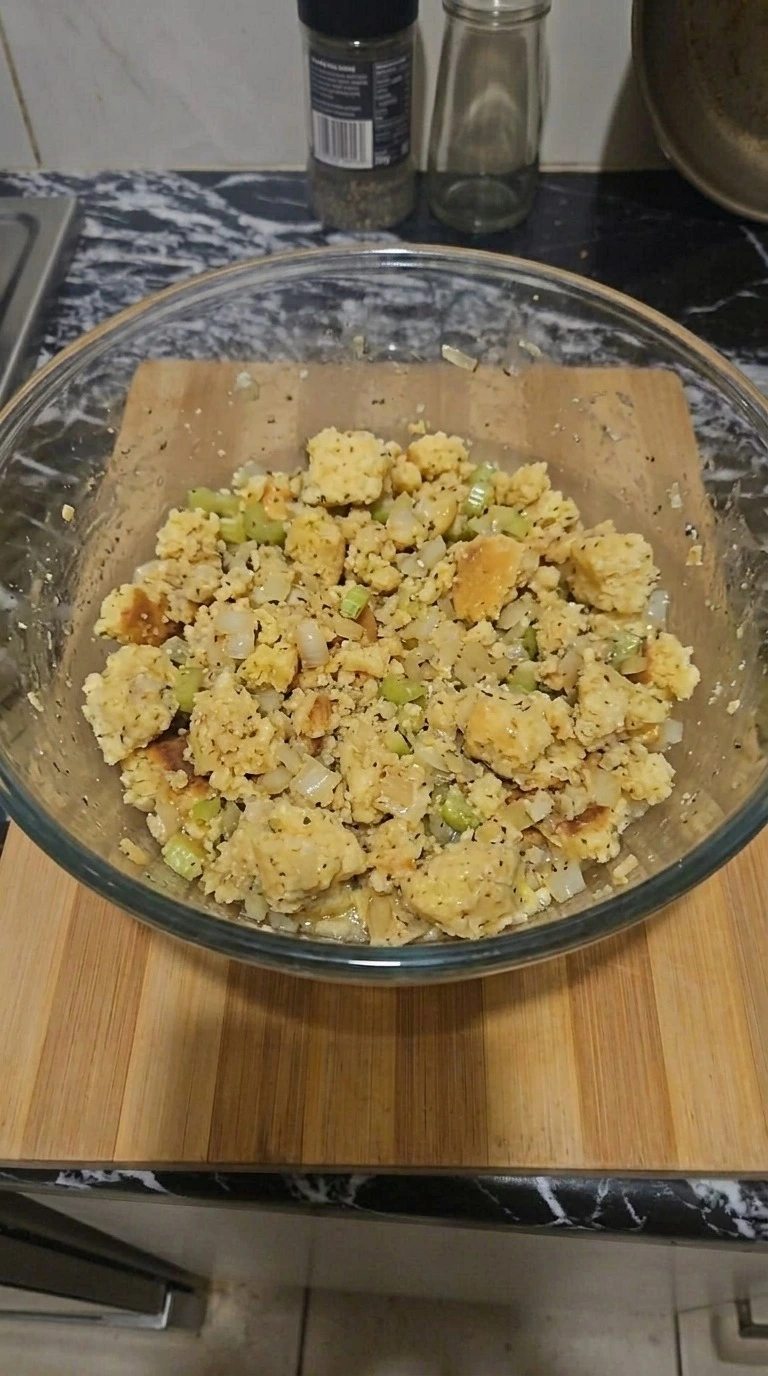
Turn the oven to 375°F. Place the dried cornbread crumbs in a very large mixing bowl and spoon the warm onion mixture over them. Whisk 2 large eggs with 3 cups low-sodium chicken broth and pour about three-quarters over the crumbs. Add 1 1/2 teaspoons kosher salt and 1/2 teaspoon freshly ground black pepper.
Fold slowly with a broad spatula and turn the bowl after every few strokes. Add the remaining broth mixture in two pours. Let everything stand for 5 minutes so the bread can soak up the liquid without falling apart. The Cornbread Dressing mixture should look quite moist but not like thin soup.
You should still see rough pieces of cornbread between the softened vegetables. If you stir hard or keep adding liquid past this point, the crumb turns pasty. Gentle folding keeps the dressing light.
Tip: Taste a spoonful of the broth and herb mixture before adding the raw eggs so you can adjust the seasoning safely.
Step 5: Bake until the center sets and the edges turn golden
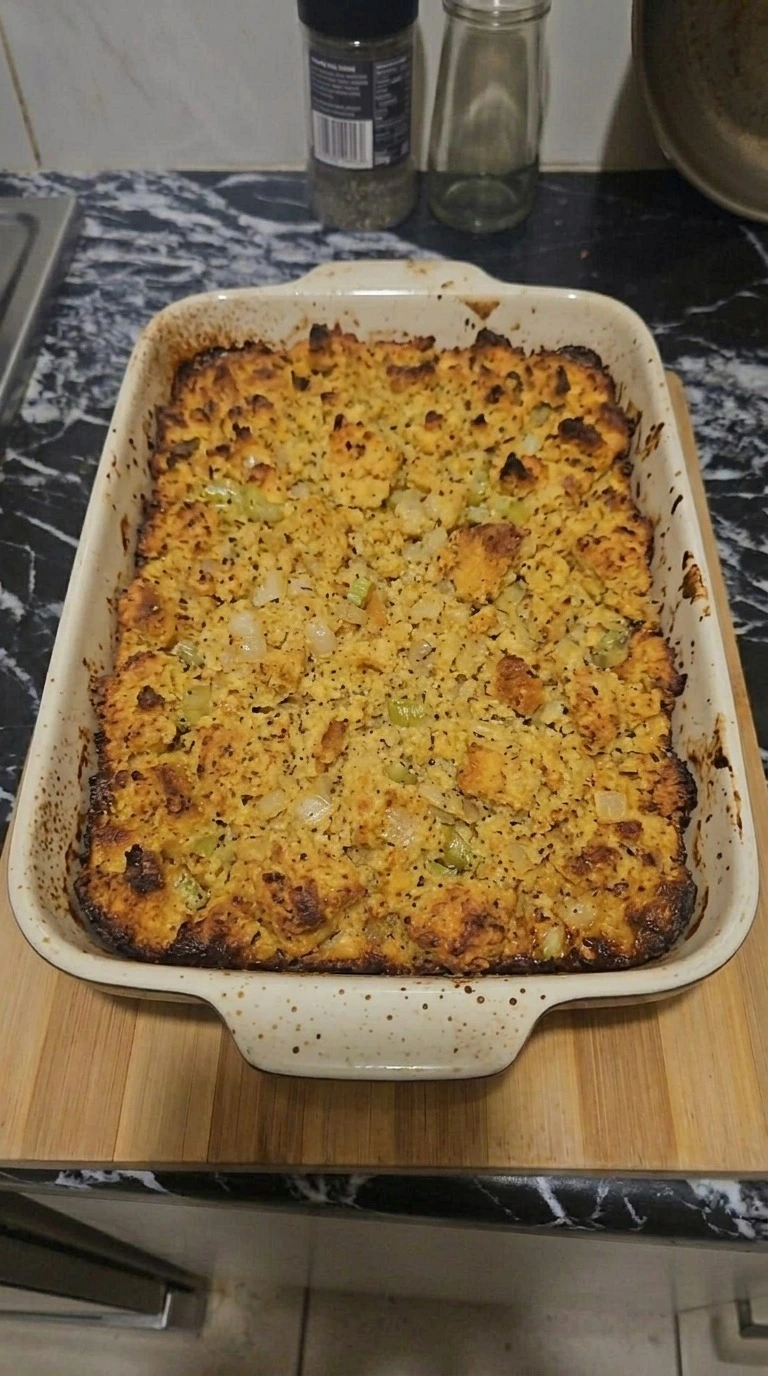
Rub the inside of a 9 by 13 inch baking dish with the final 2 tablespoons unsalted butter. Spoon in the moist cornbread mixture and spread it into a loose even layer. Don’t pack it down. Keep a few small ridges on top because they toast into crisp bites.
Bake uncovered at 375°F for 35 to 45 minutes. Check at minute 35 and look for a golden crust with deeper brown edges. The center should reach 165°F on an instant-read thermometer because the mixture contains eggs. Next, let the Cornbread Dressing rest in its baking dish for 10 minutes.
You’ll see the edges pull back slightly and the middle will hold together when pressed gently. Cutting too soon makes the soft crumb fall apart. The rest lets the hot crumb firm up.
Tip: Use the center oven rack and rotate the baking dish once at minute 25 if your oven browns the back faster.
Step 6: Spoon out a warm serving

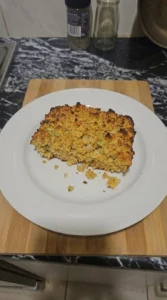
After the 10-minute rest, slide a broad serving spoon beneath the dressing near one corner. Lift out one generous portion and move it onto a dinner plate. Try to keep some of the crisp golden top attached to the tender crumb beneath. The portion won’t have neat straight edges and that’s part of its charm.
Serve it while it’s still warm, ideally around 140°F to 150°F. The soft middle should hold in loose clusters rather than collapse into a wet pile. You’ll see a pale gold interior dotted with onion and celery beneath the toasted top. A few crumbs may fall away as you serve.
That’s normal. Don’t leave the finished dish out longer than 2 hours before chilling leftovers. A brief rest helps each serving hold together.
Tip: For a holiday plate, leave enough room beside each serving for gravy so the crisp top doesn’t get soaked before eating.
Pro Tips
- Use medium-ground yellow cornmeal rather than an extra-fine grind. The slightly coarse texture helps the cornbread hold distinct pieces after the broth goes in.
- Measure the 3 cups of chicken broth before mixing and add it in stages. The crumbs should look moist without liquid collecting beneath them.
- Cook the diced onion and celery over medium heat for 8 to 10 minutes. They should turn soft and glossy without developing dark brown edges.
- Bake on the center oven rack at 375°F and check the surface after 35 minutes. A deep golden crust signals that the top has dried enough.
- Use a 9 by 13 inch baking dish rather than a shallow sheet pan. The deeper layer protects the center from drying before the top turns crisp.
- Make the cornbread 1 day ahead when planning a large holiday meal. Cool it fully before loosely covering it so trapped steam doesn’t leave it soggy.
- For a stronger sage flavor, warm an extra 0.25 teaspoon rubbed sage in 1 teaspoon melted butter and brush it lightly over the hot surface before serving.
- Check the middle with an instant-read thermometer and aim for 165°F. A golden top alone can’t confirm that the egg-enriched center has reached a safe temperature.
- For a sausage version, brown 8 ounces of mild pork breakfast sausage until it reaches 160°F and drain the fat before folding it into the vegetable mixture.
- For an apple and herb dressing, add 1 cup finely diced Granny Smith apple to the onion and celery during their final 5 minutes of cooking for a gently tart bite.
- For a vegetarian holiday version, replace the 3 cups of chicken broth with low-sodium vegetable broth and add 0.5 teaspoon dried rosemary for a deeper herbal flavor.
- For a pecan variation, fold 0.5 cup roughly chopped toasted pecans into the moist mixture before baking to add a gentle crunch against the tender cornbread.
Substitutions & Variations
- whole milk: 1.25 cups unsweetened plain oat milk or unsweetened soy milk. Use the same amount for a dairy-free cornbread batter. Oat milk makes a slightly softer crumb while soy milk gives more structure. Replace the butter with dairy-free baking sticks as well.
- all-purpose flour: 0.5 cup gluten-free 1-to-1 baking flour containing xanthan gum. Replace the flour in equal amounts and check that your cornmeal and baking powder are certified gluten-free. The cornbread may crumble more easily, so fold the broth in gently.
- large eggs: 3 tablespoons ground flaxseed mixed with 9 tablespoons warm water. Let the mixture thicken for 10 minutes before using it in place of all three eggs. The dressing will be softer and less firmly set. For a more reliable result, use a commercial egg replacer labeled for baking.
- low-sodium chicken broth: 3 cups low-sodium vegetable broth. Use an equal amount for a meat-free version with a slightly lighter savory flavor. Choose a broth with onion and celery notes for more depth. This dressing also pairs well with our Sweet Potato Casserole with Pecans for a vegetable-focused holiday spread.
- whole milk: 1.25 cups milk made from 1 cup whole milk plus 0.25 cup water. This makes a workable substitute when you’re short on milk. The cornbread will taste slightly less rich but should still hold together. Don’t replace all the milk with water because the crumb becomes less tender.
Storage Instructions
Let leftover Cornbread Dressing cool briefly and transfer it into shallow airtight containers within 2 hours of baking. Refrigerate at 40°F or colder for 3 to 4 days. For longer storage, divide the dressing into individual portions and wrap them tightly before placing them in freezer-safe containers. Freeze for up to 3 months for the best flavor and texture.
Smaller portions thaw more evenly and make weeknight leftovers easier to manage. When you’re ready to reheat, thaw frozen portions overnight in the refrigerator. Add 1 to 2 tablespoons chicken broth per serving and cover before warming at 350°F for approximately 15 to 25 minutes. Heat until the middle reaches 165°F.
Then uncover for the final 3 to 5 minutes if you’d like a little crunch. Discard leftovers with mold, unusual odors or slimy texture. Food can also become unsafe without visible spoilage, so don’t exceed safe storage times.
Cornbread Dressing
Ingredients
Method
- Heat your oven to 400°F. Whisk 1 1/2 cups yellow cornmeal with 1/2 cup all-purpose flour and 1 tablespoon baking powder in a large bowl. Add 1 large egg and 1 1/4 cups whole milk. Then pour in 4 tablespoons melted unsalted butter and stir just until the dry spots fade. Don’t beat it smooth. Spread the thick batter into a lightly greased 8 by 8 inch baking pan. Bake for 20 to 25 minutes until the top turns light gold and a toothpick comes out clean. Let it cool for 20 minutes. You’ll see a few uneven cracks across the top and the edges will pull back a little from the pan. That’s what you want. Too much mixing makes the crumb tough and a longer bake dries it out before the dressing even starts. Gentle stirring keeps the cornbread tender.
- Once the cornbread has cooled for 20 minutes, lift it from the pan and break it apart with your hands. Aim for uneven pieces between 1/2 inch and 1 inch wide. Leave a few larger bits because they’ll give the finished dressing more texture. Spread the crumbs across a large rimmed baking sheet and lower the oven to 300°F. Toast them for 12 to 15 minutes and turn them once halfway through. The crumbs should feel slightly dry on the outside but still give when you press them. Next, leave the crumbs on the sheet for 5 minutes so the last bit of steam can escape. You’ll notice the surface feels less sticky. If you toast them too long they’ll become hard and need far more broth. A short dry-out helps the crumbs hold their shape.
- While the cornbread dries, peel and finely dice 1 large yellow onion. Cut 3 celery stalks into small pieces about 1/4 inch wide. Melt 4 tablespoons unsalted butter in a large skillet over medium heat at roughly setting 5 on a 10-point dial. Add the onion and celery and stir every minute for 8 to 10 minutes. They should soften without turning dark brown. Then add 1 tablespoon rubbed sage and 1 teaspoon dried thyme. Stir for another 30 seconds so the warm butter draws out their scent. You’ll smell the sage almost right away. The onion will look glossy and pale while the celery keeps a little green color. (I once rushed this stage and found crunchy onion in the finished pan.) Go too fast and the vegetables stay firm. Slow softening builds a sweet savory base.

- Turn the oven to 375°F. Place the dried cornbread crumbs in a very large mixing bowl and spoon the warm onion mixture over them. Whisk 2 large eggs with 3 cups low-sodium chicken broth and pour about three-quarters over the crumbs. Add 1 1/2 teaspoons kosher salt and 1/2 teaspoon freshly ground black pepper. Fold slowly with a broad spatula and turn the bowl after every few strokes. Add the remaining broth mixture in two pours. Let everything stand for 5 minutes so the bread can soak up the liquid without falling apart. The Cornbread Dressing mixture should look quite moist but not like thin soup. You should still see rough pieces of cornbread between the softened vegetables. If you stir hard or keep adding liquid past this point, the crumb turns pasty. Gentle folding keeps the dressing light.

- Rub the inside of a 9 by 13 inch baking dish with the final 2 tablespoons unsalted butter. Spoon in the moist cornbread mixture and spread it into a loose even layer. Don’t pack it down. Keep a few small ridges on top because they toast into crisp bites. Bake uncovered at 375°F for 35 to 45 minutes. Check at minute 35 and look for a golden crust with deeper brown edges. The center should reach 165°F on an instant-read thermometer because the mixture contains eggs. Next, let the Cornbread Dressing rest in its baking dish for 10 minutes. You’ll see the edges pull back slightly and the middle will hold together when pressed gently. Cutting too soon makes the soft crumb fall apart. The rest lets the hot crumb firm up.

- After the 10-minute rest, slide a broad serving spoon beneath the dressing near one corner. Lift out one generous portion and move it onto a dinner plate. Try to keep some of the crisp golden top attached to the tender crumb beneath. The portion won’t have neat straight edges and that’s part of its charm. Serve it while it’s still warm, ideally around 140°F to 150°F. The soft middle should hold in loose clusters rather than collapse into a wet pile. You’ll see a pale gold interior dotted with onion and celery beneath the toasted top. A few crumbs may fall away as you serve. That’s normal. Don’t leave the finished dish out longer than 2 hours before chilling leftovers. A brief rest helps each serving hold together.
Notes
Frequently Asked Questions
Yes. Bake the cornbread up to 2 days ahead and store it covered once cool. You can also soften the vegetables the day before and refrigerate them separately. For the best texture, combine everything just before baking at 375°F. If you assemble the full mixture ahead, cover and refrigerate it for no more than 24 hours before baking.
Too much broth or cornbread that hasn’t dried enough can leave the center wet. The mixture should look very moist before baking but shouldn’t have a pool of liquid underneath. If the baked dressing seems loose, check its internal temperature and give it another 5 to 10 minutes at 375°F if needed. Let it rest for 10 minutes before serving.
You can use about 6 cups of crumbled store-bought cornbread to replace the homemade batch. Choose a savory variety because sweet cornbread can change the flavor considerably. Spread the crumbs on a baking sheet and dry them at 300°F for 10 to 15 minutes. Since packaged cornbread varies in moisture, add the broth gradually and stop before the mixture becomes soupy.
Refrigerate leftovers within 2 hours of cooking and keep them in a sealed container at 40°F or colder. They’ll stay safe for 3 to 4 days when handled and chilled properly. Divide a large batch into shallow containers so it cools faster. Discard anything that develops mold, an unusual odor or a slimy texture, and don’t rely on smell alone to judge safety.
Yes. Double every ingredient and divide the mixture between two 9 by 13 inch baking dishes rather than filling one extra-deep pan. Bake both at 375°F and rotate their oven positions halfway through. Start checking after 35 minutes but allow extra time if needed. Both centers must reach 165°F before serving. The doubled batch makes approximately 16 side-dish servings.
Roast turkey and turkey gravy are traditional choices because the savory herbs complement the rich pan juices. For Thanksgiving, serve approximately 0.75 to 1 cup of dressing per person alongside vegetables and cranberry sauce. You can also pair it with baked chicken or meatloaf for a Sunday dinner. Keep warm servings above 140°F if they’re sitting on a buffet.
Yes. Cool the baked dressing promptly and freeze portions in airtight containers for up to 3 months for the best quality. Thaw overnight in the refrigerator and add 1 to 2 tablespoons of chicken broth per serving before covering and heating at 350°F. Check after 15 minutes and continue until the center reaches 165°F. Uncover briefly if you want to restore some crispness.
Final Thoughts
Those crispy golden corners always disappear first at my table. This Cornbread Dressing follows the Southern tradition of using real cornbread and fragrant sage, but drying the crumbs first gives the center a tender texture without making it mushy.
It’s worth the extra step. The pan makes 8 generous side portions and fits right beside our Green Bean Casserole with Fresh Green Beans and Sweet Potato Casserole with Marshmallows. If you’ve been looking for an easy cornbread dressing for Thanksgiving, give this cornbread dressing recipe a try and tell me whether your family prefers the crispy edges or the soft center.
The same batch covers thanksgiving cornbread dressing without a single change.
In many Southern kitchens, dressing is baked in its own dish rather than inside the turkey. That method gives the top more room to turn crisp. It also makes serving easier because you can cut generous portions straight from the pan.