Cheesy Potato Casserole
The first Christmas dinner I made at home taught me that Cheesy Potato Casserole doesn’t need anything fancy to steal the show. I had potatoes stacked on the counter and a kitchen full of half-finished dishes. What saved me was baking the potatoes at 375°F instead of cranking up the heat. The cheese turned golden while the slices stayed soft inside. Since then it’s become the dish I make when I want something rich and homemade without spending the whole afternoon in the kitchen.
Mark always goes for the crispy corner pieces first. And Emma asks for another scoop before everyone has finished serving themselves. That’s usually a good sign. This easy cheesy potato casserole has the kind of creamy middle and buttery top that makes people forget about the main dish for a minute. If your family loves hearty potato bakes, our Crockpot Beefy Potato Taco Casserole is another one worth trying.
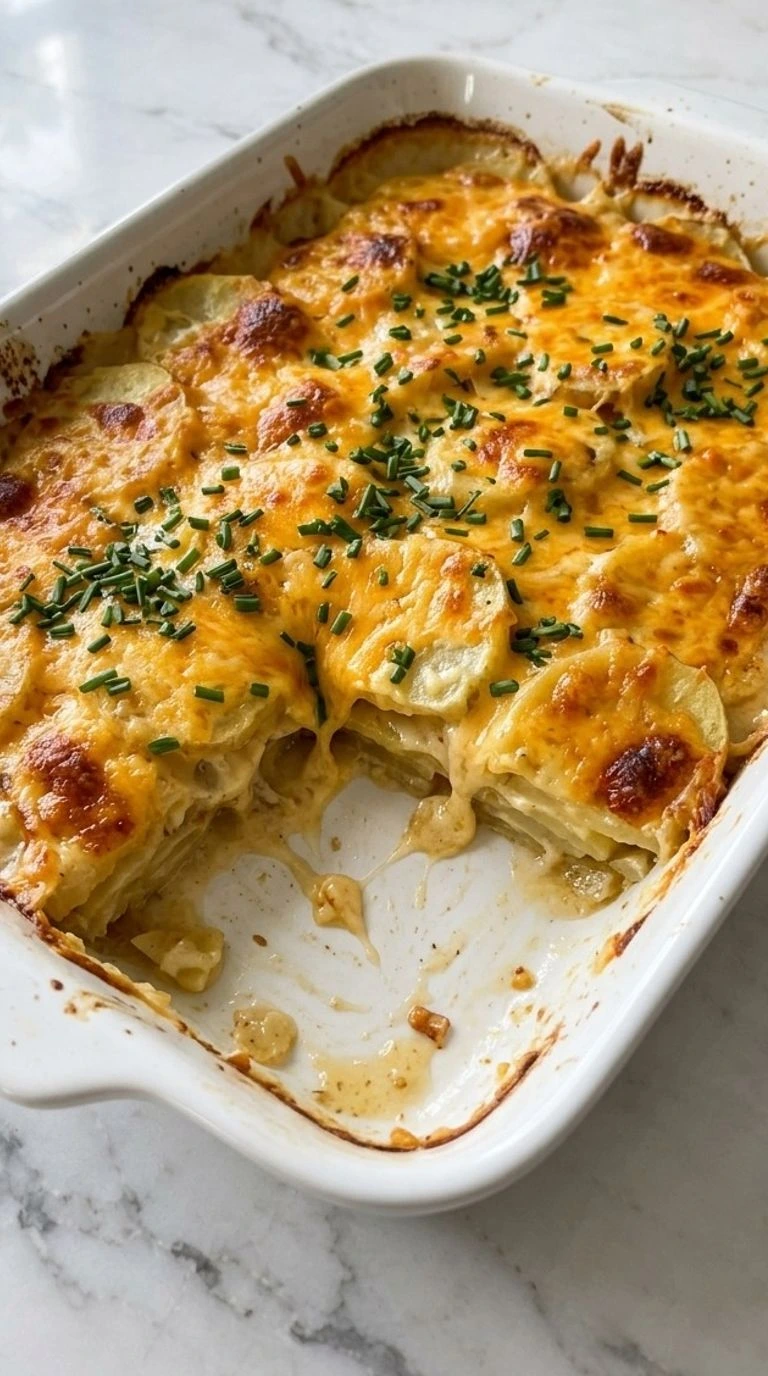
I also like that this dish doesn’t need canned soup or a long list of special ingredients. Just thinly sliced Yukon Gold potatoes and a homemade cheddar sauce that bakes into the layers. The prep is straightforward. The oven handles the rest. And whether you’re making Christmas dinner or feeding everyone on a cold weeknight, those golden edges make it hard to stop at one serving.
Why This Recipe Works
Cheesy Potato Casserole gets its creamy texture from two things working together. A butter and flour roux thickens the milk before the cheddar goes in while the starch from the thin Yukon Gold slices helps the sauce cling as the dish bakes.
That means you get soft layers instead of a puddle of cheese at the bottom. Baking at 375°F with foil for the first 40 minutes gives the potatoes time to soften before the top gets too dark, and removing the foil lets the cheddar turn golden.
If you like that mix of creamy potatoes and rich cheese, our Loaded Baked Potato Soup is another good choice.
Ingredients
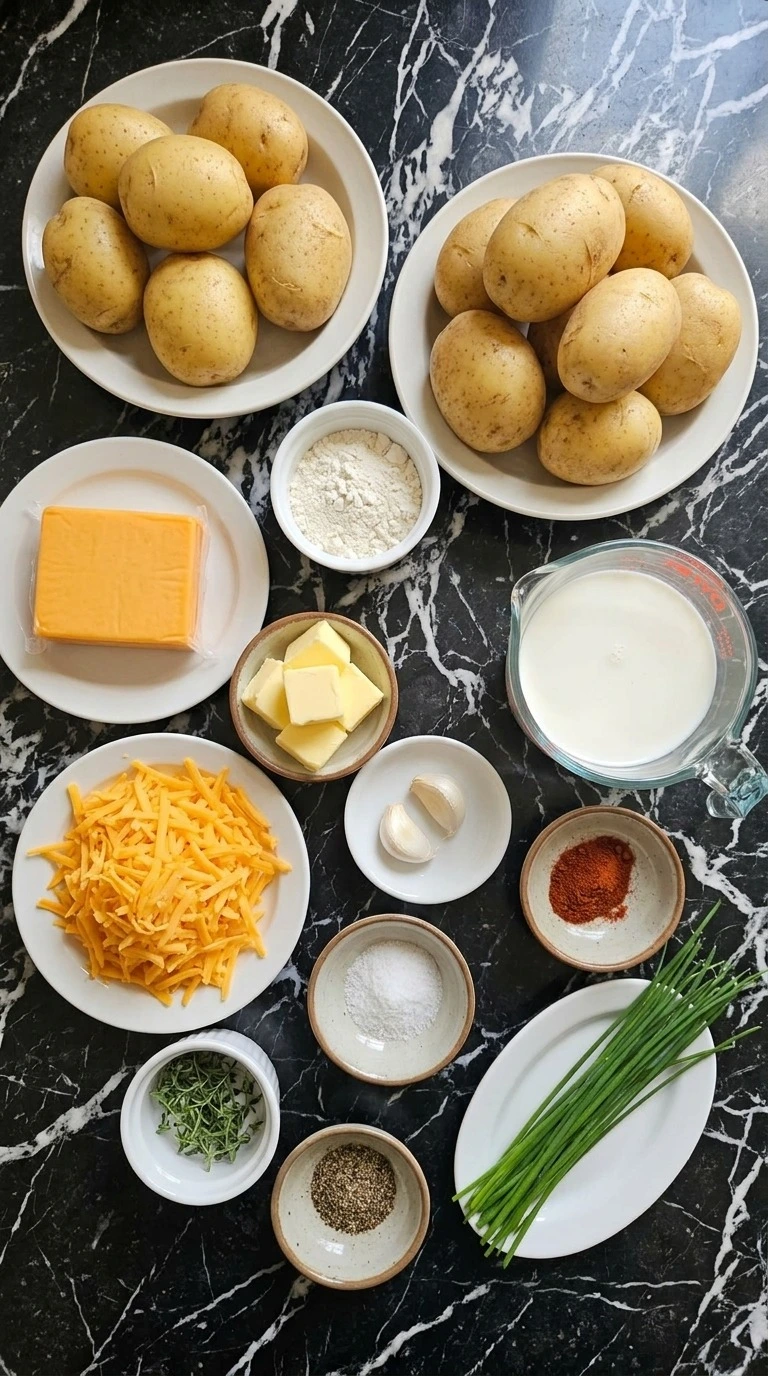
- Yukon Gold potato: Scrubbed and cut crosswise into 1/8-inch rounds with the thin skins left on. Their creamy flesh holds its shape while absorbing the cheddar sauce.
- Unsalted butter: Melted to cook the garlic and flour and form the rich base of the cheddar sauce. Use a little residue to grease the baking dish.
- Garlic cloves: Peeled and finely minced to give the cream sauce a warm savory flavor without large garlic pieces.
- All-purpose wheat flour: Whisked into melted butter to make a light roux that thickens the milk and helps the sauce cling to each potato slice.
- Whole milk: Added gradually to the roux and whisked until thick and smooth. Its fat provides richness without making the sauce as heavy as cream.
- Sharp cheddar cheese: Freshly shredded from a block with 2 cups melted into the sauce and 1/2 cup reserved for the golden topping.
- Kosher salt: Stirred into the sauce to season the potatoes throughout their layers rather than just on the surface.
- Ground black pepper: Added to the cheddar sauce for mild warmth that balances the rich cheese and butter.
- Fresh thyme leaves: Stripped from the stems and scattered over the assembled casserole for a light herbal note.
- Smoked paprika: Sprinkled over the top before baking to add mild smoky flavor and a subtle reddish tint to the cheddar crust.
- Fresh chives: Finely chopped and scattered over the finished casserole after baking for fresh onion flavor and a little green color.
Kitchen Equipment
- 9×13-inch ceramic baking dish: Choose a deep 9×13-inch oven-safe dish with at least 2-inch sides so the potato layers and bubbling cheese sauce fit without overflowing.
- Mandoline slicer or sharp chef’s knife: Use a mandoline with a hand guard and a 1/8-inch setting for even slices or choose a sharp 8-inch chef’s knife if you prefer cutting by hand.
- Medium heavy-bottomed saucepan: A 2 to 3-quart heavy-bottomed saucepan holds the cheddar sauce and spreads heat evenly so the milk and flour don’t scorch.
- Balloon whisk: Choose a medium balloon whisk that reaches the saucepan corners so the flour blends into the milk without leaving lumps.
- Box grater: A sturdy box grater with medium or large holes turns a block of sharp cheddar into shreds that melt more smoothly than thick cheese chunks.
- Aluminum foil: Use a sheet of oven-safe aluminum foil large enough to seal the 9×13-inch dish so the potato slices soften before the cheese browns.
- Wide serving spatula: A spatula with a blade at least 3 inches wide supports each hot portion and helps prevent the tender layers from falling apart during serving.
How to Make It
Step 1: Slice the Yukon Gold potatoes into thin rounds
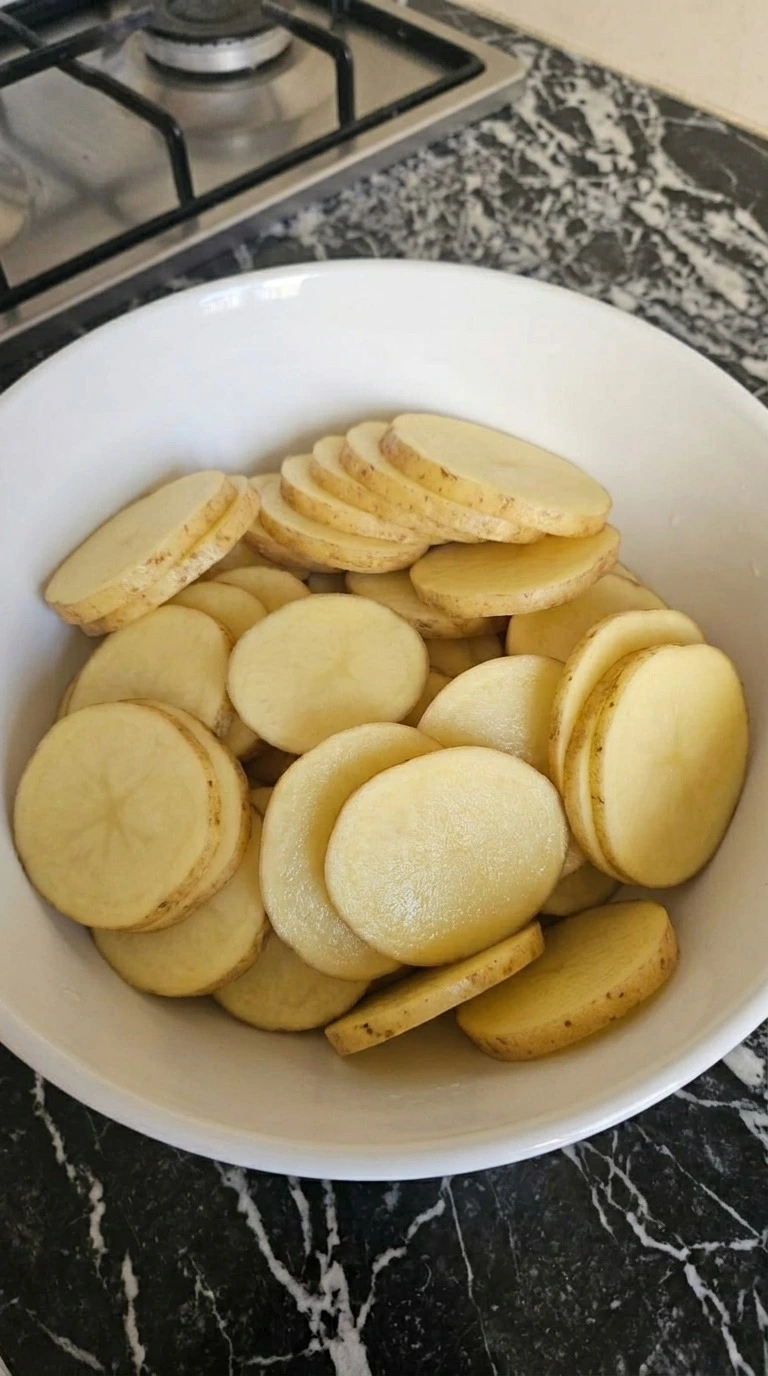
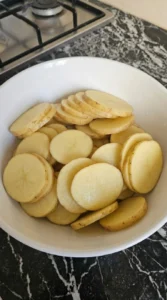
Scrub 3 pounds of Yukon Gold potatoes and dry them well. Keep the skins on because they’re thin and add a bit of texture. Use a sharp knife or mandoline to cut each potato crosswise into 1/8-inch rounds. Aim for slices that look close in thickness rather than trying to make every round identical.
This takes about 10 minutes with a mandoline or 15 minutes by hand. Meanwhile set the oven to 375°F so it’s hot when the dish goes in. Don’t soak the slices because you’ll wash away some of the starch that helps bind the sauce. The cut rounds should look pale yellow and feel firm with slightly damp surfaces.
You’ll notice a little starch on your fingers. That’s useful. If you leave the slices too thick they’ll stay firm long after the cheese topping turns dark. Thin cuts help the layers soften at the same rate.
Tip: Use a mandoline with a hand guard if you have one. Choose the 1/8-inch setting and stop before the potato gets too small to hold safely.
Step 2: Whisk the homemade cheddar sauce until smooth
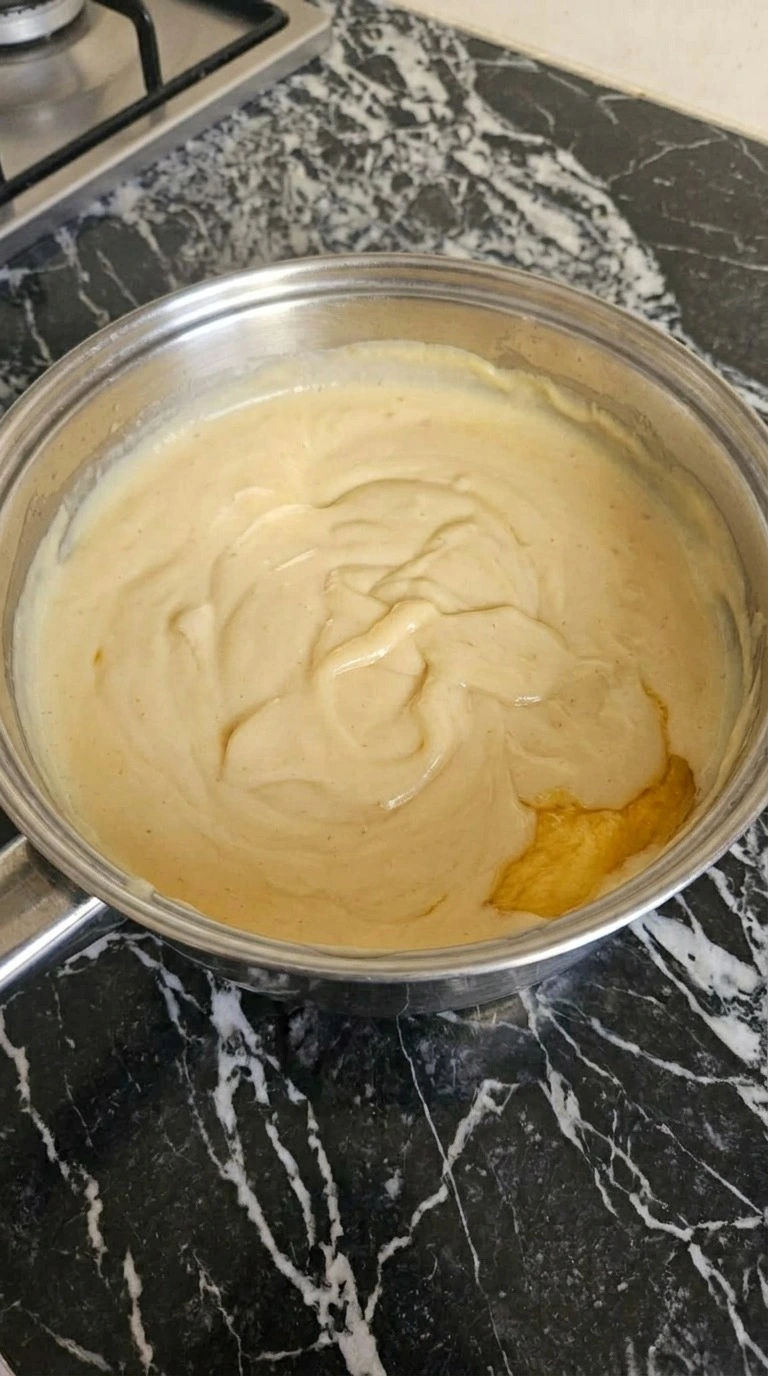
Set a medium saucepan over medium-low heat at about 4 on a 10-point dial. Melt 4 tablespoons of unsalted butter and add 2 minced garlic cloves. Stir for 30 seconds until the garlic smells sweet. Then whisk in 3 tablespoons of all-purpose flour and cook for 90 seconds.
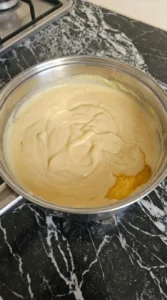
Pour in 2 cups of whole milk in a slow stream while you whisk. Keep stirring for 4 to 5 minutes until the sauce thickens. Turn off the heat and fold in 2 cups of shredded sharp cheddar. Add 1 1/2 teaspoons of kosher salt and 1/2 teaspoon of ground black pepper.
The sauce should cling to a spoon and look smooth with no dry flour streaks. You’ll smell warm garlic and melted cheddar. If you keep boiling it after the cheese melts it can turn grainy. Gentle heat keeps the cheese proteins from tightening into lumps.
Tip: Shred sharp cheddar from a block rather than using packaged shreds. Freshly grated cheese usually melts more smoothly because it has less added starch.
Step 3: Layer the potatoes with sauce and cheddar
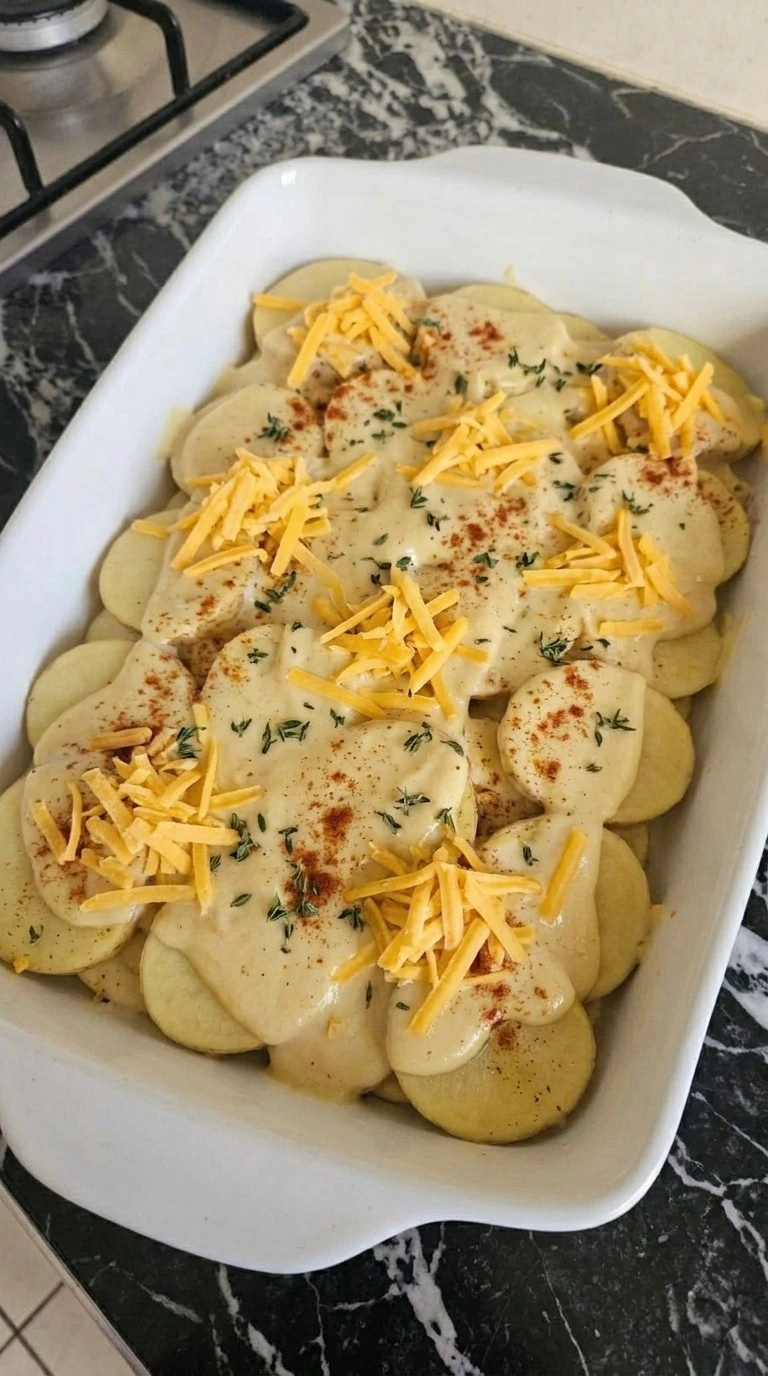
Lightly grease a 9×13-inch baking dish with a little of the prepared butter residue from the saucepan. Spread half of the sliced Yukon Gold potatoes across the bottom in loose overlapping rows. Pour half the warm cheddar sauce over them and nudge the slices apart in a few spots so the sauce can reach the bottom. Add the rest of the potatoes and spread the remaining sauce over the top.
Use the back of a spoon to coat any exposed slices. Scatter 1 teaspoon of fresh thyme leaves and 1/2 teaspoon of smoked paprika across the top. Finish with the remaining 1/2 cup of shredded sharp cheddar. This takes about 5 minutes.
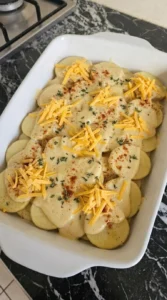
You should still see the outlines of the potato rounds beneath the creamy topping. The cheddar will sit in uneven little mounds. Don’t press everything into a solid block or the heat won’t move through the layers as well. Loose overlap leaves room for the sauce to flow.
Tip: Leave about 1/2 inch of space below the baking dish rim. The hot sauce will bubble and needs room to rise without spilling.
Step 4: Bake until the potato layers are tender and golden
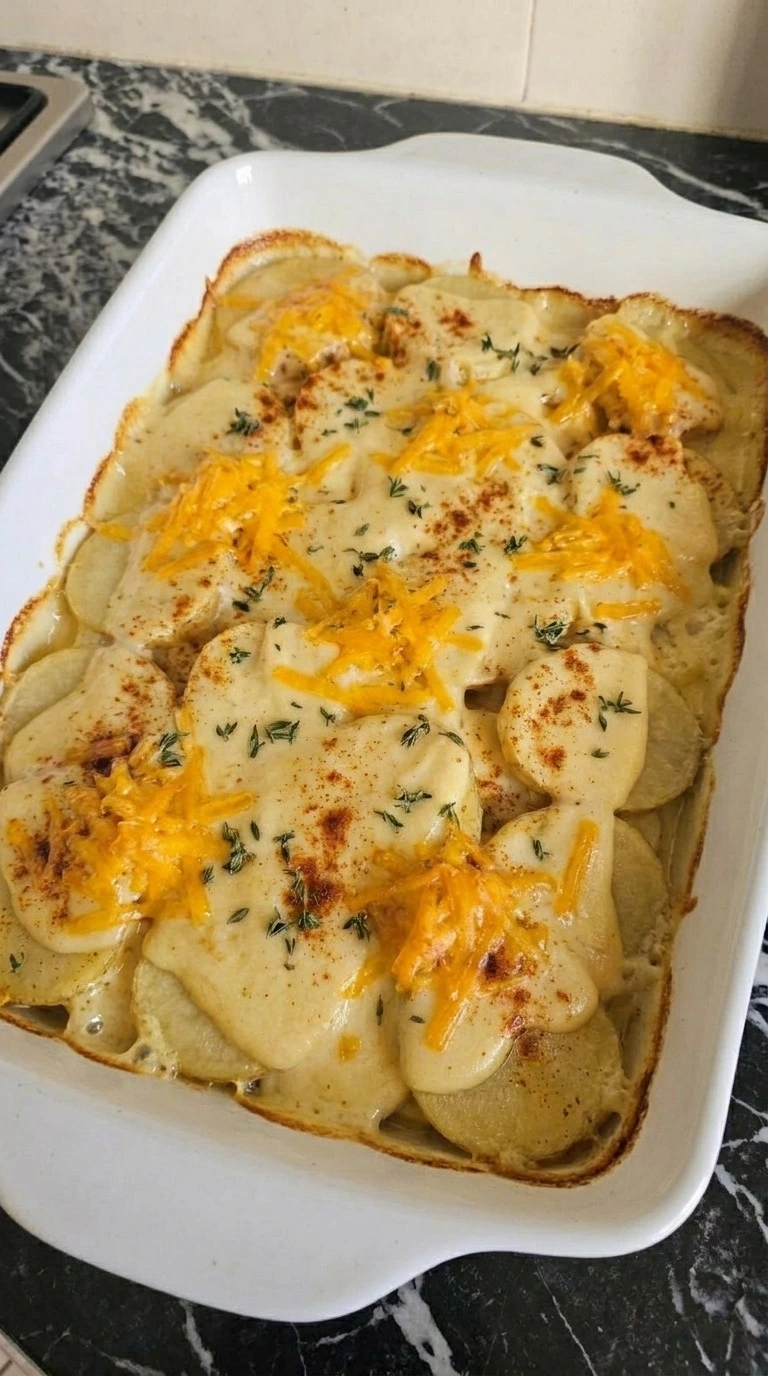
Cover the baking dish snugly with aluminum foil and place it on the middle oven rack at 375°F. Bake for 40 minutes so the trapped heat can soften the thin potato slices without drying the top. Next remove the foil and bake for another 20 to 25 minutes. Check the center with a thin knife near minute 60.
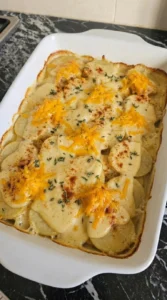
It should slide through the layers with almost no push. If you feel a firm patch give it another 5 minutes before checking again. The last stretch without foil lets the remaining cheddar melt and form golden patches across the top. Look for small bubbles around the edges and deep amber spots on the cheese.
The top should have a few crisp ridges. (I once raised the heat to 400°F and the top darkened before the center softened. ) If you pull it out too soon you’ll get firm potato centers. Covered baking traps moisture so the slices soften before the top browns.
Tip: If your oven browns unevenly rotate the dish 180 degrees when you remove the foil. This helps the far corners catch up.
Step 5: Rest the casserole and serve with fresh chives
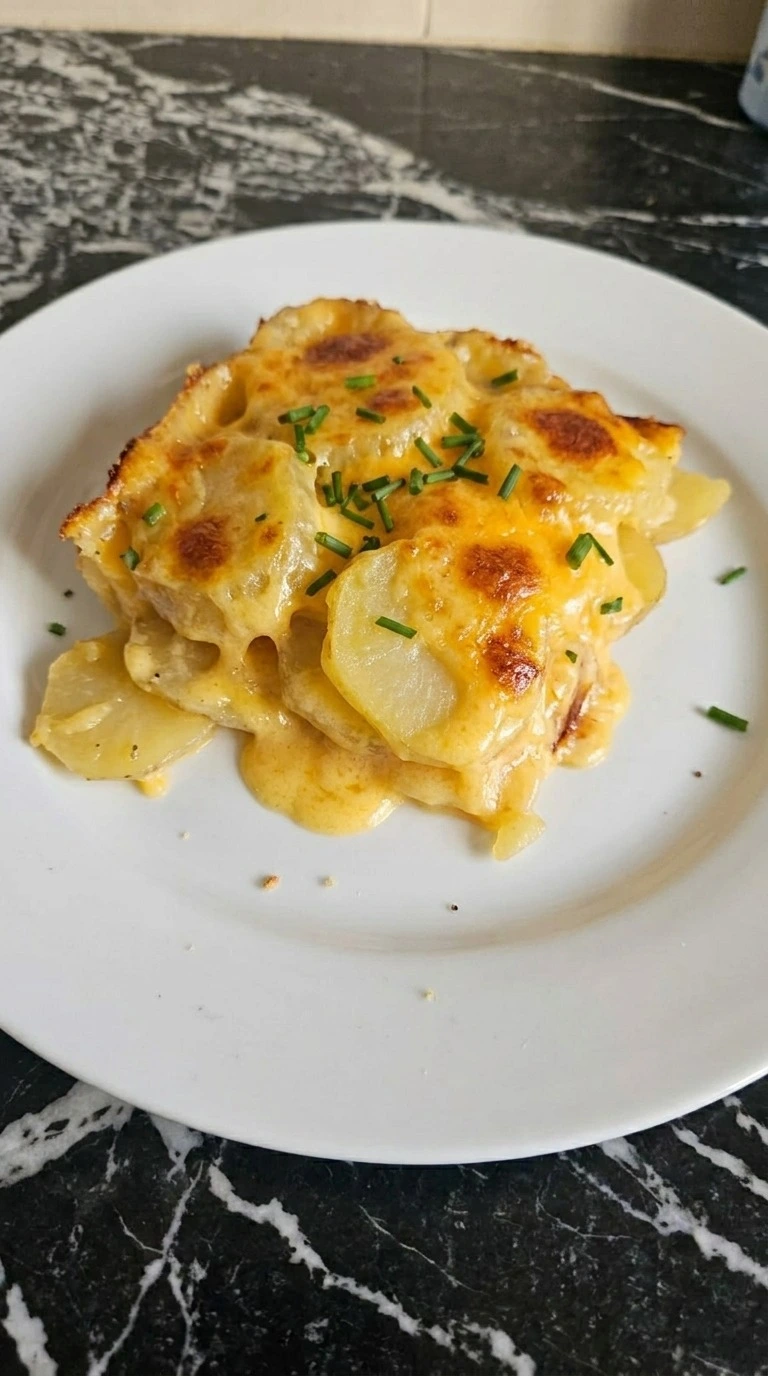
Take the baking dish out of the oven and let it stand for 15 minutes before serving. The casserole will still be hot but the bubbling sauce will settle and cling more firmly to the potatoes. Use a serving spoon or wide spatula to lift one generous square portion from the corner. Set it on a white dinner plate without forcing the edges into a neat shape.
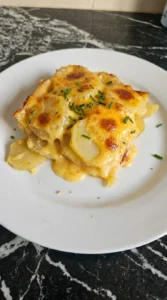
Scatter 2 tablespoons of finely chopped fresh chives over the casserole before serving and let a few pieces fall across the plated portion. Keep the serving loose so the potato layers stay visible. The cut piece should hold soft layers with a little cheddar sauce easing between them. You’ll see crisp amber edges next to pale golden centers.
Serve before the cheese cools and firms up too much. A 15-minute rest lets the starch thicken the sauce between slices.
Tip: For a neat holiday buffet portion use a wide spatula and cut generous squares after resting. For family dinner use a spoonful with plenty of crispy edges.
Pro Tips
- Keep the Yukon Gold potato slices close to 1/8 inch thick because uneven cuts can leave firm centers while thinner pieces soften too much.
- Buy a block of aged sharp cheddar and grate all 2.5 cups yourself. Pre-shredded cheese can leave the sauce slightly grainy.
- Use a 9×13-inch baking dish with sides at least 2 inches high so the bubbling sauce has enough space to rise without spilling.
- Let the milk warm slightly before adding it to the roux. Milk that’s no longer fridge-cold blends faster and reduces the risk of lumps.
- Start checking the center after 60 minutes at 375°F. A thin knife should pass through the potato layers without meeting a firm spot.
- For a stronger savory flavor, add 1/4 teaspoon of garlic powder to the cheddar sauce while whisking in the black pepper.
- After removing the foil, watch the cheese closely during the final 5 minutes. Deep golden patches are good, but dark brown spots can taste bitter.
- When planning Christmas dinner, slice the potatoes just before assembly and allow 15 minutes of resting time before serving the finished casserole.
- For a smoky cheddar version, replace 1 cup of sharp cheddar with 1 cup of smoked Gouda and keep the remaining cheese measurements unchanged.
- Make a festive herb casserole by adding 1 teaspoon of finely chopped fresh rosemary and 1 extra teaspoon of fresh thyme leaves before baking.
- For a lighter vegetable variation, replace 1 pound of Yukon Gold potatoes with 1 pound of thinly sliced cauliflower and reduce the milk by 1/4 cup.
- Create a spicy holiday potato bake by mixing 1/4 teaspoon of cayenne pepper into the sauce and topping the casserole with 1/2 cup of diced roasted poblano peppers before baking.
Substitutions & Variations
- Yukon Gold potato: Use 3 pounds of red potatoes or peeled russet potatoes. Red potatoes hold their shape better and give you firmer layers. Russets soften more and release extra starch, so check for tenderness after 55 minutes. For another potato dinner idea, try our Crockpot Beefy Potato Taco Casserole.
- Sharp cheddar cheese: Use 2.5 cups of dairy-free cheddar-style shreds or an equal amount of Monterey Jack cheese. Monterey Jack melts smoothly but tastes milder than sharp cheddar. Dairy-free shreds may melt less evenly, so choose a brand labeled for melting. For a fully dairy-free version, also replace the butter and milk.
- Whole milk and unsalted butter: Use 2 cups of unsweetened plain oat milk and 4 tablespoons of dairy-free butter. Choose unflavored oat milk without added sugar or vanilla. The sauce may be slightly thinner and less rich, so simmer it for another 1 to 2 minutes before adding dairy-free cheese.
- All-purpose wheat flour: Use 3 tablespoons of a gluten-free all-purpose flour blend containing rice flour. Replace the wheat flour in equal amounts and whisk it into the melted butter as usual. Some blends thicken more slowly, so allow another 1 to 2 minutes for the sauce to coat a spoon. Check the cheese labels if you’re avoiding gluten.
- Fresh thyme leaves: Use 1/3 teaspoon of dried thyme or 1 teaspoon of fresh rosemary leaves. Dried thyme has a more concentrated taste, so start with one-third of the fresh amount. Finely chop fresh rosemary because its needles are firmer and its flavor is stronger. This recipe is already egg-free.
Storage Instructions
Let Cheesy Potato Casserole cool briefly after serving and transfer leftovers to shallow airtight containers within 2 hours. Store them in the refrigerator at 40°F or below for up to 4 days. Keep the portions separate if possible because smaller pieces cool faster and reheat more evenly. You can also freeze the baked casserole for up to 2 months for the best quality.
Wrap individual servings tightly or place them in freezer-safe containers after cooling. The sauce may separate slightly after thawing, but the flavor should remain good. For reheating, place refrigerated portions in a covered oven-safe dish at 325°F for 15 to 20 minutes. Add 1 tablespoon of whole milk per serving to help loosen the thick sauce.
Heat the center to 165°F before eating. If you notice mold, a sour smell or a slimy texture, discard the leftovers. Don’t taste food to check whether it’s safe.
Cheesy Potato Casserole
Ingredients
Method
- Scrub 3 pounds of Yukon Gold potatoes and dry them well. Keep the skins on because they’re thin and add a bit of texture. Use a sharp knife or mandoline to cut each potato crosswise into 1/8-inch rounds. Aim for slices that look close in thickness rather than trying to make every round identical. This takes about 10 minutes with a mandoline or 15 minutes by hand. Meanwhile set the oven to 375°F so it’s hot when the dish goes in. Don’t soak the slices because you’ll wash away some of the starch that helps bind the sauce. The cut rounds should look pale yellow and feel firm with slightly damp surfaces. You’ll notice a little starch on your fingers. That’s useful. If you leave the slices too thick they’ll stay firm long after the cheese topping turns dark. Thin cuts help the layers soften at the same rate.
- Set a medium saucepan over medium-low heat at about 4 on a 10-point dial. Melt 4 tablespoons of unsalted butter and add 2 minced garlic cloves. Stir for 30 seconds until the garlic smells sweet. Then whisk in 3 tablespoons of all-purpose flour and cook for 90 seconds. Pour in 2 cups of whole milk in a slow stream while you whisk. Keep stirring for 4 to 5 minutes until the sauce thickens. Turn off the heat and fold in 2 cups of shredded sharp cheddar. Add 1 1/2 teaspoons of kosher salt and 1/2 teaspoon of ground black pepper. The sauce should cling to a spoon and look smooth with no dry flour streaks. You’ll smell warm garlic and melted cheddar. If you keep boiling it after the cheese melts it can turn grainy. Gentle heat keeps the cheese proteins from tightening into lumps.
- Lightly grease a 9×13-inch baking dish with a little of the prepared butter residue from the saucepan. Spread half of the sliced Yukon Gold potatoes across the bottom in loose overlapping rows. Pour half the warm cheddar sauce over them and nudge the slices apart in a few spots so the sauce can reach the bottom. Add the rest of the potatoes and spread the remaining sauce over the top. Use the back of a spoon to coat any exposed slices. Scatter 1 teaspoon of fresh thyme leaves and 1/2 teaspoon of smoked paprika across the top. Finish with the remaining 1/2 cup of shredded sharp cheddar. This takes about 5 minutes. You should still see the outlines of the potato rounds beneath the creamy topping. The cheddar will sit in uneven little mounds. Don’t press everything into a solid block or the heat won’t move through the layers as well. Loose overlap leaves room for the sauce to flow.
- Cover the baking dish snugly with aluminum foil and place it on the middle oven rack at 375°F. Bake for 40 minutes so the trapped heat can soften the thin potato slices without drying the top. Next remove the foil and bake for another 20 to 25 minutes. Check the center with a thin knife near minute 60. It should slide through the layers with almost no push. If you feel a firm patch give it another 5 minutes before checking again. The last stretch without foil lets the remaining cheddar melt and form golden patches across the top. Look for small bubbles around the edges and deep amber spots on the cheese. The top should have a few crisp ridges. (I once raised the heat to 400°F and the top darkened before the center softened.) If you pull it out too soon you’ll get firm potato centers. Covered baking traps moisture so the slices soften before the top browns.
- Take the baking dish out of the oven and let it stand for 15 minutes before serving. The casserole will still be hot but the bubbling sauce will settle and cling more firmly to the potatoes. Use a serving spoon or wide spatula to lift one generous square portion from the corner. Set it on a white dinner plate without forcing the edges into a neat shape. Scatter 2 tablespoons of finely chopped fresh chives over the casserole before serving and let a few pieces fall across the plated portion. Keep the serving loose so the potato layers stay visible. The cut piece should hold soft layers with a little cheddar sauce easing between them. You’ll see crisp amber edges next to pale golden centers. Serve before the cheese cools and firms up too much. A 15-minute rest lets the starch thicken the sauce between slices.
Notes
Frequently Asked Questions
Yes, you can assemble it up to 24 hours ahead and keep it tightly covered in the refrigerator at 40°F or below. Because the potatoes and sauce will be cold, allow about 10 to 15 extra minutes of covered baking at 375°F. Check the center with a thin knife before removing the foil, and bake until the slices feel fully tender.
Excess moisture usually comes from soaking the sliced potatoes or using a sauce that hasn’t thickened enough. Cook the milk and flour mixture for 4 to 5 minutes until it coats a spoon before adding the cheddar. After baking, rest the casserole for 15 minutes so the starch can absorb some moisture and the sauce can settle.
You can use 3 pounds of frozen diced hash browns, but the finished casserole will have a softer and less layered texture. Thaw them completely in the refrigerator and drain away excess moisture before mixing them with the cheddar sauce. Start checking after 35 minutes covered at 375°F, then uncover until the center is hot and the top turns golden.
Double every ingredient and divide the mixture between two separate 9×13-inch baking dishes instead of stacking everything into one deep pan. Bake at 375°F and swap the dishes between oven racks halfway through so they heat evenly. Start checking after 60 minutes, although a crowded oven may require another 10 to 15 minutes.
Freezing works best after baking because the potatoes have already softened and the sauce has thickened around them. Cool the casserole promptly and freeze individual portions in airtight containers for up to 2 months for the best texture. Thaw overnight in the refrigerator before reheating, and expect the cheese sauce to be slightly less smooth than when freshly baked.
This rich potato dish pairs well with roasted turkey, baked ham or a simple green vegetable side. Plan around 3/4 to 1 cup per person when serving it alongside several holiday dishes. For another vegetable option, try our Green Bean Casserole with Fresh Green Beans and serve both while hot.
Place a portion in a small oven-safe dish and add 1 tablespoon of whole milk around the edges. Cover loosely with foil and warm at 325°F for about 15 to 20 minutes, or until the center reaches 165°F. Remove the foil for the last few minutes if you want the cheddar topping to regain a little of its crisp texture.
Final Thoughts
That first spoonful always reminds me of the Christmas dinner when I thought I’d ruin the potatoes by leaving them in the oven too long. Turns out Cheesy Potato Casserole is much more forgiving than I expected.
The homemade cheddar sauce makes this cheesy potato casserole recipe special because it stays creamy beneath those crisp golden edges. And if you’re looking for a christmas cheesy potato casserole that people will ask for again, this one’s worth keeping.
Try it and tell me who grabbed the crispy corner piece first. For more holiday sides, check out our Sweet Potato Casserole with Pecans and Green Bean Casserole with Fresh Green Beans. Come back to it whenever you need easy cheesy potato casserole.
Yukon Gold potatoes were developed in Canada and released in 1980. Their naturally yellow flesh has a buttery look even before you add any cheese, which helps make baked potato dishes look rich and golden.