Crockpot Potato Soup
Cold evenings call for a warm bowl, and this Crockpot Potato Soup is the kind of meal I love making when I want comfort without spending hours in the kitchen. This recipe brings together tender russet potatoes, creamy broth and simple flavors in a way that feels familiar. This recipe is inspired by classic potato soup and is simple to follow.
If you enjoy slow cooker meals, you can also try our Crockpot Chicken and Rice Soup for another hearty dinner idea. The potato soup crock pot method lets the ingredients cook slowly while the flavors build. When people think about potato soup they often expect a heavy dish, but this version keeps a balanced texture with soft potatoes and a rich base.

The ham and potato soup style flavors come from savory ingredients that create a satisfying bowl without complicated steps.
Why This Recipe Works
Slow cooking at about 200°F lets russet potatoes release starch slowly, which thickens the broth without needing flour. Mashing part of the potatoes with cream cheese creates a smooth texture while keeping small potato pieces.
The timing matters because 6 to 7 hours gives the vegetables enough time to soften. For another slow cooker soup idea, try our Crockpot Chicken and Wild Rice Soup when you want a different comforting bowl.
Ingredients

- russet potato: Cut into 1-inch cubes for a soft texture and natural starch release.
- yellow onion: Diced to add a sweet savory base.
- celery stalk: Sliced thin for flavor and texture.
- garlic: Minced to add a warm savory aroma.
- chicken broth: Used as the liquid base for slow cooking.
- cream cheese: Softened before mixing to create a creamy finish.
- sharp cheddar: Shredded to add melted cheese flavor.
- bacon: Cooked and crumbled for a smoky topping.
- green onion: Sliced for a fresh finishing touch.
- dried thyme: Adds earthy herbal notes.
- salt: Balances the soup flavors.
- black pepper: Adds gentle heat and depth.
Kitchen Equipment
- 6-quart slow cooker: A 6-quart slow cooker holds this soup comfortably and keeps heat steady, while a smaller cooker can overflow or cook unevenly.
- Immersion blender: An immersion blender helps thicken part of the soup while keeping potato pieces, and a weak model may leave large lumps.
- Sharp chef knife: A sharp chef knife creates even 1-inch potato cubes, and a dull blade increases uneven cuts and longer cooking times.
How to Make It
Step 1: Dice the potatoes and combine the soup base
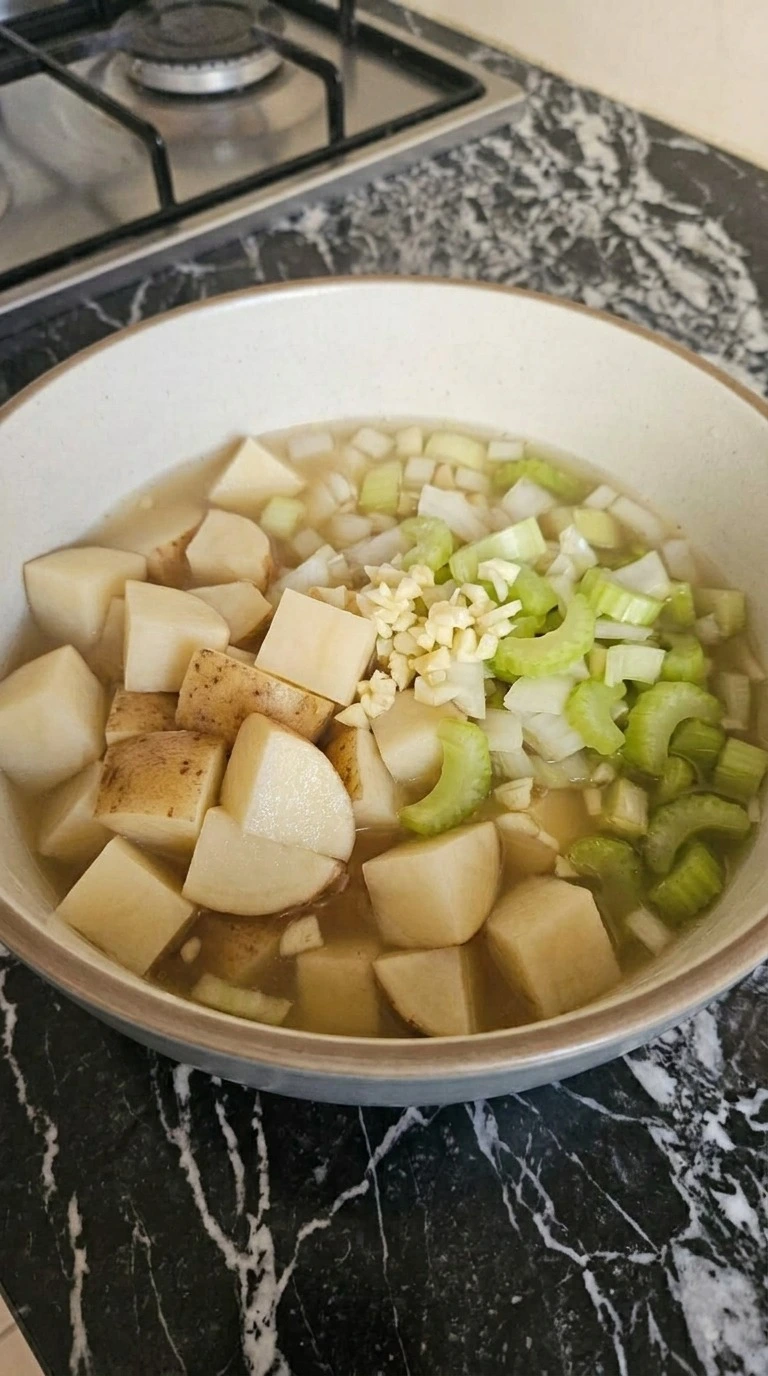
Cut 3 pounds russet potatoes into 1-inch cubes and add them with diced yellow onion, sliced celery stalks and minced garlic. Cook on LOW at about 200°F after combining the ingredients for 6 to 7 hours. Use a knife with a steady rocking motion and scrape the bowl down with a spatula after adding the seasonings.
(I tested 5 hours first, but the potato cubes stayed firm. ) You’ll see the pale potatoes coated with broth and spices while the garlic smell grows stronger. The mixture should look loose at first.
Miss this timing and the potatoes won’t soften evenly. Slow heat breaks down potato starch for a creamy base.
Tip: Cut the potato cubes close to the same size so they soften within the same 6 to 7 hour cooking window.
Step 2: Slow cook the potato mixture until tender
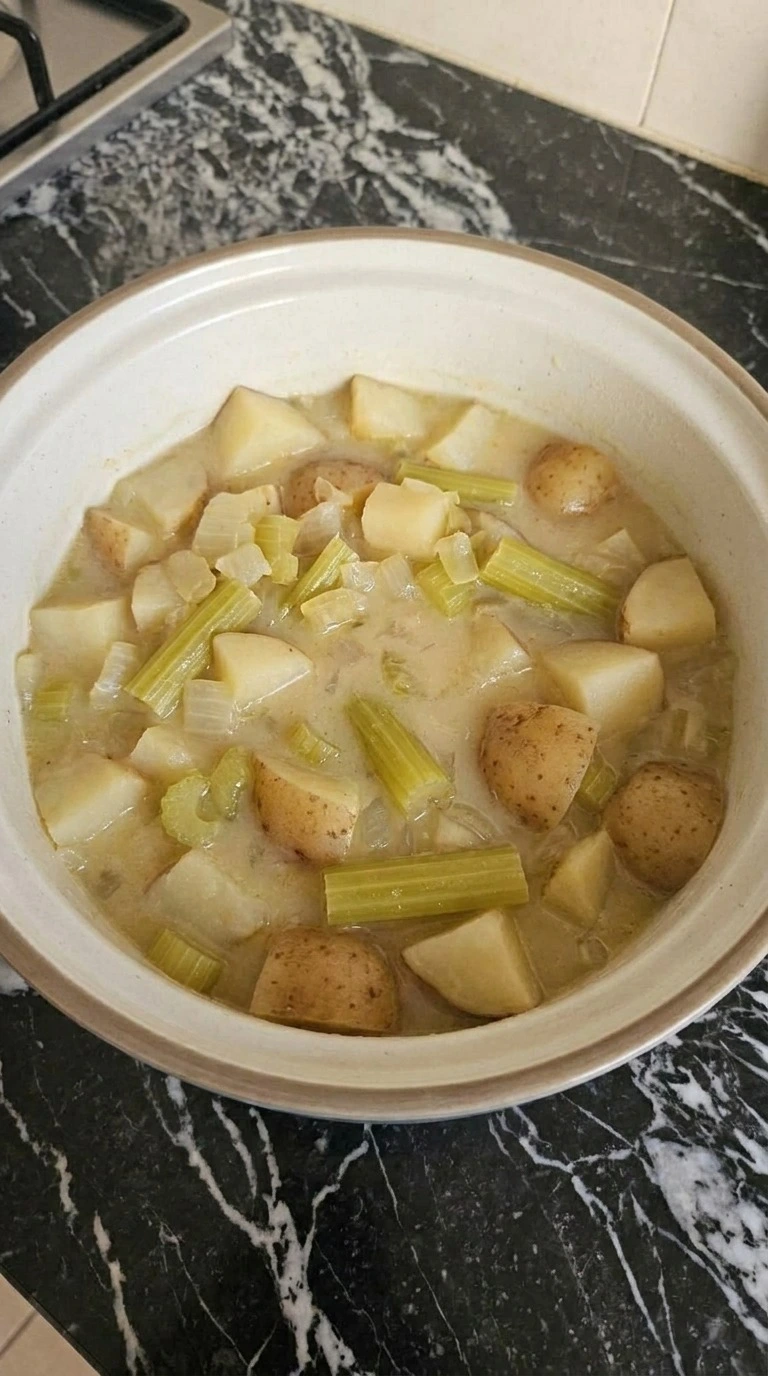
Cook the combined mixture on LOW at about 200°F for 6 to 7 hours until the russet potato cubes soften. Stir with a wooden spoon halfway through hour 4 and gently press some cubes against the side to release starch. You’ll notice the broth becoming thicker as the potatoes break apart.
The soup changes from pale and watery to a creamy golden mixture with soft potato edges. You should smell the herbs blending into the broth. Go past the cooking window and the potatoes can lose their shape.
Slow cooking releases starch without harsh heat.
Tip: Stir once around the middle of cooking so the softer potatoes spread their starch through the broth.
Step 3: Blend part of the soup and add creamy ingredients

Remove 2 cups of the softened soup and mash it with cream cheese before returning it to the pot. Warm the mixture at about 200°F for 15 minutes while stirring in a circular motion until the cream cheese melts fully. Keep the heat steady so the dairy blends smoothly.
The soup will become thicker and smoother with small potato pieces still visible. The surface should look creamy with small melted cheese streaks. Skip this step and the soup stays thinner.
Gentle heat keeps the dairy from separating.
Tip: Let cream cheese sit out for 20 minutes before mixing so it melts into the soup without small lumps.
Step 4: Finish with toppings and serve the soup

Stir in cooked bacon pieces and shredded sharp cheddar, then keep the soup at about 200°F for 10 minutes. Fold the toppings through the soup with a slow spoon motion so melted cheese spreads across the thick base. (My first batch used extra cheese and became too heavy, so this amount keeps the texture balanced.
) You’ll see melted cheese ribbons and bacon pieces spread unevenly through the bowl. The smell turns richer and the soup looks creamy with natural texture. Add toppings too early and they lose their contrast.
Final gentle heat helps the cheese melt evenly.
Tip: Add green onion just before serving so it keeps a fresh bite instead of fading during warm holding.
Step 5: Plate a single serving with final garnish
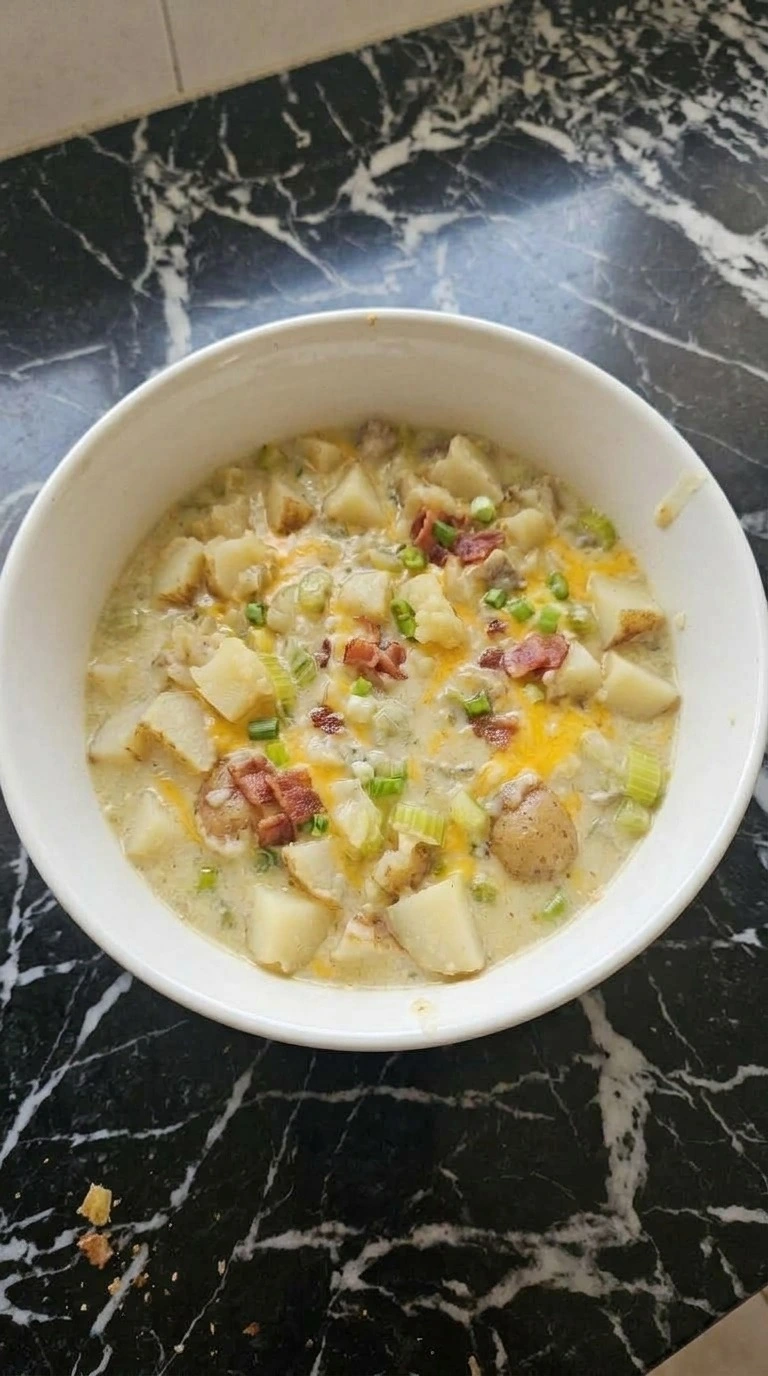
Ladle one portion into a bowl and finish with sliced green onion after keeping the soup at about 200°F for 2 minutes. Place the garnish gently with your fingers and avoid stirring so the toppings stay visible. The portion should have thick soup with uneven potato pieces throughout.
The final bowl shows creamy texture, melted cheese and small bacon pieces with a homemade appearance. You’ll notice fresh onion aroma over the warm soup. Waiting too long cools the dairy layer.
Careful finishing keeps each serving visually balanced.
Tip: Serve bowls after warming them for 2 minutes with hot water so the soup stays warm longer.
Pro Tips
- Cut the russet potatoes into 1-inch cubes so they soften evenly during the 6 to 7 hour LOW cooking time and create a smooth base.
- Choose fresh russet potatoes that feel firm and heavy for their size because soft potatoes can break down too fast during slow cooking.
- Keep the slow cooker between LOW and about 200°F for the full cooking period because higher heat can make the edges soften before the center.
- Add cream cheese after the potatoes are tender and stir for 15 minutes at 200°F so the dairy blends without becoming grainy.
- Avoid adding bacon during the first cooking stage because 6 hours in broth removes its crisp texture and weakens the smoky flavor.
- Warm leftover soup at medium-low heat for 10 to 15 minutes and add 2 tablespoons of broth if the texture becomes too thick.
- Finish each bowl with fresh green onion within 2 minutes of serving so the flavor stays bright against the creamy soup base.
- Add 1 teaspoon smoked paprika and replace bacon with smoked sausage for a deeper smoky version that works well during colder months.
- Mix in 1 cup cooked broccoli florets during the final 10 minutes for a vegetable packed twist with extra color and texture.
- Make a dairy-free version by using unsweetened coconut milk instead of cream cheese, which creates a lighter soup with a mild flavor change.
- Turn this into a ham and potato soup style meal by adding 2 cups diced cooked ham during the final 15 minutes of warming.
Substitutions & Variations
- cream cheese: full-fat Greek yogurt — Use 1 cup of Greek yogurt added after cooking because it gives a lighter tangy texture. Add it below 180°F so it won’t separate.
- chicken broth: vegetable broth — Use the same 6 cups for a vegetarian version. The flavor becomes milder, so add an extra 1/4 teaspoon of black pepper if needed.
- sharp cheddar: smoked gouda — Replace it with 1 cup smoked gouda for a deeper flavor and smoother melt. The soup becomes slightly richer and less sharp.
- bacon: turkey bacon — Use 6 slices of turkey bacon for a lighter topping. It adds less smoky fat, so the final soup may taste less savory.
- russet potato: Yukon Gold potato — Use 3 pounds Yukon Gold potatoes for a naturally buttery texture. They hold their shape better, so the soup may be less thick.
Storage Instructions
Keep Crockpot Potato Soup in airtight glass containers for up to 4 days in the refrigerator. Freeze portions for up to 3 months by leaving space at the top and sealing them tightly after cooling.
Reheat the soup at medium-low heat for 10 to 15 minutes and add 2 tablespoons of broth if it becomes too thick. Discard it if you notice sour smells, mold, or a slimy texture.
Crockpot Potato Soup
Ingredients
- 3 pounds russet potato Cut into 1-inch cubes for a soft texture and natural starch release.
- 1 large yellow onion Diced to add a sweet savory base.
- 3 stalks celery stalk Sliced thin for flavor and texture.
- 4 cloves garlic Minced to add a warm savory aroma.
- 6 cups chicken broth Used as the liquid base for slow cooking.
- 8 ounces cream cheese Softened before mixing to create a creamy finish.
- 1 cup sharp cheddar Shredded to add melted cheese flavor.
- 6 slices bacon Cooked and crumbled for a smoky topping.
- 1/4 cup green onion Sliced for a fresh finishing touch.
- 1 teaspoon dried thyme Adds earthy herbal notes.
- 1 teaspoon salt Balances the soup flavors.
- 1/2 teaspoon black pepper Adds gentle heat and depth.
Instructions
- Cut 3 pounds russet potatoes into 1-inch cubes and add them with diced yellow onion, sliced celery stalks and minced garlic. Cook on LOW at about 200°F after combining the ingredients for 6 to 7 hours. Use a knife with a steady rocking motion and scrape the bowl down with a spatula after adding the seasonings. (I tested 5 hours first, but the potato cubes stayed firm.) You’ll see the pale potatoes coated with broth and spices while the garlic smell grows stronger. The mixture should look loose at first. Miss this timing and the potatoes won’t soften evenly. Slow heat breaks down potato starch for a creamy base.

- Cook the combined mixture on LOW at about 200°F for 6 to 7 hours until the russet potato cubes soften. Stir with a wooden spoon halfway through hour 4 and gently press some cubes against the side to release starch. You’ll notice the broth becoming thicker as the potatoes break apart. The soup changes from pale and watery to a creamy golden mixture with soft potato edges. You should smell the herbs blending into the broth. Go past the cooking window and the potatoes can lose their shape. Slow cooking releases starch without harsh heat.

- Remove 2 cups of the softened soup and mash it with cream cheese before returning it to the pot. Warm the mixture at about 200°F for 15 minutes while stirring in a circular motion until the cream cheese melts fully. Keep the heat steady so the dairy blends smoothly. The soup will become thicker and smoother with small potato pieces still visible. The surface should look creamy with small melted cheese streaks. Skip this step and the soup stays thinner. Gentle heat keeps the dairy from separating.
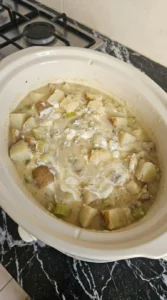
- Stir in cooked bacon pieces and shredded sharp cheddar, then keep the soup at about 200°F for 10 minutes. Fold the toppings through the soup with a slow spoon motion so melted cheese spreads across the thick base. (My first batch used extra cheese and became too heavy, so this amount keeps the texture balanced.) You’ll see melted cheese ribbons and bacon pieces spread unevenly through the bowl. The smell turns richer and the soup looks creamy with natural texture. Add toppings too early and they lose their contrast. Final gentle heat helps the cheese melt evenly.

- Ladle one portion into a bowl and finish with sliced green onion after keeping the soup at about 200°F for 2 minutes. Place the garnish gently with your fingers and avoid stirring so the toppings stay visible. The portion should have thick soup with uneven potato pieces throughout. The final bowl shows creamy texture, melted cheese and small bacon pieces with a homemade appearance. You’ll notice fresh onion aroma over the warm soup. Waiting too long cools the dairy layer. Careful finishing keeps each serving visually balanced.

Notes
Frequently Asked Questions
Yes, you can chop the russet potatoes and vegetables up to 24 hours ahead and keep them covered in the refrigerator. Start cooking within that time so the potatoes keep their texture and freshness. Add the cream cheese during the final 15 minutes rather than during storage.
Store the soup in an airtight container for up to 4 days in a refrigerator below 40°F. Reheat individual portions at medium-low heat for 10 to 15 minutes and stir slowly so the creamy base stays smooth.
You can freeze this soup for up to 3 months, but dairy texture may change slightly after thawing. Cool it completely, freeze in sealed containers, then thaw overnight and warm at about 200°F while stirring gently.
Watery soup usually happens when the potatoes release less starch or too much broth is added. Mash 1 cup of the softened potatoes and simmer the soup at 200°F for 15 minutes to help the texture become thicker.
Yes, double the ingredients in a larger 8-quart slow cooker if you need more servings. Keep the same LOW temperature but expect the cooking time to increase by about 30 to 60 minutes because the volume is larger.
Serve it with crusty bread, a green salad or a simple sandwich for a complete meal. For another slow cooker option, try our Crockpot Ham and Bean Soup when planning a hearty dinner menu.
Final Thoughts
From my kitchen comes a bowl I keep making on chilly days! This Crockpot Potato Soup uses slow cooked potatoes, creamy broth and simple toppings for a rich homemade meal. Though it needs time to develop its flavor, every spoonful is worth the wait.
The texture is smooth with tender potato pieces and a savory finish. Makes 4 generous servings. This recipe is a great choice when you want easy comfort food, and you can also explore our Creamy Cheeseburger Potato Soup Recipe or Crockpot Beefy Potato Taco Casserole for more potato based meals.
The same batch covers easy crockpot potato soup, baked potato soup crock pot and crockpot potato soup with hashbrowns without a single change.
Potatoes release starch as they slowly soften, which helps thicken soup naturally without a large amount of flour. That simple change is why slow cooked potato soups often have a creamy texture.