Chewy Gingerbread Cookies
A good gingerbread cookie should taste like gingerbread all the way through. Not just a faint hint of spice buried under sugar. And when I want Chewy Gingerbread Cookies, I mean the kind with a deep molasses flavor and a middle that stays soft when you bite into it. I really thought it would be simple. Mix brown sugar with molasses and ginger, roll the dough into balls and bake until the edges turn golden. But every little change seemed to matter.
Too much flour made the cookies dry. Too little chilling sent them spreading across the baking sheet. And leaving them in the oven for just a couple of extra minutes turned those lovely soft centers into something closer to a crunchy biscuit. So I wanted a batch of soft and chewy gingerbread cookies that could hold its shape without turning into a hard holiday decoration. A little chill time helps. Dark molasses brings that rich flavor while brown sugar keeps the middle tender.

If you love baking Christmas treats, our Christmas Cookies are worth adding to your holiday list too. These soft chewy gingerbread cookies aren’t the crisp gingerbread men you might hang on a tree. They’re thicker and softer with a light sugar crust that cracks as they bake. They’re also the kind of cookies you’ll want to sneak off the cooling rack while they’re still a little warm.
Why This Recipe Works
Dark brown sugar holds moisture while unsulphured molasses brings a deep caramel taste without the harsh edge of blackstrap. Chilling the dough for 45 minutes firms the butter and cuts down on spread, so Chewy Gingerbread Cookies stay thick with a soft middle.
Baking at 350°F for 10 to 12 minutes lets the edges set while the centers remain tender. For another cookie with a rich buttery bite, try our Butter Pecan Cookies. The flavors differ, but both make a great addition to a holiday cookie tray.
Ingredients

- all-purpose wheat flour: About 270 grams, spooned into the measuring cup and leveled. Gives the cookies structure without making them too dense.
- ground ginger: Use fresh fragrant ground ginger for the warm sharp spice that defines classic gingerbread.
- ground cinnamon: Adds a gentle sweet warmth that rounds out the stronger ginger and molasses flavors.
- ground cloves: Adds a deep aromatic note. Measure carefully because too much can overpower the cookies.
- baking soda: Helps the dough spread and rise slightly while encouraging a tender crumb and browned surface.
- fine sea salt: Balances the sweetness of the sugar and brings out the warm spice flavors.
- unsalted butter: About 170 grams, softened to 65°F to 68°F. Provides richness and helps create a tender center.
- dark brown sugar: About 150 grams, packed firmly. Adds moisture and a rich caramel flavor while supporting a chewy texture.
- large egg: Use a standard large egg. Binds the dough and provides enough structure for the cookies to hold together.
- unsulphured dark molasses: About 110 grams. Gives the cookies their distinctive deep brown color and rich gingerbread flavor without the bitterness of blackstrap molasses.
- white granulated sugar: Used to coat the dough balls before baking. Creates a lightly crisp and sparkling outer crust.
Kitchen Equipment
- Large mixing bowls: Two 3-quart mixing bowls give enough room to blend dry ingredients and cream the butter mixture without spills. Choose sturdy bowls with wide rims so you can scrape the sides without tipping them.
- Electric hand mixer: An electric mixer with adjustable low and medium speeds creams butter and dark brown sugar in 2 to 3 minutes. Choose a model with sturdy beaters because thick cookie dough can strain weaker motors.
- Rubber spatula: A flexible rubber spatula folds the flour into the wet mixture without excessive mixing. Choose a firm silicone head that can reach the bottom of a deep bowl.
- Balloon whisk: A medium balloon whisk spreads the baking soda and spices through the flour evenly. Choose stainless steel wires with enough spacing to prevent flour clumps from collecting.
- Cookie scoop: A medium cookie scoop that holds about 2 tablespoons helps portion the dough into roughly 35-gram balls. A kitchen scale is a more precise alternative when scoop sizes vary.
- Rimmed baking sheets: Two standard 18-by-13-inch metal baking sheets provide enough room for 12 cookies each with generous spacing. Avoid dark thin sheets that can brown the bottoms too quickly.
- Parchment paper: Oven-safe parchment paper prevents sticking and limits excess browning on the bottoms. Choose parchment rated for at least 350°F rather than wax paper.
- Wire cooling rack: A large wire rack lets air pass beneath the cookies as the centers set. Choose a stable rack with close-set wires so the warm cookies won’t sag between gaps.
- Digital kitchen scale: A kitchen scale accurate to 1 gram helps measure flour and keep portions consistent. Choose one with a tare function because measuring cups can pack too much flour into the dough.
How to Make It
Step 1: Whisk the flour and gingerbread spices

Add 2 1/4 cups of all-purpose wheat flour to a large mixing bowl. Sprinkle in 2 teaspoons of ground ginger and 1 1/2 teaspoons of ground cinnamon. Next add 1/4 teaspoon of ground cloves along with 1 teaspoon of baking soda and 1/2 teaspoon of fine sea salt. Whisk for 45 to 60 seconds.
Use broad strokes from the bottom of the bowl so the spices don’t settle in one spot. Break up any small flour lumps as you go. Keep the ingredients at a room temperature of about 68°F to 72°F. The mixture should look pale beige with tiny brown flecks spread all the way through.
You’ll notice the ginger and cinnamon as soon as you stir. Don’t rush it. Miss those flour pockets and some cookies will rise unevenly. Even mixing spreads the baking soda and spices through every bite.
Tip: Check the date on your ground ginger. If it’s been open for more than 12 months and smells faint, replace it for stronger flavor.
Step 2: Beat the butter and molasses into a smooth base
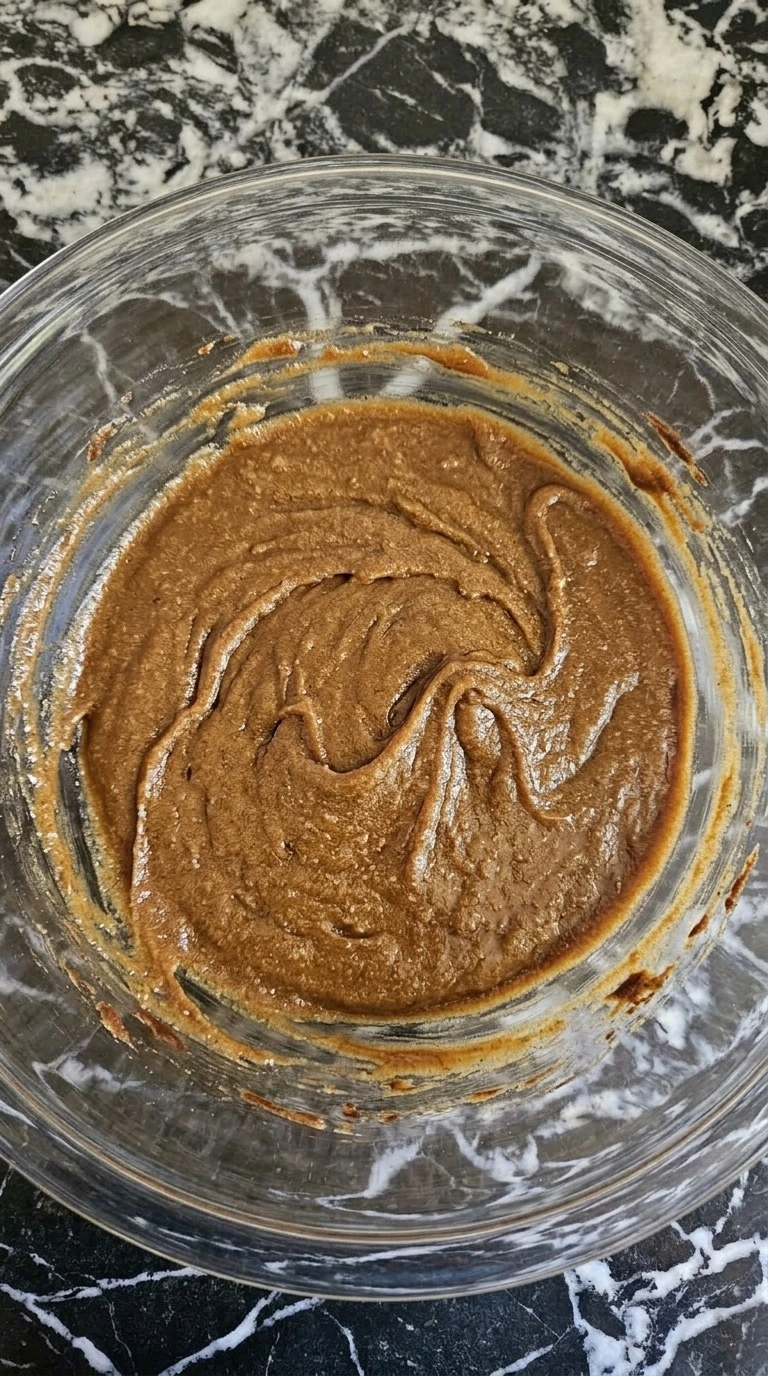
Place 3/4 cup of softened unsalted butter in a second large mixing bowl. It should feel pliable at about 65°F to 68°F but shouldn’t look melted. Add 3/4 cup of packed dark brown sugar and beat for 2 to 3 minutes until the mix grows lighter and looks creamy. Scrape down the sides halfway through.
Then add 1 large egg and 1/3 cup of unsulphured dark molasses. Beat for another 45 to 60 seconds until the streaks fade. The mixture may look slightly grainy, which is fine. You’ll see the pale butter mixture turn a rich caramel brown as the molasses blends in.
It should fall slowly from a spatula rather than run like syrup. If the butter gets oily and loose, it’s too warm. Use cool butter so the dough holds its shape.
Tip: Use unsulphured dark molasses rather than blackstrap molasses. The darker baking variety gives rich flavor without the sharp bitterness of blackstrap.
Step 3: Fold the spiced flour into the dough and chill
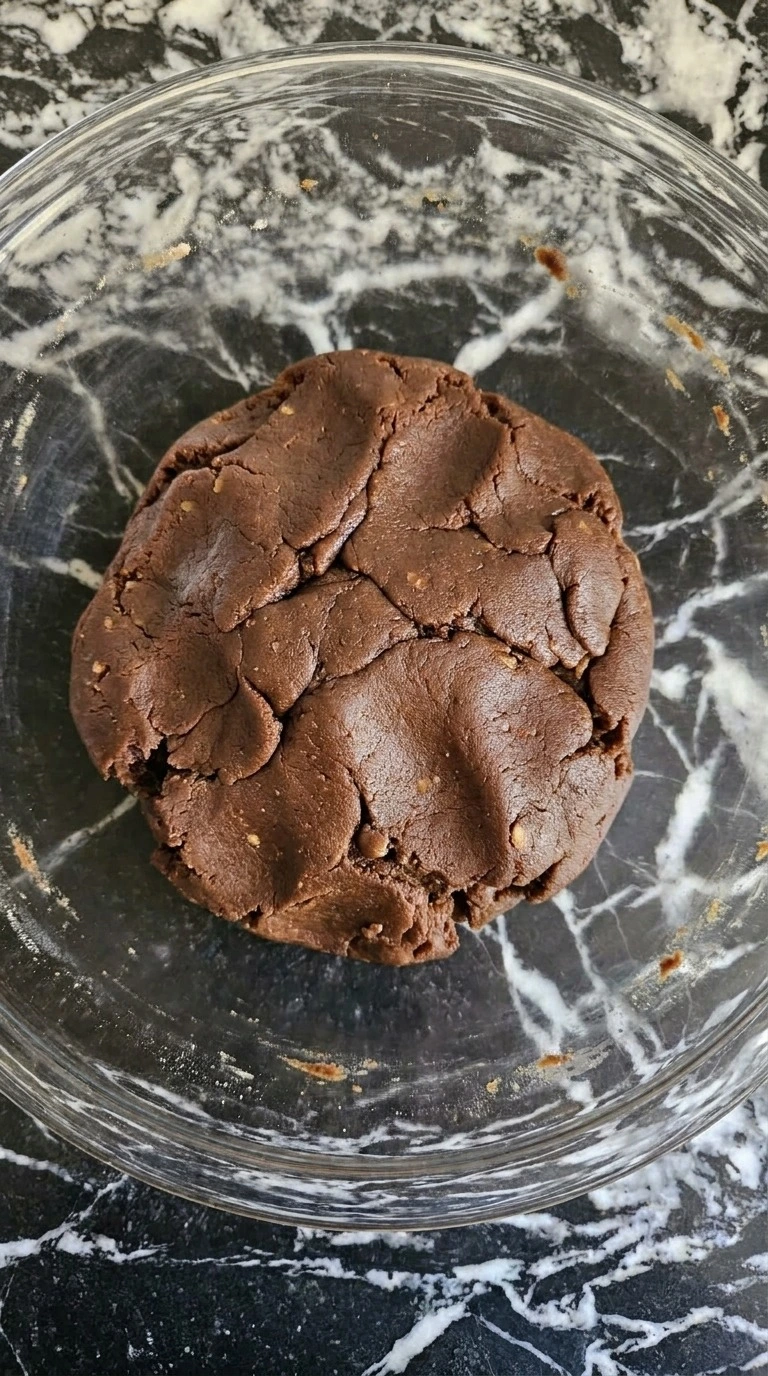
Tip the dry flour mixture into the bowl of molasses and butter in two batches. Fold gently with a rubber spatula and scrape along the bottom after each turn. Work for about 60 to 90 seconds. Stop once the last pale flour streak has faded.
Chewy Gingerbread Cookies need enough mixing to form a dough but not so much that the flour becomes tough. Cover the bowl and chill for 45 minutes at 40°F or below. The rest lets the butter firm up and the flour take in moisture. The dough will look deep brown and slightly tacky before it goes into the fridge.
After chilling, it should hold a soft mound without slumping. Overmixing makes the bite firm, and skipping the chill leads to thin cookies. Firm dough limits spread in the oven.
Tip: If the chilled dough feels too stiff to scoop, leave it at room temperature for 5 minutes before shaping the portions.
Step 4: Roll the dough balls in granulated sugar

Heat the oven to 350°F and line two large baking sheets with parchment paper. Scoop the chilled dough into 24 portions of about 35 grams each. Roll each one between your palms until it’s roughly round but not pressed flat. Pour 1/3 cup of white granulated sugar into a shallow bowl.
Roll every portion through the sugar so the crystals stick to its surface. Set the balls on the baking sheets with at least 2 inches between them. Aim for 12 cookies per sheet. The dough balls should be about 1 1/4 inches wide with a light and uneven coat of sugar.
A few darker patches are fine. Don’t pack the trays tightly because the cookies will spread. Wide gaps let the heat reach each cookie.
Tip: Weigh the first 3 dough portions before shaping the rest. Keeping them near 35 grams helps the entire batch bake at a similar rate.
Step 5: Bake until the tops crack and the edges set

Slide one baking sheet onto the middle rack of the fully heated 350°F oven. Bake for 10 to 12 minutes. At minute 9, check the edges and tops through the oven door. The dough balls should have spread into thick rounds with small cracks opening across the sugar crust.
Remove the tray when the edges look set but the centers still appear slightly soft. Bake the second tray the same way. Leave each batch on its hot sheet for 5 minutes before moving the cookies to a cooling rack for another 15 minutes. The tops should turn dark golden brown with pale sugar crystals caught in the cracks.
The centers will firm as they cool. Another 3 minutes in the oven can dry them out. Gentle carryover heat keeps the middle chewy.
Tip: For Chewy Gingerbread Cookies with more even edges, use a round cutter slightly wider than each cookie to gently swirl the hot cookies into shape.
Step 6: Cool and serve the soft gingerbread cookies

Once the cookies have cooled for 15 minutes on the rack, move a serving portion onto a white plate. Choose two cookies with deep brown tops and firm edges. Break one gently through the middle and set the halves beside the whole cookie so the center shows. The crumb should look dense and soft rather than wet.
Wait until the cookies reach about 75°F before stacking or packing them. Warm centers release moisture into sealed containers and can make the sugar crust sticky. You’ll see a tender dark brown middle against the thin crackled outside. The cookies may bend a little before breaking.
That’s the texture you want. Cooling lets the crumb set without losing its soft bite.
Tip: Serve 2 cookies with a small glass of cold milk for a simple holiday dessert. Warm the cookies for 5 seconds if you prefer them softer.
Pro Tips
- Weigh your all-purpose wheat flour instead of packing it into a measuring cup. About 270 grams gives the dough enough structure without drying out the centers.
- Use unsalted butter softened to roughly 65°F to 68°F. It should bend under gentle pressure without looking shiny or melted.
- Choose fresh ground ginger with a strong spicy smell. If your jar has been open for over 12 months and smells faint, replace it.
- Keep the mixed dough in the fridge for at least 45 minutes. If it starts sticking to your palms while rolling, chill it for another 10 minutes.
- Line two standard baking sheets with parchment and leave at least 2 inches between dough balls. Crowded cookies can merge as they spread.
- Check the first tray after 10 minutes at 350°F. Pull it out when the edges look set and the centers still have a little give.
- For a brighter spice flavor, add 1 teaspoon of finely grated orange zest to the wet mixture before folding in the flour.
- Let the cookies sit on their baking sheet for 5 minutes before moving them. Their centers are still delicate and can break if lifted too early.
- For chewy chocolate gingerbread cookies, fold 1/2 cup of mini semisweet chocolate chips into the dough before chilling. The chocolate adds a sweet contrast to the spicy molasses.
- For orange gingerbread cookies, mix 1 teaspoon of finely grated orange zest into the butter and brown sugar mixture. It gives the cookies a fresh citrus note without changing their soft texture.
- For extra-spiced gingerbread cookies, add 1/4 teaspoon of ground nutmeg and another 1/2 teaspoon of ground ginger to the dry ingredients. The result has a stronger warm spice flavor.
- For small holiday cookie bites, divide the dough into approximately 32 portions instead of 24. Bake at 350°F and start checking after 8 minutes because smaller cookies set faster.
Substitutions & Variations
- unsalted butter: Replace 3/4 cup of unsalted butter with 3/4 cup of dairy-free baking butter. Choose a firm plant-based baking stick with about 80% fat rather than a soft tub spread. Dairy-free dough may spread more, so chill it for 60 minutes before shaping.
- all-purpose wheat flour: Replace 270 grams of all-purpose wheat flour with 270 grams of gluten-free 1-to-1 baking flour containing xanthan gum. The cookies may be slightly more crumbly and less chewy. Let the mixed dough rest for 15 minutes before chilling so the gluten-free flour can absorb the moisture.
- large egg: Replace 1 large egg with 1 tablespoon of ground flaxseed mixed with 3 tablespoons of water. Let the flax mixture stand for 10 minutes until thick before adding it to the butter mixture. The cookies will be denser and a little more fragile. Cool them fully before moving or stacking.
- dark brown sugar: Replace 3/4 cup of packed dark brown sugar with 3/4 cup of packed light brown sugar. Light brown sugar gives a milder caramel flavor and a slightly lighter cookie. Keep the 1/3 cup of dark molasses unchanged to maintain a strong gingerbread taste. For a different holiday treat, try our Pumpkin Cheesecake Cookies.
- unsulphured dark molasses: Replace 1/3 cup of dark molasses with 1/3 cup of mild unsulphured molasses. Mild molasses makes the cookies sweeter and less intense. The color will also be a little lighter. Avoid substituting blackstrap molasses in equal amounts because its bitter flavor can overwhelm the ginger and cinnamon.
Storage Instructions
Once the cookies have cooled fully, store them in an airtight container at room temperature for 4 to 5 days. If you prefer refrigerated storage, they’ll keep for up to 7 days in a sealed container at 40°F or below. Place parchment between layers to keep the sugar crusts from sticking.
For longer storage, freeze the baked cookies in a freezer-safe container for up to 3 months. Thaw them while covered so moisture doesn’t settle directly on the surfaces. Chewy Gingerbread Cookies keep their soft centers best when you avoid leaving them uncovered overnight.
To refresh a cookie, microwave it for 5 to 8 seconds or warm several in a 300°F oven for 3 to 4 minutes. Don’t add water or milk because that can make the sugar coating wet. If the cookies develop visible mold or an unusual smell, discard them.
Chewy Gingerbread Cookies
Ingredients
Method
- Add 2 1/4 cups of all-purpose wheat flour to a large mixing bowl. Sprinkle in 2 teaspoons of ground ginger and 1 1/2 teaspoons of ground cinnamon. Next add 1/4 teaspoon of ground cloves along with 1 teaspoon of baking soda and 1/2 teaspoon of fine sea salt. Whisk for 45 to 60 seconds. Use broad strokes from the bottom of the bowl so the spices don’t settle in one spot. Break up any small flour lumps as you go. Keep the ingredients at a room temperature of about 68°F to 72°F. The mixture should look pale beige with tiny brown flecks spread all the way through. You’ll notice the ginger and cinnamon as soon as you stir. Don’t rush it. Miss those flour pockets and some cookies will rise unevenly. Even mixing spreads the baking soda and spices through every bite.

- Place 3/4 cup of softened unsalted butter in a second large mixing bowl. It should feel pliable at about 65°F to 68°F but shouldn’t look melted. Add 3/4 cup of packed dark brown sugar and beat for 2 to 3 minutes until the mix grows lighter and looks creamy. Scrape down the sides halfway through. Then add 1 large egg and 1/3 cup of unsulphured dark molasses. Beat for another 45 to 60 seconds until the streaks fade. The mixture may look slightly grainy, which is fine. You’ll see the pale butter mixture turn a rich caramel brown as the molasses blends in. It should fall slowly from a spatula rather than run like syrup. If the butter gets oily and loose, it’s too warm. Use cool butter so the dough holds its shape.
- Tip the dry flour mixture into the bowl of molasses and butter in two batches. Fold gently with a rubber spatula and scrape along the bottom after each turn. Work for about 60 to 90 seconds. Stop once the last pale flour streak has faded. Chewy Gingerbread Cookies need enough mixing to form a dough but not so much that the flour becomes tough. Cover the bowl and chill for 45 minutes at 40°F or below. The rest lets the butter firm up and the flour take in moisture. The dough will look deep brown and slightly tacky before it goes into the fridge. After chilling, it should hold a soft mound without slumping. Overmixing makes the bite firm, and skipping the chill leads to thin cookies. Firm dough limits spread in the oven.

- Heat the oven to 350°F and line two large baking sheets with parchment paper. Scoop the chilled dough into 24 portions of about 35 grams each. Roll each one between your palms until it’s roughly round but not pressed flat. Pour 1/3 cup of white granulated sugar into a shallow bowl. Roll every portion through the sugar so the crystals stick to its surface. Set the balls on the baking sheets with at least 2 inches between them. Aim for 12 cookies per sheet. The dough balls should be about 1 1/4 inches wide with a light and uneven coat of sugar. A few darker patches are fine. Don’t pack the trays tightly because the cookies will spread. Wide gaps let the heat reach each cookie.

- Slide one baking sheet onto the middle rack of the fully heated 350°F oven. Bake for 10 to 12 minutes. At minute 9, check the edges and tops through the oven door. The dough balls should have spread into thick rounds with small cracks opening across the sugar crust. Remove the tray when the edges look set but the centers still appear slightly soft. Bake the second tray the same way. Leave each batch on its hot sheet for 5 minutes before moving the cookies to a cooling rack for another 15 minutes. The tops should turn dark golden brown with pale sugar crystals caught in the cracks. The centers will firm as they cool. Another 3 minutes in the oven can dry them out. Gentle carryover heat keeps the middle chewy.

- Once the cookies have cooled for 15 minutes on the rack, move a serving portion onto a white plate. Choose two cookies with deep brown tops and firm edges. Break one gently through the middle and set the halves beside the whole cookie so the center shows. The crumb should look dense and soft rather than wet. Wait until the cookies reach about 75°F before stacking or packing them. Warm centers release moisture into sealed containers and can make the sugar crust sticky. You’ll see a tender dark brown middle against the thin crackled outside. The cookies may bend a little before breaking. That’s the texture you want. Cooling lets the crumb set without losing its soft bite.

Notes
Frequently Asked Questions
Yes. Mix the dough and refrigerate it in a tightly covered container for up to 48 hours at 40°F or below. When you’re ready to bake, let it stand for 5 to 10 minutes if it’s too firm to scoop. Shape the dough into balls and bake at 350°F until the edges are set.
The most common causes are too much flour and baking the cookies for too long. Measure about 270 grams of flour and check the first tray at the 10-minute mark. The centers should still look slightly soft when the cookies leave the 350°F oven because they’ll firm up as they cool.
You can try cutting shapes, but this soft dough spreads more than traditional cutout gingerbread dough. For chewy gingerbread man cookies, chill the dough for 60 minutes and roll it between parchment sheets to about 1/4 inch thick. Freeze the cut shapes for 15 minutes before baking at 350°F. The outlines will soften and spread, so fine details may disappear.
Yes. Shape the dough into 35-gram balls and arrange them in a single layer before freezing for about 2 hours. Transfer them to a sealed freezer-safe bag for up to 3 months. Roll the frozen portions in granulated sugar and bake at 350°F for roughly 12 to 14 minutes, checking for set edges.
Start with butter that feels soft but hasn’t melted and chill the dough for at least 45 minutes. Keep the baking sheets cool between batches because warm metal can melt the butter before baking begins. If your first batch spreads too much, refrigerate the remaining shaped dough for another 15 minutes.
Absolutely. Double every ingredient to make approximately 48 cookies and divide the mixture between bowls if your mixer is small. Portion the dough into balls weighing about 35 grams each. Bake one sheet at a time at 350°F and check each batch after 10 minutes so the centers stay tender.
Serve two cookies with a glass of cold milk or a cup of hot cocoa for a simple holiday dessert. To soften a leftover cookie, warm it in the microwave for 5 to 8 seconds. You can also warm several cookies in a 300°F oven for 3 to 4 minutes, but avoid heating them until they’re dry.
Final Thoughts
These are going straight onto my holiday baking list! Chewy Gingerbread Cookies have the deep flavor of traditional gingerbread but with a thick soft center and a fine sugar crust that cracks when you bite into it. No icing needed because the ginger and molasses do the work.
I especially love serving these soft and chewy gingerbread cookies while they’re still a little warm. One batch makes 24 cookies, so there’s plenty for sharing. If you’re looking for more Christmas baking ideas, try our Christmas Cookies or Cranberry White Chocolate Cookies. Bake these thick chewy gingerbread cookies and let me know how yours turn out!
Come back to it whenever you need chewy gingerbread men cookies and chewy gingerbread man cookies.
Gingerbread has a much longer history than the decorated gingerbread people often seen at Christmas. Early versions varied from firm spiced cakes to crisp biscuits. Molasses became especially common in American gingerbread baking because it added sweetness and a rich dark color. Today, thick chewy gingerbread cookies offer a softer twist on those traditional holiday flavors.