Fall Salad Dressing
One good jar of Fall Salad Dressing can make a plain bowl of greens feel like the part of dinner everyone reaches for first. This fall salad dressing is tangy and a little sweet with apple cider vinegar, maple and Dijon, and it takes about 15 minutes from start to finish. If you’ve been collecting fall salad dressing recipes, this is the kind you can keep in the fridge and use through several meals. Hi!
Meet your new friend, the most punchy maple-sweet vinaigrette with a savory mustard bite that is so useful, so meal-saving, so bright and easy, and also.. totally no-cook. It slips into fall salad dressings without covering up apples, roasted squash or bitter greens. That’s right.

We’re calling upon APPLE CIDER VINEGAR to bring the sharpness here, and maple syrup softens it without turning the dressing sugary. A little shallot rests in that vinegar first, so its raw bite mellows before the oil goes in.
Why This Recipe Works
The Fall Salad Dressing starts by soaking minced shallot in apple cider vinegar for 10 minutes, which softens the sharp sulfur compounds before they spread through the oil. Dijon then acts as an emulsifier, helping tiny oil droplets stay suspended instead of racing back into a greasy top layer.
The slow pour matters. Adding 1/2 cup olive oil over 60 to 90 seconds creates a silkier texture than dumping it in at once, while maple syrup balances acidity without making the vinaigrette sticky.
Ingredients

- shallot: Finely mince into roughly 1/8-inch pieces so the acid can soften its bite during the 10-minute soak.
- apple cider vinegar: Use a bright unflavored vinegar to provide the main acidity and apple note.
- pure maple syrup: Use pure maple syrup for gentle sweetness that rounds the vinegar without making the dressing syrupy.
- kosher salt: Dissolve it in the acidic base so the seasoning spreads evenly before the oil is added.
- Dijon mustard: Whisk it into the vinegar base to add savory depth and help stabilize the emulsion.
- fresh thyme: Strip the leaves from the stems and use the leaves for a clean herbal note.
- black pepper: Use freshly ground pepper for a warm bite that balances the maple.
- extra virgin olive oil: Bring it to 68 to 72°F and whisk it in slowly so the dressing emulsifies instead of separating.
Kitchen Equipment
- Chef’s knife: A sharp 8-inch chef’s knife minces the shallot evenly, while a dull blade crushes it and releases harsher onion juices.
- Cutting board: A board at least 12 by 16 inches gives the shallot room to mince cleanly, while a cramped board makes the pieces uneven.
- Medium mixing bowl: A 2-quart bowl gives enough room for vigorous whisking, while a shallow bowl makes the oil splash out before the emulsion forms.
- Balloon whisk: An 8 to 10-inch balloon whisk breaks the oil into smaller droplets, while a tiny whisk slows emulsification and tires your wrist.
- Measuring cups and spoons: Accurate 1-cup and tablespoon measures keep the oil-to-acid ratio balanced, while rough pouring can make the dressing greasy or overly sharp.
How to Make It
Step 1: Macerate the minced shallot

Finely mince the shallot into pieces about 1/8 inch wide and naturally irregular in size, then combine it with the apple cider vinegar, maple syrup and kosher salt. Keep the mixture at 68 to 72°F for 10 minutes. Next, stir it three or four times so every shallot piece gets coated.
The liquid should stay thin while the shallot begins softening. Meanwhile, watch the shallot edges turn slightly translucent and notice the sharp onion smell become softer and fruitier by the end. If you stop at 2 or 3 minutes, the raw sulfur bite stays noticeably harsher.
Don’t rush it. Ten minutes softens the shallot because acid tames its raw sulfur bite.
Tip: Use a small shallot around 1 ounce. A much larger one can overwhelm this batch even after the full 10-minute soak.
Step 2: Whisk in Dijon and thyme

Add the Dijon mustard, fresh thyme and black pepper to the shallot mixture at 68 to 72°F after the full 10-minute soak has softened its raw bite. Then whisk in tight circles for 30 to 45 seconds and scrape the sides once halfway through. Keep the motion brisk but controlled.
The mustard should disappear into the vinegar instead of sitting in pale yellow streaks. Next, look for a smooth amber base with tiny green thyme flecks and black pepper distributed from edge to edge. You’ll smell mustard first, then thyme.
Underwhisk this stage and the mustard can clump, which makes the oil harder to disperse evenly later. Even mixing builds the base that helps the oil disperse later.
Tip: Choose a Dijon with at least 5 percent acidity if listed. Very sweet mustard can mute the vinegar and make the dressing taste flat.
Step 3: Whisk in the olive oil slowly

Pour the extra virgin olive oil in a thin steady thread over 60 to 90 seconds while whisking continuously at 68 to 72°F without stopping once. Then whisk another 30 seconds after the last oil goes in. The Fall Salad Dressing should shift from transparent amber to pale golden and lightly opaque. Keep the stream narrow so the emulsion forms gradually.
Meanwhile, watch for the dressing to thicken enough that a ribbon sits on the surface for about one second before disappearing. No clear oil ring should remain at the edge. The surface should look calm, not foamy. (I poured the oil in all at once during one test.
It separated within a minute. ) Pour too fast and the emulsion can break. Slow oil addition keeps droplets small so the emulsion stays stable.
Tip: Set the mixing bowl on a folded damp towel for the 90-second whisk. The extra stability lets you control the oil stream with one hand.
Step 4: Rest and serve the dressing

Let the finished dressing stand at 68 to 72°F for 10 minutes, then stir for exactly 10 seconds before portioning it into a small serving bowl. Finally, taste 1/4 teaspoon rather than judging it straight after whisking. The vinegar will seem sharper before the short rest has blended the maple, mustard and shallot flavors.
Next, look for fewer surface bubbles and a smooth pale golden body that still holds the shallot and thyme in suspension. The thyme smell should remain fresh, not muted. If you chill it immediately, the olive oil can thicken before the flavors settle together.
The dressing should coat a teaspoon in a thin even film. A short rest lets the flavors meld before serving.
Tip: Portion 2 tablespoons first. Then toss the salad for 20 seconds before adding more so the final texture stays light rather than heavy.
Pro Tips
- Keep the oil and vinegar between 68 and 72°F for the smoothest Fall Salad Dressing. Very cold oil thickens too quickly.
- Mince the shallot to about 1/8 inch. A 10-minute vinegar soak then mellows it without turning the pieces soft and mushy.
- Whisk the oil in over at least 60 seconds. A faster pour creates larger droplets and makes visible separation more likely within the first hour.
- Use pure maple syrup at 2 tablespoons per 1/2 cup oil. Pancake syrup tastes flatter and can make the finish noticeably sweeter.
- Taste the dressing on one lettuce leaf after the 10-minute rest. A spoonful exaggerates acidity and can make you oversweeten it.
- If the dressing separates after chilling, let it sit 15 minutes at room temperature. Then whisk for 20 seconds before serving.
- Add only 1 teaspoon extra apple cider vinegar at a time for a sharper finish. Wait 30 seconds before tasting again.
- Add 1 tablespoon finely chopped fresh rosemary in place of thyme for a woodier flavor that pairs especially well with roasted squash.
- Whisk in 2 tablespoons unsweetened cranberry juice and reduce the maple syrup to 1 tablespoon for a tart cranberry variation.
- Replace 2 tablespoons of the olive oil with toasted walnut oil for a nuttier dressing that works well with pears and blue cheese.
- Add 1 teaspoon finely grated orange zest for a brighter holiday version without changing the oil-to-acid ratio.
Substitutions & Variations
- apple cider vinegar: white wine vinegar. Use the same 1/4 cup. The flavor becomes cleaner and less fruity, so add 1 extra teaspoon maple syrup if you want the original sweetness.
- pure maple syrup: honey. Use 1 1/2 tablespoons honey because it tastes sweeter and feels thicker. The dressing becomes more floral and is no longer vegan.
- Dijon mustard: whole-grain mustard. Use 1 tablespoon. The emulsion will be slightly looser and the visible mustard seeds give the dressing a coarser texture.
- Dijon mustard: certified egg-free Dijon mustard. Use the same 1 tablespoon for an egg-free version. Texture and flavor stay nearly identical if the mustard has a similar acidity.
- Dijon mustard: certified gluten-free Dijon mustard. Use the same 1 tablespoon if gluten is a concern. Check the label because flavored mustards can include additives that standard Dijon doesn’t.
- extra virgin olive oil: avocado oil. Use the same 1/2 cup for a dairy-free neutral option. The dressing becomes milder and less peppery, which lets the maple and apple cider vinegar stand out more.
Storage Instructions
Store Fall Salad Dressing in a clean airtight glass jar for up to 4 days at 40°F or colder. Freezing isn’t my first choice because it can split, but you can freeze it for 1 month with 1 inch headspace.
Label the jar with the date. Don’t reheat it.
Instead, let the jar stand at 68 to 72°F for 15 minutes and whisk for 20 seconds before serving. Discard it if you notice a fermented smell, slimy herbs or unusual bubbling.
Fall Salad Dressing
Ingredients
Method
- Finely mince the shallot into pieces about 1/8 inch wide and naturally irregular in size, then combine it with the apple cider vinegar, maple syrup and kosher salt. Keep the mixture at 68 to 72°F for 10 minutes. Next, stir it three or four times so every shallot piece gets coated. The liquid should stay thin while the shallot begins softening. Meanwhile, watch the shallot edges turn slightly translucent and notice the sharp onion smell become softer and fruitier by the end. If you stop at 2 or 3 minutes, the raw sulfur bite stays noticeably harsher. Don’t rush it. Ten minutes softens the shallot because acid tames its raw sulfur bite.

- Add the Dijon mustard, fresh thyme and black pepper to the shallot mixture at 68 to 72°F after the full 10-minute soak has softened its raw bite. Then whisk in tight circles for 30 to 45 seconds and scrape the sides once halfway through. Keep the motion brisk but controlled. The mustard should disappear into the vinegar instead of sitting in pale yellow streaks. Next, look for a smooth amber base with tiny green thyme flecks and black pepper distributed from edge to edge. You’ll smell mustard first, then thyme. Underwhisk this stage and the mustard can clump, which makes the oil harder to disperse evenly later. Even mixing builds the base that helps the oil disperse later.

- Pour the extra virgin olive oil in a thin steady thread over 60 to 90 seconds while whisking continuously at 68 to 72°F without stopping once. Then whisk another 30 seconds after the last oil goes in. The Fall Salad Dressing should shift from transparent amber to pale golden and lightly opaque. Keep the stream narrow so the emulsion forms gradually. Meanwhile, watch for the dressing to thicken enough that a ribbon sits on the surface for about one second before disappearing. No clear oil ring should remain at the edge. The surface should look calm, not foamy. (I poured the oil in all at once during one test. It separated within a minute.) Pour too fast and the emulsion can break. Slow oil addition keeps droplets small so the emulsion stays stable.

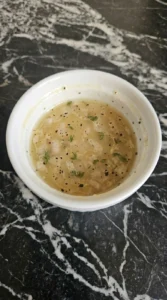
- Let the finished dressing stand at 68 to 72°F for 10 minutes, then stir for exactly 10 seconds before portioning it into a small serving bowl. Finally, taste 1/4 teaspoon rather than judging it straight after whisking. The vinegar will seem sharper before the short rest has blended the maple, mustard and shallot flavors. Next, look for fewer surface bubbles and a smooth pale golden body that still holds the shallot and thyme in suspension. The thyme smell should remain fresh, not muted. If you chill it immediately, the olive oil can thicken before the flavors settle together. The dressing should coat a teaspoon in a thin even film. A short rest lets the flavors meld before serving.
Notes
Frequently Asked Questions
Yes, make it up to 4 days ahead and refrigerate it in a tightly sealed jar at 40°F or colder. Before serving, let it stand at room temperature for 15 minutes and whisk for 20 seconds so the olive oil loosens. That short reset restores the pourable texture without adding more oil.
Fall Salad Dressing keeps for 4 days in a clean airtight container at 40°F or colder. The fresh shallot and thyme are the limiting ingredients, so don’t stretch it to a full week. Discard it early if the aroma turns sour in a fermented way or the herbs become slimy.
The oil probably went in faster than the mustard base could disperse it, especially if everything was cold. Bring the mixture to about 70°F, then whisk for 20 seconds while adding 1 teaspoon Dijon if needed. A narrow oil stream is more important than whisking wildly.
Yes, double every ingredient and use at least a 3-quart bowl so you have room to whisk without splashing. Pour the 1 cup olive oil in over 2 to 3 minutes instead of rushing it. The larger batch needs that slower stream to keep the emulsion smooth.
Use it on sturdy greens such as kale, arugula or chopped romaine with apples, pears, squash or toasted nuts. Start with 2 tablespoons dressing for every 4 cups of greens, then toss for 20 seconds. Add more only after tasting because sweet fall toppings can change the balance.
You can freeze it for up to 1 month, but the emulsion will usually break as it thaws. Thaw it overnight at 40°F, then let it sit 15 minutes and whisk for 30 seconds. The flavor stays usable, though the texture won’t be quite as silky.
Final Thoughts
Some recipes earn a permanent spot in my fridge, and Fall Salad Dressing is one of them. It would have saved me bland lunch salads, and now it’s my best salad dressing for salads for thanksgiving dinner.
The shallot soak and slow oil whisk keep it smooth, so I use it for an easy fall salad all season. If you try it, leave a comment or share your plate because I read every one and it makes my day.
The same batch covers fall salad dressings, fall salads recipes autumn and fall salads for a crowd without a single change.
Mustard does more than add flavor. Its natural emulsifying compounds help oil and vinegar stay mixed longer after whisking.