Ingredients
Method
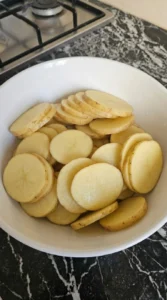
- Scrub 3 pounds of Yukon Gold potatoes and dry them well. Keep the skins on because they're thin and add a bit of texture. Use a sharp knife or mandoline to cut each potato crosswise into 1/8-inch rounds. Aim for slices that look close in thickness rather than trying to make every round identical. This takes about 10 minutes with a mandoline or 15 minutes by hand. Meanwhile set the oven to 375°F so it's hot when the dish goes in. Don't soak the slices because you'll wash away some of the starch that helps bind the sauce. The cut rounds should look pale yellow and feel firm with slightly damp surfaces. You'll notice a little starch on your fingers. That's useful. If you leave the slices too thick they'll stay firm long after the cheese topping turns dark. Thin cuts help the layers soften at the same rate.
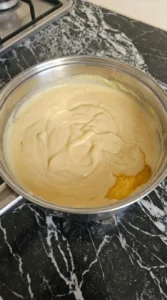
- Set a medium saucepan over medium-low heat at about 4 on a 10-point dial. Melt 4 tablespoons of unsalted butter and add 2 minced garlic cloves. Stir for 30 seconds until the garlic smells sweet. Then whisk in 3 tablespoons of all-purpose flour and cook for 90 seconds. Pour in 2 cups of whole milk in a slow stream while you whisk. Keep stirring for 4 to 5 minutes until the sauce thickens. Turn off the heat and fold in 2 cups of shredded sharp cheddar. Add 1 1/2 teaspoons of kosher salt and 1/2 teaspoon of ground black pepper. The sauce should cling to a spoon and look smooth with no dry flour streaks. You'll smell warm garlic and melted cheddar. If you keep boiling it after the cheese melts it can turn grainy. Gentle heat keeps the cheese proteins from tightening into lumps.
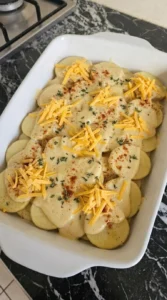
- Lightly grease a 9x13-inch baking dish with a little of the prepared butter residue from the saucepan. Spread half of the sliced Yukon Gold potatoes across the bottom in loose overlapping rows. Pour half the warm cheddar sauce over them and nudge the slices apart in a few spots so the sauce can reach the bottom. Add the rest of the potatoes and spread the remaining sauce over the top. Use the back of a spoon to coat any exposed slices. Scatter 1 teaspoon of fresh thyme leaves and 1/2 teaspoon of smoked paprika across the top. Finish with the remaining 1/2 cup of shredded sharp cheddar. This takes about 5 minutes. You should still see the outlines of the potato rounds beneath the creamy topping. The cheddar will sit in uneven little mounds. Don't press everything into a solid block or the heat won't move through the layers as well. Loose overlap leaves room for the sauce to flow.
- Cover the baking dish snugly with aluminum foil and place it on the middle oven rack at 375°F. Bake for 40 minutes so the trapped heat can soften the thin potato slices without drying the top. Next remove the foil and bake for another 20 to 25 minutes. Check the center with a thin knife near minute 60. It should slide through the layers with almost no push. If you feel a firm patch give it another 5 minutes before checking again. The last stretch without foil lets the remaining cheddar melt and form golden patches across the top. Look for small bubbles around the edges and deep amber spots on the cheese. The top should have a few crisp ridges. (I once raised the heat to 400°F and the top darkened before the center softened.) If you pull it out too soon you'll get firm potato centers. Covered baking traps moisture so the slices soften before the top browns.
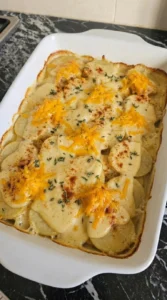
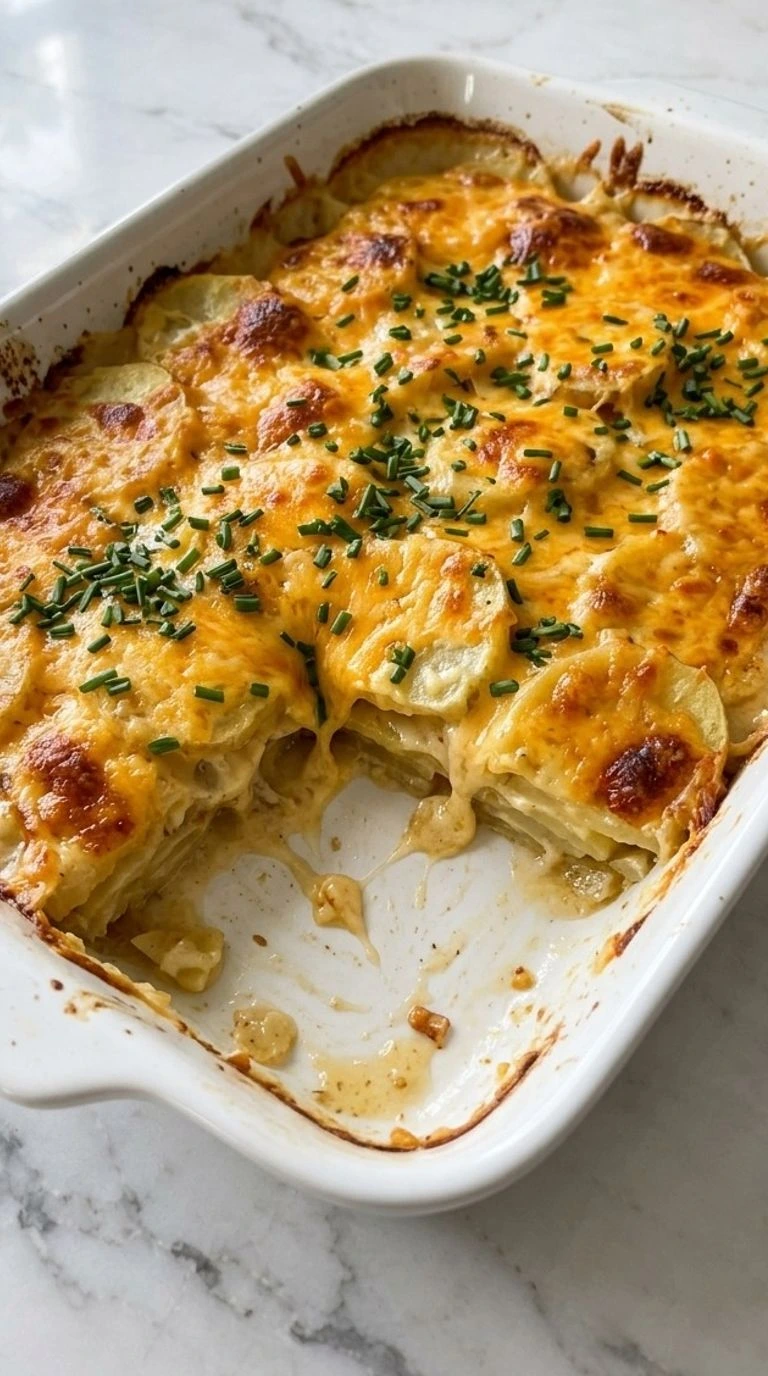
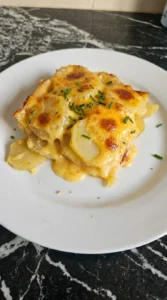
- Take the baking dish out of the oven and let it stand for 15 minutes before serving. The casserole will still be hot but the bubbling sauce will settle and cling more firmly to the potatoes. Use a serving spoon or wide spatula to lift one generous square portion from the corner. Set it on a white dinner plate without forcing the edges into a neat shape. Scatter 2 tablespoons of finely chopped fresh chives over the casserole before serving and let a few pieces fall across the plated portion. Keep the serving loose so the potato layers stay visible. The cut piece should hold soft layers with a little cheddar sauce easing between them. You'll see crisp amber edges next to pale golden centers. Serve before the cheese cools and firms up too much. A 15-minute rest lets the starch thicken the sauce between slices.
Notes
Let Cheesy Potato Casserole cool briefly after serving and transfer leftovers to shallow airtight containers within 2 hours. Store them in the refrigerator at 40°F or below for up to 4 days. Keep the portions separate if possible because smaller pieces cool faster and reheat more evenly. You can also freeze the baked casserole for up to 2 months for the best quality. Wrap individual servings tightly or place them in freezer-safe containers after cooling. The sauce may separate slightly after thawing, but the flavor should remain good. For reheating, place refrigerated portions in a covered oven-safe dish at 325°F for 15 to 20 minutes. Add 1 tablespoon of whole milk per serving to help loosen the thick sauce. Heat the center to 165°F before eating. If you notice mold, a sour smell or a slimy texture, discard the leftovers. Don't taste food to check whether it's safe.