Ingredients
Method
- Warm 1 cup of whole milk to 105°F and pour it into a large mixing bowl. Add the instant dry yeast and granulated white sugar. Then stir in the two large eggs and 4 tablespoons of melted unsalted butter that has cooled to lukewarm. Add the all purpose wheat flour and fine sea salt. Mix until a shaggy dough forms. Knead for 8 to 10 minutes by hand or 6 to 8 minutes with a mixer fitted with a dough hook. Press the dough forward with your palm and fold it back after each turn. Stop when it feels smooth and slightly tacky. Next, check the dough with a gentle stretch. It should pull into a thin sheet without tearing at once. If it's stiff and dry, you've likely added too much flour. Keep the dough soft because that moisture helps the bread stay tender.
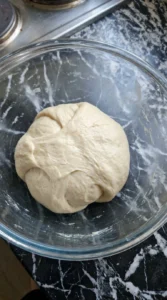
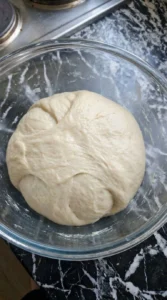
- Shape the kneaded dough into a loose ball and place it back in the lightly buttered mixing bowl. Cover the bowl and leave it in a warm spot around 75°F to 80°F for 60 to 90 minutes. Don't set it directly beside a hot oven because strong heat can weaken the yeast and dry the surface. The dough should slowly expand until it takes up about twice its starting space. Gently press one finger into the top. If the dent fills back slowly then the dough has risen enough. Meanwhile, keep an eye on the surface. You'll see small air pockets beneath the smooth skin and the dough will feel much lighter. Don't wait until it collapses in the center. A steady rise builds the soft crumb.
- Gently press the risen dough down and roll it into a rectangle about 12 by 18 inches. Keep the long edge facing you. Spread 6 tablespoons of softened unsalted butter across the dough while leaving a half-inch strip bare along the far edge. Mix the packed light brown sugar with the ground Saigon cinnamon and scatter it over the butter. Press the filling down lightly so it sticks. Then roll the dough into a snug log starting from the long edge nearest you. Pinch the seam closed and cut the log into 9 even pieces with a thin serrated knife or unflavored dental floss. Next, check the cut sides. You should see distinct dark brown ribbons winding through pale dough. If the log feels too soft to cut cleanly, chill it for 10 minutes first. Gentle cuts preserve the air pockets.
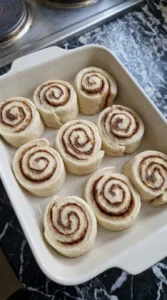
- Place the 9 cinnamon rolls cut side up in the lightly buttered 9 by 13 inch baking dish. Leave a little space between the pieces so they can expand. For baking the same day, cover them and rest at about 75°F for 35 to 50 minutes. For an overnight breakfast, cover the dish tightly and chill it for 8 to 12 hours at 40°F or below. The next morning, bring the dish out of the fridge and let the rolls stand for 60 to 90 minutes until visibly puffy. Don't bake them while they're still dense and cold. You'll know they're close when the spirals have grown and the gaps between several rolls have narrowed. They should wobble slightly when the dish moves. A short proof makes heavy centers, so give the yeast time to expand.
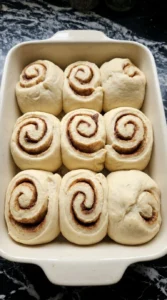
- Heat the oven to 350°F with the rack in the middle position. Once the shaped rolls look well risen, place the baking dish on the middle rack and bake for 25 to 30 minutes. Rotate the dish once after 18 minutes if your oven heats unevenly. The tops should turn light golden brown while the outer edges develop a slightly deeper amber color. Check the center roll with an instant-read thermometer. Aim for 190°F to 195°F in the bread portion rather than the melted filling. If the tops darken too fast, cover the dish loosely with foil. Then let the rolls rest in their dish for 8 to 10 minutes. You'll smell warm cinnamon and baked butter as the tops settle. Cutting too early can crush the soft centers. Brief cooling helps the crumb set.
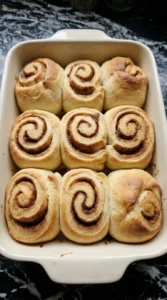
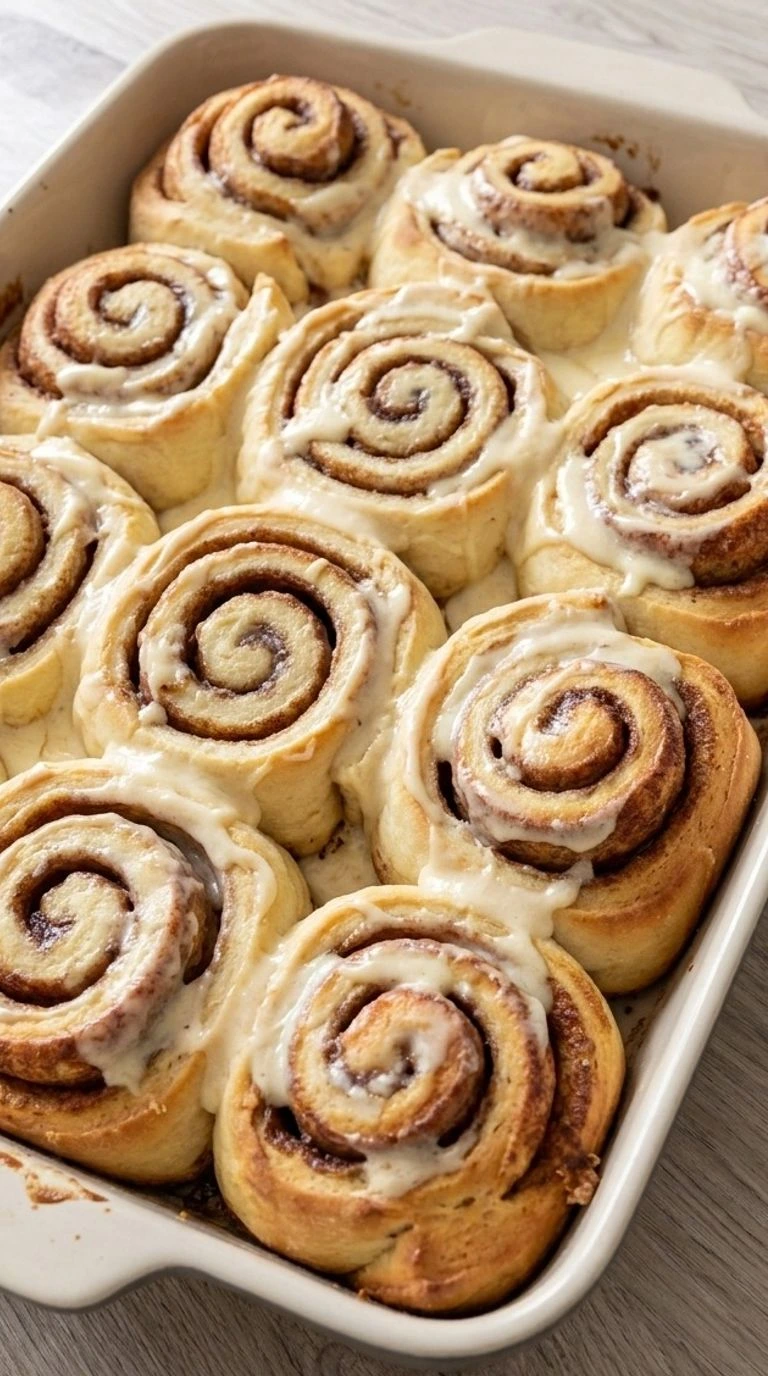
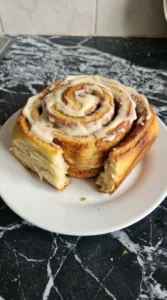
- While the rolls cool for 8 to 10 minutes, beat the softened full fat brick cream cheese with 4 tablespoons of softened unsalted butter until smooth. Add the sifted powdered confectioners' sugar and pure vanilla extract. Beat for 2 to 3 minutes until the frosting looks thick and creamy. Spread it across the warm cinnamon rolls using gentle strokes so some frosting settles into the spiral grooves while the golden edges still show. Wait until the rolls have cooled slightly because very hot bread will melt the frosting into a thin glaze. Finally, lift one roll onto a small white serving plate. Pull the outer coil apart just enough to show its soft layered center. You'll see thick ivory frosting against the amber filling. The brief rest keeps the topping creamy.
Notes
Keep leftover Christmas Morning Cinnamon Rolls in a tightly sealed food container in the refrigerator for up to 4 days because the frosting contains cream cheese. Let them cool before storing so trapped moisture doesn't leave the tops soggy. For longer storage, freeze the rolls individually in food-safe wrapping and place them in a freezer bag for up to 2 months. Freeze unfrosted portions when possible because fresh frosting gives the best texture after reheating. To reheat, cover refrigerated rolls loosely with foil and warm them at 300°F for 10 to 15 minutes. Add 1 teaspoon of whole milk around each unfrosted roll if the bread feels dry. Discard rolls that develop mold, an unusual sour smell or slimy frosting. Don't leave cream cheese frosted rolls at room temperature for more than 2 hours.