Ingredients
Method
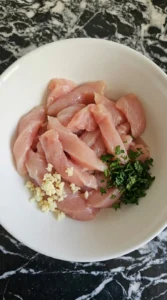
- The chicken breasts are cut into uneven bite-size strips and gathered in the white ceramic bowl, with a few thinner pieces and a few thicker ones so it feels like real home prep instead of perfect matching cuts. The garlic is minced, parsley is chopped, and all the dairy and seasonings are measured into separate additions ready to go. The visual change here is all about turning whole ingredients into recipe-ready pieces. The bowl now shows raw chicken with soft pink color and natural variation in size, while the surrounding measured ingredients look prepped for a smooth, steady assembly.
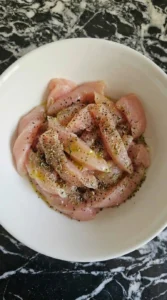
- Olive oil is poured over the raw chicken in thin uneven streaks, then salt, pepper, and Italian seasoning are scattered across the top instead of landing in a perfectly even layer. Some pieces catch more seasoning than others at first, which makes the bowl look natural and lived-in. After a partial toss, the chicken shifts from plain and glossy to more visibly coated. Specks of herbs cling to the surface, the oil gives it a deeper sheen, and the strips start to look like they are on their way to becoming savory and well seasoned.
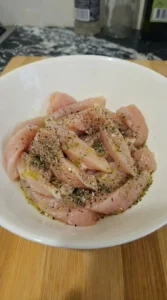
- The seasoned chicken sits in the bowl for a short rest so the surface looks a little more absorbed and less slick. The herbs darken slightly as they hydrate, and the seasonings settle into the folds and edges of the strips. This is a subtle marinating stage, but it matters for the visual progression. The chicken still looks raw, yet it now appears more cohesive and ready, with the coating no longer sitting loosely on top but clinging in a more natural way.
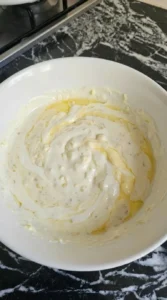
- Heavy cream, softened butter, cream cheese, and minced garlic are added into the bowl and stirred together with a few visible streaks still showing at first. The cream looks loose, the butter sits in pale soft pieces, and the cream cheese leaves thicker swirls through the mixture. As the mixture is worked more, it becomes smoother and slightly thicker, though not perfectly uniform. The sauce base now looks rich and creamy with tiny garlic flecks throughout, and the uneven texture gives it that realistic homemade start before cheese is fully blended in.
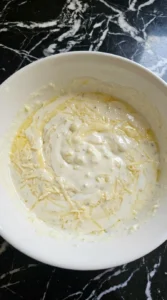
- Freshly grated parmesan is scattered over the creamy base in a loose layer, then milk is added in a small pour around the edges. At first the cheese sits in soft mounds and shaggy pockets, with some strands melting into the mixture faster than others. After stirring, the sauce becomes silkier and more cohesive. It looks thicker than plain cream, with unevenly melted cheese creating a realistic texture and a few richer areas where the parmesan gathers more heavily.
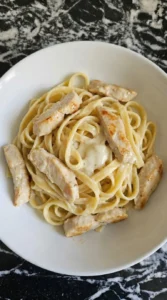
- Tender cooked fettuccine and fully cooked sliced chicken are added into the bowl with the finished Alfredo sauce. The pasta lands in loose folds rather than neat coils, and the chicken is tucked through the noodles with casual overlap so some pieces peek out while others sink into the sauce. Once folded together, the visual change is dramatic. The noodles become glossy and coated, the chicken shifts from simply seasoned to fully integrated, and the whole bowl takes on a richer, softer appearance with sauce clinging more heavily in some spots than others.
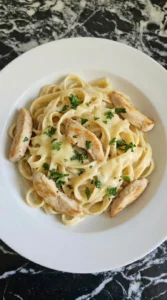
- Extra parmesan is scattered over the hot creamy pasta, not in a centered pile but in irregular patches that start to soften and melt where they land. Chopped parsley is sprinkled casually over the top, with some flakes catching on the chicken and some dropping into the sauce. The dish now looks finished but still naturally imperfect. The cheese melts unevenly into creamy spots, a few edges of chicken show slight browning, and the sauce settles into a rich, velvety coating that looks homemade instead of overly polished.
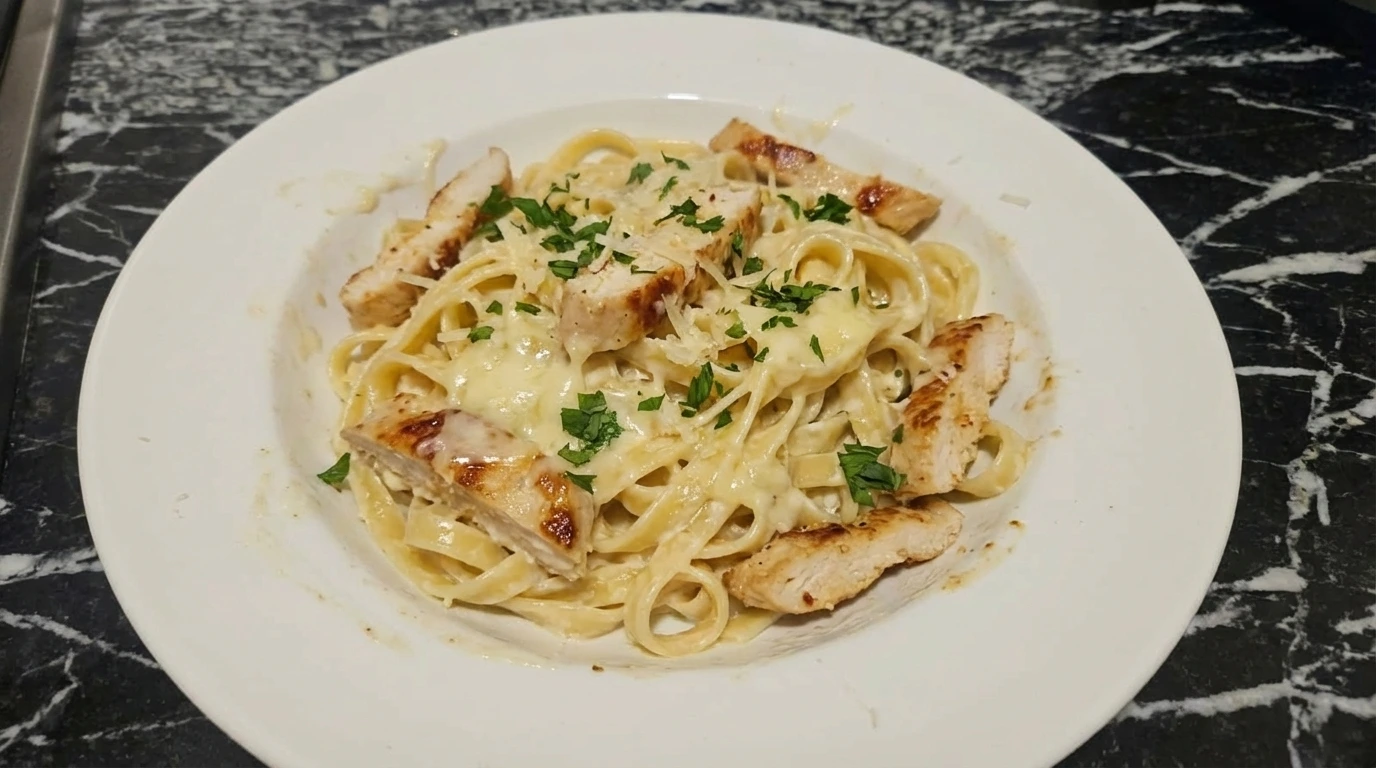
- The creamy pasta is transferred onto the white ceramic dinner plate in a loose mound with visible folds, scattered chicken, and sauce pooling lightly in a few shallow areas. Nothing is perfectly centered, and the cheese remains melted in irregular patches with bits of parsley and parmesan landing wherever they fall. This final plated dish shows the full progression from raw ingredients to a fully cooked dinner. The chicken has light golden-brown color, the sauce looks rich and thick, the noodles are fully softened and glossy, and the whole plate feels warm, generous, and ready to serve.
Notes
This simple Creamy Chicken Alfredo Pasta is rich and delicious! Tender chicken, silky Alfredo sauce, and glossy pasta all piled onto one cozy plate. So simple and oh-so good!