Ingredients
Method
- Keep the six apples at 68°F to 72°F, then peel and core them. Cut them into 48 irregular 1/2-inch wedges over 8 to 10 minutes. Fold the wedges with 1/3 cup light brown sugar, lemon juice, vanilla, 1 1/2 teaspoons cinnamon, nutmeg and cornstarch. Use broad scooping motions so the thin edges don’t break. Scrape the bottom twice so no dry starch remains. Stop when every wedge looks glossy and lightly speckled with cinnamon. You’ll smell vanilla and fresh lemon before any juice gathers at the bowl’s base. Letting the coated apples sit longer than 15 minutes creates a watery pool and softens the edges. Don’t mash the slices while folding. Even coating lets cornstarch thicken every pocket of apple juice.

- Use unsalted butter straight from the refrigerator at about 40°F. Mix old-fashioned rolled oats, all-purpose flour, 2/3 cup light brown sugar, the remaining 1/2 teaspoon cinnamon, kosher salt and chopped pecans for 2 minutes. Cut in the butter for 4 to 5 minutes. Pinch and release until irregular pea-sized crumbs form. The mixture should look sandy in places with visible butter nuggets throughout. It should smell nutty and warm from the cinnamon even before cooking. Stop before the crumbs become a paste. Working past 6 minutes warms the butter and creates a heavy topping. Cold butter melts slowly and leaves crisp pockets between the oats.

- Keep the slow cooker insert at 68°F to 72°F during assembly. Spread the coated apples and every drop of juice across the base in 2 minutes. Scatter the oat mixture over them for another 2 minutes. Leave several uneven gaps where the glossy apple wedges remain visible. Don’t press the topping flat. Set the cooker to HIGH, which averages near 300°F in many models. Cover it immediately after layering. The surface should look rough and loose with larger crumbs near the center. A packed topping traps steam and turns pasty before the apples soften. Loose layers create channels for bubbling juice and escaping steam.
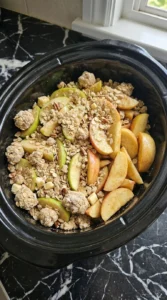
- Cook on HIGH near 300°F for 1 hour 45 minutes without lifting the lid. Then slide the lid open about 1 inch and cook 30 to 45 minutes more. Rotate the insert a quarter turn at minute 90 if your cooker heats unevenly. Don’t stir because the topping needs an intact surface. Look for amber bubbles around the edges and tender wedges that resist slightly when pressed. The topping should deepen to golden brown and lose its raw flour smell. (I tested it fully covered, the apples were good but the topping stayed soft.) Go past 2 hours 30 minutes and the wedges start collapsing. Venting releases steam so the crumble firms instead of steaming.

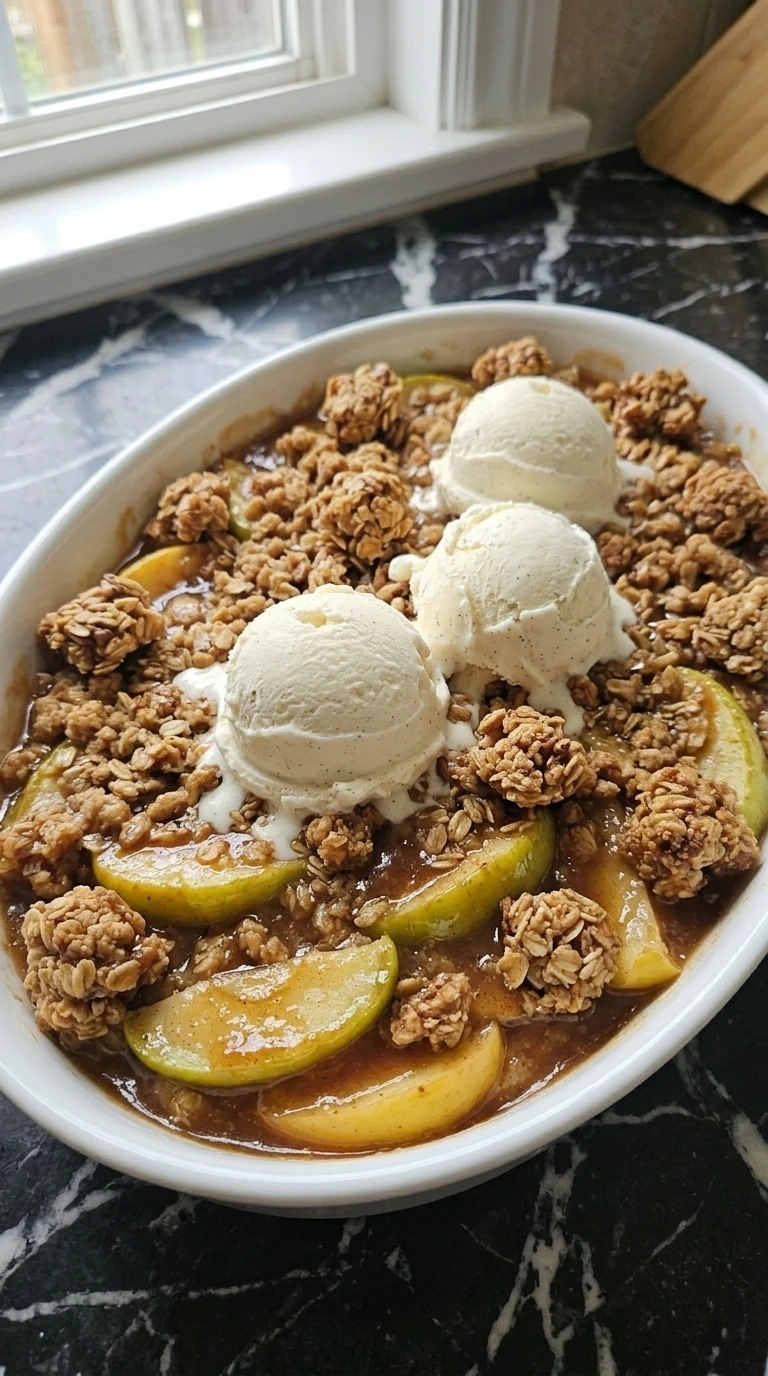
- Turn the cooker off and rest the crisp uncovered for 20 minutes. The center should cool from about 200°F to near 160°F. Scoop one-eighth of the crisp into each bowl with a lifting motion. Keep six apple wedges visible per serving and place one 1/3-cup scoop of vanilla bean ice cream on top. The sauce should coat the apples instead of running across the bowl. You’ll hear faint crackling from the oat topping while the ice cream softens at the edges. Serving before 15 minutes makes the filling thin and hides the crumble’s texture. Resting lets the cornstarch gel set properly around the tender fruit.

Notes
Crockpot Apple Crisp Recipe, Easy Slow Cooker Apple Crisp for Fall will keep for up to 4 days in a shallow, airtight container in the fridge. Let it cool within 2 hours before covering it. You can also freeze individual portions for up to 2 months. Press parchment against the surface, then seal the container tightly. Don’t freeze it with ice cream, since dairy can form icy crystals and melt into the crumble as it thaws. To reheat one chilled portion, bake it uncovered at 325°F for 15 to 20 minutes so the moisture can escape. You can also microwave it for 45 to 60 seconds. Add fresh vanilla bean ice cream after reheating. Toss the crisp if it smells fermented, shows visible mold, or releases cloudy liquid with bubbles that don’t go away after refrigeration.