Ingredients
Method
- Set a skillet over medium heat at about 325°F. Add 1 teaspoon olive oil and the baby spinach. Toss for 90 seconds until the leaves collapse. Cool for 5 minutes. Then fold the spinach with goat cheese, diced black Mission figs, garlic, thyme, 1/4 teaspoon salt and 1/8 teaspoon pepper using a slow J-shaped motion. The filling should look marbled, thick and slightly crumbly with green ribbons and purple fig pieces. You'll smell the garlic just as the mixture comes together. Go past 2 minutes on the heat and the spinach releases water, which can make the filling leak. Brief heat removes moisture without melting the goat cheese.

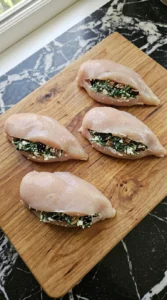
- Keep the chicken at 40°F or colder until you start. Cut one deep horizontal pocket into each breast over 5 to 7 minutes. Leave a 1/2-inch border around every edge. Divide the filling into four equal mounds. Press one mound into each pocket and close every seam with two toothpicks. The breasts should look plump but not stretched, and a little filling may peek through uneven seams. Press lightly with your palm for 10 seconds so each portion sits flat. Overfill the pockets and the cheese pushes out during searing. A snug pocket holds the filling while heat firms the chicken.
- Heat the remaining olive oil over medium-high heat until the skillet surface reaches about 410°F. Season the four stuffed breasts with the remaining salt and pepper. Lay them in without crowding. Sear for 2 1/2 minutes on the first side. Flip once and sear the second side for 2 minutes. You'll hear a sharp steady sizzle and see a deep amber crust form around the uneven edges. Shift the breasts toward the center after flipping so they brown evenly at once. Move them too soon and the crust tears away. High heat sets the exterior before the filling can escape.

- Whisk the fig preserves, balsamic vinegar, chicken broth and honey until completely smooth. Pour the mixture around the seared chicken and spoon a little over each breast. Add the quartered black Mission figs between the pieces. Bake at 375°F for 16 to 20 minutes until the thickest center reaches 165°F. The glaze should bubble slowly, turn glossy mahogany and coat a spoon in a thin sticky layer. Swirl in the butter for 30 seconds after baking. (I tried 400°F first, the glaze darkened before the centers reached temperature.) The USDA lists 165°F as the safe minimum for poultry. Food Safety and Inspection Service+1 Moderate oven heat cooks the center before the glaze scorches.

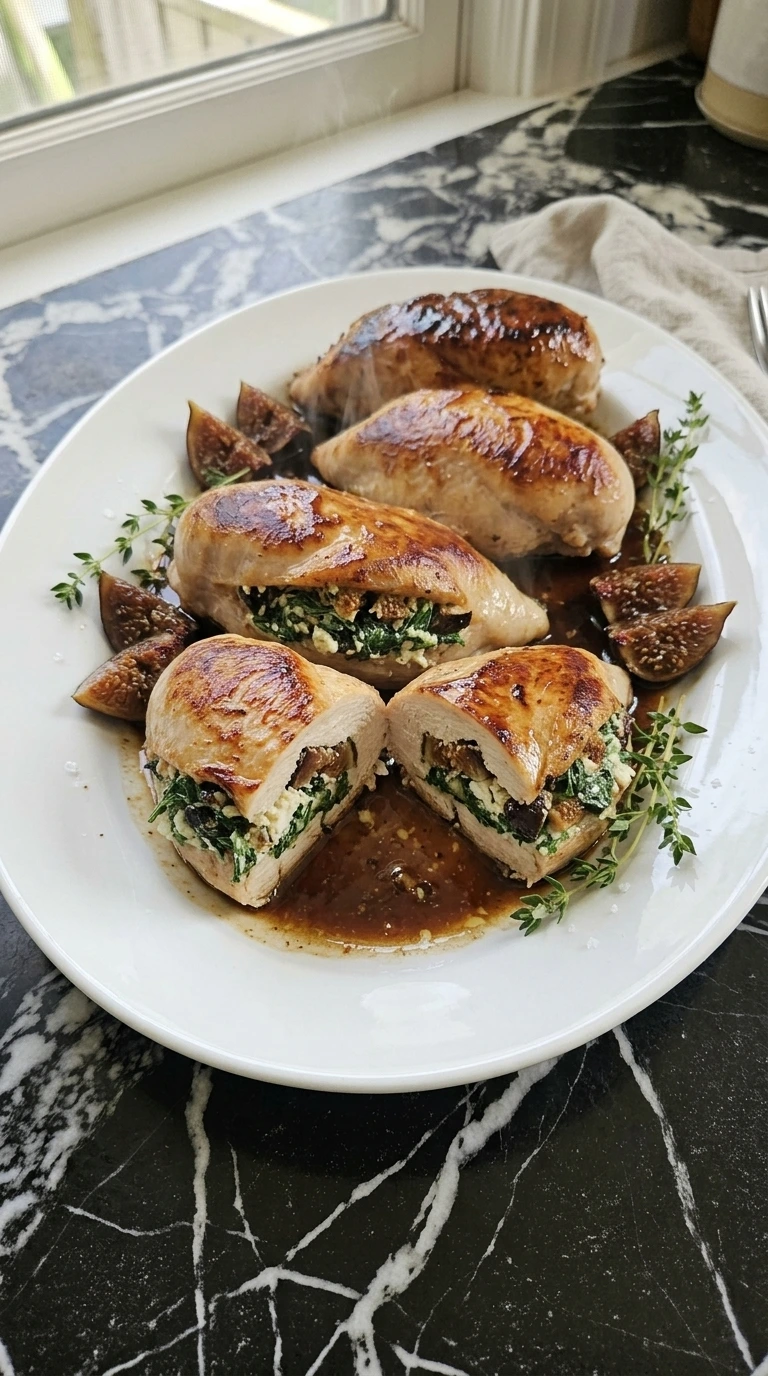
- Rest the chicken off heat for exactly 8 minutes while it stays above 140°F. Remove the toothpicks. Transfer one breast to a white plate and slice it on a slight diagonal. Spoon 2 tablespoons of fig glaze over the cut surface. Add two warm fig quarters and one small thyme sprig. The interior should look fully opaque and juicy, with creamy goat cheese and green spinach holding inside the seam. The glaze should pool irregularly instead of flooding the plate. Cut before 8 minutes and the juices run into the sauce. Resting lets the proteins relax and keeps each slice moist.

Notes
Cool leftovers within 2 hours and store them in a shallow airtight container for up to 3 days at 40°F or colder. Keep the glaze with the chicken so the surface stays moist. For freezing, wrap each cooled breast tightly and place it in a freezer container for up to 2 months. Freeze extra glaze separately in small portions so it doesn't soak the crust during thawing. Thaw overnight in the refrigerator. Reheat covered at 325°F for 15 to 18 minutes with 1 tablespoon low-sodium chicken broth per breast. Remove the cover for the final 3 minutes so the surface regains some texture. Discard portions with a sour smell, sticky film or gray-green filling. For another quick dinner after the leftovers are gone, make Garlic Butter Shrimp Pasta.