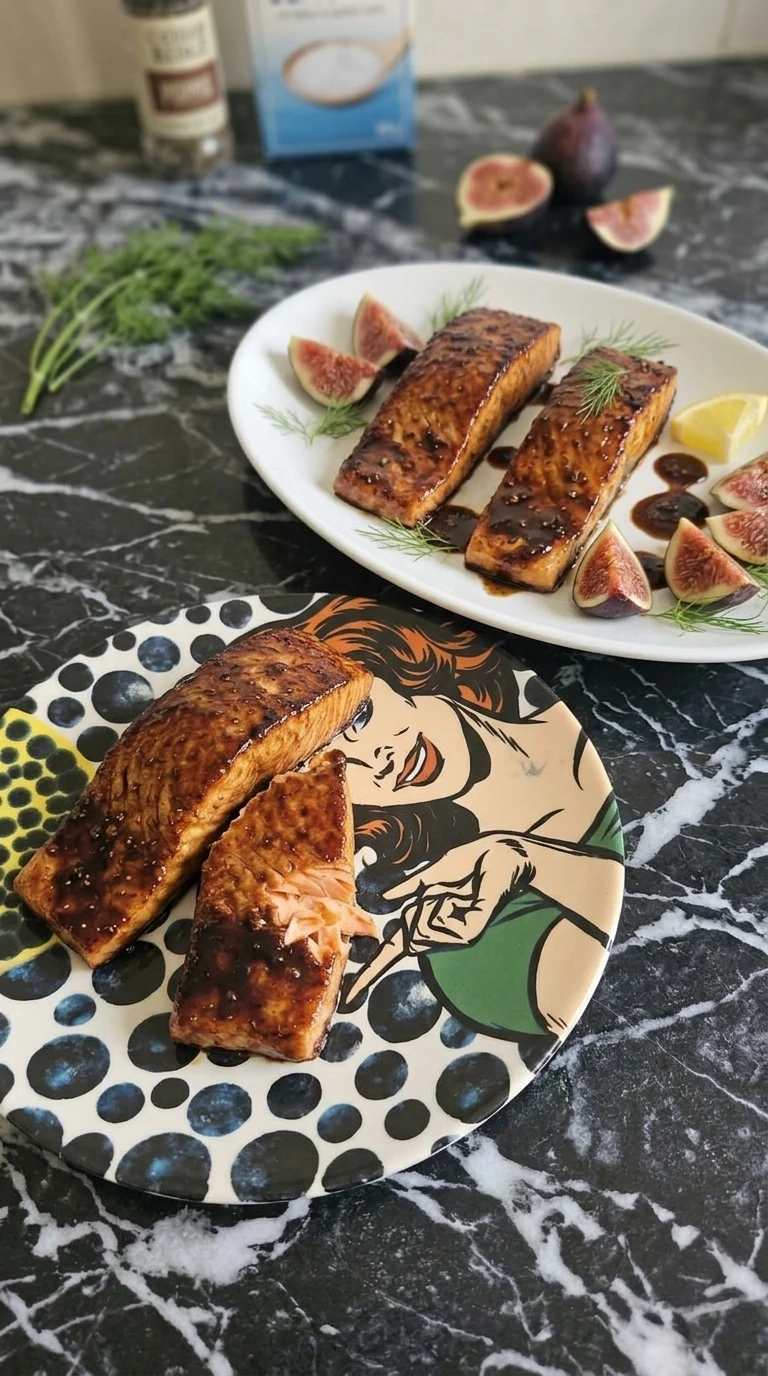
Fig Balsamic Salmon
This easy Fig Balsamic Salmon is one of my best ideas for a quick weeknight dinner, meal prep or a simple holiday main. The salmon stays healthy and tender while the fig balsamic glaze turns glossy and lightly sticky. You'll smell thyme and caramelized fruit as it finishes. What makes this version different is the two-stage cook. A fast sear builds color and the trick is finishing at 400°F so the glaze sets without scorching. Search focus: Dinner Recipes To Impress Guests.
Print
Pin
Servings: 4
Calories: 249kcal
Ingredients
- 4 fillets, 6 ounces each Atlantic salmon fillet Choose center-cut skinless pieces about 1 inch thick for even cooking.
- 1 teaspoon fine sea salt Use fine crystals so the seasoning spreads evenly across all four fillets.
- 1/2 teaspoon black pepper Grind it shortly before cooking for a sharper aroma.
- 1 tablespoon extra-virgin olive oil Divide it between coating the salmon and searing in the skillet.
- 1/3 cup Black Mission fig preserves Choose preserves with visible fruit and seeds for a textured glaze.
- 1/4 cup aged balsamic vinegar of Modena Use a balanced vinegar with gentle sweetness and clear acidity.
- 1 tablespoon Dijon mustard Whisk it into the glaze to sharpen flavor and improve cling.
- 2 cloves garlic Mince finely so the pieces soften during the short reduction.
- 1 teaspoon fresh thyme Strip and lightly chop the leaves before adding them to the glaze.
- 1 large fresh lemon Juice 1 tablespoon for the glaze and cut the remainder into four wedges.
- 1 tablespoon unsalted butter Whisk it in off heat to smooth the glaze and add shine.
- 2 tablespoons fresh dill Tear the fronds loosely and scatter them just before serving.
- 2 fresh Black Mission fig Quarter each fig to provide two pieces for every plated portion.
Instructions
- Keep four 6-ounce center-cut skinless salmon fillets at 40°F until 15 minutes before cooking. Pat every side dry and brush with 1 teaspoon extra-virgin olive oil. Then season with fine sea salt and black pepper. Press the seasoning lightly with your fingertips and rest the fillets for exactly 10 minutes. Don't leave them longer than 20 minutes or the surface starts releasing water. Next, the coral flesh should look matte with a faint oily sheen and visible pepper specks. The fillets should feel slightly tacky rather than wet. You'll smell clean salmon and pepper, but no sharp fishy odor. If beads of moisture form, blot them once before searing or the crust will steam. The short rest seasons the fish without drawing out excess moisture.

- Combine fig preserves and balsamic vinegar with Dijon mustard and minced garlic in a 1.5-quart saucepan. Add fresh thyme leaves and lemon juice. Cook over medium-low heat at about 4 on a 10-dial for 8 to 10 minutes. Whisk every 30 seconds and scrape the bottom in wide circles. Remove the pan and whisk in unsalted butter for 20 seconds. Go past 10 minutes and the fruit sugars can catch along the edges. Meanwhile, the mixture will shift from loose purple-red syrup to a glossy mahogany glaze. Tiny bubbles should rise steadily without splashing. Drag a spoon through the glaze at minute 8. A clean line should hold for 2 seconds before slowly closing. If it smells bitter instead of fruity, remove it immediately. Gentle reduction concentrates flavor without burning the fig sugars.

- Heat a 12-inch oven-safe cast-iron skillet over medium-high until the surface reaches about 425°F. Add the remaining 2 teaspoons extra-virgin olive oil and tilt once to coat. Lay the four fillets away from you with uneven spacing. Press each top for 10 seconds and sear without moving for 3 minutes. Flip once and sear the second side for exactly 90 seconds. You'll hear a strong steady sizzle that softens near minute 3. The first side should show an irregular amber crust while the edges turn opaque by about 1/4 inch. If the fillets cling, wait 20 seconds because forcing them tears the surface. Miss the hot window and the fish releases water instead of browning. High heat builds fond before the salmon releases too much moisture.

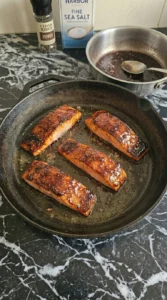
- Brush half of the warm fig balsamic glaze over the four seared fillets and push the glaze toward the uneven edges. Transfer the skillet to a 400°F oven for 6 to 8 minutes. At minute 4, rotate the skillet 180 degrees and brush on 2 more tablespoons. Check the thickest fillet at minute 6. Remove each fillet when its center reaches 145°F. The tops should deepen from amber to glossy mahogany with small dark caramelized patches. The centers should look opaque and flake under light pressure. (I tried 425°F first, the glaze darkened before the thickest fillet reached temperature. 400°F fixed it.) Go beyond 150°F and the layers tighten and dry. Moderate oven heat sets the glaze before the fig sugars burn.
- Rest the skillet off heat for 5 minutes in a 68°F to 72°F kitchen. Then lift one fillet onto each plate and spoon the reserved glaze over the center. Tuck two Black Mission fig quarters beside every portion. Scatter fresh dill unevenly and add one lemon wedge. Don't cut during the rest or the juices escape and thin the glaze on the plate. Finally, each fillet should show a dark glossy top and moist coral flakes at one broken edge. The fig quarters stay deep purple and fresh while the dill looks feathery and bright. Squeeze lemon only at the table so the glaze stays thick. If the glaze pools too loosely, let it sit 1 minute before serving. Resting lets the salmon fibers relax and hold their moisture.

Notes
Cool leftover salmon for no more than 2 hours and refrigerate it at 40°F or colder. Use a shallow airtight glass container and keep the fillets in one layer for up to 3 days. For longer storage, wrap each cooled portion tightly and place it in a freezer bag for up to 2 months. Freeze the extra glaze separately in a small sealed container so it doesn't soak into the fish. Thaw frozen salmon overnight in the refrigerator. Reheat it covered at 300°F for 10 to 15 minutes and add 1 teaspoon water or reserved glaze before warming. Stop when the center reaches 165°F. Discard the salmon if it smells sour, feels slimy or shows gray dry patches with leaking liquid. Fresh dill and lemon should always be added after reheating.
Nutrition
Serving: 1g | Calories: 249kcal | Carbohydrates: 26g | Fat: 16g | Saturated Fat: 5g | Cholesterol: 59mg | Sodium: 696mg | Fiber: 2g | Sugar: 17g