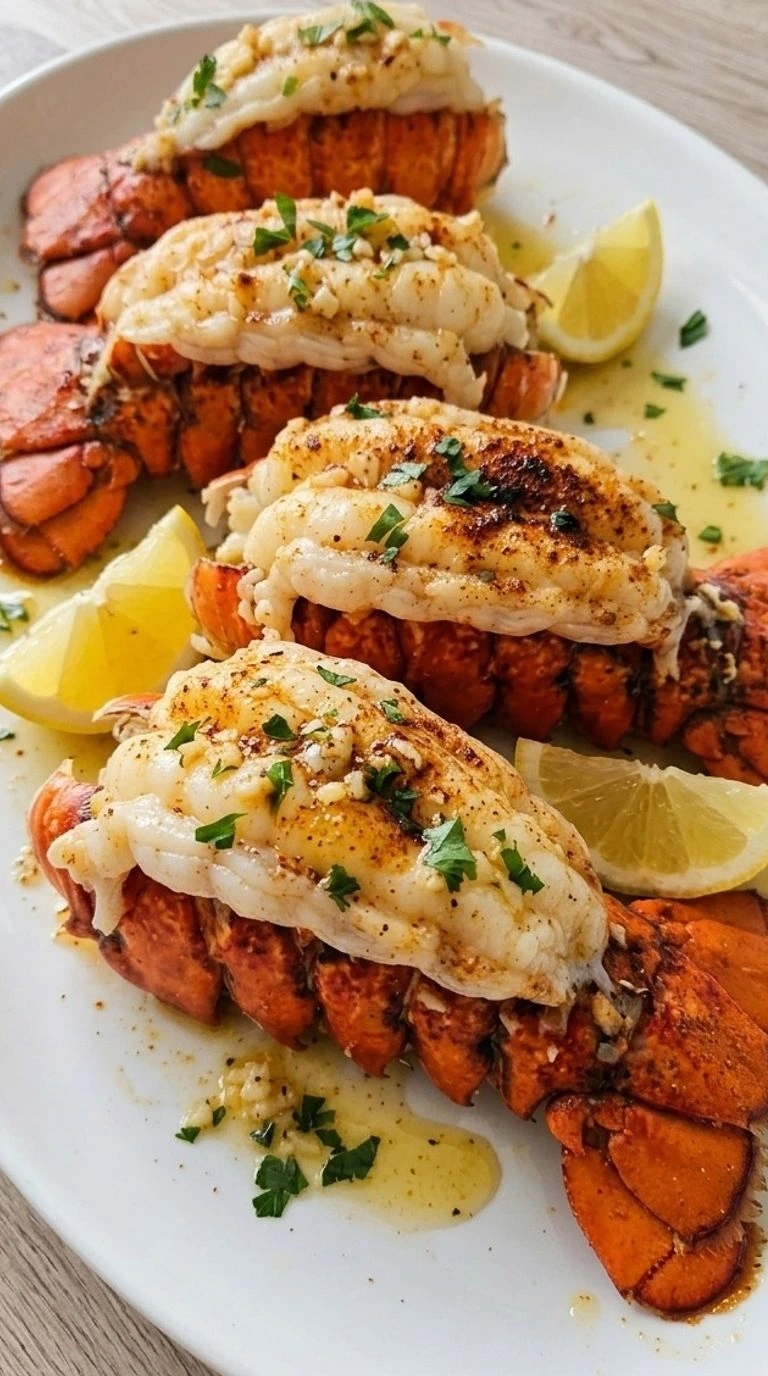
Ingredients
Method
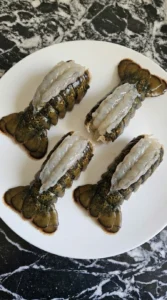
- Start with 4 fully thawed cold-water lobster tails that each weigh about 5 to 6 ounces. Keep the shells facing up and use kitchen shears to cut down the center of each hard upper shell. Stop just before the tail fan. Then gently spread the shell apart with your fingers and loosen the meat from the sides while keeping it attached at the tail end. Lift the meat through the opening and rest it on top of its shell. This should take about 5 to 7 minutes for all four tails. Work with the lobster cold at 40°F or below until it's time to bake. Next, check that the flesh sits above the shell without tearing into small pieces. You'll see pale translucent meat with a smooth and slightly wet surface. Don't force the shell too far apart or it may split at the base. The tail fan should still hold the meat in place. Keep the meat attached because the shell supports it while it cooks.
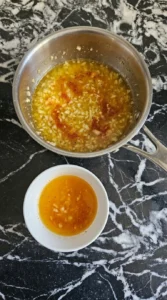
- Place 6 tablespoons of unsalted butter in a small saucepan and set it over medium-low heat. Aim for a gentle heat of about 3 on a 10-setting dial. Let the butter melt for 2 to 3 minutes and then add 4 finely minced garlic cloves. Stir with a silicone spatula for 30 to 60 seconds until the garlic smells sweet and fragrant. Remove the pan from the heat and mix in 1 tablespoon of fresh lemon juice, 1 teaspoon of smoked paprika, 1/2 teaspoon of fine sea salt and 1/4 teaspoon of freshly ground black pepper. Reserve about 2 tablespoons of the mixture in a separate clean bowl for serving. You'll see tiny garlic pieces floating through the golden butter and the paprika will turn it a light orange color. The garlic should stay pale. If it turns dark brown, the sauce can taste bitter. (I prefer adding the lemon off the heat because the flavor stays brighter.) Use gentle heat because browned garlic can overpower the sweet lobster.
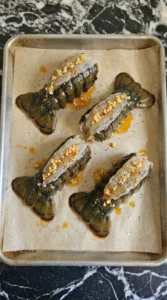
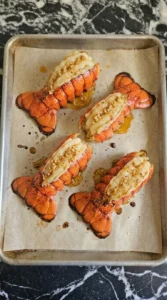
- Set the oven to 425°F and line a rimmed baking sheet with parchment paper. Arrange the 4 butterflied lobster tails with a little room between their shells. Brush 1 tablespoon of extra-virgin olive oil lightly over the exposed meat. Then spoon or brush the warm garlic butter mixture over each tail while keeping the reserved serving butter separate. Make sure the garlic reaches the deeper folds of the meat. This should take about 2 to 3 minutes once the tails are on the baking sheet. Keep the shells open so the heat can reach the thickest part of the lobster. At this stage, the pale meat will have a shiny orange-gold coating and small bits of garlic along its edges. Some butter will collect inside the shells. That's normal. But don't pour so much in one spot that the garlic slides off the meat. Spread the coating evenly because exposed patches can dry faster in the oven.
- Slide the baking sheet onto the middle rack of the 425°F oven. Bake the 4 lobster tails for about 10 to 14 minutes depending on their thickness. At minute 9, check the thickest piece with an instant-read thermometer by placing the probe into the center of the meat without touching the shell. Keep baking until the center reaches 145°F. If one tail reaches that temperature first, remove it and let the others finish. The shells will turn bright orange-red as the pale meat becomes firm and opaque. Don't keep baking just to make every edge deeply brown because lobster can turn tough fast. You'll notice a buttery garlic smell and a few golden spots along the exposed ridges. The meat should look solid white instead of glassy. If the center still looks translucent, check its temperature again after another minute or two. Stop at 145°F because extra oven time makes the meat dry and chewy.
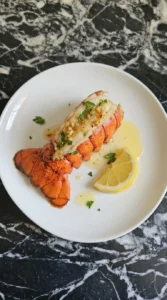
- Remove the baking sheet from the oven and leave the lobster undisturbed for 2 minutes. Meanwhile, stir 2 tablespoons of freshly chopped flat-leaf parsley into the reserved garlic butter. Move one tail onto each of 4 white dinner plates and spoon a little of that warm butter over the exposed meat. Cut the remaining lemon into 4 wedges and place one beside each tail. The garlic butter lobster tails should have bright shells and a soft center with just a little golden color around the edges. Serve while the butter is still fluid and the lobster is warm. Now the meat looks glossy with fresh green parsley scattered over the top. A few drops of lemon juice will bring out the sweet flavor. Don't leave the lobster on the hot baking sheet for another 10 minutes or the carryover heat may make the texture firmer. Serve soon because lobster tastes best before its butter cools and thickens.
Notes
Let leftover Garlic Butter Lobster Tails cool briefly and refrigerate them within 2 hours of cooking. Place the meat and shells in a shallow airtight container and keep the refrigerator at 40°F or below. For the best flavor and texture, enjoy them within 1 to 2 days. If you need longer storage, remove the meat from the shells and wrap it tightly before placing it in a freezer-safe container. Freeze for up to 2 months for best quality. Thaw overnight in the refrigerator and don't leave frozen lobster on the counter to defrost. To reheat, place the thawed lobster meat in a small covered baking dish with 1 teaspoon of fresh unsalted butter per tail. Warm at 275°F and begin checking after 8 minutes. Continue only until the center reaches 165°F. Don't use a very hot oven because the meat can become dry. If you notice a sour or ammonia-like smell, unusual discoloration or a slimy surface, throw the lobster away.