Ingredients
Method
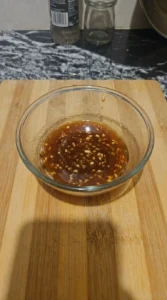
- Measure 1/3 cup honey, 3 tablespoons low-sodium soy sauce, 4 finely minced garlic cloves, 1 tablespoon fresh lemon juice and 1 teaspoon cornstarch into a mixing bowl. Whisk at room temperature for 45 to 60 seconds, using small circular strokes until the cornstarch disappears and the sauce turns evenly amber. Keep the mixture smooth before it touches the fish. Look for a thin, even glaze with tiny garlic flecks and no dry starch clumps. Work the whisk around the bowl's edge, because missed clumps can leave pale streaks in the finished sauce. Whisk thoroughly so the starch thickens the glaze evenly.
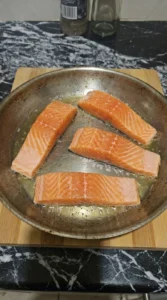
- Pat 4 skin-on salmon fillets, about 6 ounces each, dry with paper towels and season both sides with 1/2 teaspoon fine salt and 1/4 teaspoon black pepper. Heat 1 tablespoon olive oil in a 12-inch skillet over medium-high heat, about 400°F at the cooking surface, then place the fillets skin-side down with natural gaps between them. Press each fillet gently for 10 seconds to prevent curling and sear for 4 to 5 minutes without moving them. The skin should turn crisp and golden while the lower sides become opaque coral. If the oil smokes heavily, lower the heat before the garlic sauce goes in. Don't crowd the pan, or the fish will steam instead of sear. Sear over steady heat to build a crust before glazing.
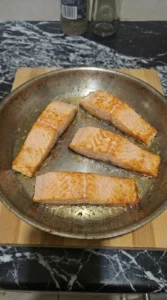
- Slide a thin spatula beneath each fillet and turn it carefully so the flesh faces the hot skillet. Cook over medium heat, around 350°F at the cooking surface, for 2 to 3 minutes, adjusting the time for thickness. Spoon a little of the pan oil over any pale areas, but keep the fillets spaced apart so heat reaches their sides. Check the thickest part with an instant-read thermometer as the color changes. The flesh should look opaque coral around the edges and slightly translucent only at the center until it reaches 145°F internally. If the surface darkens before the middle warms, reduce the heat and give it another short interval. Turn once and cook gently so the fillets stay intact.
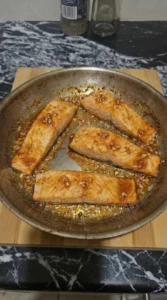
- Pour the prepared honey garlic mixture into the skillet around the 4 salmon fillets, then lower the heat to medium-low, about 300°F at the cooking surface. Let the sauce bubble gently for 2 to 4 minutes while you spoon it over the tops in slow strokes. Turn the fillets once more only if needed for even coating, and check that the thickest center reaches 145°F. The glaze should cling rather than run like water. Watch for small steady bubbles and a deeper amber color around the edges. If the sauce thickens too quickly, add 1 tablespoon water and swirl the skillet gently. Stop before the honey darkens to a bitter brown. Gentle reduction thickens the glaze without burning the honey.
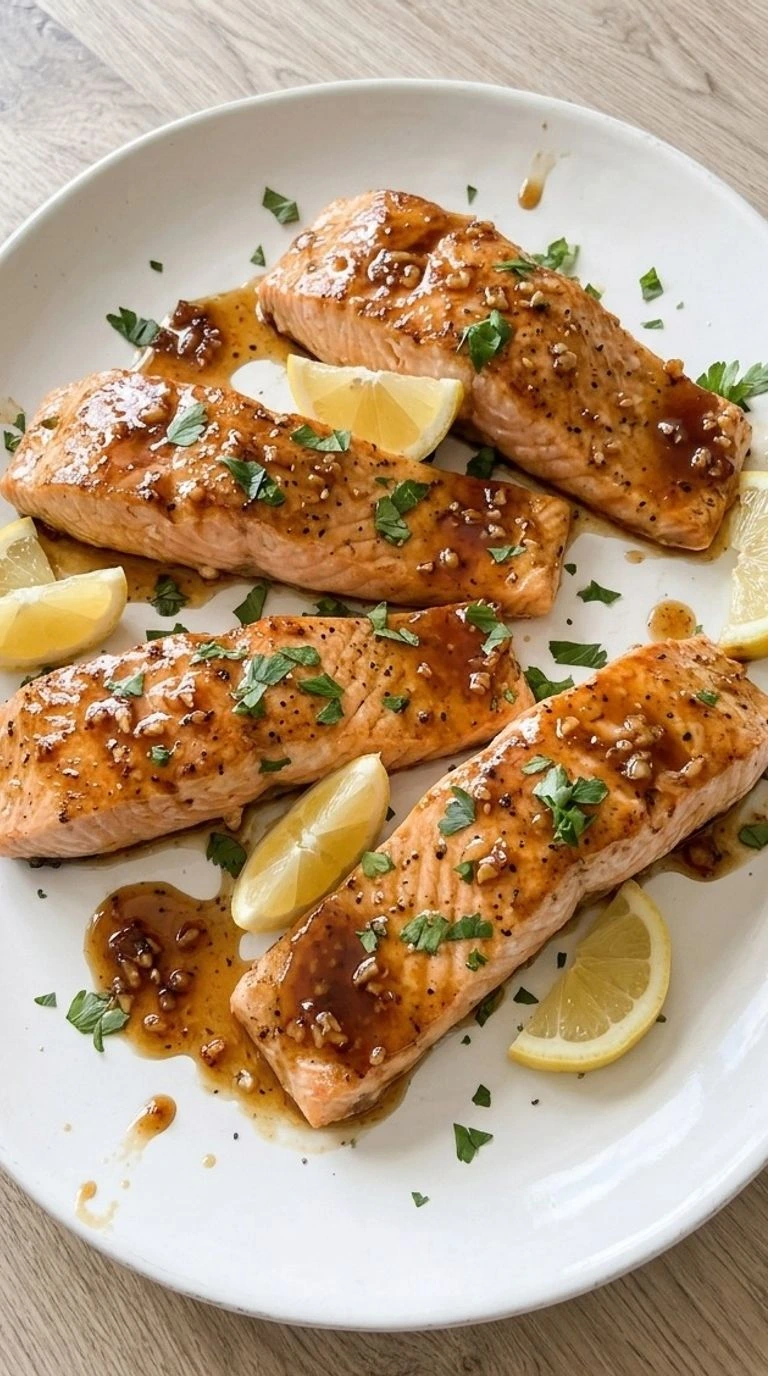
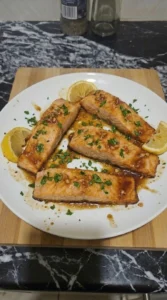
- Transfer the 4 glazed salmon fillets to a large white serving plate, keeping their skin intact and leaving natural gaps between them. Spoon the remaining sauce over the fish, then scatter 1 tablespoon finely chopped fresh parsley across the fillets. Add 4 lemon wedges around the edges and let the salmon rest for 2 minutes before serving. The thickest part should have reached 145°F before it leaves the skillet. Look for sticky amber glaze, lightly crisp edges and moist coral flakes that separate easily with a fork. Keep some skin visible, and don't bury the fish under sauce or garnish. Rest briefly so the juices settle and the glaze stays in place.
Notes
Place leftover Honey Garlic Salmon in an airtight container and refrigerate it within 2 hours of cooking. Keep it chilled at 40°F or below and eat it within 3 days. For longer storage, wrap each cooled fillet tightly and freeze it in a freezer-safe bag for up to 2 months, removing as much air as possible to limit freezer burn. To reheat, place a portion in a covered oven-safe dish at 275°F for 10 to 15 minutes, adding 1 teaspoon of water to the sauce if it looks thick. Heat the center to 165°F, and avoid repeated reheating because the fish dries out quickly. Discard leftovers with an unusual odor, a slimy texture or uncertain storage history.