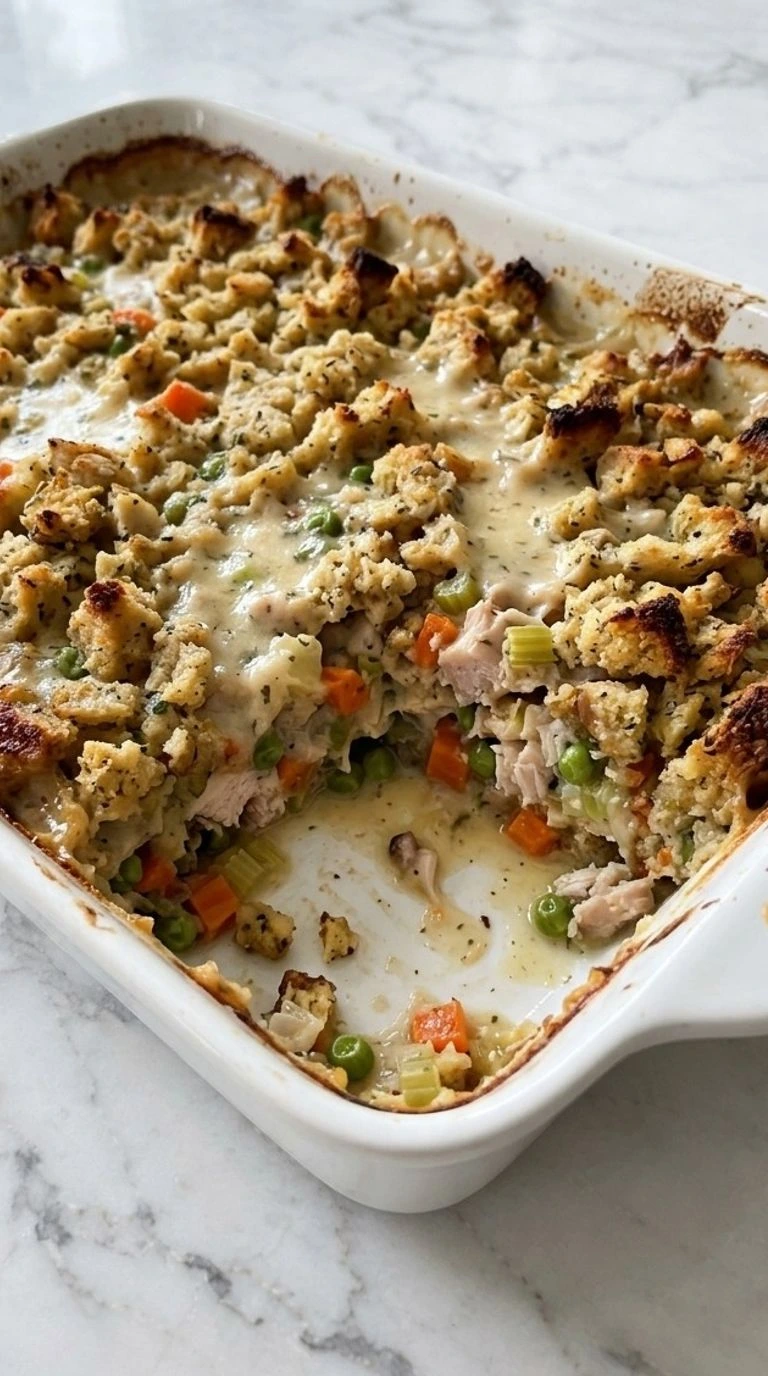
Ingredients
Method
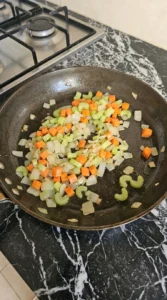
- Start by peeling 2 medium carrots and cutting them into small 1/4-inch cubes. Dice 1 medium yellow onion and slice 2 celery stalks into 1/4-inch pieces. Melt 2 tablespoons of unsalted butter in a large skillet over medium heat, around 350°F at the pan surface. Add the onion, carrots and celery. Then stir with a wooden spoon every minute for 7 to 8 minutes so the vegetables soften without taking on much color. Keep the pieces moving across the pan rather than letting them sit in one spot. The onion should turn pale and see-through while the carrots lose their hard bite. You'll smell the sweet onion as it softens. Stop before the vegetables turn dark brown or they'll bring a bitter edge to the sauce. Gentle heat keeps the vegetables tender without scorching their natural sugars.
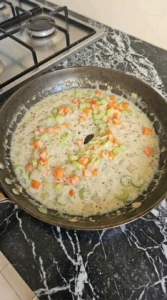
- Turn the heat to medium-low, about 300°F at the pan surface. Add the remaining 2 tablespoons of unsalted butter to the softened vegetables. Once it melts, sprinkle in 1/4 cup of all-purpose flour and stir for 60 to 90 seconds. Next pour in 1 1/2 cups of low-sodium turkey broth in small splashes while whisking to break up the flour. Add 1/2 cup of whole milk and 1 teaspoon of dried thyme. Keep stirring gently for 3 to 5 minutes until the mixture thickens into a smooth sauce. You'll know it's close when the sauce coats the back of a spoon and leaves a clear trail after you swipe through it. Thick, not pasty. If you stop too soon, the filling can turn watery in the oven. A short simmer lets the flour absorb liquid and set the sauce.
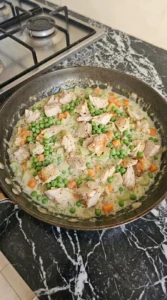
- Lower the heat to low, about 250°F at the pan surface, and add 3 cups of cooked roasted turkey breast and thigh meat cut into bite-size pieces. Pour in 1 cup of frozen green peas straight from the freezer. Sprinkle in 1/2 teaspoon of kosher salt and 1/4 teaspoon of freshly ground black pepper. Then use a spatula to fold the mixture from the bottom toward the center for 2 to 3 minutes. Move gently so the turkey chunks keep their shape and the sauce coats everything. The turkey should look moist and fully coated while bright green peas peek through the pale filling. You shouldn't see dry patches. Keep this brief because a long simmer can make the already-roasted meat tough. Low heat warms the filling without drawing more moisture from the turkey.
- Preheat the oven to 375°F and lightly coat a 9-by-13-inch baking dish with 1 teaspoon of unsalted butter. Spoon in the turkey mixture and spread it across the bottom in an even layer. Next scatter 3 cups of prepared herb bread stuffing over the filling. Leave small gaps between the stuffing pieces so some creamy sauce stays visible. Don't pack the bread down. Move the larger chunks toward the middle and let the smaller pieces settle naturally near the edges. This should take about 3 to 4 minutes. The top will look uneven and slightly loose. That's what you want. (I prefer leaving little gaps in the stuffing because the sauce can bubble through them.) Pressing it flat makes the topping dense and damp. Loose stuffing lets hot air dry the upper edges while the base stays moist.
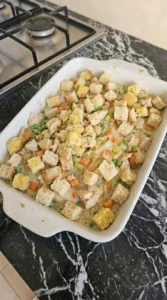
- Place the assembled casserole on the center rack of a 375°F oven and bake uncovered for 25 to 30 minutes. Let the topping toast while the sauce bubbles beneath it. At minute 20, check the top through the oven window. If the stuffing starts turning too dark, cover the dish loosely with aluminum foil for the remaining time. Check the middle of the filling with a food thermometer before removing the casserole. It needs to reach 165°F throughout for safe reheating. Look for deep golden spots along the stuffing edges and small bubbles near the sides of the dish. The sauce should no longer look thin. Don't leave it baking long after it reaches temperature or the turkey may dry out. Baking uncovered helps the stuffing crisp while the filling heats through.
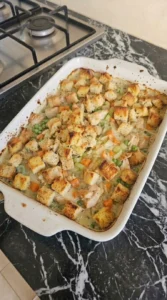
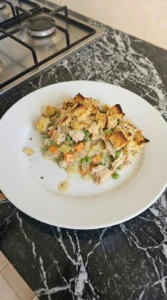
- Take the casserole out of the oven and let it stand for 10 minutes before serving. The center should still be hot and the stuffing should hold its crisp top. Use a broad serving spatula to scoop one generous portion from a corner onto a white dinner plate. Slide the spatula beneath the filling rather than dragging through the bread. Keep some of the golden topping attached so each bite has soft turkey and crisp stuffing. A typical serving is about one-sixth of the pan. You'll see tender turkey chunks and bright peas under the broken golden crust. A little sauce may settle along the edge of the portion. That's normal. Serve too soon and the hot filling can spread across the plate. A brief rest helps the thickened sauce hold the layers together.
Notes
Let the casserole stop steaming heavily and divide leftovers into shallow airtight containers within 2 hours of baking. Store at 40°F or below and use within 3 to 4 days of the turkey's original cooking date. Making a casserole doesn't restart the leftover storage clock. For longer storage, freeze individual portions as soon as possible. Wrap tightly or use freezer-safe containers and aim to enjoy them within 2 to 3 months for the best texture. The stuffing may soften after freezing, but the filling should remain creamy. For reheating, place a chilled portion in an oven-safe dish and add 1 to 2 tablespoons of low-sodium turkey broth. Cover loosely and heat at 350°F for about 15 to 25 minutes or until the center reaches 165°F. Uncover briefly if you want a drier topping. Discard leftovers with mold or an unusual smell, and don't rely on smell alone to judge safety. If the turkey sat out too long before refrigeration, throw it away rather than reheating it.