Ingredients
Method
- Start with 3 pounds of Yukon Gold potatoes and rinse them under cool running water for 30 to 60 seconds to remove any dirt. Peel each potato and cut it into chunks about 1 1/2 inches wide. Try to keep the pieces close in size so they soften at roughly the same rate. You don't need perfect cubes. In fact a few uneven edges won't hurt anything because everything gets mashed later. Keep the pieces in cool water at about 60°F to 70°F while you finish cutting. Aim to finish this stage within 10 minutes. Next, check the pieces before they go into the pot. They should look firm and pale yellow with no brown spots from sitting exposed to air. Don't leave the cut potatoes uncovered for long because their surfaces can darken. Keeping them in water slows that change.

- Transfer the 3 pounds of cut Yukon Gold potatoes into a large pot and add 2 quarts of cold water. Stir in 1 tablespoon of kosher salt. The water should cover the potato chunks by about 1 inch. Bring everything to a boil over high heat and then lower the burner to medium so the water holds a gentle simmer around 205°F to 212°F. Cook for 15 to 18 minutes while checking the largest pieces with a fork. They should split apart without much pressure. Drain the potatoes thoroughly and return them to the empty pot over low heat for 1 minute. Then give the pot two gentle shakes to let the last drops evaporate. The potato surfaces will look dull rather than wet and the edges may start breaking apart. Don't leave them over the heat too long or the bottom can scorch. This brief drying step removes extra water that would thin the mash.

- Keep the drained Yukon Gold potatoes in the warm pot and let them sit off the heat for 2 minutes. Their temperature should still be around 160°F to 180°F when you start mashing. Press a potato masher straight down through the chunks and lift it without stirring in circles. Work from one side of the pot to the other for about 2 to 3 minutes. Break down the largest pieces first and then press through the smaller ones. Stop when the mixture looks soft with a few tiny lumps. Don't keep beating it once the chunks disappear. You'll see the pale yellow pieces turn into a thick and uneven mash with small ridges across the surface. It's fine if it isn't completely smooth. Too much stirring can make the potatoes gluey because it releases more starch. Gentle pressing keeps the starch from turning pasty.

- Warm 3/4 cup of heavy whipping cream and 1/4 cup of whole milk in a small saucepan over medium-low heat for 3 to 4 minutes until they reach about 140°F. Don't let them boil. Add 6 tablespoons of softened unsalted butter to the warm mashed potatoes and gently fold until melted. Next pour in the warm cream mixture in three additions while folding with a rubber spatula. Add 1/2 cup of sour cream along with 1/2 teaspoon of garlic powder and 1/2 teaspoon of freshly ground black pepper. Fold for 60 to 90 seconds until the mixture looks creamy but still holds soft ridges. Then spread the mash into a 9-by-13-inch baking dish with shallow uneven swirls. Let it cool briefly and refrigerate within 2 hours of cooking in a shallow covered dish. Chill at 40°F or below for up to 2 days. (I've found that warm dairy blends in more evenly than fridge-cold cream.) Don't overmix or the mash can turn sticky. Gentle folding limits excess starch release.
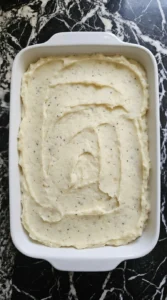
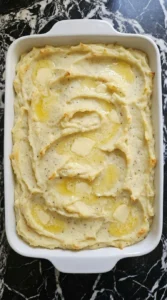
- Take the baking dish from the fridge while the oven heats to 350°F. Remove the cover and pour 1/4 cup of whole milk evenly over the chilled potato surface. Then dot the top with the remaining 2 tablespoons of unsalted butter in small uneven pieces. Cover the dish tightly with foil and bake for 30 to 35 minutes. Check the center with a food thermometer and keep heating until it reaches 165°F. If the center isn't hot enough after 35 minutes then keep the dish covered and check again every 5 minutes. Remove the foil and bake for 5 more minutes to melt the butter into the ridges. The surface should look soft and slightly glossy with pale golden edges and small pools of melted butter. Stir gently from the edges toward the center once if needed. Don't leave the dish uncovered for too long because the top can dry out. Covered heat warms the center without stripping away moisture.
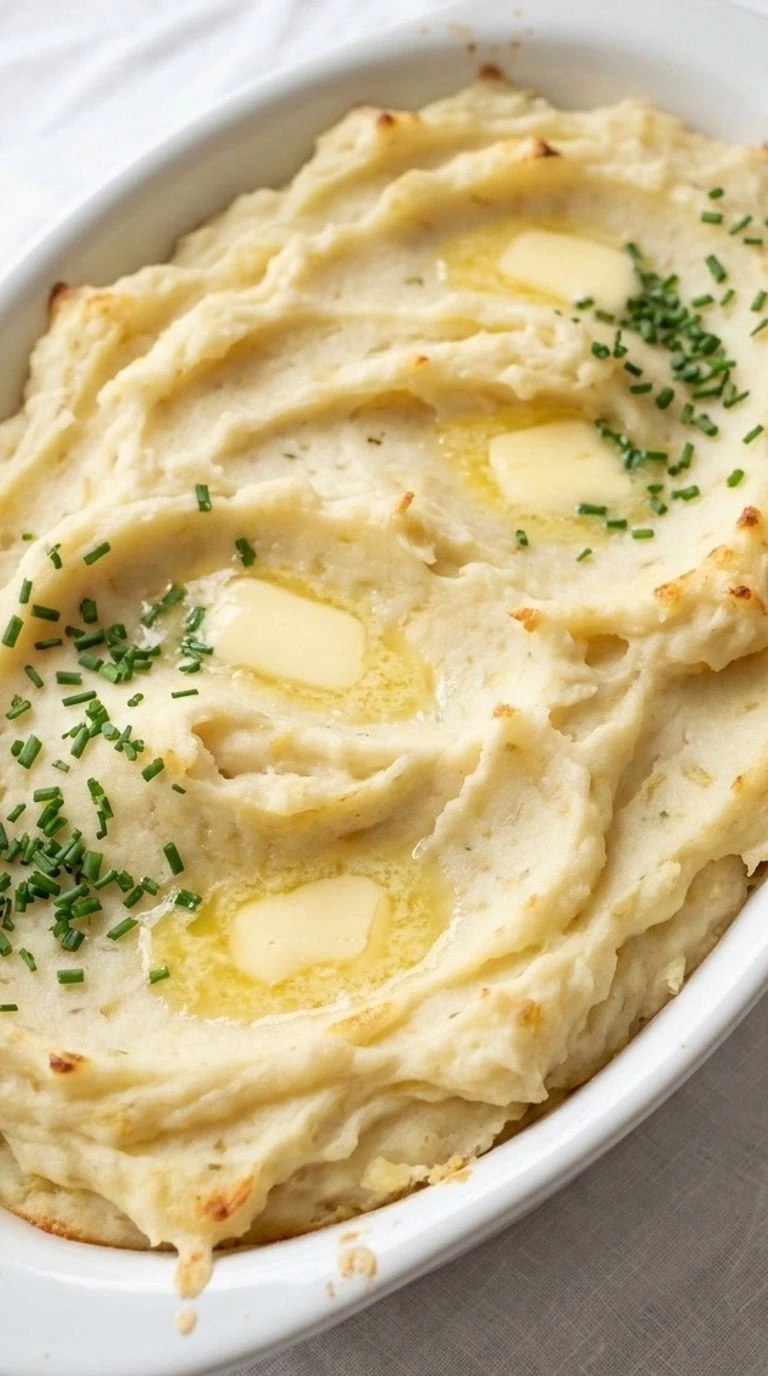
- Let the hot mashed potatoes rest for 3 minutes after they leave the oven. This gives the melted butter a chance to settle into the soft folds. Then scoop about 3/4 to 1 cup onto each of 8 warm serving plates. Use the back of a spoon to shape a shallow dip in each portion instead of pressing it flat. Scatter the 2 tablespoons of finely chopped fresh chives across the portions and add a little extra freshly ground black pepper if desired. Serve while the potatoes are still around 140°F to 160°F for the best texture. Each portion should have irregular pale ivory folds with small golden buttery patches and bright green chive pieces. The potatoes will feel thick but soft when you lift a spoonful. Don't leave the portions uncovered for a long stretch or a skin can form. Serving hot keeps the butter soft and the mash creamy.

Notes
Make Ahead Mashed Potatoes keep well in the refrigerator for 3 to 4 days from the day they're first cooked. For the best texture, plan to serve them within 2 days. Transfer the mash to a shallow airtight container or cover the baking dish tightly. Refrigerate at 40°F or below within 2 hours of cooking. You can also freeze portions in freezer-safe containers for up to 2 months at 0°F. Let them cool promptly before sealing and leave a little room for expansion. For reheating, thaw frozen portions overnight in the refrigerator. Cover the potatoes and warm at 350°F for about 30 to 40 minutes or until the center reaches 165°F. Add 2 tablespoons of warm whole milk if they seem dry. Discard potatoes with mold or an unusual sour smell. Don't taste questionable leftovers to check whether they're safe.