
Ingredients
Method
- Dice the yellow onion into roughly 1/4-inch pieces and cut the carrots and celery into small cubes of a similar size. Mince the garlic cloves and set them aside. Then pour the extra virgin olive oil into a heavy pot and set the burner to medium heat (about 5 on a 10-point dial). Add the onion, carrots and celery and stir with a wooden spoon every minute for 7 to 8 minutes. Keep the vegetables moving across the bottom so they soften without taking on much color. Add the minced garlic and stir for another 60 seconds. The onion should look soft and almost clear while the carrots stay bright orange. You'll notice a sweet smell as the garlic warms through. But don't let it turn dark brown or the whole soup can taste bitter. Gentle heat builds the flavor without burning the garlic.
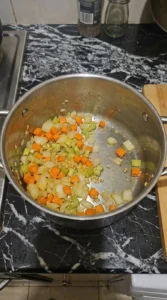
- Pour the crushed San Marzano tomatoes into the pot and stir until the softened vegetables turn red. Drain and rinse both cans of cannellini beans. Add them with the low-sodium vegetable broth, dried oregano, dried thyme, dried bay leaf, fine sea salt and freshly ground black pepper. Bring the pot to a gentle simmer at about 200 to 205°F, then lower the burner to medium-low (about 3 on a 10-point dial). Let it bubble softly for 12 minutes while you stir every 3 minutes. Keep the lid slightly open so the broth can thicken a little. Next, press about 1 cup of beans against the side of the pot with the back of your spoon. They'll break into the broth and give it a soft creamy look. Don't boil hard or the beans may fall apart too much. A low simmer thickens the base while keeping most beans intact.
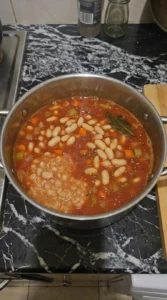
- Turn the heat up until the broth returns to a steady gentle simmer between 200 and 205°F. Remove the bay leaf and stir in the dry ditalini pasta. Make sure every piece sinks below the broth so the small tubes cook at the same pace. Stir along the bottom of the pot every 2 minutes because the pasta can settle and stick as the soup thickens. Let it simmer for 9 to 11 minutes or until the ditalini is tender with a slight bite in the center. If the broth gets too thick, stir in a little hot water from the measured amount. You'll see the pasta swell and the broth get thicker as starch seeps out. (I once left the noodles simmering for 15 minutes and they turned far too soft.) Check early. Going past 11 minutes can leave the small pasta tubes mushy. Gentle bubbling keeps the pasta tender without breaking it.
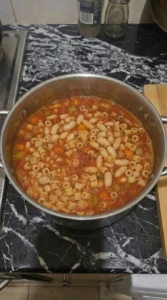
- Turn off the heat and leave the pot uncovered for 2 minutes so the bubbling stops and the broth settles. Taste the soup and adjust with a little of the measured fine sea salt or black pepper if needed. Finely chop the fresh flat-leaf parsley and grate the Parmigiano Reggiano while the soup rests. Then ladle one generous portion into a deep serving bowl. Sprinkle the parsley over the center and add a loose layer of grated cheese. Serve while the soup is still around 175 to 185°F so the Parmesan softens against the hot broth. The finished Pasta e Fagioli should have tender pasta and creamy beans in a broth thick enough to cling to your spoon. The Parmesan will soften into small pale strands while the parsley stays bright green. Don't let the finished pasta sit on the heat. Serving promptly stops the noodles from soaking up too much broth.

Notes
Let Pasta e Fagioli cool slightly, then divide it into shallow airtight containers and refrigerate within 2 hours. Keep it at 40°F or below and eat within 3 to 4 days. The ditalini will absorb more broth overnight, so the leftovers will be thicker than the first serving. For freezing, leave the pasta out if possible and freeze the cooled bean and tomato base in freezer-safe containers for up to 3 months. Leave about 1 inch of room at the top so the liquid can expand. To reheat, warm one portion in a small saucepan over medium-low heat for 5 to 8 minutes until it reaches 165°F. Add 1/4 cup of vegetable broth or water to loosen the texture and stir gently. If the soup develops an unusual sour smell, visible mold or a slimy texture, discard it. Don't taste questionable leftovers to check if they're safe.