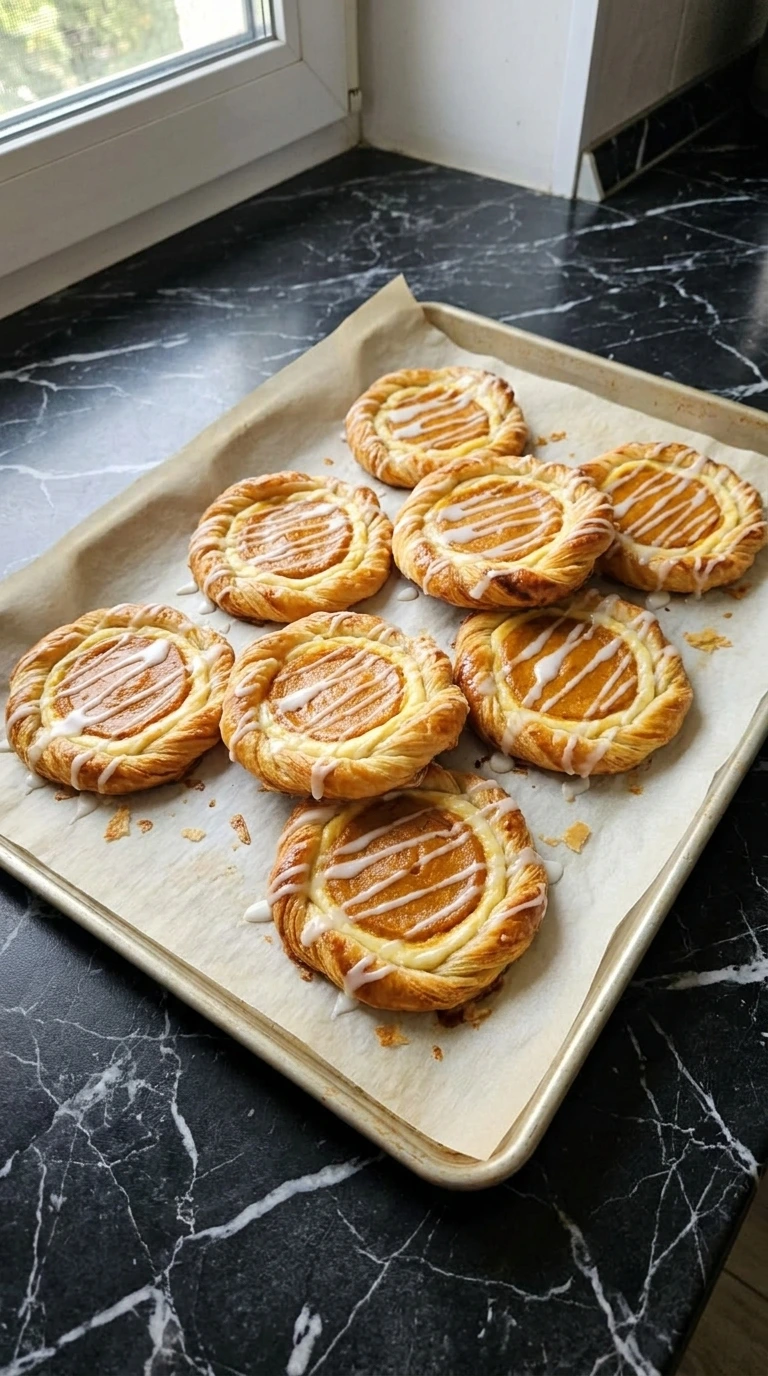
Ingredients
Method
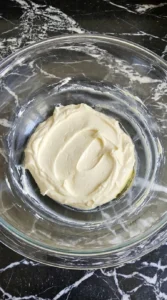
- Set the full-fat brick cream cheese at 70°F for 30 minutes. Beat it with granulated cane sugar, one egg yolk and 1 teaspoon pure vanilla extract for 2 minutes. Use firm circular strokes and scrape the bowl halfway through. Keep the mixture below 75°F so it stays thick. If it warms too much, chill it for 10 minutes before shaping. The filling should look smooth and pale with soft ridges that hold for 5 seconds. You shouldn't see sugar crystals or cream cheese lumps. Stop once it turns satiny because another 2 minutes can loosen it. Miss this window and the center may spread beyond the pastry ring. Controlled mixing keeps the cream cheese stable during baking.
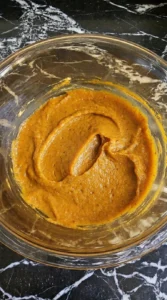
- Stir canned pumpkin puree with light brown sugar, all-purpose flour, pumpkin pie spice, ground cinnamon and fine sea salt at 68°F. Fold with short strokes for 60 seconds, then press the mixture against the bowl twice. Rest it for 5 minutes so the flour hydrates. Don't whip air into it because bubbles can make the centers puff and crack. The pumpkin mixture should turn a deeper orange and fall in a thick ribbon. A line drawn through it should stay open for 3 seconds. If it looks glossy or watery, add 1 teaspoon flour and wait another 3 minutes. Skip that correction and the pastry base can turn soggy. Hydrated flour binds excess pumpkin moisture before the oven.
- Keep the all-butter puff pastry between 38°F and 42°F. Roll it to a 10×12-inch rectangle and cut eight 1¼-inch strips lengthwise. Twist each strip three times, then coil it into a loose 4-inch ring. Press the tail underneath. Chill the rings for 10 minutes, then spoon 1 tablespoon cream cheese filling and 2 teaspoons pumpkin filling into each center. Brush the exposed pastry with the second egg beaten with 1 teaspoon water. At this stage, each Pumpkin Cream Cheese Danish should feel cool and firm while both fillings stay visibly separate. If the butter softens and smears, freeze the tray for 5 minutes. Warm dough won't lift into clean layers. Cold butter creates steam pockets that separate the pastry sheets.

- Bake the filled pastries in a fully preheated 375°F oven for 18 to 22 minutes. Rotate the sheet pan 180 degrees at minute 12 and don't open the door earlier. The pastry needs uninterrupted heat to rise. (My first batch went in at 400°F, the edges browned before the pumpkin center set. 375°F fixed it.) By minute 18, the spiral rims should look deep golden and the cream cheese should appear set but softly glossy. The pumpkin centers will darken one shade and stop wobbling when the pan moves. Go past 22 minutes and the exposed layers can taste dry. Moderate heat sets both fillings before the laminated edges scorch.

- Cool the pastries on the sheet pan for exactly 10 minutes. Whisk powdered cane sugar with whole milk and the remaining 1/2 teaspoon pure vanilla extract at about 70°F for 45 seconds. Drizzle 1 teaspoon over each pastry in thin uneven lines. Then transfer one pastry to a plate and cut it once through the center after another 5 minutes. The glaze should turn satin-white and settle into the cracks without hiding the golden layers. The cut center should show flaky sheets, a pale cream cheese ring and thick orange pumpkin filling. Glaze too soon and it melts into a clear film. Cut too soon and the filling drags. Brief cooling lets the pastry structure firm before serving.

Notes
Refrigerate the pastries within 2 hours of baking and keep them in a shallow airtight container for up to 3 days. Place parchment between layers so the glaze doesn't stick. Freeze unglazed pastries individually for 1 hour, then wrap each piece tightly and seal them in a freezer bag for up to 2 months. Thaw overnight in the refrigerator for the most even texture. Reheat Pumpkin Cream Cheese Danish at 325°F for 6 to 8 minutes from chilled, or 12 to 15 minutes from frozen. Let each pastry stand 5 minutes, then add 1 teaspoon fresh glaze if the surface looks dry. Don't microwave longer than 20 seconds because the pastry turns rubbery. Discard pieces with sour dairy odor, wet separated filling, unusual dark spots or visible mold.