
Raspberry Colada
This easy Raspberry Colada is packed with bright berry flavor, creamy coconut, and tropical pineapple for one of the best quick and simple drink ideas around. It feels healthy enough for brunch, fun enough for a party, and special enough for a holiday or potluck. Great for meal prep freezer packs or a laid-back weeknight dinner treat, this refreshing sip comes together fast with simple ingredients.
Print
Pin
Servings: 4
Ingredients
- 2 cups fresh raspberries
- 1 1/2 cups pineapple chunks
- 1 cup coconut cream
- 3/4 cup unsweetened pineapple juice
- 1/3 cup cream of coconut
- 1 whole fresh lime
- 2 tablespoons granulated sugar
- 1/8 teaspoon fine sea salt
- 3 cups crushed ice
- 1/4 cup sweetened shredded coconut
- 2 tablespoons toasted coconut flakes
- 4 leaves fresh mint leaves
- 8 berries extra raspberries
Instructions
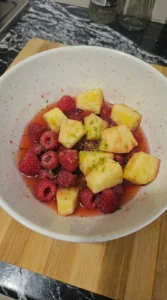
- Add the raspberries and the pineapple chunks to a speckled white ceramic mixing bowl. The pineapple pieces should look a little irregular in size, and the raspberries should sit loosely against them instead of being arranged neatly. Scatter over the lime zest so the bright green flecks catch in random places. At this stage, everything still looks fresh and raw, with the berries whole, the pineapple glossy, and the colors clearly separate.

- Sprinkle the sugar and sea salt over the fruit in the same bowl, then squeeze in the lime juice. The sugar should fall in uneven patches, and the salt should disappear into the shiny fruit surface rather than sitting in a perfect ring. The fruit now looks lightly seasoned and wetter than before. A little juice begins pooling at the bottom, and the raspberries start to look glossy around the edges while the pineapple takes on a brighter, slicker surface.

- Let the bowl sit so the raspberries can soften and the sugar can draw out more juices. The berries should slump slightly, with a few collapsing into the liquid while the pineapple pieces remain chunkier and more defined. This is the point where the mixture visibly shifts from raw and dry to softened and lightly marinated. The juices turn rosy, the bottom of the bowl looks syrupy, and the fruit no longer looks crisp and untouched.
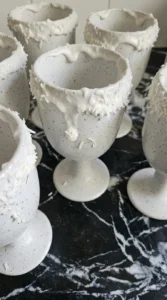
- Spoon a little coconut cream around the inside edge of four chilled speckled white ceramic goblets, then press the rims into shredded coconut. The coating should look uneven and homemade, with some areas more thickly covered than others. Visually, this step adds the first creamy element. The white coconut clings in rough patches, and a few stray flakes stick lower on the rim instead of forming a perfect border.
- Transfer the softened fruit and its rosy juices into a blender jar, then add the coconut cream, cream of coconut, and pineapple juice. The liquids should settle around the fruit in loose layers, with creamy white streaks drifting through the pink and yellow. Nothing is blended yet, so the ingredients are clearly separate but beginning to mingle. The look is part layered, part pooled, with heavy creaminess resting over the fruit and juice collecting in uneven pockets.

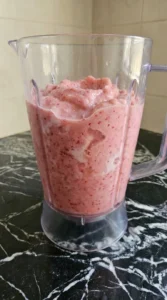
- Blend the mixture until the fruit breaks down and the color turns a cloudy blush pink. The texture should look thick and creamy, but not perfectly smooth, with tiny specks of raspberry and soft pale streaks of coconut still visible. The visual change here is major: the separate ingredients become one frosty mixture. The ice and fruit soften into the liquid, creating a heavier slush with rounded swirls and a colder, fuller body.
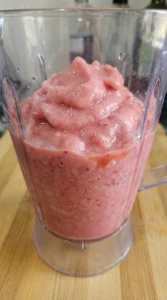
- Add the crushed ice and pulse again just until the mixture turns thicker and more mounded, with small uneven crystals throughout. The drink should visibly evolve from creamy to frozen and piled, with softer edges where the ice starts to melt into the fruit base. This stage brings that raw-to-softened-to-melted progression into focus. The slush looks colder, denser, and slightly airy on top, while the bottom remains a little looser and more glossy.
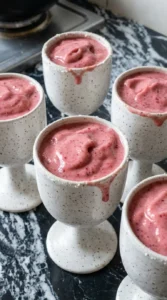
- Spoon and pour the frozen mixture into the coconut-rimmed goblets, letting it settle in natural swirls. Some glasses can sit a little fuller than others, and a few drips or smears near the rim make the presentation feel real rather than overly styled. The drink now looks close to finished, with thick pink curves pressing against the white ceramic and a soft, creamy mound forming at the top. The surface should be imperfect, with dips, ridges, and a few berry flecks visible.
- Scatter toasted coconut flakes over the tops so they land unevenly, then tuck in the extra raspberries and mint leaves without forcing them into perfect alignment. The golden flakes should cling in random spots, with some sinking slightly into the creamy surface. This finishing step adds the final contrast the drink needs. The toasted coconut brings slight golden-brown color, the mint adds fresh green movement, and the top now looks layered, textured, and ready to serve.
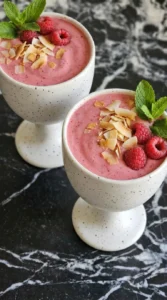
- Set the finished goblets together as the final plated dish, with the frozen drink slightly settled and the garnish looking naturally relaxed. The tops should show creamy melted patches between the toasted coconut, and the pink mixture should have a rich, thick look instead of anything pale or flat. This is the fully finished Raspberry Colada: frosty, creamy, visibly blended, and topped with slight golden-brown color from the toasted coconut. The surface is imperfect in the best way, with uneven garnish, soft melt around the edges, and a homemade, ready-to-serve finish.

Notes
One of my signature recipes! This is a Raspberry Colada made the sunny tropical way, with creamy coconut, sweet pineapple, and bright raspberries blended into a thick frozen drink. No artificial shortcuts - that’s the overly sweet version. Though it requires a little layering and blending, it is worth every minute. The fruit is fresh and tangy and the texture is rich and thick. Makes 4 generous servings. This Raspberry Colada has layers of berry, pineapple, and coconut flavor with a frosty blended base, a coconut-coated rim, then finished with toasted coconut and fresh garnish on top. You could stretch it to 5 smaller servings. If making a bigger batch, scale up the recipe by 25% and use a very large blender jar!