Ingredients
Method
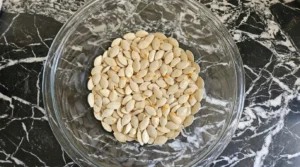
- Rinse 2 cups fresh pumpkin seeds in cool water around 60°F for 3 to 5 minutes. Rub the seeds gently between your fingers so the orange pumpkin fibers loosen and float away. Drain them well and spread them into one loose layer. Don't rush this cleaning stage because stringy pulp traps water and roasts unevenly. Next, check the seeds closely and pull away any remaining soft fibers. The shells should look pale cream and clean with only a light surface sheen. You'll stop smelling raw pumpkin flesh once the pulp is gone. Leave clinging pulp behind and it can scorch before the shells crisp. Clean thoroughly because exposed shell surfaces dry much faster. Preheat the oven to 250°F now so it's fully hot by the time the pan goes in.
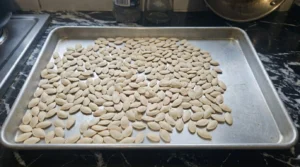
- Heat the oven to 250°F and spread the cleaned seeds in one layer. Dry them for 10 to 12 minutes and stir once at minute 6 so damp spots reach the hot air. The shells should lose their wet shine and feel dry when touched. Don't let them toast deeply yet because this stage is only removing moisture. Meanwhile, listen for a faint dry rustle when you move the seeds. They should smell neutral and slightly nutty but not roasted. (My first batch went straight into oil while damp, and the coating slid right off.) Pull them at 12 minutes before the edges darken. Low heat drives off water before the real roasting begins.
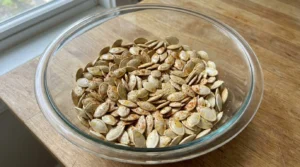
- Raise the oven to 325°F. Toss the dried seeds with 1 tablespoon extra-virgin olive oil, 1 teaspoon garlic powder, 1/2 teaspoon smoked paprika and 1/2 teaspoon fine sea salt for 45 to 60 seconds. Turn the seeds from the edges toward the center until every shell looks lightly slick. Don't drown them in oil or they'll roast greasy. Then spread the coated seeds back into a loose single layer. You should see a thin orange-red spice film with small pale patches still showing through. The oil should smell fruity and the paprika warm but not smoky. If seasoning collects in wet clumps, keep tossing for another 15 seconds. A thin coating promotes even browning instead of patchy scorching.
- Roast the seasoned seeds at 325°F for 18 to 22 minutes. Stir at minute 10 and rotate the seeds from the darker edges toward the center. The shells should deepen from pale cream to warm golden brown with a few bronze spots. Don't go past 22 minutes without checking because the thin shells can turn bitter quickly. Next, smell for a toasted nut aroma and listen for a light crackle when the seeds shift. Roasted Pumpkin Seeds with Parmesan need this dry crisp base before the cheese goes on. If the seeds still bend instead of snapping lightly, roast 2 more minutes. Moderate heat crisps the shell before the Parmesan can scorch.
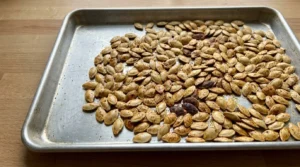
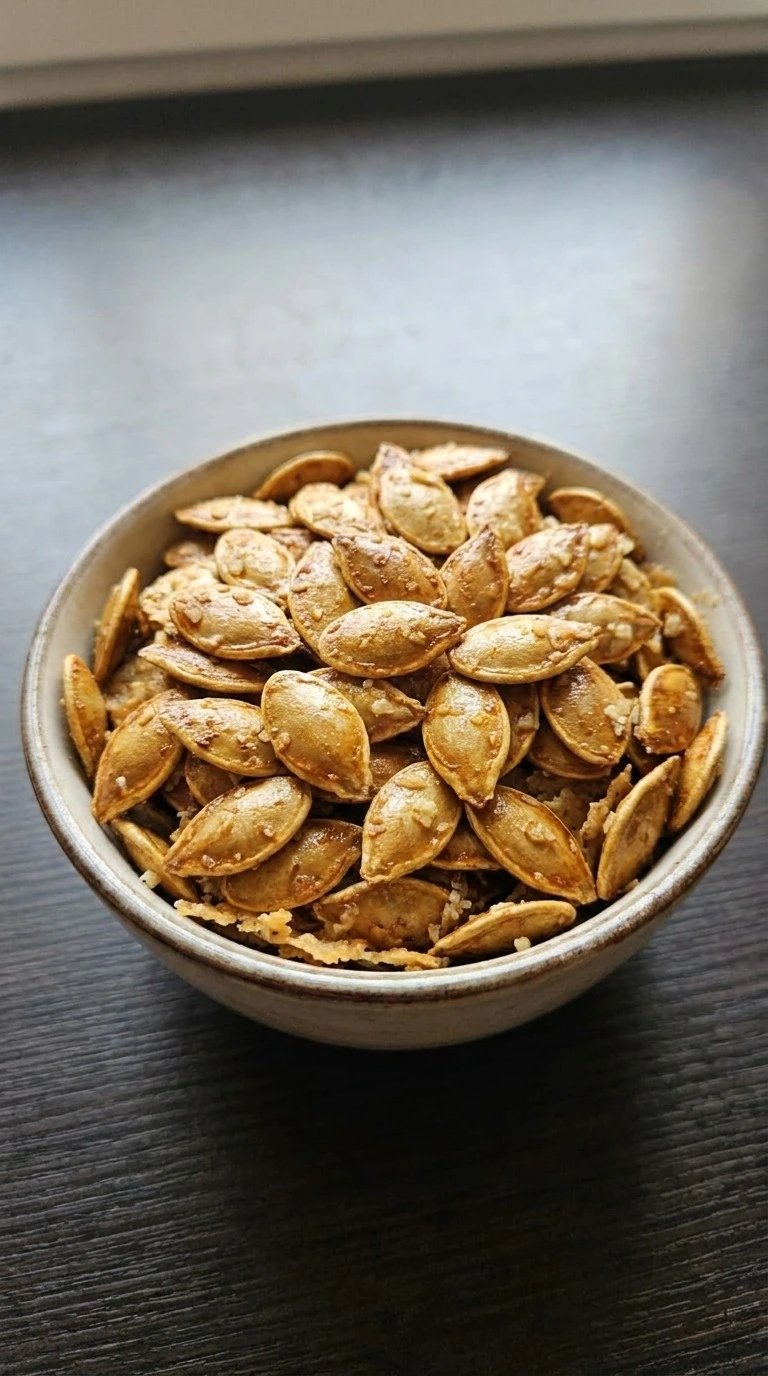
- Sprinkle 1/2 cup finely grated Parmigiano-Reggiano over the hot seeds and toss for 20 to 30 seconds. Return them to the 325°F oven for 4 to 6 minutes. Shift the seeds once halfway through so the cheese catches on different shells. The coating should turn pale gold and cling in fine crisp patches. Don't bake longer or the cheese can taste bitter. Finally, cool the seeds for 8 to 10 minutes before serving. You'll hear the crackle fade as the coating firms and the shells become crunchier. The finished Roasted Pumpkin Seeds with Parmesan should show uneven bronze edges, pale golden cheese flecks and natural color variation. Serve too soon and steam softens the crisp coating. Cooling lets rendered cheese fat set around the shells.

Notes
Let the seeds cool completely before storing them because trapped steam softens the shells. Keep them in an airtight container at room temperature for 4 to 5 days, or refrigerate them for up to 7 days. For longer storage, freeze cooled seeds in a freezer-safe bag with as much air pressed out as possible. They'll keep for about 2 months, although the Parmesan coating can lose some of its original crispness after thawing. To refresh refrigerated or thawed seeds, spread them in one layer and heat at 300°F for 4 to 6 minutes. Then cool them for 5 minutes before serving so the cheese coating firms again. Don't add more oil during reheating because it can make the shells greasy. Discard the batch if you notice a rancid nut smell, unusual moisture, visible mold or a bitter stale flavor that wasn't present after roasting.