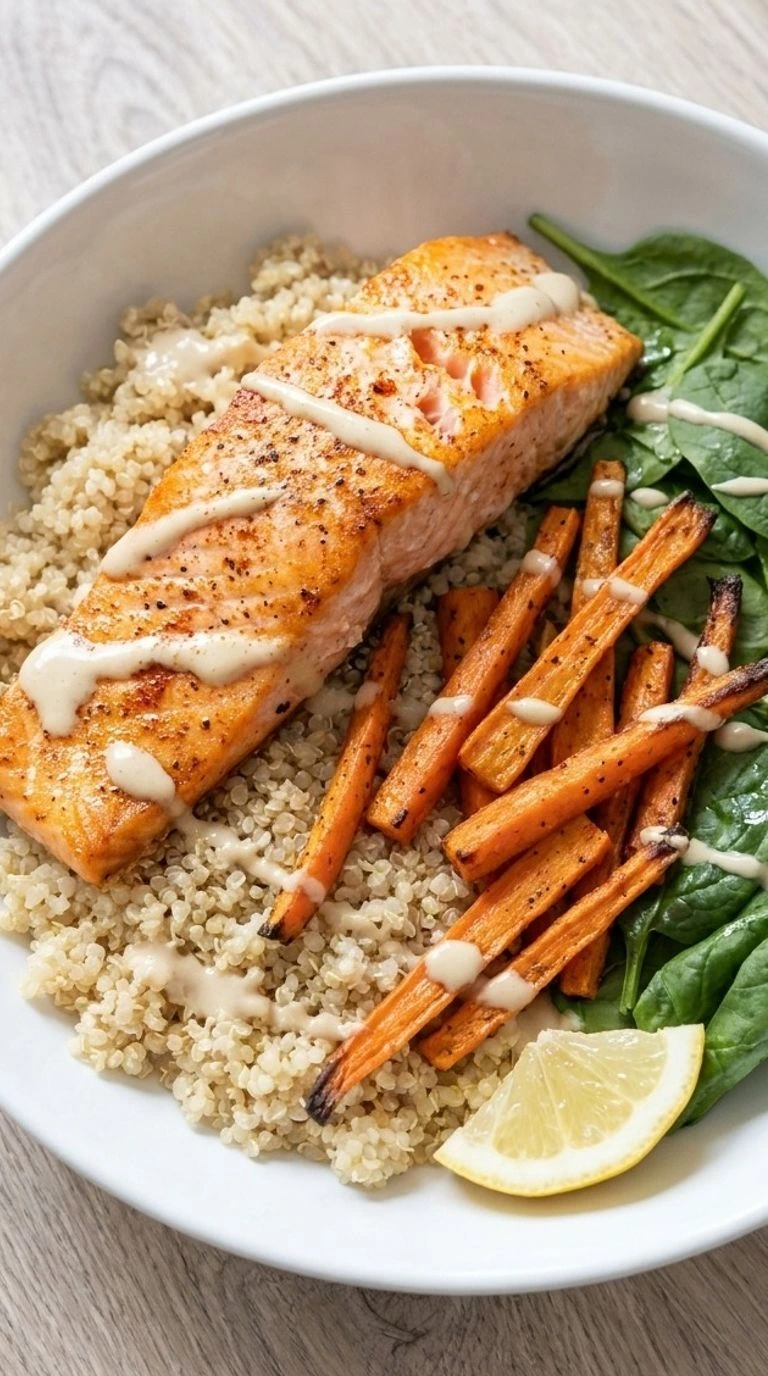
Ingredients
Method
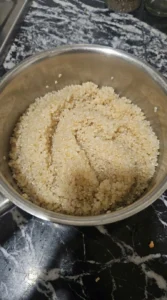
- Start by rinsing 1 cup of dry white quinoa under cold running water for 30 seconds. Move it to a medium saucepan and add 2 cups of water with 1/4 teaspoon of kosher salt. Bring the mixture to a boil over medium-high heat. Then lower the heat to a gentle simmer at roughly 200°F and cover with a tight lid. Let it cook for 15 minutes without stirring because moving the grains too often can leave them sticky and break their delicate shape. Turn off the heat and let the quinoa stand covered for another 5 minutes. Next, lift the lid and look for tiny white spirals around the grains. The water should be gone and the quinoa should feel light when you fluff it with a fork. If water remains after 15 minutes, keep simmering for 2 more minutes. Don't let the bottom dry out and scorch. The covered rest helps the grains absorb their last bit of moisture.
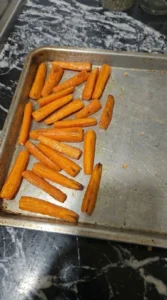
- Meanwhile, heat your oven to 425°F and line a large rimmed baking sheet with parchment paper. Peel 4 medium orange carrots and cut them into slender batons about 1/4 inch thick and 3 inches long. Toss them with 1 tablespoon of extra virgin olive oil and 1/4 teaspoon of kosher salt. Then spread the pieces in a loose single layer across one side of the baking sheet and leave the other side open for the salmon. Roast for 12 minutes on the middle rack. Flip the carrots once at minute 8 so the edges start to color without burning. After 12 minutes, the carrot tips should show small golden patches while their centers remain fairly firm. You'll smell a mild sweetness as the edges start to roast. Avoid cutting thick pieces because they'll stay hard when the fish finishes. Thin cuts help the carrots soften during the second roasting stage.
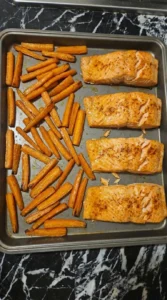
- Take 4 skin-on Atlantic salmon fillets from the refrigerator and pat their surfaces dry. Each fillet should weigh about 5 ounces. Brush them with the remaining 1 tablespoon of extra virgin olive oil and sprinkle evenly with 1 teaspoon of smoked paprika, 1/4 teaspoon of kosher salt and 1/2 teaspoon of freshly ground black pepper. Then place the fillets skin-side down on the empty side of the baking sheet beside the partly roasted carrots. Leave a little room between them. Roast at 425°F for 12 to 15 minutes until the thickest part of each fillet reaches 145°F on an instant-read thermometer. The tops should turn a deeper orange with a few golden spots. And when you press gently with a fork, the flesh should separate into moist opaque flakes. Avoid roasting past the temperature target because the flesh dries out quickly. (I first tried roasting the salmon with the carrots from the start. The fish dried out before the carrots softened.) The staggered roast keeps the salmon moist while the carrots finish browning.
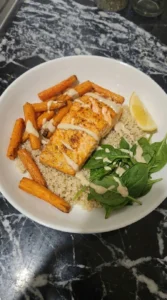
- While the fish rests for 3 minutes, add 1/4 cup of tahini to a small bowl. Squeeze in 2 tablespoons of juice from 1 large lemon and add 2 teaspoons of pure maple syrup. Whisk with a fork for 30 seconds. The sauce may thicken at first. Then add 3 tablespoons of warm water a little at a time and whisk for another 45 to 60 seconds until it flows slowly from the fork. Set aside a small lemon wedge from the remaining lemon for each serving. Divide the quinoa among 4 shallow serving bowls and add 1 cup of fresh baby spinach to each. Spoon the roasted carrot batons alongside the greens and place one salmon fillet on top of each portion. Finally, drizzle about 1 tablespoon of the lemon tahini sauce across each salmon quinoa bowl and share the remaining dressing at the table. You'll see pale ribbons settling between the warm grains while the spinach starts to soften slightly. Don't soak the quinoa too early or it'll lose its light texture. A last-minute drizzle keeps the grains fluffy and the greens fresh.
Notes
Store leftover Salmon and Quinoa Bowls in separate airtight containers in the refrigerator at 40°F or below for up to 3 days. Keep the roasted salmon and quinoa apart from the fresh spinach and dressing. Refrigerate everything within 2 hours of cooking. You can freeze the salmon and quinoa separately for up to 2 months. Wrap each salmon fillet tightly and place it in a freezer-safe container. Don't freeze the assembled bowls because the spinach turns limp and the tahini dressing may separate. To reheat, thaw frozen portions overnight in the refrigerator. Warm the salmon in a covered oven-safe dish at 300°F for about 10 to 15 minutes or until it reaches 165°F throughout. Heat the quinoa with 1 tablespoon of water per serving until steaming hot. Then add fresh spinach and dressing. Discard leftovers with mold or an unusual odor. And remember that unsafe food doesn't always smell bad.