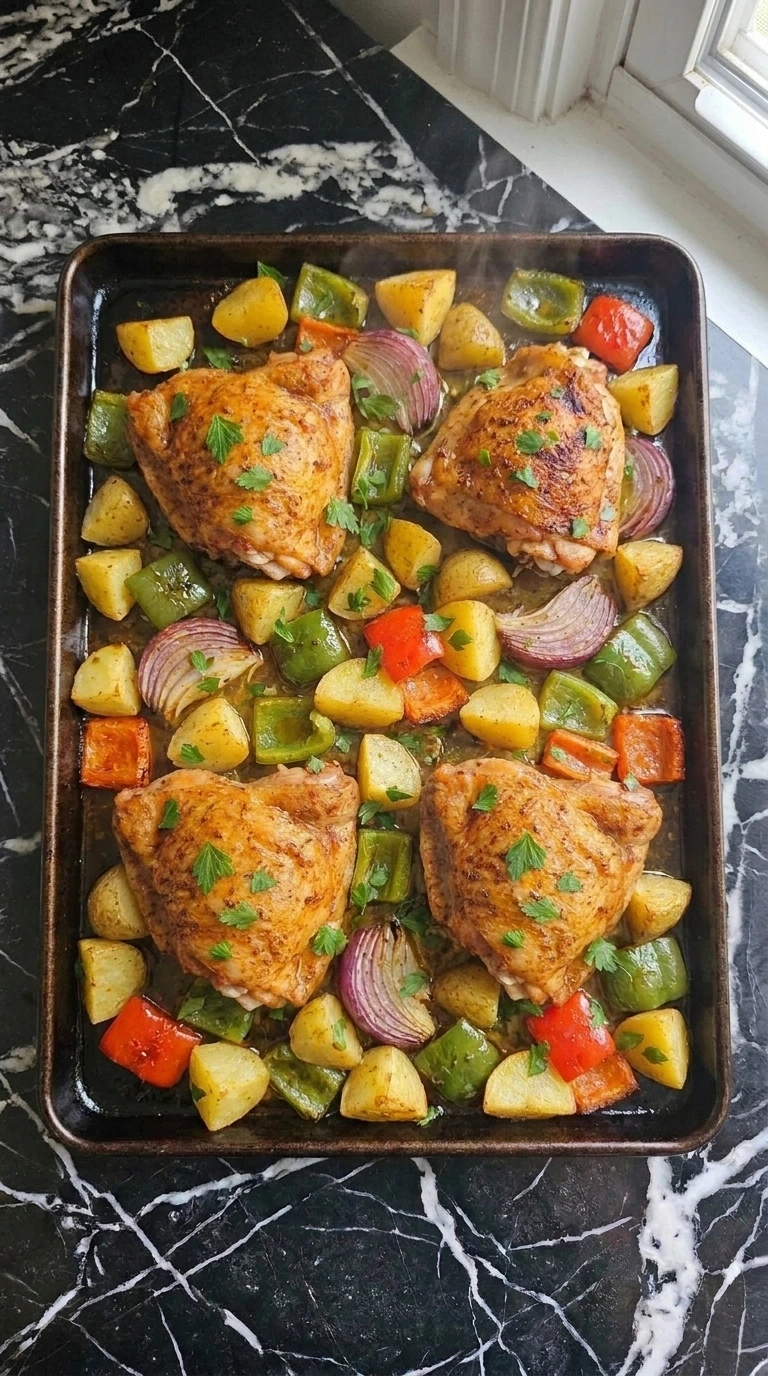
Ingredients
Method
- Preheat the oven to 425°F. Heat the oven to 425°F. Cut the Yukon Gold potatoes into rough 1-inch chunks during the next 8 to 10 minutes. Slice both bell peppers into 1-inch pieces and cut the red onion into thick wedges. Keep the knife tip down and rock through each vegetable. Then blot the potatoes dry so their surfaces feel matte instead of wet. You should see uneven but similarly sized pieces with plenty of exposed cut faces. The onion layers may separate slightly and that’s useful. Pieces larger than 1½ inches stay firm after the chicken finishes. Pieces much smaller than ¾ inch can scorch at the corners. Uniform 1-inch cuts let the potatoes soften before the chicken overcooks.
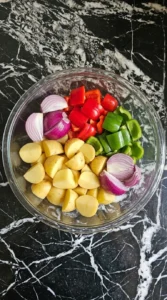
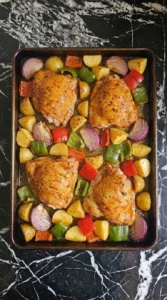
- Combine the olive oil, smoked paprika, garlic powder, dried thyme, kosher salt and black pepper for 30 seconds. Toss the vegetables through two-thirds of the mixture for 1 minute. Rub the rest over 4 chicken thighs and under any loose skin. Then spread everything across a 13×18-inch pan with the chicken skin-side up. Keep the oven at 425°F. The coating should look thin and rusty orange, not puddled or pasty. Leave about 1 inch between the thighs and expose most potato cut sides. Crowding the pan traps steam and leaves pale skin. Sheet Pan Chicken Thighs and Potatoes for an Easy Dinner needs open space for dry heat. A thin coating promotes browning without making the vegetables greasy.

- Roast the pan at 425°F for 20 minutes on the center rack. Then slide a thin spatula beneath the potatoes and peppers. Turn them once and shift the onion wedges away from any dark pan corners. Don’t move the 4 chicken thighs yet. (I flipped the chicken in my first batch, the skin softened against the pan.) Return the pan immediately. At minute 20 the chicken skin should look taut and light amber. The potato bottoms should show pale golden patches and the peppers should start collapsing. You’ll hear steady sizzling near the pan edges. If the vegetables still look wet, they’re crowded and steaming. Turning exposes fresh surfaces for the Maillard reaction.

- Continue roasting at 425°F for 15 to 20 minutes. Rotate the pan 180 degrees after 10 minutes so the back pieces don’t darken first. Insert an instant-read thermometer into the thickest thigh without touching bone. Pull the pan when every thigh reaches at least 165°F and preferably 175°F. The potatoes should yield when pressed with the spatula edge. The 4 chicken thighs should have deep amber skin with darker paprika freckles. Potato edges should look crisp and bronze while the peppers show scattered charred corners. The onion should smell sweet instead of sharp. Go past 185°F and the meat starts losing moisture. Finishing at 175°F softens thigh connective tissue without drying the meat.
- Rest the pan for exactly 5 minutes at room temperature. Then place 1 chicken thigh and one-quarter of the vegetables on each plate. Spoon 1 teaspoon of pan juices over each portion. Squeeze the lemon evenly across all 4 plates and scatter the parsley with your fingertips. Serve while the food stays near 140°F and the skin remains crisp. The plated thigh should glisten without sitting in a puddle. Its skin stays craggy and deep amber while the potatoes show creamy centers at broken edges. You should smell lemon first and smoky paprika next. Cut immediately and the juices run onto the plate. Five minutes lets the hot juices settle back into the meat.

Notes
Cool leftovers within 2 hours and refrigerate them in a shallow airtight container for up to 4 days. Keep the chicken above the vegetables so the skin absorbs less moisture. Sheet Pan Chicken Thighs and Potatoes for an Easy Dinner can be frozen for 2 months. Wrap each thigh tightly and freeze the vegetables separately in flat portions, because potatoes soften more after thawing. Reheat thawed portions at 400°F for 12 to 15 minutes on a shallow pan. Add 1 teaspoon of olive oil to the potatoes before heating so their edges crisp again. The microwave works for 2 to 3 minutes, but it softens the skin. Discard leftovers promptly with a sour smell, sticky chicken surface or gray liquid collecting beneath the food.