Ingredients
Method
- Preheat the oven to 425°F. Heat the oven to 425°F. Spend 10 to 12 minutes cutting the Yukon Gold potatoes into 3/4-inch cubes and the red onion into 1-inch wedges. Trim the green beans and keep them separate. Then blot all 4 chicken thighs firmly with paper towels and press around every fold of skin. Wet skin steams instead of crisping. The potato cubes should look irregular but close in size and the chicken skin should feel matte rather than slick. You'll notice the onion layers stay attached at the root end. If the potato pieces vary by more than 1/2 inch, some scorch before others soften. Even cuts let the vegetables finish beside the chicken.

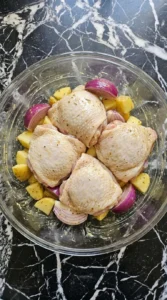
- Keep the ingredients at a cool room temperature of 68 to 72°F. Whisk extra-virgin olive oil, Dijon mustard, lemon juice and garlic for 20 seconds. Add thyme, rosemary, smoked paprika, kosher salt and black pepper. Whisk for 25 seconds more. Then add the 4 chicken thighs, potato cubes and onion wedges. Turn everything by hand for 2 minutes and rub seasoning beneath loose skin without tearing it. The coating should look glossy and cling in thin streaks instead of pooling at the bottom. You'll smell lemon first and then garlic and herbs. Stop after 2 minutes because longer mixing bruises the onion and loosens its layers. A thin coating promotes faster browning than a heavy wet marinade.
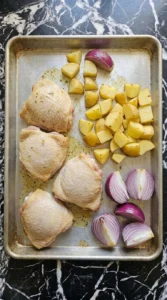
- Spread the seasoned potatoes and onion across a 13×18-inch rimmed sheet pan. Then nestle the 4 chicken thighs skin-side up between them. Leave about 1 inch around each thigh. Roast at 425°F for 18 minutes without opening the oven. Rotate the pan 180 degrees at minute 12 so the back edge doesn't darken too fast. By minute 18, the chicken skin should show pale gold patches. The potato bottoms should release with a firm nudge. You'll hear steady sizzling and smell toasted rosemary. If the pieces touch tightly, trapped steam softens the skin. Open spacing helps Sheet Pan Chicken Thighs and Veggies for Busy Weeknights brown, not steam.
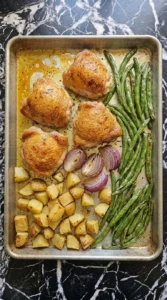
- At minute 18, slide the pan out while keeping the oven at 425°F. Flip the potato cubes with a thin spatula and shift the onion toward the center. Toss the green beans with 1 teaspoon of the pan juices. Then spread them along the open right side. Return the pan for 15 to 18 minutes. The chicken skin should deepen to amber and turn lightly blistered. Meanwhile, the beans should stay glossy and wrinkle at the tips. Check the thickest thigh for 175°F without touching bone. Go past 185°F and the meat loses moisture. (I tested 165°F first. The thighs were safe but less tender.) Higher thigh temperature melts more collagen without drying the meat.
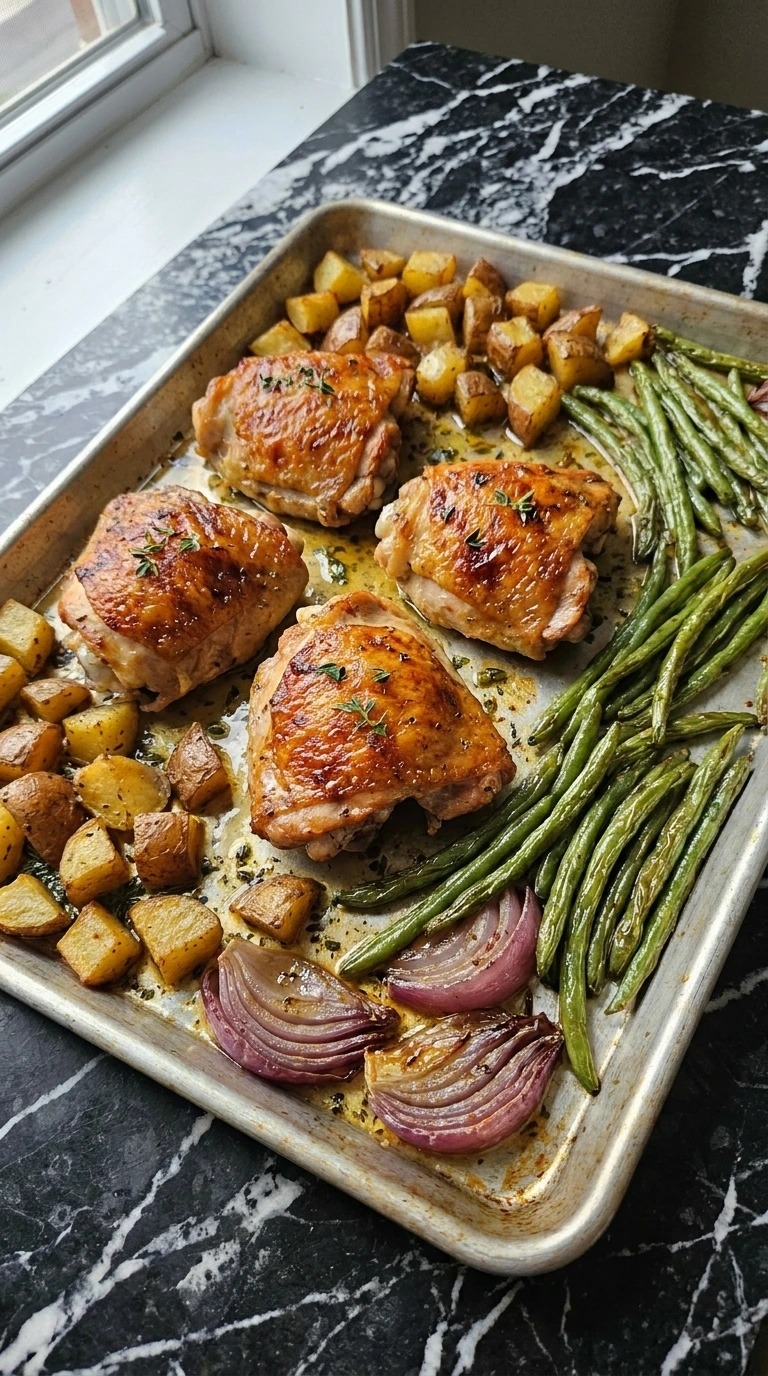
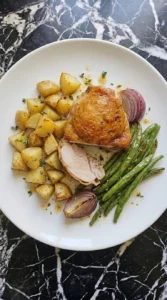
- Move the pan off heat after the thickest thigh reaches 175°F and rest everything for exactly 5 minutes. Keep the 4 chicken thighs skin-side up so steam can't soften the crust. Cut a 1-inch slice from the thick edge of one thigh. Place that thigh and slice on a plate with one-quarter of the potatoes, onion and green beans. Spoon 1 teaspoon of pan juices beside the meat. Finally, scatter 1/4 teaspoon of reserved thyme leaves over the potatoes. The cut face should look fully opaque and glossy while the potatoes appear creamy where a cube breaks. You'll hear the pan quiet as the sizzling fades. Slice too soon and clear juices flood the plate while the meat turns drier. A full 5-minute rest lets muscle fibers hold their moisture.
Notes
Cool Sheet Pan Chicken Thighs and Veggies for Busy Weeknights within 2 hours. Refrigerate the chicken and vegetables in separate shallow airtight containers for up to 4 days. The separation keeps the green beans from absorbing too much rendered fat. Freeze the chicken and potatoes for up to 2 months. Wrap each thigh tightly and place the potatoes in a freezer bag. Don't freeze the beans because they soften after thawing. Reheat thawed chicken and potatoes at 375°F for 12 to 15 minutes with the skin facing up. Add the green beans during the final 5 minutes and sprinkle on 1 teaspoon of reserved lemon juice. The skin should regain a light crackle and the potatoes should steam at the center. Discard leftovers with a sour smell, sticky surface or gray-green discoloration. Don't taste food that looks questionable.