Ingredients
Method
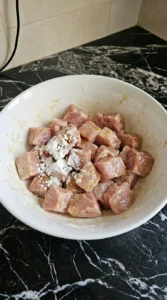
- Start by cutting 1 pound of boneless pork shoulder into roughly 3/4-inch cubes. Try to keep the pieces close in size so they'll cook at the same rate. Then cut the red bell pepper and green bell pepper into 1-inch squares and slice the yellow onion into thick petals. Set the vegetables aside. In a large bowl, beat 1 large egg with 1 tablespoon of light soy sauce. Add the pork and turn each piece through the mix. Let it sit for 10 minutes in the fridge at 40°F or below. Next, press the pork into 3/4 cup of cornstarch until each cube has a thin white coat. The meat should look pale and lightly dusted with no thick clumps of dry starch. Don't leave it sitting after coating because the starch will soak up moisture and turn gummy. A thin coat grips the pork because the egg helps the starch stick.
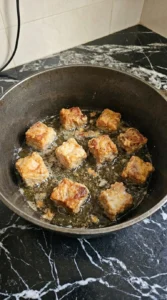
- Pour 3 cups of canola oil into a deep heavy-bottomed pot and heat it to 350°F. The oil should stay well below the rim. Lower the coated pork into the oil in three small batches and keep the pieces apart as they fry. Cook each batch for 4 to 5 minutes while turning the cubes gently halfway through. Keep the oil between 340°F and 350°F. Lift the pork onto a wire rack and check that a thick piece has reached at least 145°F inside. Let the pork rest for 3 minutes before serving. (I found that crowding the pot made the crust turn soft instead of crisp.) You'll see the coating change from chalky white to golden amber with little rough edges. The bubbling should slow as the crust sets. If the oil falls too low, the coating turns greasy. Steady heat dries the crust before the pork loses its moisture.
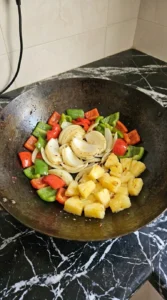
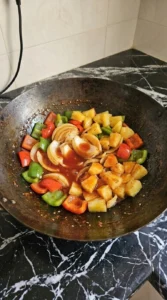
- Next, heat a large wok over medium-high heat (about 7 on a 10-dial) for 1 minute. Add 1 tablespoon of canola oil from the measured frying oil before it's used for frying, or use clean oil reserved from the same amount. Add the red bell pepper squares and green bell pepper squares along with the yellow onion petals. Stir-fry for 2 to 3 minutes. Keep everything moving by lifting and folding the vegetables toward the center every 20 seconds. Then add 1 cup of drained pineapple chunks and toss for another 60 seconds. Don't let the vegetables sit without moving because the edges can burn before the centers soften. The peppers should look brighter and slightly glossy while their edges remain firm. You'll smell the pineapple warm up as a few sides take on light golden spots. Short heat keeps the vegetables crisp instead of limp.
- Turn the wok to medium heat (about 5 on a 10-dial). In a small bowl, mix 1/3 cup of tomato ketchup with 1/4 cup of rice vinegar and 3 tablespoons of white granulated sugar. Add 1 tablespoon of light soy sauce and 1/2 cup of reserved pineapple juice. Pour this mix over the vegetables and fold it through for 2 minutes. In another small bowl, stir 1 tablespoon of cornstarch into 2 tablespoons of cold water until smooth. Pour the slurry into the bubbling sauce while stirring in circles. Simmer for 2 to 3 minutes until the sauce turns thick and shiny. The sauce should cling to the peppers and leave a clear trail when you drag a spoon through it. It should bubble slowly rather than boil hard. Too much heat can scorch the sugar. Gentle simmering lets the starch thicken the liquid.
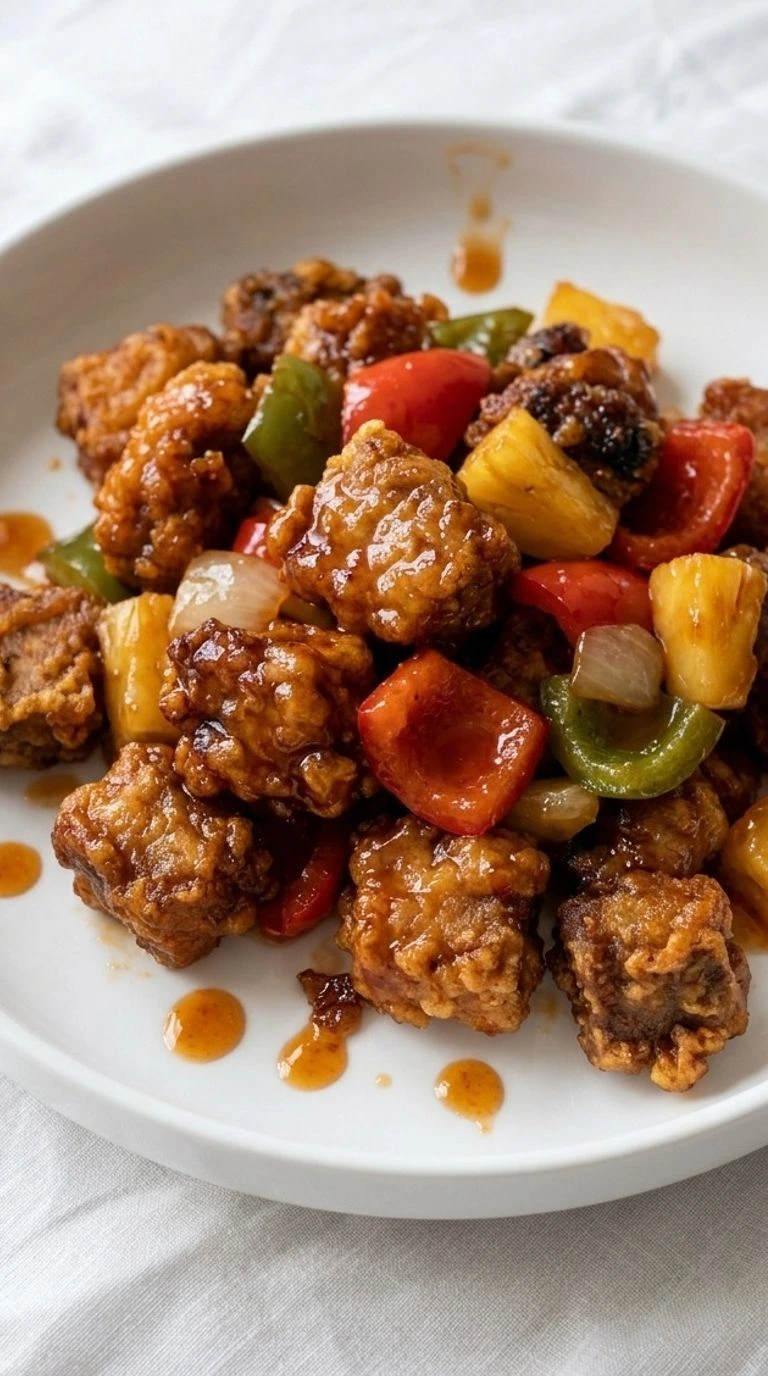
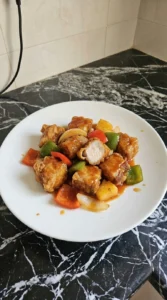
- Finally, turn the heat down to low (about 2 on a 10-dial). Add all the golden fried pork cubes to the wok and fold them through the sauce with a broad lifting motion. Work for just 30 to 45 seconds so every piece gets a light coat. Don't stir hard because you'll knock off the crisp crust. Turn off the heat and move the pork with the peppers and pineapple onto a large white serving plate. Spoon the remaining sauce over the vegetables while leaving a few pork edges exposed. Serve within 2 minutes while the coating still has some crunch. You'll see a shiny reddish-orange glaze on the golden crust and bright peppers tucked between the pork pieces. The sauce should cling rather than pool heavily. Leaving the pork in the wok too long makes it soggy. A quick toss protects the crisp coating.
Notes
Sweet and Sour Pork keeps in the refrigerator for 3 to 4 days when you store it in a shallow airtight container at 40°F or below. Let the food stop steaming heavily and refrigerate it within 2 hours of cooking. If you know you'll have leftovers, keep the fried pork separate from the sauce so the coating stays firmer. You can also freeze the pork and sauce separately for up to 2 months for the best quality. Use freezer-safe containers and leave a little space for the sauce to expand. Don't freeze a large batch while it's still hot because it can warm nearby food. For reheating, spread the pork on a baking tray and warm it at 375°F for 10 to 15 minutes until it reaches 165°F inside. Heat the sauce in a small saucepan over medium-low heat for 3 to 5 minutes and stir in 1 to 2 tablespoons of water if it's too thick. Then toss everything together just before eating. Discard leftovers if you notice mold or an unusual smell or texture, and don't rely on smell alone to judge safety.